GPS Sports Watches
Garmin Forerunner 570 vs 965: Which Running Watch Makes More Sense in 2026?
A detailed comparison of the Garmin Forerunner 570 and 965 covering size, display, heart rate accuracy, battery life, maps, and smartwatch features.
Introduction
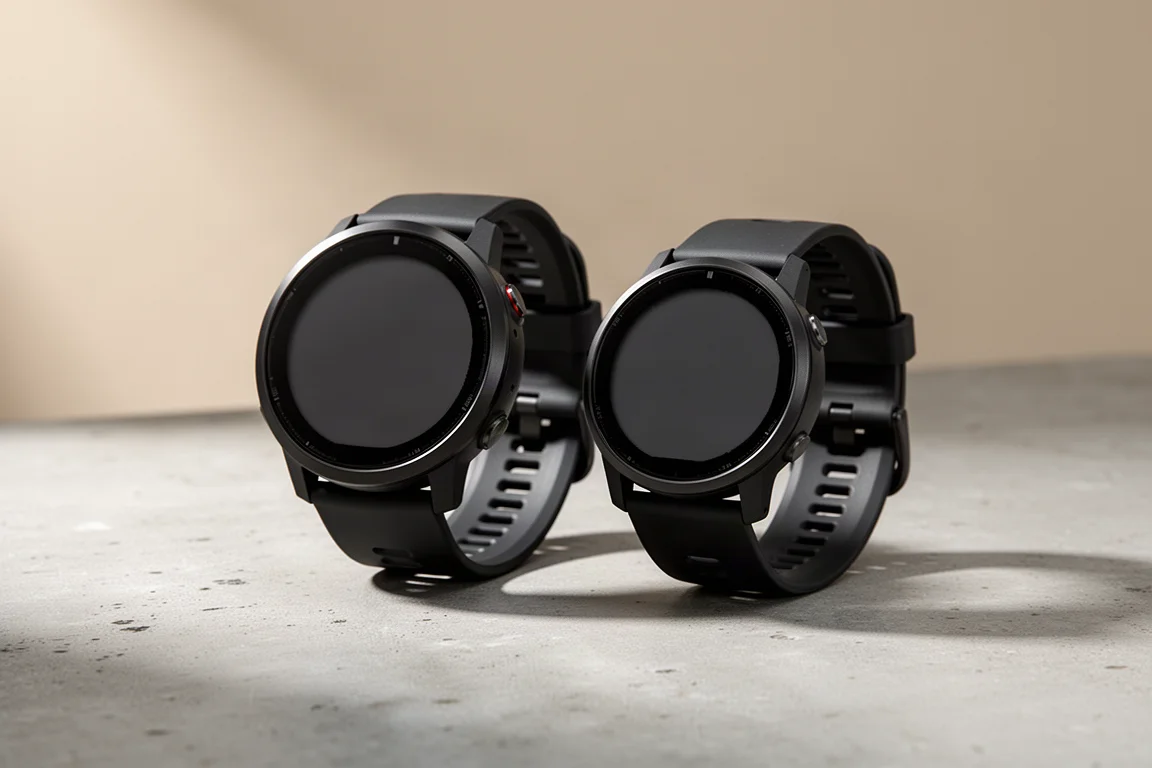
The Garmin Forerunner 570 and Forerunner 965 are an interesting pairing right now. With recent sales, the 965 can be found at a price very close to the newer 570, and even when the 965 first launched, it cost roughly the same as the 570 does today. That makes the choice less obvious than a model number alone suggests.
On paper, the 965 is the more capable watch. It has full offline maps, a titanium bezel, and a few extra training tools. But it is also a two-year-old watch. Garmin supports its watches for a long time, and the 965’s core features match those of the current lineup, so it is far from outdated. The 570, meanwhile, brings a brighter display, a newer heart rate sensor, a built-in speaker and microphone, and some features the 965 may never receive.
This comparison walks through what both watches share and where they genuinely differ, so you can decide which one fits your running and daily life better.
Evaluation Criteria
We compared both watches across the categories that matter most for a running watch:
- Size and fit options
- Display quality
- Smartwatch features and phone integration
- Health tracking and heart rate accuracy
- Battery life
- Music storage
- Software and interface
- GPS accuracy and navigation
- Training and recovery features
- External sensor support
Size, Fit, and Build
This may be the dealbreaker right out of the gate. The Forerunner 570 comes in two sizes: a 42mm case and a larger 47mm case. The Forerunner 965 comes in only one size, a 47mm case, which sits at the mid-to-higher end of watch sizing and may simply not fit some wrists well.
Both watches are thin and lightweight, and the 965 is only very slightly thicker than the 570, not enough to be noticeable. Both suit running as well as virtually any other sport. On materials, the 570 uses an aluminum bezel while the 965 uses titanium; both use a resin case otherwise. Both look great, and while there may be a slight durability difference between aluminum and titanium, both can scratch if you are hard on your watches and neither should be a major concern.
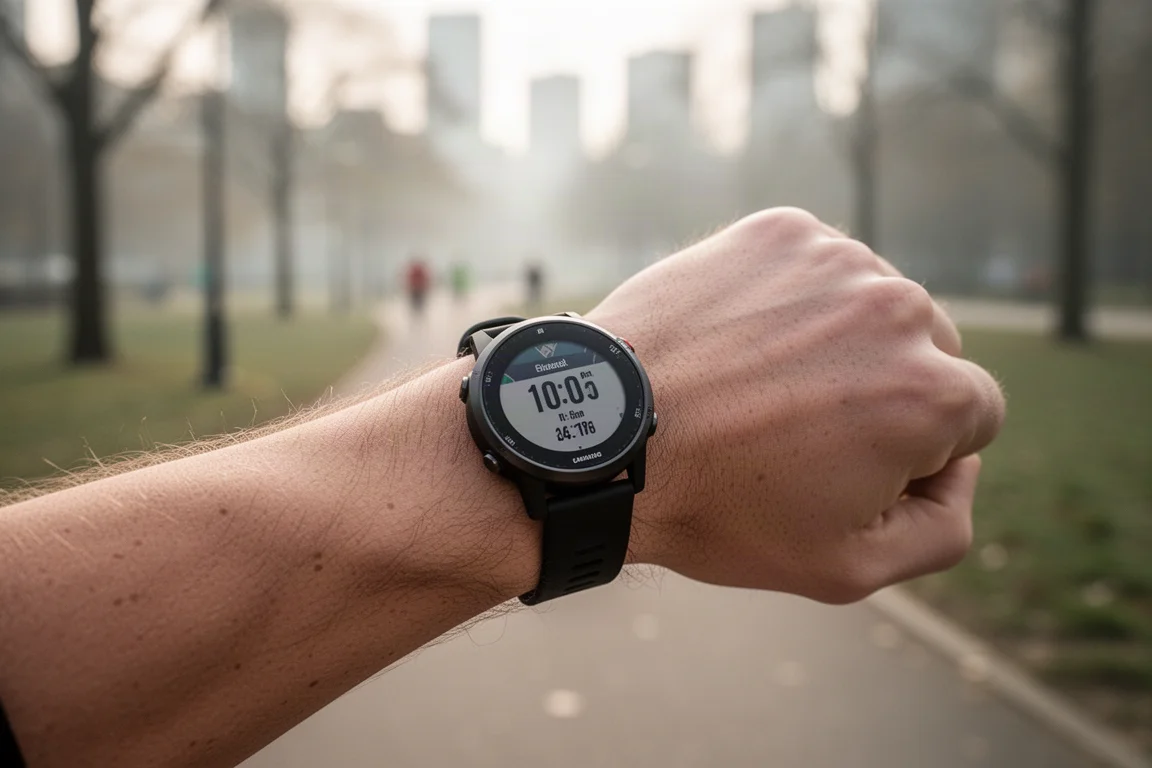
Both watches use a Gorilla Glass lens, though the 965 uses Gorilla Glass DX versus standard Gorilla Glass on the 570, which in theory should be slightly more durable. Both also have a domed lens that protrudes slightly past the bezel, which means a screen protector will not reach the very edge of the bezel on either watch.
Display and Touchscreen
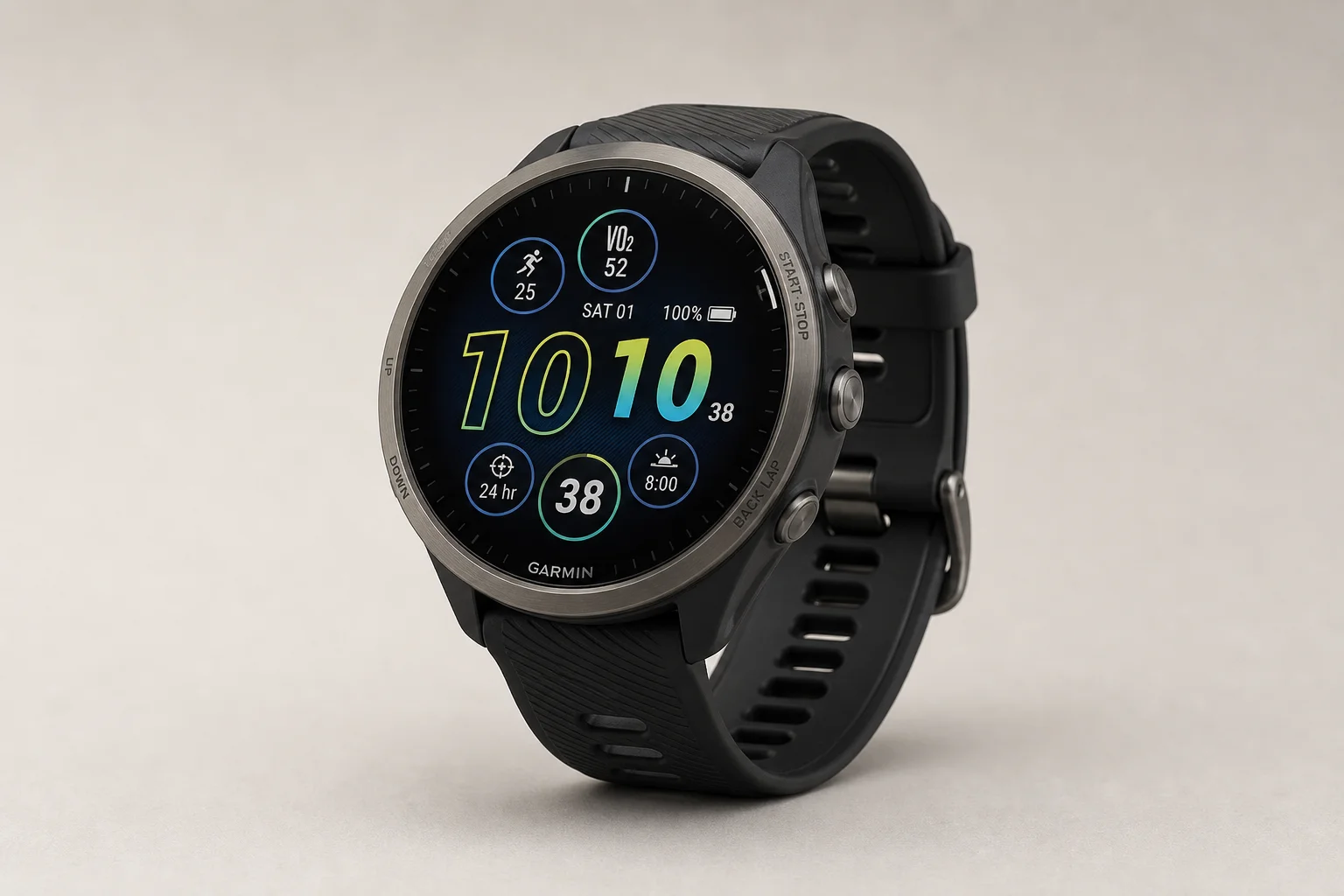
The larger 47mm Forerunner 570 has the same display size as the 965: a 1.4-inch AMOLED panel. However, the 570 uses an upgraded panel that is brighter than the 965’s. That does not mean the 965 has a poor display; both are easily viewable outside in sunny conditions, the 570 is simply a little brighter. The smaller 42mm 570 has a 1.2-inch display that also benefits from the brighter panel.
Both watches have touchscreens that work well, and on both you can enable or disable touch for daily use and on a per-activity basis, for example allowing touch for trail running but not cycling. The 570 adds one subtle but meaningful extra: a touch lock feature that automatically locks the touchscreen when you are not using it. If you try to touch the screen, a small lock icon appears, and swiping down unlocks it. For anyone who has had a screen turn on a watch accidentally mid-workout, this is a genuinely useful addition.
Bands
The 965 is compatible with Garmin’s QuickFit bands, which snap on and off without tools and feel a bit more premium. The 570 uses industry-standard bands instead, which are also easy to swap but open up a far wider range of third-party options. If band variety matters to you, the 570 has the edge; if you want Garmin’s premium quick-release system, the 965 wins.
Smartwatch Features: The 570’s Biggest Advantage
One of the biggest differences between the two is that the 570 has a built-in speaker and microphone. That extends its smartwatch capabilities considerably: you can take calls on the watch itself and access your phone’s voice assistant, such as Siri or Google Assistant, as long as your phone is within Bluetooth range.
There is also a voice command feature using the built-in microphone, so you can ask the watch to start a timer, set an alarm, or even start a workout. On top of that, the 570 uses friendlier, more pleasant tones overall for notifications and for starting and stopping activities.
It is an interesting choice for Garmin to bring this to the Forerunner lineup, since features like this have traditionally been split between the Venu and Forerunner series, but after the Fenix 8 also gained a speaker and microphone, it is not surprising.
Health Tracking and Heart Rate Accuracy
Both watches track steps, floors climbed (both have altimeters), calories burned, heart rate, sleep with HRV, and blood oxygen saturation via SPO2 sensors.
The heart rate sensors differ, though. The 965 uses Garmin’s fourth-generation sensor, while the 570 carries the latest fifth-generation version. Two differences matter here. First, the fifth-generation sensor should be more accurate during workouts, particularly challenging ones like high-intensity interval training and weight training. The fourth-generation sensor is not wildly inaccurate; both do a solid job overall.
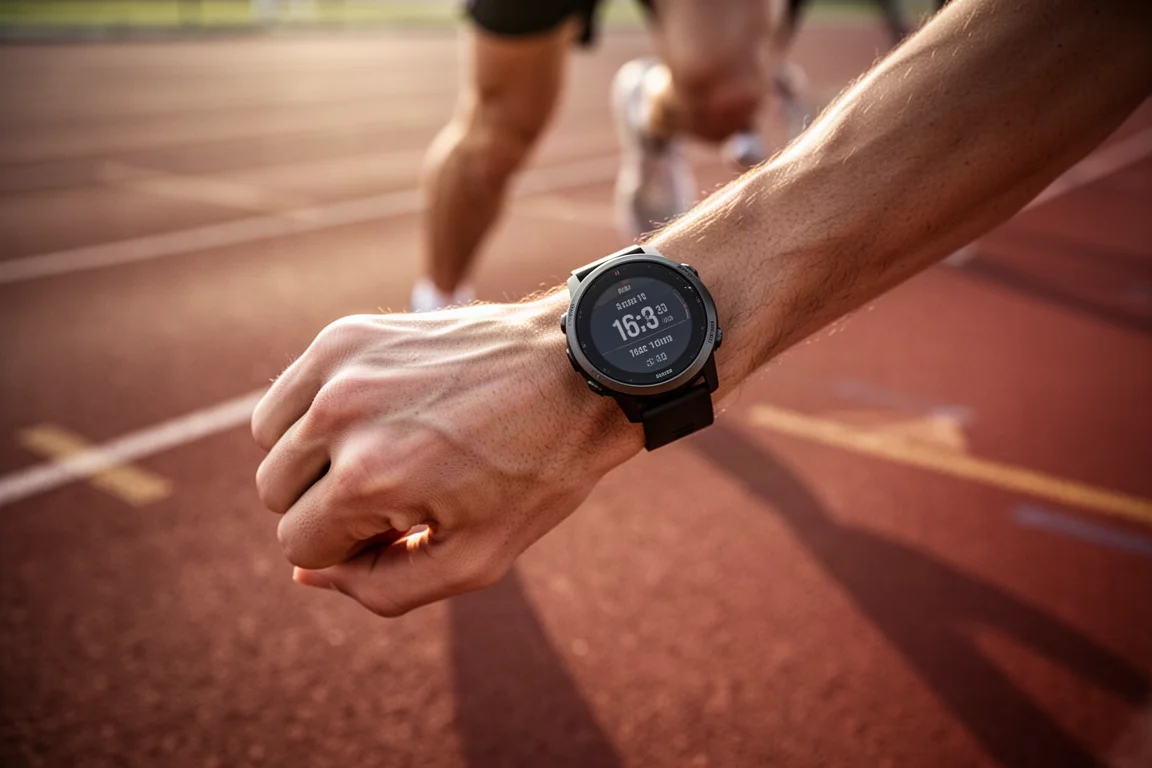
In testing, an easy indoor cycling session produced near-perfect heart rate traces from both watches, with only a small stumble at the start from the 570 and a couple of brief wanderings from the 965. A gravel ride outdoors was more challenging, with both watches losing accuracy briefly in spots before recovering, and some shakiness from the 570 toward the end of the ride.
During interval workouts, the differences were clearer. The 965 took longer to start tracking the warm-up ramp in heart rate, and across five intervals each watch had at least one questionable interval. The general takeaway: both sensors handle steady-state and most cardio activities well, while the fifth-generation sensor has the better shot at intervals and weight training.
The fifth-generation sensor in the 570 also includes a skin temperature sensor for tracking temperature changes during sleep. One notable similarity: neither watch has ECG capability, which is surprising given that every other Garmin watch with the fifth-generation sensor has it. It is unclear whether additional components are required, but the 570 does not have ECG despite having the newer sensor.
Battery Life
Battery life favors the 965 clearly. Without the always-on display, the 965 reaches up to 23 days, while the 570 manages up to 10 to 11 days depending on size. With always-on display enabled, battery life typically drops to about a third: roughly 7 to 10 days on the 965 and around 4 to 5 days on the 570. Real-world figures will also depend on brightness, how much you interact with the watch, and how many outdoor activities you track. For outdoor activity tracking, the 965 lasts longer across the board, and interestingly both 570 sizes share the same battery estimates.
Music Storage
Both watches have onboard music storage for offline listening without your phone, with downloads from services like Spotify and Amazon Music, so you can run or ride with Bluetooth headphones and leave the phone behind. A minor extra on the 570: you can also play music through its built-in speaker.
Software and Interface
Both watches share largely the same theme, but the 570 has a slightly refreshed interface. The biggest difference is in the sport profiles and app lists. On the 570, pressing the start button brings up a more organized layout with up to three primary sport profiles pinned at the top, the rest of your activities in a dedicated folder, and apps like the Connect IQ store and Garmin Share separated out below.
Both watches also have Garmin’s morning report, showing sleep quality, HRV status, recovery time, weather, and upcoming events first thing in the morning. The 570 adds a new evening report, a night-time companion that summarizes your day’s workouts and activities. There is no confirmation the evening report will come to the 965 via software update, though morning report was backported to older watches in the past, so it is not out of the question.
GPS, Maps, and Outdoor Navigation
Both watches have dual-band satellite chipsets, so there is no meaningful difference in positioning accuracy; both are solid here.
The 965, however, has full offline topographic maps, which is its biggest advantage over the 570, much as the speaker and microphone is the 570’s biggest advantage over the 965. The maps show more than your location: street information, trail information, landmarks like parks, and even points of interest such as coffee shop locations. You can also do on-demand routing directly on the watch, navigating to a point of interest or specific address and receiving actual turn-by-turn directions. The 965 additionally includes ski map information with runs and chairlift data.
The 570 offers breadcrumb-style navigation, showing a trail of where you have been, plus you can load routes for navigation, but without underlying map data it gives generic instructions like “turn right here” rather than street names, and there is no on-demand routing. It does have a back-to-start feature that guides you back along the path you took. Storage also differs: the 965 has 32GB shared between maps and music, while the 570 has 8GB dedicated to music.
Training and Recovery Features
Both watches have a lot here. Both include training status with the same metrics, training readiness, HRV status, and recovery time. The 965 adds a few extras: real-time stamina, endurance score, and hill score. These are nice, but arguably none are must-have features.
Both collect wrist-based running dynamics like cadence, stride length, vertical oscillation, vertical ratio, and running power. Note that the new HRM 600 heart rate strap, launched alongside the 570 and 970, can collect even more advanced running dynamics when paired with the 970 but not the 570, and it is unclear whether the 965 will gain those metrics via update.
The 570 also brings new running features: a projected race time predictor beyond the basic race predictor widget, an auto lap by timing gate feature for more accurate race lap splits, and suggested finish line estimates. It is not yet known which of these will be backported to the 965, but as a full multisport triathlon watch, the 965 has a reasonable chance of receiving some of them.
Sport Profiles and External Sensors
Both watches share a long list of sport profiles covering the core activities: running, cycling, pool and open water swimming, triathlon, multisport, gym profiles, and team and racket sports. The 570 adds a few new profiles, mainly on the multisport side, though it is unclear whether these will come to the 965.
On external sensors, the lists are similar for core sensors, but the 965 supports additional devices such as Garmin’s inReach satellite communicators, electronic shifting, action cameras, and dog tracking sensors. Both pair with cycling power meters, though the 965 can collect advanced cycling dynamics like left/right power balance and pedal power phase when paired with compatible pedals. Both can also download heart rate data from compatible straps like the HRM Pro and HRM 600, useful for swimming or sports where a wrist watch is impractical.
Which Should You Buy?
There is arguably one big advantage with each watch, and they appeal to different people. The 570’s speaker and microphone deliver more smartwatch features and phone integration, while the 965’s offline maps make it more useful outdoors.
Size is another consideration: the 570 comes in two case sizes, while the 965 only comes in one, on the larger side. Finally, consider age: the 965 launched two years ago and, while more capable on paper, will be two years behind on software updates. Garmin has added features to the 965 since launch, but the odds of new features arriving shrink over time, while the 570 has a better outlook for future updates.
If you want the smartwatch experience, a smaller size option, a brighter display, and the newest heart rate sensor, the 570 is the more forward-looking pick. If you want maps, the longest battery life, and the deepest feature set for training and navigation, the 965 remains a strong buy, especially at its current discounted pricing.
Conclusion
The Forerunner 570 and 965 share a great deal: dual-band GPS, AMOLED displays, strong training tools, offline music, and a long list of sport profiles. The choice comes down to what you value most: the 570’s speaker, microphone, brighter panel, and newer sensor, or the 965’s maps, titanium bezel, and 23-day battery life. Match the watch to how you actually train and travel, and either one will serve you well.
Further reading
Related Reviews
GPS Sports Watches
Polar Grit X2 Pro vs Vantage V3 vs COROS Vertix 2S: Which Flagship Adventure Watch Makes Sense
Polar's new flagship shares its internals with the Vantage V3 and goes up against the COROS Vertix 2S. Here is what two months of testing revealed about GPS, heart rate, navigation, and value.
GPS Sports Watches
Coros Apex 2 vs Garmin: Six GPS Sports Watches Worth Comparing
A practical look at the Coros Apex 2, Apex 2 Pro, Vertex 2, and three Garmin rivals, with what each does well and where the trade-offs sit.
GPS Sports Watches
Coros Apex 4 Hands-On: Titanium Build, Faster Mapping, and a Battery Built for the Mountains
A first look at the new Coros Apex 4 GPS sports watch, including its titanium construction, improved mapping, built-in speaker, and standout battery life.