GPS Sports Watches
Garmin Forerunner 255 vs 955: Which Sports Watch Makes Sense for You
Two capable Garmin sports watches with plenty of shared features, but a few key differences that decide which one fits your training.
Introduction
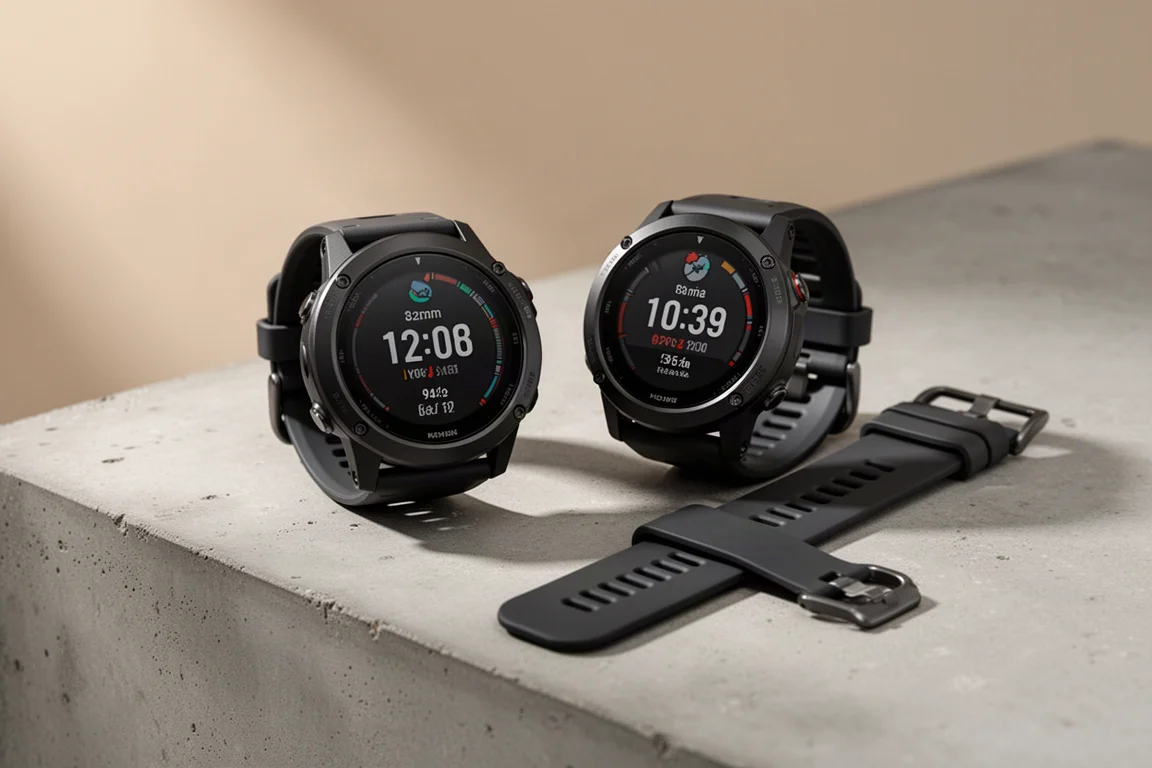
Garmin’s Forerunner 255 and Forerunner 955 are two very capable sports watches, and both arrive with a long list of new features. The 255 in particular gains a lot compared with the previous generation, which makes the choice between the two less obvious than the price gap suggests. Here is how they compare so you can pick the right one.
What They Share
Both watches cover the essentials extremely well. They include a wide range of sport profiles with full triathlon support, something new to the Forerunner 200 series, plus barometric altimeters, also new to this line. Both support Garmin’s multiband satellite mode for improved GPS accuracy, native running power with a compatible accessory, heart rate variability status, and Garmin Pay.
On the health side, both use Garmin’s fourth-generation Elevate heart rate sensor, track blood oxygen saturation, and offer the health snapshot feature that collects heart rate, SpO2, stress, and respiration rate in one reading. Advanced sleep tracking, the morning report, body battery, running and cycling VO2 max estimates, the visual race predictor, training status, and the new race widgets with adaptive suggested workouts are all present on both models too.
Hardware and Battery Life
The 955 comes in one size with a 46.5mm case and a 1.3-inch display. The 255 gives you more options: a larger version with the same 46.5mm case and 1.3-inch display, and a smaller 255S with a 41mm case and a 1.1-inch display.
The 955 is also available in a solar version with a solar ring around the display and hidden solar panels beneath it. With sufficient sun exposure, the 955 Solar can reach up to 20 days of smartwatch battery life, compared with up to 15 days for the standard 955, up to 14 days for the larger 255, and up to 12 days for the 255S.
GPS battery life shows a bigger gap: up to 42 hours in standard GPS mode and 20 hours in multiband mode for the 955, versus 30 and 16 hours respectively for the 255. The 255 has no solar option, but it does come in a Music version that can download tracks from services like Spotify, Amazon Music, and Deezer for phone-free listening with Bluetooth earbuds.
Maps and Navigation
This is one of the clearest dividing lines. The 955 gets full topographic and landscape maps with detail like street names, lakes, rivers, trails, plus ski resort and golf maps. The touchscreen on the 955 makes panning and zooming maps especially convenient, though you can still use the physical buttons for everything if you prefer.
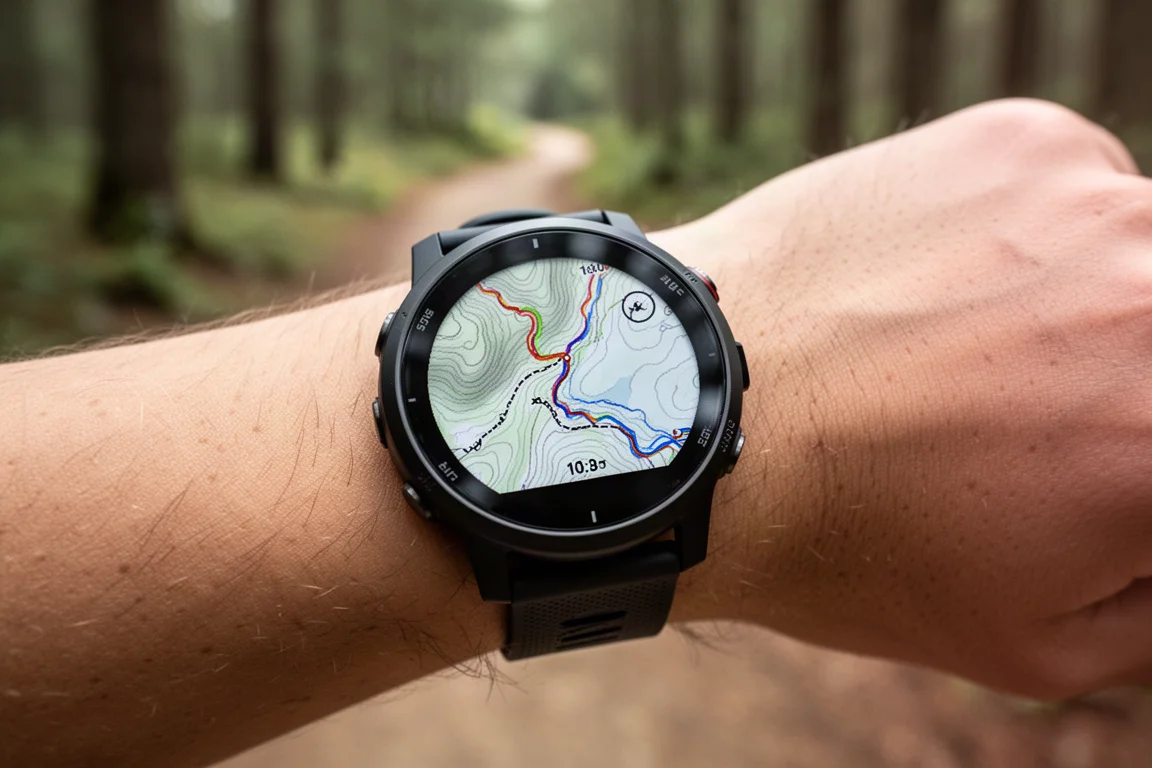
The 255 has no maps, but you still get a breadcrumb trail during outdoor activities, the ability to load a predefined route, and navigation back to your start location. Both watches support the Up Ahead feature for course points on custom routes created in Garmin Connect, along with safety features like live tracking, incident detection, and assistance requests. The 955 adds spectator messaging, letting friends and family send messages to you during an activity through a live track link.
Advanced Training Tools on the 955
Both watches include HRV status for tracking recovery trends, but the 955 goes further with Garmin’s training readiness feature. It produces a score from 1 to 100 based on sleep, recovery time, HRV status, acute training load, sleep history, and stress history, and it appears directly on the 955’s morning report.
The 955 also adds real-time stamina, which shows both potential stamina, roughly your long-term aerobic capacity, and actual stamina, a short-term at-the-moment measure, during a workout. On top of that, the 955 displays heat and altitude acclimation separately, while the 255 factors them into training status without breaking them out. Storage differs as well: the 255 Music holds up to 500 tracks, while the 955 holds up to 2,000.
Activity Profiles
Both watches cover the expected profiles: indoor and outdoor running, indoor and outdoor cycling, pool and open water swimming, triathlon, plus recreation profiles like skiing, snowboarding, and stand-up paddleboarding. The 955 adds indoor rock climbing and bouldering, backcountry skiing, cross-country skate skiing, kayaking, navigation profiles that use its maps, tennis, pickleball, padel, road and gravel biking, bike commuting, cyclocross, and a golf profile with preloaded worldwide course maps.
For mountain biking, the 955 can also collect Garmin’s grit and flow metrics, which measure terrain difficulty and how smoothly you maintain momentum.
Sensors and Cycling Data
Both watches pair with a broad range of external sensors, including heart rate sensors, foot pods, speed and cadence sensors, cycling power meters, radar and lights, and smart trainers. The 955 extends this with support for inReach satellite communicators, muscle oxygen sensors, and Shimano Di2 electronic shifting.
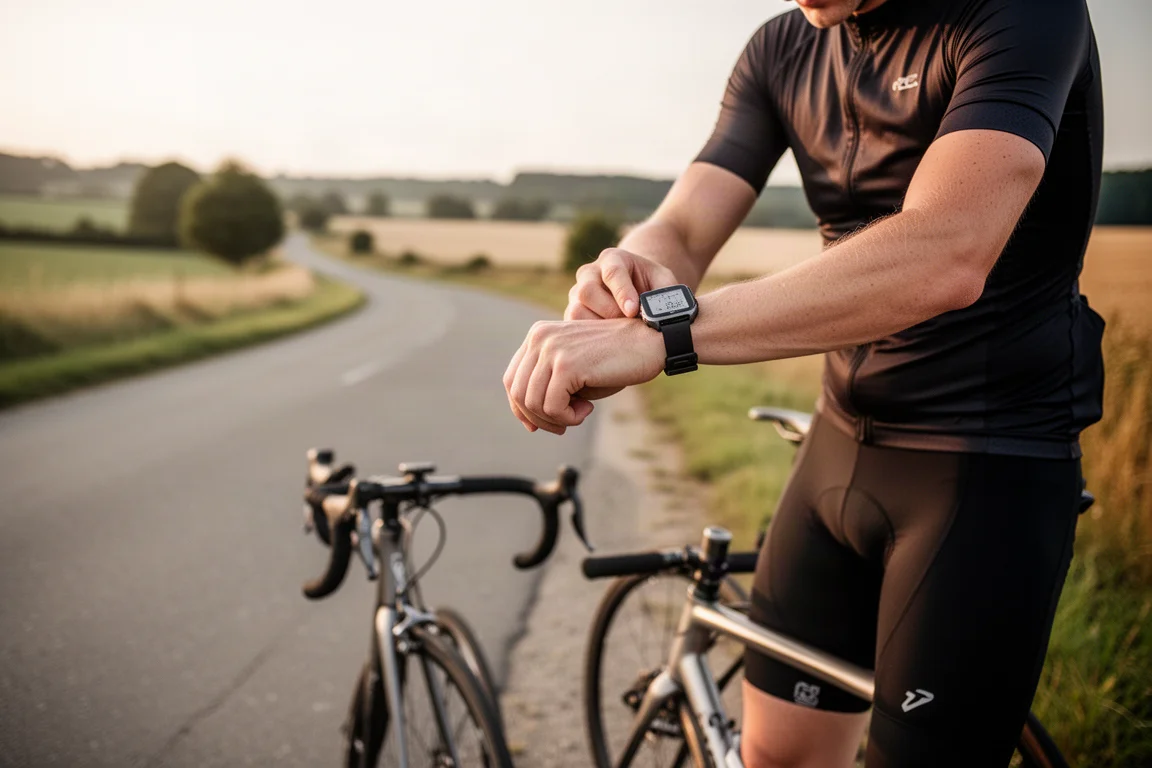
With compatible power meters, the 955 also reports advanced cycling dynamics such as left-right power balance, platform center offset, power phase, torque effectiveness, and pedal smoothness. The 255 still delivers average, max, and normalized power. On the running side, there is no difference: both report the same advanced running dynamics, including vertical oscillation, ground contact time, and stride length, alongside running power.
Which One Should You Buy
The 255 is the better value for most runners and triathletes. It gains so much over its predecessor that it essentially replaces the Forerunner 745, so if you were weighing those two, the 255 is the clearer pick. Choose the 255 Music if phone-free music matters, and the 255S if you want a smaller case.
The 955 makes sense if full onboard maps, a touchscreen, longer GPS battery life, solar charging, training readiness, real-time stamina, and deeper cycling dynamics genuinely matter to your training. Serious trail navigators and data-driven cyclists will get the most out of those extras.
Conclusion
Both watches are strong, and the gap between them is narrower than ever. If core training features are your priority, the 255 delivers remarkable capability for its position in the lineup. If you want the full navigation and advanced analytics package, the 955 earns its place at the top.
Product link
View more details for Garmin Forerunner 255
This product is mentioned in the review. Check the specifications, options, and compatibility before buying.
View more details for Garmin Forerunner 255Further reading
Related Reviews
GPS Sports Watches
Polar Grit X2 Pro vs Vantage V3 vs COROS Vertix 2S: Which Flagship Adventure Watch Makes Sense
Polar's new flagship shares its internals with the Vantage V3 and goes up against the COROS Vertix 2S. Here is what two months of testing revealed about GPS, heart rate, navigation, and value.
GPS Sports Watches
Coros Apex 2 vs Garmin: Six GPS Sports Watches Worth Comparing
A practical look at the Coros Apex 2, Apex 2 Pro, Vertex 2, and three Garmin rivals, with what each does well and where the trade-offs sit.
GPS Sports Watches
Coros Apex 4 Hands-On: Titanium Build, Faster Mapping, and a Battery Built for the Mountains
A first look at the new Coros Apex 4 GPS sports watch, including its titanium construction, improved mapping, built-in speaker, and standout battery life.