Wearables
Garmin Forerunner 255 Review: A Full Multisport Upgrade at a Reasonable Price
The Forerunner 255 adds dual-frequency GPS, triathlon support, barometric altitude, and HRV tracking, making it a major step up from the 245.
Introduction
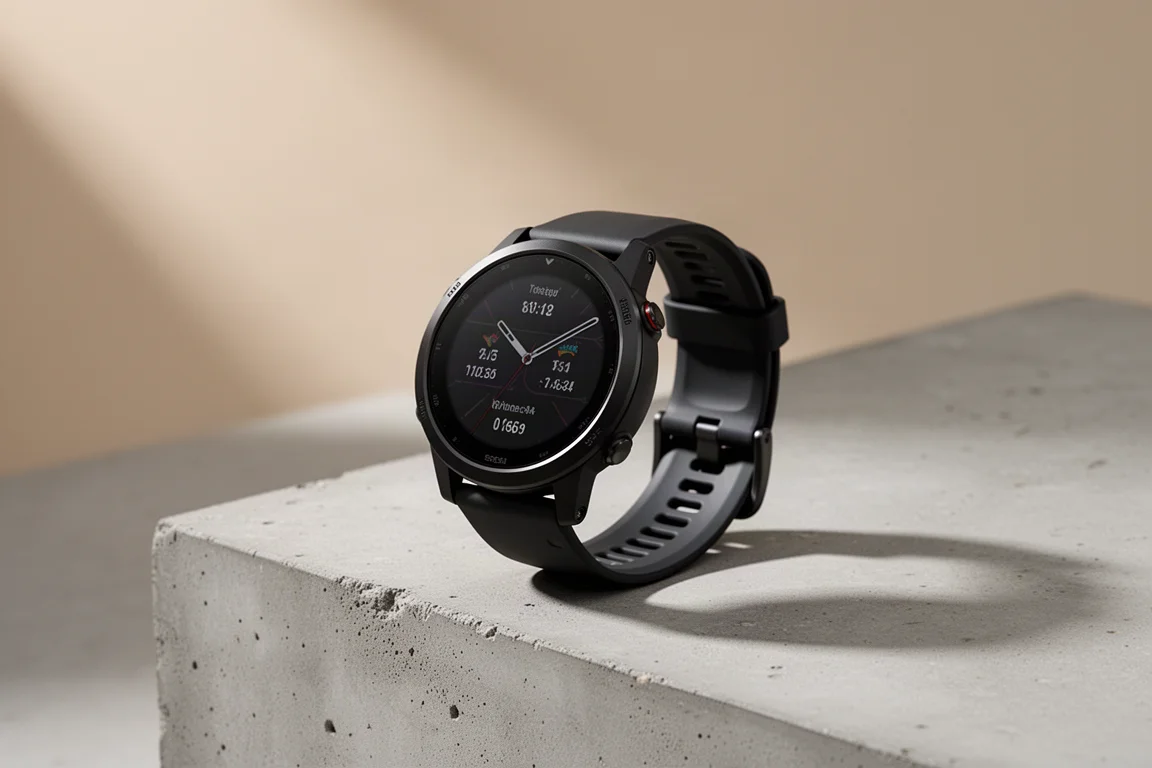
The Garmin Forerunner 255 is a massive upgrade over the Forerunner 245. What used to be a running-focused watch is now a full multisport watch, and it picks up a long list of features that previously lived only on much more expensive devices. We have been using it across swim, bike, run, and hike to figure out where it works well and where it still needs a little love.
It comes in four variants: two sizes and a music or non-music edition for each. The standard 255 is a 46mm case, while the smaller 255S is 42mm. Both sizes cost the same: $349 for the non-music edition and $399 for the music edition. Beyond battery life differences tied to case size and on-board music storage, the feature set is identical across the board.
From Running Watch to Full Multisport Watch
The biggest structural change is full multisport support. The 245 had pool swimming, but no open water swimming and no way to string disciplines together into one cohesive event like a triathlon. The 255 handles all of that, plus support for cycling power meters, which the 245 generation lacked entirely. You can pair a power meter and an indoor trainer and get essentially a full triathlon experience, similar to what Garmin did with the Instinct 2 series at a very similar price point.
One caveat: ClimbPro has not worked its way down to this watch yet. If you want that on-screen segment tracking for climbs, you need to step up to something like the 745 or the 955.
GPS Accuracy: Dual-Frequency Done Right
The addition of multi-band (dual-frequency) GPS at this price point is genuinely surprising. This technology debuted on the Fenix 7 Sapphire and Epix editions at nearly a thousand dollars, and now it is here in a $349 watch. Dual-frequency GPS is widely considered the holy grail of GPS accuracy, and the results on the 255 back that up.

In dense city environments, running between tall 20 to 30 story buildings on tiny streets, the 255 almost locks the track perfectly. Compared with watches like the Forerunner 945 LTE, Coros Vertex 2, and Polar Pacer Pro, none of them held a candle to it. They were leagues apart in terms of accuracy. On open water swims, forested sections, and farmland roads, the tracks stayed spot on across the board.
Garmin has also added a barometric altimeter to the 255, a first for a Forerunner at anywhere near this price. It delivers more accurate elevation data than the typical GPS-based altimeter, though as noted above, it does not include ClimbPro.
Running Power, Finally Native
Alongside the 955, this is the first time Garmin offers native running power in a watch. Previously it required a Connect IQ app, and it still requires a Garmin accessory: an RD Pod, or one of the HRM Run, HRM Tri, or HRM Pro straps. Once paired, running power appears on the screen, and you can customize running power zones separately from cycling zones and build structured workouts around power.
Accuracy is unchanged from the old app-based version. There is still no industry standard for running power accuracy, and anyone claiming otherwise is trying to sell you something. That said, any of these sources is generally consistent enough to pace against, and this is no different.
Nightly HRV Tracking and Morning Report
The 255 adds nightly HRV status tracking. The key thing to understand is that this is a long-term trend tool, not a single-night score. Your personal baseline is established after roughly 19 days of data and then compares against up to 90 days of history. Your HRV zone is custom to you and can be wider or thinner depending on how much your values vary night to night.
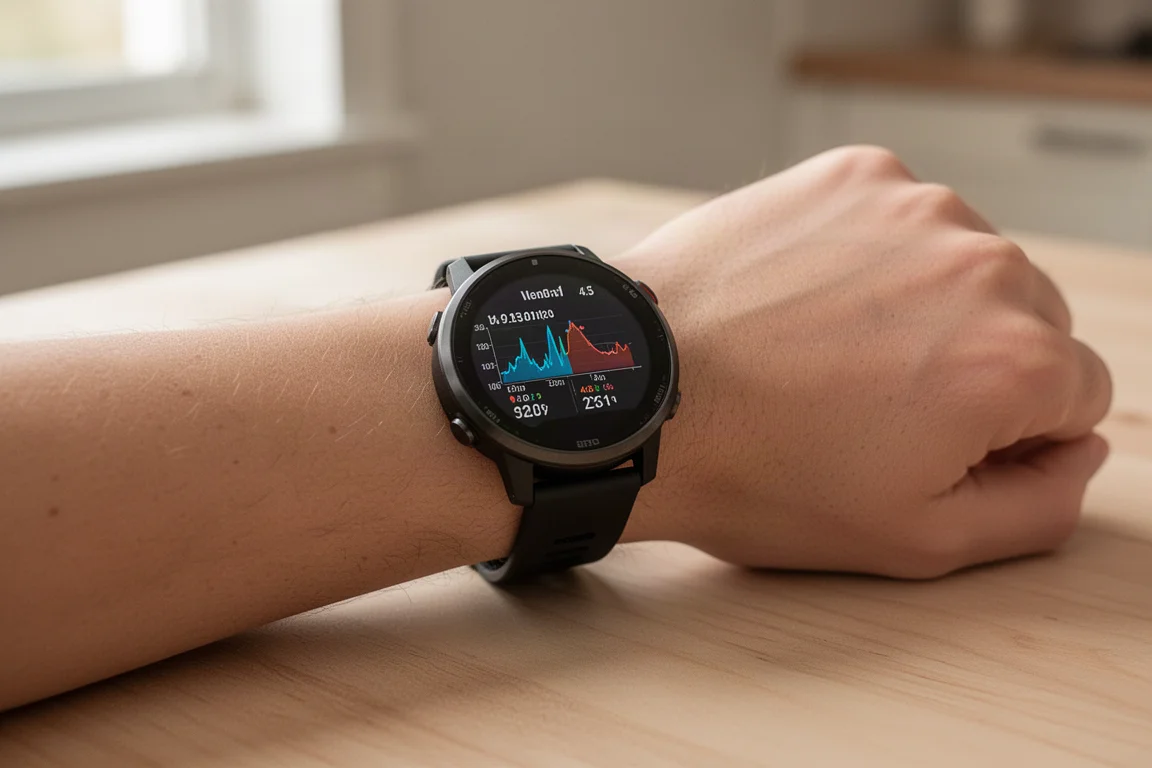
Many factors influence HRV, including alcohol, sleep, fatigue, training, and recovery, and even which side of your body you lie on can shift the readings. A single night should not be a big deal; the goal is a long-term gut check on whether you are trending in the right direction.
Every morning the watch also serves a new Morning Report, showing last night’s sleep stats, your current HRV status, upcoming workouts, and the weather. It is customizable, or you can disable it entirely, but it is a genuinely useful at-a-glance check each day.
Race Widgets and Adaptive Training Plans
The new race widgets are split into a race calendar and the race event itself. You can search existing events pulled in from Active.com or create your own, and adding a course location surfaces a lot of useful information: a countdown, an estimated finish time based on your current VO2 max and the course distance, average temperature for the start time, highs and lows, and the course profile. As race day approaches, exact forecast weather for the event appears. Note that predictive finish estimates are running-only for now; cycling events do not get them yet.
Under the hood, adding a race quietly builds out your entire training plan. Daily Suggested Workouts now phase toward your goal event with build, peak, and taper phases, and each week generates the specific workouts. You can set which day your long workout falls on, switch target type between pace and heart rate, and pause the whole plan if you would rather do your own thing.

All of this feeds directly into Training Status and training load. The watch shows your seven-day load against an optimal range, exercise load broken into anaerobic, high aerobic, and low aerobic buckets, a four-week load focus trend, recovery time until your next hard workout, and VO2 max for both running and cycling. Keep in mind that cycling VO2 max requires a power meter.
Configuration and Daily Practicality
Two smaller additions make daily use smoother. First, you can now configure every setting, data field, and data page from your phone instead of pressing buttons on the watch. Second, a new Up Ahead feature, introduced with the Fenix 7, shows waypoints you have defined in Garmin Connect on a loaded course, with distances calculated along the actual course routing rather than as the crow flies. It is especially useful on longer courses, like knowing how far it is to the next cafe stop.
Garmin Pay is also on board. Holding the upper left button opens the wallet, where you can store a card and tap any contactless NFC reader to pay. Availability depends on your bank supporting the service, not the card network itself.
Battery Life and Everyday Use
Battery life differs between the two sizes because the 46mm case is bigger. In base GPS mode the 255 reaches up to 30 hours, and in standby watch mode it runs up to 14 days. That standby figure is double what the 245 delivered, which is a huge increase. The 42mm 255S sits below those numbers, and the music editions drain faster still.

Heart rate accuracy held up well in testing: spot on across steady-state runs and indoor trainer intervals, occasionally beating a chest strap at the very start of a workout, and mostly acceptable on outdoor rides despite some wobbles on cobblestones near the city. The sprint repeats in a 20x20 second interval session were nailed perfectly.
Conclusion
For $349, the Garmin Forerunner 255 is an astounding, impressive watch. It takes everything that made the Instinct 2 series a full triathlon watch and elevates it further, adding dual-frequency GPS that the Instinct 2 lacks. If you have been holding onto a 245, this is the upgrade you have been waiting for.
Product link
View more details for Garmin Forerunner 255
This product is mentioned in the review. Check the specifications, options, and compatibility before buying.
View more details for Garmin Forerunner 255Further reading
Related Reviews
Wearables
Apple Watch Ultra 3 vs Garmin: Which Training Watch Wins for Athletes
A practical head-to-head comparison of the Apple Watch Ultra 3 and Garmin for serious training, covering GPS accuracy, data tracking, usability, and recovery metrics.
Wearables
Apple Watch vs Garmin for Running: A Year of Training Compared
After a year training for marathons with both devices, here's what actually matters when choosing a running watch.
Wearables
Apple Watch Ultra 3 vs Garmin Fenix 8 Pro: Satellite Messaging Compared
A practical comparison of satellite messaging on the Apple Watch Ultra 3 and the Garmin Fenix 8 Pro, covering connection methods, messaging workflows, coverage, and running costs.