GPS Sports Watches
Garmin Fenix 7 Pro Review: A Meaningful Refresh That Rounds Out the Lineup
A new heart rate sensor, a brighter display, a flashlight in every size, and new training metrics make the Fenix 7 Pro a solid update. Here is who should upgrade and who should grab the discounted original.
Introduction
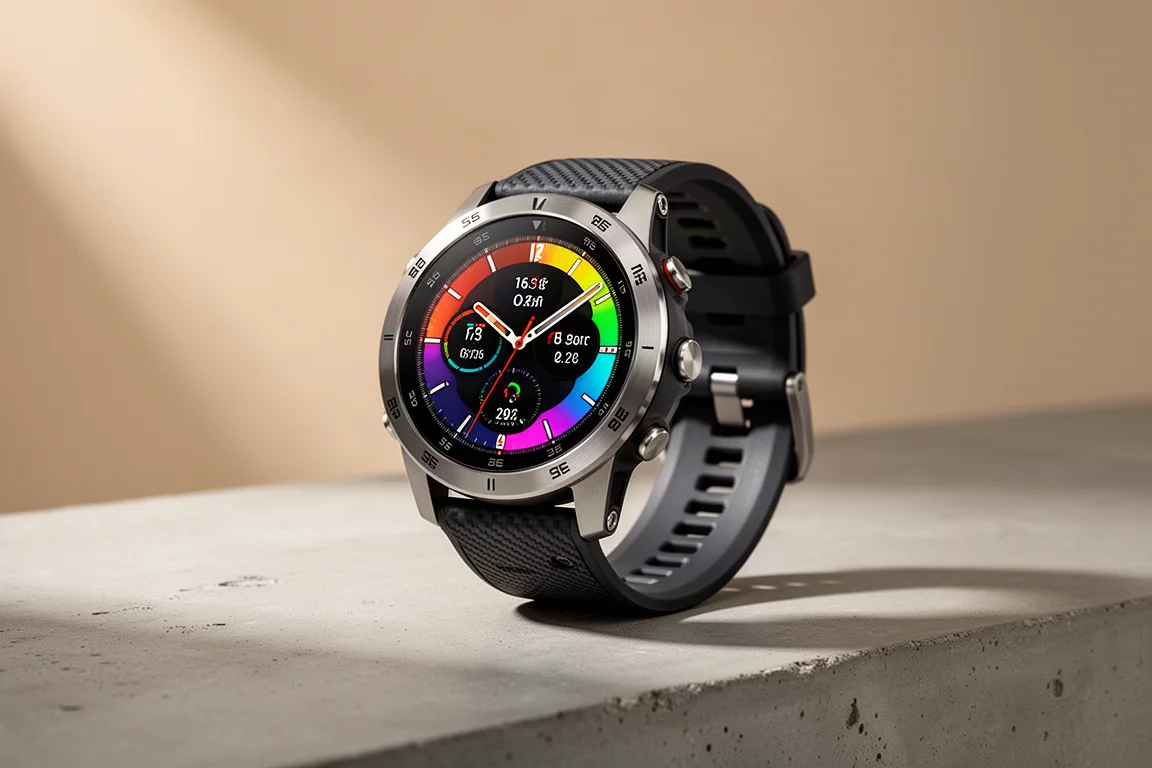
Garmin’s Fenix line has long been the benchmark for full-featured multisport watches, and the Fenix 7 Pro refresh adds a “Pro” suffix to all three sizes rather than reinventing the platform. The headline changes are a next-generation heart rate sensor, a significantly brighter display, new training feedback metrics, new map overlays, and a LED flashlight that now comes standard across the lineup. The price stays the same as the original Fenix 7 did at launch, which makes the value equation interesting, especially with the original Fenix 7 models heavily discounted.
This review focuses on what is genuinely new, how the watch performs in real-world sports, and whether existing Fenix 7 owners should upgrade.
Design, Sizes, and Display
The Fenix 7 Pro comes in the same three sizes as before: the 42mm Fenix 7S Pro, the 47mm Fenix 7 Pro, and the 51mm Fenix 7X Pro. Dimensions and weight are essentially identical to the original Fenix 7 series. There are stainless steel models with Gorilla Glass lenses and titanium models with sapphire lenses, plus one 42mm variant with a stainless steel bezel and sapphire lens. One notable change: unlike the original series, there is now no difference in satellite chipset or internal storage between case finishes. Every Fenix 7 Pro gets the multi-band satellite chipset, 32GB of storage, and solar charging.
The memory-in-pixel display has been upgraded with a much brighter backlight, higher contrast, and more vivid colors, while remaining power efficient. This also softens one drawback of sapphire lenses, which are slightly less clear than Gorilla Glass; the brighter panel compensates well. Auto brightness is new, and cleverly uses the solar panel itself as the light sensor. In practice it can leave the screen a bit dim in some conditions, so switching to manual brightness is the safer route for full output.
Pricing and Battery Life
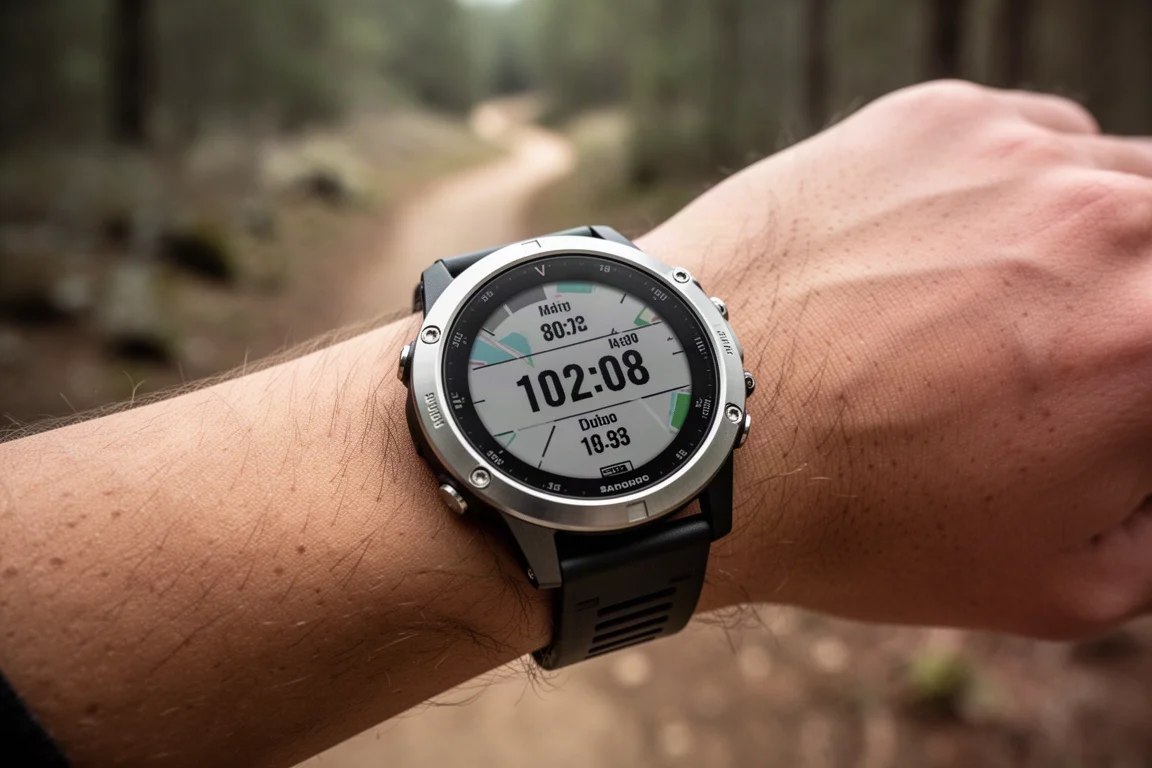
Pricing matches the original Fenix 7 launch prices: around $799 for the 47mm and 42mm stainless steel models, around $899 for the titanium sapphire versions, and around $899 (stainless) or $999 (sapphire titanium) for the 51mm Fenix 7X Pro. Battery life is essentially unchanged from the original Fenix 7. In a real-world test recording outdoor activities with stock settings, auto brightness, wrist-based heart rate, and multi-band satellite mode locked on, a sunny hike landed right on the claimed battery figures, if not slightly better. The Pro models also now ship with a USB-C charging cable instead of the older USB type-A plug.
The LED Flashlight, Now in Every Size
The dedicated LED flashlight was previously exclusive to the larger 51mm Fenix 7X, and it is arguably one of the most useful features Garmin has added to a watch in years. Now all three sizes include it, and it has been improved. Where the original Fenix 7X used a tinted lens to keep the flashlight subtle, the Pro models use a clear lens, making the beam slightly brighter. The LEDs are arranged closer together, likely to fit the smaller cases, while the 7X Pro retains a wider lens for a wider beam.
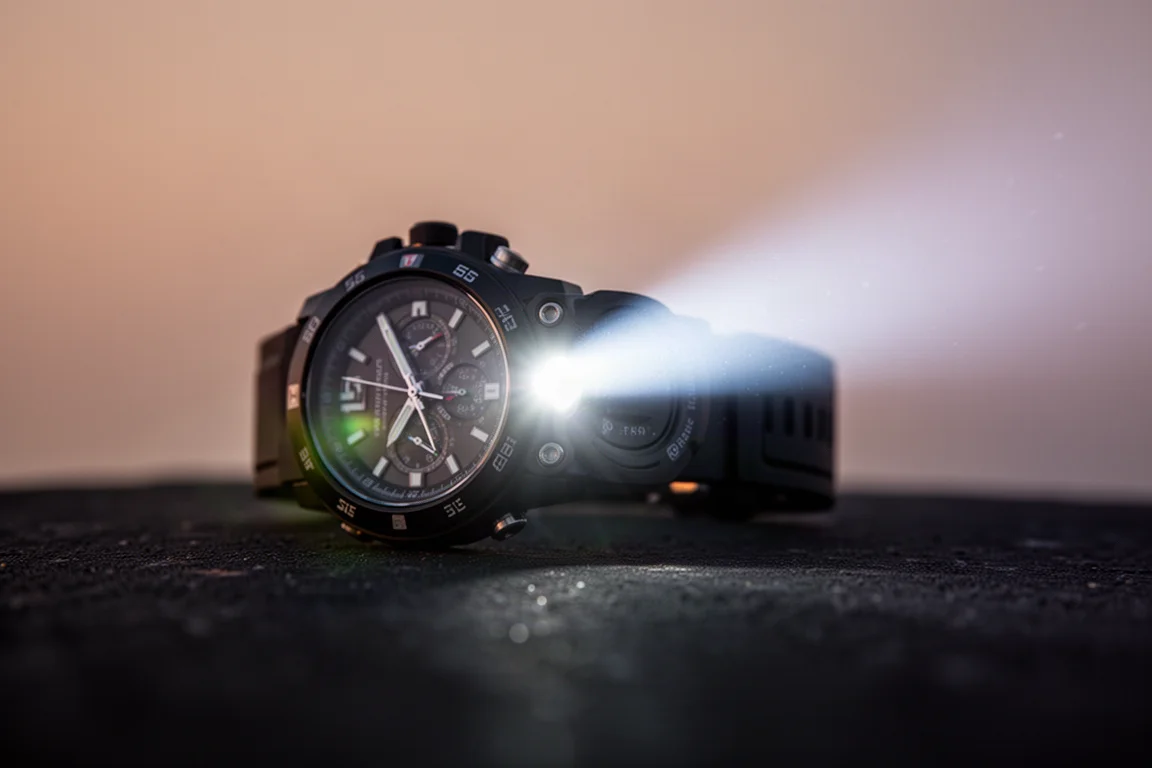
A double press of the upper left button brings up the flashlight, where you can adjust brightness, switch to a red night mode, and choose from several strobe patterns including blitz, beacon, pulse, blink, and a custom mode. There is even a cadence-matched strobe option during running activities, which is genuinely handy for late-night or early-morning runs.
New Map Overlays and Layouts
The map page gains shaded relief overlays that make steep terrain easier to spot at a glance, complementing the existing contour lines. These can be disabled if you prefer a cleaner look. New layouts are also on board: a split-screen mode with three data fields beside the map, and a perimeter layout that surrounds the map with up to six data fields, ideal for data-hungry athletes.

Weather map overlays are the standout addition. From the weather widget, you can display precipitation, cloud cover, temperature, and wind directly on a map, with directional arrows for wind and color-coded temperatures. Two caveats: the labels could be larger, and the overlays are currently only available through the weather widget rather than on the map page during an activity. Garmin has apparently acknowledged the limitation, which may come down to the processing demands of rendering changing data over a rotating map.
A related quality-of-life change: long-pressing the lower right button now opens a recent apps menu instead of jumping straight back to the watch face. It is a small change that makes jumping between the weather widget and an active workout much faster, and the old behavior can still be assigned as a hotkey.
Training Feedback: Endurance Score and Hill Score
Endurance score is a new metric assessing your ability to sustain effort over long periods, weaving together VO2 max, training load, and training history. Unlike VO2 max, it works for any athlete recording heart rate, whether that is hiking, kayaking, weight training, or skiing. Longer activities raise the score, but consistent higher-load training can maintain it too, so you do not need to grind out seven-hour rides. Performance matters as well: a long hike done on a rough day can actually lower the score. There is no hard ceiling, though an elite triathlete might sit around the 11,000 to 12,000 range. New users need a couple of weeks to build a baseline; existing Garmin users get a score from the last 28 days of training.
Hill score rates your climbing ability for running, trail running, and hiking on a 0 to 100 scale with classifications from recreational to elite. It breaks down into hill endurance (longer-term aerobic ability) and hill strength (high aerobic and anaerobic efforts on steep terrain). It considers time spent climbing, grade, total elevation gain, and exertion, but not descending and not running power. In testing, a 3.5-mile hike with 1,790 feet of elevation gain moved a starting hill score of 41 up to 45. Note that both scores update only after you save an activity, not in real time.
Beyond metrics, the Fenix 7 Pro adds more than 30 new sport profiles with a strong emphasis on team sports, contact sports like boxing and MMA, and racket sports, on top of the already extensive existing list. Importantly, all of these software features are being back-ported to the original Fenix 7 via software update.
GPS and Heart Rate Accuracy
GPS accuracy is excellent. With multi-band satellite reception and the auto-select SatIQ mode, which dynamically switches between satellite modes based on signal quality, the Fenix 7 Pro tracked flawlessly across dozens of test activities: rock-solid tracks in the open, crisp corners and switchbacks, reliable performance under heavy tree cover, and accurate elevation gain.
The new fifth-generation heart rate sensor is the bigger story. It triples the number of LEDs, uses a larger sampling area, sits slightly deeper against the skin thanks to a marginally taller sensor, and adds metallic contact points around the module. In practice it uses two middle sensors for everyday wear and fires up the outer LEDs during workouts for higher accuracy.

Real-world testing was encouraging. On an indoor ride with intervals and steady-state sections, the readings tracked closely with a chest strap and an optical armband. On a trail run, accuracy was very solid with only a brief dip of a few beats per minute. Road biking, a classic challenge for wrist-based sensors thanks to handlebar grip and road vibration, went well, with only a slow initial pickup and occasional small blips. Mountain biking, one of the hardest activities for optical sensors, showed the first real hiccups: strong accuracy while climbing, less consistency on descents, though it recovered quickly. Weight training revealed the sensor’s limits, with under-reading during shoulder flies and dropouts during battle ropes, though other intervals tracked well.
Who Should Buy It, and Who Should Not
The Fenix 7 Pro is a well-rounded update: a genuinely better heart rate sensor, a much brighter display, a flashlight in every size, and a set of new software features that older models will also receive. There is no longer any feature gap between the three sizes beyond battery life, so smaller-wristed buyers get everything.
The counterpoint is the original Fenix 7, which has been heavily discounted, often more than $200 off. If you mostly do endurance or cardio activities, or you rely on an external heart rate strap anyway, the older sensor may serve you fine, and the discounted original is a compelling deal for a premium, fully capable sports watch with full mapping and solar charging. The Pro models make the most sense if you prefer the smaller 42mm or 47mm sizes and really want that flashlight, or if you do mixed training like gym work and mountain biking where the new sensor’s accuracy gains matter.
Conclusion
The Fenix 7 Pro is less a revolution and more a thoughtful completion of the Fenix formula. The improved heart rate sensor, brighter display, and flashlight in all sizes close the gaps that used to separate the lineup, and the new training metrics add genuine insight for anyone training consistently. Whether you buy the Pro or the discounted original depends largely on how much you value the new sensor and the flashlight, but either way, Garmin’s flagship line is in excellent shape.
Product link
View more details for Garmin Fenix 7 Pro
This product is mentioned in the review. Check the specifications, options, and compatibility before buying.
View more details for Garmin Fenix 7 ProFurther reading
Related Reviews
GPS Sports Watches
Polar Grit X2 Pro vs Vantage V3 vs COROS Vertix 2S: Which Flagship Adventure Watch Makes Sense
Polar's new flagship shares its internals with the Vantage V3 and goes up against the COROS Vertix 2S. Here is what two months of testing revealed about GPS, heart rate, navigation, and value.
GPS Sports Watches
Coros Apex 2 vs Garmin: Six GPS Sports Watches Worth Comparing
A practical look at the Coros Apex 2, Apex 2 Pro, Vertex 2, and three Garmin rivals, with what each does well and where the trade-offs sit.
GPS Sports Watches
Coros Apex 4 Hands-On: Titanium Build, Faster Mapping, and a Battery Built for the Mountains
A first look at the new Coros Apex 4 GPS sports watch, including its titanium construction, improved mapping, built-in speaker, and standout battery life.