Wearables
Garmin Epix Pro Series Review: Smaller Sizes, a Flashlight, and Serious Battery Life
The Epix Pro Series adds 42mm and 51mm case sizes, a built-in flashlight, multi-band GPS on every model, and noticeably better battery life across the range.
Introduction
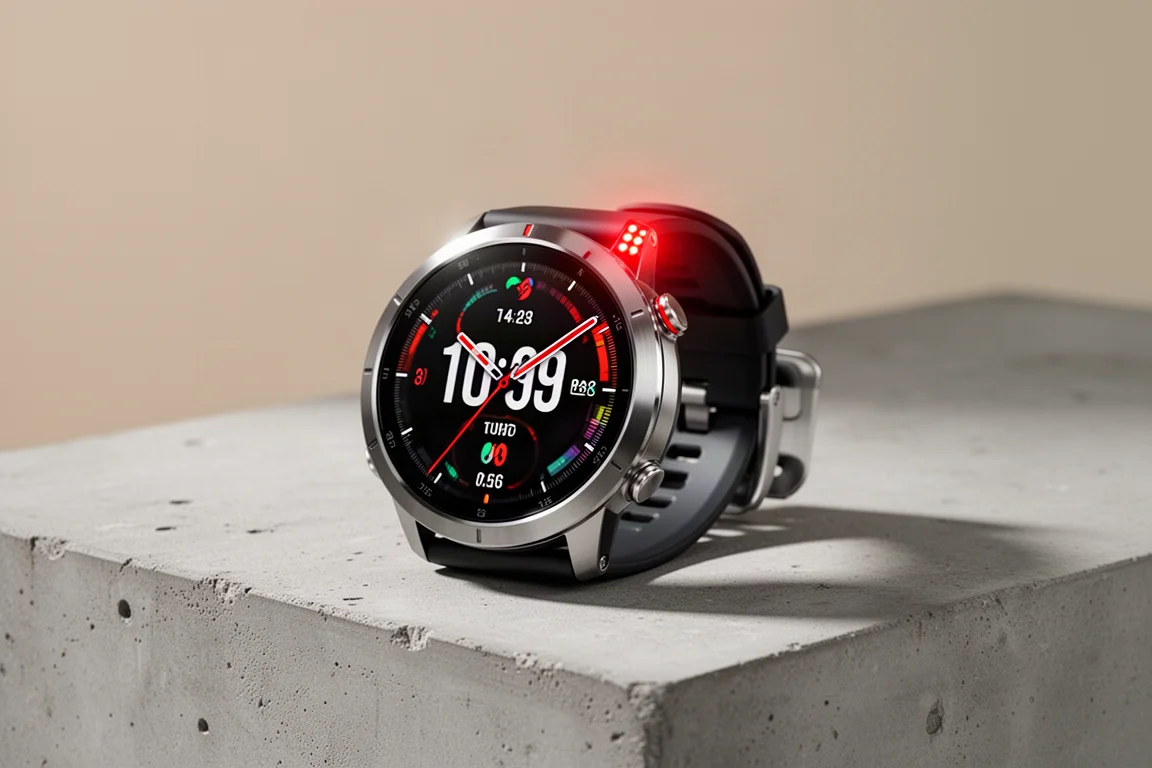
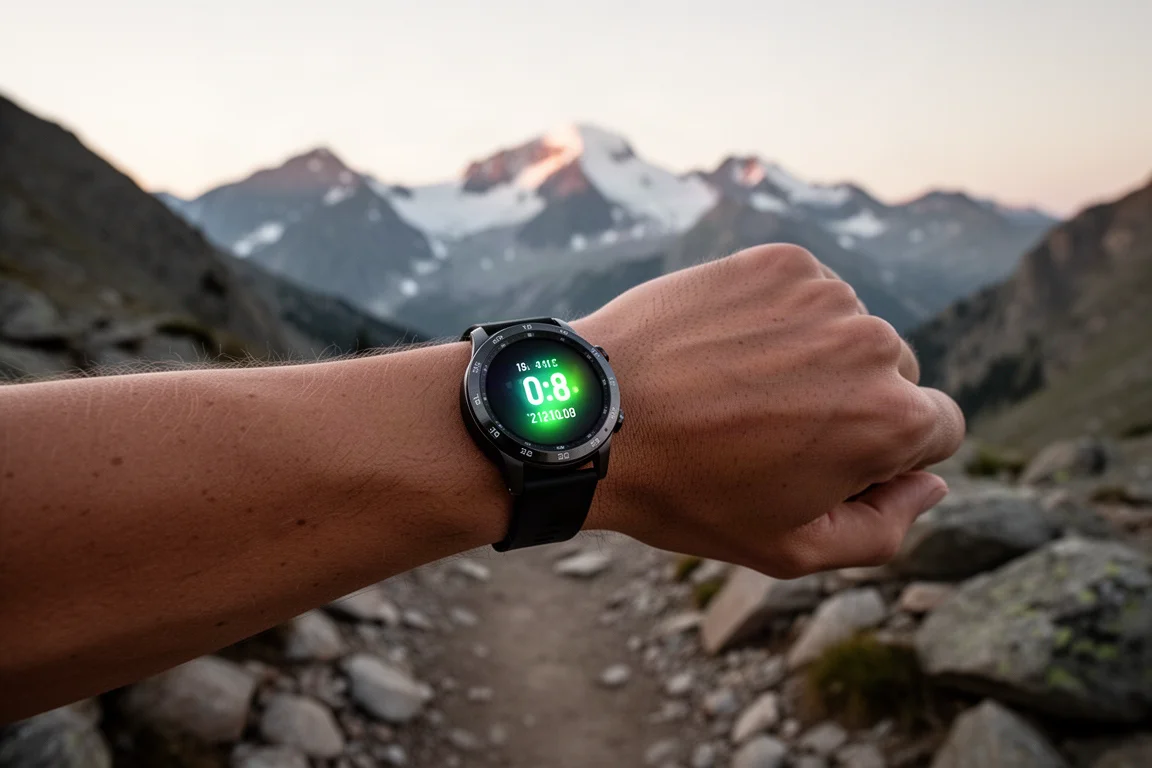
Nearly a year and a half after the original Epix arrived, the Epix Pro Series is here, and it brings more than a minor refresh. There are now three case sizes to choose from, plus a built-in flashlight, new hardware and sensors inside, and a whole slate of new software features. The watch has been put through extended real-world testing over recent months, including trail running from sea level to the top of an 8,000-foot snow-capped mountain in one go, an Ironman 70.3 race, and a full-day coastal hike-and-trail-run outing.
Three Sizes, Same Display Philosophy
The biggest structural change is that the Epix Pro Series now comes in three sizes: 42mm, 47mm, and 51mm. Those are the exact same sizes as the Fenix 7 Series, carried over into the Epix line. Compared to the Fenix 7 Series, which uses a MIP-based display that tends to offer longer battery life, the Epix Pro series uses an AMOLED display that is notably brighter and more brilliant.
On pricing, the simple answer is that nothing changed: the Epix Pro Series matches the same prices as the original Epix series. The base edition is $899 and the Sapphire edition is $999. The only differences between those two levels are that the Sapphire edition has sapphire glass and preloaded maps, but maps are free to download on all the watches. Unlike in the past, all editions now have 32GB of storage and multi-band GPS.
The Built-In Flashlight
The headline new hardware feature is the flashlight, previously seen on the Fenix 7X series and the Instinct 2X, and now finally on the Epix line. A double tap on the top button turns it on, and the flashlight configuration can be changed in the menu, including two of four levels of white light or a red light mode.
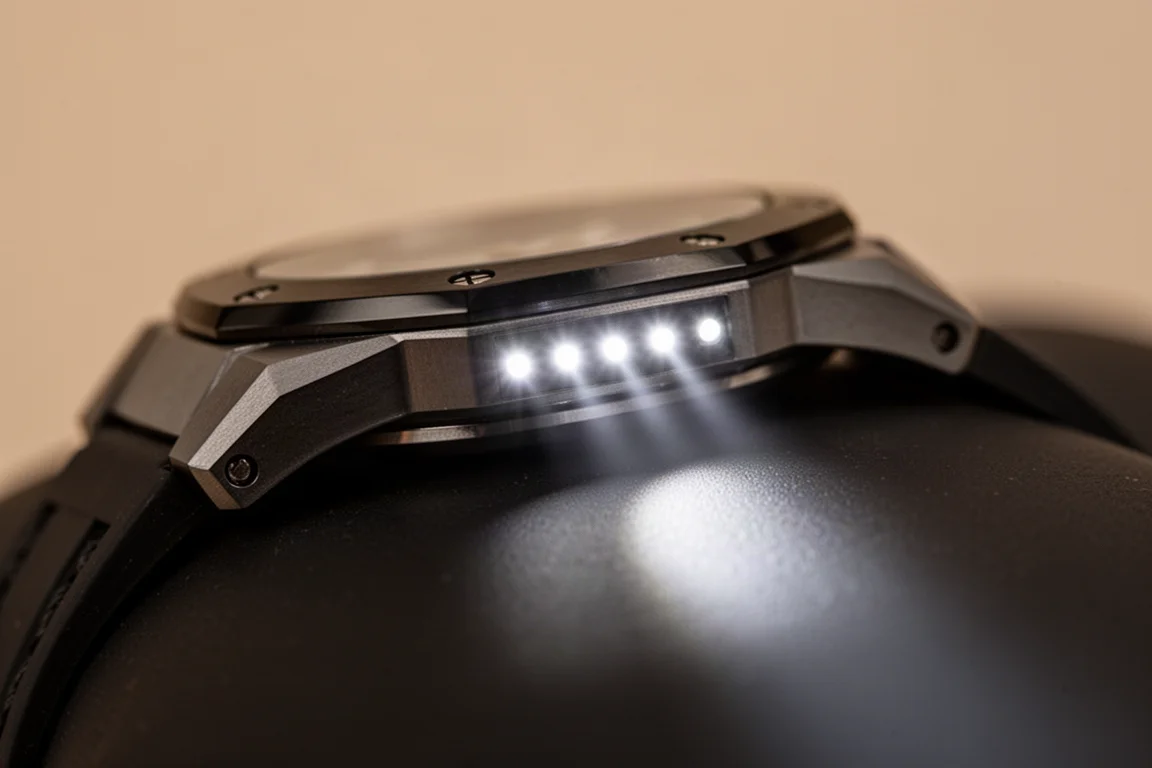
The flashlight has a couple of purposes. The obvious one is finding things in a dark tent or navigating a dark hotel room in the middle of the night, where a double tap makes it instantly available. It can also match your running cadence to act as a strobe light, so people, bikes, or vehicles can see you while you run. From a brightness standpoint, it is on par with a phone flashlight, with slightly different beam angles. Red light mode is plenty bright in the middle of the night, though white mode is available if you want it. It sounds silly, but it is the kind of feature everyone who has used it tends to love.
New Heart Rate Sensor and ECG Hardware
On the back, there is a new optical heart rate sensor: Garmin’s Elevate Gen 5 biosensor. The LEDs have been spaced out more, including a red LED used for SpO2 sensing, or what Garmin calls Pulse Ox. According to Garmin, spacing out the LEDs improves accuracy on certain types of movement, particularly wrist-based movements such as weightlifting where you may be bending your wrist. Outside light is generally the arch nemesis of optical heart rate sensors, and the goal is to handle wrist flexion and light leakage better.
In testing against a chest strap, this produced the best optical heart rate results seen on a Garmin watch to date, even on hard interval sessions with only slight latency on the first couple of intervals.
As for ECG, something Garmin rolled out on the Venu 2 Plus series, the answer is circuitous. Garmin legally cannot comment on devices that are not yet certified. However, there are obvious signs this hardware will support it: you can clearly see the ECG isolation ring on the inside of the optical sensor, which Garmin only puts on ECG-capable hardware. When asked directly, Garmin said only that it is “not capable of ECG today,” rather than stating the hardware is absent, as they did on other watches. Whether ECG actually arrives could take weeks, months, or possibly never if certification does not come through for this unit.
Battery Life That Holds Up
Battery life shows a big shift, particularly on the larger edition. In testing with the always-on display enabled full time, the middle-sized unit delivered a very consistent five to six days with roughly one to two hours of GPS use per day. The real kicker is the 51mm edition, which reached about 11 days in the always-on configuration with real-world GPS usage and navigation, losing roughly one day of battery per day of use.

Those numbers are remarkable for an AMOLED display, and they actually hold water. The reason the 51mm unit can do this is that it carries an Enduro 2 battery inside. Because AMOLED display technology is thinner than the MIP-based display on the Fenix series, there is more space inside the case, and Garmin used that space to put a bigger battery in.
During workouts, the battery math stayed consistent: on a six-and-a-half-hour hike, the burn rate was roughly 50 hours with full navigation and all sensors connected, and an Ironman race trended toward about 45 hours for both tested units.
Multi-Band GPS and Accuracy
Every model and edition of the Epix Pro now includes multi-band, dual-frequency GPS, versus previously only the Sapphire edition. Multi-band GPS is considered the gold standard for GPS accuracy, producing very good tracks even under a rock overhang with more than half the sky blocked.
Across testing, accuracy was consistently strong. GPS tracks were spot on against reference tracks, including complex training routes, trail runs in the woods, and an Ironman race where it even outperformed an Edge 840 bike computer in one small section. The swim track looked crisp, elevation plots were spot on, and heart rate from the bike was acceptable despite bumpy roads, rain, and descending, while a gravel ride delivered exceptionally good heart rate across the board.
New Metrics: Endurance Score and Hill Score
Two new training metrics arrive with this generation. Endurance Score, viewable on the watch and in Garmin Connect, aims to better account for endurance activities that are not just running and cycling, blending VO2 max, activity intensity, and duration, with duration mattering more than pure intensity. Garmin says a pro-level Ironman athlete might sit near the 12,000 range at the top end.
Hill Score breaks into two categories: Hill Endurance, about sustained efforts over long periods, and Hill Strength, about how fast you go up a section of hill. In practice, the scoring showed quirks. A single 8,000-foot mountain run produced a score in the elite category that later dropped without further big climbs, and Endurance Score sometimes incremented oddly, barely moving after a couple-hour ride while jumping substantially after an easy short swim. It is also worth noting that Hill Score applies only to running, trail, and hiking activities, not cycling. The concept is appealing, but the jury is still out on both metrics.
Maps, Weather, and Sport Profiles
Several feature additions round out the update. The weather widget now shows live weather radar maps on the watch, including precipitation, temperature, wind, and clouds. The catch is that it lives only in the weather widget, and does not display while navigating or following a route, which seems like a miss since that is when weather overlays matter most.
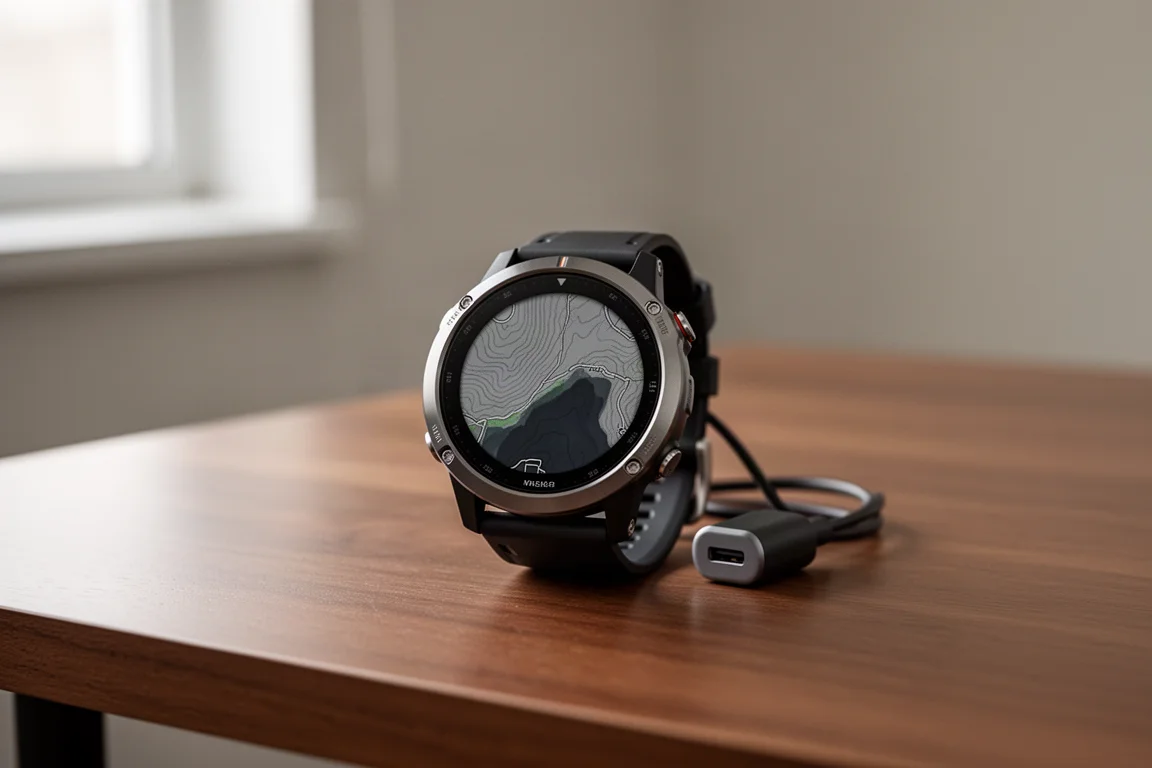
All maps now include shaded relief, downloaded automatically and on by default. Garmin also added 30 new activity profiles. Up until now, Garmin mostly only added sport profiles when it had data behind them, so these new ones are largely for categorization; Garmin will look at actual usage to decide which ones get full data metrics built out.
There are also new data page layouts: a split map page showing data on one side and the map on the other, and a perimeter layout with the map in the middle and data around the outside edge. Every watch has 32GB of storage, enough for plenty of regional maps at roughly 8 to 12GB per region, downloadable over Wi-Fi directly to the watch or faster via a computer.
Charging, Storage, and Software Feel
Charging is drastically faster. On the previous Epix and Fenix 7 Series, going from zero to 90 percent took about 1 hour 45 minutes. Now it is spot on an hour to 90 percent, with the last 10 percent trickling in over roughly half an hour. If you are really low, five minutes gets you 10 percent of battery life, enough for a couple-hour workout.
On the software side, a long hold on the lower right button brings up a recents menu accessible from anywhere on the watch. However, the interface does not adopt the newer UI found on the Garmin 965, with Garmin saying they wanted to maintain a more pro look. Coming from a 965, it does feel dated, no two ways about it.
Should You Upgrade?
If you are coming from an existing Epix series watch, it is probably not worth the upgrade unless you really want the flashlight or one of the alternate sizes, particularly since a lot of people wanted an Epix but did not want the middle size, and now both smaller and larger options exist. From an accuracy standpoint, the multi-band GPS continues to be industry leading, the heart rate sensor is very solid, and the battery life is genuinely impressive. The main complaints are around quirks with Hill Score and Endurance Score, features many buyers may not care much about anyway.
Existing Fenix or Epix owners wondering about these new features: the answer is yes, mostly yes. Garmin says the existing units should remain more or less clumped together from a feature standpoint, with hardware elements like the flashlight obviously excluded, as long as the hardware permits.
Conclusion
The Epix Pro Series is a thoughtful refresh rather than a revolution. Three sizes make the line accessible to far more wrists, the flashlight is the kind of feature that quietly becomes indispensable, the new heart rate sensor delivers the best optical results yet from this watch family, and the battery life, especially on the 51mm model, is remarkable for an AMOLED sports watch. If the original Epix was already on your shortlist, this is the version to buy.
Product link
View more details for Garmin Epix Pro Series
This product is mentioned in the review. Check the specifications, options, and compatibility before buying.
View more details for Garmin Epix Pro SeriesFurther reading
Related Reviews
Wearables
Apple Watch Ultra 3 vs Garmin: Which Training Watch Wins for Athletes
A practical head-to-head comparison of the Apple Watch Ultra 3 and Garmin for serious training, covering GPS accuracy, data tracking, usability, and recovery metrics.
Wearables
Apple Watch vs Garmin for Running: A Year of Training Compared
After a year training for marathons with both devices, here's what actually matters when choosing a running watch.
Wearables
Apple Watch Ultra 3 vs Garmin Fenix 8 Pro: Satellite Messaging Compared
A practical comparison of satellite messaging on the Apple Watch Ultra 3 and the Garmin Fenix 8 Pro, covering connection methods, messaging workflows, coverage, and running costs.