GPS Sports Watches
Garmin Enduro 3 vs Fenix 8 vs Enduro 2: Which Endurance Watch Makes Sense?
Early impressions of Garmin's new Enduro 3, compared side by side with the Fenix 8 and the older Enduro 2 on battery, design, and accuracy.
Introduction
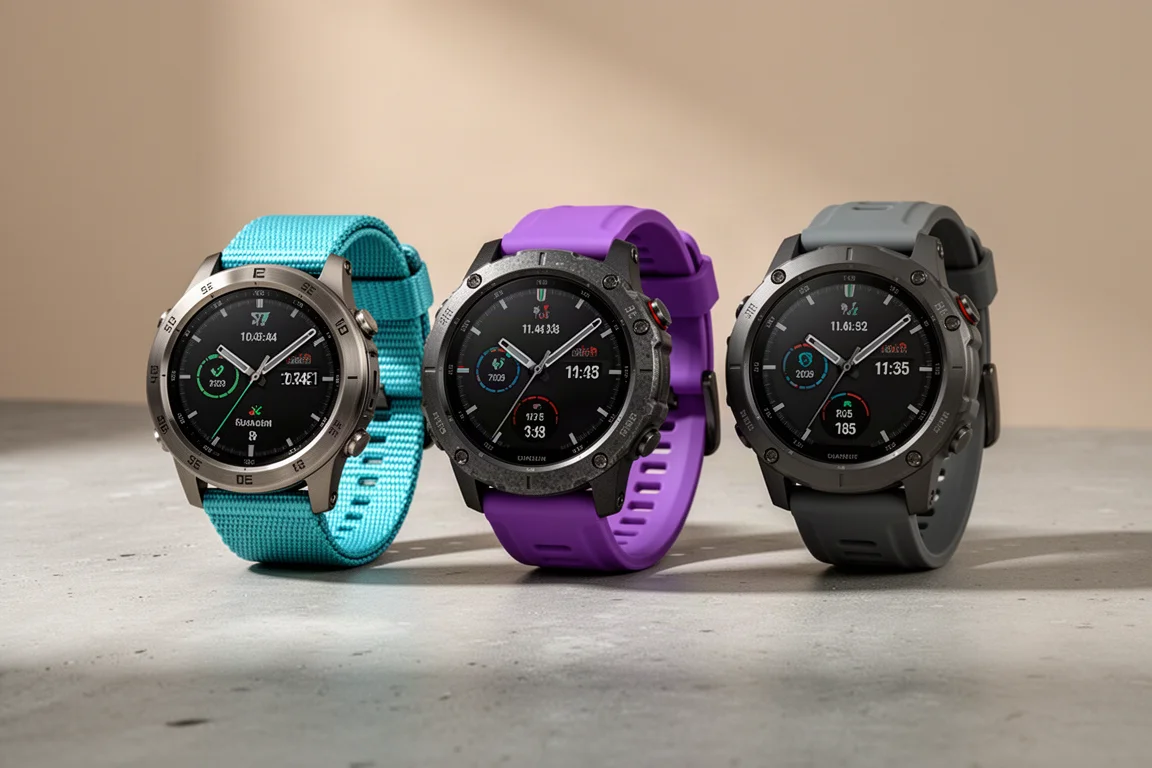
Garmin’s Enduro line has always been about one thing above everything else: staying power. The Enduro 2 earned a loyal following among ultra runners largely because it could go roughly a month between charges, while still packing a full set of training, performance, and navigation features.
The new Enduro 3 takes that formula and pushes it further, promising double the solar power and dramatically longer GPS battery life. This is not a full verdict yet, since extended real-world testing is still ongoing, but a week of early use alongside the Fenix 8 and Enduro 2 already reveals where each of these watches fits best.
What the Enduro 3 Gets for Its Feature Set
Like the Enduro 2 before it, the Enduro 3 is a fully loaded trainer. You get training load, training effect, VO2 max race prediction, a new Trail VO2 max, Gar-adjusted style adaptive pacing, Morning Report, sleep and nap tracking, HRV recovery, and more. On the smartwatch side there are notifications, contactless payments, find my phone, offline music from Spotify and Deezer, and messaging with fellow users through the Garmin messenger app.
Navigation has also picked up a genuinely useful upgrade. Alongside Topo Active Maps and next-fork map guides, there is now Dynamic Round Trip Routing. You set a target distance and the watch generates route options, then recalculates on the fly if you stray off course so you still hit your distance. It takes a little while to recompute rather than adjusting instantly, so it suits explorers rather than anyone racing the clock, but in early use it worked well.
Garmin Enduro 3: Design and Display
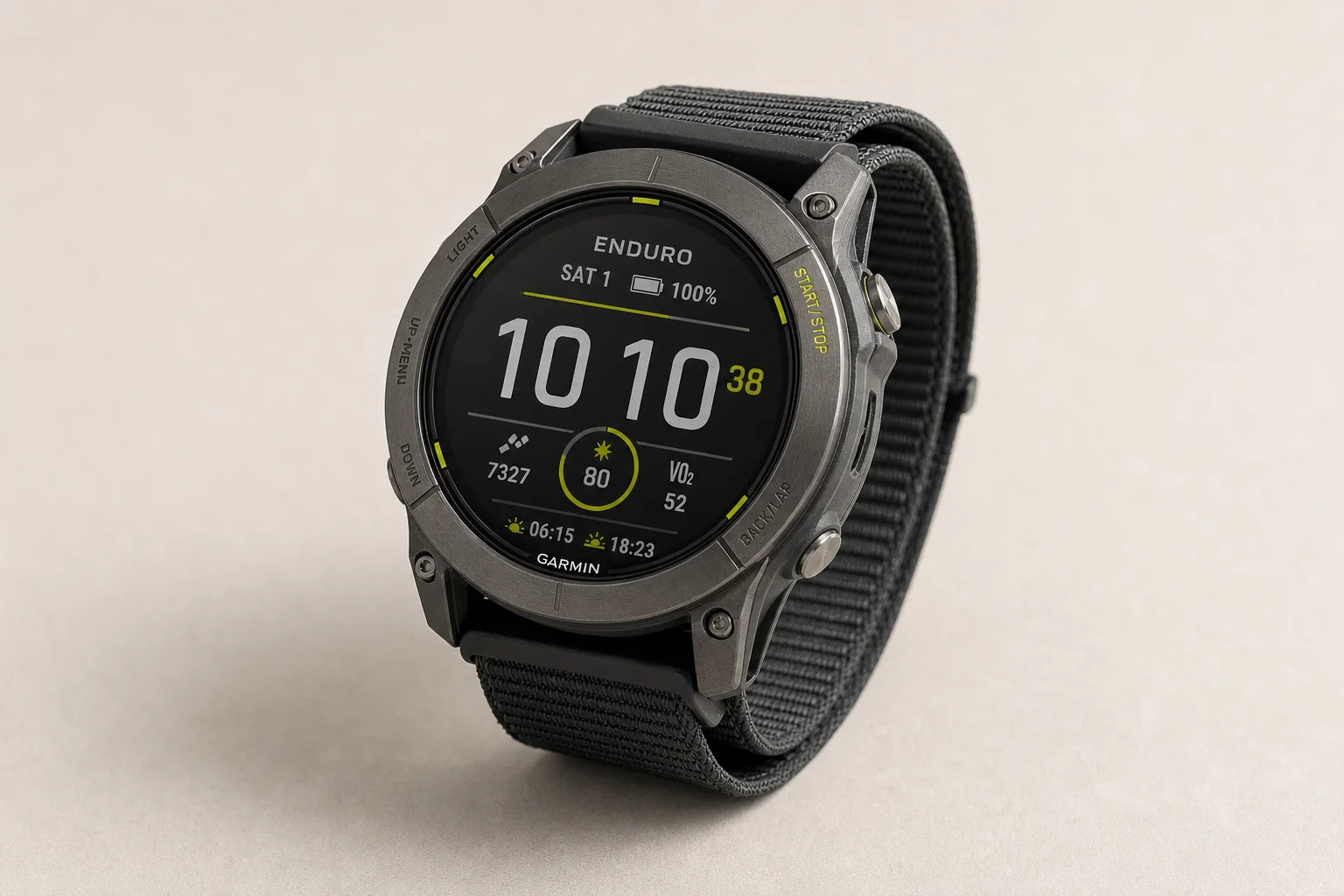
The Enduro 3 keeps the 51 mm titanium case, scratch-resistant sapphire lens, and the comfortable UltraFit nylon bands. It is about 7 g lighter than before, partly because the metallic rear casing has been swapped for a plastic back. The bezel is noticeably slimmer than on both the Enduro 2 and the Fenix 8, giving the watch a cleaner, more minimal look than the big, rugged Fenix frame.
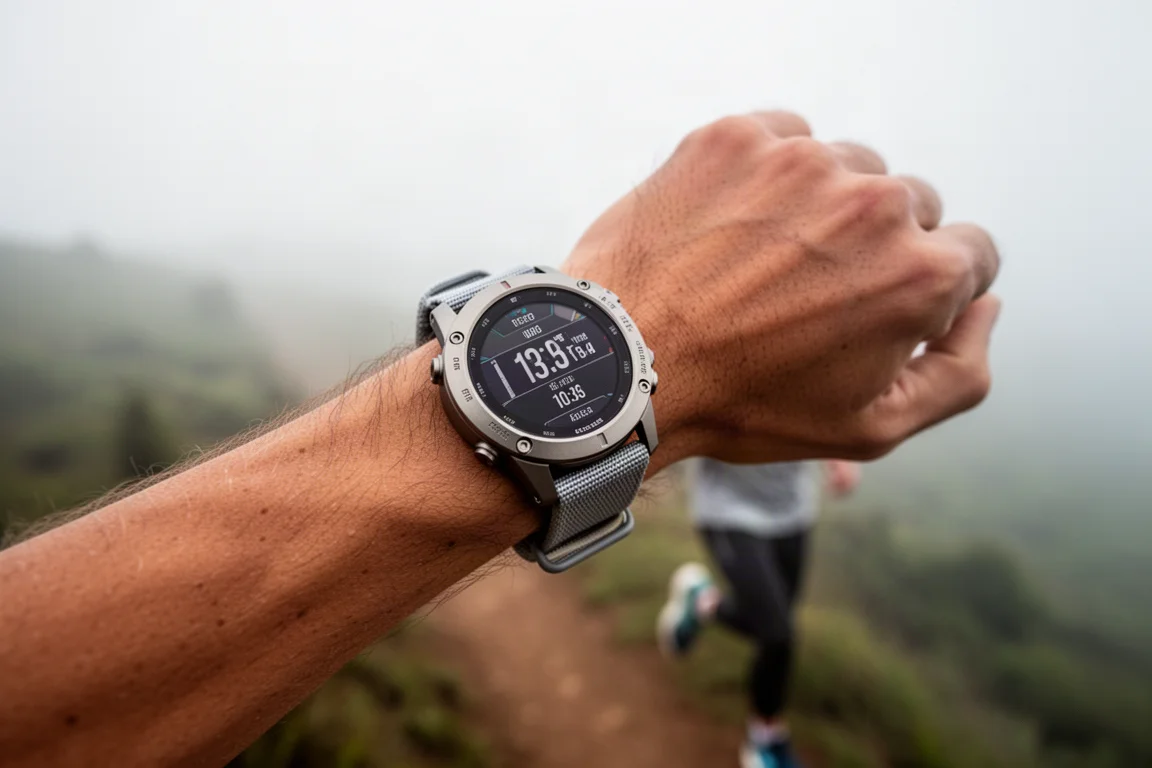
The display is the quiet highlight. Solar panels now sit entirely around the edge of the screen rather than over it, which opens up more usable screen area and removes the reddish tint baked into earlier Enduro displays. It reads clearly in all conditions we have thrown at it so far, even if it lacks the punch of an AMOLED panel.
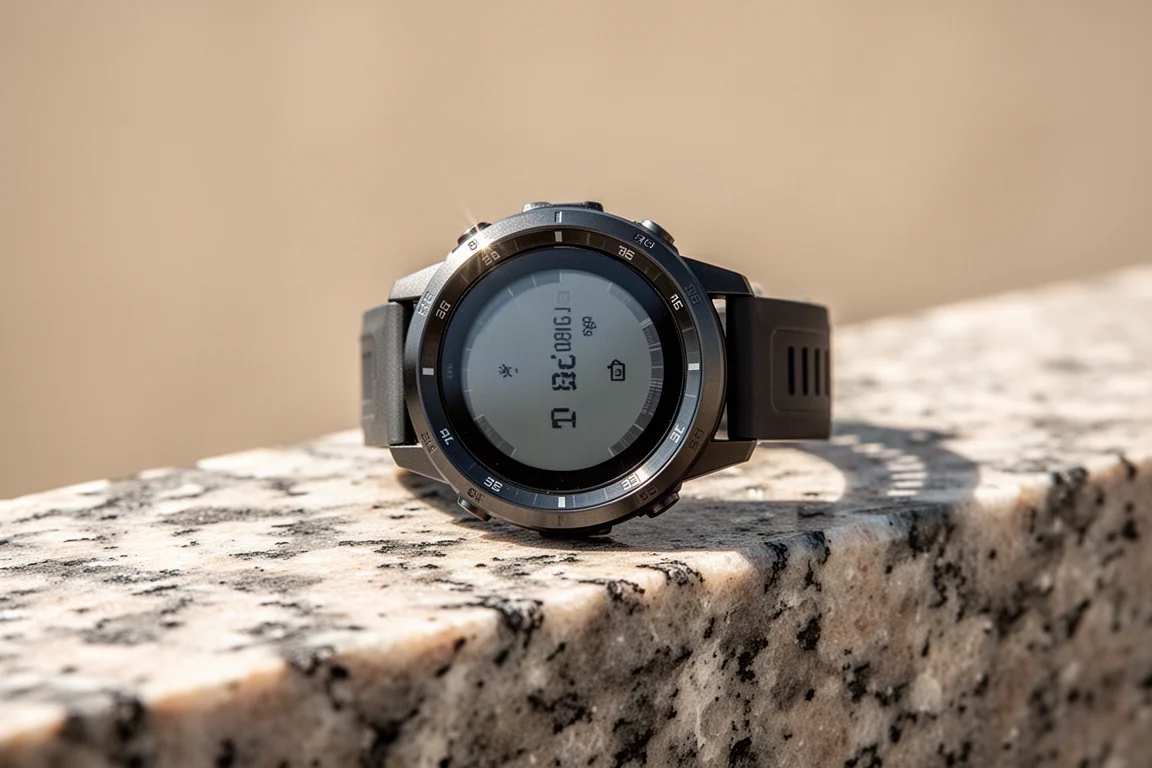
Buttons feel slightly stiffer than on the Fenix 8, which you would only really notice when comparing them directly, and the touchscreen is snappy with no lag. One interface change to note: the top right button now opens a general tools screen with activities at the top, so reaching your run takes an extra click, while shortcuts to maps, music, and phones are easier to reach. The flashlight stays, and it can now be controlled from the display.
Battery Life: The Big Reason to Buy
On paper, the Enduro 3 has the best battery numbers in the business. Garmin claims 320 hours in GPS mode, more than double the Enduro 2, up to 120 days of multiband GPS life, and up to 90 days of regular smartwatch use in the right conditions, thanks to a larger, more efficient solar lens.
Early testing backs the direction if not quite the headline figures. A two-hour, 20-minute run in top-accuracy GPS mode drained 2.31% per hour, which projects to around 43 hours of multiband tracking: very good, though short of the listed numbers. A 90-minute run in normal mode burned 3% versus 4% on the Enduro 2. Overnight drain sat around 1%, and general daily use has been extremely light so far. Solar gain in cloudy testing weather has been modest, so sunnier climates should see a real uptick.
One honest counterpoint: side by side with the Fenix 8 AMOLED, the gap in drain is smaller than you might expect. The Fenix 8’s battery is better than its reputation suggests. The Enduro 3 is still clearly the longevity champion of Garmin’s current range, but the Fenix 8 is not far behind in day-to-day use.
GPS Accuracy on the Trail
Across four runs, GPS has been very accurate in both multiband and auto-select modes, tracking closely against the Fenix 8 and a Forerunner 965. Trail running in the hills and under tree cover produced routes that matched the comparison watches well.

One shared weakness is the familiar one for optical GPS: city underpasses. During a tunnel section, every watch on test, including the Fenix 8, produced wandering tracks, though the Enduro 3 coped marginally better than the Fenix 8. Overall, no accuracy concerns so far.
Heart Rate: Mixed but Expected
Optical heart rate held up well on easy paces and long runs, generally tracking a chest strap closely with occasional random spikes. During a short hill session with rapid 30-second spikes, however, it missed the sharp changes almost entirely compared with a chest strap, lagging both rising and falling effort. On a steady run it usually caught up within moments, though a hard climb showed a gap of around nine beats per minute at peak effort.
That is broadly consistent with what optical sensors tend to do on a large watch worn on a smaller wrist, especially during intervals. If precise interval heart rate matters to you, a chest strap remains the safer pairing.
View more details for Garmin Enduro 3
Fenix 8: What You Give Up by Not Choosing It
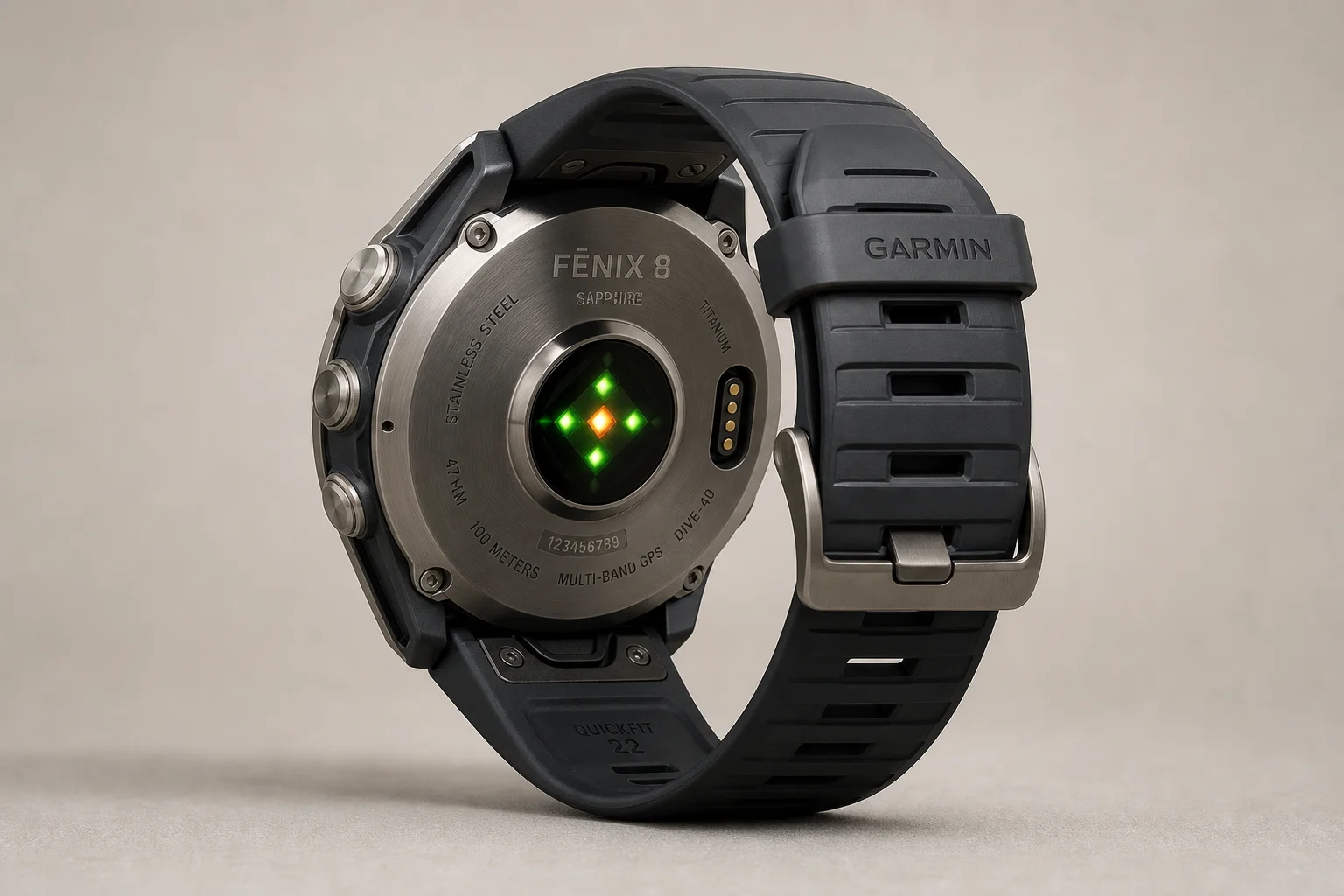
The Fenix 8 is the richer smartwatch. It brings a brighter AMOLED option, a speaker and microphone for calls, phone-free voice commands, and geotagged voice notes. It also adds dive-friendly features that the Enduro line skips. Its battery is genuinely better than expected, and in side-by-side runs it did not drain dramatically more than the Enduro 3.
The trade-off is weight and focus. The Enduro 3 is noticeably lighter on the wrist for the same 51 mm size, easier to wear around the clock, and cheaper. If you care about calls, voice commands, and screen vibrancy, the Fenix 8 justifies itself. If you mostly want performance, battery, and comfort, those extras may simply be dead weight.
Should You Buy the Fenix 8 or the Enduro 2 Instead?
The Enduro 3 is an evolution rather than a revolution. Compared with the Enduro 2, the core experience is similar, with a clearer screen, a lighter build, and a meaningful battery uptick. Garmin has also priced it below the Fenix 8, at $899.99 in the US and £769.99 in the UK, which makes the flagship endurance option a little less exclusive than it used to be.
But the Enduro 2 remains a compelling route. Its experience is close to the Enduro 3’s, it charges roughly once a month, and if you can find it at a good discount, it is probably the smarter buy for value-focused runners. Choose the Enduro 3 only if the longer battery claims, lighter build, and clearer screen are worth the premium to you.
Conclusion
Early signs suggest the Enduro 3 is a solid, well-judged update: lighter, cleaner, with a better screen and a battery that should comfortably outlast everything else in Garmin’s lineup. The Fenix 8 remains the pick if you want the full smartwatch experience with calls and voice commands, while the Enduro 2 is the value play if you can catch it on sale. Full testing continues, but the direction is clearly positive.
Further reading
Related Reviews
GPS Sports Watches
Polar Grit X2 Pro vs Vantage V3 vs COROS Vertix 2S: Which Flagship Adventure Watch Makes Sense
Polar's new flagship shares its internals with the Vantage V3 and goes up against the COROS Vertix 2S. Here is what two months of testing revealed about GPS, heart rate, navigation, and value.
GPS Sports Watches
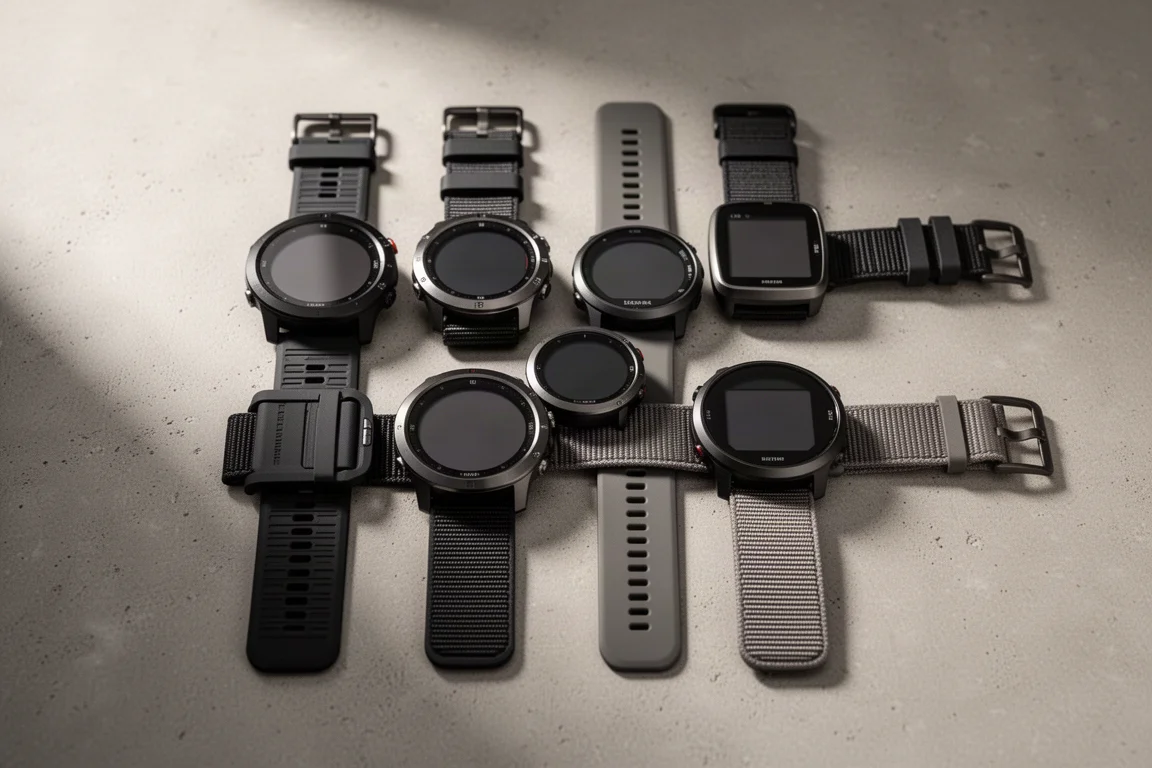
Coros Apex 2 vs Garmin: Six GPS Sports Watches Worth Comparing
A practical look at the Coros Apex 2, Apex 2 Pro, Vertex 2, and three Garmin rivals, with what each does well and where the trade-offs sit.
GPS Sports Watches
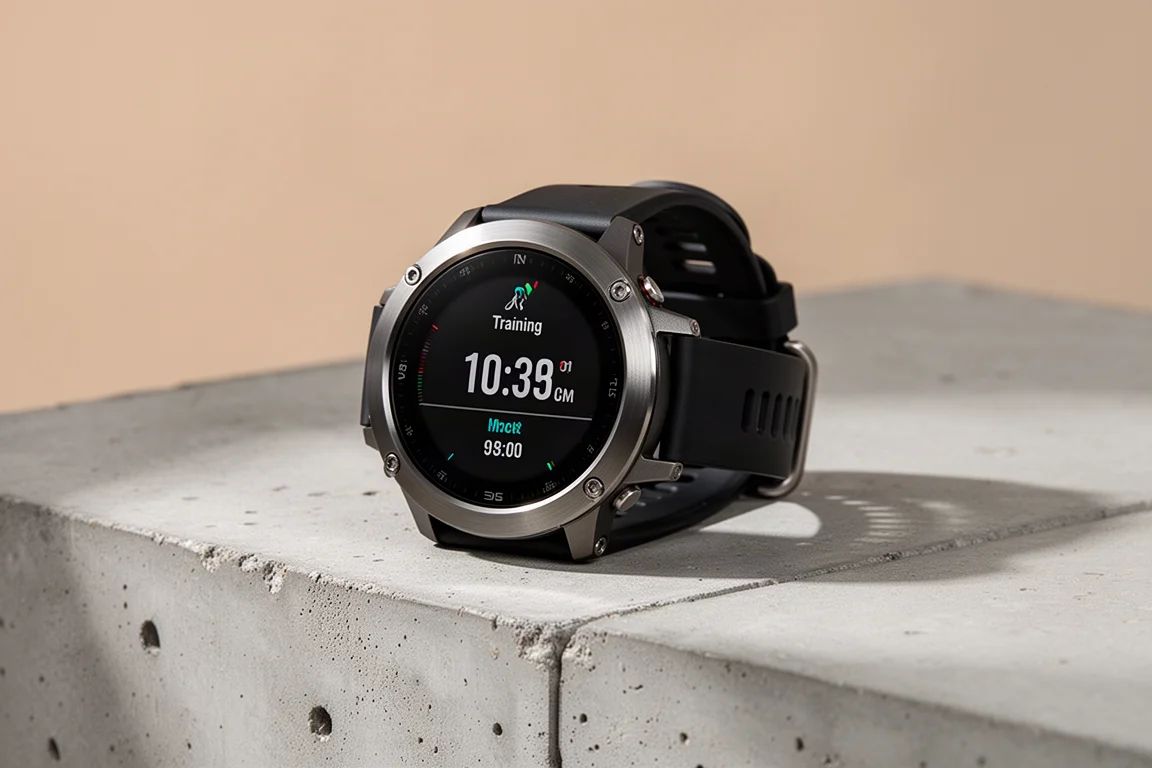
Coros Apex 4 Hands-On: Titanium Build, Faster Mapping, and a Battery Built for the Mountains
A first look at the new Coros Apex 4 GPS sports watch, including its titanium construction, improved mapping, built-in speaker, and standout battery life.