Wearables
Garmin Circa Review: A Screenless Fitness Band With Real Workout Ambitions
Garmin's first screenless band tracks health and workouts around the clock with no subscription, but a rocky launch and inconsistent battery life temper the promise.
Introduction
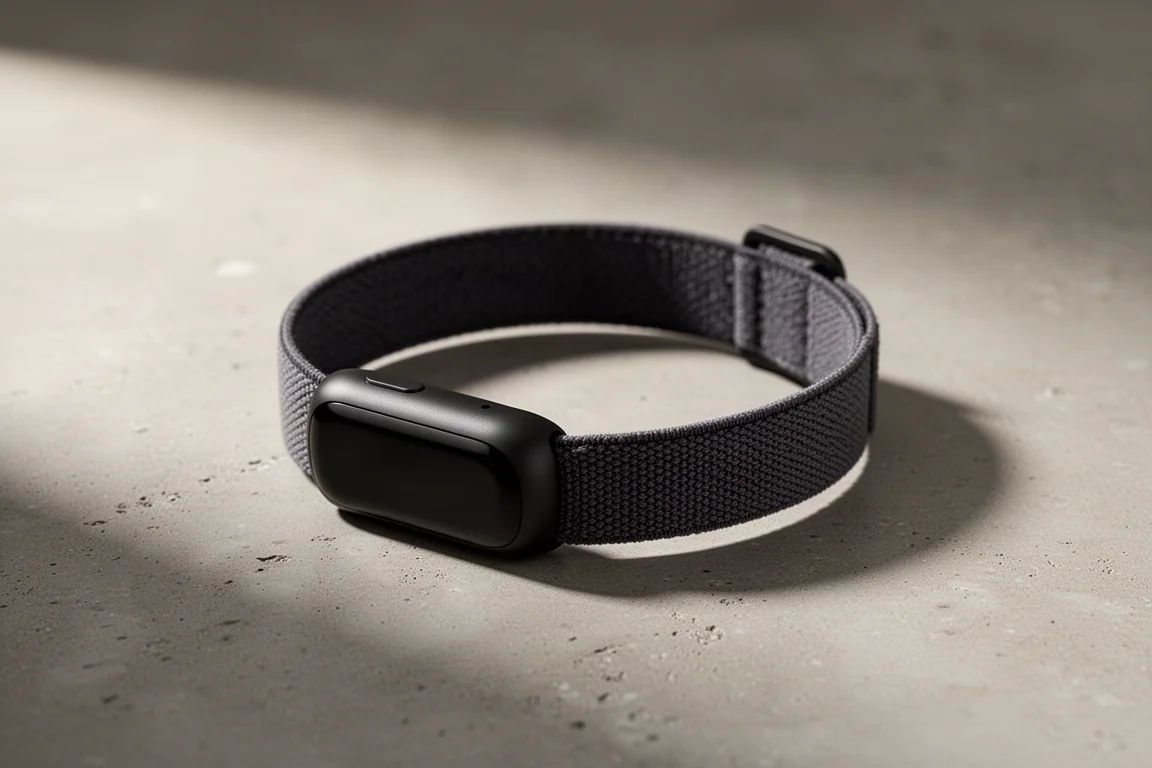
Garmin’s Circa is the company’s first screenless fitness band, built for people who want round-the-clock health and workout tracking without another display on their wrist. It has been tested across cycling, running, swimming, and everyday scenarios in both hot and cold conditions, side by side with the usual rivals in this space such as Whoop, Fitbit, Amazfit, and Polar.
The headline numbers look straightforward: $199, no subscription required, and a feature set that closely mirrors what you would find on a high-end Garmin watch. The reality, however, is a bit more complicated, and this review walks through where it shines and where it still needs work.
Price and What’s in the Box
The Garmin Circa costs $199 regardless of color. There are four core colors, plus a range of accessory bands sold separately, including a bicep or arm band option in both smaller and larger sizes.
The box contains the strap with the pod already attached, a standard Garmin charging cable shared with Garmin’s watches, and the usual paperwork. Notably, everything covered here works on the free version of Garmin Connect, with no Garmin Connect Plus subscription enabled.
Design and Hardware
The band comes in two pieces: a plastic pod and a fabric band that can be removed using small pins. A physical button on the side lets you start and stop activities manually, enable heart rate broadcasting, or dismiss a vibrating wake-up alarm.
In terms of size, it sits in the same general width ballpark as the Whoop band, though it runs a bit longer across the wrist. On smaller wrists it looks noticeably bigger, but for people used to wearing watches it is smaller and lighter than most.
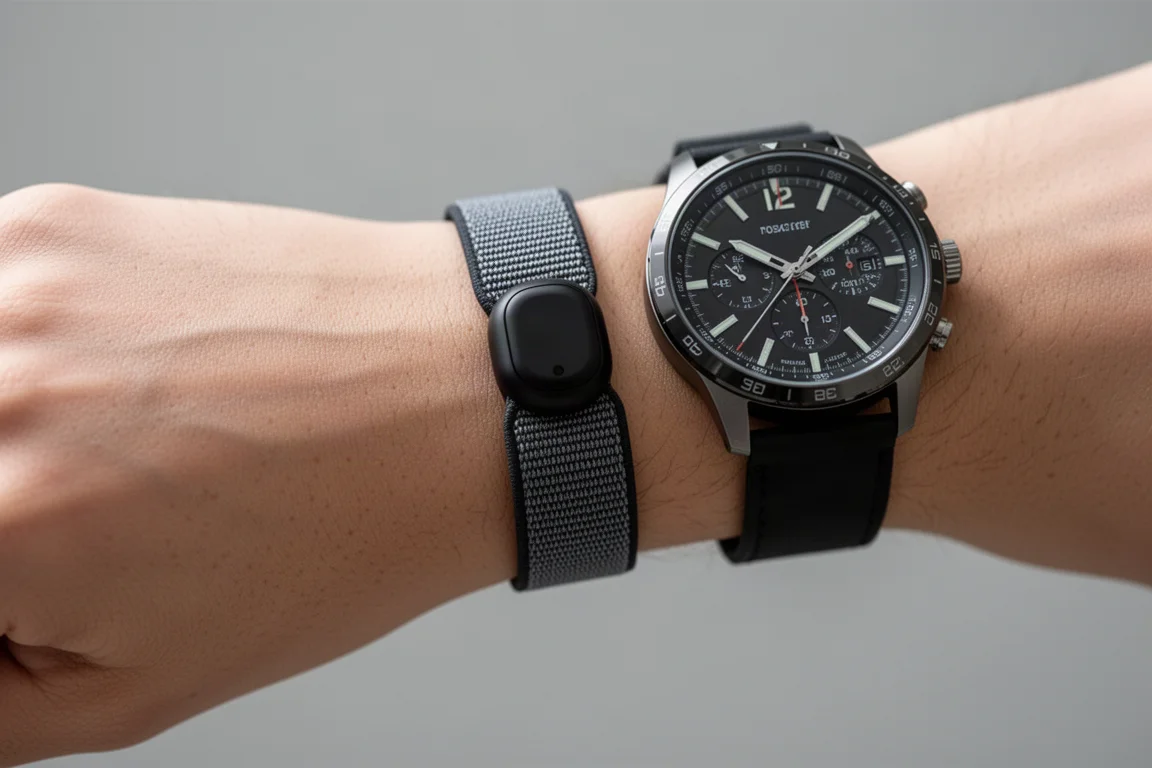
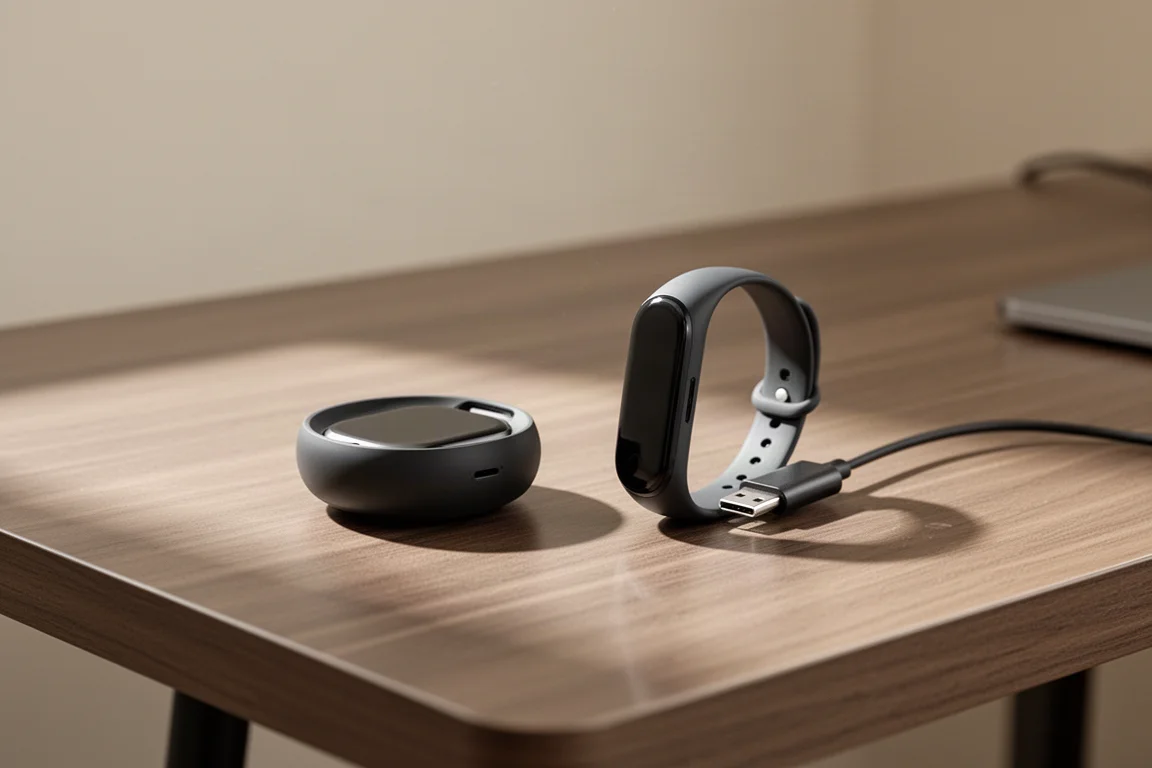
Underneath sits Garmin’s Gen 4 optical heart rate sensor with an added hardware layer for skin temperature, something previously reserved for the Gen 5 sensor used in Garmin’s watches. There is no ECG here. Garmin says the newer Gen 5 sensor was simply too wide to fit without making the band bulkier. The standard Garmin charging port sits on the bottom, same as on most recent Garmin watches.
The weakest part of the hardware experience is swapping bands. The pin system works, but the fabric tends to rotate awkwardly, and the process is nowhere near as clean as the quick-swap systems on Whoop or Fitbit. A quick-release design like Garmin uses on its watches would be an obvious improvement for a future version.
Everyday Use and the App
Day to day, you just slide it on and forget about it. The band automatically captures the metrics you would see on a Garmin watch, including sleep, calories, and recovery data. The Garmin app adds a new Essentials tab with four customizable slots, though there are only six metrics to choose from, which feels oddly restrictive. Below that, customizable In Focus cards cover training readiness, training status, and body battery, followed by at-a-glance tiles and yesterday and 7-day stats.
Step accuracy holds up reasonably well. In controlled counting tests, results landed close to the reference, and across full days the numbers generally stayed within 10 to 15%. One quirk worth knowing: Polar and Amazfit convert cycling time into steps, which inflates their step counts on bike days, something Garmin avoids.
Sleep tracking runs automatically each night and delivers a sleep score, sleep stages, skin temperature, HRV, and resting heart rate. In side-by-side testing, wrist-based wearables all landed in the same ballpark for sleep and wake times. Wrist placement beat bicep placement for sleep timing across every brand, and the worst Garmin night was off by roughly half an hour, similar to what other devices in this category occasionally produce.
Mornings bring a body battery score and a health status view trending five core metrics: heart rate, HRV, respiration rate, skin temperature, and pulse ox. Pulse ox is disabled by default to save battery, but enabling it for sleep only had a negligible battery impact. The band also supports both static alarms and a smart alarm that searches a 30-minute window for the optimal wake-up moment.
Workout Tracking
There are three ways to record workouts. Automatic detection requires nothing at all. The physical button is useful for workouts like yoga or strength training where there is no clear heart rate spike to trigger detection. The app can also start a session, with roughly 80 workout types available, though the live workout screen is disappointingly basic, showing only live heart rate and nothing else. Competitors offer maps, charts, and richer live pages, so Garmin has work to do here.
One genuinely unique feature: automatic detection can also enable GPS based on your per-sport preferences, pulling the track from your phone. No other screenless band does this automatically. Manual GPS workouts behave just like Garmin watch activities and upload to Strava, TrainingPeaks, and other platforms with the full data set.

Automatic detection results are mixed but improving. Early bike commutes were missed almost entirely, whether on e-bike or cargo bike, even though every other device on the arm caught them. Garmin has confirmed it is constantly updating the detection algorithms server-side, and recent results have been much better, with rides detected within a couple of minutes. Running and walking detection has been solid across the board, with every run and walk captured. The one quirk is that Garmin sometimes includes the pre-run walking time in the activity, which is easy to trim but differs from Whoop and Fitbit.
The Training Load Gap
Here is the most significant limitation for athletes. When Garmin detects an activity, it boosts the heart rate sensor’s power for accuracy, and when it thinks the activity ended, it drops back down. If detection starts late or ends early, that heart rate data is simply gone. Missed sections cannot be recovered, so the training load from hard hills or intervals disappears from your acute load chart entirely.

That is a core difference from Whoop and Fitbit, which record and accumulate training load or strain 24/7 regardless of detection. For a company focused heavily on athletes, this feels like a real gap. Garmin is reportedly working on ways to address it, but nothing has been finalized. The flip side: detection does capture everyday exertion well, and hours of heavy box moving in high heat registered correctly as a strength workout.
All of this feeds into Garmin’s training status and training readiness systems, the latter combining sleep, stress, training load, recovery time, and HRV. Training readiness remains one of Garmin’s best features and does a good job of guiding what to do day to day. The band also supports heart rate broadcasting: hold the button for three seconds and it pairs with Zwift, Peloton, Garmin Edge devices, or watches over ANT+ or Bluetooth.
Heart Rate Accuracy
Workout heart rate accuracy is broadly what you would expect from the Gen 4 sensor. Steady state runs, indoor trainer rides, and hot-weather mountain road rides matched a chest strap closely.
Cold weather is where things got rougher. On a rainy cold ride, wrist-based accuracy was all over the place for every brand, while bicep bands did much better. On a milder cold day, results were genuinely strong, even outperforming a heavier watch with the newer Gen 5 sensor on chunky gravel sections, where the lighter band bounced less.
The standout failure is 400-meter intervals. Repeated attempts in cold, rainy conditions fell apart entirely, though a tester in warm weather got clean results on the same workout. Otherwise, the sensor performs on par with competitors, and the usual truism holds: bicep placement improves workout accuracy, while wrist placement is better for sleep.
Bugs and Polish
This is not a polished launch. There are more bugs than expected from Garmin historically, spanning the app and device behavior, and many of them are easy to stumble upon rather than obscure edge cases. Garmin is actively investigating reported issues, and many are being fixed, but buyers should expect some rough edges in the early going, similar to what other new band launches have gone through recently.
Battery Life
Garmin claims 10 days of battery life assuming about 30 minutes of daily workout time and no pulse ox at night. Real-world results are hit or miss. Some days hit the expected 10% drain, other days burn 30% for no obvious reason. With 1 to 3 hours of daily workouts, hitting 10 days is simply not happening.
Workouts burn roughly 1 to 2% per hour, with or without heart rate broadcasting enabled. That relatively high burn rate likely explains why Garmin keeps background heart rate fidelity low the rest of the day. Compared to the Whoop band, which reliably hits its claimed 14 days even with heavy use, Garmin clearly has battery work ahead of it, and the aging Gen 4 sensor, designed for watches rather than continuous band use, is likely part of the equation.
Things to Consider Before Buying
The Circa is a good device with real strengths: no subscription, deep Garmin integration, unique automatic GPS, and solid everyday tracking. But weigh the trade-offs carefully. The launch is buggy, battery life is inconsistent, live workout screens are barebones, and the training load gap matters if you are serious about structured training.
It also does not require any prior Garmin investment. Despite assumptions that it is only for Garmin watch owners, it works for anyone who wants 24/7 health and fitness tracking with a workout focus. If you already wear a full Garmin watch around the clock, though, the band offers less incremental value.
Conclusion
The Garmin Circa delivers on the core promise of a screenless band: subscription-free, feature-rich health tracking with genuine workout capability and a couple of features no competitor offers. The execution is not there yet, with bugs, battery inconsistency, and detection-driven load gaps that Garmin is actively working to fix. If you are already in the Garmin ecosystem or want a Whoop-style band without the subscription, it is easy to recommend with eyes open. If you need flawless launch-week polish or guaranteed 10-day battery life, waiting a few months for updates is the safer play.
Product link
View more details for Garmin Circa
This product is mentioned in the review. Check the specifications, options, and compatibility before buying.
View more details for Garmin CircaFurther reading
Related Reviews
Wearables
Apple Watch Ultra 3 vs Garmin: Which Training Watch Wins for Athletes
A practical head-to-head comparison of the Apple Watch Ultra 3 and Garmin for serious training, covering GPS accuracy, data tracking, usability, and recovery metrics.
Wearables
Apple Watch vs Garmin for Running: A Year of Training Compared
After a year training for marathons with both devices, here's what actually matters when choosing a running watch.
Wearables
Apple Watch Ultra 3 vs Garmin Fenix 8 Pro: Satellite Messaging Compared
A practical comparison of satellite messaging on the Apple Watch Ultra 3 and the Garmin Fenix 8 Pro, covering connection methods, messaging workflows, coverage, and running costs.