Wearable Accessories
Garmin Charging Battery Bank Review: A Tiny Backup Charger With a Narrow Use Case
A pocket-sized third-party battery bank with a built-in Garmin charging connector. Charging speed is identical to the standard cable, but the limited capacity and single purpose make it a niche buy.
Introduction
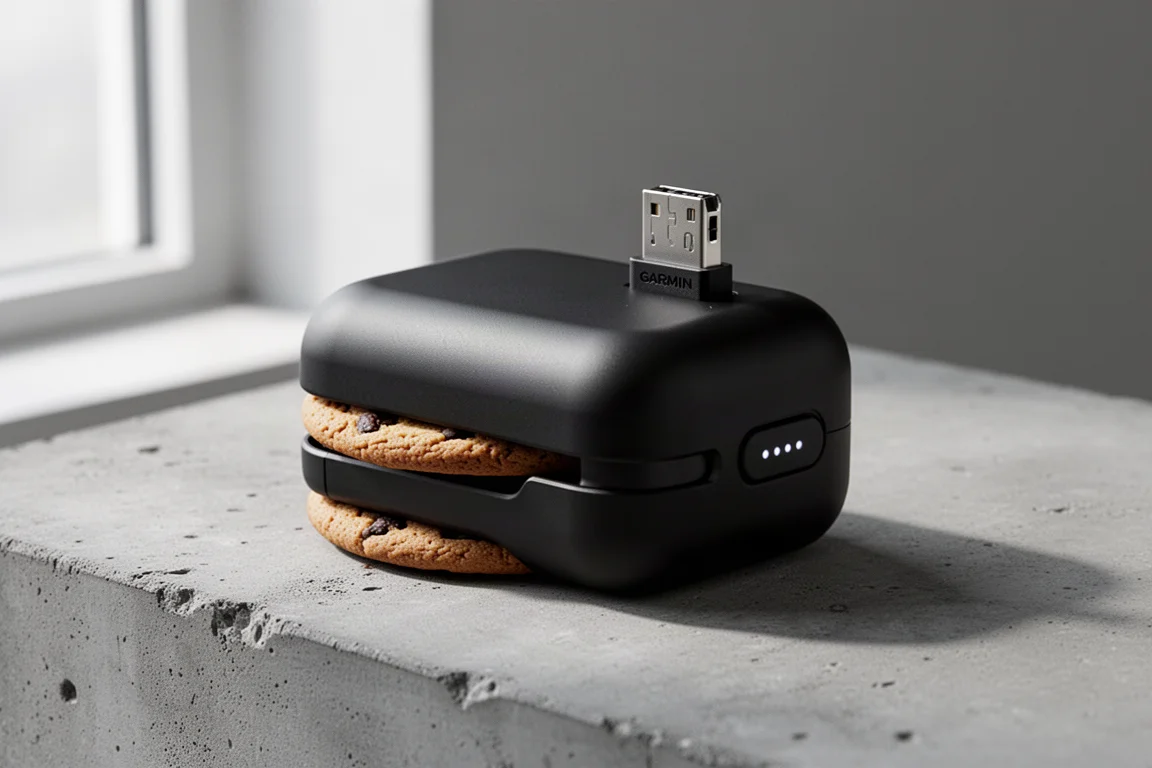
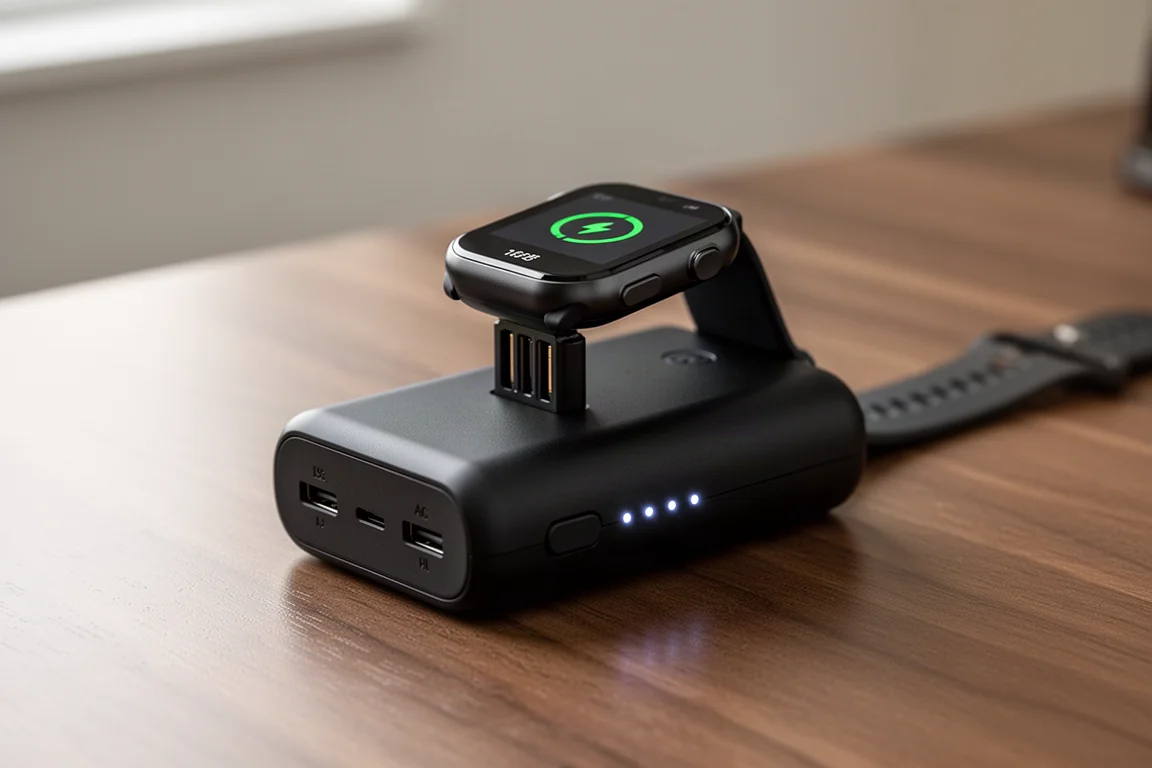
This is a Garmin charging battery bank: a tiny power pack with a Garmin charging connector built into its top. Snap almost any Garmin watch on top, press the side button, and the watch starts charging. That simplicity is the whole pitch. It is also the whole limitation.
One important caveat up front: Garmin does not make this. It comes from third-party accessory companies, so treat it as an unofficial accessory rather than part of Garmin’s own lineup. And despite the simple premise, whether it is actually worthwhile depends heavily on which Garmin watches live in your household.
Who This Product Is For
The bank charges over USB-C and shows its remaining charge through three LED indicators behind a side button. The battery inside is 5,000 mAh, which is small next to the 10,000 mAh packs most people keep around for phones, or the 27,000 mAh units that can top up laptops, drones, and action cameras on longer trips.
The connector on top is the standard Garmin charging port used by the vast majority of Garmin watches from roughly the last decade. A handful of models do not use it, so it is worth confirming your watch before buying. There is also a small keychain holder included, though it is hard to imagine many people carrying their charger dangling from their keys.
Main Strengths
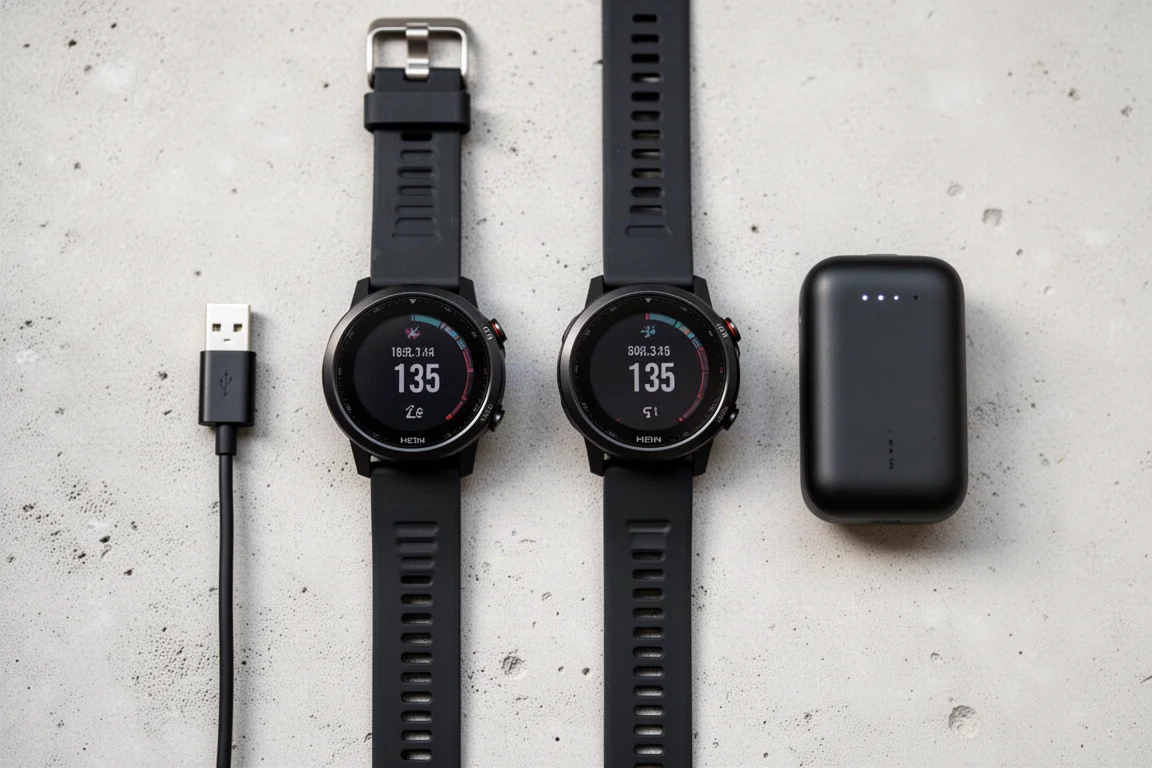
The headline strength is that charging is completely uncompromised. In a side-by-side test with two identical Garmin Fenix 8 Pro units drained to empty, one charged from the standard Garmin cable on a high-power USB-C port and the other from this bank, the results were identical across the board.
The bank’s charging port outputs 5 volts at 1.2 amps, but modern electronics negotiate their own power requirements, so the watch simply asks for what it needs. On a Fenix 8 Pro that meant roughly 50% in about 30 minutes, roughly 90% in about an hour, and a trickle charge for the final 10% over another half hour. Older watches like a Forerunner 955 or Fenix 7 take around two and a half hours regardless of the power source, and this bank behaves no differently.
Things to Consider Before Buying
The downsides start with the port on the side. The USB-C input charges the bank itself, but it cannot output power to other devices. Plug a Garmin charging cable into it and connect a watch, and nothing happens. That rules out the dream of using this as an emergency micro power bank for a phone, headphones, or anything else, which is exactly what a small dedicated emergency charger on a long trek would be good for.
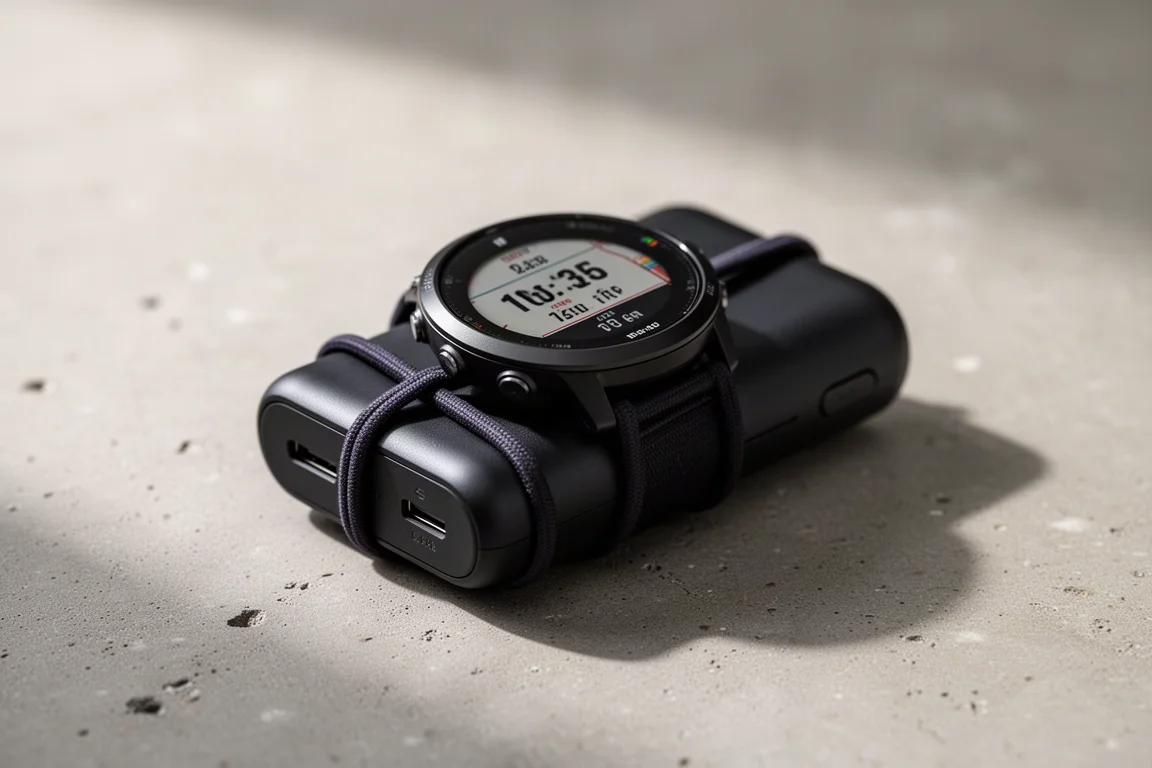
The second issue is keeping the watch attached. The magnetic Garmin connector is standardized but not especially strong. Turn a watch over, give it a small shake, and it eventually falls off. In a backpack it can pop off immediately and stop charging. On smaller kids’ watches you can wrap everything tightly and it stays put, but larger Fenix models have just enough play that the watch pops free. A hair tie solves it: stretch one around the watch and the bank and it stays connected. It works, but it is a workaround, and a small integrated strap would have fixed the problem entirely.
Then there is the value question. At around $25, you can buy a decent 10,000 mAh battery bank or a compact lipstick-sized charger, attach a USB-C cable or a Garmin charging adapter, and end up with something that charges phones, headphones, and watches alike. That multi-use flexibility makes the dedicated Garmin bank a hard sell on pure practicality.
Buying Advice
For most people, a general-purpose battery bank plus a Garmin charging cable or adapter is the smarter purchase. But the niche cases are real. Garmin’s LTE kids’ watches only manage about two days of battery life, and a morning discovery of a dead watch is a common household problem. Having this bank tucked in a child’s backpack for a midday top-up before after-school sports genuinely works, especially combined with a hair tie so it stays charging while jostled around.
The other half-scenario is wanting a dedicated Garmin-only charging bank that floats around the house or bag, safe from anyone borrowing its power for their phone. Because the USB-C port cannot output to other devices, this bank can only ever charge a Garmin watch, which is either a flaw or, in this specific case, a feature.

Conclusion
This battery bank does exactly what it promises: charges Garmin watches at full speed, in a package small enough to forget about until needed. Charging performance is identical to the standard cable, which is genuinely impressive for the size. But the 5,000 mAh capacity is modest, the USB-C port cannot power other devices, the connector needs a hair tie to stay attached, and $25 buys more flexible alternatives. Buy it if you have Garmin kids’ watches with unpredictable battery levels, or if you specifically want a Garmin-only backup charger. Everyone else should put that money toward a general-purpose bank and a Garmin adapter.
Product link
View more details for Garmin Charging Battery Bank
This product is mentioned in the review. Check the specifications, options, and compatibility before buying.
View more details for Garmin Charging Battery BankFurther reading
Related Reviews
Wearables
Apple Watch vs Garmin for Running: A Year of Training Compared
After a year training for marathons with both devices, here's what actually matters when choosing a running watch.
Astrophotography
Astro Imaging Gear 2026: Eight New Products Worth Watching
A look at the most interesting new astrophotography and astronomy products announced this year, from fast telescopes to smart cameras and wireless accessories.
Bike Computers
Best Bike Computers 2026: Wahoo ELEMNT ACE, Garmin Edge 1050 and Two Value Alternatives
A practical comparison of the Wahoo ELEMNT ACE and Garmin Edge 1050, plus two cheaper computers that cover the essentials for far less.