Floorstanding Speakers
G Acoustic Capello 100 Review: Thunderous Bass in a Three-Way Floorstander
A German-made three-way floorstander with deep, textured bass, a balanced midrange, and genuine amplifier demands. Here is what to weigh before buying at this price.
Introduction
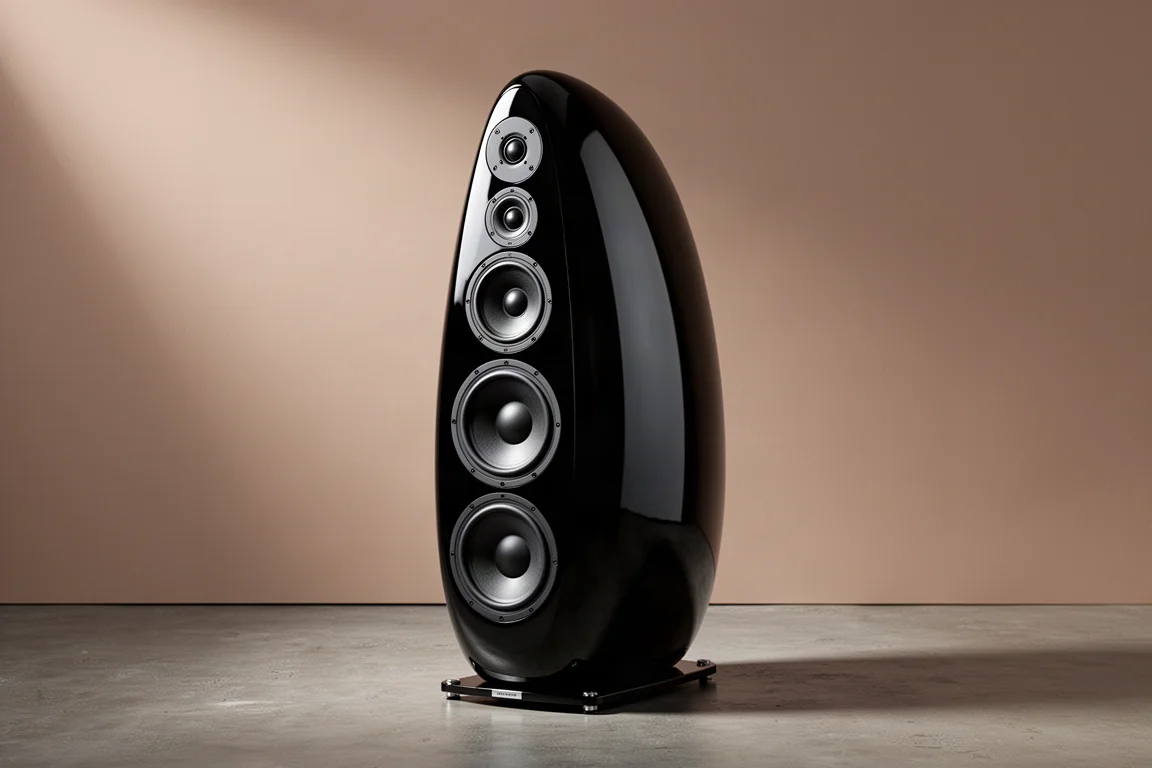
The G Acoustic Capello 100 is a German-made three-way floorstanding loudspeaker with a teardrop-shaped cabinet, a sophisticated crossover, and a price tag of $25,000. It is the kind of speaker that exists to answer a specific question: what does a designer do differently when cost is no longer the primary constraint?
The short answer is that the Capella 100 solves problems in the cabinet, the driver selection, and above all the crossover. The longer answer involves an unusual driver material, an unusually large parts count, and a bass response that behaves unlike most floorstanders at any price. It is a genuinely capable loudspeaker, and it asks a few things of its owner in return.
Who This Speaker Is For
This is a speaker for listeners shopping at the top of the floorstanding market, and for anyone curious about how far a three-way design can be pushed. It rewards buyers who value bass authority, low-level resolution, and a presentation that stays composed over long sessions.
It is not a plug-and-play purchase. The Capella 100 has real requirements around room placement and amplification, and it is happiest when those requirements are met deliberately rather than by accident. Buyers who plan to drop it into a tight corner and drive it with whatever amplifier happens to be on hand should think carefully before committing.
The speaker also suits listeners who care about texture as much as quantity in the low end. If deep bass that stays articulate at quiet volumes sounds appealing, this design is aimed squarely at that experience.
Design and Cabinet Construction
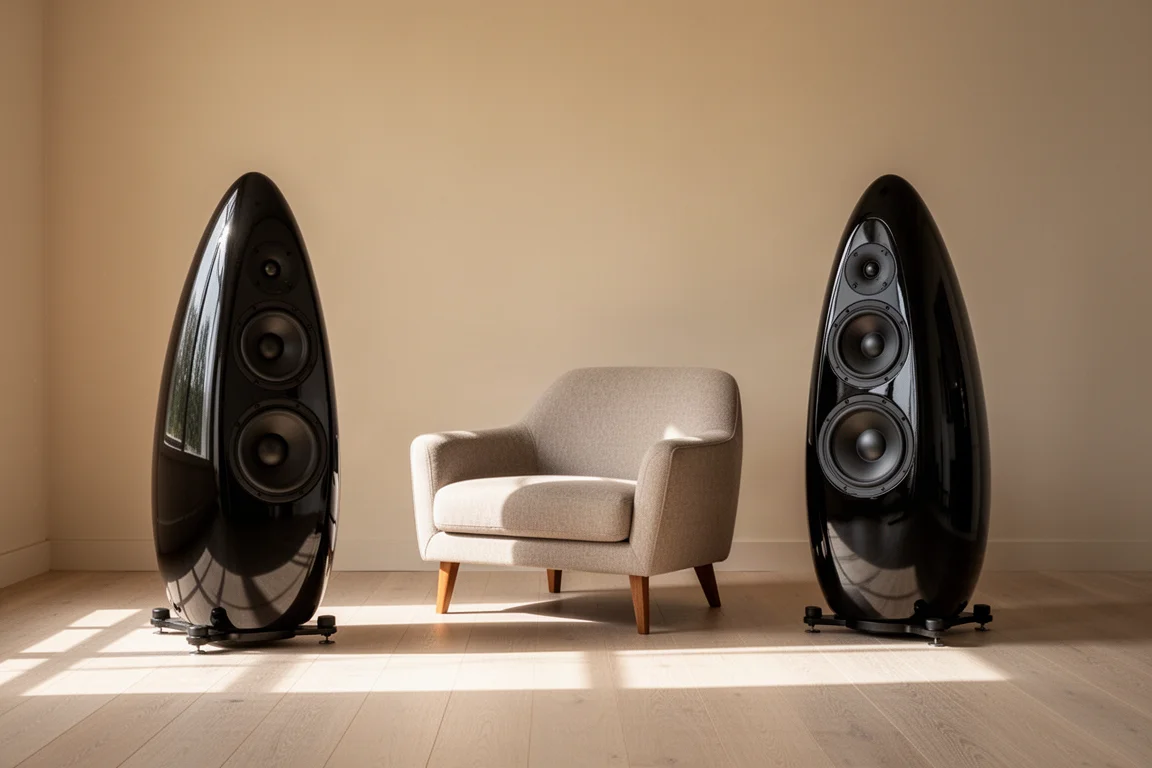
The cabinet is drop shaped rather than a conventional rectangular box. G Acoustic claims that this geometry helps manage standing waves and cabinet resonance, and the construction itself is heavily braced and solid. Finishes vary, and the olive veneer in particular gives the shape a furniture-like presence that a standard box rarely achieves.
The driver complement is a three-way arrangement: an aluminium dome tweeter, a mid-range driver, and two bass drivers. Using a relatively large driver for the mid-range would normally raise eyebrows, and G Acoustic addresses that directly with a patented aluminium polymer diaphragm technology it calls Expulse. According to the company, the design keeps that driver operating above 3,400 Hz, which allows a larger mid-range unit to stay within its optimal range while preserving tonal consistency with the bass drivers.
The rear panel uses genuine WBT binding posts and supports bi-wiring. The crossover is where the design becomes unusual: 56 high-quality parts sourced from German suppliers including Mundorf and Intertechnik. Part of that count comes from a symmetrical crossover topology, which uses a steeper rolloff so the drivers overlap less, helping phase behaviour and the summed on-axis response. The rest comes from the company’s TDC technology, which corrects the small electrical time delay introduced by a complex crossover network by adding further correction rather than aligning drivers mechanically. G Acoustic is explicit about preferring this approach, and it is a legitimate design philosophy even if it is an expensive one to implement.
Bass Performance and Dynamics
The bass is the headline. Extension reaches below 20 Hz in room, and the sheer authority on offer is difficult to describe without sounding exaggerated. What makes it more than a party trick is the texture and nuance: low notes that blur together on most speakers stay distinct here, and quiet passages retain weight and definition rather than thinning out.
That behaviour at low volume is the most unusual part of the experience. Many large floorstanders deliver physical impact only once the volume is pushed up. The Capella 100 does get more dynamic as levels rise, but it retains body and low-frequency texture even when played quietly.
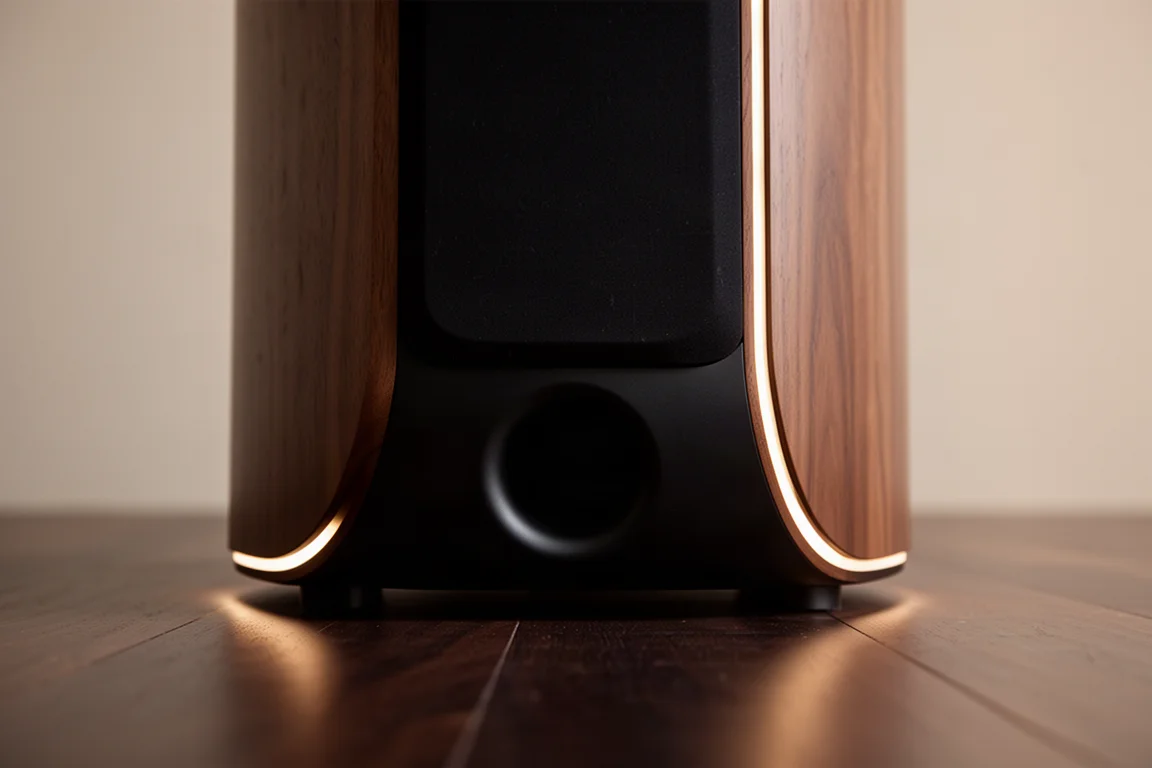
G Acoustic gives owners tools to manage all that energy. A bass adjustment offers plus or minus 1.5 dB across the entire bass range. On top of that, bass extension modules let you tune the low end in finer steps: the standard jumper provides 4 dB of gain, the white module 3.5 dB, green 3 dB, blue 2 dB, and red 1 dB, with the jumper removed giving 0 dB, the leanest setting available. The cabinet is also bottom ported to ease placement, though a bottom port does not neutralise a room. In a smaller space, this speaker may still need to sit a considerable distance from the wall behind it, in one case around 4.5 feet, to keep the low end from becoming bloated. Expect a dealer to handle this optimisation during setup, since the module system is exactly the sort of thing white-glove service exists for.
Midrange and Treble Balance
Above the bass, the presentation is balanced and close to neutral, with only a faint softness in the treble. That touch of gentleness flatters cymbals, trumpets, violins, and female vocals without dulling them, and it makes long listening sessions easy on the ears.
Measured response sits within roughly plus or minus 2 dB across the midrange and treble, which is a reference-grade result and a direct payoff from the work done in the crossover. There is a slight scoop of about 2 dB in the upper midrange and lower treble, though in practice a speaker placed in a real room tends to slope downward in that region anyway, making the in-room result more linear than the anechoic data suggests. The overall character is fuller and richer rather than bright or forward, so listeners who chase a lit-up, spotlight presentation may find it more relaxed than they prefer.
Soundstage, Imaging, and Layering
The soundstage is spacious without becoming artificially inflated. Rather than projecting a flat wall of sound, the speaker builds a three-dimensional image in which instruments and voices occupy distinct positions relative to the listening seat. Small differences in depth, such as a lead guitar sitting slightly behind a singer, come through clearly instead of requiring careful concentration.
Imaging strikes a sensible balance between the sharpness that keeps instruments separate and the warmth that keeps them sounding natural. Separation on well-recorded, densely arranged tracks is genuinely impressive, and the presentation is convincing enough that the equipment tends to disappear from the listening experience. Poorly recorded material with careless panning will still sound like poorly recorded material, as it does on any speaker.
Setup and Amplifier Matching
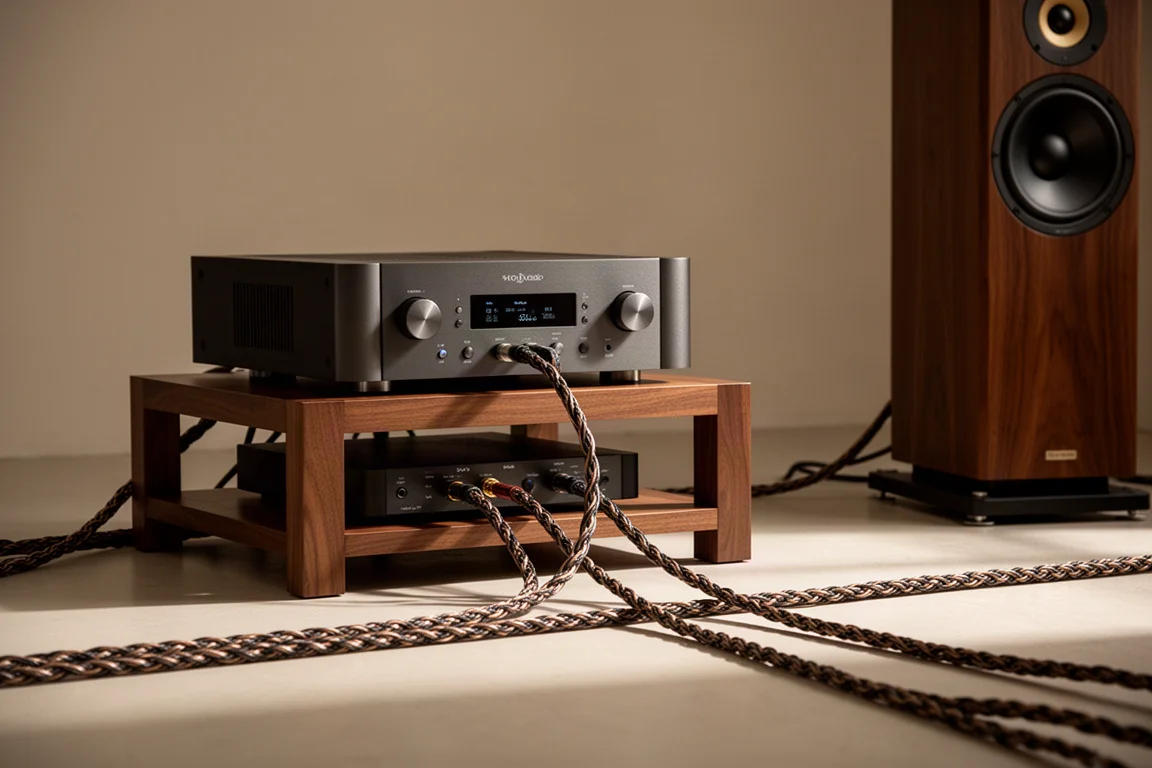
Sensitivity is rated at 91 dB, which might suggest that modest amplifiers are sufficient. In practice the impedance dips below 3 ohms, and the figure shifts only slightly across the various bass settings. That combination means the speaker benefits from, and effectively requires, an amplifier comfortable with low-impedance loads.
A range of amplifiers will make sound through the Capella 100, but many sound muted and congested doing it. Some inexpensive monoblock designs have clipped and shut down entirely under the load. With capable amplification the speaker scales noticeably, and a high-quality preamp and power amplifier pairing can lift everything the design does well to another level. The practical takeaway is simple: budget as carefully for electronics as for the speaker itself.
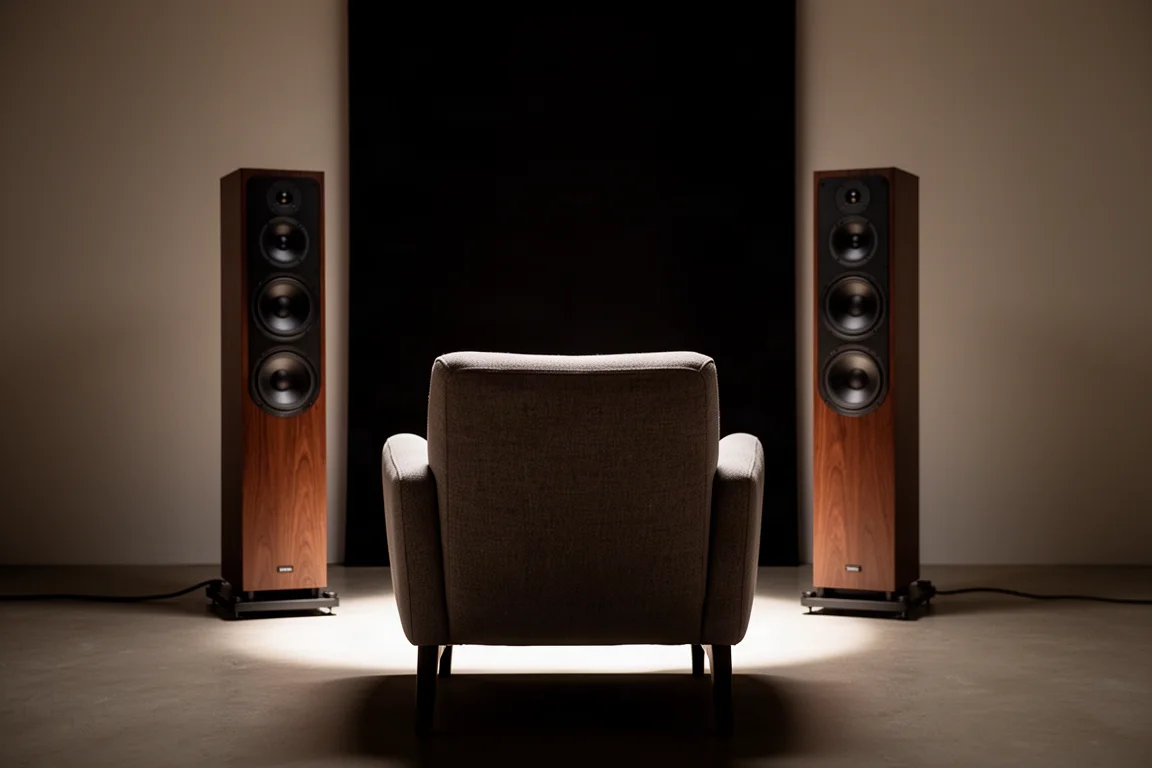
Placement is comparatively forgiving thanks to excellent horizontal off-axis behaviour, which keeps the tonal character consistent as you move around the room. That makes tow-in a usable tone control: angle the speakers further away from your ears for a little less treble, or more toward them for a little more. A wider sweet spot also means listeners on a shared couch get a similar experience rather than a compromised one. Seating height matters less than expected, and sitting slightly below the tweeter is not a serious problem, though sitting on axis with the tweeter remains ideal.
Things to Consider Before Buying
- The bass module system and bass adjustment give real flexibility, but they also mean setup matters. Plan on a dealer who knows the speaker, or a willingness to experiment patiently.
- In smaller rooms, the low end may demand significant distance from the wall behind the speaker. Measure your space before committing.
- Low impedance below 3 ohms narrows the field of suitable amplifiers and can turn an inexpensive pairing into a disappointing one.
- The 56-part crossover is a genuine engineering choice with sonic benefits, but it also contributes materially to the cost of the speaker.
- Finish selection is not a trivial decision at this level. Some finishes suit the sculpted cabinet far better than others, and the difference in how the speaker sits in a room is real.
Buying Advice
Approach the Capella 100 as a system rather than a single purchase. Decide on amplification first, choosing something that comfortably handles low-impedance loads, then plan where the speaker will sit and how much space it can be given. If a dealer is involved, let them handle the bass module and jumper configuration, since that is where much of the speaker’s room-friendliness lives.
Audition it with music you know well, particularly tracks with deep, sustained low notes and dense arrangements, because those are the places where this design separates itself from more conventional floorstanders. If the priorities are bass authority, low-volume texture, and a relaxed, detailed midrange and treble, the Capella 100 makes a strong case at its price. If the priority is a bright, forward presentation, it is worth hearing alongside other options before deciding.
Conclusion
The G Acoustic Capella 100 is a serious, thoughtfully engineered three-way floorstander. Its bass reaches below 20 Hz with authority and unusual texture even at low volumes, its midrange and treble stay balanced and easy to live with, and its soundstage layers instruments in a way that feels closer to a real performance than to a speaker. The cabinet shape, the Expulse diaphragm, and the extensive crossover are not marketing decoration; they show up in how the speaker measures and how it sounds.
The trade-offs are equally clear. This is a $25,000 speaker with a narrow impedance curve, a strong preference for quality amplification, and a genuine need for considered room placement. Meet those conditions, and it delivers at a level that justifies the attention.
Product link
View more details for G Acoustic Capello 100
This product is mentioned in the review. Check the specifications, options, and compatibility before buying.
View more details for G Acoustic Capello 100Further reading
Related Reviews
Floorstanding Speakers
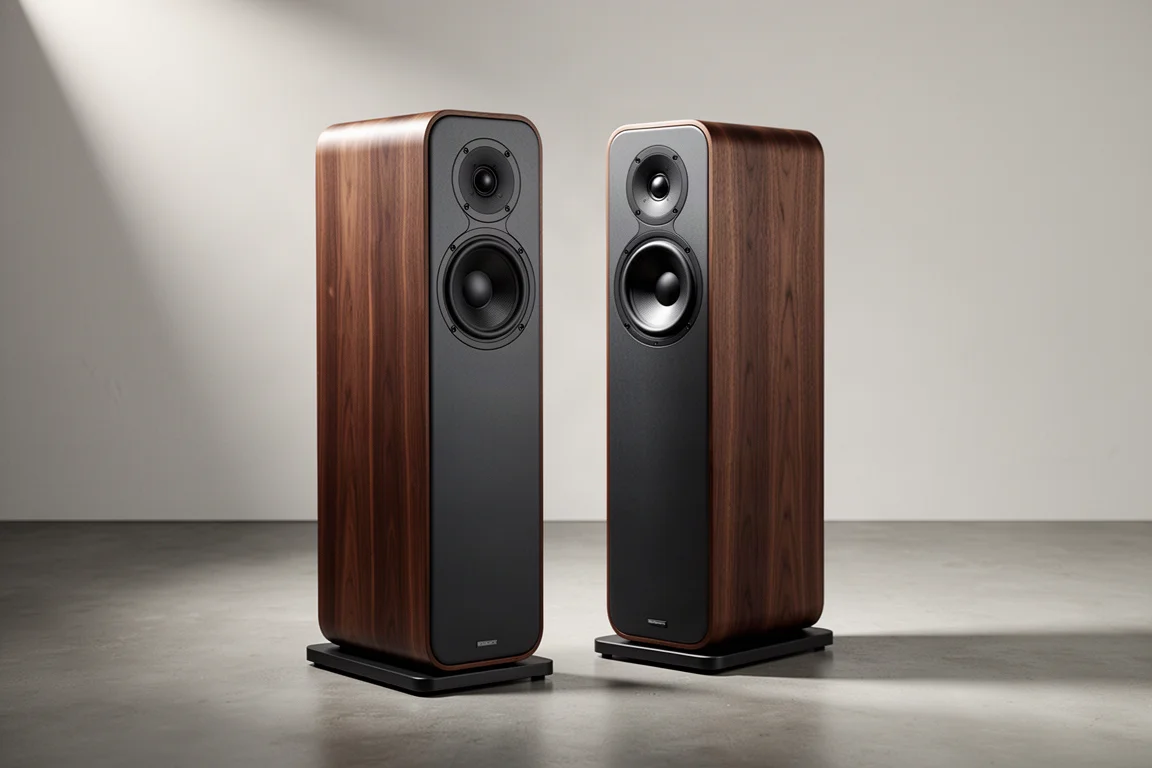
Acoustic Energy AE109 Mark II Review: A Refined Floorstander at £699
The Acoustic Energy AE109 Mark II is a slim, warm sounding floorstander that delivers clarity, midrange body and strong imaging in small to medium rooms.
Floorstanding Speakers
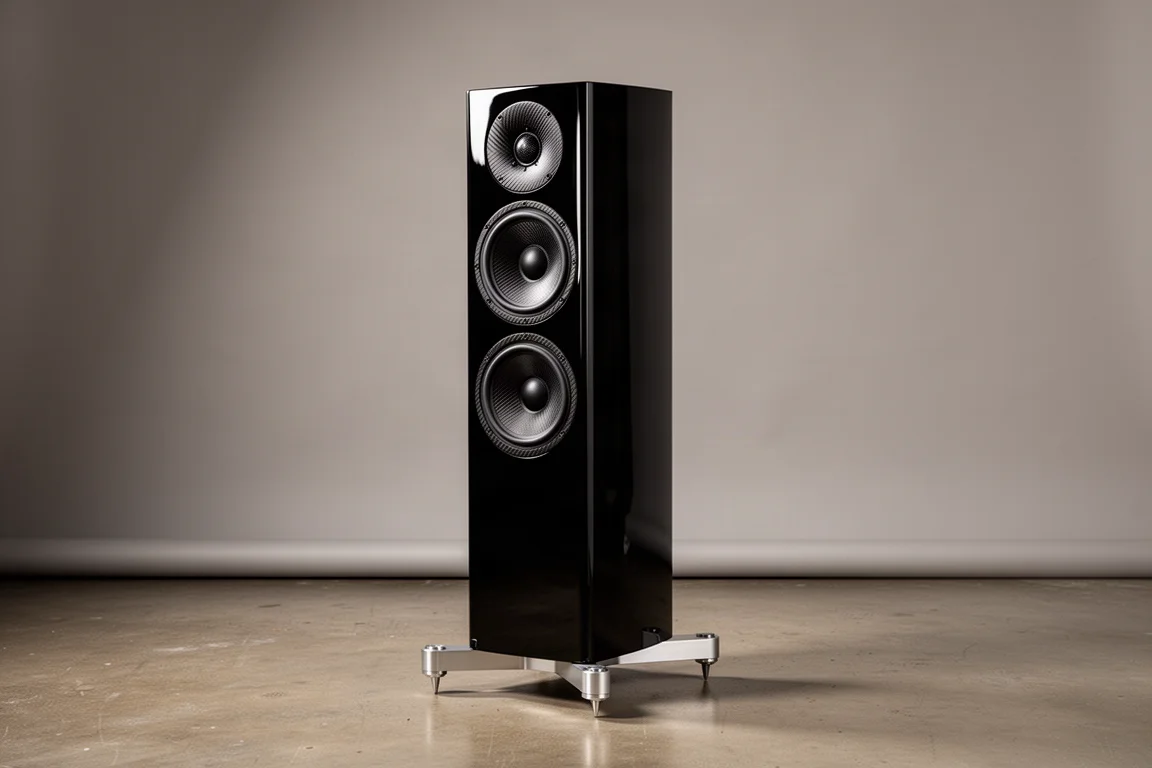
Acoustic Energy AE509 Review: A Slim Floorstander With Deep, Defined Bass
A practical look at the Acoustic Energy AE509, a slim floorstanding speaker with carbon fibre drivers, deep and well-defined bass, and an easy-going character that rewards careful system matching.
Floorstanding Speakers
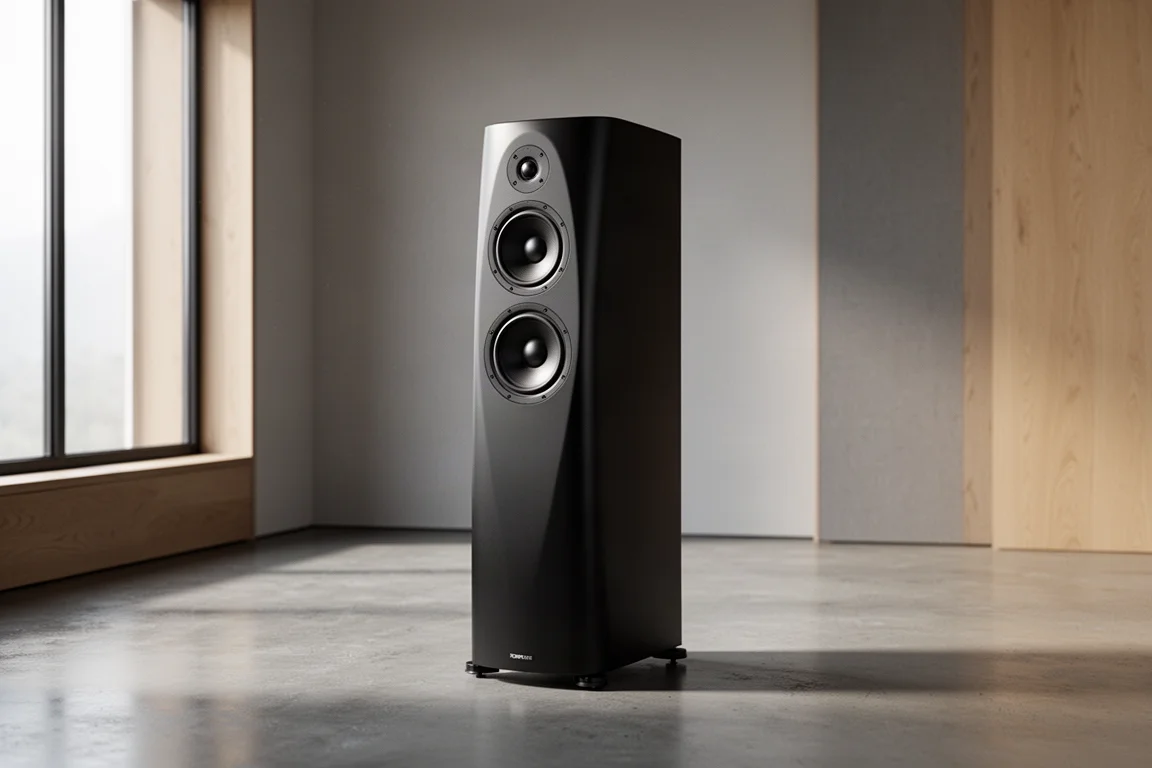
Arendal 1528 Tower 8 Review: Reference Neutrality With Real Demands
A close look at the Arendal 1528 Tower 8, a nearly five-foot, 200-pound floorstander that rewards generous space, serious power, and high listening levels with reference-grade neutrality.