Cycling
Full Suspension Gravel Bike vs XC Mountain Bike: Trek Checkout SL5 and Trek Supercaliber SL 9.7 Compared
One mixed-surface loop, two Trek platforms: how a full suspension gravel bike and a cross-country race mountain bike differ in speed, comfort and control.
Introduction
Choosing between a gravel bike and a cross-country mountain bike used to be straightforward. Now that gravel bikes have grown proper suspension, the two categories overlap in the middle of the same ride. That is exactly what happened on a mixed-surface loop that opened with a tarmac climb, spread out into fast, wide open gravel, and finished in rooty, water-cut singletrack.
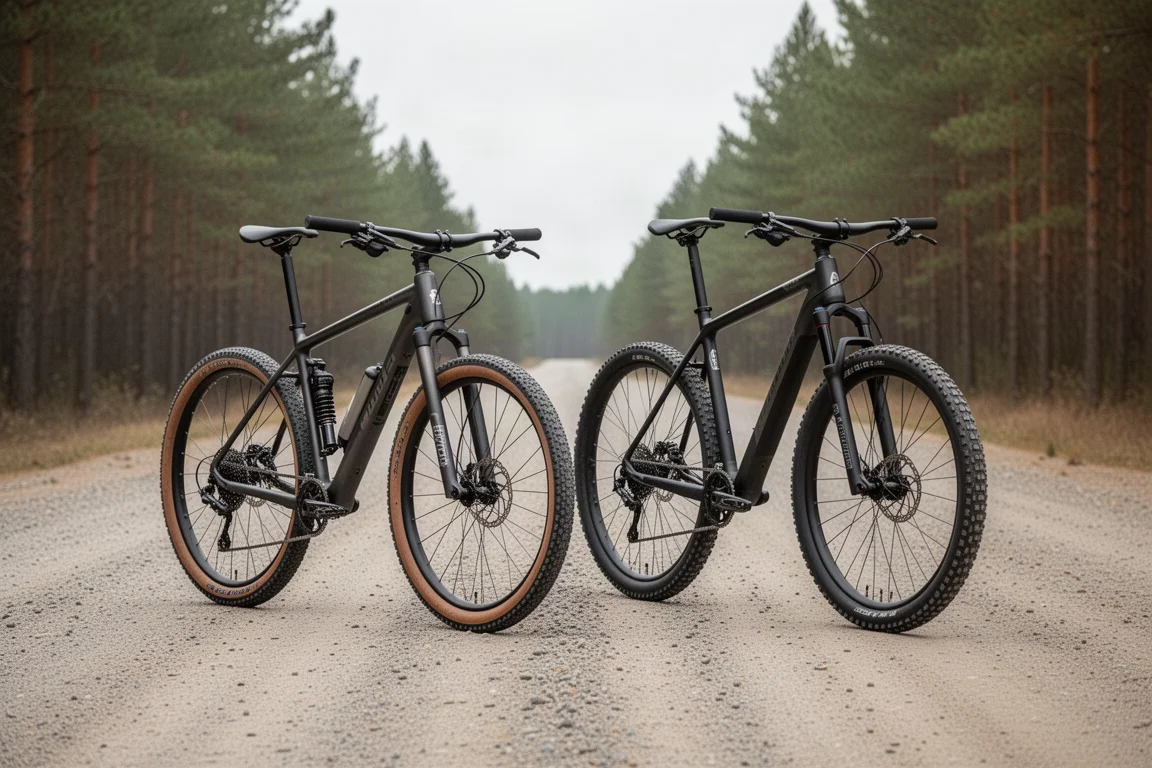
Two Trek platforms made the comparison concrete. The Trek Checkout SL5 is a full suspension gravel bike with drop bars and a pivoting rack. The Trek Supercaliber SL 9.7 is a carbon cross-country race bike with 80mm of rear travel. Same route, same conditions, two very different answers.
How These Two Bikes Compare
The comparison comes down to a handful of measurable things: suspension travel, weight, gearing, tire volume and pressure, and riding position. The gravel bike runs a 60mm Rudy XL fork and 55mm of rear travel. The mountain bike runs a 110mm RockShox SID fork and 80mm at the rear, with a suspension layout built around cross-country racing.
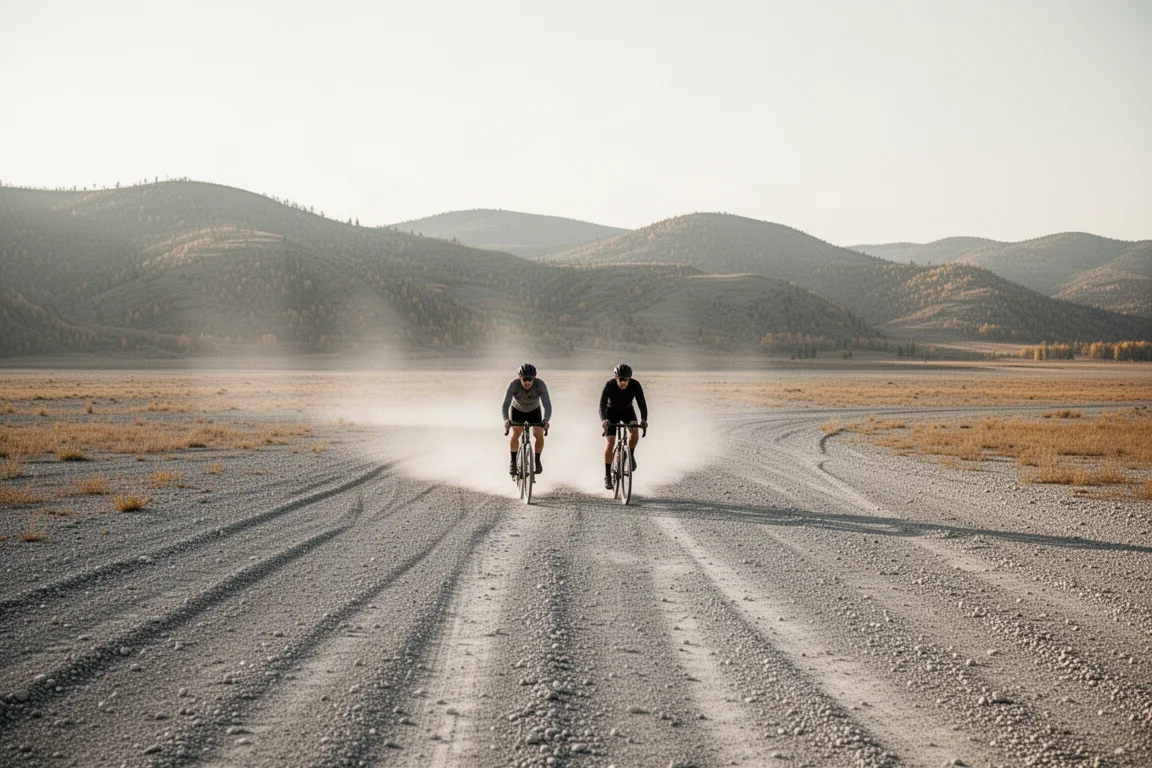
The route was chosen to cover the full spread of surfaces a typical mixed ride throws at you: a tarmac climb, long stretches of fast open gravel, chattery and rutted sections cut by water, and tight, rooty singletrack. That range makes the trade-offs visible rather than theoretical, and it is where the two bikes start to separate.
Trek Supercaliber SL 9.7: The XC Race Platform
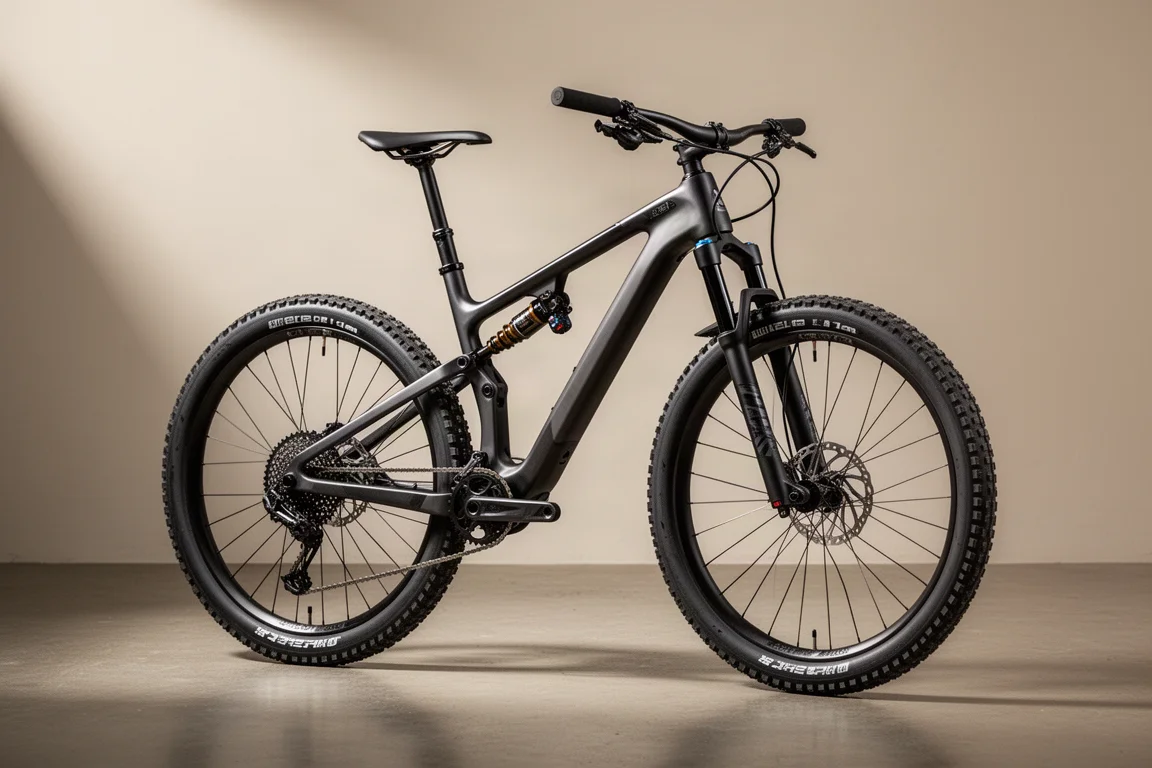
The Supercaliber SL 9.7 is built around 80mm of rear travel in a carbon frame, paired with a 110mm RockShox SID fork up front. SRAM handles drivetrain and brakes, and the build is finished with Bontrager components including a 150mm dropper post. A 38-tooth chainring and 2.4in tires at around 20 PSI set the tone: this is a bike configured to go fast over rough ground.
On rooty singletrack and chattery descents it felt completely at ease. The bigger tires and lower pressures spread the load across a larger contact patch, so grip held up even on slick, chalky ground where the gravel bike was slipping. The slacker head angle added stability, and the bike floated over roots rather than skipping across them, which opened up far more line choice in technical sections. It also came in around a kilo lighter than the full suspension gravel bike, and the climbs were closer than the travel numbers would suggest.
The main caveat is the rubber. The build ran race-oriented tires that suit fast, dry conditions better than winter slop, so a more aggressive tread would be a sensible change for wetter months. The complete build sits at around 4,500.
Trek Checkout SL5: The Full Suspension Gravel Bike
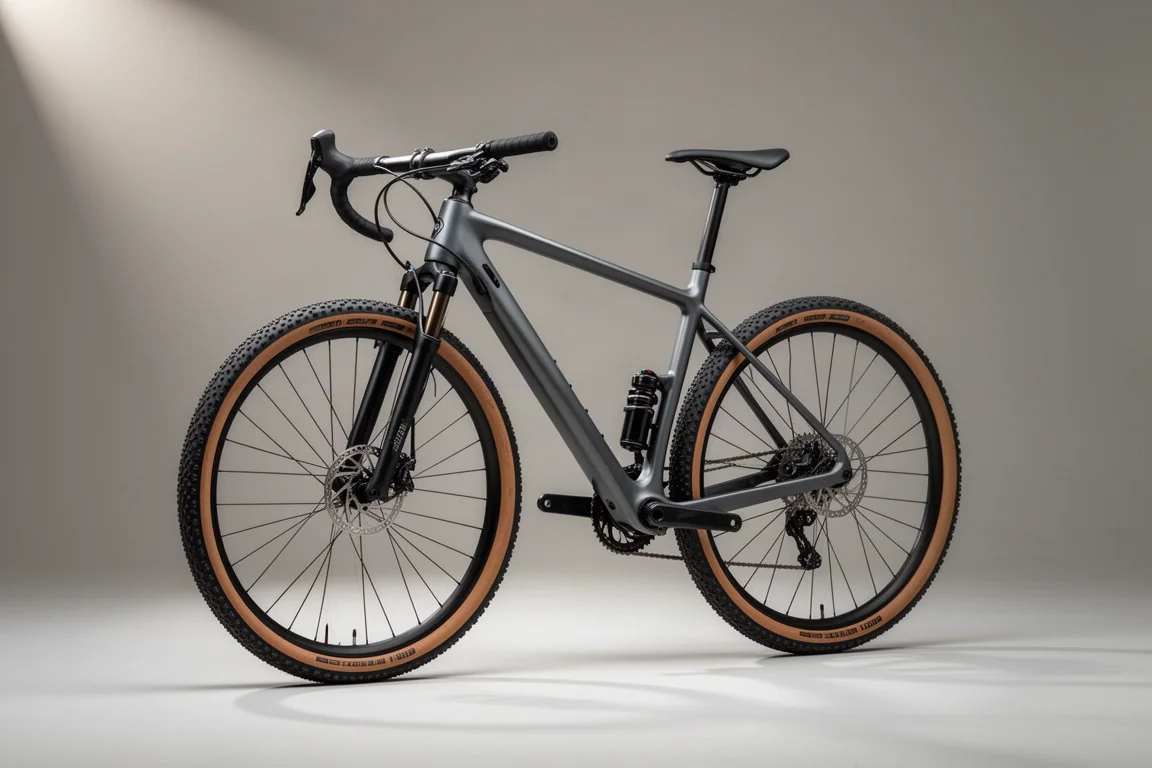
The Checkout SL5 takes the drop-bar gravel format and adds real suspension: a 60mm Rudy XL fork up front and 55mm of travel at the rear. The drivetrain is a 1x12 mechanical GRX setup with a 34-tooth chainring, and the frame carries a fully pivoting rack that can hold a crate of bottles or groceries without shaking them up on rough ground.
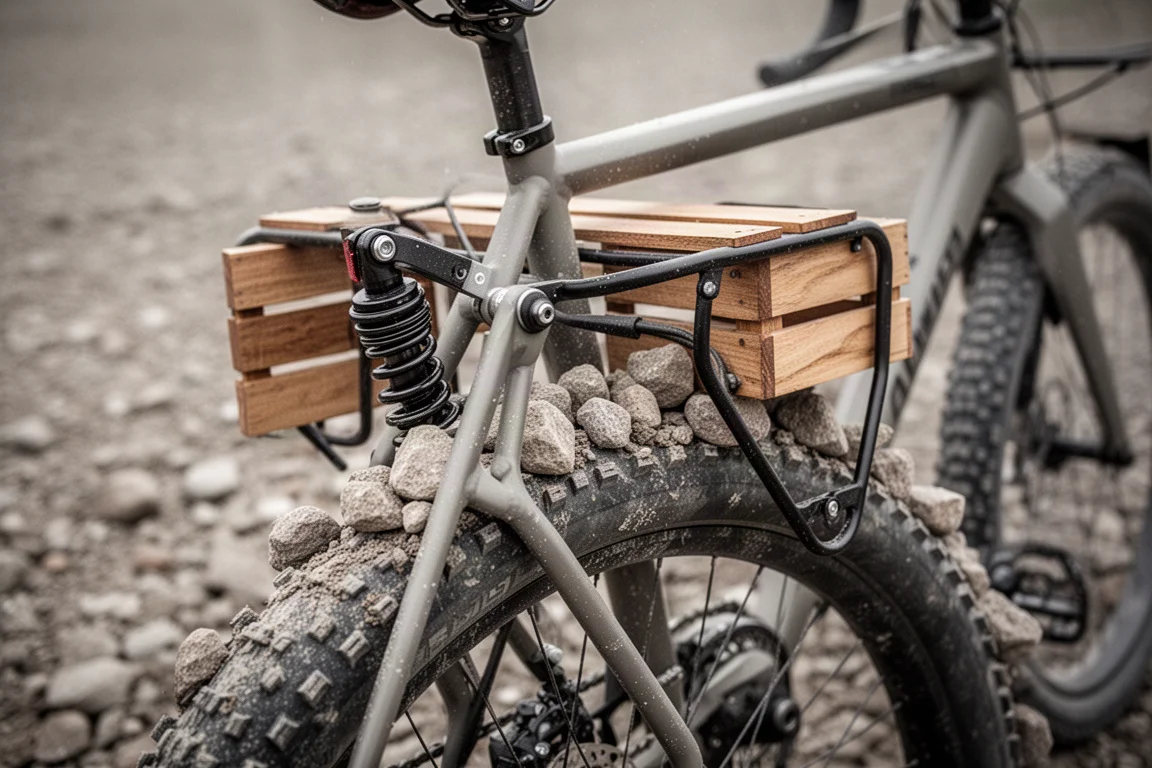
On tarmac and long, moderately flat gravel this was the quicker of the two. Smaller tires at higher pressure, a lower ride position and better aerodynamics all pointed the same way, and the suspension kept it noticeably smoother than a rigid gravel bike over moderate chunk. Even with modest travel, the rear shock was visibly working over small stones as well as bigger bumps.
The limits appear when the ground turns rough. On fast, washboard descents the front end became lively and started to dance, and keeping the bike straight took more effort, which makes for an engaging ride even if it is not as quick. In slick, rooty singletrack, grip and line choice were clearly behind the mountain bike. This build also carries more weight than a rigid gravel equivalent, at around 12.5 kg.
Where Each Bike Wins on the Trail
The pattern was consistent. On tarmac and rolling, moderately flat gravel, the gravel bike’s efficiency, smaller tires and lower position gave it the advantage. On a steep, technical gravel climb, the mountain bike’s upright position and taller gears made it the easier and quicker bike, with traction never in question.
Choppy, chattering descents and fast washboard gravel went the mountain bike’s way too. Bigger tires, lower pressure and more relaxed geometry made it feel secure where the gravel bike felt underbiked and slightly on edge. The same held in rooty singletrack and sloppy ground, where the mountain bike carried more speed and offered more line choice.
The crossover point is worth remembering. Moderately technical terrain is where the two bikes sit closest together. Steeper and gnarlier, and the mountain bike pulls ahead. Mellower, and the full suspension gravel bike becomes the better tool. Mellower still, and a rigid gravel bike makes more sense than either.
Weight, Gearing and Suspension Compared
The Checkout SL5 weighed in at around 12.5 kg, while the Supercaliber SL 9.7 was roughly a kilo lighter despite carrying more travel. That gap is smaller than the suspension difference might imply, and it showed on the climbs.
Gearing splits along the same lines. The mountain bike ran a 38-tooth chainring against the gravel bike’s 34, giving it taller gears for fast gravel and descents, while the gravel bike’s lower gearing helped on the climbs.
Travel is the clearest divide. The gravel bike pairs a 60mm fork with 55mm at the rear, and the mountain bike pairs 110mm with 80mm. The gravel bike in particular uses an actual rear shock rather than relying on frame flex, which is a meaningful shift for the category.
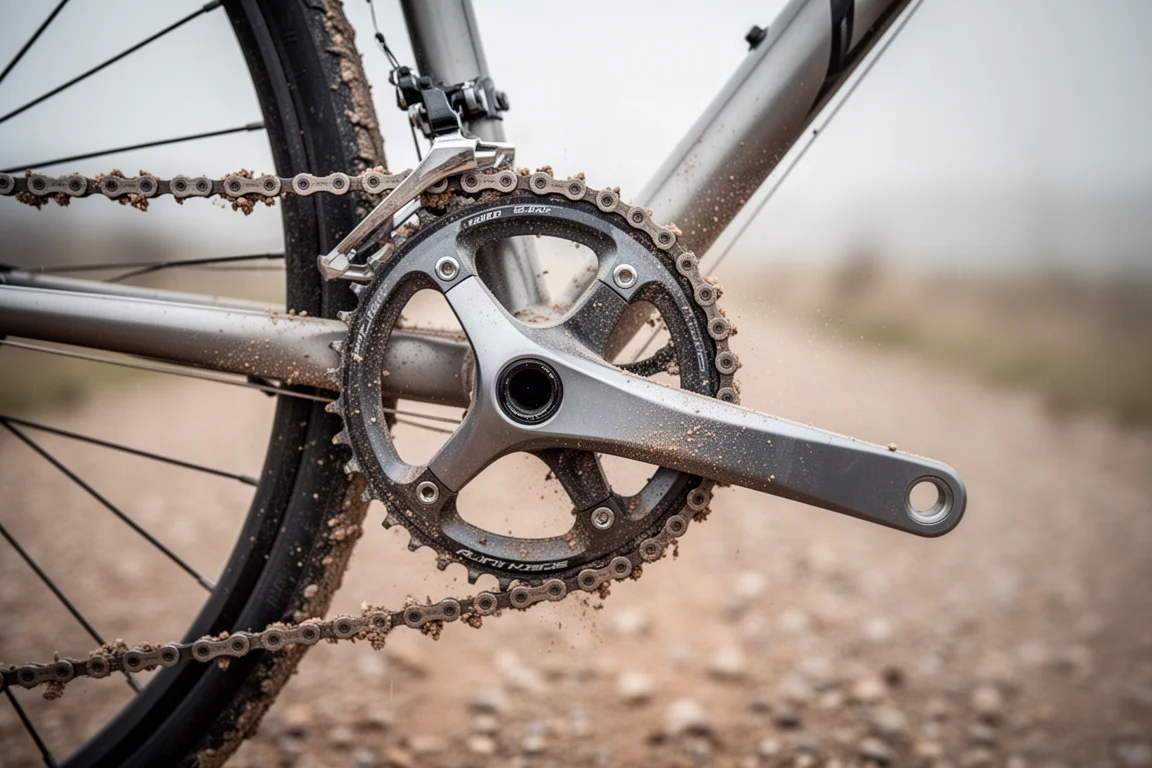
Ride position explains much of the rest. The gravel bike sits lower with the rider’s weight forward, which helps on tarmac. The mountain bike’s steeper seat angle and more upright posture keep the chest open and the weight settled on technical climbs.
Tires, Traction and Setup Notes
Tire choice drove much of the difference in grip. The mountain bike ran 2.4in tires at around 20 PSI, spreading the load across a larger area, which held traction on wet, chalky ground where the gravel bike lost grip. The gravel bike’s narrower, higher-pressure tires are the reason it rolls so well on tarmac and fast gravel.
The mountain bike’s tires were race-oriented, which suits dry, fast conditions. For winter riding, a more aggressive tread would be the first upgrade to consider. Pressure and volume are also the easiest variables to tune on either bike, and they change the feel more than most spec changes do.
Buying Advice: Which One Fits Your Riding
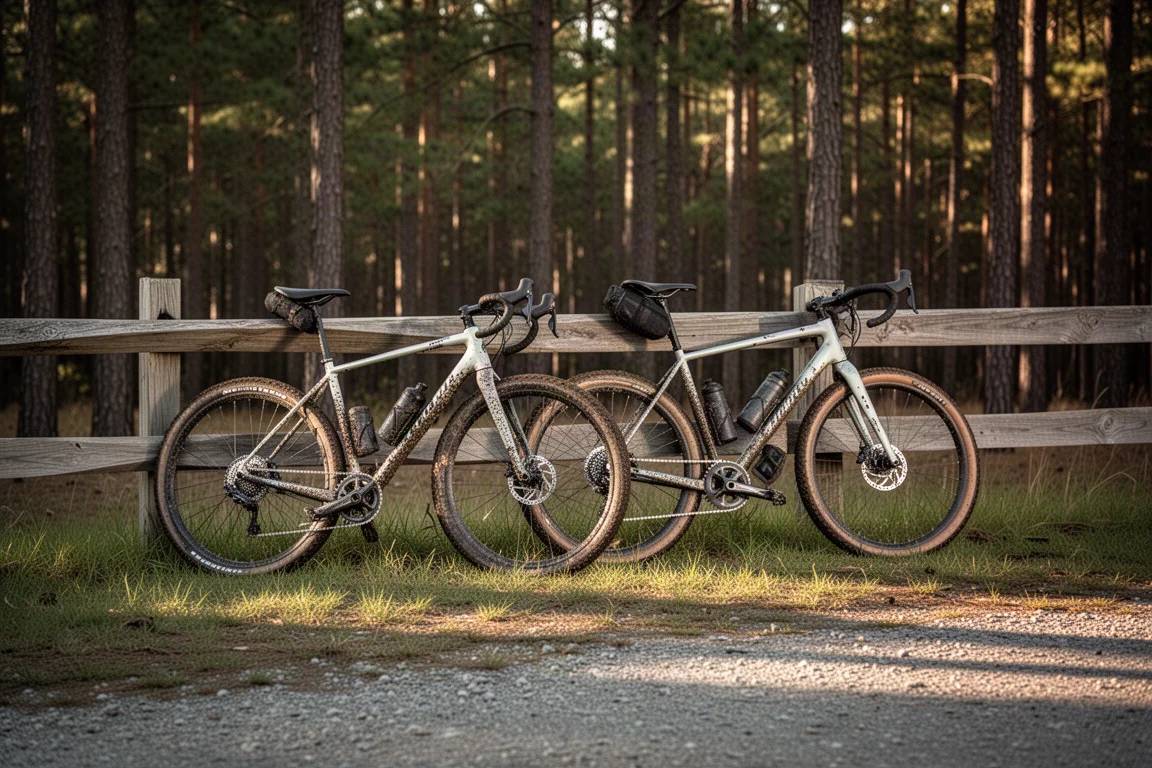
Pick the Supercaliber SL 9.7 if your rides regularly include roots, singletrack and rough descents, and you want one bike that stays composed when the terrain gets technical. It is the lighter of the two, it climbs well for a bike with 80mm of rear travel, and it makes rough ground feel manageable rather than demanding. Budget for a tire change if you ride through wet winters.
Pick the Checkout SL5 if tarmac, fast open gravel and long, rolling routes make up most of your riding, and you want suspension comfort without giving up drop-bar efficiency. The pivoting rack adds genuine carrying capacity, which suits commuting, errands or long days out. Accept that technical descents and sloppy singletrack will ask more of you.
If your terrain is mostly mellow gravel and tarmac, a rigid gravel bike remains the lighter and simpler choice.
Conclusion
Both bikes handled the same mixed loop, and both were enjoyable in different ways. The Supercaliber SL 9.7 is the more capable tool once the surface turns rough, rooty or steep, and its lighter build keeps it competitive on the climbs. The Checkout SL5 is faster and more efficient where the ground stays smooth, and its suspension takes the edge off long days without sacrificing drop-bar speed.
The deciding factor is the terrain you actually ride most often. If technical ground is a regular feature, the mountain bike platform is the safer buy. If speed on tarmac and fast gravel matters more, the full suspension gravel bike earns its place.
Further reading
Related Reviews
Cycling
2026 Bike of the Year and the Cycling Gear Worth Watching
A drop bar roundup for 2026 covering the Ridley Kanzo Fast 2.0, Shimano Dura-Ace Di2 R9300, Trek Checkpoint ALR Gen 3, Specialized Tarmac SL9, Garmin Fenix 9 and Insta360 X6.
Cycling
Best All-Road Bikes 2026: Six Versatile Endurance Road Bikes Worth Considering
A practical look at six all-road and endurance road bikes, from lightweight carbon speed machines to steel all-rounders and comfort-focused mile eaters.
Cycling
Best All-Road Bikes 2026: 8 Endurance Bikes for Road and Light Gravel
Eight all-road bikes that blur the line between endurance road and light gravel, compared on tire clearance, ride character, practicality, and value.