Reef Aquarium Accessories
Frag Plug Buyer's Guide: Choosing the Right Mount for Every Coral
A practical breakdown of frag plugs, tiles, and rock mounts, and which ones suit SPS, encrusting corals, and natural-looking reef displays.
Introduction
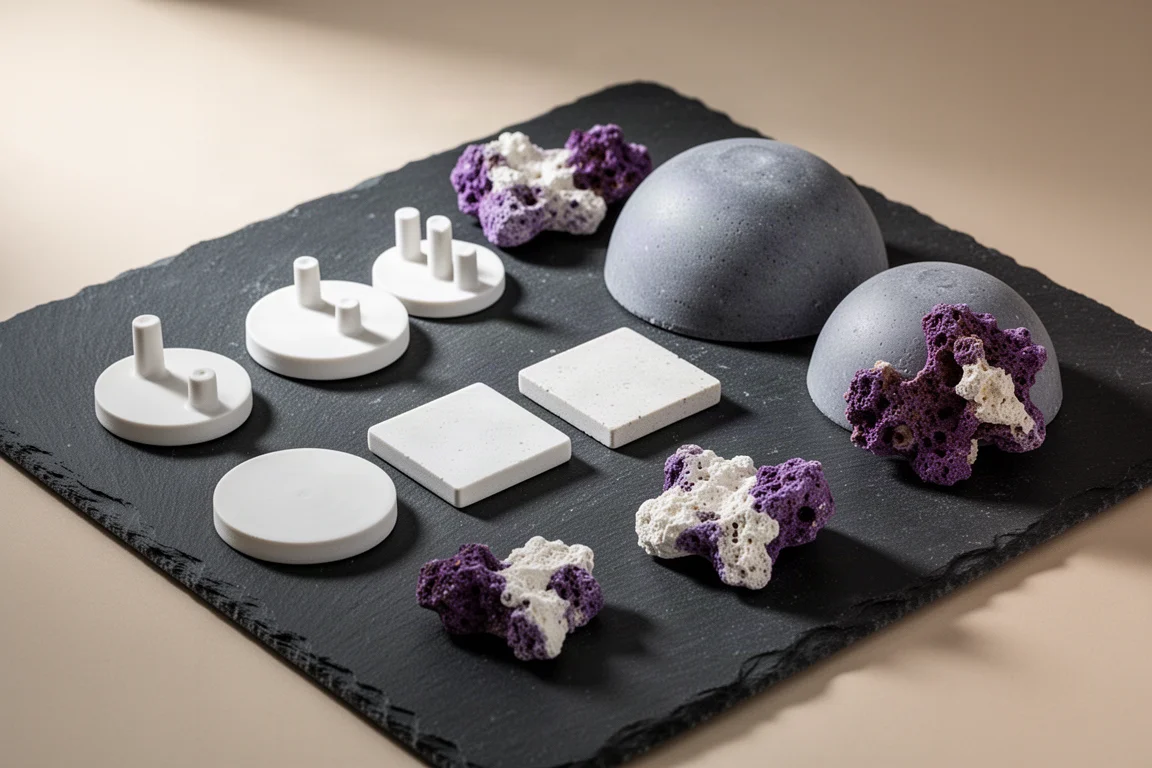
Browse any reef shop shelf or online catalog and you will find something close to twenty different styles of frag plug and coral mount. They look interchangeable at a glance, but they are not. A peg plug that keeps a high-flow SPS frag locked into egg crate is a poor choice for a coral that wants to spread across a wide flat surface, and a rock-textured mount that disappears into your aquascape makes no sense in a system where the rock is still bright white.
This guide walks through the categories that actually matter, then looks at five mounts worth knowing about, including the option that has become the default choice for a lot of reef keepers and a few that solve very specific problems better.
What to Look For in a Frag Plug
Four things tend to decide whether a mount works for you.
The first is whether it has a peg. A peg is what lets a frag sit steadily in egg crate, and that matters most for SPS. Sticks that get jostled around do not base out as cleanly as ones that stay still.
The second is surface area. Encrusting corals, zoanthids, and mushrooms need room to spread, and a small peg plug runs out of it quickly. Flat round disks and small square tiles both offer a broader footprint, and tiles have the added advantage of sharing edges, so a group of them can be arranged to let a coral migrate outward from one to the next.
The third is material. Kiln-fired ceramic is the version to choose if you plan to add a large number of frags at once, because it is inert and does not leach into the water even at scale. That matters less with a handful of frags and considerably more with five hundred.
The fourth is color, which is really about algae. White plugs reflect light and tend to grow more algae on them than black ones, and many commercial aquaculture facilities use black for exactly that reason. Purple sits in the middle, useful when you want a peg to blend in rather than stand out.
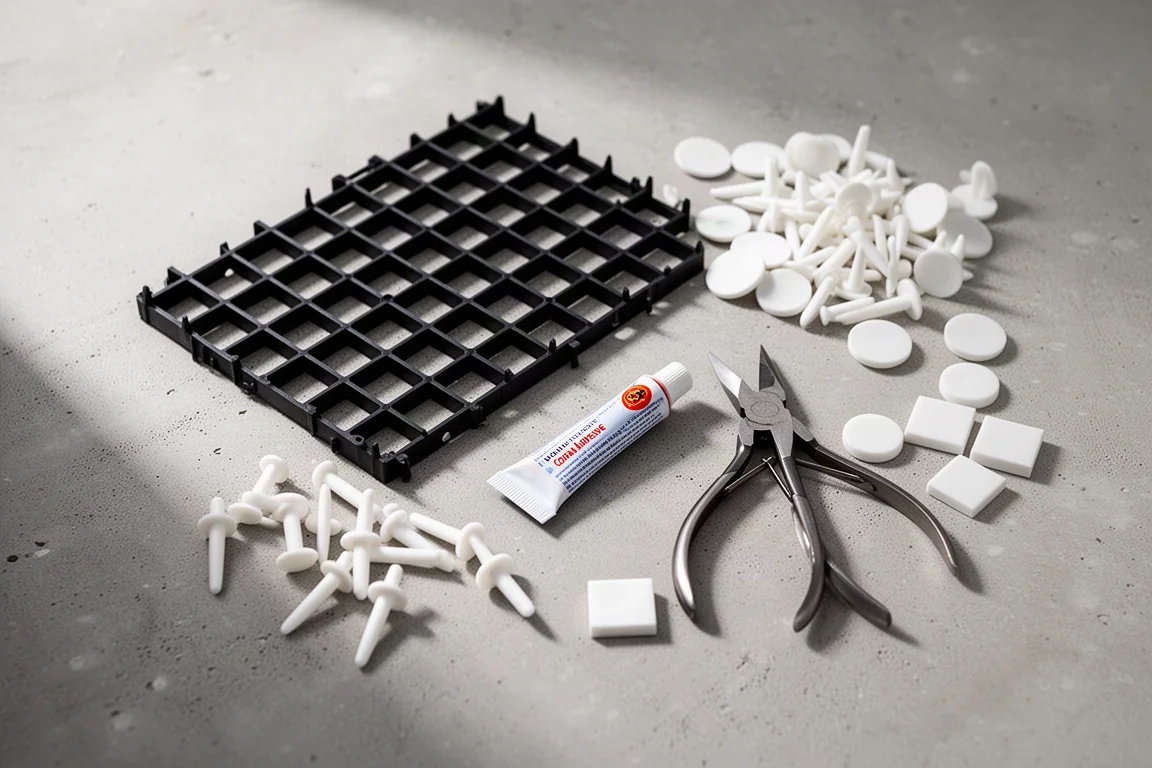
There is also the question of how a mount looks once the coral has grown over it. A circular plug leaves a visible circle at the base of an encrusting coral forever. Rock-based mounts avoid that by matching the color and texture of the rockwork around them, and most of them can be snapped off later, which lets the coral travel with its base instead of being cut free.
Ocean Wonders Frag Plugs: The Bestseller for SPS Grow-Out
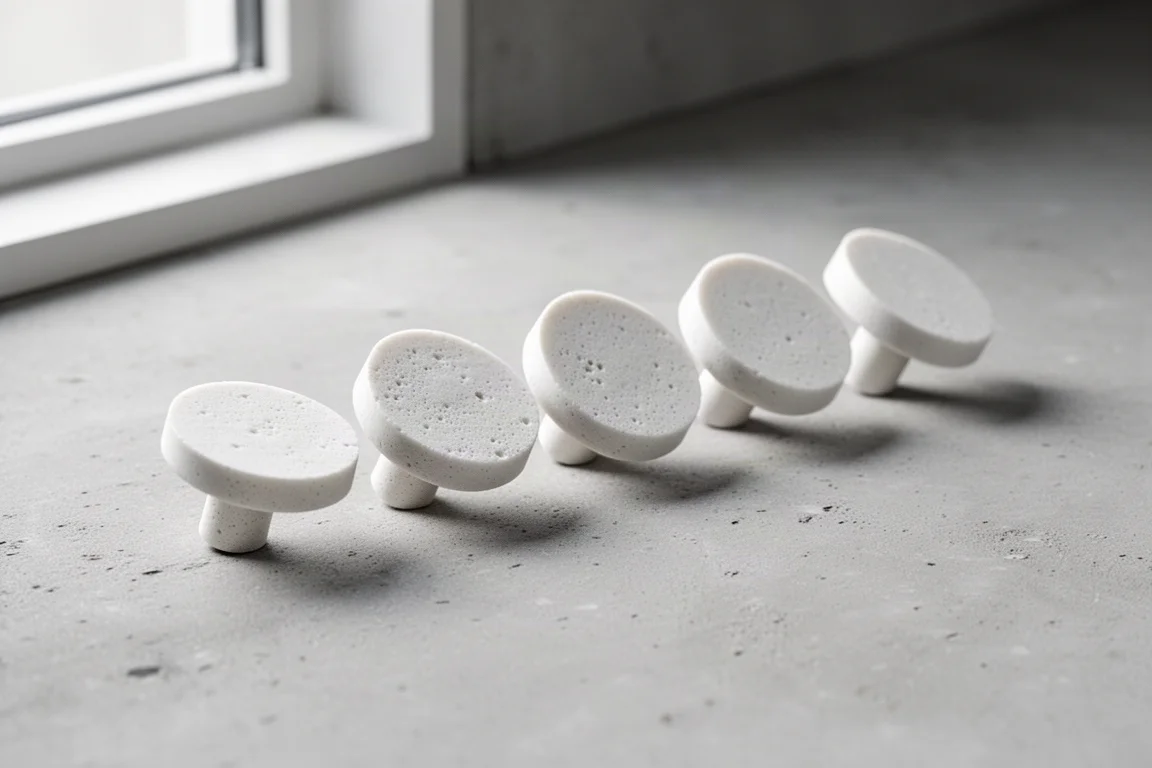
This is the standard white frag plug with a peg on the back, sold in a 25 pack, and it is the single most popular option out there. It is cheap, inert, quick, and ready to use, and the peg holds a frag firmly and steadily in egg crate, which is exactly what SPS wants.
The same range is also offered in an aragonite version and a ceramic version. The ceramic is the one worth paying slightly more for. It is kiln-fired, so it does not leach anything into the rock or the water even when you are running a large number of them at once.
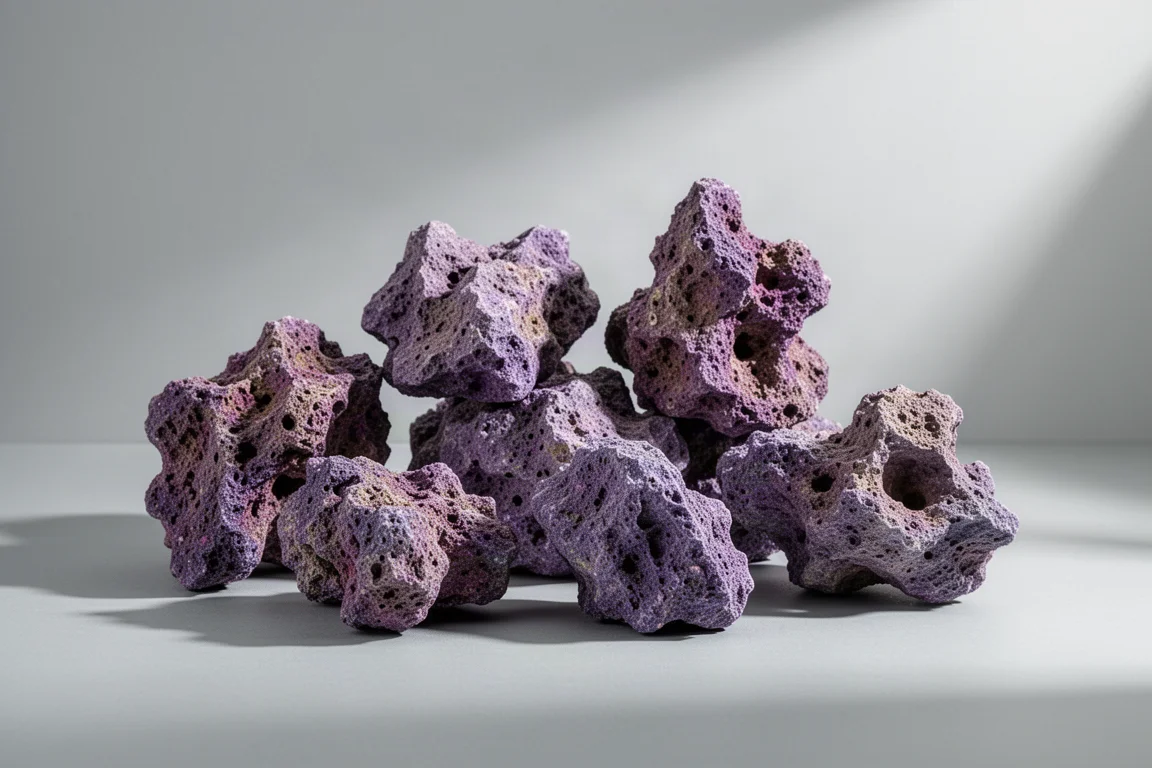
Caribsea FragZone: A Purple Rock Look for Coralline-Covered Systems
If your goal is a tank where new frags look like part of the rockwork, FragZone is one of the natural-look routes worth considering. It is essentially the same idea as plain rubble, but dyed purple, which means it blends into rock that is already covered in coralline algae and into matching purple life rock.
The practical benefit goes beyond appearance. Because it is a separate piece of rock rather than a plug, you can glue a coral onto it, let the coral encrust, and then snap the whole thing off later with the coral still attached. That makes it easy to move a colony, trade a frag, or reposition a coral without cutting into the coral itself.
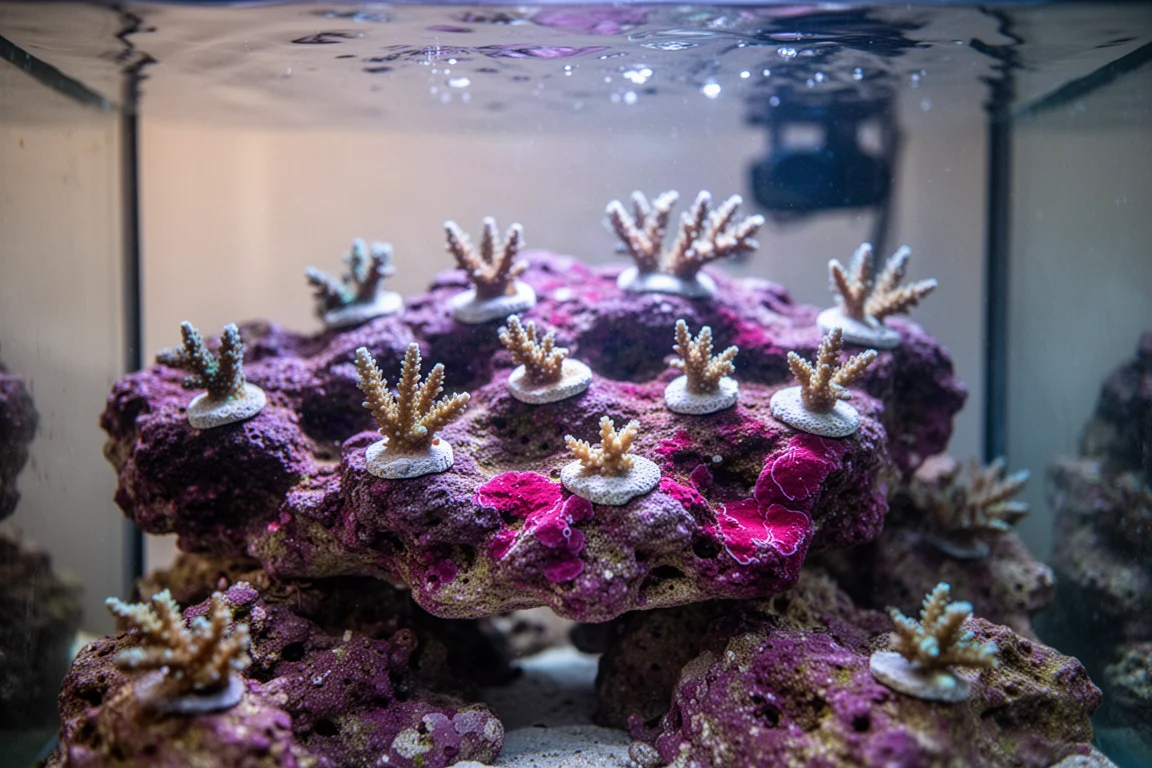
It is a good match for anyone who already runs purple or coralline-covered rock and wants the mount to disappear completely. In a system where the rock is still white, the same style of mount in an unpigmented version will look more natural.
Real Reef Frag Plugs: Shaped Mounts That Read as Natural Rock
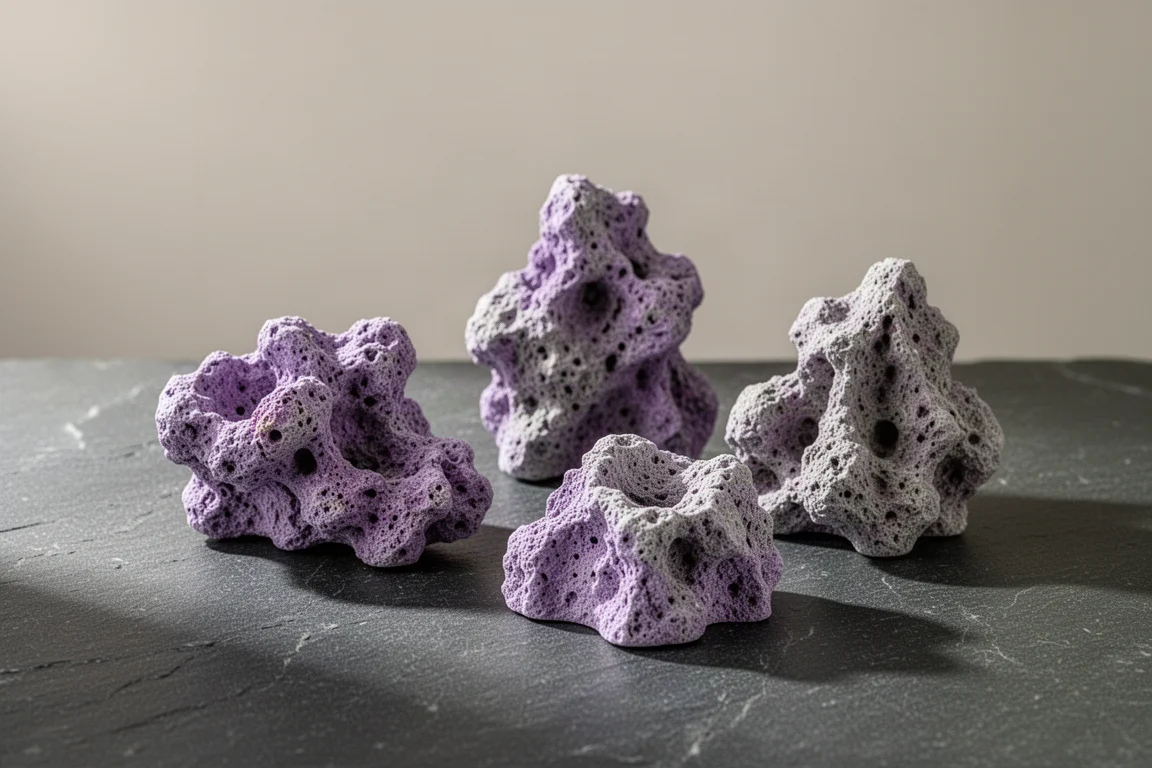
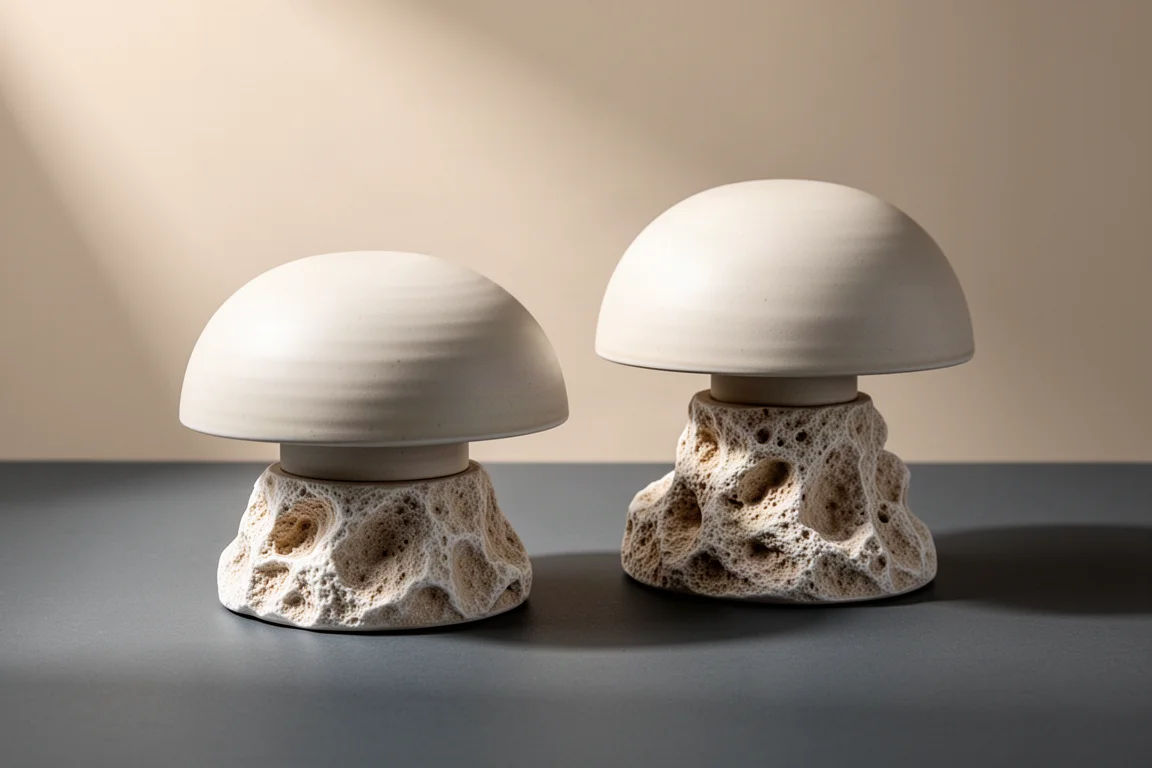
Real Reef takes a different approach to the natural-look problem. Instead of uniform rubble, these mounts are made in molds, so the shapes are irregular and organic rather than a perfect drilled circle. Some pieces clearly offer an ideal spot for an encrusting coral to spread over the top.
That irregularity is the point. When an SPS frag bases out across one of these, the result reads like part of the natural rockwork instead of a plug that has been welded into place. For a stick you intend to keep for the long term, a shaped mount is often the more satisfying choice than a standard peg plug.
MarcoRock Reef Saver Rock Frag Mounts: A Match for White Rock
These are white rock pieces, and it would be easy to dismiss them as rubble. They are not. The pieces are selected specifically for mounting frags rather than being a bag of leftover crumbs, so there is enough material to actually glue a coral onto.
The use case is straightforward. If your aquascape is still white, whether it is dry rock or a newer tank, a purple mount will stand out. A white rock mount blends in now and will age along with the rest of the rock as the tank matures.
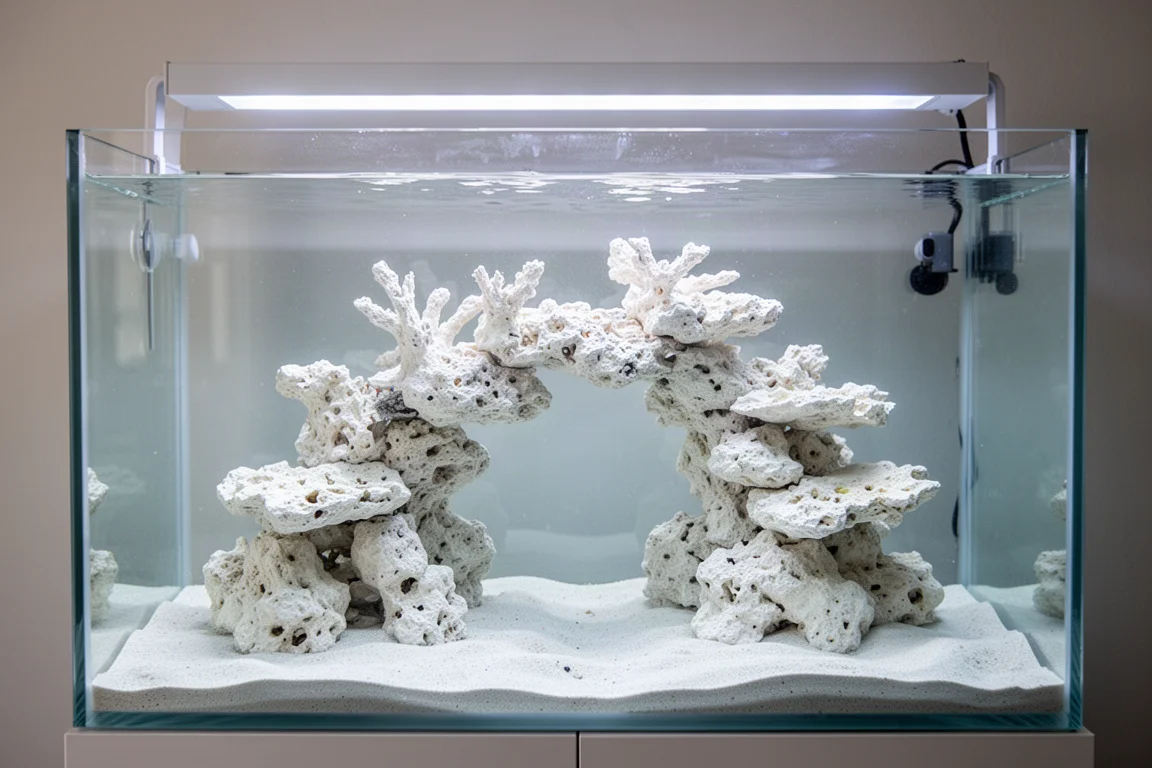
That combination of a natural white tone and a rock-like texture makes these a sensible default for newer systems and for anyone building out a frag-heavy aquascape from scratch.
Aquadomes: A Weighted Pedestal for Branching Corals
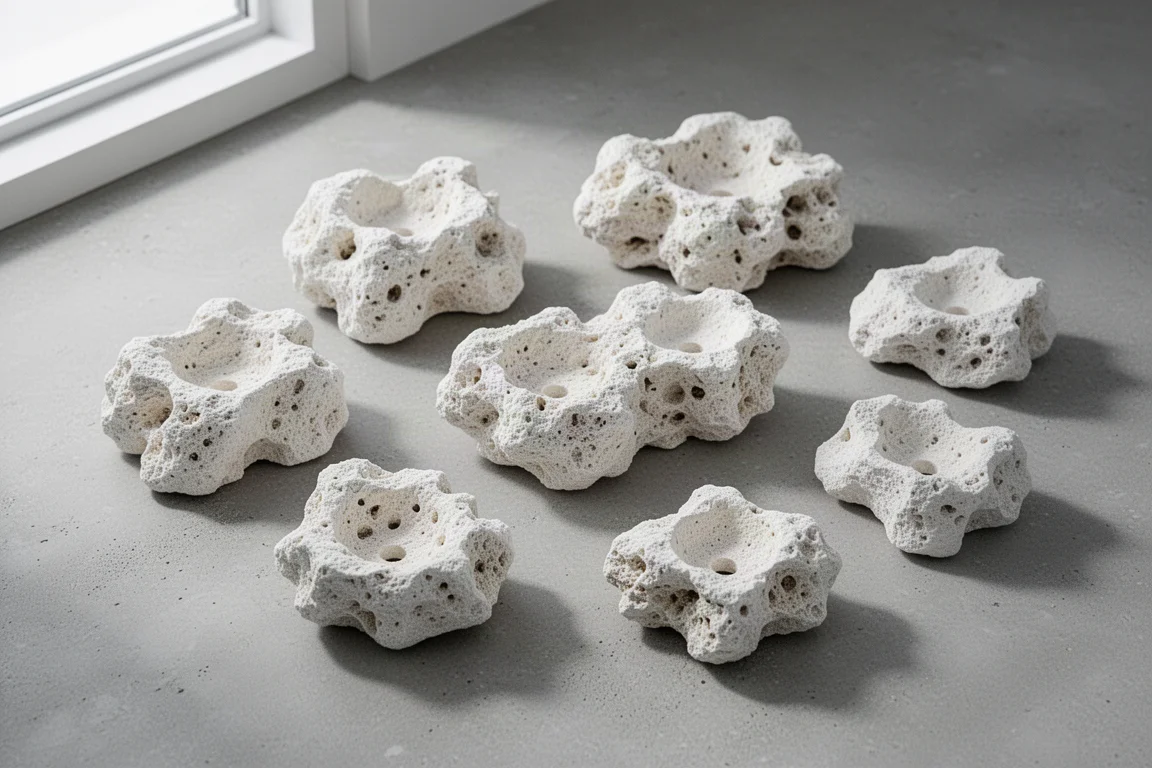
Aquadomes solve a problem that pegs and flat mounts do not. Branching corals such as torch, frogspawn, and other Euphyllia are usually wedged into a hole in the rockwork, which is rarely ideal. A head can end up too low, too close to the sand, or in a spot where it cannot open properly.
These domes are heavy, which is what makes them useful. You glue the coral to the top of the dome, and the weight keeps the whole thing in place even when the coral is large and catching a lot of flow. Sitting up off the sand, the coral has room to open wide instead of being crowded, and it gets a proper pedestal rather than a peg.
The domes also look likely to be reusable. Frag a Euphyllia colony, mount the cut heads on a dome, let them recover, then snap them off when they move on and use the dome again.
Buying Advice: Color, Material, and Glue Technique
Two choices cover most of the decision. Black absorbs light rather than reflecting it, so it grows noticeably less algae on the plug surface than white does, and it is what a lot of commercial facilities use. The trade-off is a slightly higher price, which is worth weighing against the time and effort of fighting algae at the base of every frag. Purple is the middle ground when you want the mount to be less visible without going fully black.
Material is the other one. If you are adding a large number of frags to a system at once, kiln-fired or heat-treated ceramic is the safer choice, because it will not precipitate anything into the water in meaningful quantities. A single cement-based mount will not move the needle in a small system, but five hundred of them might.
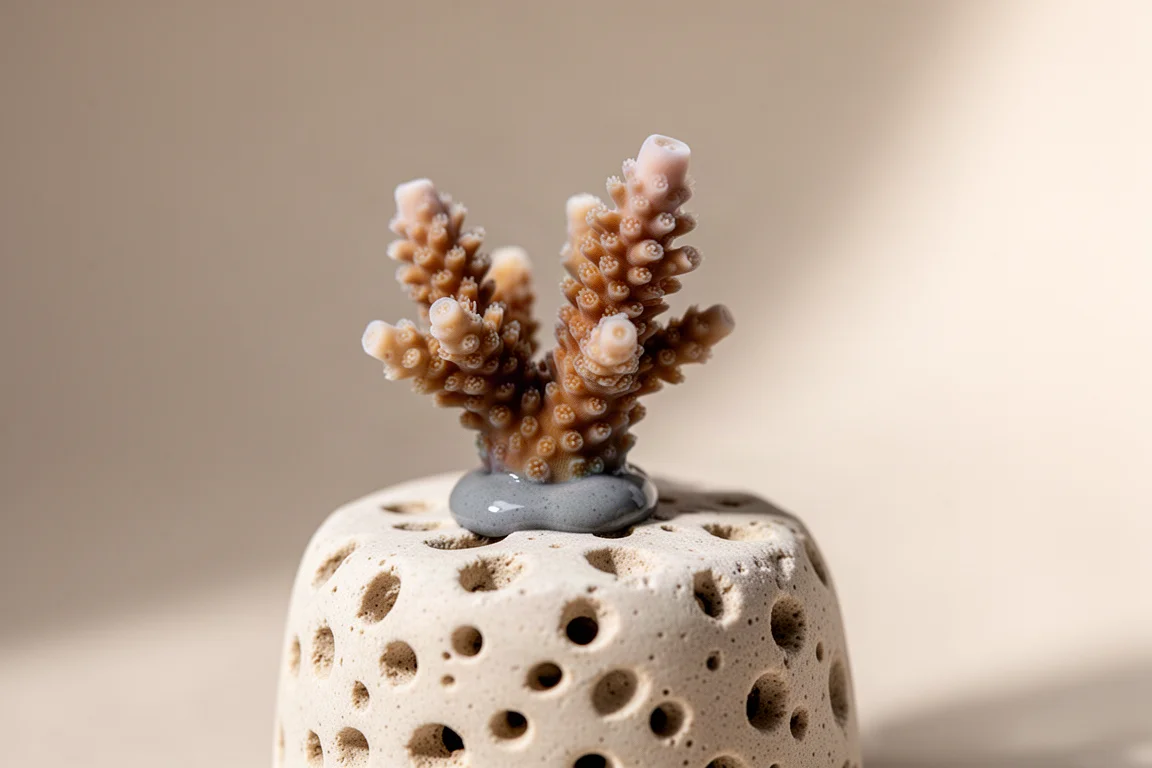
Technique matters as much as the hardware. Use the minimum amount of glue that will hold the frag for its current purpose, rather than burying the base in a mound of it. Live tissue that gets covered has to spend energy growing up and over the glue instead of onto the mount, and many corals take to rock or ceramic more readily than to a thick layer of adhesive.
Leave yourself a gap as well. If you want to pop the coral off later, keep a small open space or a crack under the mount so a chisel or similar tool can get underneath, and use only as much glue as the situation requires.
Conclusion
There is no single best frag plug, only the right mount for a particular job. A standard peg plug remains the fastest and most economical way to handle a large batch of SPS frags, while the ceramic version is the one to pick when those frags number in the hundreds. Encrusting corals and zoanthids do better on flat disks and square tiles that give them room to spread.
For display tanks, the natural-look mounts, whether purple, white, or molded into irregular shapes, are what prevent that telltale circle at the base of every colony. And for branching Euphyllia, a heavy dome does something none of the other options can.
Pick the category that matches the coral and the system in front of you, choose the color deliberately, and use less glue than you think you need.
Further reading
Related Reviews

Reef Aquarium Accessories
Neat Aquatics Trident Reagent Needle Guides Review: A Small Fix for Reagent Waste
An inexpensive add-on that keeps the dosing needle straight, reaches the bottom of the bottle, and trims reagent waste in a Trident setup.

Backpacking Gear
Building a 10 lb Base Weight: An Ultralight Backpacking Gear List
A practical walkthrough of the ultralight pieces behind a 10 lb base weight, from a 765 g pack and a roomy one-person tent to a full camp chair and a dependable water filter.

Road Bikes
10 New Road Bikes Worth Watching: Aero, Titanium, Steel and Endurance Standouts
A practical roundup of 10 new road bikes, from aero flagships chasing single-watt gains to titanium, steel and endurance platforms built for real roads.