Growing
FoxFarm Ocean Forest vs Bio365 Bioflower: A Side-by-Side Seedling Soil Test
Two popular potting soils, one grow setup, six identical seeds. Here is how FoxFarm Ocean Forest and Bio365 Bioflower performed under automatic watering.
Introduction
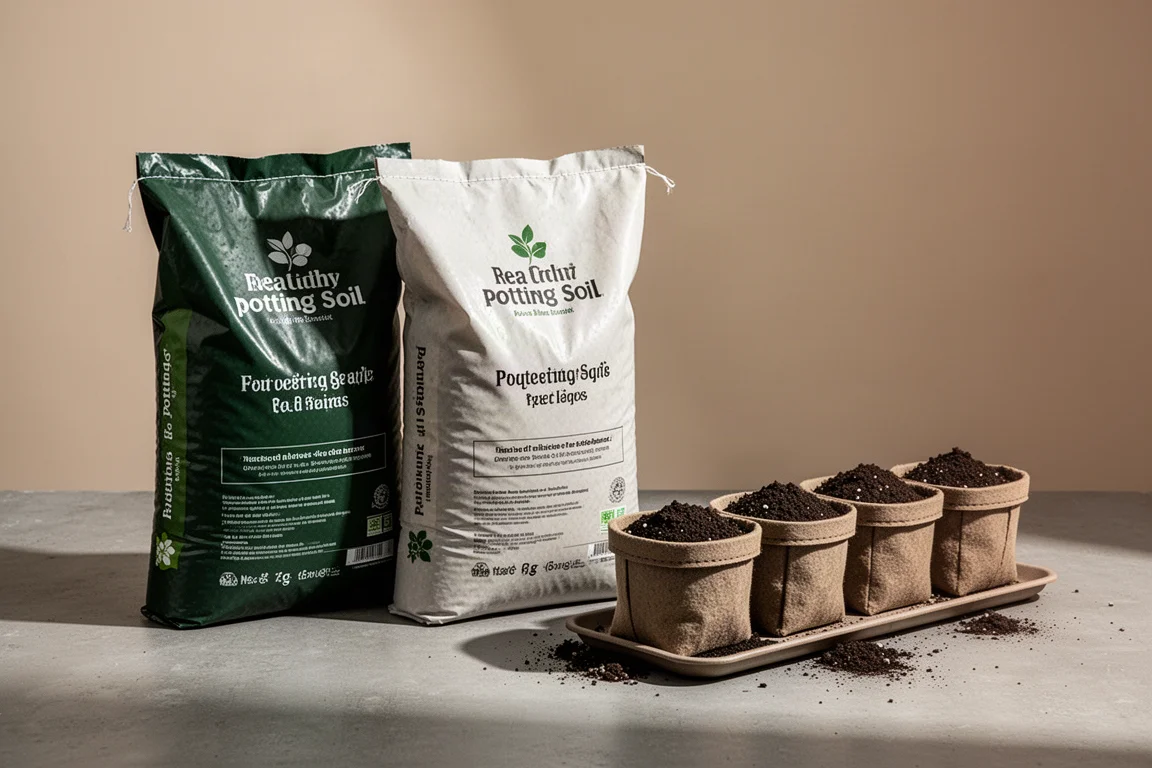
Potting soil can quietly decide how a plant’s first weeks go, and few matchups are asked about more often than FoxFarm Ocean Forest and Bio365 Bioflower. To see how the two actually compare, a controlled side-by-side test was run: six seeds of identical genetics, three planted in each soil, all in one-gallon fabric grow pots under the same light, same airflow, and same climate settings.
The twist was the watering. Instead of hand watering, all six pots went onto an automatic tray-based watering system to keep moisture as consistent as possible, so differences in growth would reflect the soil itself rather than watering habits.
The Side-by-Side Test Setup
The test used six one-gallon fabric grow pots, three filled with FoxFarm Ocean Forest and three with Bio365 Bioflower, all planted with seeds of the same cross: Frosted Lemonade crossed with Fire, a collaboration between Swag Genetics and From the Stash. Seeds were soaked for close to 48 hours until every one had cracked and shown a root, then planted at the same time.
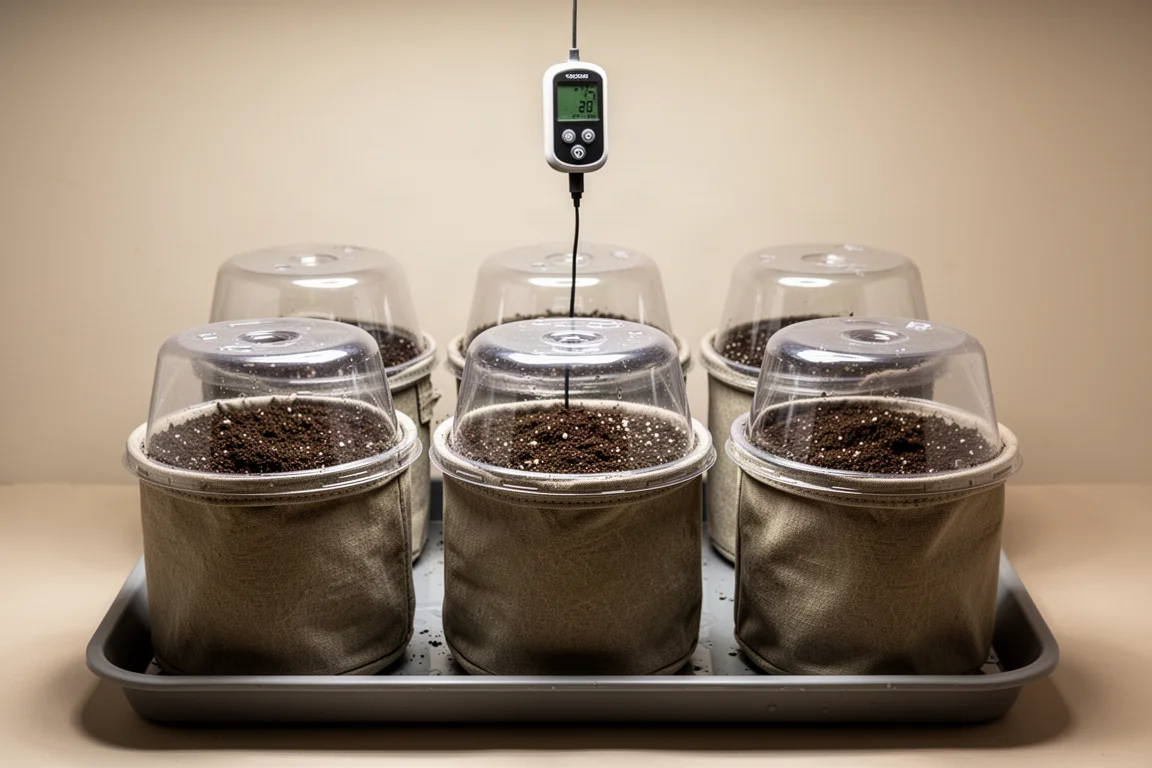
Moisture was monitored with a probe in one pot from each soil, and clear cups were placed over the seedlings as small domes to retain humidity during germination. Lighting was provided by a spectrum-tunable LED fixture running a cool-white spectrum for the vegetative stage, with gentle air circulation around, but not directly onto, the containers. At the start, the Bioflower pots read slightly more moist than the Ocean Forest pots, and the two mediums never settled at exactly the same moisture percentage, which hinted early on that these soils behave differently.
Early Results: A Clear Split
By day two after sprouting, all six seeds had emerged from the medium and looked about the same size. Growth stayed consistent across both groups through day four, with one plant slightly smaller than the rest but nothing drastic.
The real split showed up at day ten after the pots moved onto the automatic watering tray. The three Bio365 Bioflower plants looked excellent, notably more developed than what is typical at that stage. The three FoxFarm Ocean Forest plants were smaller, possibly stunted, with concerns that the waterlogged medium was holding more saturation than the seedlings could handle.
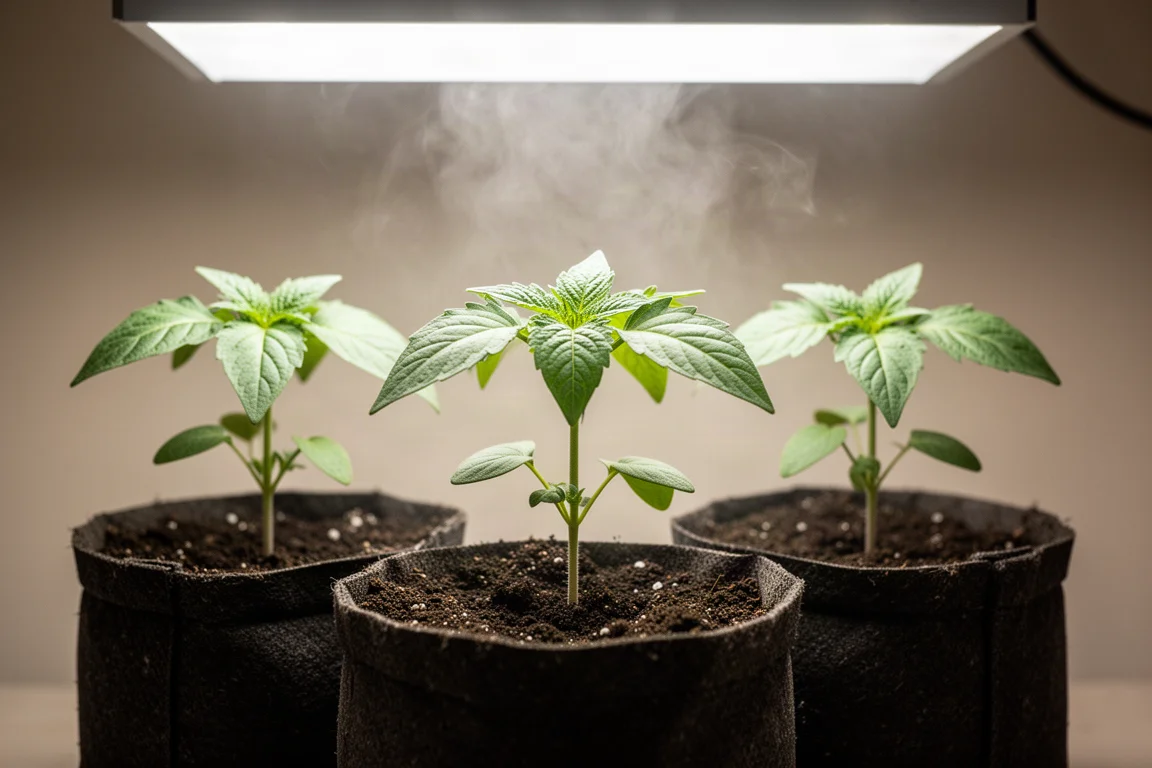
The moisture readings backed this up. The Bioflower pots sat in the low-to-mid 40s percent and the plants still thrived, while the Ocean Forest pots crept up to around 31 percent and the plants looked unhappy. The likely explanation is the makeup of the medium itself: Bioflower is a lighter, airier mix with more cocoa content, while Ocean Forest leans more peat-based and holds saturation differently.
The FoxFarm Ocean Forest Seedlings Stalled
The three Ocean Forest plants were pulled off the watering tray and moved to plain saucers to dry out and recover. It did not work quickly. By day 11 they were clearly stunted, with droopy stems showing a slight purple tint and classic overwatering symptoms. By day 13, leaves were discoloring and curling over with almost no new growth.
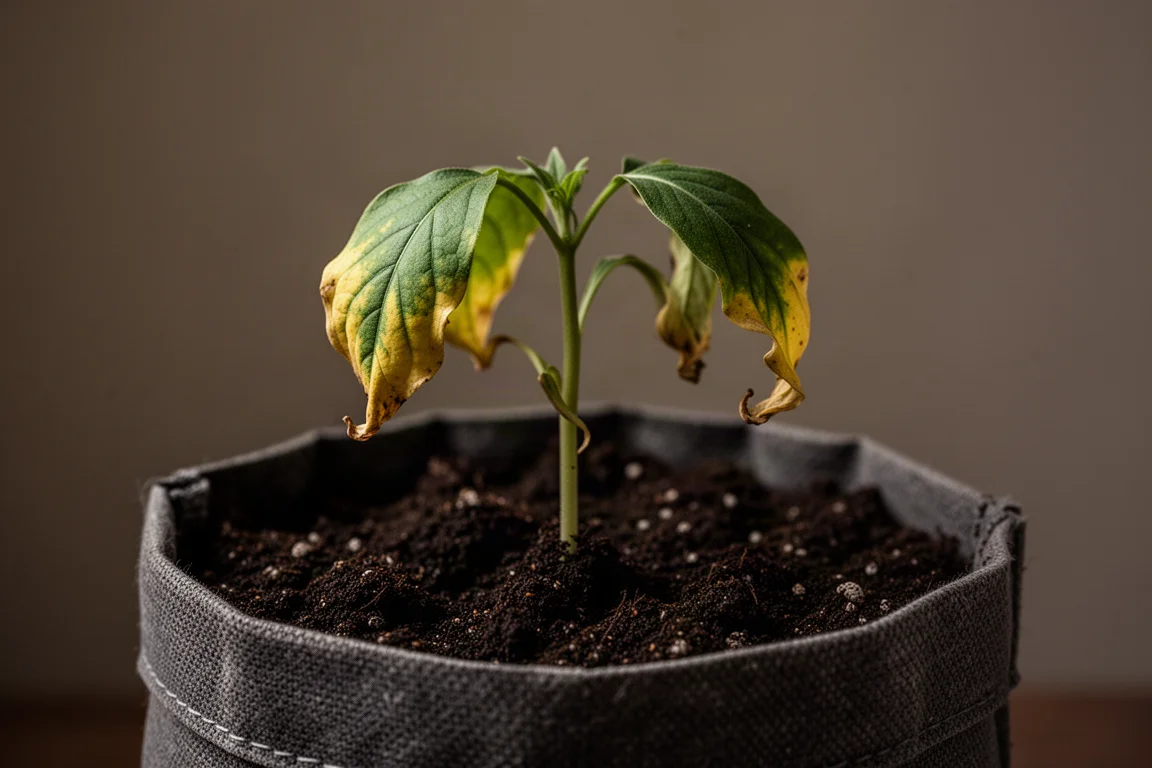
The lesson here matters even though the result was harsh: when seedlings get stunted this young, recovery can be slow or incomplete, and it is often faster to simply plant new seeds. Severely saturated medium can slow growth dramatically, yellow the leaves, and in the worst case kill seedlings outright. A more established root zone might have handled the higher saturation better, but young seedlings in this peat-heavier mix clearly could not.
It is worth being fair to FoxFarm Ocean Forest here: this soil has a strong track record under hand watering, and the setup itself, not just the soil, contributed to the outcome. The combination of a dense, peat-leaning medium and bottom-fed automatic watering simply did not suit seedlings in fabric pots.
Bio365 Bioflower Kept Getting Better
The Bioflower side told the opposite story. From day 10 through day 17, the three plants in Bio365 Bioflower kept growing strongly on the automatic tray with no signs of stress. The growth at day 11 matched, or by some accounts slightly exceeded, what Ocean Forest typically delivers under careful hand watering at the same stage.
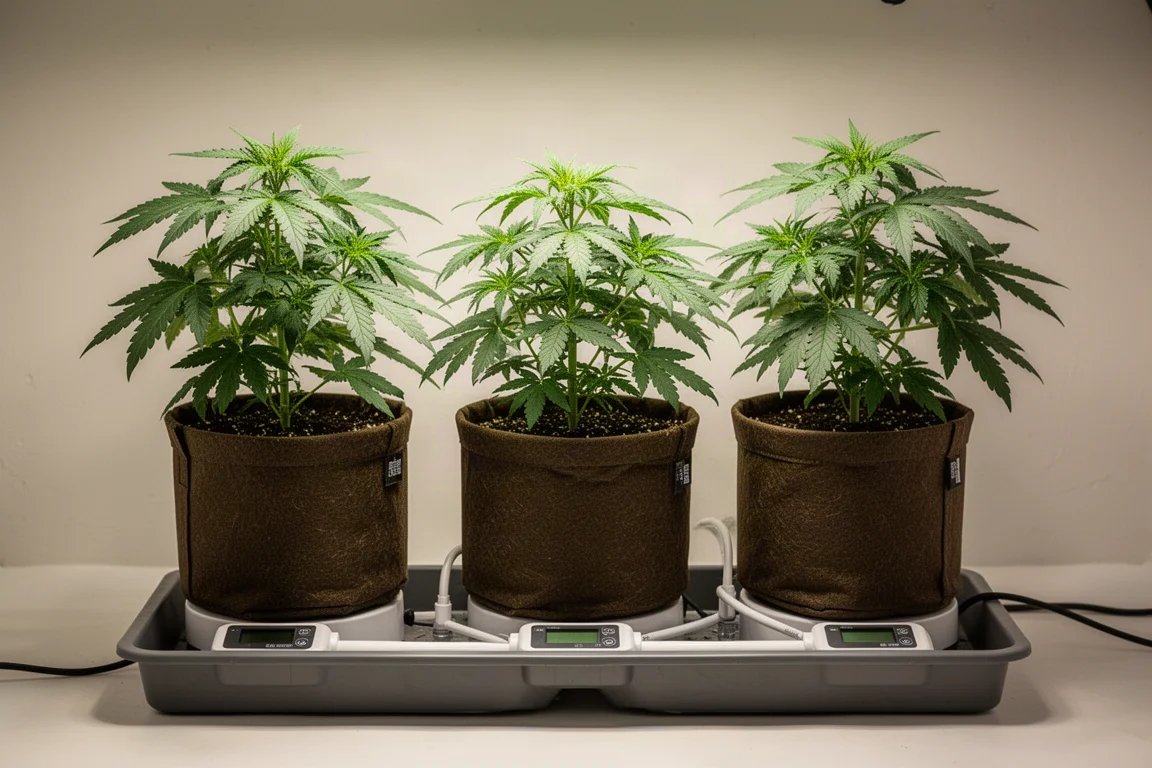
The combination of the lighter, airier medium and the fabric pots appears to give the roots enough air even when the tray keeps the medium consistently moist. For anyone running an automatic tray-based watering system, especially from the seedling stage, that difference is the headline finding of this test. The plants were later sent out for DNA sex testing to sort males from females, and the Bioflower plants carried on thriving while that was pending.
Which Soil Should You Choose?
The honest answer depends on how you water:
- Automatic or bottom-fed watering from seedling stage: Bio365 Bioflower is the safer pick. Its lighter, airier structure tolerated consistent saturation in fabric pots without stunting, and the plants responded with faster, healthier early growth.
- Hand watering: FoxFarm Ocean Forest remains a proven option. Its dense, rich profile pairs well with a grower who can let the medium dry back between waterings, and its usual results at this stage are strong.
- Mixed setups: If you plan to move seedlings onto an automatic system later, consider starting them in Bioflower and only transitioning to Ocean Forest once the root zone is more established, if at all.
One caveat should be carried forward from this test: because the Ocean Forest plants were inadvertently overwatered, the comparison is not a perfectly fair, like-for-like verdict on the soil alone. It is, however, a very practical lesson about matching your medium to your watering method.
Conclusion
In this side-by-side test, Bio365 Bioflower came out clearly ahead for seedlings grown with automatic tray watering, delivering faster and healthier early growth, while FoxFarm Ocean Forest plants became saturated, stunted, and slow to recover. Neither result condemns either product outright, but if your grow depends on consistent automatic moisture, the lighter, airier Bioflower medium is the one that handled it gracefully.
Product link
View more details for FoxFarm Ocean Forest
This product is mentioned in the review. Check the specifications, options, and compatibility before buying.
View more details for FoxFarm Ocean ForestFurther reading
Related Reviews
Coffee Equipment
BEEM vs Melitta EPOS: Two Automated Pour-Over Coffee Makers Compared
A detailed comparison of two automated pour-over brewers: the budget-friendly BEEM and the feature-rich Melitta EPOS with integrated grinder. Which one delivers better coffee?
3D Scanning Equipment
Budget 3D Scanners Under $1000: Four Practical Options Compared
A detailed comparison of four entry-level 3D scanners under $1000, including real-world scanning tests, accuracy measurements, and practical recommendations for automotive and mechanical projects.

E Ink Monitors
Dasung 13K vs Modos Flow: Which 13.3 Inch Color E Ink Monitor Fits Your Workflow?
A direct comparison of the two main 13.3 inch color E Ink monitors, covering image quality, front light performance, connectivity, and design.