Hi-Fi Accessories
Fosi Audio LC30 vs Douk Audio V3: Which Speaker and Amplifier Switcher Fits Your System?
Two affordable hi-fi switchers compared: the Fosi Audio LC30 and the Douk Audio V3, plus how to choose the one that suits your rack, your room, and the way you listen.
Introduction
Comparing two amplifiers, or two pairs of speakers, is harder than it looks. Swapping cables takes time, and by the time the second option is playing, the first is already fading from memory. Hearing is not a perfect recording device, so slow comparisons tend to flatten the differences that matter most.
A switcher solves this in the simplest way possible. Both amplifiers, or both pairs of speakers, stay connected at the same time, and a button press moves the signal from one to the other almost instantly. That speed is what makes a comparison genuinely useful rather than a test of memory.
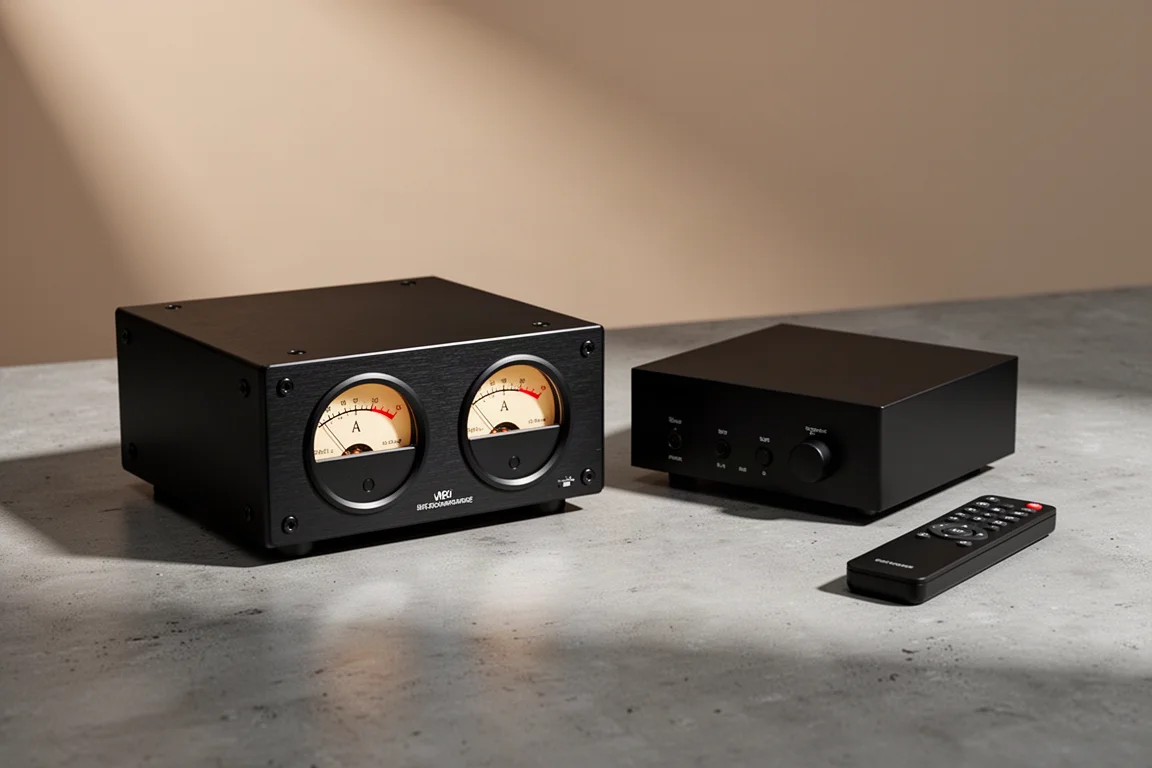
Two affordable units dominate this small corner of hi-fi: the Fosi Audio LC30 and the Douk Audio V3. Both handle the core job, and both now sell for similar money, so the decision comes down to build quality, controls, and how much space you have.
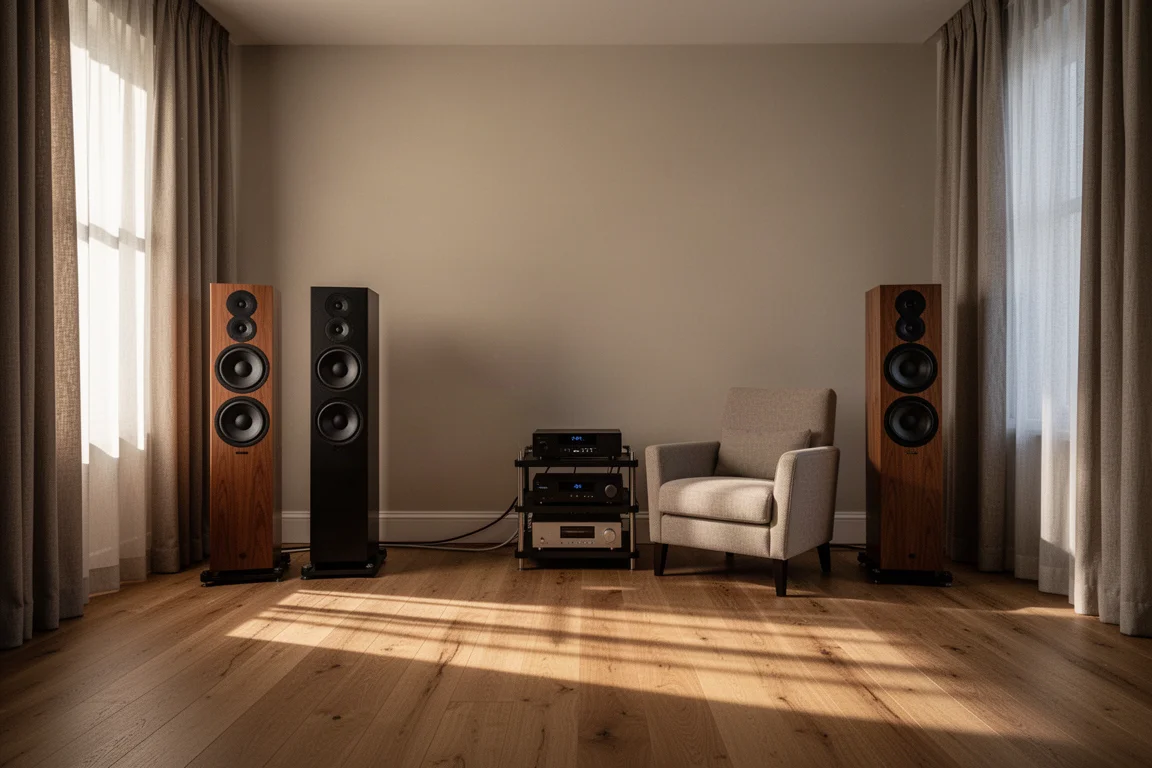
What separates one switcher from another is rarely the switching itself. It is how solid the unit feels, how easily it can be operated from a listening chair, and whether the speaker terminals still hold tight after a few hundred cable changes.
Why a Switcher Is Worth Owning
The case for a switcher is not convenience for its own sake. It changes what you can actually hear. With both amplifiers connected to the same speakers, playing the same track at a matched level, differences in tone, control, and dynamics become far easier to pin down than they are across separate listening sessions.
The same logic applies to speakers. If one pair is warmer and another is more energetic, keeping both connected to the same amplifier means the comparison is about the speakers alone, not about the room, the source, or the mood of the evening.
That is also where a switcher earns its keep financially. If a new amplifier turns out not to be an improvement over the old one, the money stays in your pocket. And if you have ever been asked whether a comparison was done blind, a switcher makes that possible without any special equipment.
Fosi Audio LC30: Build, Features, and VU Meters
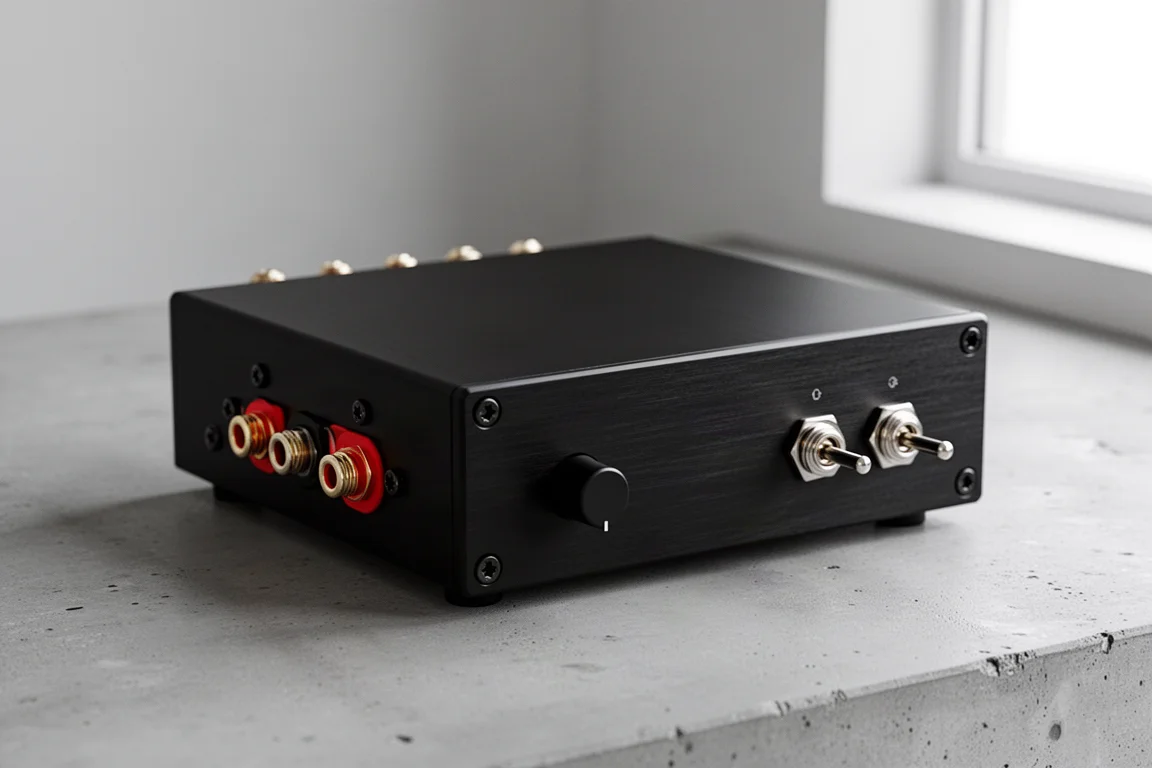
The LC30 is the more substantial of the two. It began as a crowdfunding project that was funded quickly, and the finished unit feels heavier and stouter than the older Douk Audio design. The knobs and switches have a more deliberate action, and the binding posts on the rear are beefy enough to take regular cable changes without complaint.
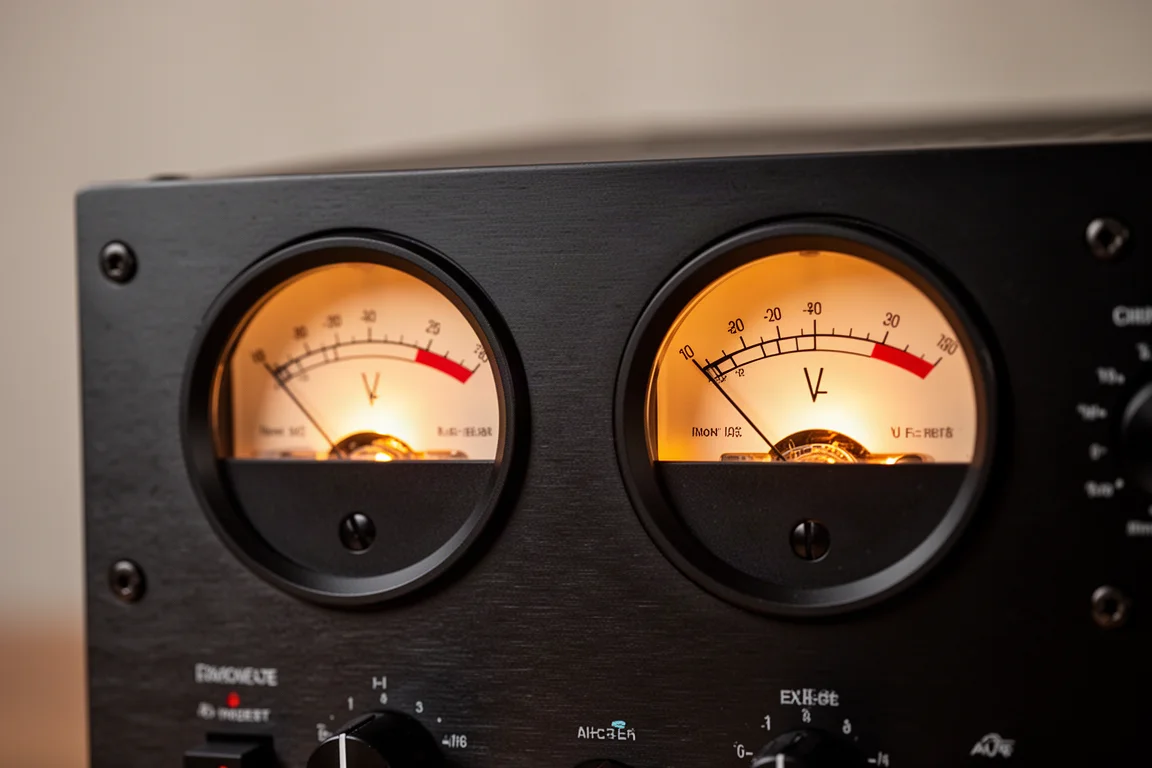
The front panel carries two analog VU meters, the sort of detail that makes a component pleasant to keep on a shelf. A small potentiometer adjusts meter sensitivity, so the needles respond sensibly to the level in your system instead of sitting pinned at one end of the scale.
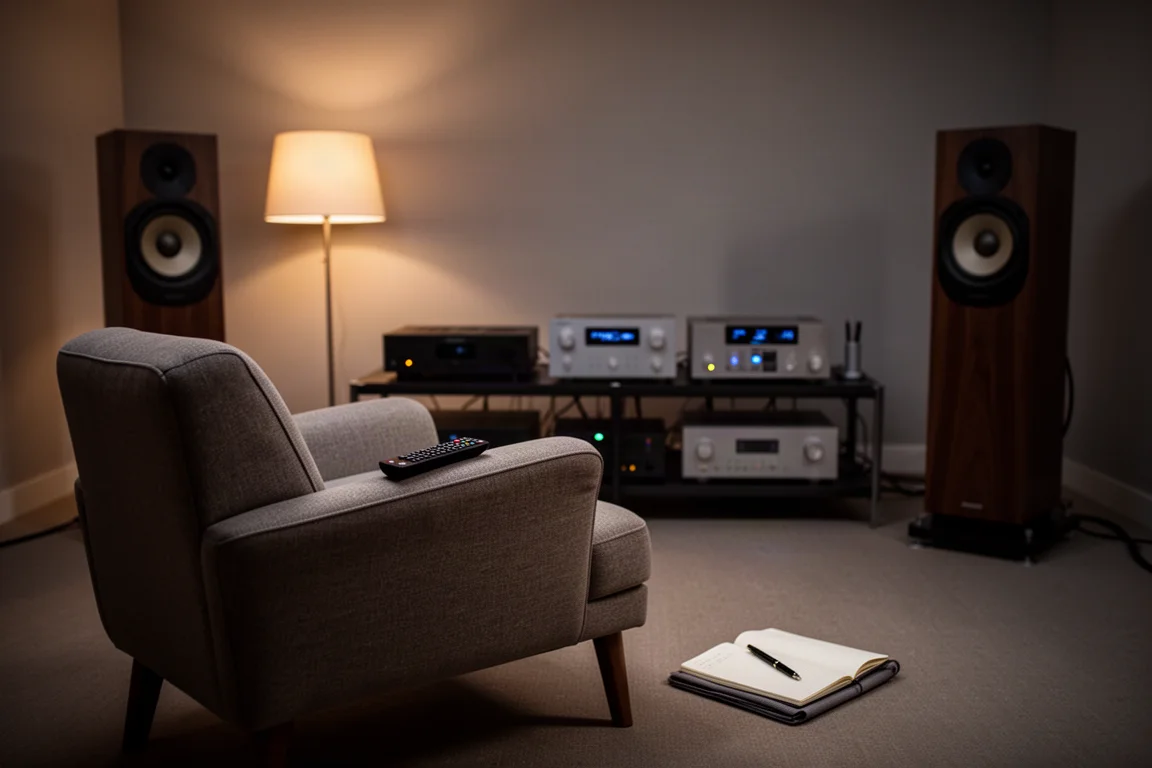
The remote control is the strongest argument for the LC30. It provides A and B buttons for two amplifiers, 1 and 2 for two pairs of speakers, a button that raises or lowers the display lighting, and a sensitivity control. Switching can therefore happen from the listening position, which is the only place a comparison is really worth doing.
Two setups matter most here. Two amplifiers can feed one pair of speakers, or one amplifier can feed two pairs of speakers. With an AVR’s front channels running into the switcher, a pair of speakers dialed in for movies and a second pair kept for music can both stay connected and be swapped at will.
Douk Audio V3: What It Still Does Well
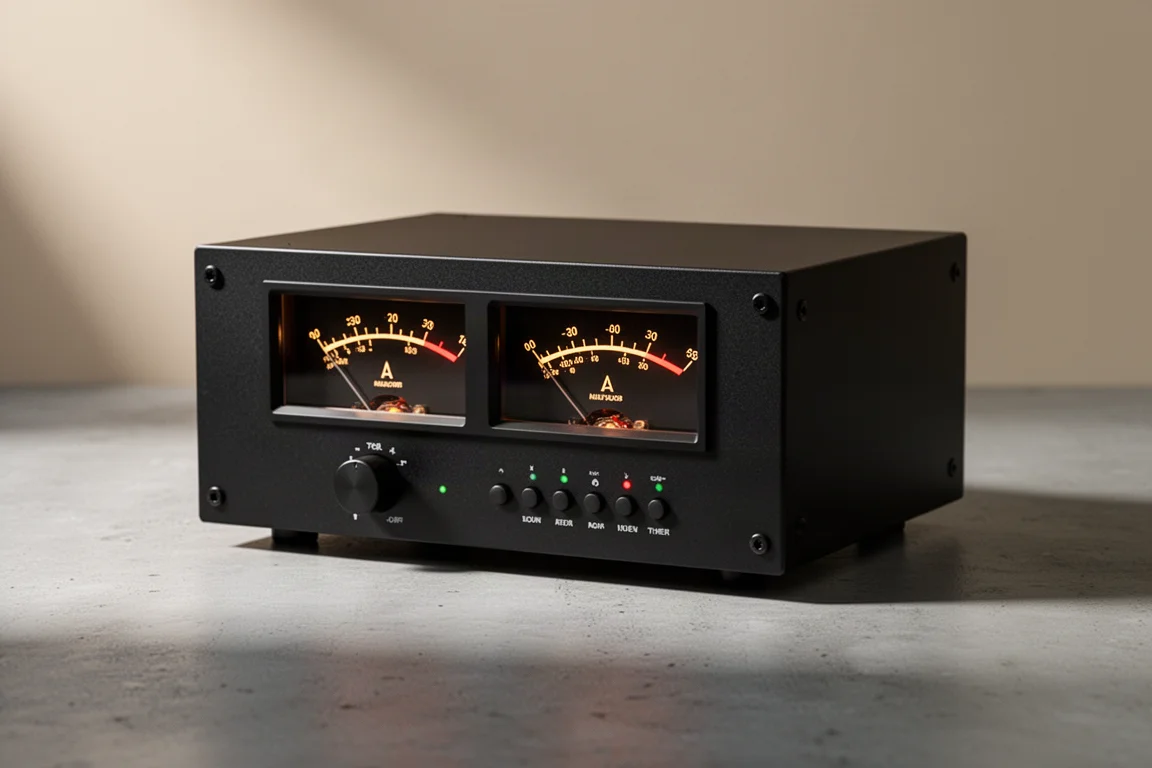
The Douk Audio V3 has been a popular way into switching for good reason. It does the essential job, it takes up less space than the LC30, and for straightforward A/B work it remains perfectly usable.
Where it falls short is the long haul. With heavy use, the speaker terminals on the back can work loose, and a channel can occasionally drop out and need to be re-seated. The knobs, switches, and remote control are all a step behind the LC30’s, and the unit as a whole has a lighter, less confidence-inspiring feel.
Because the two units now sell for roughly the same money, the V3 is mainly a choice for listeners who are short on space or who do not need the LC30’s extra controls. It is not a bad switcher. It is simply the older design at a price that no longer undercuts its rival.
Practical Setups: Home Theater, Two-Channel, and Speaker Rotation
A switcher is most useful when it removes a compromise. In a home theater system, the front channels can run through the switcher so that a pair of speakers tuned for movies and a second pair kept for music both stay connected. Movies go to one pair, music to the other, and nothing has to be unplugged.
The same arrangement works for listeners who keep different speakers for different genres. A warmer pair for acoustic and jazz, a more energetic pair for heavier material, and a single button press to move between them.
There are practical limits. Both pairs of speakers need somewhere to live, and two pairs sitting side by side can affect soundstage and imaging. Moving one pair further out, or positioning it differently in the room, is usually enough to keep the arrangement workable.
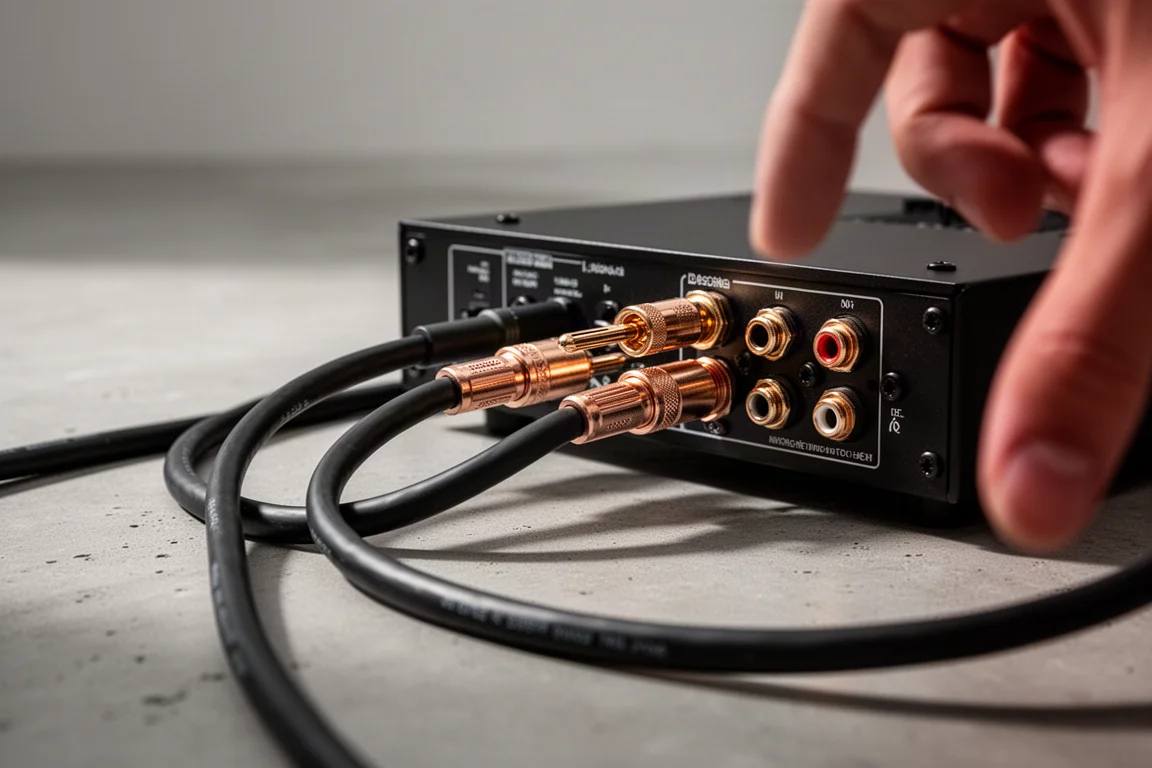
Rear binding posts are worth a look before buying. A switcher is only as reliable as its terminals, and frequent cable changes put real wear on them, which is exactly where the LC30’s heavier hardware has an advantage.
Blind Testing Without the Guesswork
One of the most valuable things a switcher enables is blind listening. Differences between amplifiers are often small enough that expectation does most of the work, and the only way to remove that is to not know which unit is playing.
There are a few simple ways to do it. Tape over the indicator lights removes the visual giveaway. Someone else can connect the amplifiers so you genuinely do not know which is which. Or you can press the amplifier button several times in a row until you lose track of where you have landed, then listen, switch, and listen again.
For amplifiers, level matching matters. Test tones can be used to bring two integrated amplifiers with different volume controls to the same output level before any comparison begins. Speakers are harder to match because their sensitivities rarely line up exactly, but switching between them from the same source and the same amplifier still tells you far more than swapping cables over an afternoon.
Writing down what you hear, and which option you preferred, turns a vague impression into something you can actually trust.
Buying Advice: Matching a Switcher to Your System
Start with what you want to switch. If the answer is two amplifiers into one pair of speakers, or one amplifier into two pairs, both units can do it. If the answer is remote control from your seat, the LC30 is the one to choose.
Build quality is the second consideration. The LC30 is heavier, its controls feel more substantial, and its binding posts are better suited to repeated use. The V3 remains a capable switcher, but its terminals and controls show their age under heavy use, and it is now priced alongside a unit that outclasses it on hardware.
Space is the third consideration, and the only area where the V3 has a clear advantage. If your rack is tight, its smaller footprint may matter more than the LC30’s extra features.
On price, the LC30 lists at $150 and is frequently available with a 15 percent off coupon that brings it to around $135, which is remarkable for a component with meters, a remote, and this level of build. The V3 sits at a similar price, which makes the comparison unusually straightforward.
If you are buying an amplifier or a pair of speakers to compare, buy from a seller with a liberal return policy. If your current gear sounds better, you want the option of sending the new purchase back and getting your money refunded. A switcher makes that decision easier to reach, but it does not replace the safety net of a good return window.
Conclusion
The Fosi Audio LC30 and the Douk Audio V3 both do the same fundamental job, and either one will let you compare two amplifiers or two pairs of speakers in real time. The difference is in the details: the LC30 is built more heavily, its controls are better, and its remote lets you switch from where you actually listen.
The V3 keeps a place for listeners with limited space, and it still works. But at the same price, the LC30 is the easier recommendation for most systems, and it is the one that makes an upgrade feel less like a gamble.
Further reading
Related Reviews
Hi-Fi Accessories
Affordable Hi-Fi Accessories Under $100: A Practical Gift Guide
A practical guide to budget Hi-Fi upgrades, from 12-gauge speaker cable and isolation pads to affordable bookshelf speakers, a warm stereo receiver, and a vinyl anti-static device.
Hi-Fi Accessories
Five Affordable Hi-Fi Upgrades to Modernize a Vintage or Budget System
Five inexpensive add-ons that bring HDMI, extra inputs, phono support, and CD playback to a modest hi-fi setup.
Hi-Fi Accessories
Best Hi-Fi Accessories for Summer: Five Upgrades That Improve What You Hear
A free room-measuring app, a genuinely quiet fan, a serious Bluetooth speaker, and two vinyl essentials that make summer listening better.