Soundbars
Focal Hekla Review: A First Soundbar That Plays Like a Serious System
The Focal Hekla pairs 15 drivers, 660 watts, and Dolby Atmos with app-based room tuning, a dedicated subwoofer output, and a $3,600 starting price.
Introduction
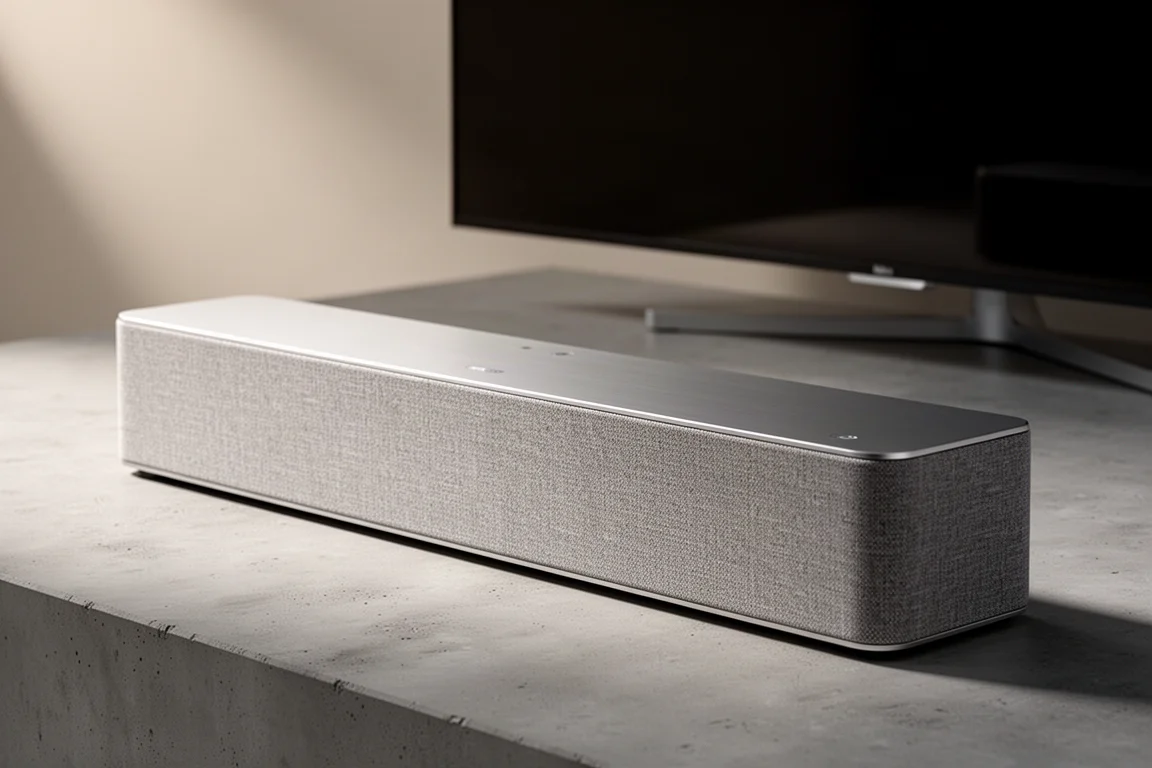
Focal is best known for building speakers, and the Hekla is the company’s first true soundbar. That distinction matters. The Muso 2 could connect to a television, but it was not a true soundbar, and it was technically a Naim product. The Hekla is not an addition to that line. With 15 drivers, 660 watts of power, and Dolby Atmos processing, it is a different proposition entirely, and it arrives at a moment when soundbars have become genuinely capable alternatives to a room full of separates.
The pitch is straightforward. Movie night should deliver scale and impact, and the room should still work as a room the rest of the week. The Hekla is built around that idea, and the results are more convincing than the category usually allows.
Who the Focal Hekla Is For
The Hekla suits listeners who want a cinematic system without turning the living room into a project. There are no rear speakers to place, no cable to route behind a sofa, and no equipment rack to accommodate. The bar sits below the television, connects with a single HDMI cable to an ARC or eARC port, and that is the physical installation finished.
It is also a standalone music system. The Hekla supports most major streaming services, and its optical input means a source such as a CD player can be connected directly. A subwoofer can be added later if the room or the material calls for more low-end weight.
One practical constraint is worth knowing before purchase: the Hekla cannot be wall-mounted. It needs a cabinet or another flat surface beneath the screen.
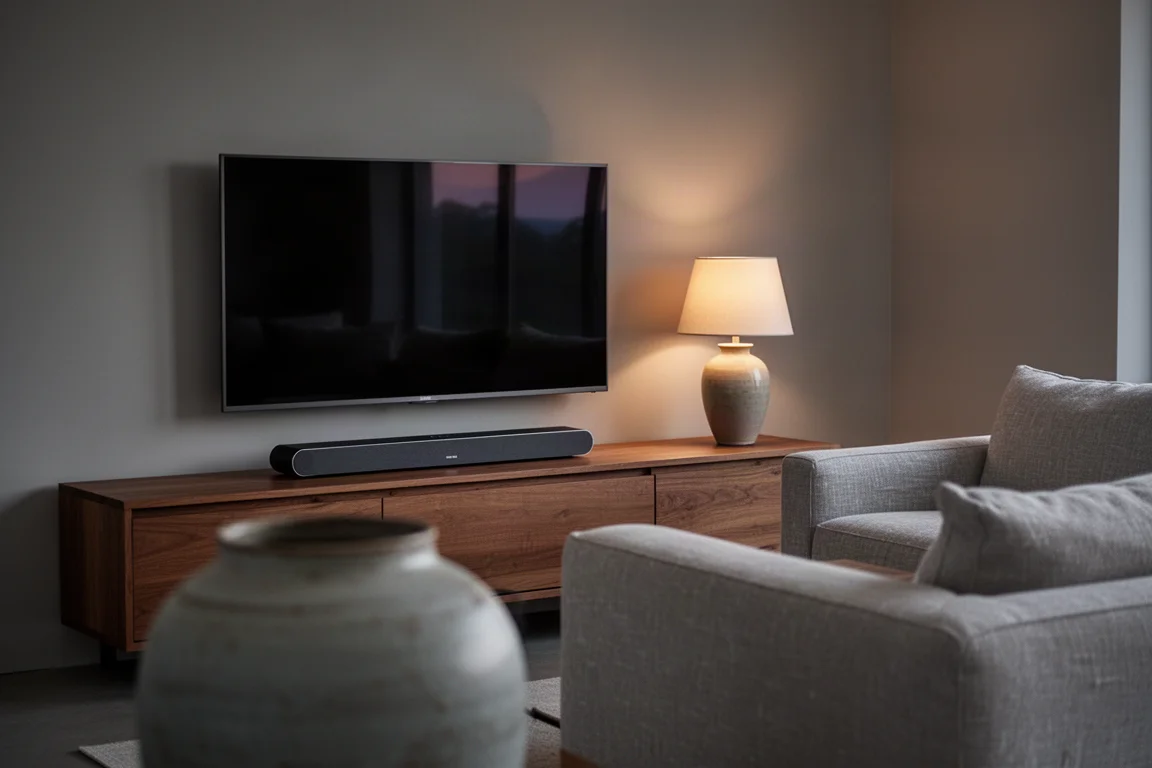
Placement is the one decision the Hekla leaves to the owner. Because the bar relies on reflected sound to build height and width, the surface beneath it and the distance to the side walls shape what the listener hears.
Main Strengths
The most striking quality of the Hekla is how little it sounds like a soundbar. It does not keep reminding the listener that everything is coming from a single enclosure under the television. It sounds bigger, fuller, and more convincing than its form factor suggests.
Scale is the headline. In a living room roughly 20 feet wide, with a ceiling between 9 and 10 feet and a listening position about 12 feet from the screen, Dolby Atmos material stretched corner to corner and reached well overhead. There was even a sense of sound moving behind the listening position, although the effect was strongest across the front 180 degrees and faded fairly quickly beyond that. In a room that deep, that is still a strong result, and smaller rooms with parallel walls should extract even more immersion from the bar.
Film soundtracks behave the same way. Big, dynamic material plays with a level of scale, impact, and effortless immersion that is unusual for a single-enclosure system. It is not the same as a separates-based home theater costing roughly the same money, but it gets closer than most alternatives.
Tonality, presence, scale, and clarity are all strengths here, and the build quality is refined enough that the bar does not draw attention to itself in a living space.
Sound Quality and Room Adaptation
Setup runs through the Focal Naim app, which found the bar quickly, joined it to the home network, and walked through Focal’s adaptive acoustic personal tuning, known as Adapt. There is no microphone and no series of test sweeps. The owner enters the distance from the bar to the ceiling, to the side walls, and to the listening position, and Adapt uses those measurements to tune the output to the room. In the context of a home theater installation, that is about as painless as calibration gets.
Five sound profiles are available: Dolby movie, Dolby music, night, sphere movie, and sphere music. The sphere modes are designed to create a wider, more immersive orb of sound with a larger sweet spot. They also raise output by a few decibels and add bass and treble. The difference is audible. Both sphere profiles sound more dynamic and lively, with a larger sense of horizontal and vertical scale. With upmixed stereo music, sphere music can sound a little echoey at times. The Dolby modes are less dramatic but far more consistent, and they hold up better for everyday listening.
Bass performance depends heavily on the room. In a space that Focal cautions is near the upper size limit for the Hekla, output measured down to about 26 Hz in room, with the strongest energy between 30 and 60 Hz. At the top end, response extended to 20 kHz with a noticeable energy bump around 10 kHz. The sphere profiles pushed that 10 kHz region a few decibels higher and accentuated the bass hump around 40 Hz. Thirty hertz is not technically full range, but the Hekla remains convincing at everyday volumes and a few steps beyond them.
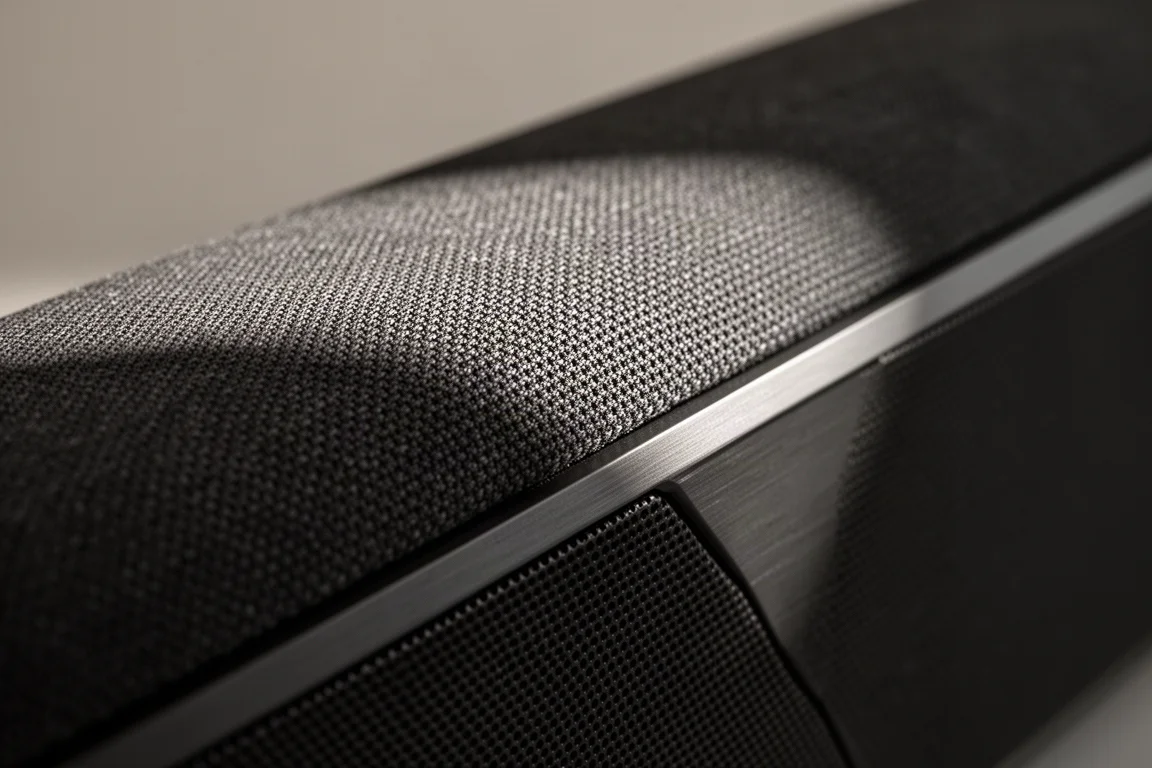
The five profiles are not a gimmick. They change the character of the bar enough that most owners will settle on one mode for films and another for music rather than leaving everything on a single setting.
Things to Consider Before Buying
Surround envelopment is the clearest trade-off. Systems that place real speakers behind the listener, such as the Sonos Ultimate Immersion Set or the Sony Theater Quad with a subwoofer, can surround a room more convincingly in some spaces because they do not have to simulate rear channels. The Hekla gives up ground there, but it matches or beats those systems on tonality, presence, scale, and clarity.
Dialogue intelligibility is good, and most listeners will find it above average, but the Hekla does not include the latest AI-enhanced dialogue modes found on some competing bars. Anyone who constantly reaches for the subtitle button may be better served elsewhere.
Two-channel music requires a decision from the owner. Upmixing stereo across all 15 drivers never fully settles into something natural. It is not unpleasant, but it can sound slightly phased and delayed once the stereo image is stretched too far. For strict stereo content, turning upmixing off is the better compromise: some height and depth are lost, but the presentation stays coherent.
Subwoofer integration is capable but not deep. The app provides crossover and level control, and that is roughly the extent of it. Subwoofer EQ, parametric EQ, and time alignment all have to be handled with external tools.
Finally, Focal has not confirmed whether the Hekla will support additional speakers in the future. When asked, the company said ideas and options are always being discussed, which is not a roadmap.
Subwoofer Options and Expandability
The Hekla includes a dedicated subwoofer output and internal bass management, and adding a subwoofer is one of the more rewarding upgrades available to it. A single KEF KC62 connected to the sub out and crossed over at 80 Hz, level matched to the bar with attention paid to placement, added weight, better grounding, and a greater sense of spatial separation. The system moved from sounding like an excellent soundbar to something much closer to a serious home theater.
More ambitious setups are possible. Using an external processor and room correction software, two subwoofers can be integrated properly, although that is not the simple plug-and-play experience Focal advertises. With both subwoofers dialed in, the result is dimensional and genuinely cinematic, and across a two-and-a-half-hour Dolby Atmos feature there was no sense that a full home theater system was missing.
Cost is the variable. A single subwoofer is the sensible starting point, and the SVS 3000 Micro is worth noting because it is roughly half the size of the KEF KC62. Two of those bring a complete system in under $6,000, while a configuration using the KEF and an SVS subwoofer comes to roughly $7,300. A less expensive subwoofer would lower the total further.
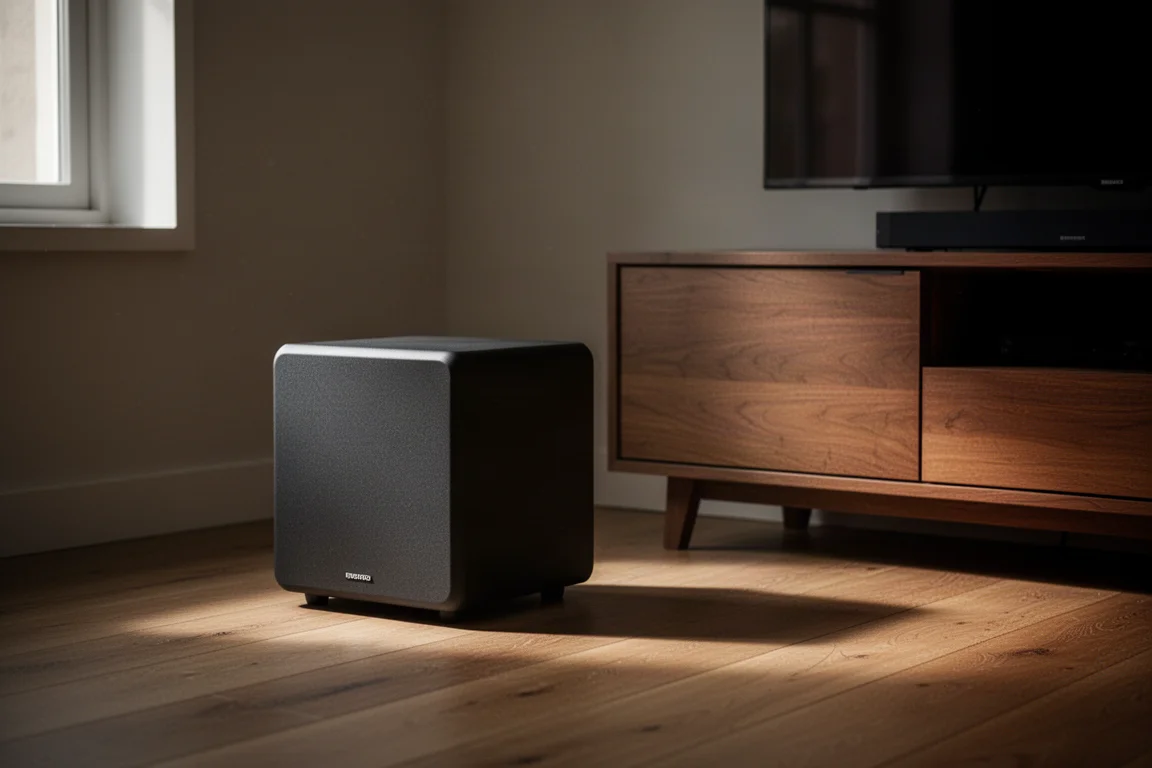
For listeners who are not chasing deep bass, the bar on its own is the simpler purchase. The subwoofer output is best treated as an upgrade path rather than a requirement.
Design, Setup, and Everyday Use
Daily use is straightforward. The bar sits below the television, one HDMI cable runs to the ARC or eARC port, and power is the only other connection. Network setup is handled in the app, and profile switching is quick enough that it does not interrupt a viewing session.
The Hekla is also a well-judged piece of industrial design. It reads as a considered audio product rather than a black plastic accessory, and it does not dominate a room the way some large high-end bars can.
Buying Advice
The Hekla costs $3,600 on its own, which is more than some complete surround soundbar systems from Sonos and Sony. Those systems use actual rear speakers, and in the right room they will surround a listener more convincingly. What the Hekla offers instead is a smaller equipment footprint, refined build quality, and a more elevated everyday experience. It sounds less like a soundbar imitating a theater and more like a serious speaker system that happens to live under the television, closer in scale and weight to a pair of large bookshelf speakers or small towers.
Against the wider market, the value case is strong. The Hekla lands very close to the Bang & Olufsen Theatre in outright capability while costing far less, and it is easier to live with in one important respect: it is not locked into a single ecosystem, so pairing third-party subwoofers is straightforward. The Theatre remains ahead on flexibility, since it can be wall-mounted, offers more automated features and sound profiles, and can be expanded with other speakers from the same brand. The Bang & Olufsen Premiere, now $4,700, can also be expanded with specific speakers from that range, but comparing the bars alone, the Hekla’s larger ported cabinet gives it a more neutral tone and more weight.
Other options are worth weighing honestly. The Sennheiser Ambeo Max is cheaper and offers a similar all-in-one Atmos approach, though that product line dates back to 2019 and its most recent addition is now three years old. The KEF LS50 Wireless II has had CEC issues, and updates that were expected to expand its capability have not been released. The Hekla is the stronger spatial performer of the two.
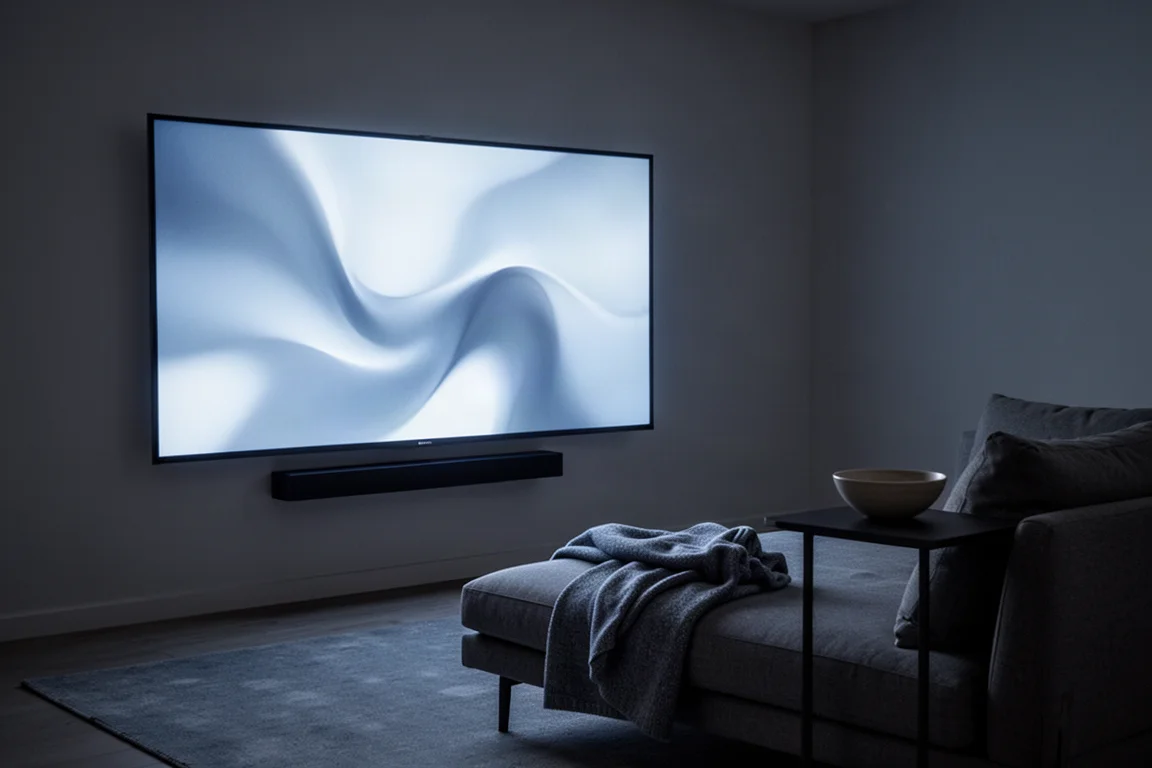
For most buyers, the decision comes down to priorities: a compact, well-built, music-capable bar with a clear upgrade path for bass, or a multi-speaker system with genuine rear channels and a larger visual footprint.
Conclusion
The Focal Hekla does not make traditional home theaters obsolete, and for anyone committed to a dedicated room, a soundbar will never be a substitute. What it does is make the case for a single, well-engineered enclosure that sounds far larger than it looks, adapts to the room without measurement microphones, and can be expanded with a subwoofer when the material demands it. For a first soundbar from a speaker company, it is a remarkably confident one.
Product link
View more details for Focal Hekla
This product is mentioned in the review. Check the specifications, options, and compatibility before buying.
View more details for Focal HeklaFurther reading
Related Reviews
Soundbars
Bang & Olufsen Premiere Review: A Compact Soundbar Built to Last
A close look at the Bang & Olufsen Premiere, a compact soundbar with deep bass for its size, automatic sound profiles, and a clear modular upgrade path.
Soundbars
Best Dolby Atmos Soundbars: Six Picks for Movies, Music, and Small Rooms
A practical roundup of six Dolby Atmos soundbars, from compact dialogue-focused bars to expandable systems and an all-in-one flagship.
Soundbars
Bluesound Pulse Cinema Review: A Music-First Soundbar With a Software Catch
A close look at the Bluesound Pulse Cinema, a 3.2.2 soundbar with a genuinely expressive midrange and natural tone, plus the app and expansion limits worth knowing before you buy.