Floorstanding Speakers
Focal Aria Evo X No.4 Review: A Neutral Tower With Wide Dynamic Range
A practical look at the Focal Aria Evo X No.4, a three-way floorstander with a neutral on-axis balance, high sensitivity, and a green finish that stands apart.
Introduction
The Focal Aria Evo X No.4 is the flagship floorstanding loudspeaker in the Aria Evo X series, and it lands in a price bracket where expectations run high. At around $6,000 per pair, it asks buyers to commit to a genuine three-way tower rather than a compact stand-mount paired with a subwoofer.
That price also places it well below Focal’s Kanta models while following a similar design philosophy, which makes it an appealing option for listeners who want the character of a larger Focal tower without stepping up to the Kanta range. This article covers the design, the measured behavior, the amplifier requirements, and the practical room conditions that let the No.4 perform at its best.
Who the Focal Aria Evo X No.4 Is For
Focal designs this speaker for larger rooms, with a listening distance of roughly three meters. It is not a nearfield monitor, and it is not the right choice for a small studio or a cramped apartment setup. The tweeter sits about 44 inches above the floor, so a low seat placed close to the speaker puts your ears below the intended axis and creates a dip through the crossover region.
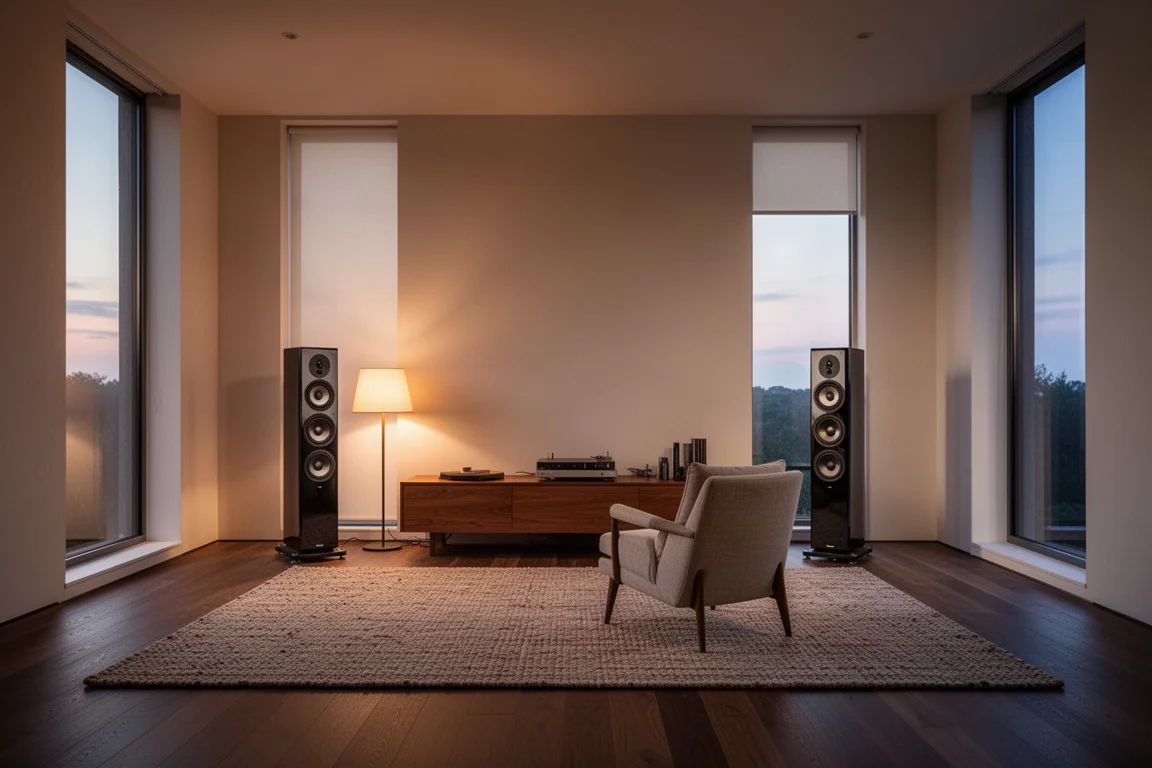
Where the No.4 makes the most sense is in a room with enough space to let the drivers breathe and enough distance for the three-way array to integrate properly. Listeners who value a neutral on-axis balance, wide dynamic range, and the ability to play loudly without strain will find a lot to like here. Anyone chasing the deepest possible sub-bass for film soundtracks should plan on adding subwoofers rather than relying on the towers alone.
Design and Finish: A Statement Piece in Green
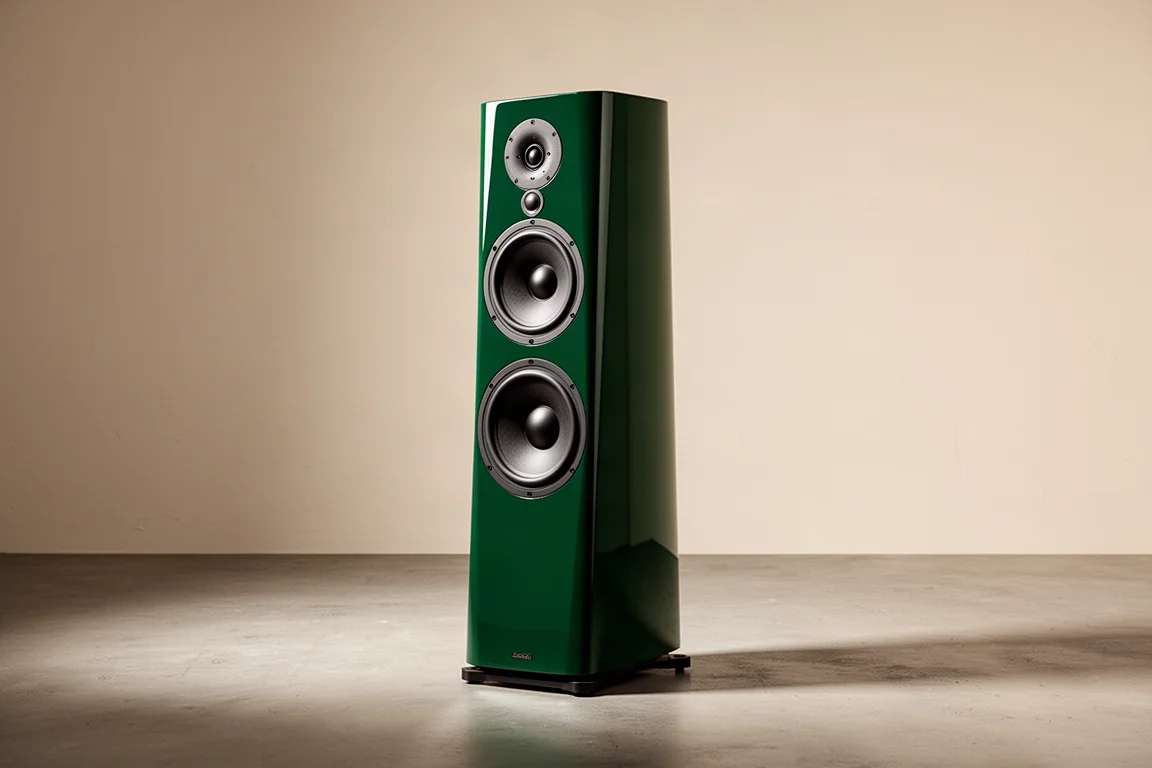
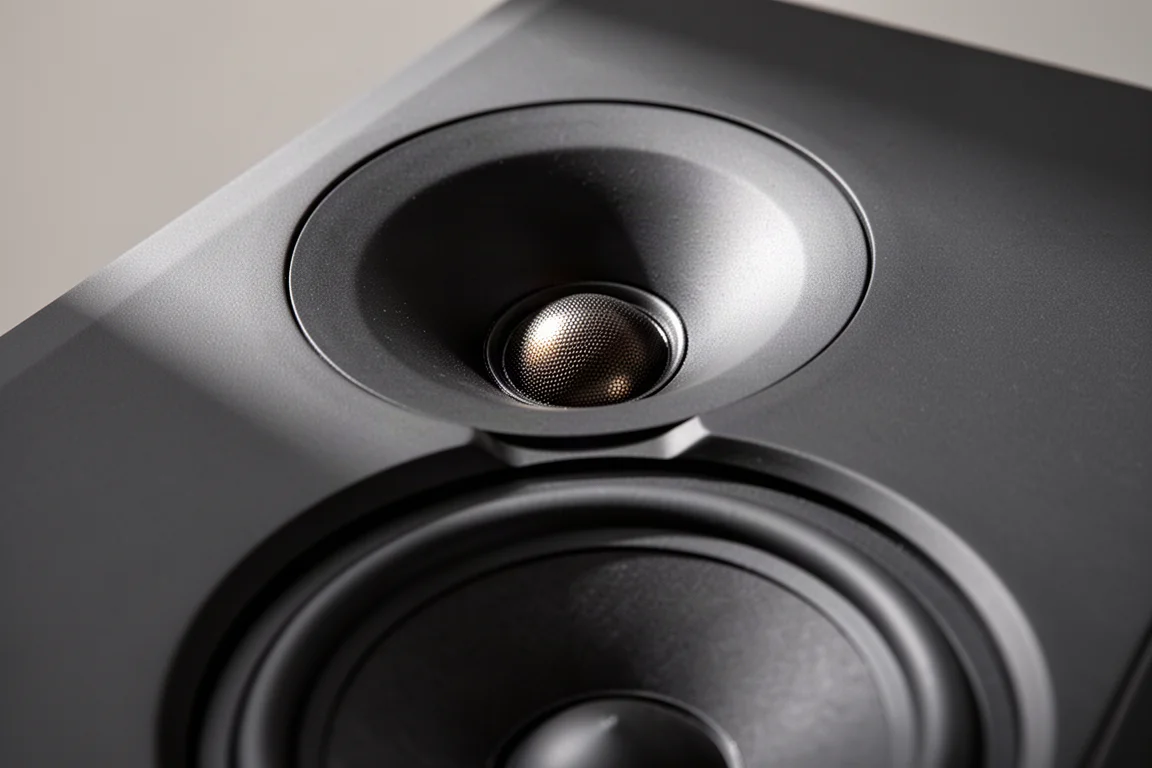
The No.4 is a three-way tower built around a 1-inch inverted dome tweeter loaded into a shallow waveguide, a 6.5-inch midrange, and two 8-inch bass drivers. Focal uses an inverted dome design across its tweeter range, and the dome here is made from an aluminium-magnesium alloy. The cones use a flax-based composite that is specific to Focal. Crossover points sit at 280 Hz and 2.6 kHz, which is a conventional layout for a tower of this size.
The cabinet is the other headline. The green finish has an automotive quality to it, and it shifts in appearance depending on how much light hits the surface, which gives the speaker a presence that most wood-grain or satin-black towers do not have. The base arrives unassembled and attaches with a handful of screws, after which you choose between spiked feet and rubber-tipped feet. The base itself is a substantial aluminium piece that adds low-ground mass and makes the tower difficult to tip. Grilles are included, and the speaker looks purposeful with or without them.
Sound Character and Measured Behavior
On axis, the No.4 measures very flat and neutral, and the response stays smooth across a wide range of angles. There is a modest rise in the treble off axis above roughly 10 kHz, which is largely a function of the inverted dome tweeter working with the waveguide. That lift sits above the 4 to 8 kHz region where sibilance lives, so the speaker does not come across as harsh in the way a forward upper-midrange presentation would.
Dispersion is wide, and that has an audible consequence: more energy reaches the side walls, which produces an expansive, enveloping presentation rather than a tightly focused one. Aiming the speakers inward toward the listening position tightens up the imaging and increases the ratio of direct to reflected sound. Vertical dispersion is much narrower, so staying at or near tweeter height matters for tonal consistency.
Dynamics, Bass, and Amplifier Matching
Focal rates the No.4 at 92.5 dB sensitivity, which is high for a tower with this much bass capability, and it is the key to how the speaker behaves. Measured anechoic output falls 3 dB at 55 Hz, port tuning sits in the mid-30 Hz range at roughly 36 Hz, and in a typical room you can expect usable output down to about 30 Hz. The bass response is notably flat, and the two ports, one at the bottom and one at the front, use different lengths, which broadens the port bandwidth instead of producing a single sharp tuning spike.
The trade-off is deliberate: sensitivity and dynamic range come at the cost of the very deepest extension. The specification sheet lists nominal impedance at 8 ohms, but the published minimum is 2.5 ohms, and the load behaves much more like a 4-ohm speaker, with dips near 100 Hz and again in the 30 Hz region. That means current delivery matters more than raw wattage. A decent receiver of around 100 watts can drive these speakers to high levels, but an amplifier with a solid power supply and roughly 200 watts per channel will get considerably more out of them. Preamp outputs are worth having so a dedicated power amplifier can be added later, and a very inexpensive receiver is not a good match for this load.
Setup, Room, and Placement Notes
Give the No.4 a large room and about three meters of listening distance, and the integration concerns largely disappear. Reflective rooms are the main risk, because the off-axis treble lift can tip the balance brighter than neutral, and a hard, echo-prone space will exaggerate that tendency.
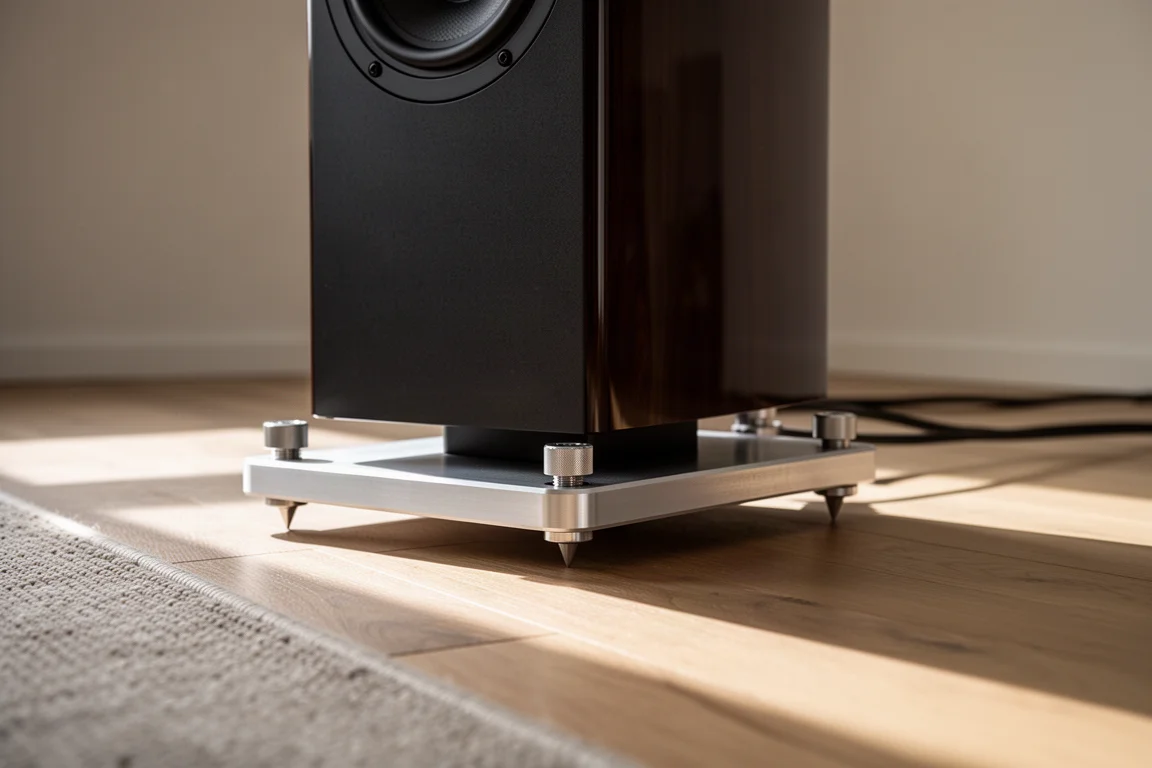
The fix is rarely complicated. Soft furnishings, a thick rug, a bookshelf, or a small amount of absorption on the side walls is often enough, since high frequencies are easy to tame with ordinary room contents. The individually adjustable feet let you level each speaker on uneven flooring, and the base assembly is a straightforward job that takes only a few minutes.
Things to Consider Before Buying
The first consideration is bass extension. These are large towers, but they do not dig especially deep, because Focal traded low-frequency reach for sensitivity and dynamic headroom. That is a sensible choice for music, since very little acoustically recorded material extends below 40 Hz, but it means home theater owners will still want subwoofers in the system.
The second is amplification. The impedance curve dips well below the nominal rating, so the speaker rewards an amplifier that can deliver current, and a low-cost receiver may struggle to keep the sound composed at high volume.
The third is the room itself. The off-axis treble lift can read as bright in a highly reflective space, and the speaker needs distance, so a small or acoustically live room is a poor fit. Buyers should also weigh the green finish against their existing decor, since it is a strong design statement rather than a neutral background piece.
Buying Advice
At around $6,000 per pair, the Aria Evo X No.4 competes in a serious price class, and the value case rests on what you actually need. If you have a large room, a listening position near the three-meter mark, and an amplifier with genuine current capability, the speaker delivers a neutral, uncolored balance with the dynamic range to fill the space.
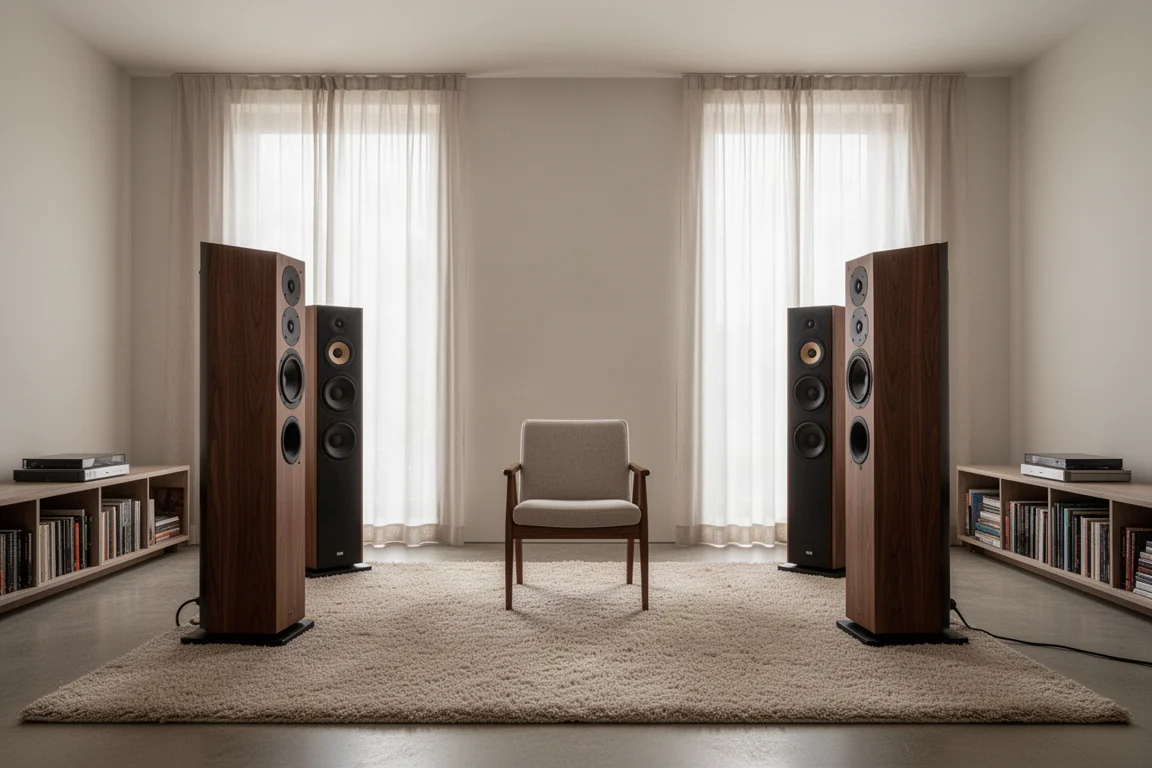
Budget for the rest of the chain, not just the speakers. A quality integrated amplifier or a receiver with preamp outputs and a dedicated power amplifier will let the No.4 show what it can do, and a modest amount of room treatment or sensible furniture placement will keep the treble in check.
If deep sub-bass is a priority for film, plan for subwoofers from the start. If your listening is mostly music in a well-proportioned room, the No.4 covers the range that matters without them, and it does so with a level of finish and cabinet craftsmanship that makes it easy to live with.
Conclusion
The Focal Aria Evo X No.4 is a considered, well-executed floorstander. Its strengths are a neutral on-axis response, wide dispersion, high sensitivity, and a dynamic range that suits larger rooms, all wrapped in a cabinet finish that stands apart from the usual black and wood-grain options.
Its limits are equally clear: it needs a capable amplifier, a reasonably large and controlled room, and subwoofers if you want the deepest bass. Buyers who match those conditions will find a speaker that is easy to recommend and rewarding to own.
Product link
View more details for Focal Aria Evo X No.4
This product is mentioned in the review. Check the specifications, options, and compatibility before buying.
View more details for Focal Aria Evo X No.4Further reading
Related Reviews
Floorstanding Speakers
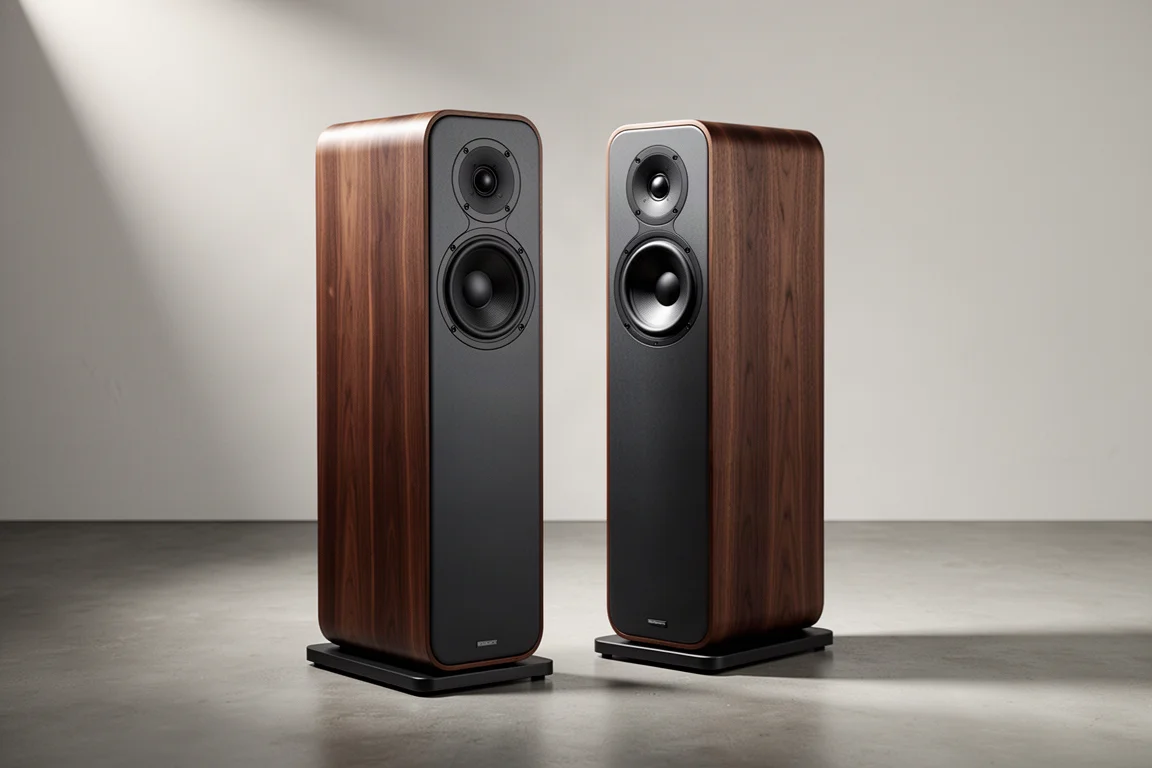
Acoustic Energy AE109 Mark II Review: A Refined Floorstander at £699
The Acoustic Energy AE109 Mark II is a slim, warm sounding floorstander that delivers clarity, midrange body and strong imaging in small to medium rooms.
Floorstanding Speakers
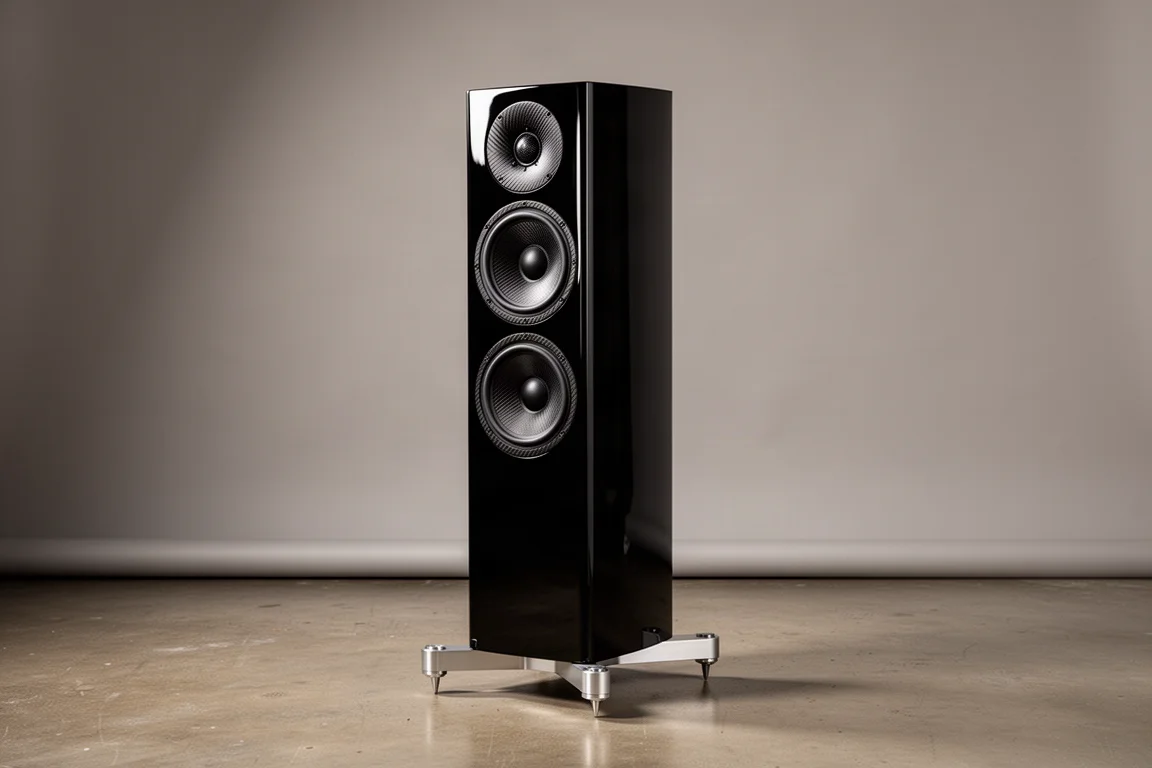
Acoustic Energy AE509 Review: A Slim Floorstander With Deep, Defined Bass
A practical look at the Acoustic Energy AE509, a slim floorstanding speaker with carbon fibre drivers, deep and well-defined bass, and an easy-going character that rewards careful system matching.
Floorstanding Speakers
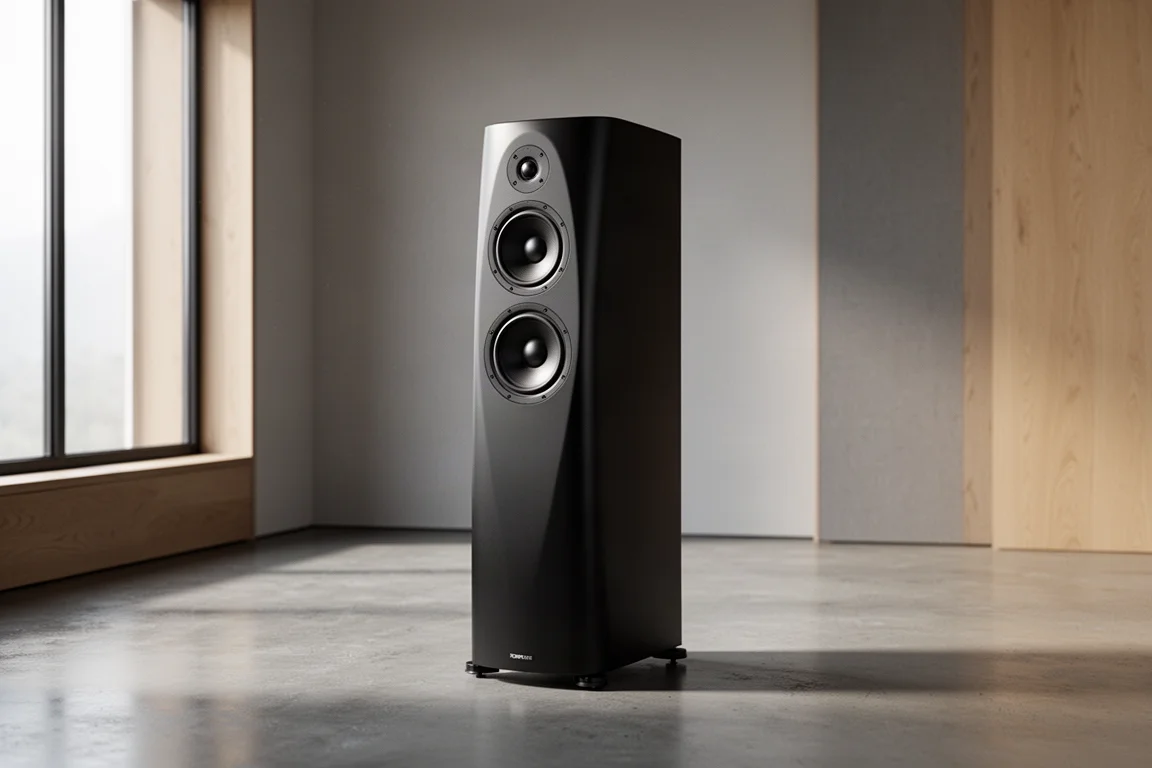
Arendal 1528 Tower 8 Review: Reference Neutrality With Real Demands
A close look at the Arendal 1528 Tower 8, a nearly five-foot, 200-pound floorstander that rewards generous space, serious power, and high listening levels with reference-grade neutrality.