Floorstanding Speakers
Focal Aria Evo X N°4 Review: A Neutral Tower Speaker With Real Depth
A close look at the Focal Aria Evo X N°4 floorstanding speaker, covering build quality, sound character, bass limits, and how it compares with a neutral reference tower.
Introduction
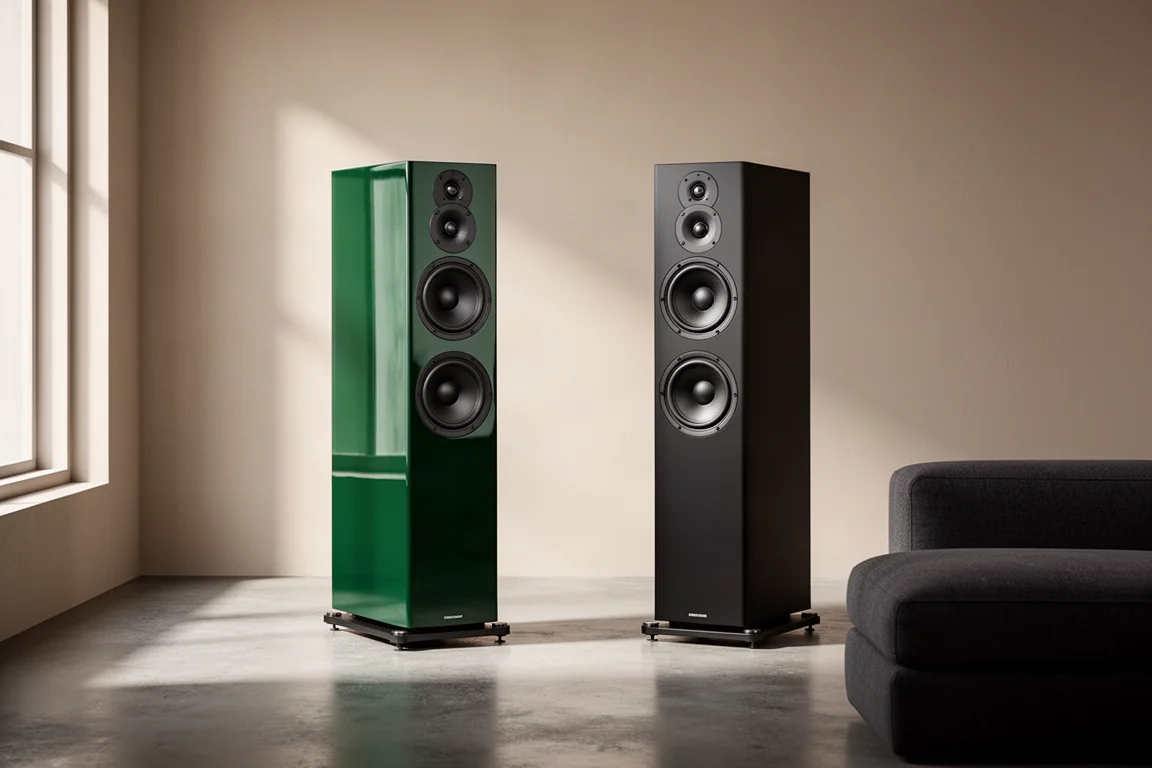
Floorstanding speakers at this price point are rarely about one single strength. The Focal Aria Evo X N°4 is a tall, made-in-France tower that sits at the more accessible end of Focal’s higher-end range, priced at $3,300 each, or $6,600 for a pair. It measures roughly 42.5 inches tall, 10.5 inches wide and 14.75 inches deep, and each cabinet weighs 77 lbs.
This article looks at how the speaker is built, how it behaves in a real living room, where its limits show up, and how it compares with a neutral reference tower that has lived in the same system for several years.
Design and Build of the Focal Aria Evo X N°4
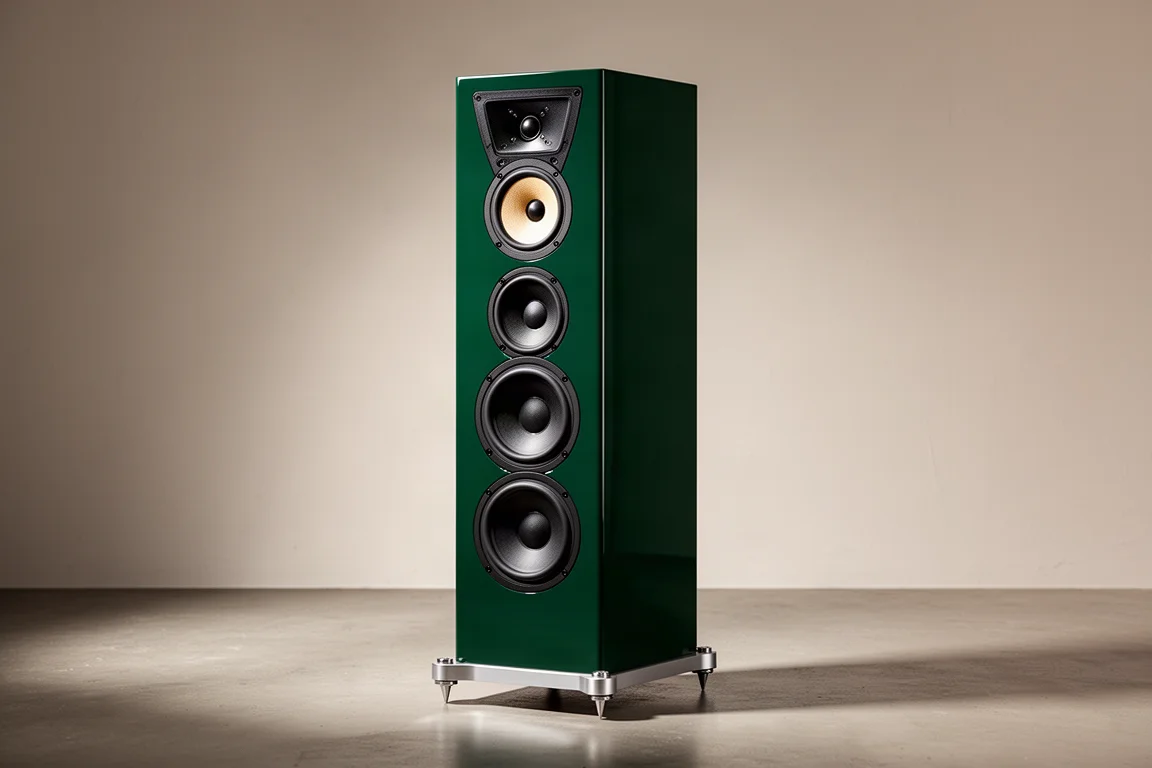
The cabinet is built from MDF and finished in an automotive-grade lacquer. The forest green sample has a deep, even surface with no orange peel visible in the reflection, and the front and rear panels carry a leather-like material that adds a softer texture against the gloss. Focal builds the speaker in France.
The driver array is unusual at this price. A 1-inch inverted dome tweeter handles the top end. Because the dome is inverted, its dispersion is narrower than a conventional dome, which pushes high frequencies into a more focused window rather than spreading them wide across the room. Below it sits a 6.5-inch midrange and a pair of 8-inch bass drivers, both built with Focal’s flax cone material.
The speaker is ported in two places: a front-facing port low on the baffle and a second port underneath the cabinet. Combined with a sensitivity of around 92 dB, that should let the Aria Evo X N°4 fill a large room without asking for enormous power.
Setup hardware is generous. The box includes documentation, spiked feet, the screws and Allen wrench needed to mount them, and an aluminum base plate that the speaker stands on. The base has a reassuring weight to it and carries an embossed brand mark, with the four spikes threading into its corners. The grille is plastic, attaches magnetically, and carries a small logo at the bottom.
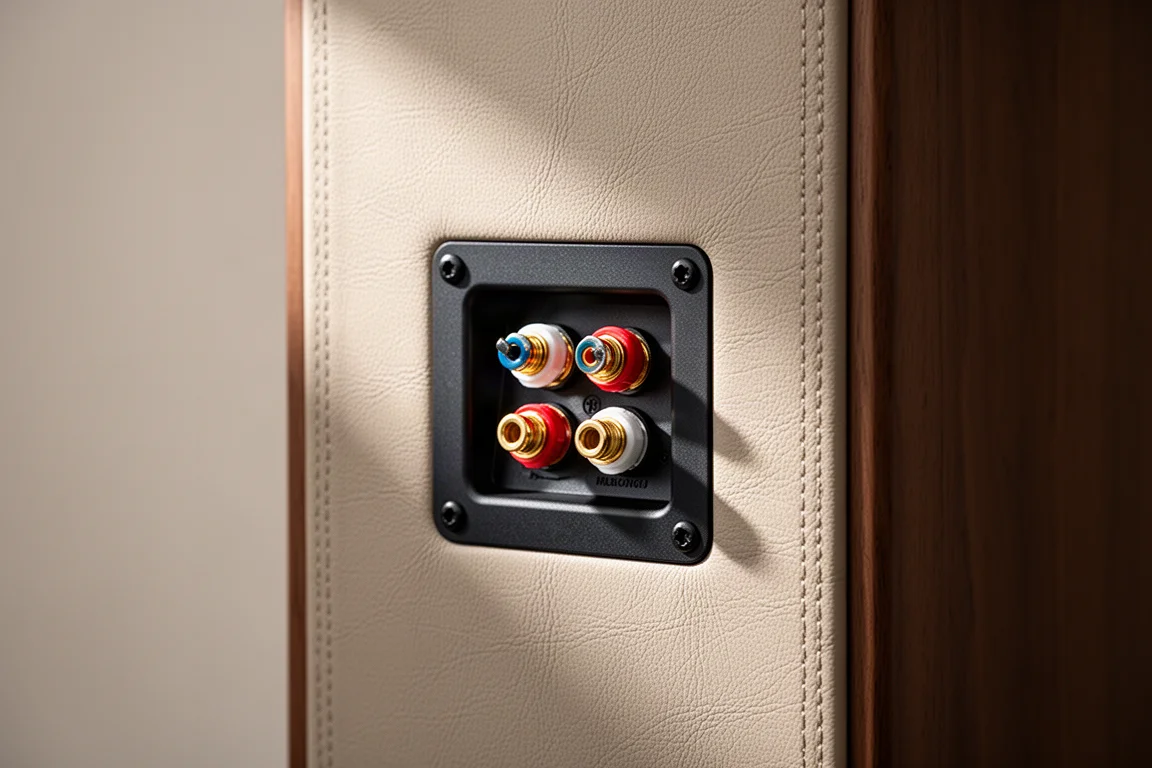
Connections are deliberately simple. There is one pair of color-coded binding posts on the rear panel, which means no bi-wiring and no bi-amping. The posts themselves are plastic rather than metal.
How the Focal Aria Evo X N°4 Sounds in Practice
The Aria Evo X N°4 measures as a broadly neutral speaker, but the listening impression leans toward the brighter side of neutral. That tilt is mild. Against Focal’s smaller Kanta No.3 and Diablo models, which cost considerably more, this tower is noticeably more controlled up top, with the highest frequencies rolled off just enough to keep sibilant passages from turning harsh. On a track where every sibilant consonant is exposed, the edge is present but never piercing.
The bigger story is the soundstage. Instruments are easy to place inside a wide, deep image, and the presentation reaches a couple of feet behind the speakers rather than hugging the front plane. On a dense, well-recorded rock track, the congas on one side, the percussion on the other and the vocal just left of center all hold their own space without smearing together. Vocal weight is a touch lighter than the reference tower in the same room, but it never sounds thin.
Bass, Dynamics, and Cabinet Behavior
Two 8-inch bass drivers on a tall cabinet suggest deep low-frequency output, and the reality is more modest. The speaker is rated down to roughly 37 Hz, and in a normal room it delivers useful output somewhere between 30 and 40 Hz. That is enough for most music, but it will not pressurize a room the way a speaker that reaches a solid 20 Hz does, and it will not deliver the physical kick that a large cinematic soundtrack asks for.
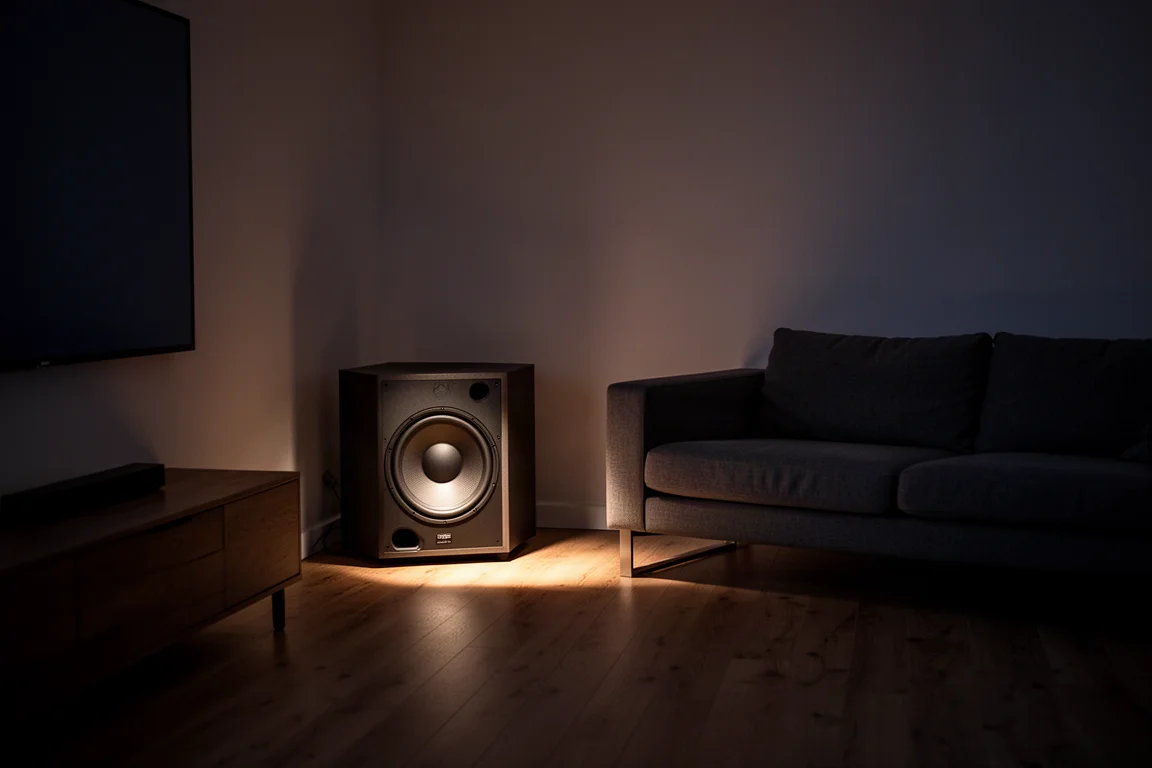
For a home theater system, a subwoofer is effectively mandatory. The cabinet also has a little more life in it than the most inert designs: under heavy bass hits there is a slight resonance that makes the low end read as a touch boomier and less tightly textured.
With the volume up, though, the speaker holds together well. Dynamic range is excellent, and the sound does not compress or fall apart as the level climbs.
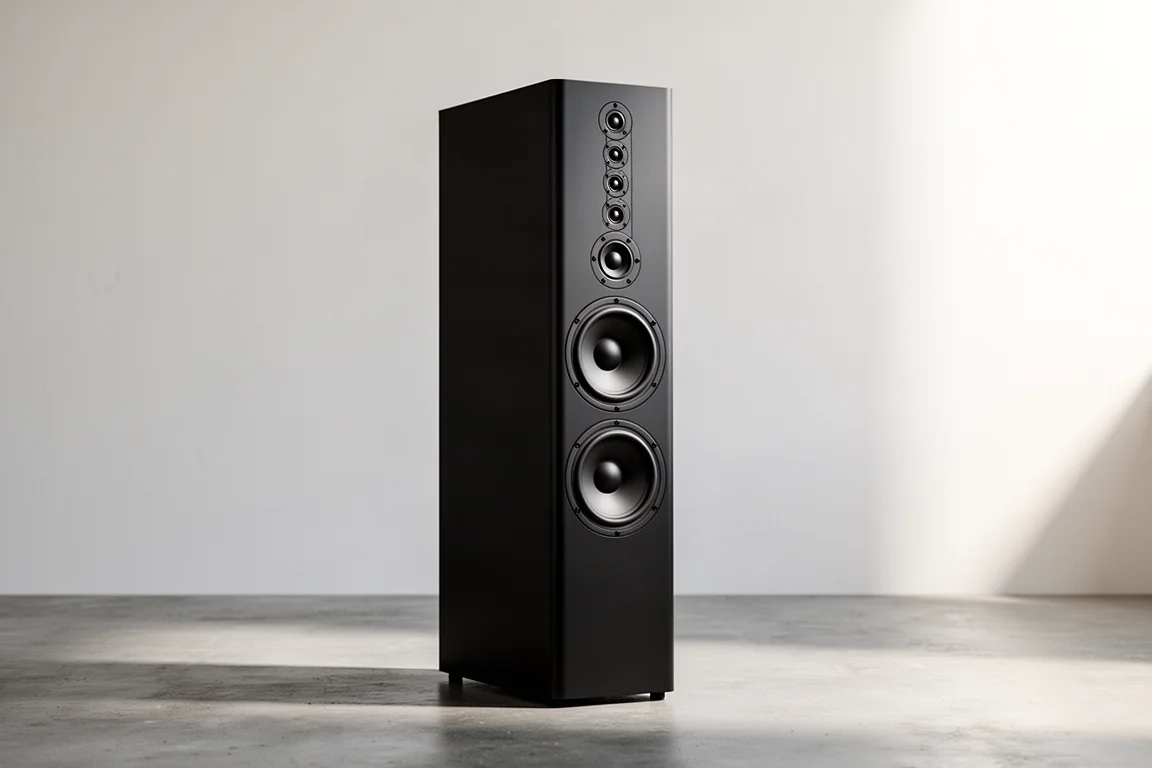
The Perlisten R5t as a Neutral Reference
The comparison point here is the Perlisten R5t, a floorstanding tower priced at $4,400 each, or $8,800 for a pair. It has served as the everyday reference in the same room, which makes it a useful yardstick even though the two speakers are not direct price competitors.
The R5t is a very neutral, very linear design that measures flat. Listeners who prefer a little warmth sometimes describe that kind of presentation as flat or boring, but it is the reason the speaker works so well as a reference. Its bass is the standout: in-room, it reaches a solid 20 Hz, and the low end stays taut, textured and controlled. The cabinet behaves like a solid block, with almost no resonance under heavy bass. Vocals come across slightly more forward than on the Focal, and the soundstage is a little narrower, with depth extending about a foot behind the speakers rather than several feet.
Placement, Room Size, and Amplifier Matching
In the room used for this evaluation, the Focal towers sat about two and a half to three feet out from the front wall. That distance is worth respecting: the two ports and the rear-firing energy need space to breathe, and pulling the speakers forward tends to firm up the bass and open up the image.
Amplifier matching deserves attention. The Aria Evo X N°4 is listed at 8 ohms, but in practice it behaves more like a 4-ohm load, so a high-current amplifier is the safer partner. The setup here used an EverSolo DMP-A6 Gen 2 as streamer and preamp, feeding a Stark Sound A3 amplifier delivering around 620 watts per channel into 4 ohms.
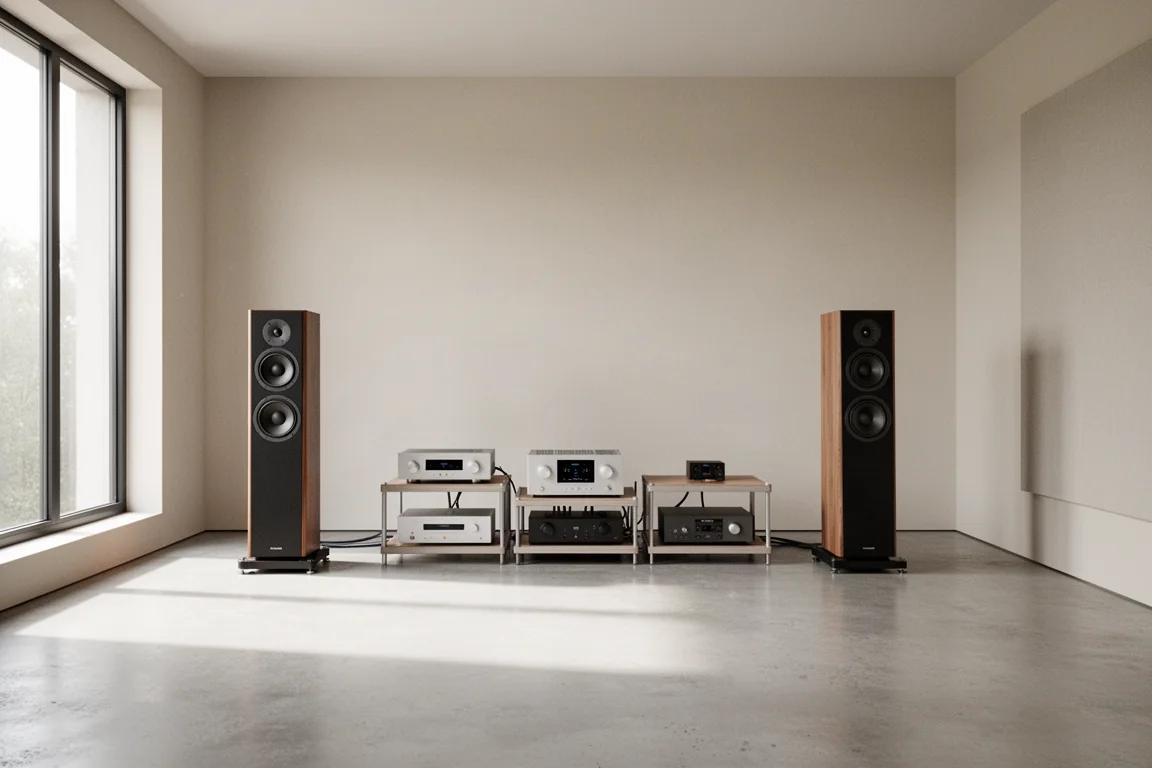
With sensitivity near 92 dB, the speaker does not need that much power to play loudly, but headroom never hurts. A larger room suits it as well: the twin ports and high sensitivity mean it can fill a bigger space without strain, and the extra distance helps the drivers integrate into a more convincing image.
What to Consider Before Buying
The main limitation is bass depth. Anyone planning a mixed music and film system should budget for a subwoofer alongside the towers. Buyers who like to experiment with bi-amping or bi-wiring will also find the single pair of binding posts restrictive, and those who prioritize the flattest possible response may prefer a more neutral design. The slight cabinet resonance under heavy bass is worth knowing about, though it is not noticeable in most everyday listening.
Buying Advice
The Focal Aria Evo X N°4 makes the most sense for listeners who value a wide, deep soundstage and a controlled high end that avoids the hardness some Focal models are known for. At $6,600 per pair it sits below the company’s more expensive towers while borrowing drivers and finish quality from them. Pair it with a capable amplifier and a subwoofer, and it covers both music and film duty comfortably.
The Perlisten R5t costs more at $8,800 per pair, and it earns that premium with a flatter, more neutral balance, deeper and more tightly controlled bass, and a cabinet that stays quiet under pressure. Buyers who want the most accurate presentation, or who want deep bass without adding a subwoofer, will find it the stronger choice.
Either way, both speakers reward a properly set up room, and both are easy enough to drive that the amplifier decision is less about raw wattage and more about current delivery and quality.
Conclusion
Both towers are easy to drive, both are built to a high standard, and both reward a carefully arranged room. The Focal Aria Evo X N°4 delivers depth, separation and a slightly bright-neutral character at a lower price, provided a subwoofer handles the bottom octave. The Perlisten R5t trades some of that width for neutrality and genuinely deep, disciplined bass. Matching the speaker to the room and the rest of the system matters more than the price gap between them.
Further reading
Related Reviews
Floorstanding Speakers
Acoustic Energy AE109 Mark II Review: A Refined Floorstander at £699
The Acoustic Energy AE109 Mark II is a slim, warm sounding floorstander that delivers clarity, midrange body and strong imaging in small to medium rooms.
Floorstanding Speakers
Acoustic Energy AE509 Review: A Slim Floorstander With Deep, Defined Bass
A practical look at the Acoustic Energy AE509, a slim floorstanding speaker with carbon fibre drivers, deep and well-defined bass, and an easy-going character that rewards careful system matching.
Floorstanding Speakers
Arendal 1528 Tower 8 Review: Reference Neutrality With Real Demands
A close look at the Arendal 1528 Tower 8, a nearly five-foot, 200-pound floorstander that rewards generous space, serious power, and high listening levels with reference-grade neutrality.