Aquarium Maintenance
Flipper Platinum Scrapers Review: Handheld Scrapers for Reef Tank Glass
A practical look at the Flipper Platinum handheld scraper line, covering the standard lengths, the 12 inch Nano model, the blade options, and the card-upcycling trick built into the blade holder.
Introduction
A magnetic cleaner handles most of the routine film on the front pane, but there are always spots it simply cannot reach. The back glass, the corners, the narrow stretch behind rockwork: these are the places where a handheld scraper is the only tool that will do the job properly.
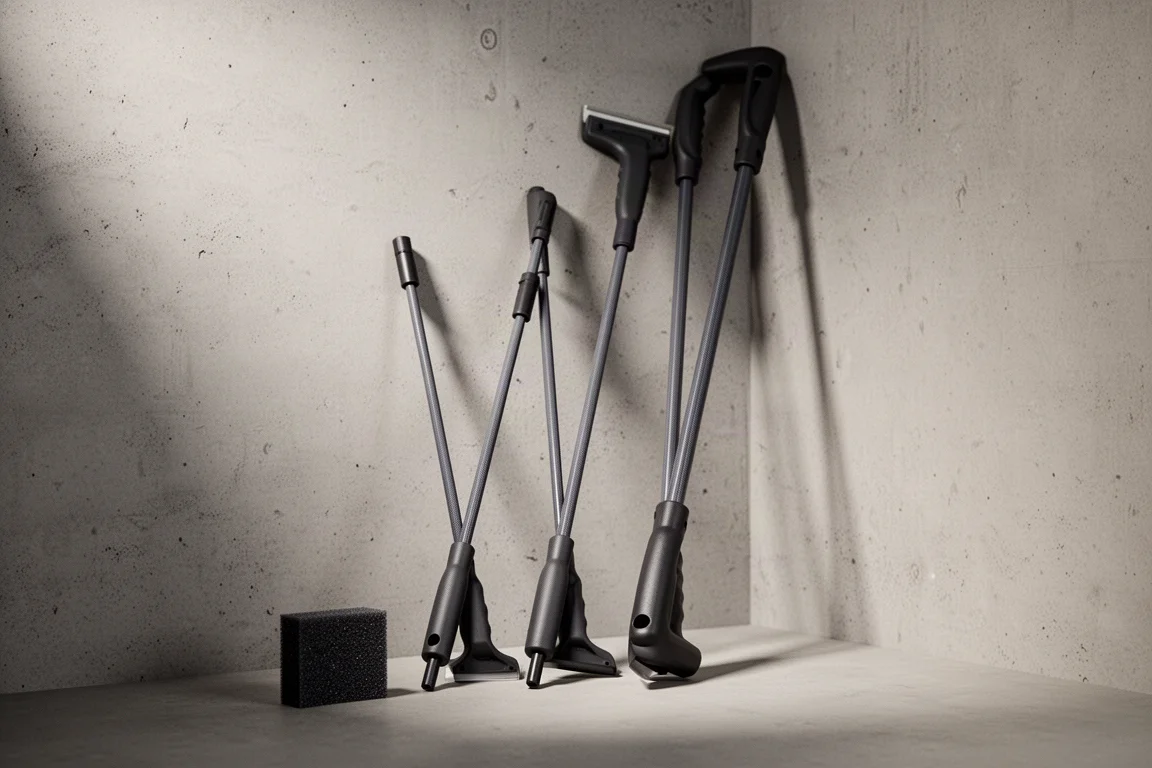
That is the gap the Flipper Platinum scraper line is built for. These are handheld glass and acrylic scrapers with a choice of lengths, a rigid shaft, and a blade system that covers flexible plastic, stainless steel, and even repurposed plastic cards.
This review walks through what the line offers, where the standard models and the 12 inch Nano model diverge, and how to pick the one that matches your tank.
What Makes a Good Handheld Scraper
Manual scraping is a pressure game. You press the blade against the glass and the tool either transfers that pressure into cleaning force or loses it to bending. A shaft that flexes also forces you to keep adjusting the handle so the blade edge stays flat against the pane, which makes a long scraping session more tiring than it needs to be.
Ruggedness matters just as much. Handheld scrapers take real load at the blade holder, and a handle that feels hollow or gives under a firm grip undermines the whole tool.
Blade choice is the third piece of the puzzle. Different algae respond to different edges, and working close to a silicone bead demands a profile that can get tight to the seam without cutting into it.
Shared Design Across the Platinum Line
Every scraper in the Platinum family follows the same formula. The shaft is solid fiberglass with very little flex, so the pressure you apply at the handle actually reaches the blade instead of disappearing into the shaft. That rigidity also holds the blade angle steady, which means far less fiddling with the handle mid-scrape.
The blade holder and the grip are both made from a plastic that feels solid and rugged, a sensible choice given how much force these handheld tools absorb during normal use.
The line spans four sizes: 10 inch, 18 inch, 28 inch, and a 12 inch Nano version. Each one is built around the same rigid-shaft approach, so the main decision comes down to how much reach you need and how tight the space you are working in.
Flipper Platinum Scraper: Standard Lengths
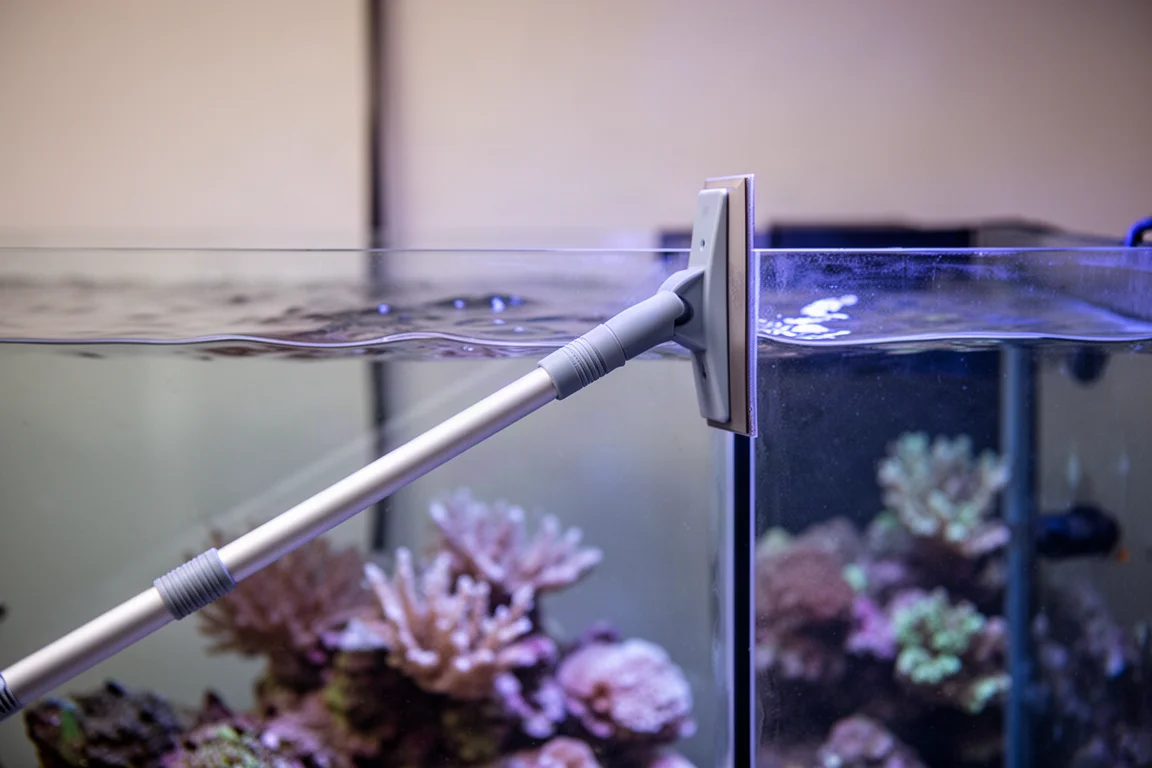
The standard Platinum scraper is the natural starting point for most aquariums. With 10 inch, 18 inch and 28 inch options, the range is designed to cover everything from a compact tank where a short tool is easier to control, up to a deeper system where you need the handle to reach the back glass without putting your arm in the water.
Because the fiberglass shaft hardly flexes, the longer versions do not ask you to compensate with your wrist. You keep the blade angle where you set it and let the tool do the work, which is exactly what you want when you are scraping a large rear panel in one pass.
The plastic grip and blade holder feel substantial in the hand, so pushing hard against a stubborn patch of algae does not feel like it is straining the tool.
For anyone maintaining a tank with a broad back panel or a deep footprint, one of these standard lengths will handle the bulk of the job.
Flipper Platinum Nano Scraper: Built for Tight Quarters
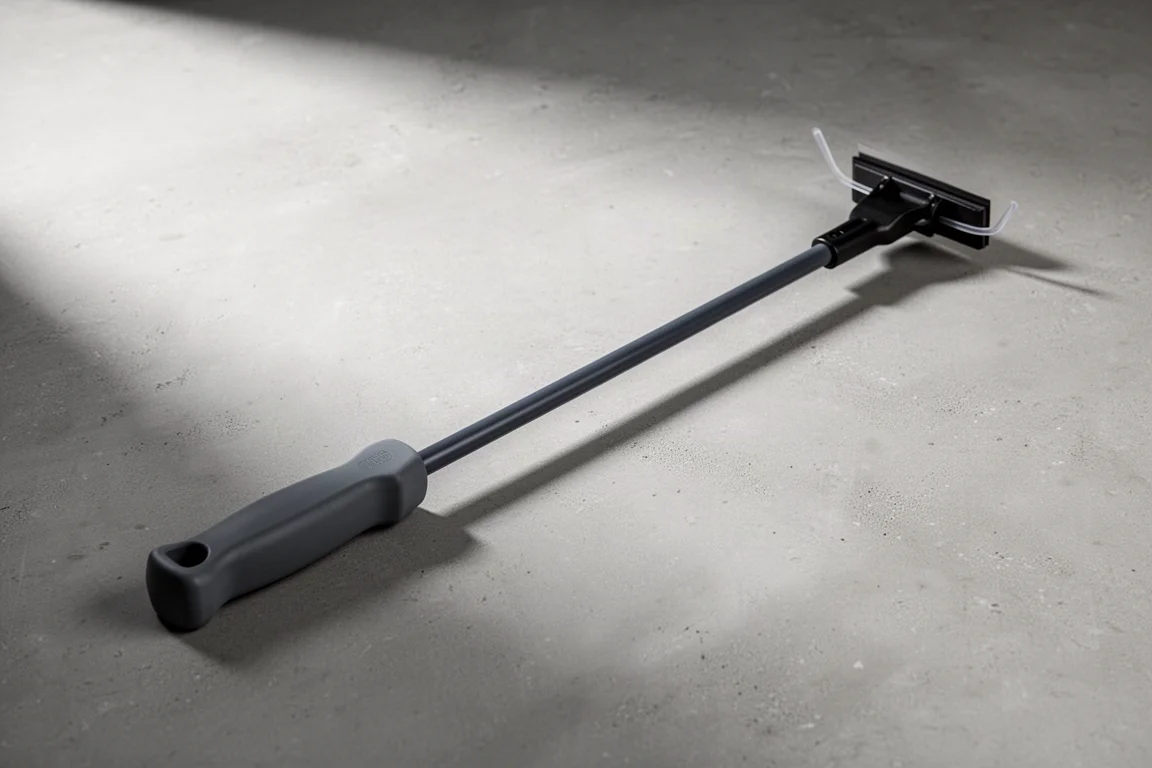
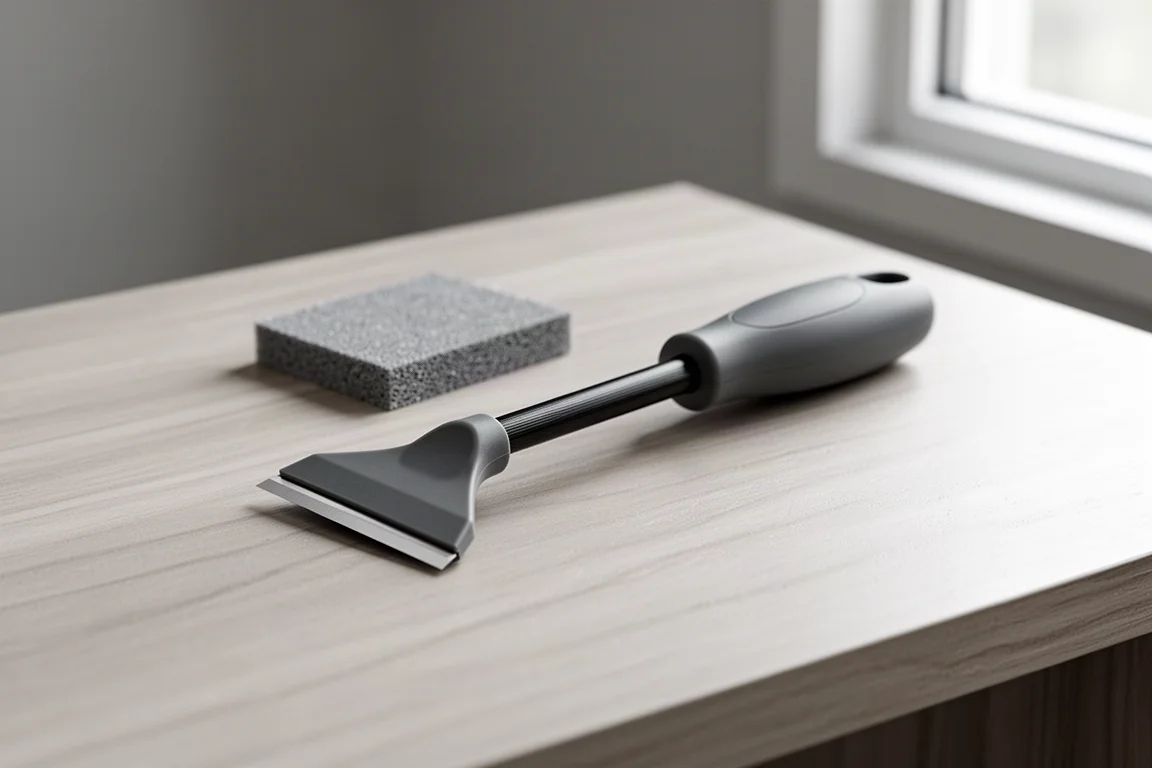
The 12 inch Nano version shares the rigid build of its longer siblings but changes the geometry. It uses a shallow scraper angle with less width, which is what lets it slip in and around the tighter quarters of a nano reef tank where a wider blade simply will not fit.
It is also the only model in the range that includes an abrasive pad, which adds a useful option for tackling deposits that a plain edge will not shift.
The trade-off is reach. The Nano is built for precision in small spaces rather than for sweeping across a large pane, so it makes the most sense alongside, rather than instead of, a longer scraper.
Blade Options: Plastic, Stainless Steel, and Upcycled Cards
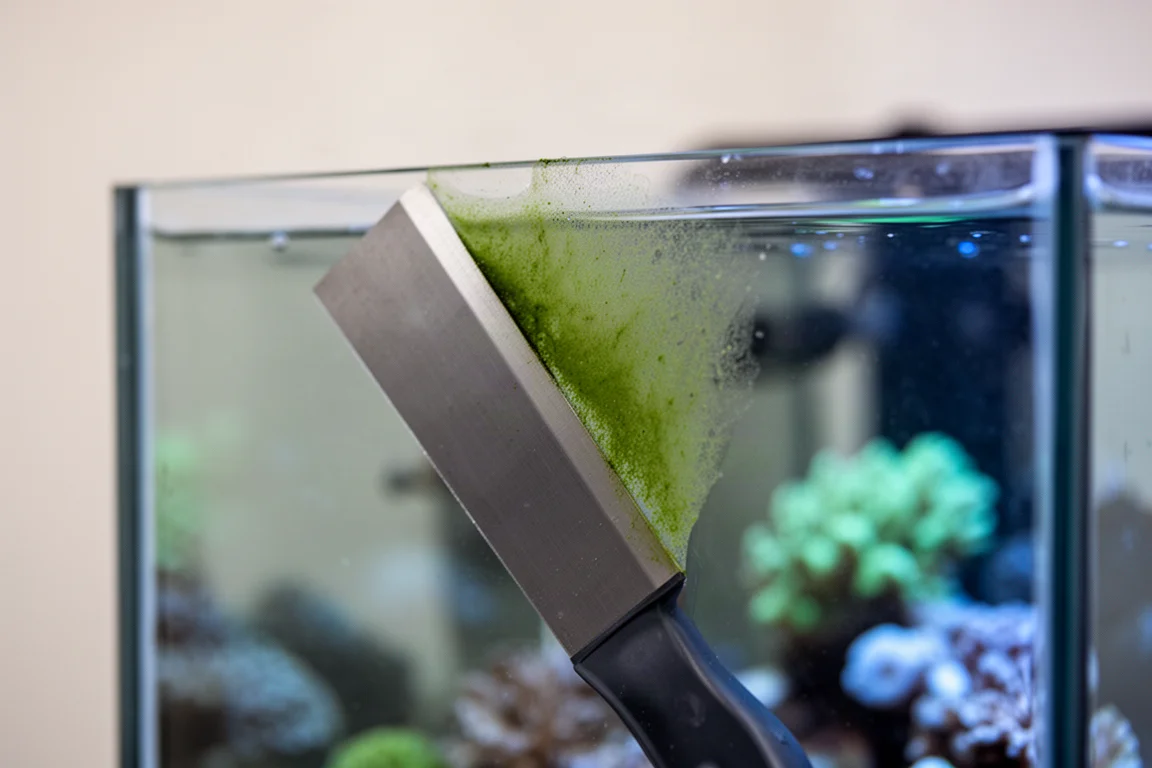
Each Platinum scraper arrives with flexible plastic blades suitable for both glass and acrylic. They are serrated on one end and flat on the opposite end, and each corner has a slightly different radius so you can work into tight corners whether or not there is a thick bead of silicone in the way. That gives you different options for soft and calcareous algae, and different profiles for getting close to the panels without touching the sealant.
For tanks where calcareous algae dominates and you prefer a metal edge, there is also a stainless steel blade option available separately for the really stubborn deposits. Like the plastic blades, the stainless version is double-sided, and each side carries two cleaning edges. That means four usable edges in total: flip the blade over when the first edge dulls, turn it around, then flip that side, and only replace it once all four are spent.
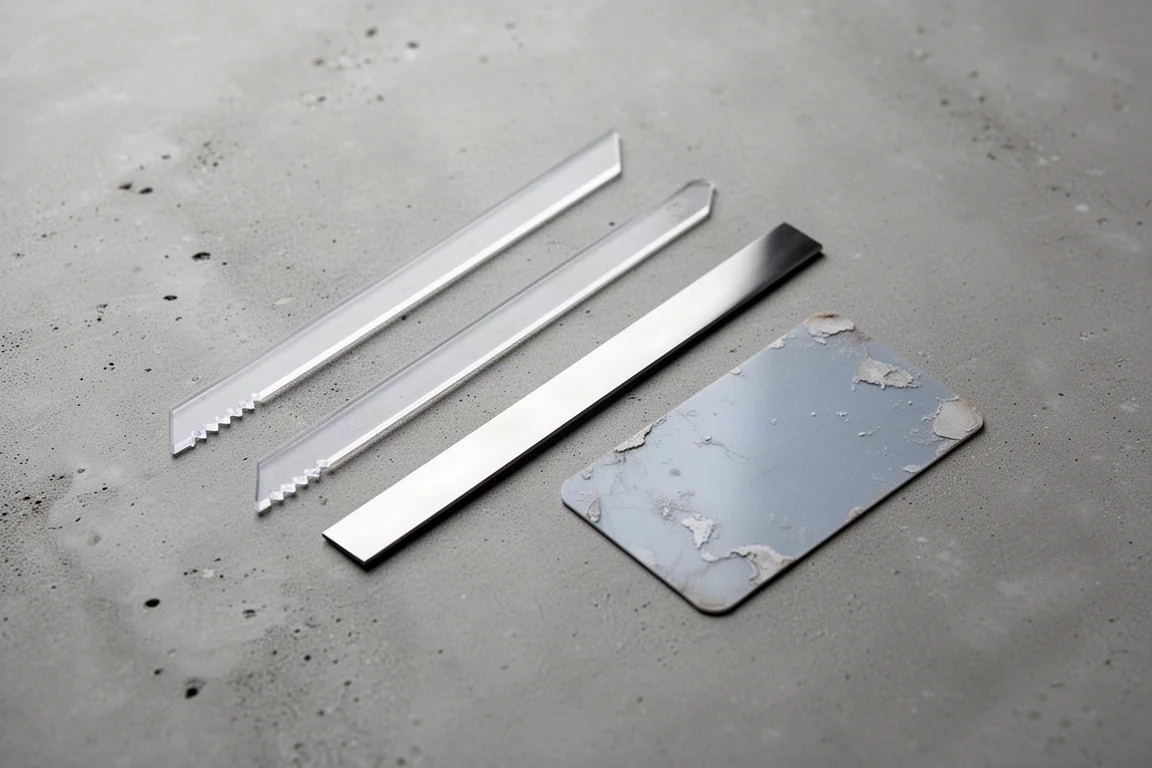
The blade holder itself is where the clever part sits, and it is patent pending. It is shaped specifically so the blades match the size and shape of a typical plastic card, such as a points card or a gift card. That gives reefers who like to upcycle, or who simply enjoy the DIY side of the hobby, a way to cut their own scraper blades from old cards.
You can slide a used card straight in and start scraping, and it works well. You can also take a pair of scissors to a card and cut a specific profile, for example an angled blade for a spot where you cannot hold the handle at a perfect right angle to the glass. It is an unusual feature, and it turns a drawer of dead cards into a supply of blades.
Blade Care and Longevity
Blade maintenance on the Platinum line is mostly about paying attention to edge wear rather than following a schedule. Plastic blades will dull over time, and dull edges are what push you into pressing harder than you should.
Stainless blades are the more economical option in the sense that each one offers four cleaning edges. Rotating through them before you replace the blade keeps the cutting edge sharp for longer and gets the most out of each piece.
It also helps to rinse and dry blades after use so algae residue does not build up on the edge, and to store the tool somewhere the blade is not resting against anything that could nick it. Because the holder accepts cut-to-shape cards, replacing a worn blade does not necessarily mean buying anything at all.
Choosing the Right Platinum Scraper for Your Tank
Start with reach. If you are cleaning a deep tank and want the back glass handled without reaching in, the 18 inch or 28 inch model will save you effort and keep your arm dry. If you prefer a shorter tool for close control in a compact system, the 10 inch version covers that.
Add the 12 inch Nano when tight quarters are part of your routine. Its shallow angle and reduced width let it work into the narrow spaces a nano reef tank is full of, and the included abrasive pad gives you an extra tool for the tougher deposits. Many keepers will end up with one longer scraper for the broad panels and the Nano for everything else.
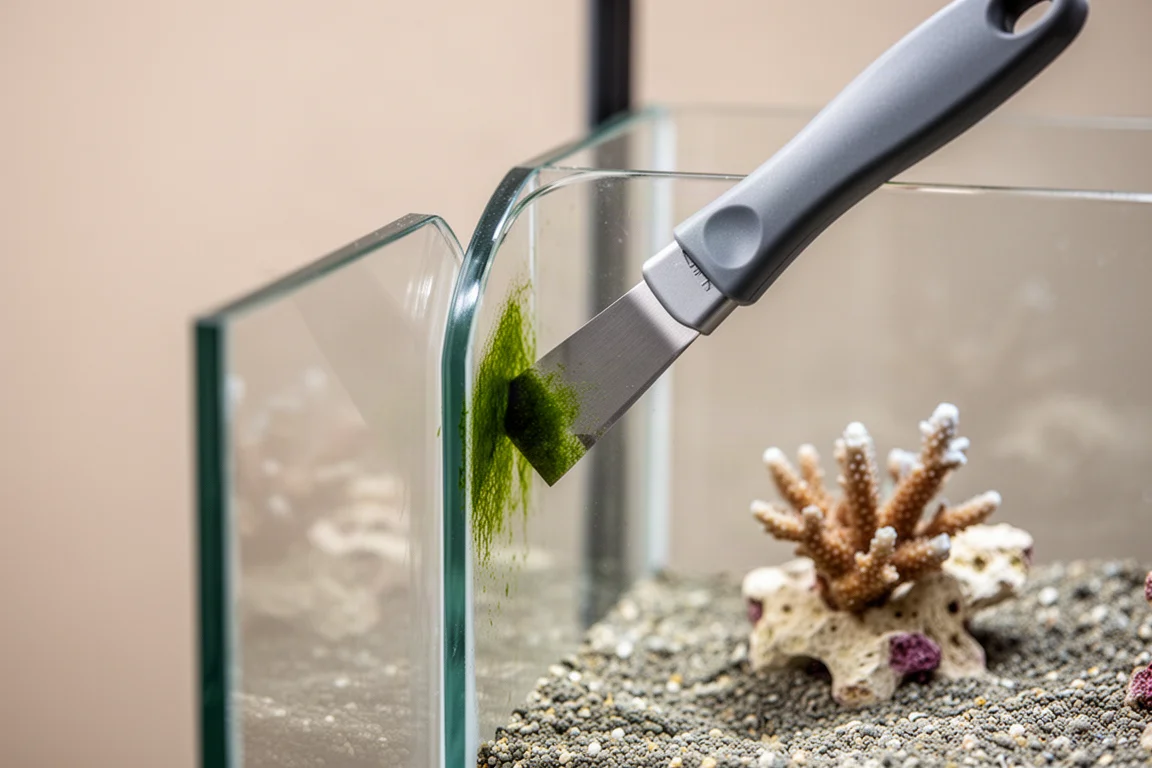
On blades, the plastic set covers glass and acrylic and comes with the tool, the stainless option is there for calcareous algae on glass, and the card holder is worth having if you would rather cut your own profiles than buy replacements. If the shape and range of the manufacturer blades already suit you, that route works just as well.
Conclusion
The Flipper Platinum line makes a straightforward case for itself. Rigid fiberglass shafts keep the pressure where it belongs, the grips and blade holders feel built to take abuse, and the blade system covers soft algae, calcareous algae, silicone-safe corner work, and DIY options from a stack of old cards.
Pick the length that matches your tank’s reach, add the Nano if tight spaces are part of your maintenance routine, and the scraping side of aquarium upkeep becomes considerably less of a chore.
Further reading
Related Reviews
Aquarium Maintenance
Aquarium Maintenance Must-Haves: 6 Tools for a Cleaner Tank
A practical roundup of aquarium maintenance tools, from magnetic algae scrapers to a glass cleaner and camera lens, with strengths and trade-offs.
Aquarium Maintenance
Best Aquarium Water Change Tools 2026: Six Options That Beat the Bucket
A practical comparison of six aquarium water change tools, from a sink-powered siphon to app-controlled auto water changers, with the trade-offs that actually matter.
Aquarium Maintenance
Continuum AquaBlade Aquarium Scraper Review: A Sturdy Tool for Cleaner Glass
A practical look at the Continuum AquaBlade scraper, its one-piece build, swappable plastic and metal blades, size options, and the everyday jobs it handles beyond algae.