Aquarium Maintenance
Best Aquarium Water Change Tools 2026: Six Options That Beat the Bucket
A practical comparison of six aquarium water change tools, from a sink-powered siphon to app-controlled auto water changers, with the trade-offs that actually matter.
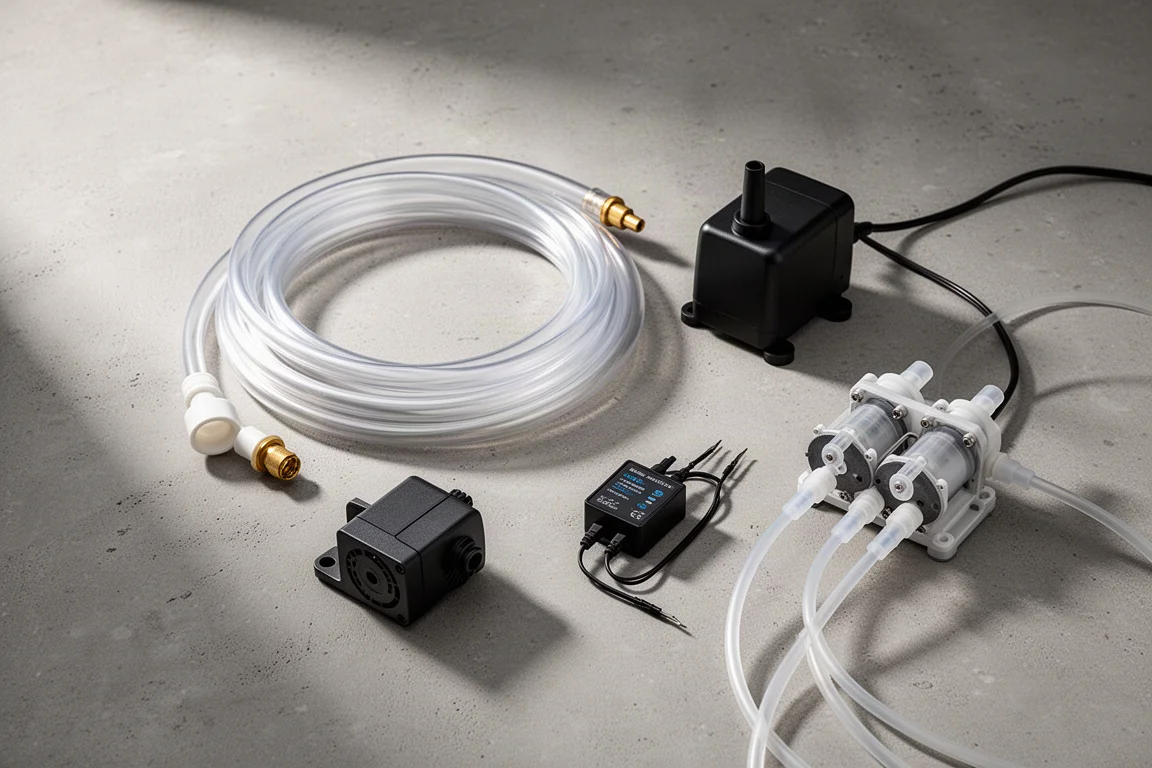
Introduction
Water changes are the least glamorous part of running a reef tank, and they are also where most household damage happens. A bucket carried across a living room is a reliable way to end up with saltwater in the carpet or, worse, on a hardwood finish.
The tools in this roundup attack that problem from different directions. Some replace the bucket with a hose and your sink, some automate the process with sensors and pumps, and one hands the entire job to a controller on a schedule. Every option here has a clear use case, and the differences come down to tank size, how far the water has to travel, and how much of the routine you want to stop thinking about.
What Separates a Good Water Change Tool From a Great One
Three practical questions sort these tools out quickly.
The first is flow and volume. A siphon and a metering pump move water at completely different rates, and the right answer depends on whether you are changing five gallons or thirty.
The second is accuracy. Metering pumps and optical sensors let you know very closely how much water left the tank and how much went back in, which matters more for salinity stability than for convenience.
The third is how much of the routine disappears. A good manual tool removes the bucket. A good automated tool removes your involvement almost entirely.
Proximity matters too. Systems that decide how much to change based on water level need their reservoirs close to the tank, while metering pump setups can push water much further away.
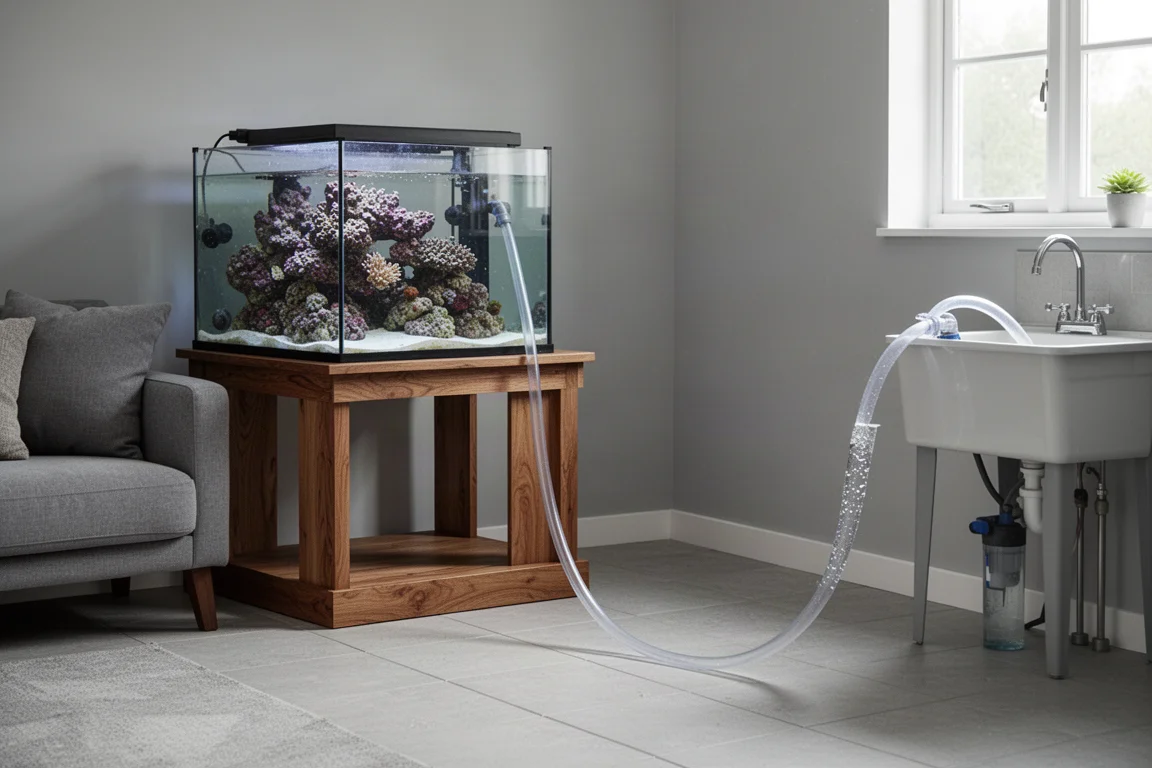
That distance question is often what decides the purchase, because routing tubing permanently is a bigger commitment than buying the tool itself.
Best Overall: Python No Spill Clean and Fill
The most recommended water change tool in the hobby is still a hose that attaches to a tap. The Python No Spill Clean and Fill hooks up to a sink, uses the pressure of running water to create suction, and pulls water straight out of the tank and down the drain. The same setup lets you vacuum the sand bed while the water is leaving, so cleaning and draining happen in one pass.
What it removes from the process is the two worst parts: carrying buckets and starting a siphon by mouth. Nothing about the kit is complicated, which is exactly why it keeps showing up at the top of these lists. For anyone doing regular manual water changes on a modest tank, it is the simplest meaningful upgrade available.
Best Pump Upgrade: CJ Ultra Zero
The CJ Ultra Zero is the natural companion for anyone who already owns a hose-based system and wants more control over the draining side.
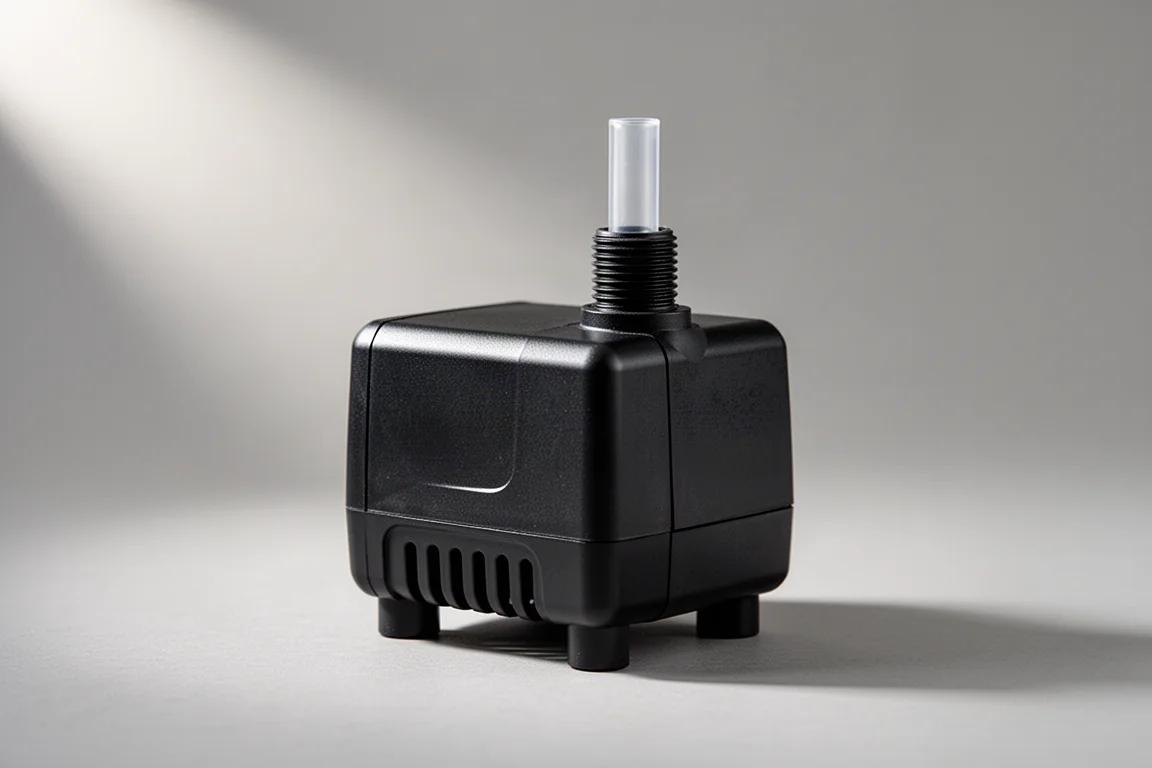
This is a small submersible pump that pulls water from the bottom rather than the side. Its intake sits behind short little feet, which lets it drain a container or a sump down to almost nothing, roughly the last quarter inch. That characteristic is what makes it so useful for saltwater mixing containers: drain one all the way down and you can refill it to exactly the same level, which tells you precisely how much new water your tank needs.
It works in more than one configuration. It can be used to create a siphon with the tap running, or it can pump on its own through a tube to the sink, with the outlet screwed into place so the line stays put. The pump body also screws onto the top of a larger AC pump if you want more power, and the difference is dramatic. Pair it with a high-flow pump and a large tank can be drained in about a minute and a half, then refilled in a fraction of that. The same approach can move water from another floor of the house if you are willing to run the tubing.
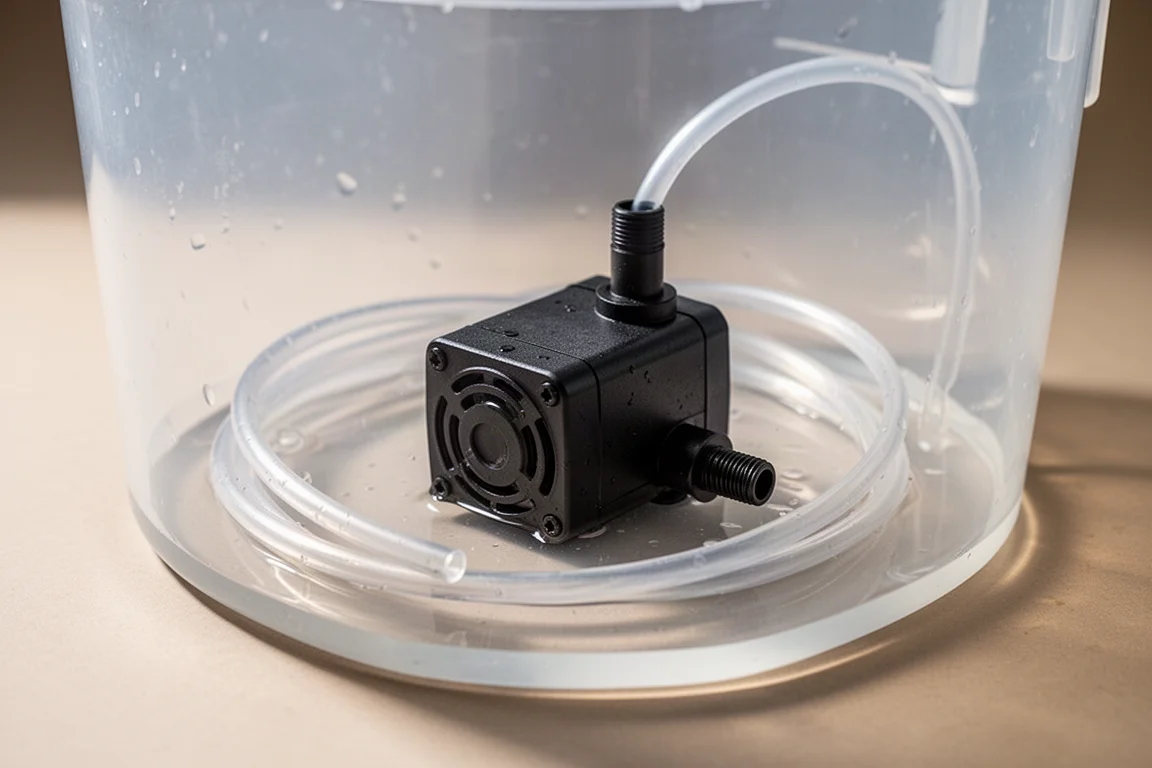
One habit that makes this pump especially practical is dropping it into the sump rather than the display. Many sumps hold roughly the volume of a routine water change, so draining one does not expose corals in the main tank at all.
Best Budget Auto Water Changer: AutoAqua Auto Water Changer
If you want the tank to handle water changes without you standing next to it, the AutoAqua Auto Water Changer is the most budget-friendly route.
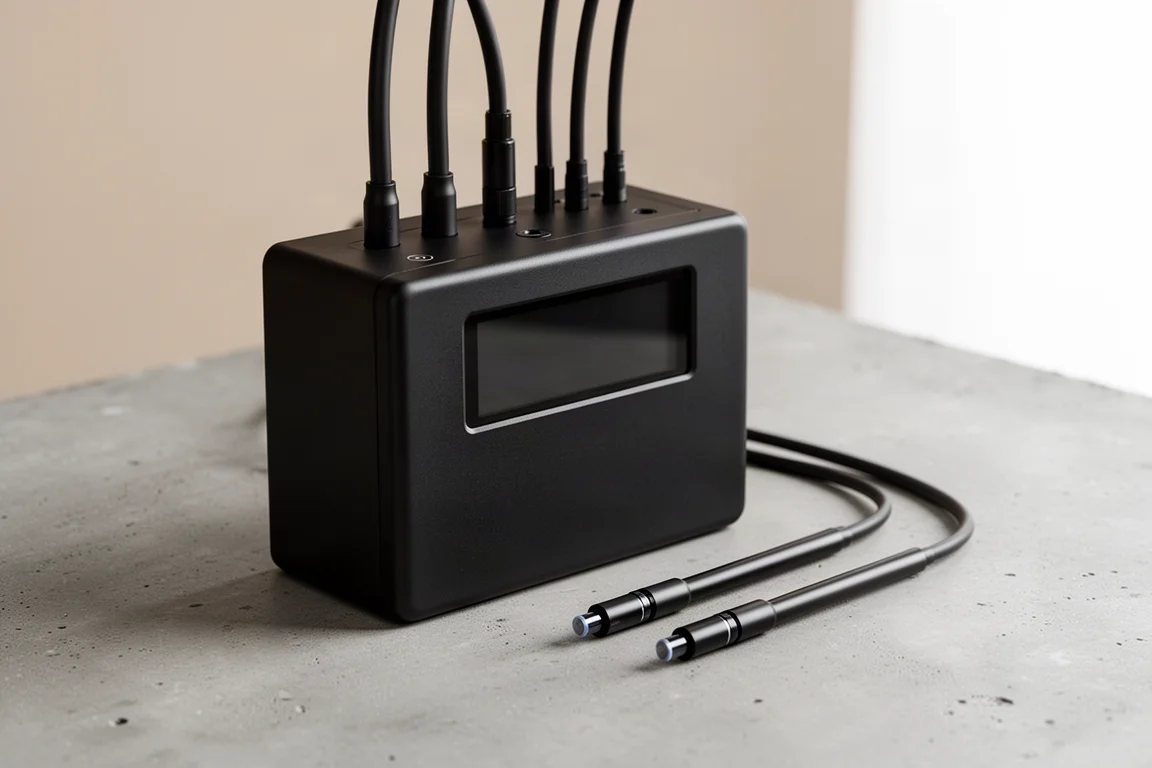
It uses dual optical sensors to work out the current water level and the level you want, then performs the change based on that. It also includes auto top-off as a built-in bonus, which is a meaningful addition for a unit at this price point.
The main limitation is distance. The unit relies on three small internal pumps, and while there is an option to connect a larger pump through additional switch sockets, the design is built around water-level readings. That means the fresh saltwater and drain reservoirs need to sit fairly close to the tank itself. If you can live with that arrangement, it delivers the core benefit of automated changes without a large investment.
Best Standalone Auto Water Changer: Kamoer AWC
For a large tank, or a tank far away from where you store water, the Kamoer AWC is the strongest dedicated option.
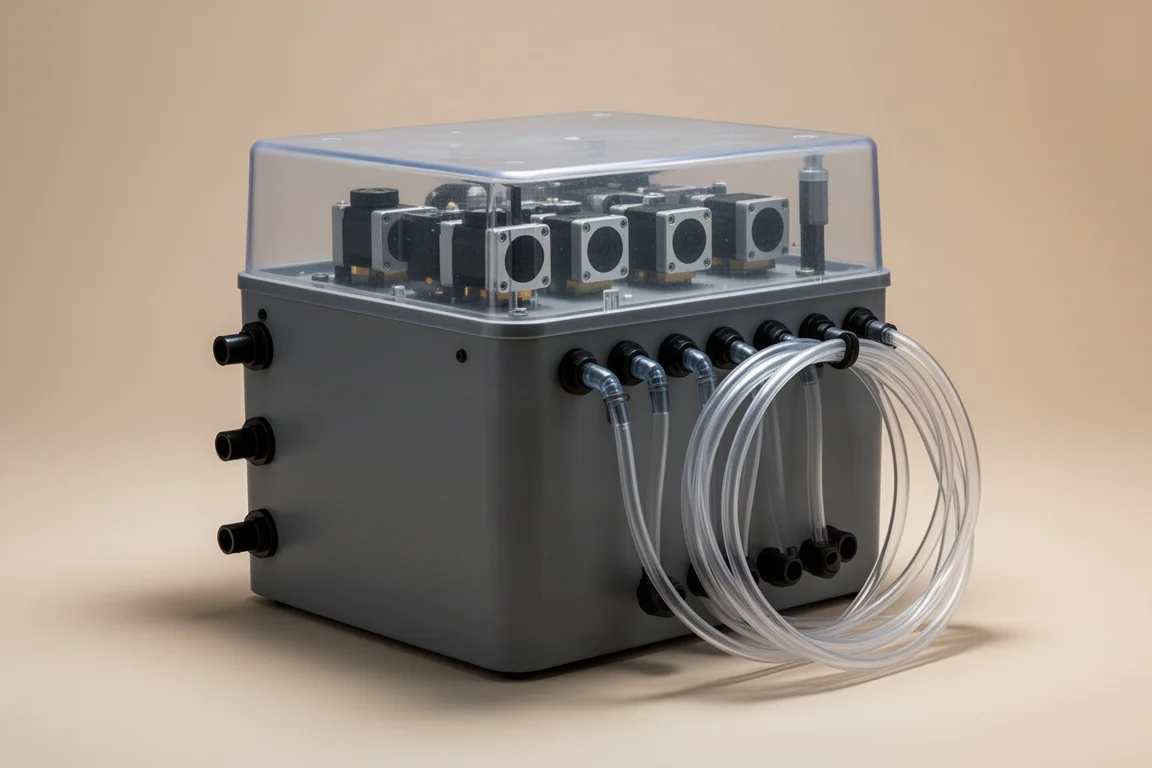
It is a heavy, substantial unit with large stepper motor pumps inside, generous tubing, and enough capacity to move volumes that smaller changers simply cannot handle. Where many automated systems rely on small dosing pumps to measure water down to the milliliter, this one scales the pump and the tubing to the job, so a thirty-gallon change does not mean a pump running flat out for hours.
It is app controlled and includes redundancy and sensors to verify what is happening. The app is the one point that needs a caveat. Some owners struggle to connect it at all, and in most cases the cause is Wi-Fi bandwidth. Like many cloud-connected devices, it needs a 2.4 GHz network rather than 5 GHz. On a dual-band router, separating the two networks makes setup straightforward, and once connected the app experience is genuinely effective.
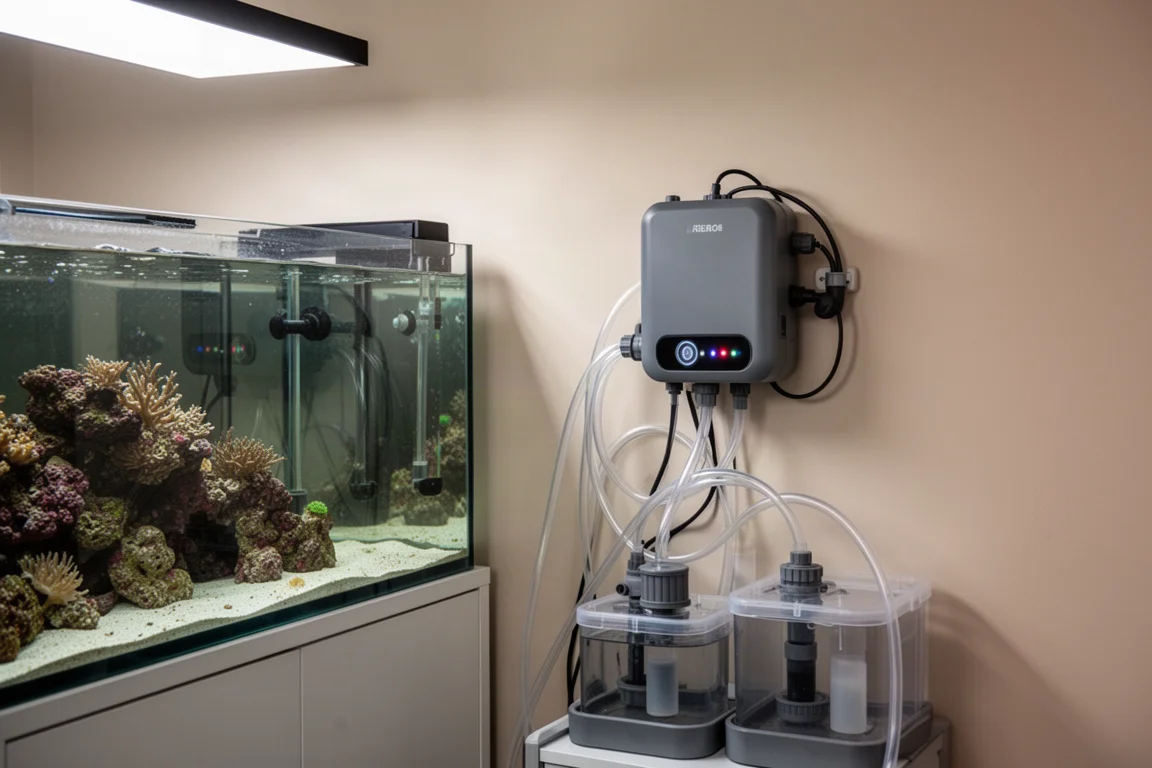
For big or distant systems, the combination of oversized pumps and accurate metering makes this the most capable standalone changer here.
Best Expandable Setup: Neptune Systems DOS and Apex Jr
Neptune Systems DOS
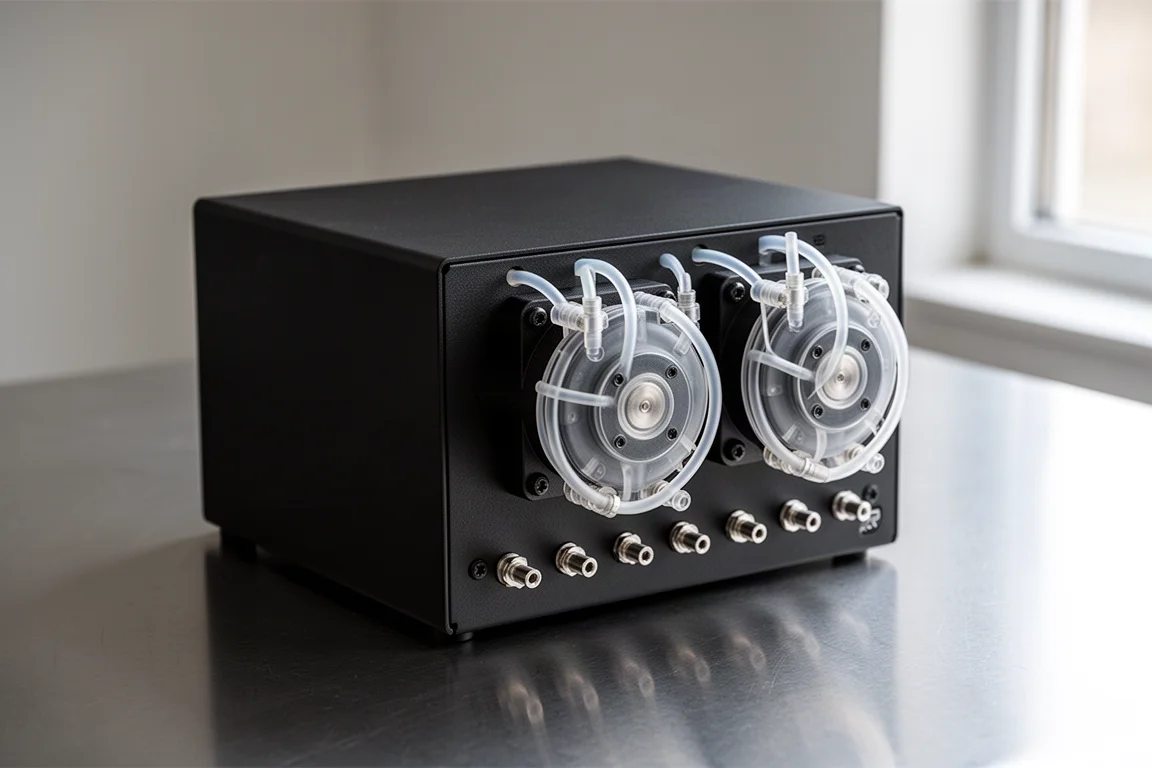
The DOS is an accurate peristaltic pump system that can move water very long distances, in different directions, and it doubles as a platform for far more than water changes.
If you already run an Apex controller, adding a DOS is the least expensive way to get precise automated water changes. Flow rates are high enough for long runs, including roughly 40 to 50 feet horizontally and around 15 feet up and back down. It is not silent, and the smart approach is to schedule it for a time when nobody is listening, such as the middle of the night. That also happens to be the ideal window for small daily changes: one percent a day at 3 a.m. is invisible to everyone, livestock included.
Neptune Systems Apex Jr
If you do not already own a controller, the Apex Jr is the cleanest way to run a DOS, and it is the option that turns a water changer into a full monitoring system.
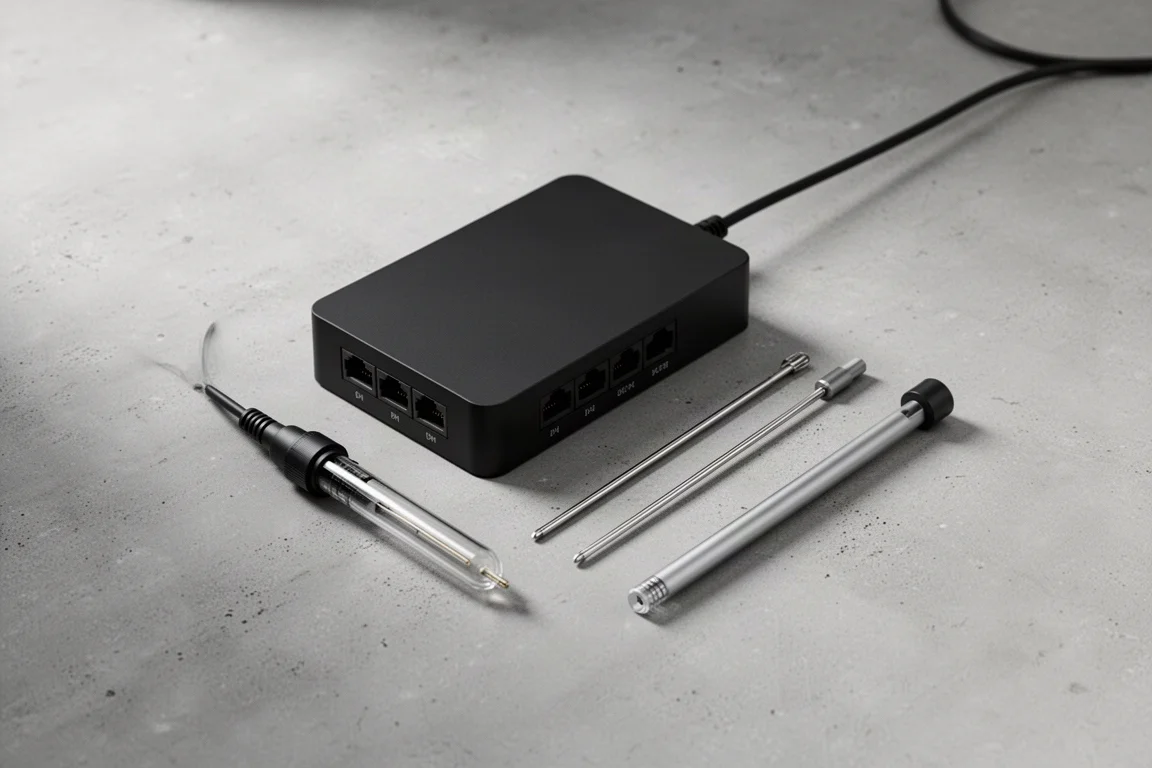
The package includes a leak sensor, a water level sensor, a pH probe, and a temperature probe, and it adds monitoring and alarms for the parameters you care about, along with logging for calcium and alkalinity. Pricing lands close to the dedicated Kamoer unit, so the decision comes down to priorities. The dedicated changer does one job with a heavier pump. The Apex Jr setup asks you to trade a little simplicity for expandability, and it is a scalable entry point into a much larger ecosystem if you ever want to grow into it.
Matching a Water Change Setup to Your Tank
The right answer depends less on budget than on how your tank is maintained.
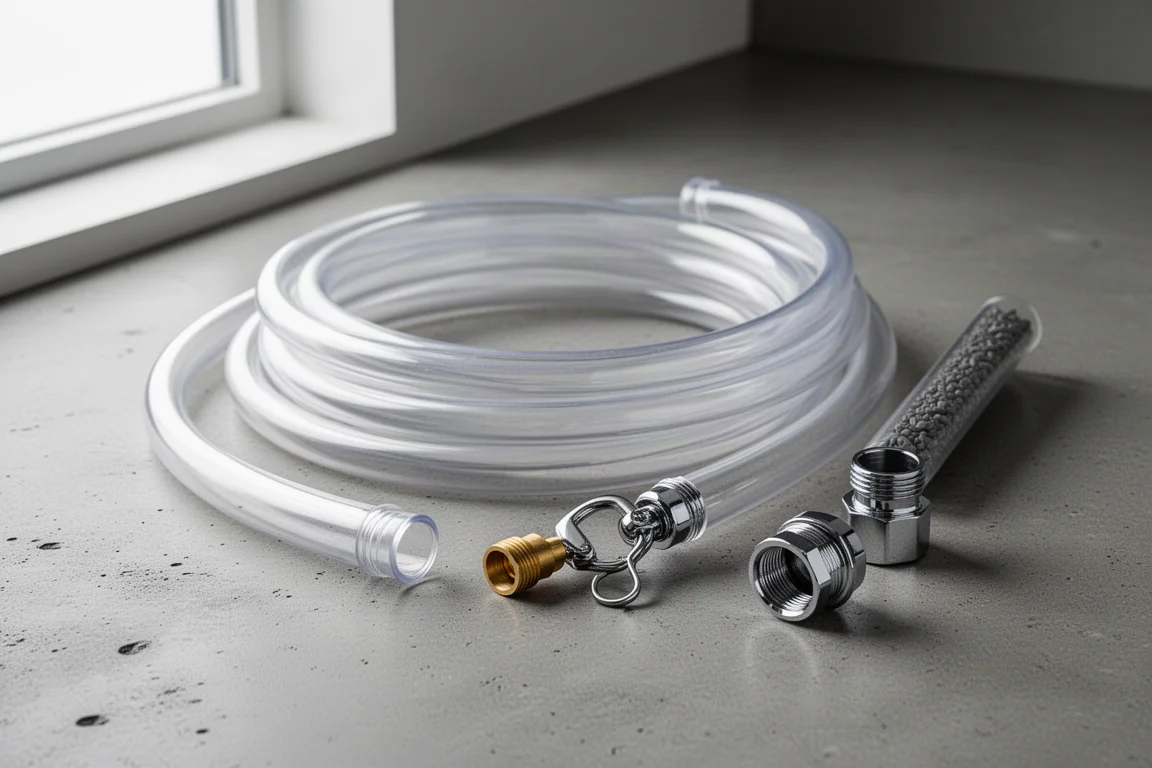
If you run a sand bed, you still need to siphon, and that points to the Python No Spill Clean and Fill. The natural companion is the CJ Ultra Zero, and the two work best together with a small trick. Pick up the brass snap connectors designed for the Python, fit one to the sink tap and one to the CJ pump, and you can slide the connector off one and clip it onto the other. Threading disappears, and swapping between the two becomes almost instant. That pairing is the fastest manual water change workflow available.
If reservoirs can live near the tank and cost matters, the AutoAqua is the sensible entry into automation. If the tank is large or the water storage is far away, the Kamoer and the DOS plus Apex Jr setups are the options worth the extra spend. Keep in mind that an automated changer and a manual siphon are not mutually exclusive. Plenty of setups run scheduled changes year round and still break out a hose when the sand bed needs attention or something looks off in the tank.
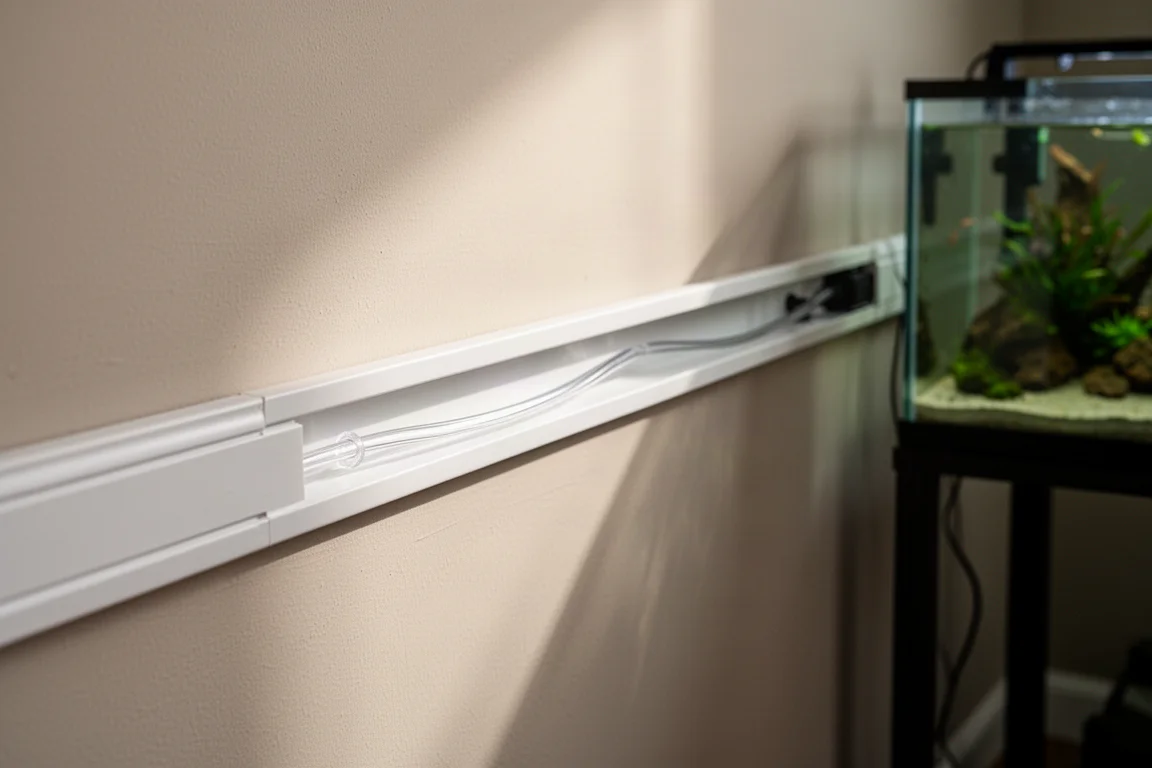
Routing is the practical obstacle for the more advanced systems. Tubing can go through a crawl space, up through a drilled floor, or along a baseboard inside a cable-hiding channel picked up from a hardware store and painted to match the wall, at which point it disappears. Long-term experience with this kind of automation is encouraging: a tank run on scheduled auto water changes alone, with no skimmer and no filter socks, can still develop into a healthy, flourishing reef. And if permanent plumbing is not an option, the one-button water change on a controller still lets you carry the tubes to the tank, press a button, and walk away.
Conclusion
Every tool here removes a different part of the chore. The Python No Spill Clean and Fill removes the bucket and the mouth siphon, the CJ Ultra Zero gets the last quarter inch out of any container, the AutoAqua brings automated changes to a modest budget, the Kamoer handles large or distant systems with serious pumps, and the DOS with an Apex Jr delivers precision, monitoring, and room to expand.
Start with the part of the routine you dislike most. If it is buckets, buy the hose. If it is the whole routine, buy the automation.
Further reading
Related Reviews
Aquarium Maintenance
Aquarium Maintenance Must-Haves: 6 Tools for a Cleaner Tank
A practical roundup of aquarium maintenance tools, from magnetic algae scrapers to a glass cleaner and camera lens, with strengths and trade-offs.
Aquarium Maintenance
Continuum AquaBlade Aquarium Scraper Review: A Sturdy Tool for Cleaner Glass
A practical look at the Continuum AquaBlade scraper, its one-piece build, swappable plastic and metal blades, size options, and the everyday jobs it handles beyond algae.
Aquarium Maintenance
Flipper Float Review: A Floating Magnetic Glass Cleaner for Reef Tanks
Flipper's Float magnetic cleaner keeps the flip design reef keepers rely on and adds a wet side that floats, plus a larger handle and revised scraper clearance.