Aquarium Filtration
Fleece Roller Filtration for Reef Sumps: Theiling Rollermat Compact vs Royal Exclusiv Dreambox
A practical look at two fleece roller approaches for reef sumps, plus what filter socks really cost you in maintenance, nutrients, and skimmer performance.
Introduction
Filter socks have been the default mechanical filter in reef sumps for years, and they work. They also come with a chore schedule most hobbyists quietly resent: pull them, soak them, wash them, buy replacements, repeat.
Fleece roller filtration reframes the problem. Instead of trapping waste in a sock that stays submerged until you get around to cleaning it, a fleece roller captures whole food particles, molts, and fish waste on a sheet of fleece and pulls them out of the system as the roll advances. Nothing gets the chance to sit and break down.
That difference shapes everything else in this guide, from how big a skimmer you need to how often you actually have to touch the sump. Below we look at two ways to bring fleece into a reef system: a compact, self-contained roller, and a sump with wide fleece built into its design.
What Fleece Rollers Change in a Reef Tank
Timing is the whole argument. Waste that is captured whole and removed quickly never dissolves into the water column. Waste that lingers gets broken down by bacteria, and the end products are nitrate and phosphate.
Filter socks illustrate the point. A three-day change interval is the practical sweet spot: changing socks daily or every two days did not deliver a meaningful advantage, and once you pass three days the trapped material starts to rot. At that stage the sock is no longer filtering so much as holding nutrients inside the system.
There is a second, less obvious effect. Filter socks strip out the particulate food and broken-down detritus that a protein skimmer would otherwise collect, which can leave the skimmer with less to work with. When mechanical filtration is doing that job consistently, a smaller skimmer is often enough for the same tank.
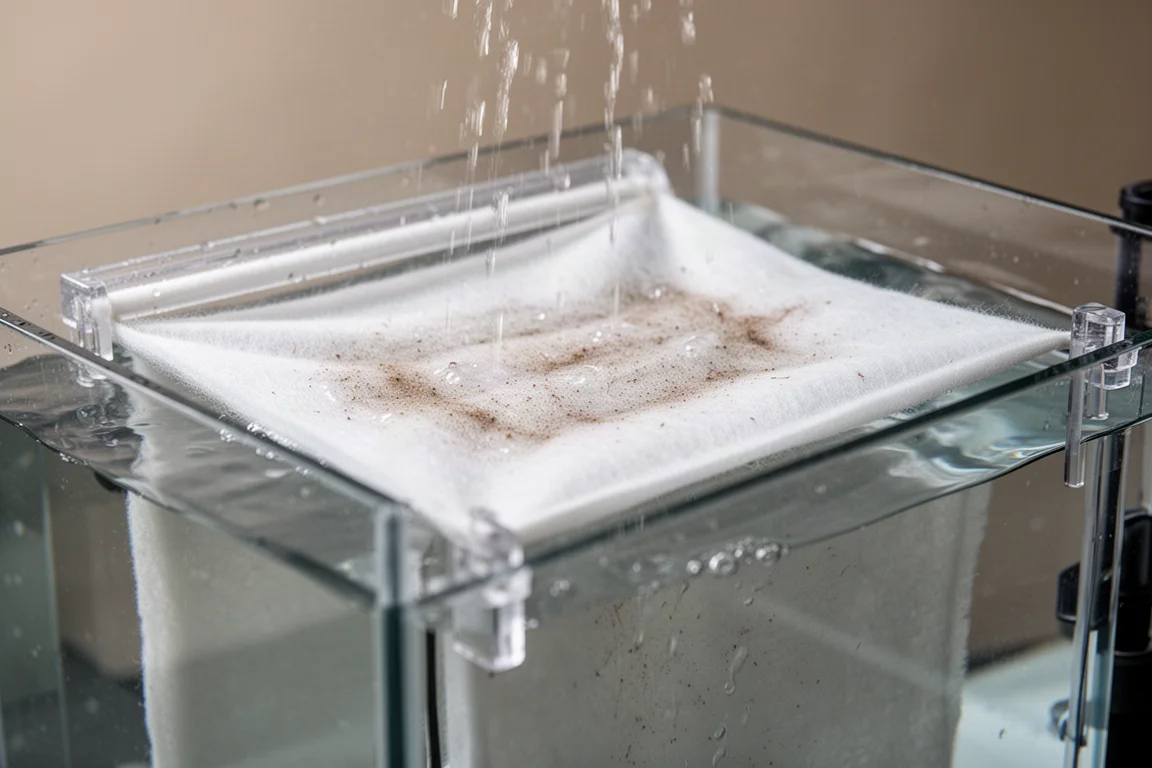
What makes fleece compelling is the combination: fast, whole-waste removal plus a lighter load on downstream filtration. For reefers who like to feed generously, that is a more forgiving arrangement than socks, because it compensates for the food that never reaches a fish.
Theiling Rollermat Compact: Compact, Self-Contained, Easy to Install
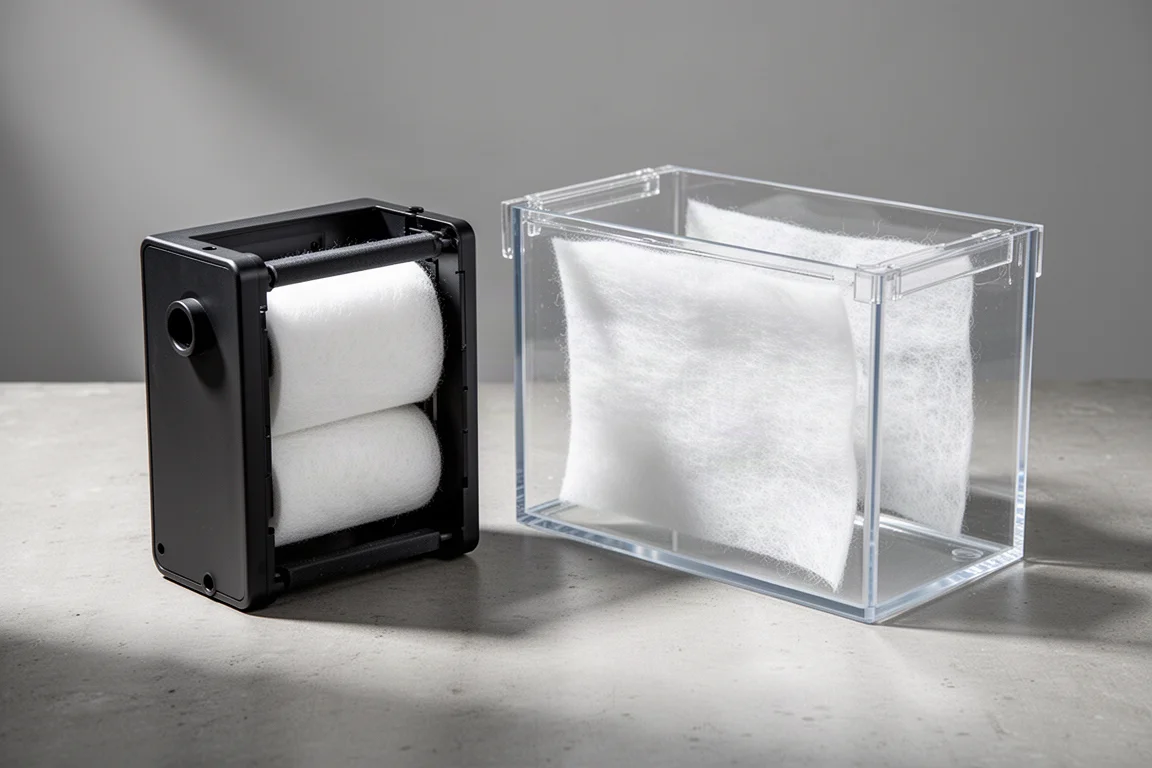
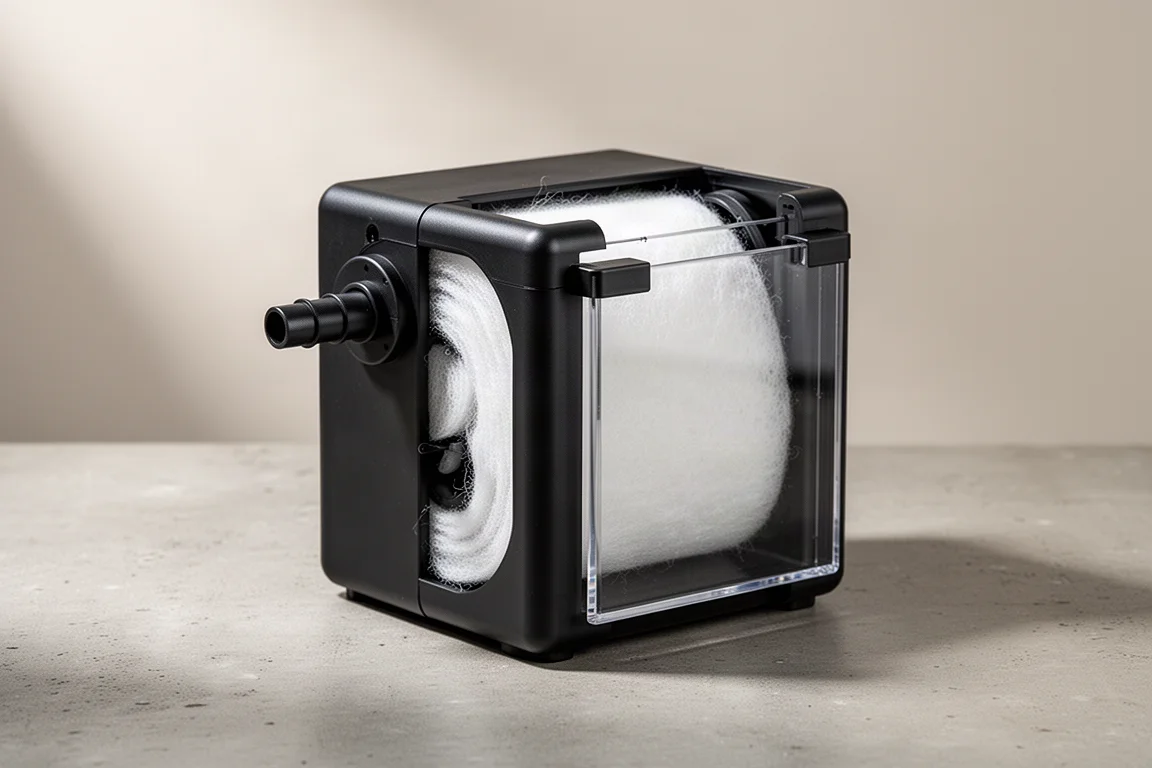
Theiling’s Rollermat Compact is the compact, self-contained route to fleece filtration. It is rated for up to 500 gallons per hour of flow, which covers a wide range of tank sizes once you consider how much turnover a sump filter actually needs.
Its real advantage is independence. Rather than relying on the water level inside a filter sock chamber, the unit regulates the water level within its own body, so the sump around it does not have to be built specifically to accommodate the roller. The drain connection uses a barb fitting that comes in three sizes, and the package includes a clip for glass without euro bracing as well as a stand, which keeps installation simple.
That is why it works so well as a retrofit. A basic glass tank paired with this roller, plus some mesh to capture microbubbles, can deliver low-maintenance mechanical filtration comparable to a purpose-built fleece sump without replacing an entire filtration system. It is not the most decorative piece of equipment you can put under a tank, but the priorities here are nutrient removal and low upkeep rather than appearance.
Royal Exclusiv Dreambox: Wide Fleece and Adjustable Water Height Built In
The Dreambox takes the opposite approach. Instead of retrofitting a roller into an existing sump, the fleece filtration is part of the sump itself. That matters because built-in designs generally use a much wider sheet of fleece than the narrow strips found in many aftermarket rollers, and a wider sheet takes substantially longer to clog and advance.
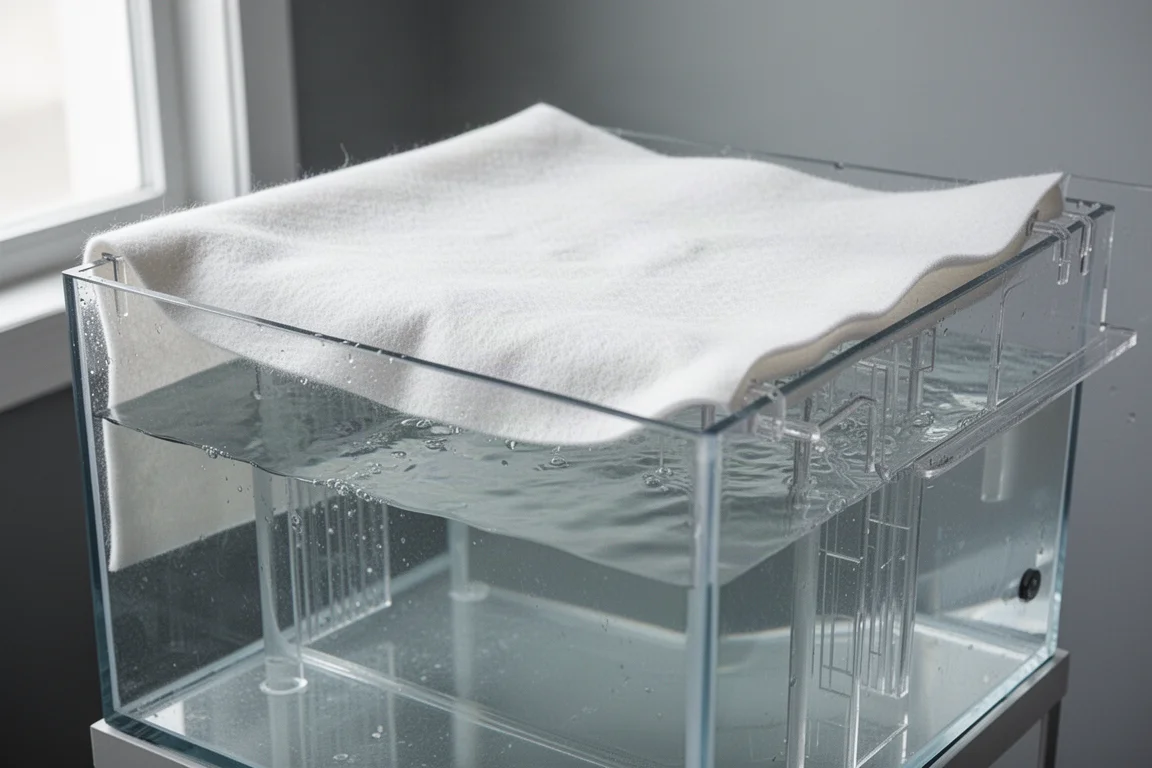
Water height inside the filter is adjustable, which gives direct control over how quickly the fleece is consumed. Exposing more fleece area means the material takes longer to clog and the roll lasts longer between advances. Exposing less area makes it clog and advance faster, which pulls particulate out of the tank more aggressively. Being able to tune that is one of the features that separates a well-designed fleece filter from a basic one.
The trade-offs are price and commitment. A complete built-in fleece sump sits in a different price bracket from a compact manual roller, and replacing a sump once a tank is running is one of the hardest upgrades to make. This route makes the most sense when the system is being planned from the start.

Wider Fleece and Built-In Sumps Outperform Narrow Retrofit Rolls
Width is not a detail. A large sheet of fleece can last roughly five times as long as a small one before it needs replacing, simply because there is more surface area to clog. Some aftermarket rollers use strips only about two inches wide, and owners of those units can find themselves swapping rolls every week, which trades one maintenance routine for another.
That is the core argument for in-sump fleece designs: the roller is sized to the filtration chamber rather than squeezed into whatever space is available, so the fleece is wide and the intervals between roll changes stretch out. Retrofit rollers remain a reasonable option when the housing is genuinely compact and self-contained, but a narrow strip inside a large sump rarely solves the underlying problem.
Turnover, Drain Plumbing, and Running Two Rollers
A fleece filter does not need to see every drop of water every time it passes through the sump. A system that pushes the full volume through the filter two or three times an hour is enough to keep catching waste, and many setups send only part of the return flow through the mechanical stage.
That flexibility opens up some practical configurations. Two compact rollers can be paired with a primary and a secondary drain, with the drains tuned to run at similar rates so both units share the load. A single drain can also be split to feed two filter inlets, provided the flow is divided sensibly. Alternatively, one return path can bypass the roller entirely, since the water will come back around again.
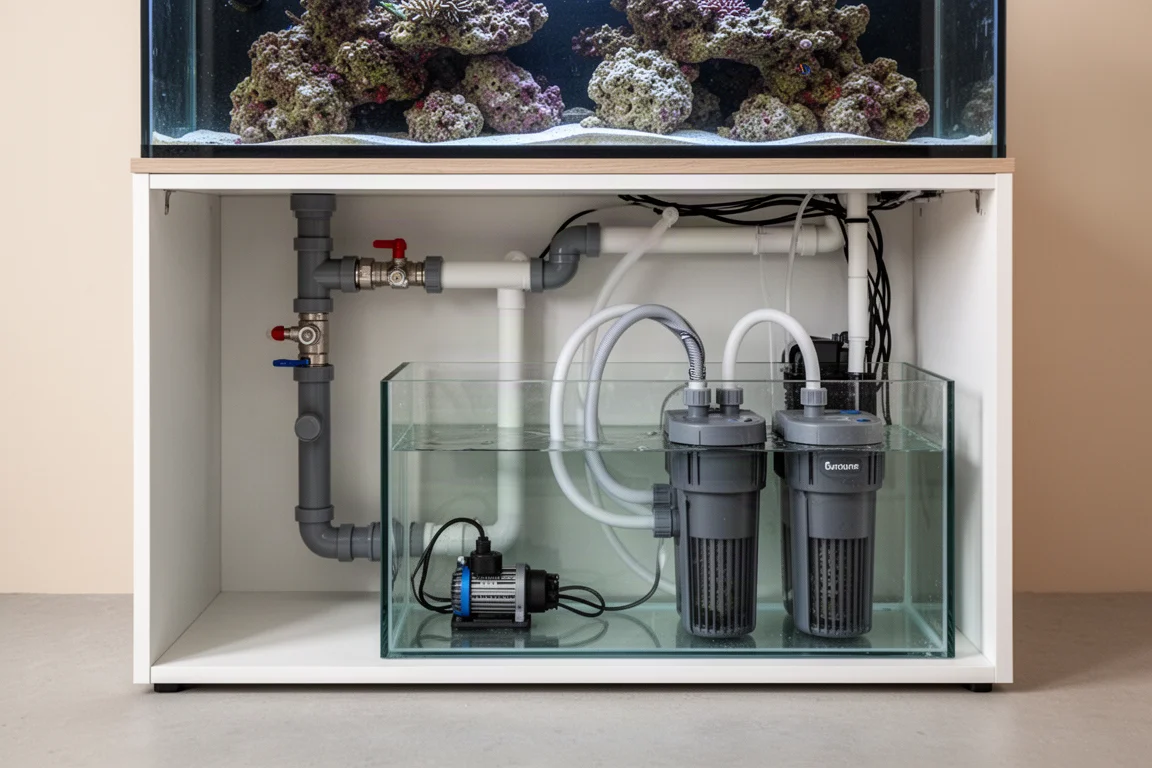
For a manual roller, the maintenance rhythm is a matter of seconds: reach into the sump, give the roll a turn, and walk away. That small, low-effort action every few days is what keeps captured waste moving out of the system instead of rotting in place.
Hard Lessons From Filter Socks Worth Knowing
Filter socks have a few surprises in them, and one is literal. Bristle worms take up residence inside the sock material, and reaching in to pull a clogged sock bare-handed is a genuinely painful mistake. Grab socks by the tab, or use a tool, rather than assuming the inside of a filter sock is harmless.
The second lesson is that fleece and socks can work too well. When mechanical filtration removes waste efficiently, a protein skimmer may have too little left to work with and can become noticeably less productive, which is worth factoring in when you size one. In tanks with very low nitrate and phosphate, aggressive mechanical filtration can also leave a refugium short of the nutrients it needs to thrive.
The third lesson concerns sump choice. Many sumps are designed around filter sock holders, so if you have no intention of running socks, be deliberate about the model you buy. Removing socks from a sump built for them can leave unused space and a noisy trickle through the empty holder. Mesh socks are an option in that situation, but they only catch large debris and let fine particulate and broken-down food pass through.
Buying Advice: Which Roller Fits Your Sump
The first question is whether you want to work on the sump at all. A manual fleece roller asks for a quick turn of the roll every few days, which is a very different commitment from pulling socks, soaking them, washing them without leaving soap residue, and buying replacements. Once you account for the electricity, the washing cycles, and the way sock material loosens with every wash, the running cost of a manual fleece roller can land in roughly the same territory as filter socks, with far less hands-on work.
Automated rollers add motors, float switches, and the mechanisms that drive them, and that complexity is what pushes their cost up. Complete built-in fleece sump setups were noted around the $1,000 mark, which is a fair reflection of what you get when the roller is engineered into the sump rather than added to it.
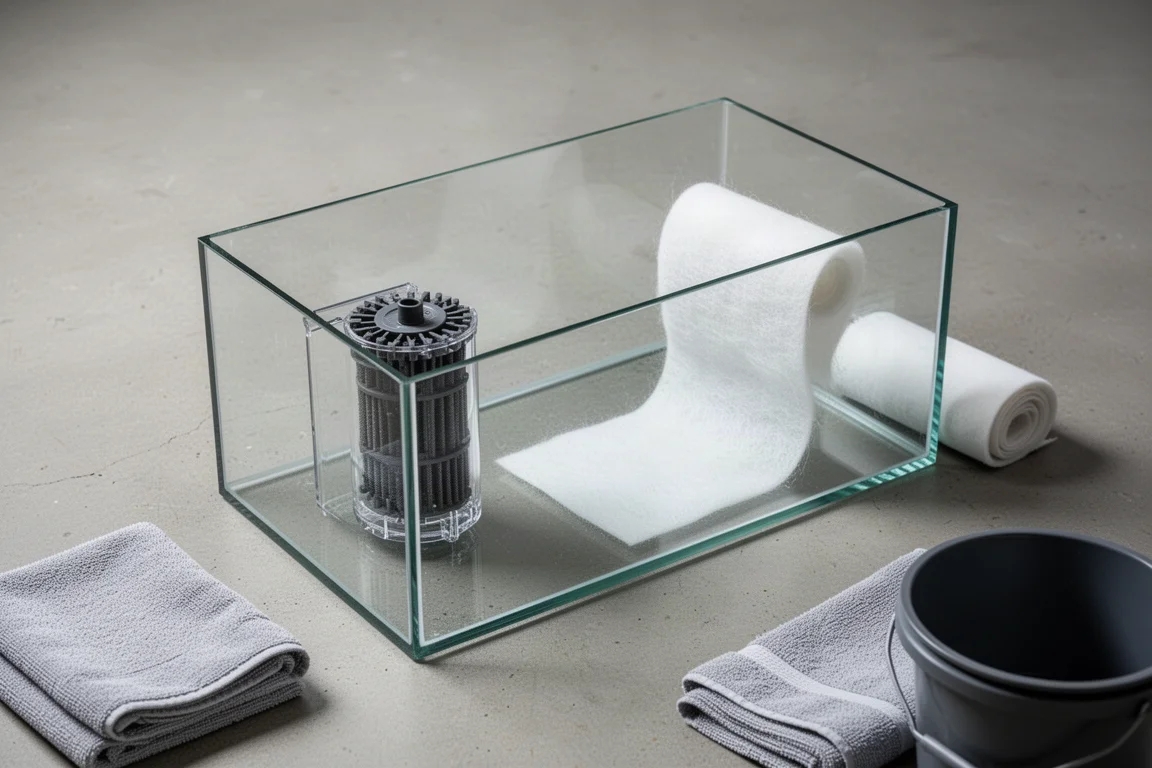
If you are retrofitting, a compact self-contained roller is the sensible starting point, especially in a simple glass sump where you control the layout. If you are planning a new system and want the widest fleece and the longest interval between roll changes, a sump with integrated fleece filtration is the more capable long-term home for it. Either way, pick the option you will actually maintain, because the benefit comes from the waste leaving the tank, not from the equipment sitting in the cabinet.
Conclusion
Fleece filtration earns its place because it removes waste whole and in real time, before it has a chance to break down into nitrate and phosphate. Theiling’s Rollermat Compact makes that practical as a compact, self-contained retrofit rated for up to 500 gallons per hour, while the Royal Exclusiv Dreambox builds wide, adjustable fleece filtration directly into the sump for new builds.
Whichever route you take, the goal is the same: mechanical filtration that captures what you feed before it becomes a nutrient problem, and maintenance light enough that you will keep up with it.
Further reading
Related Reviews

Aquarium Filtration
Adaptive Reef Refugium Reactor Review: A Simple Way to Grow Nuisance Algae Outside Your Display
A vessel designed to grow nuisance algae in a controlled space so it stops taking over the display tank, with an adjustable stand, a removable basket, and a single LED light on top.
Aquarium Filtration
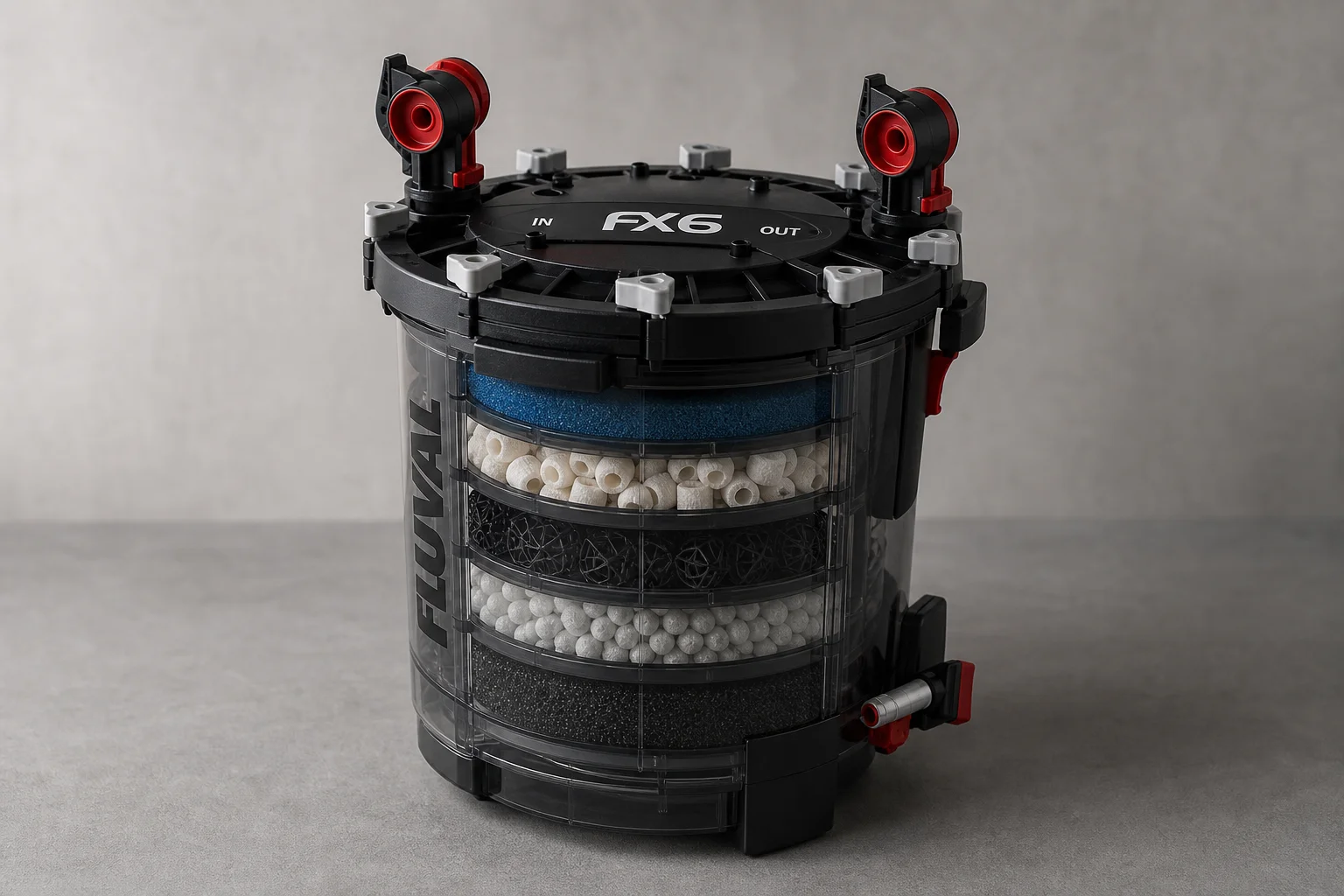
Affordable Aquarium Filter Media: Testing Budget Alternatives to Expensive Biomedia
Can cheap pot scrubbers replace expensive ceramic biomedia in a canister filter? One aquarist tests the theory on a heavily stocked 210-gallon tank.
Aquarium Filtration
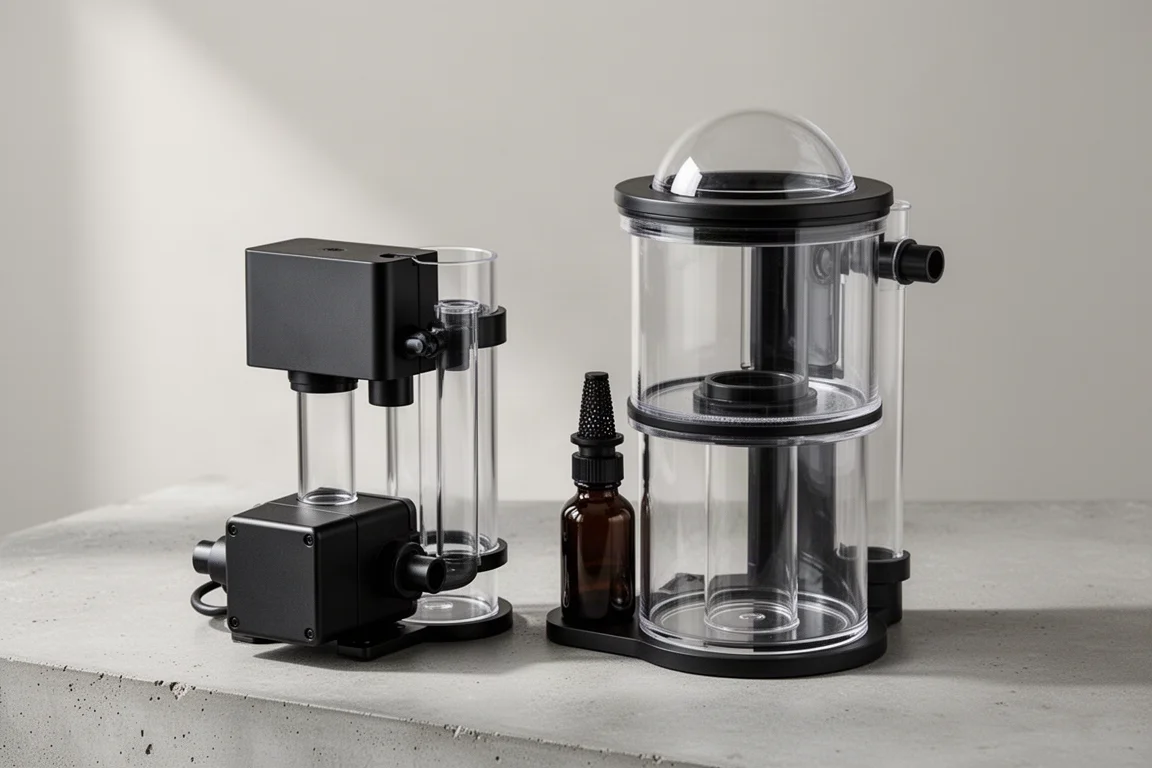
AquaMaxx Bullet 2 and Bullet 3 Review: Hang-On Protein Skimmers Compared
A closer look at two larger AquaMaxx hang-on protein skimmers, covering capacity ratings, clearance needs, and the design details that separate the Bullet 3 from the Bullet 2.