Bouldering Pads
Flash Drifter and Big Squishy Bouldering Pads: Two Sizes, One Tough Build
A practical look at two Flash bouldering pads, the lighter Drifter and the larger Big Squishy, and how their shells, carry systems, and foam layers differ.
Introduction
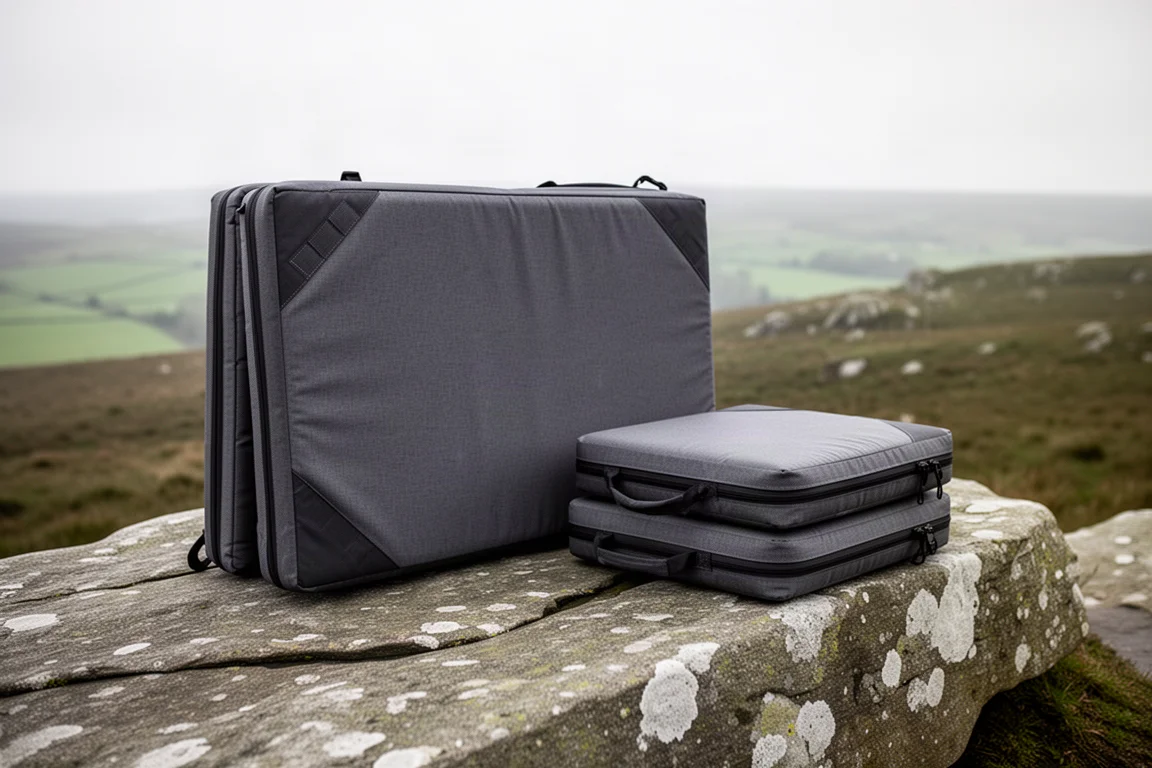
Flash has been making climbing pads for a long time, and the current range is packed with details that a lot of pads on the market simply leave out. Two models define the line: the Drifter, a smaller and lighter pad, and the Big Squishy, a much larger pad with an extra foam layer. They share the same tough outer construction and the same carefully considered carry system, so the choice between them comes down to how you climb and how much cushioning you want underneath you.
What Sets Flash Pads Apart
Both pads use 1680 denier ballistic nylon uppers, which is a genuinely tough fabric, and the corners are reinforced with a PU coating. That coating repels water for a long time, even though the pads are not fully waterproof, and it adds meaningful durability for anyone who wants to keep a pad for years.
They are folding pads rather than taco style pads. Folding is quicker and simpler to pack: you drop your gear inside, grab the handles, and move on to the next problem. It also means the foam is not left compressed in a rolled shape, which is how foam tends to deteriorate, so the pad is safe to leave in a car between sessions.
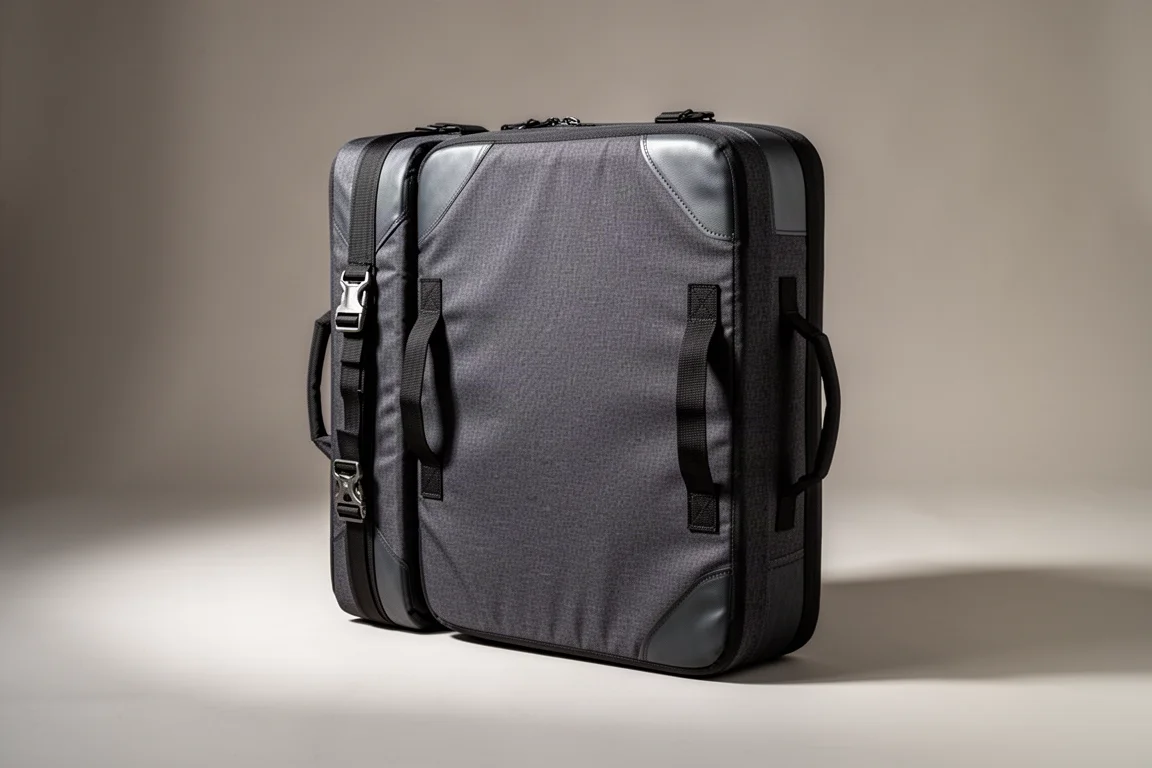
The burly details continue with handles on both sides, which not every pad offers even though they make a real difference once you are carrying gear. The handles use car seatbelt style webbing that is tough and easy to grab. There is no plastic anywhere on the pad, as every buckle is metal, so standing on it or crushing it over time is far less likely to break anything.
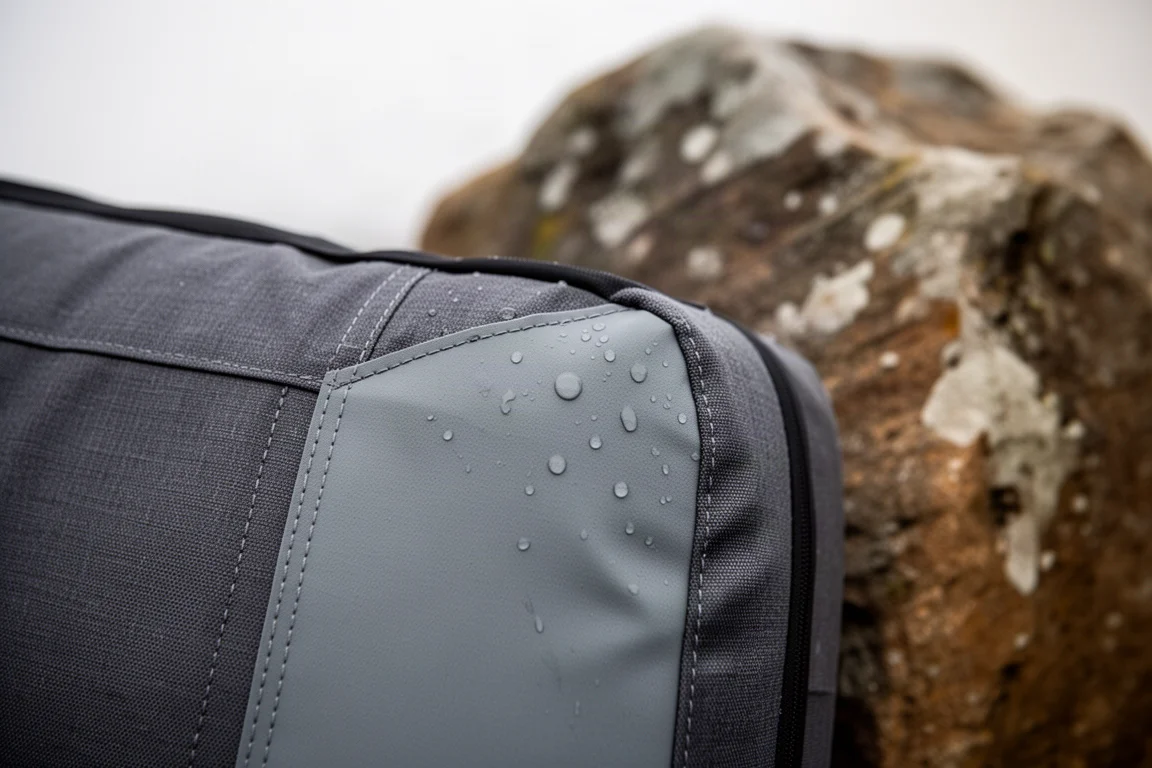
Those choices add up over a long day at the crag. A pad that is easy to grab, easy to pack, and built from materials that shrug off rough ground is a pad you stop worrying about.
Flash Drifter: The Smaller, Lighter Pad
The Drifter weighs around 5.5 kg, making it the easier of the two to carry and the more manageable option for shorter approaches. Its foam build uses two layers: a soft layer underneath and a firm, weight-distributing layer on top. On landing, the soft base sinks in and spreads the impact, while the firmer top layer keeps you from bottoming out through the pad, so the landing feels reassuring rather than harsh.
Flash Big Squishy: Maximum Reassurance
The Big Squishy weighs around 8.5 kg, which sounds like a lot on paper, but it feels light and nimble for a pad of its size compared with much of the competition. Its foam build adds a third element: the soft base layer and the firm distributing layer are joined by a thin squishy topper. That combination works particularly well for highballs and long falls, because you still get the support that prevents bottoming out, without the completely solid and unforgiving impact a brand new pad can deliver. It takes the edge off and feels lovely and squishy underfoot.
Foam Construction: How the Two Pads Differ
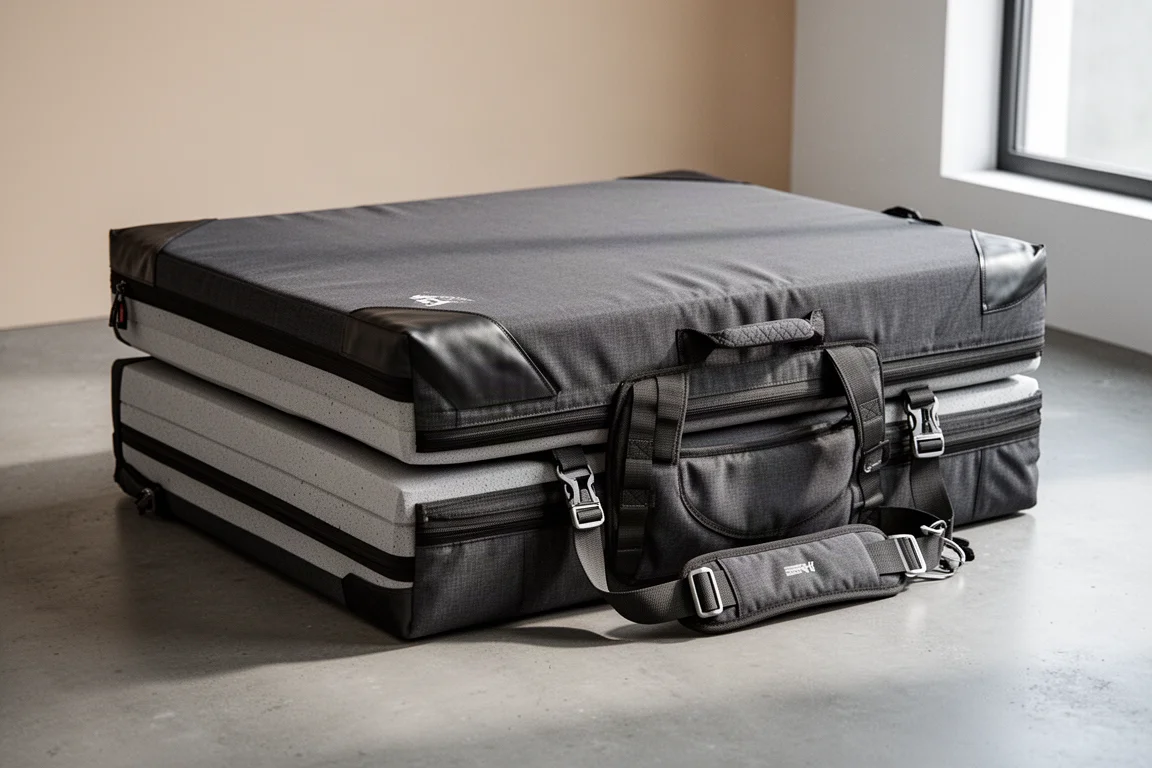
The difference between the two models is not only size. The Drifter keeps the classic two layer arrangement, soft under firm, which is a tried and tested way to build a pad that feels solid without being punishing. The Big Squishy keeps those same two layers and adds the thin soft topper above them, so the first contact is gentler before the firmer layer takes over and distributes the load.
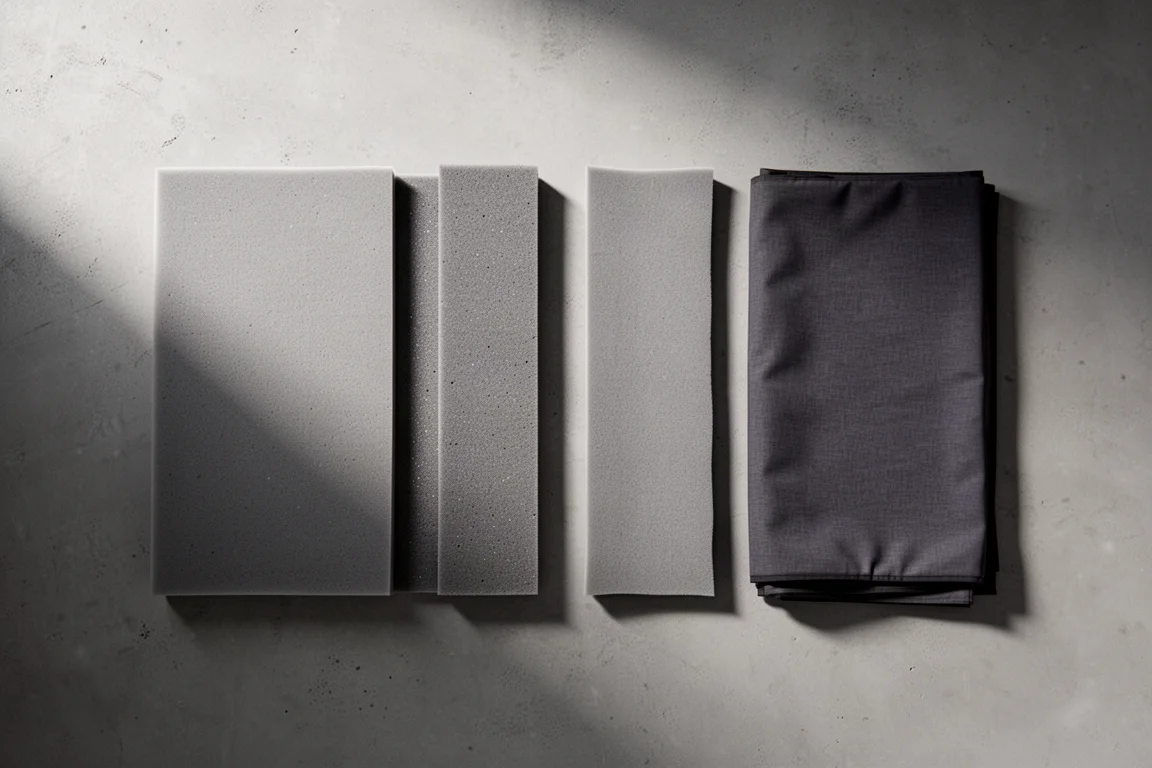
In practice, that extra topper is what makes the larger pad so confidence inspiring on long problems. You get a landing that absorbs the first impact softly and then holds firm, which is exactly what you want when you are high off the ground.
The Carry System and Two-Pad Stacking
The carry system is one of the most important parts of any pad, and it is where Flash has gone further than most. The shoulder straps can be mounted in two different positions depending on your height, and tension straps let you fine tune the angle the pad sits at, much like adjusting a properly fitted rucksack. The hip belt is generously padded and thick, and every buckle on the harness is metal.
There are also dedicated carrying straps that are not meant for wearing on your back. They let you slot a second pad in at the top and bottom, pull it tight, and carry both as one stable load. A smaller Drifter slid into the straps of the Big Squishy stays secure, and gear packed inside the pad stays stable too, rather than bouncing around the way a pad slung over one shoulder tends to do. The straps are designed with Flash pads in mind, but they can hold other pads as well, which is useful if you already own one and want to add a second.
Who Each Pad Suits
The two pads are aimed at slightly different climbers. The Drifter suits anyone who wants a lighter, simpler pad: lower level bouldering, shorter sessions, or days when a trad climber takes a pad to the crag. The Big Squishy suits climbers who spend time on highballs or long problems and want the most reassuring landing they can get.
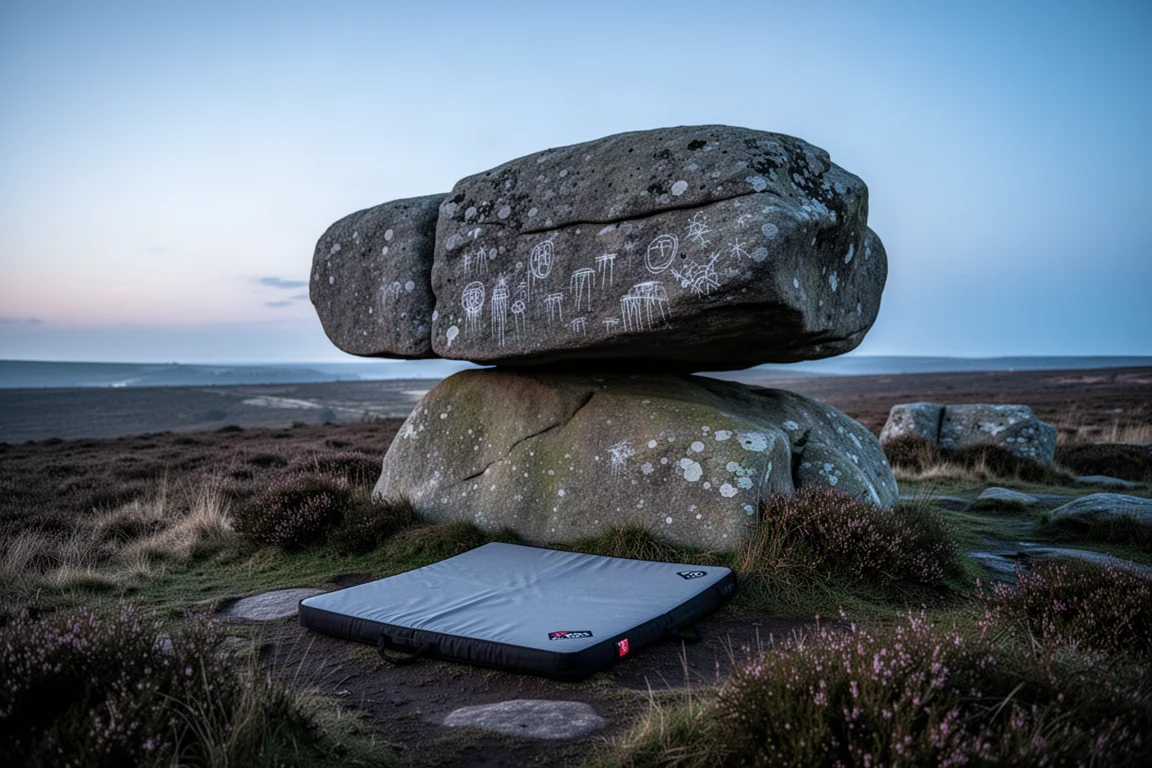
Used together, the pair covers a lot of ground, with the smaller pad strapped to the larger one for the walk in and both carried as a single load.
Points to Weigh Up Before Buying
Neither pad is fully waterproof. The PU coated corners and the tough nylon upper repel water for a long time, which handles damp ground and light rain, but a proper soaking will still get through. The Big Squishy is also a genuinely large pad at around 8.5 kg, so it best suits climbers who value the extra protection over the lightest possible carry. And because these are folding pads, they pack differently from taco pads: excellent for quick packing and for storing foam safely, but a different habit if you are used to rolling a pad up.
Buying Advice
Start with how you actually climb. If you mostly boulder at moderate heights and want a pad that is easy to carry and quick to pack, the Drifter is the sensible starting point.
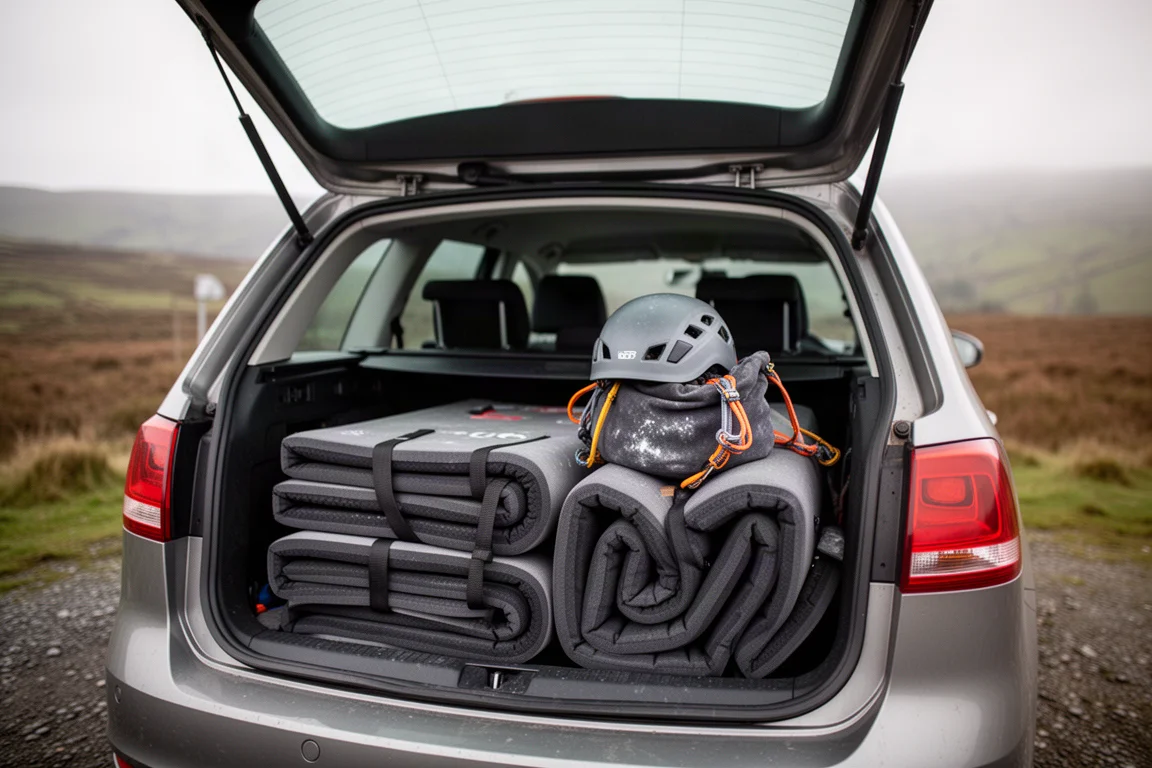
If your sessions regularly take you onto highballs or long problems, the Big Squishy’s extra foam layer and larger surface are worth the additional weight. Buying both makes a genuinely versatile setup, and the carrying straps let you move the pair as one load rather than juggling two pads.
Conclusion
The Flash range stands out because of the details: tough 1680 denier uppers with reinforced corners, metal buckles throughout, handles on both sides, and a carry system that can be adjusted to your height and used to stack two pads together. The Drifter keeps things light with a two layer foam build, while the Big Squishy adds a soft topper for highballs and long falls. Either way, you get a pad that is built to last and comfortable to carry all day.
Further reading
Related Reviews
Bouldering Pads
Black Diamond Circuit Z Review: A Compact Z-Fold Bouldering Pad for Circuits and Small Cars
A close look at the Black Diamond Circuit Z, a Z-folding bouldering pad with 152 x 101 cm of coverage, a 5.5 kg carry weight, and a modular design for climbers with limited boot space.

Backpacking Gear
Building a 10 lb Base Weight: An Ultralight Backpacking Gear List
A practical walkthrough of the ultralight pieces behind a 10 lb base weight, from a 765 g pack and a roomy one-person tent to a full camp chair and a dependable water filter.

Road Bikes
10 New Road Bikes Worth Watching: Aero, Titanium, Steel and Endurance Standouts
A practical roundup of 10 new road bikes, from aero flagships chasing single-watt gains to titanium, steel and endurance platforms built for real roads.