Backcountry Skiing
Fischer Hannibal 96 Review: A Dedicated Backcountry Touring Ski
A close look at the Fischer Hannibal 96, a lightweight touring ski built for efficient climbing while keeping an energetic descent.
Introduction
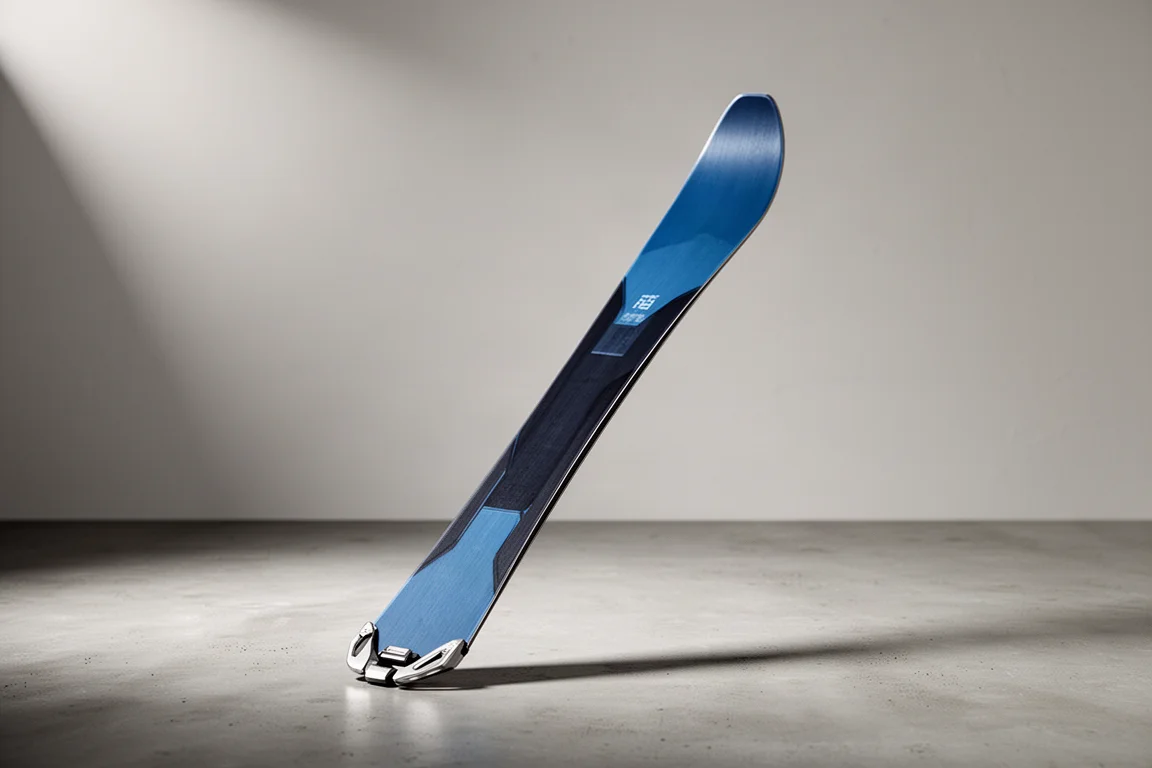
The Fischer Hannibal 96 is a dedicated touring ski built for skiers who plan to spend most or all of their time in the backcountry. It also handles early morning laps where you climb under your own power and ski back down, but it has very little application for lift-served skiing. That makes it a fairly single-purpose, uphill-oriented design.
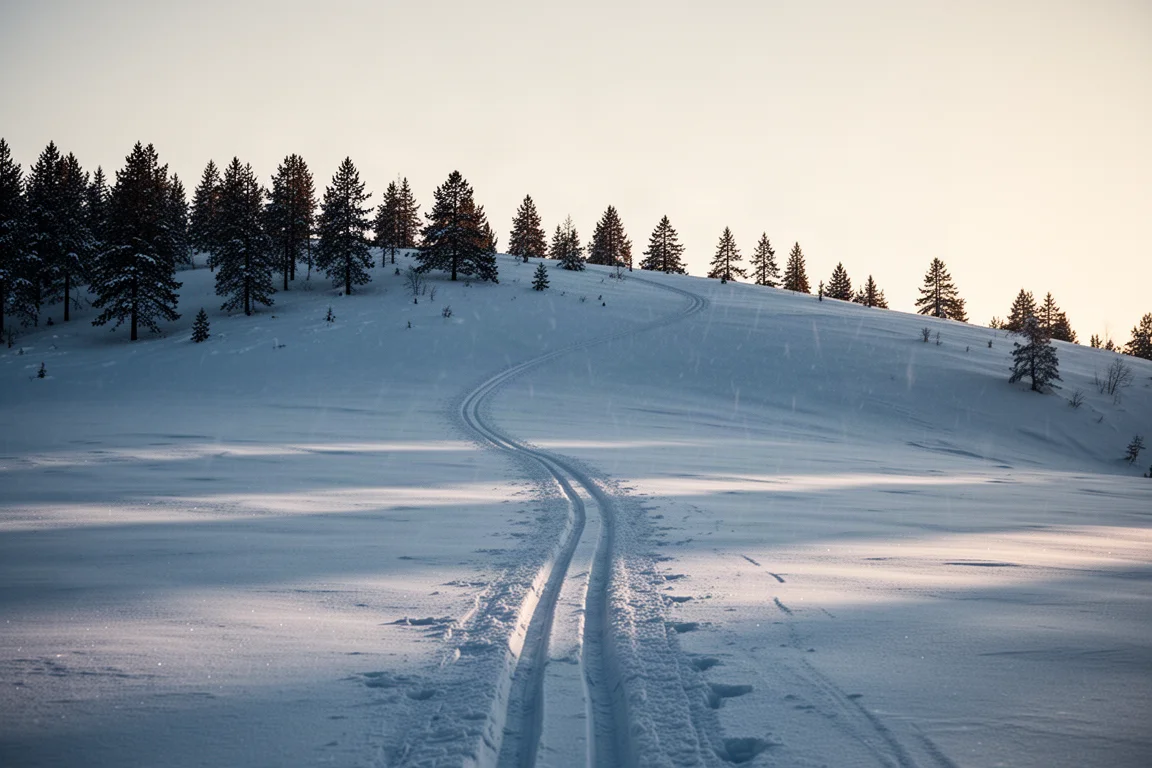
The encouraging part is that the downhill side has not been sacrificed to get there. Several construction choices carry over into a fun, energetic descent after a long climb, which is exactly what most touring skiers are looking for.
Who This Ski Is For
This ski is aimed at skiers whose days revolve around the skin track: long approaches, rolling terrain, and the reward of a descent earned on the way up. If your season is mostly chairlift laps with the occasional touring day, the Hannibal 96 is a narrow fit for that use case.
It is also a reasonable choice for early morning laps that combine a sustained climb with a quick descent before the day starts. The uphill bias is deliberate, and the ski is happiest when climbing efficiency matters as much as downhill feel.
Main Strengths
Lightweight Paulownia Core and Carbon Construction
At the core is a paulownia wood core, which gives the ski a light, energetic start. Fischer pairs it with its Carbon Tax construction, a distinctive way of laying in carbon stringers. A small window under the binding plate reveals what is happening inside: both vertical carbon stringers and a cross-hatched pattern.
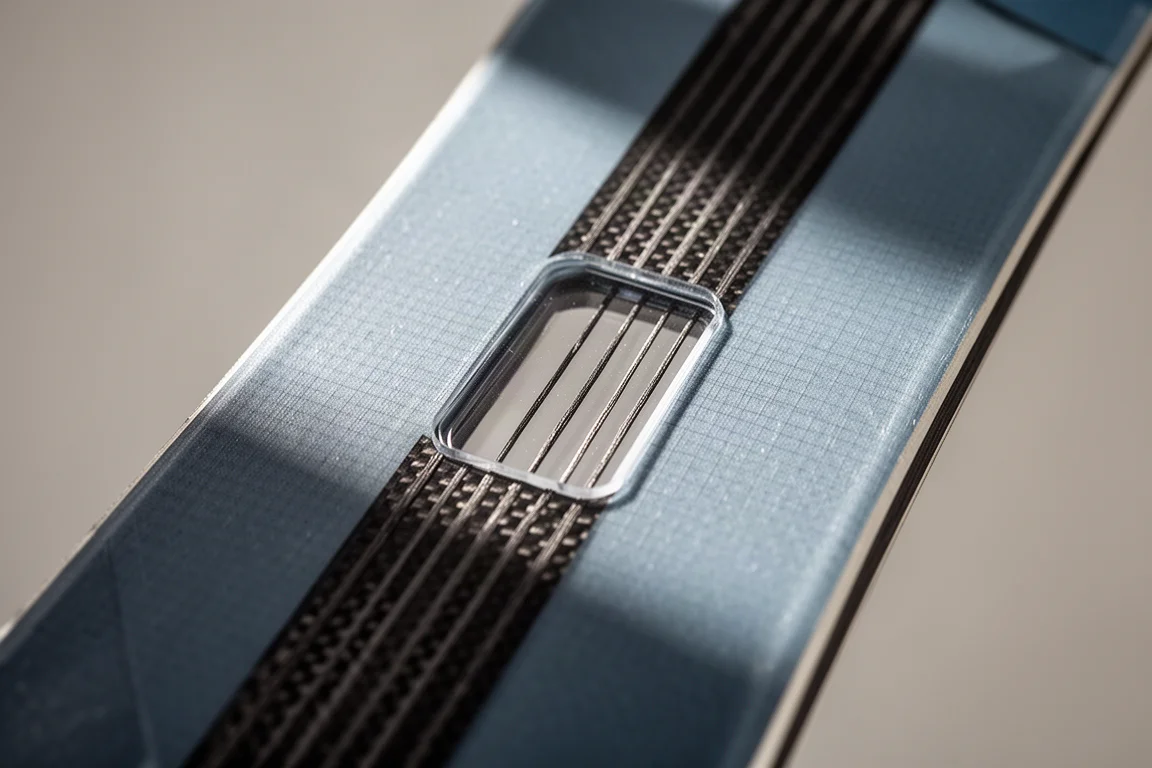
Running carbon in more than one direction adds stiffness and performance without simply piling on material. The result is a ski that feels responsive underfoot while staying light enough to keep the climb from feeling like a chore.
Shape and Climbing Efficiency
The Hannibal uses a convex profile, with the middle of the ski sitting higher than the sides. That raised central spine adds stability along the length of the ski while keeping the edges light and easier to maneuver.
Construction follows a half cap design: the blue top sheet rounds down to the sidewall and stops short of the very ends of the ski, where a full cap takes over. Pulling material out of the tips and tails, where it contributes little to performance, reduces swing weight and makes the ski noticeably more efficient on the way up.
Weight and Uphill Efficiency
With a Fischer-branded Dynafit tech binding and a demo plate mounted, the setup comes in at 2,010 grams. The demo rails add weight, and a comparable tech binding without them brings the 169cm length in under 2,000 grams.
The dimensions support the same goal. A 95mm waist in the 169cm length is wide enough to be versatile on the descent but not so wide that it makes the skin track awkward. The 20 meter radius is long and fairly straight, which suits climbing: a heavily sidecut ski tends to pull you across the slope, while a straighter cut tracks in a more linear, predictable line.
Rocker is also weighted toward touring. There is tip rocker, but noticeably less tail rocker, which keeps more edge and better skin grip at the rear of the ski for efficient climbing. The tail still has enough flex to add a bit of playfulness when you point it downhill.
Skin Fixation and Tail Clip
The ski uses Fischer’s skin fixation system. It accepts Fischer skins directly, and it can also take other skins with a toe tip loop. At the rear there is a regular metal tail clip, a small but meaningful upgrade over the plastic clips found on some other touring skis, and it provides a more direct connection.
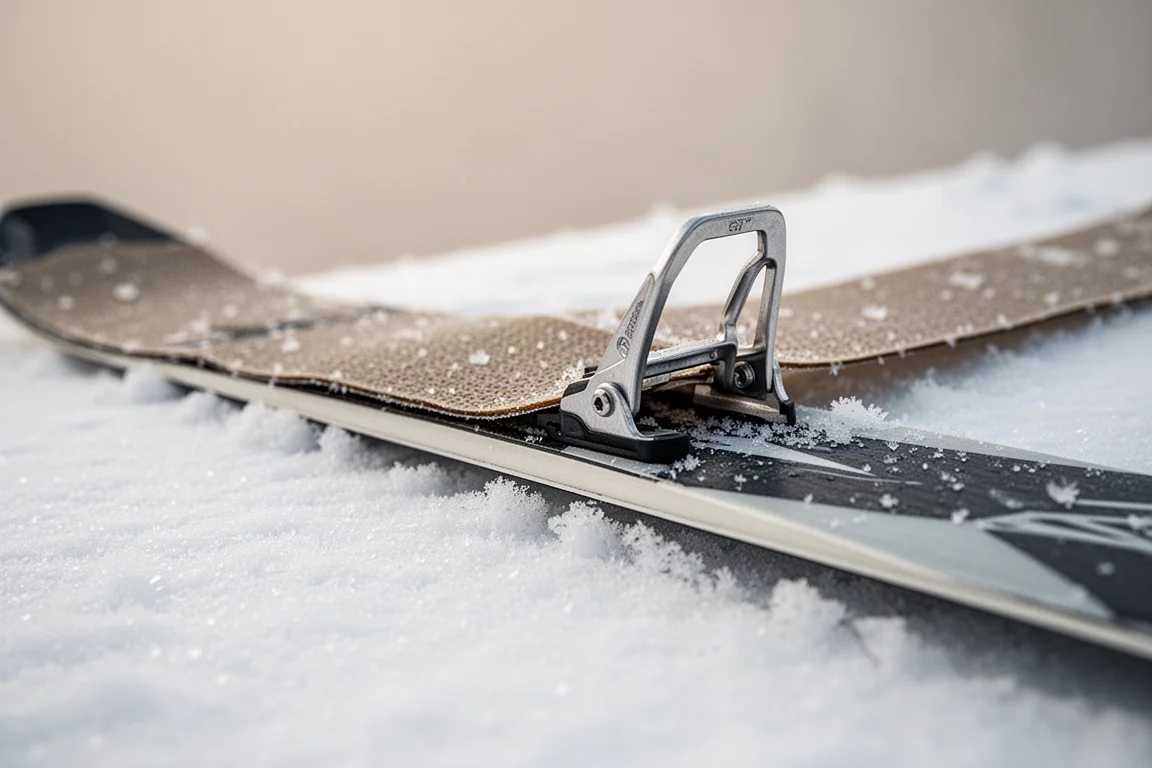
Between the skin system and the metal clip, setting up for a climb is quick and predictable, which matters on cold mornings when you would rather not fuss with hardware.
Things to Consider Before Buying
The Hannibal 96 is not a quiver-of-one resort ski. It has minimal chairlift application, so if your priority is lift-served days with occasional touring, this is the wrong tool.
The demo plate on the pictured setup adds weight. If you are chasing the lightest possible build, plan for a binding without demo rails.
Because tail rocker is reduced, the ski leans toward grip and climbing efficiency rather than loose, surfy downhill performance. Riders who want a very playful, pivot-heavy feel from the tail should weigh that against the uphill benefits.
Buying Advice
Choose the Hannibal 96 if your skiing is genuinely backcountry-first. The combination of a lightweight paulownia core, multi-directional carbon stringers, and a shape engineered for efficient climbing is what makes the ski work, and those traits matter most to skiers who spend their time earning turns.
Match the binding to the goal. A tech binding without a demo plate keeps the 169cm setup under 2,000 grams, which preserves the weight advantage the ski was built around. Fischer skins pair directly with the fixation system, and other skins work too as long as they have a toe tip loop.
If you split your time more evenly between the resort and the backcountry, be honest about that. This ski rewards a backcountry focus and offers less in return for lift-served days.
Conclusion
The Fischer Hannibal 96 is a focused backcountry touring ski with a clear design brief: climb efficiently, stay light, and still deliver an energetic descent. The paulownia core, multi-directional carbon construction, convex profile, and half cap build all point the same way, and the metal tail clip and skin fixation system round out the practical details. For skiers who live on the skin track, it is a coherent, well-considered package.
Product link
View more details for Fischer Hannibal 96
This product is mentioned in the review. Check the specifications, options, and compatibility before buying.
View more details for Fischer Hannibal 96Further reading
Related Reviews
Backcountry Skiing
Backcountry Ski Gear That Earns Its Place: 12 Picks Worth a Look
From avalanche safety essentials to lightweight touring skis and photochromic goggles, a curated look at backcountry gear chosen for real mountain use.
Backcountry Skiing
Blizzard Zero G 95 W Review: A Purpose-Built Touring Ski for Uphill Efficiency
A close look at the Blizzard Zero G 95 W, a lightweight carbon touring ski built for backcountry uphill efficiency, and what to weigh before buying.
Backcountry Skiing
Fischer Transalp 98 CTI Review: A Purpose-Built Touring Ski for Uphill Efficiency and Downhill Composure
A closer look at the Fischer Transalp 98 CTI, a 1,489 g backcountry touring ski that pairs a milled wood core and carbon stringers with metal edge reinforcement.