Camping Stoves
Fire Maple Saturn Stove Review: A Wide, Stable Camp Stove With Cold-Weather Tricks
A practical look at the Fire Maple Saturn stove, covering its build, pot support system, 15,000 BTU output, preheat tubes, fuel requirements, and who it actually suits.
Introduction
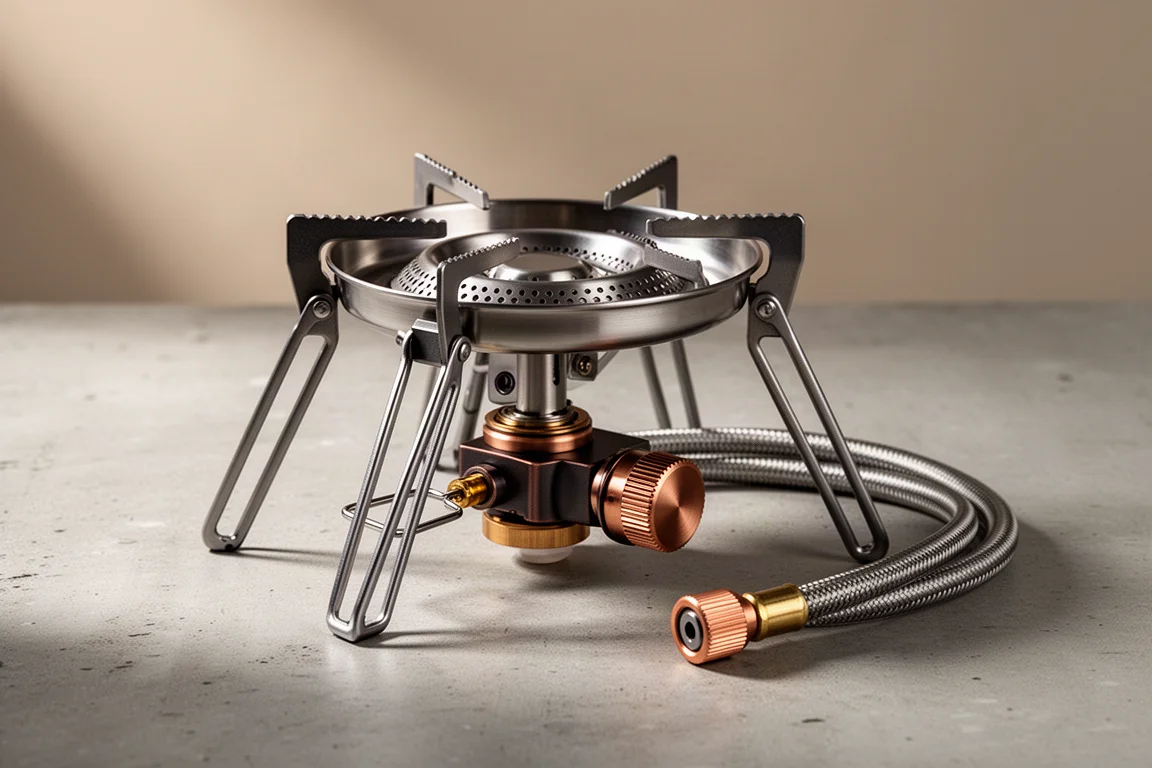
Fire Maple has a habit of building camp stoves that do not look like anything else on the shelf, and the Saturn is a clear example. It is a compact isobutane stove with a round burner head, four folding legs, and pot supports that can be flipped out for large cookware or folded back in for small cups. Two preheat tubes run beneath the burner, which is what gives the stove its cold-weather ambitions.
The headline numbers are straightforward. Fire Maple rates the Saturn at 15,000 BTU. The stove alone weighs 2.3 pounds, and the complete package with its storage case comes to 2.6 pounds. Retail pricing sits at $115, and at the time of writing it was discounted to around $85.
That combination of a wide footprint, a soft-sided case, and liquid-feed capability puts the Saturn in an interesting spot between a light backpacking burner and a full car-camping stove.
Who This Stove Is For
The Saturn makes the most sense for campers who cook rather than just boil. Because the pot supports can be unfolded into a wide ring, the stove happily accepts large skillets and a variety of pots and pans, and the broad footprint keeps everything steady while it cooks. Anyone who has tried to balance a frying pan on a narrow three-prong burner will understand why that matters.
It is also a reasonable pick for cold-weather trips. The preheat tubes let the stove run on liquid fuel after a short warm-up, which is a meaningful advantage when temperatures drop and standard canister stoves start to lose pressure.

Where it fits less well is fast-and-light backpacking. At 2.3 pounds for the stove alone, it is not a minimalist choice, and the storage case adds a little more bulk to a pack. Car campers, basecamp cooks, and anyone who values a stable cooking platform over the lowest possible weight will get far more out of it.
Design and Build Quality
Materials are a mixed-metal construction of stainless steel, aluminum, copper, and bronze, and the overall impression is of a solid, well-finished piece of equipment. The burner head sits on top of a gas tube that runs down to a control valve, and the four legs fold out to create the base.
One leg carries a piezo igniter, which is a neat way to keep the ignition system out of the way of the burner. In use, the igniter fired on the first attempt.
The adjuster deserves particular praise. There is a noticeable amount of tension in the valve, which means it can be dialled in precisely rather than jumping between off and full blast. It is neither loose nor stubborn, and that fine control is what makes a stove pleasant to cook on rather than merely functional.
Small details hold up too. The pot supports are finished with fine jimping that grips pans and stops them sliding, and the folding feet are deliberately stiff, which keeps them locked in position instead of flopping open in transit.
Setup, Pot Supports, and Packed Size
Setup is quick, and the support system is the most interesting part of the design. With the supports unfolded, the stove accepts large skillets along with a wide range of pots and pans. With the supports folded in, small cups fit comfortably, including very small titanium cups such as the MSR Titan.
Dimensions are sensible in both states. Packed in its case, the stove measures 7.5 by 7.5 by 4 inches. Set up, it measures 9.5 inches wide, 9.5 inches long, and 4.75 inches tall. The hose is 26 inches long, which gives enough reach to keep the canister clear of the burner.
The storage case is genuinely nice. It is soft, closes with a zipper that runs all the way around, and feels closer to a mess kit than a stove bag. There is no carry handle, which is the one obvious omission.
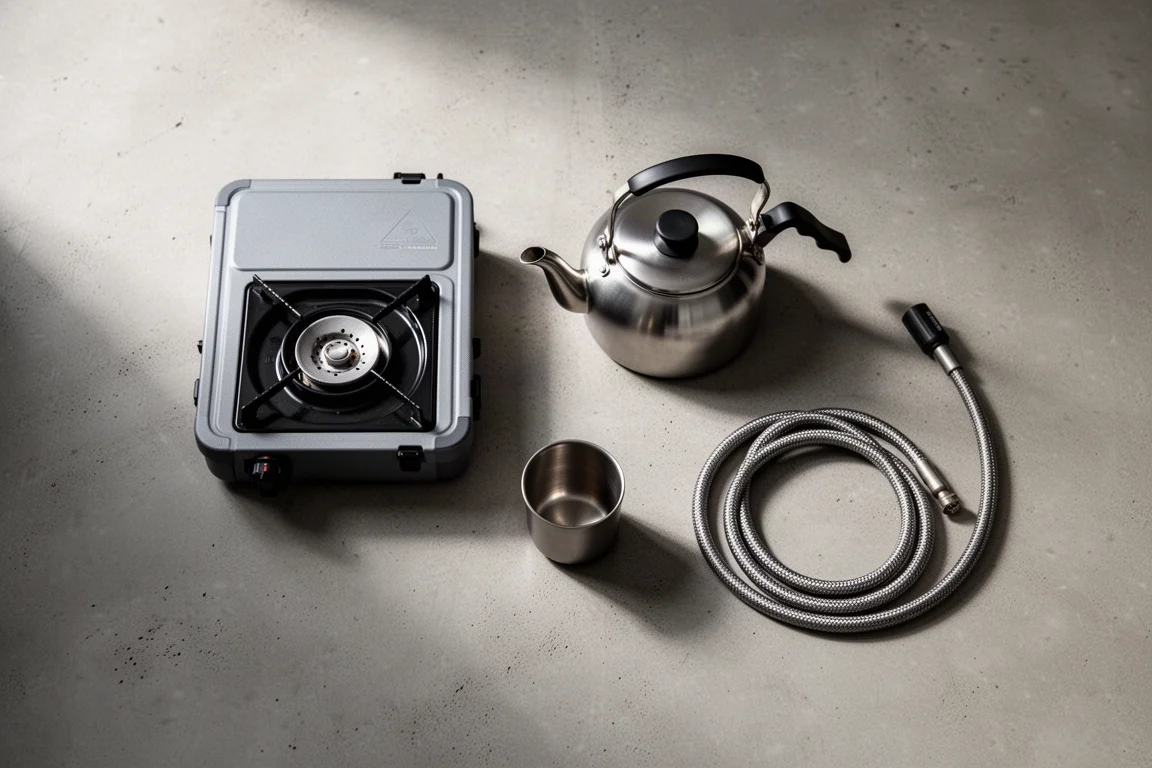
Because the stove is wide, it is stable on uneven ground, and that width is the main reason it feels comfortable under heavier cookware. It also means the stove occupies a little more space in a vehicle than a compact canister burner, though not enough to be a real inconvenience.
Performance and Heat Output
The Saturn is a powerful stove. In a boil test with breezy conditions, ambient air around 60°F, and starting water around 50°F, 16 ounces of water reached a boil in roughly 2 minutes and 31 seconds. That is quick work for a stove in this class.
The trade-off is heat. The burner throws out a serious amount of warmth, enough that bringing a hand too close while lifting a kettle lid is uncomfortable. Anyone cooking on it should treat the area above and around the burner head with respect, particularly when reaching over the pot.
Wind is the other consideration. In breezy conditions the stove was clearly affected, and Fire Maple does not include a windscreen. If the Saturn is going to be used in exposed places, a dedicated windscreen is worth adding to the kit.
Cold Weather Use and Fuel Compatibility
The two preheat tubes are the Saturn’s most distinctive feature. Fuel travels through them, the flame heats them, and the result is better performance in the cold. Once the tubes are properly hot, the fuel canister can be inverted so that liquid fuel travels down the hose, meets the hot tubes, and vaporises into the gas the burner runs on.
Timing matters here. The stove needs to run for about five minutes before the canister is inverted, which is enough time for the tubes to reach working temperature. Invert too early and liquid fuel can sputter out of the burner, which is exactly the outcome the procedure is meant to avoid.
Fire Maple states that the preheat tubes help below 5°F, but that figure sits well under the point where isobutane starts to struggle. Isobutane begins to lose performance around 40°F and below, so in practice inverting the canister closer to that range makes more sense than waiting for extreme cold.
On fuel type, the instruction manual is explicit: the Saturn is designed to run on isobutane only, not pure propane. The product pages do not advertise propane compatibility either. Some owners have reported running the stove on pure propane using a Z1 adapter, and the stove does light and run that way, but it is not a manufacturer-supported configuration. It runs less hot and quieter than on isobutane, and the manual’s warning is worth taking seriously.

For most buyers, the practical takeaway is simple. Use isobutane canisters as intended, and treat the preheat tubes and canister inversion as a cold-weather tool rather than an everyday routine.
Things to Consider Before Buying
- At 2.3 pounds for the stove alone, this is not an ultralight option, and the case adds further bulk.
- The stove is affected by wind and does not ship with a windscreen, so exposed sites need extra gear.
- Heat output is high, which demands care when reaching over the burner.
- The manual specifies isobutane only, so propane use falls outside the manufacturer’s guidance.
- The storage case has no carry handle.
Buying Advice
At $115 retail, and around $85 when discounted, the Saturn sits in a reasonable spot for what it offers. The build quality is high, the igniter works reliably, the valve adjustment is excellent, and the pot support system covers everything from a large skillet down to a small cup. Add the cold-weather preheat tubes and the well-made case, and the package is easy to justify for anyone who cooks properly at camp.
The buyers who will be happiest are car campers, basecamp cooks, and cold-weather travellers who want one stove that can handle a real pan and still function when temperatures drop. Buyers counting grams for a long backpacking trip should look at lighter options instead, because the Saturn’s stability and capability come with weight.
If the plan is to use the stove in windy, exposed terrain, budget for a windscreen at the same time. It is a small addition that makes a noticeable difference to how the burner performs, and it protects the fuel efficiency that makes the stove appealing in the first place.
Conclusion
The Fire Maple Saturn is a distinctive design that backs up its unusual looks with real capability. It is powerful, stable, precisely adjustable, and thoughtfully built, with a pot support system that handles far more cookware than a typical canister stove. The preheat tubes give it a genuine cold-weather advantage for anyone willing to follow the correct procedure, and the included case is better than most.
It is not the lightest option, and it needs a windscreen in breezy conditions. But for campers who want a wide, steady cooking platform and the flexibility to cook real meals outdoors, the Saturn makes a strong case for itself at its price.
Product link
View more details for Fire Maple Saturn Stove
This product is mentioned in the review. Check the specifications, options, and compatibility before buying.
View more details for Fire Maple Saturn StoveFurther reading
Related Reviews
Camping Stoves
BCB Fire Dragon Mini Cooker Review: A Tiny Folding Stove With Real Trade-Offs
A palm-sized, fuel-flexible folding stove that heats water well enough, but brings flame control, stability, and fuel cost questions worth understanding first.
Camping Stoves
Boundless Voyage Titanium Alcohol and Wood Stove Review: Ultralight Cooking, Two Ways
A titanium alcohol and wood burning stove kit that weighs 4.5 oz complete, boils two cups of water in about 10 minutes, and costs $36.
Camping Stoves
BRS 32 Dual Burner Stove Review: A Folding Two-Burner That Packs Down Flat
A detailed look at the BRS 32, a slim folding dual burner camping stove that expands into a stable cooking platform for around $60.