Portable Audio
FiiO DM13 vs Moondrop Discdream 2 Ultra: Two Portable CD Players Compared
A practical comparison of two modern portable CD players, covering output power, build quality, connectivity, battery life, and who each one suits.
Introduction
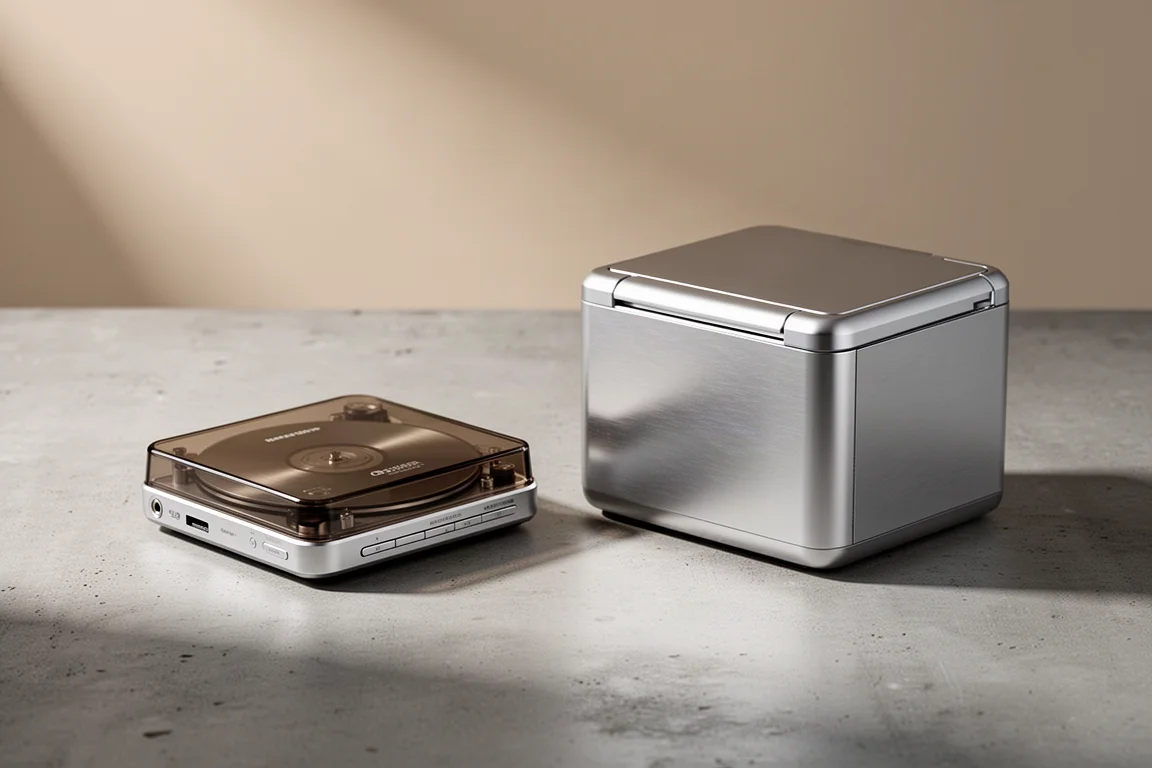
Portable CD players are an unusual sight in 2025, but two recent models make a real case for keeping a disc collection in rotation: the FiiO DM13 and the Moondrop Discdream 2 Ultra. Both play CDs, both protect playback from movement, and both can feed an external DAC over a mini-optical connection. Beyond those shared foundations, they take noticeably different routes.
These two players were compared side by side over several weeks, using a pair of open-back dynamic headphones on a 3.5 mm cable, a pair of in-ear monitors on a 4.4 mm balanced connection, and a third pair of over-ear headphones over balanced output. The goal here is not to crown a winner on sound alone, because the two are far closer on that front than their prices suggest. The more useful question is which set of features and which physical design fits the way you actually listen.
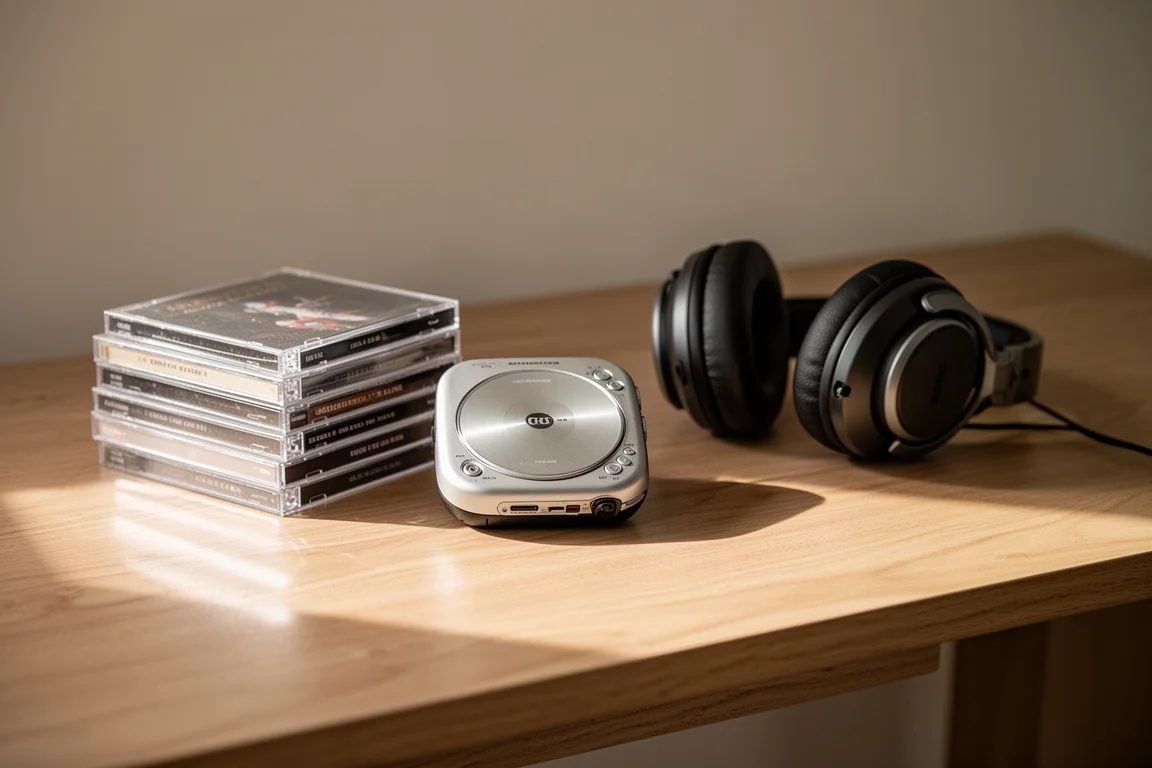
The FiiO DM13 carries the longer feature list and the lower price, while the Moondrop Discdream 2 Ultra leans on build quality, a USB DAC input, and a more spacious presentation. Both are worth understanding in detail before deciding.
What Matters Most in a Modern Portable CD Player
A portable CD player in 2025 is judged on a handful of practical points. Headphone output power matters if your headphones need more current or voltage than a small dongle can supply. Connectivity matters if you plan to feed a separate DAC or a home amplifier. Battery behaviour, shock protection, and the way the lid and controls are arranged matter every single time you press play. Build quality matters more than usual too, because these are mechanical devices with a spinning disc inside.
The two players here differ most clearly in rated output power and in the physical layout of their connections. Both offer a balanced headphone socket, which was not something portable CD players offered in the 1990s. Both offer line-level outputs for an amplifier and mini-optical outputs for an external DAC. Beyond that, the feature lists diverge sharply, and so do the prices.
FiiO DM13: Compact, Feature-Rich, and the More Powerful Player
The DM13 sells for €200 in its Skylight edition with the transparent lid, and €50 less if you forgo that transparent lid. It is the smaller and lighter of the two players, and it behaves more like an everyday carry device. Its shell is an aluminium alloy, and the disc lid runs across the top with the transport controls built into it, which makes them easy to reach from above. The lid must be closed before playback starts and before the disc spins up.
On connectivity, the DM13 offers a balanced headphone output on the front of the unit, a balanced line-level output for a home amplifier, and a mini-optical output that doubles as a 3.5 mm digital coaxial output. In practice the coaxial connection could not be confirmed to work, and the sockets had a soft, slightly vague feel rather than a positive click, so that particular output is best treated as a bonus rather than a guarantee.
Inside, the DM13 uses a pair of Cirrus Logic DAC chips, and the headphone drive comes from separate amplifier chips rather than from the DACs themselves. That architecture lines up with the rated output of 660 mW into 32 ohms over the balanced socket, which is three times the figure quoted for the Moondrop. If your headphones are harder to drive, this is the player with more headroom.
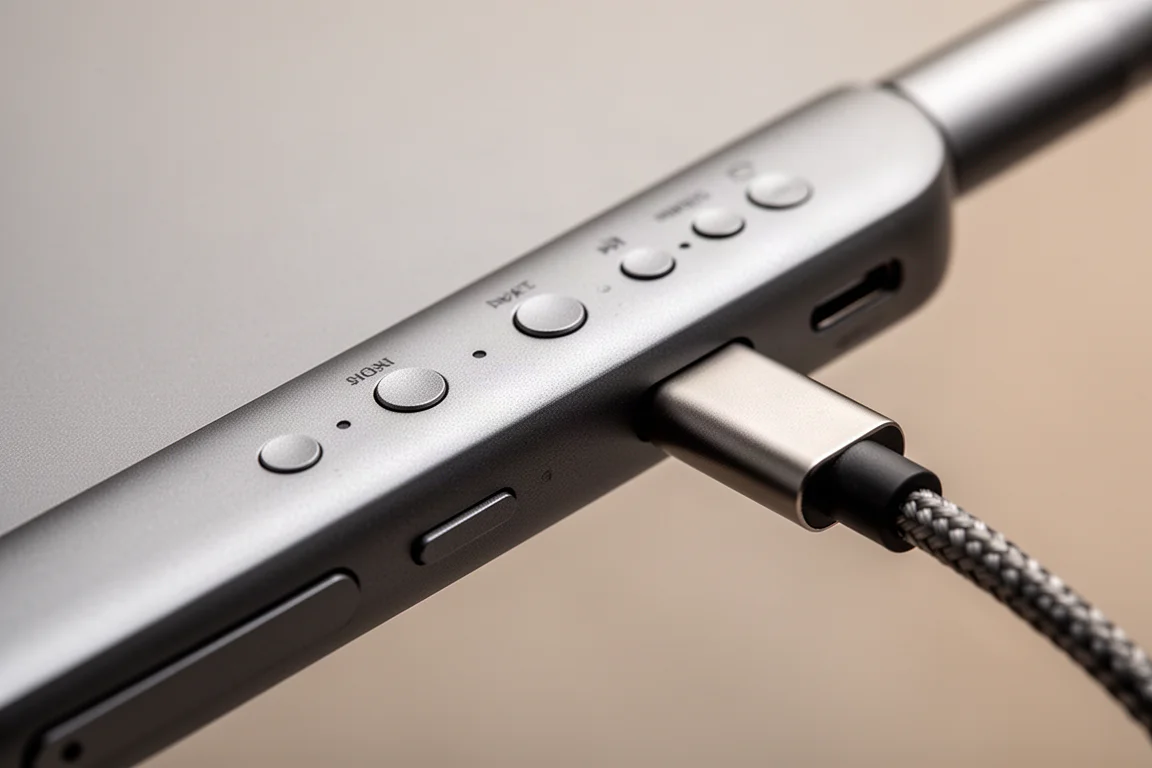
A second USB-C socket on the DM13 lets the player rip CDs directly to a thumb drive, with firmware version 25 or later required to avoid failed rips. The trade-offs are worth knowing: the USB connections are not intuitive and the instructions need to be followed carefully, rips happen in real time so a disc takes as long to copy as it does to play, and the resulting files are WAV. Converting them to FLAC or MP3 and adding metadata needs a computer and suitable software. The DM13 also adds a Bluetooth output with the aptX HD codec, and a desktop mode that runs the player from wall power alone so the battery is left untouched.
Two smaller details round out the picture. The DM13 remembers where you stopped on a disc and resumes from that point, which some listeners will appreciate and others will find irritating. Its data buffer can also be switched off, which does not change sound quality but can reduce battery consumption.
Moondrop Discdream 2 Ultra: Premium Build and a Different Priority Set
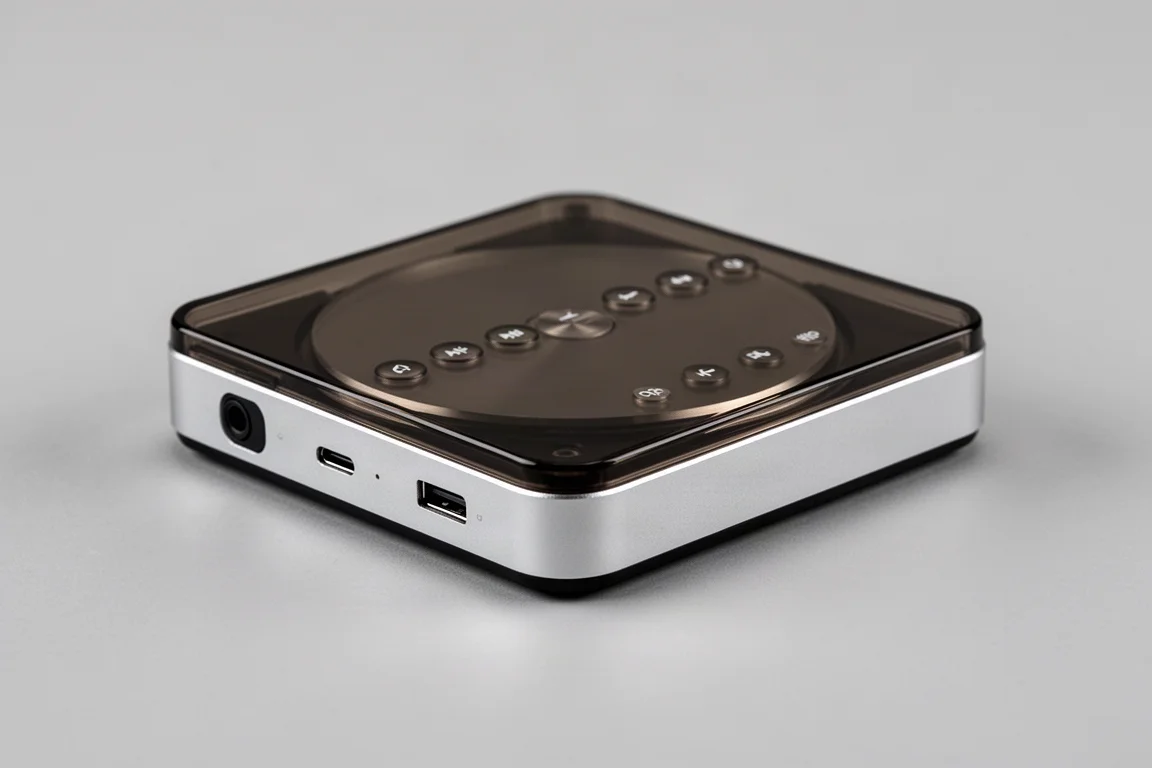
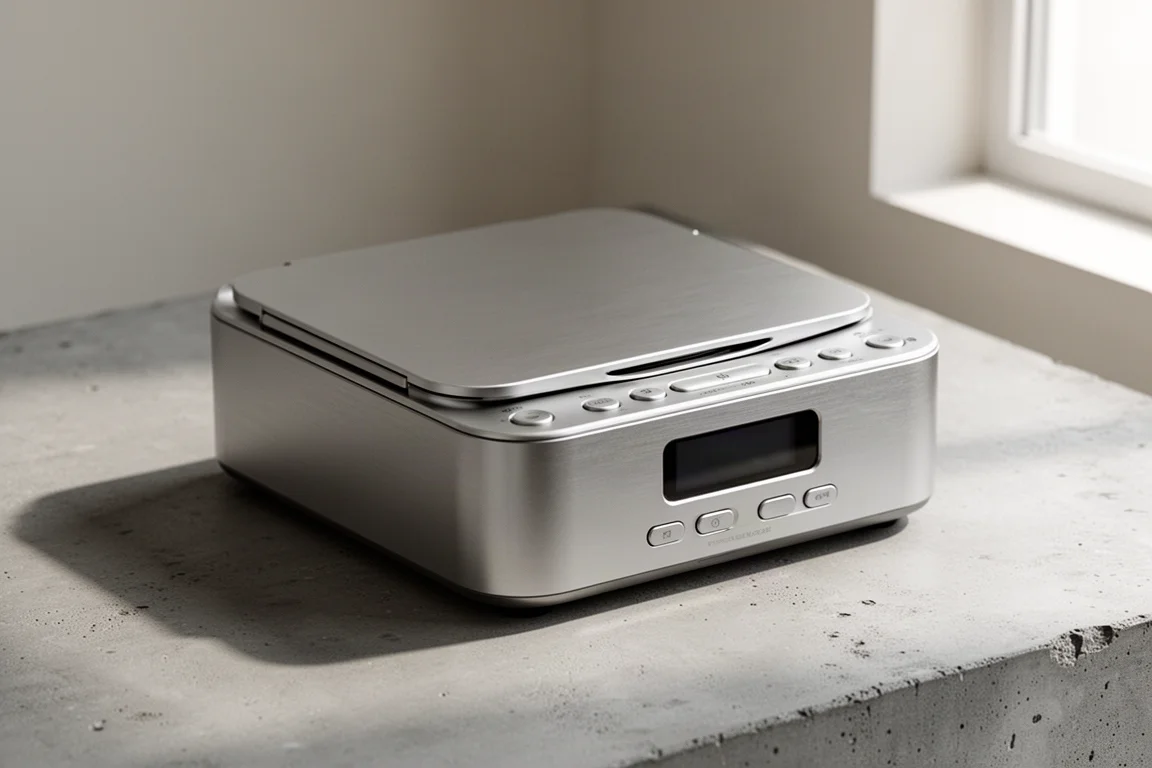
The Discdream 2 Ultra costs €385, close to double the DM13, and much of that difference is felt in the hand rather than heard through headphones. It is larger and heavier than the FiiO, and its industrial design looks and feels a cut above, with an aluminium alloy shell and a lid that is not secured or clipped in any way. That last detail matters: the lid can stay open during playback, and it simply lifts and closes without a latch.
The transport buttons sit along the front lip rather than on top of the lid. That placement makes them harder to reach from above, but they are larger than the FiiO’s and feel nicer to press. The connections follow a similar approach and sit on the side of the unit rather than on the front.
Inside, the Discdream 2 Ultra uses a pair of Cirrus Logic DAC chips of a different model, and those chips integrate the headphone amplifier. The manufacturer rates the balanced headphone output at 222 mW into 32 ohms, around one third of the DM13’s figure. For most efficient headphones that is still plenty, but demanding headphones will prefer the FiiO.
The USB-C port on the Discdream 2 Ultra is labelled USB audio because it doubles as a USB DAC input, something the DM13 cannot do. The player also offers a mini-optical output for an external DAC and a line-level output for an amplifier. A more affordable non-Ultra Discdream 2 also exists, but it was not part of this comparison, so no direct conclusions can be drawn about how it performs.
Sound Quality: Very Close, With Subtle Differences
Separating these two players on sound quality alone is genuinely difficult. In extended listening, the DM13 came across as slightly crisper, which suits sparse electronic and ambient material, while the Discdream 2 Ultra came across as slightly softer and more forgiving, which suits a brash indie rock record. The DM13 also delivered harder-hitting sub-bass on at least one bass-heavy remix.
The clearest difference was in staging: the Discdream 2 Ultra presents music with greater width and greater height than the FiiO. Otherwise the differences were small and conditional, closer to a preference than a verdict. The same character carries through to the line-level outputs, so both players can be connected to an integrated amplifier with confidence.
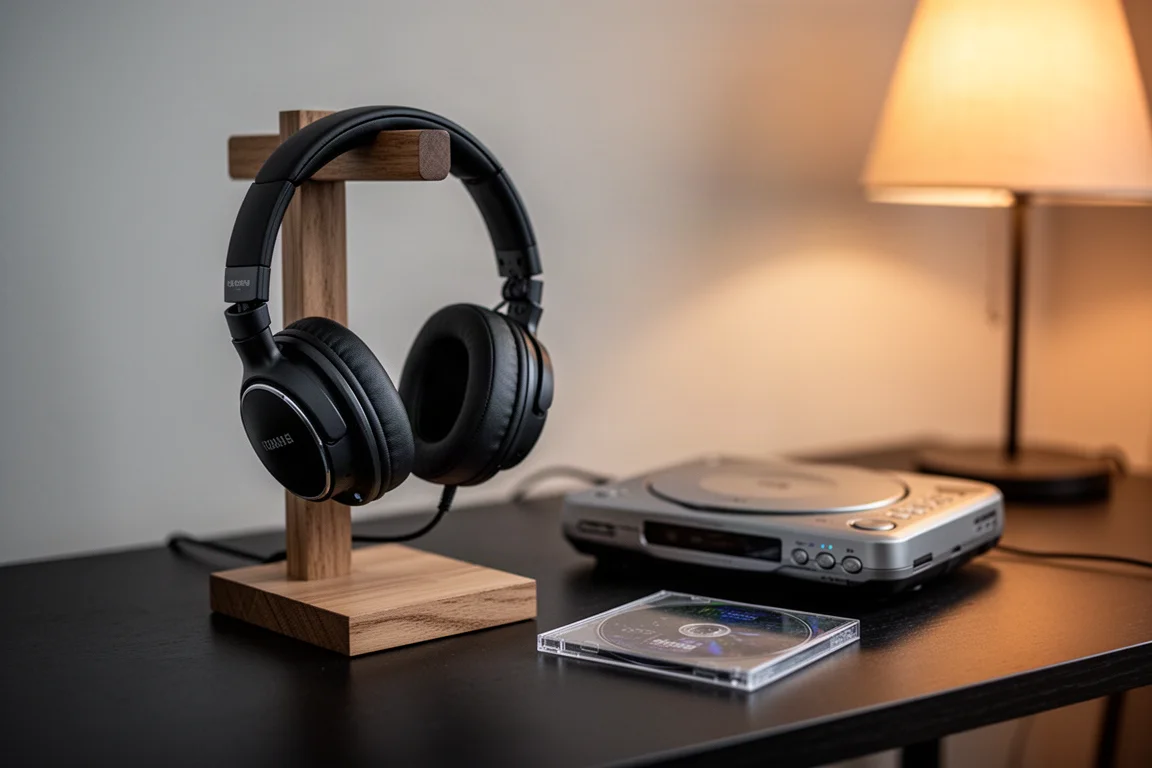
It is worth being careful about how much weight to place on chip specifications. Judging sound quality from a DAC or amplifier chip alone is like predicting a car’s top speed from its engine specs without knowing anything about its drivetrain or its weight. Both players use Cirrus Logic DAC chips, they differ in how the headphone output is driven, and the audible result is far narrower than those differences would suggest.
If a choice had to be made on sound quality alone, the Discdream 2 Ultra has a slight edge. Most buyers, though, will be deciding on features, build, and price.
Battery Life, Shock Protection, and Everyday Practicality
Both players use electronic shock protection built around an elastically damped mechanism and a data buffer, and both handle movement very well. The FiiO’s buffer can be turned off to reduce battery consumption, without any change in sound quality.
Battery ratings favour the DM13: the manufacturer quotes 10 hours against 8 hours for the Discdream 2 Ultra, and the FiiO has the slightly larger battery. In day-to-day use the two came out roughly level at about 7 hours between charges, so the practical difference is not significant. Both recharge over USB-C, and the DM13 adds a desktop mode that draws only wall power to protect long-term battery health.
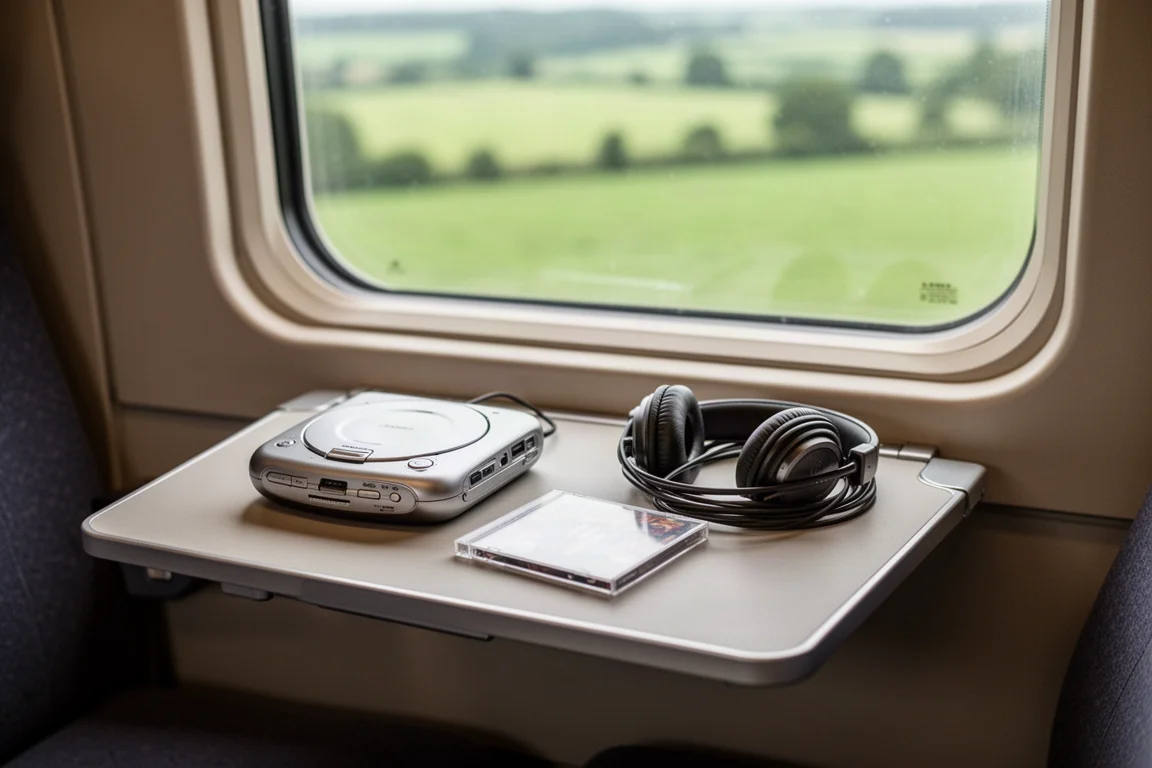
Portability is where the two diverge most. Neither is as small or as light as the portable CD players of the 1990s. The Discdream 2 Ultra is the larger and heavier of the pair and its lid does not lock, which makes it better suited to a desk at home or an occasional tray table on a plane or train. The DM13 is the more versatile outdoor option, although its screen is very difficult to read in bright sunshine. Both players handle gapless playback, and both are made in China.
Which Portable CD Player Should You Buy?
The DM13 is the easier recommendation for most people. It is cheaper, smaller, and more powerful, and it carries features the Discdream 2 Ultra does not have at all: Bluetooth output with aptX HD, CD ripping to a thumb drive, disc memory, and a desktop mode. It is also the player that travels better, with the caveat that its screen struggles in direct sunlight.
The Discdream 2 Ultra makes sense for a different set of priorities. Its build quality is a step above, its controls feel better in the hand, its lid can stay open during playback, and its USB-C port doubles as a USB DAC input. It also stages music with more width and height. If the extra cost is acceptable and the player will mostly stay at home, those strengths are real.
A practical way to decide is to start with your headphones. If they are demanding, the DM13’s rated output of 660 mW into 32 ohms makes it the safer pairing. If your headphones are easy to drive and you value a more spacious presentation along with a better-built enclosure, the Discdream 2 Ultra deserves a look. Buyers who mainly want to play discs at home and occasionally feed an amplifier will be well served by either.
Conclusion
Both of these portable CD players earn their place, and the deciding factors are practical rather than sonic. The FiiO DM13 wins on price, portability, output power, and features, which makes it the more versatile choice for most listeners. The Moondrop Discdream 2 Ultra wins on build quality, control feel, staging, and its USB DAC input, which makes it the more satisfying object to own if it stays on a desk. Match the player to your headphones and to where you actually listen, and either one will do the job well.
Further reading
Related Reviews
Portable Audio
Best USB DAC Dongles Compared: DragonFly Cobalt, Fosi Audio DS1 and Hidizs S9 Pro
Five portable USB dongle DACs compared on sound signature, outputs, connectivity, build quality and value, from the $77 Fosi Audio DS1 to the $350 DragonFly Cobalt.
Portable Audio
Cayin RU6 Review: A Discrete R2R Dongle DAC That Sounds Bigger Than It Looks
A pocket-sized R2R ladder DAC with balanced output, tactile controls, and a spacious, dynamic sound, plus the power limits worth knowing before you buy.
Portable Audio
Chord Mojo 2 Review: A Pocketable DAC and Headphone Amp for Serious Listening
A practical look at the Chord Mojo 2, a portable DAC and headphone amplifier with a custom FPGA design, dual headphone outputs, USB-C input, and a battery-friendly desktop mode.