Headlamps
Fenix HM65R vs HM50R: Which Headlamp Deserves Your Forehead?
A dual-emitter workhorse and a pocket-sized favorite compared: output, battery setup, durability, and which one fits how you actually use a headlamp.
Introduction
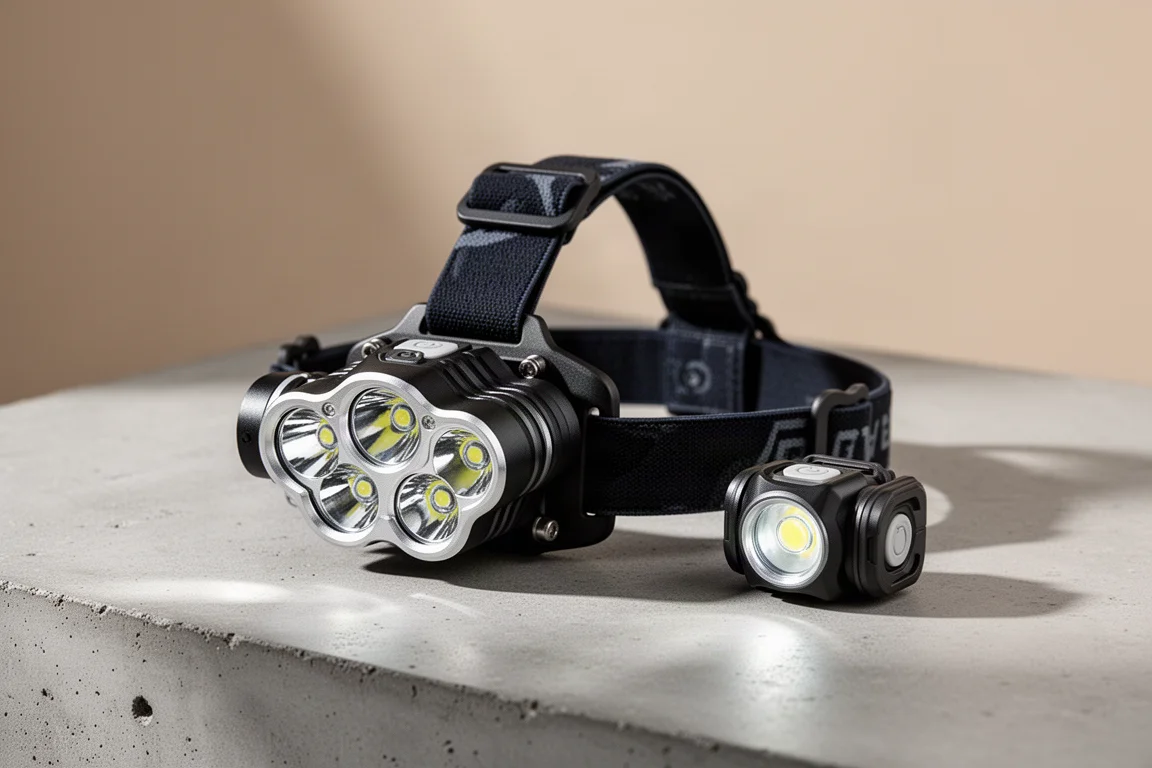
Most people own a headlamp. Few people own the right headlamp. The common compromise is a single emitter that tries to be both a spotlight and a floodlight, and ends up mediocre at both. Fenix takes a different approach with the HM65R, a dual-emitter design that treats distance and spread as two separate jobs. Alongside it sits the HM50R, a tiny, simpler light that has earned a loyal following for exactly the opposite reason: it does one job with almost no fuss.
This comparison looks at where each one wins, where it frustrates, and which type of user should buy which.
The Case for Two Emitters
There really is no single emitter ideal for both spotlight and floodlight duty. Any attempt to combine them is a compromise. Some lights try a rotating lens to focus the beam, but when shifted to flood mode the result feels artificial, with a hotspot and visible artifacts in the beam.
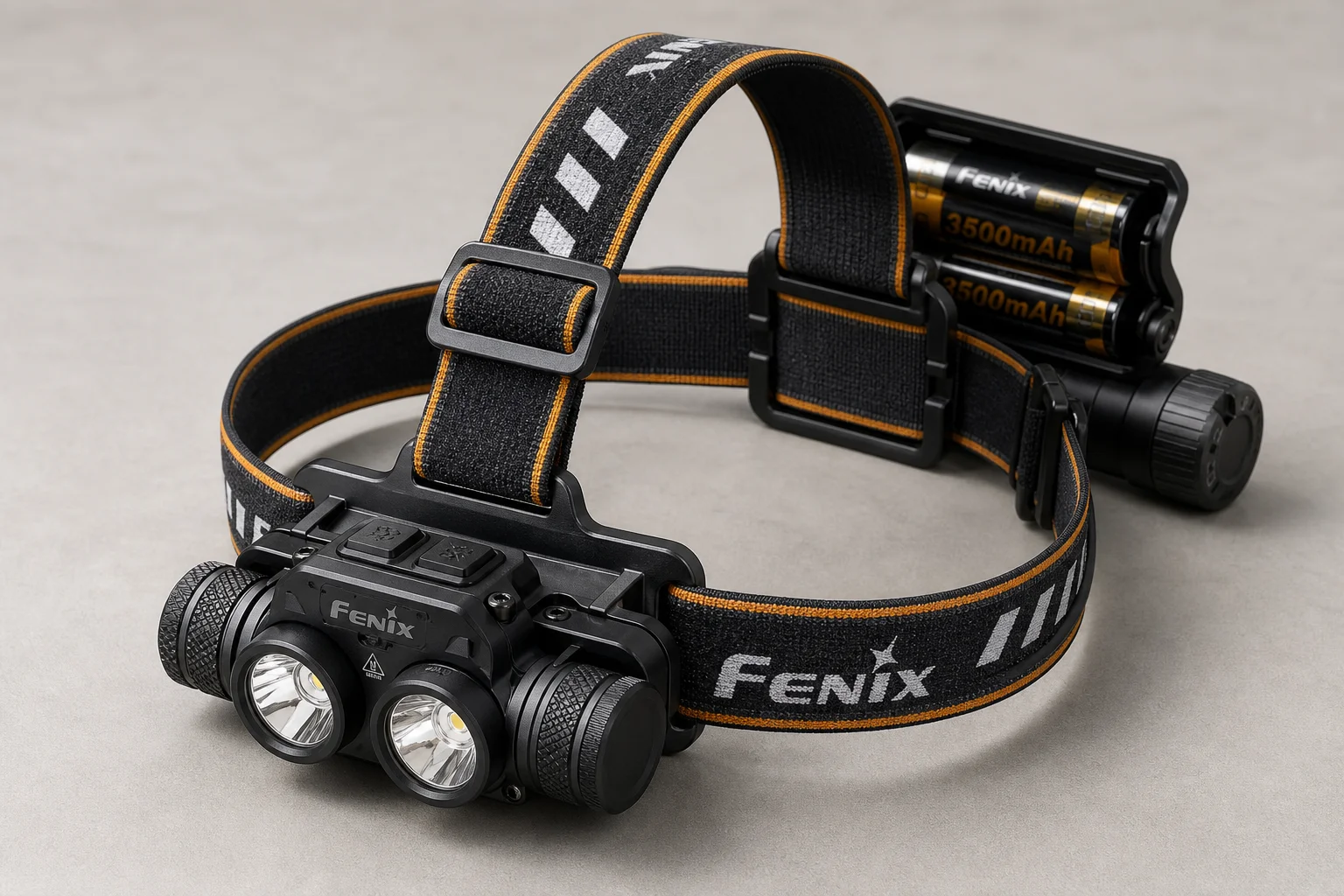
The HM65R sidesteps that problem entirely. The flood emitter covers close-up work, with a low of about 8 lumens, a medium of 130, and a high of 400. The spotlight handles distance, with a low of 50, a medium of 130, a high of 400, and a turbo mode reaching 1,000 lumens. Run both emitters on high together and you get the headline 1,400-lumen figure, though run time at that level is understandably limited.
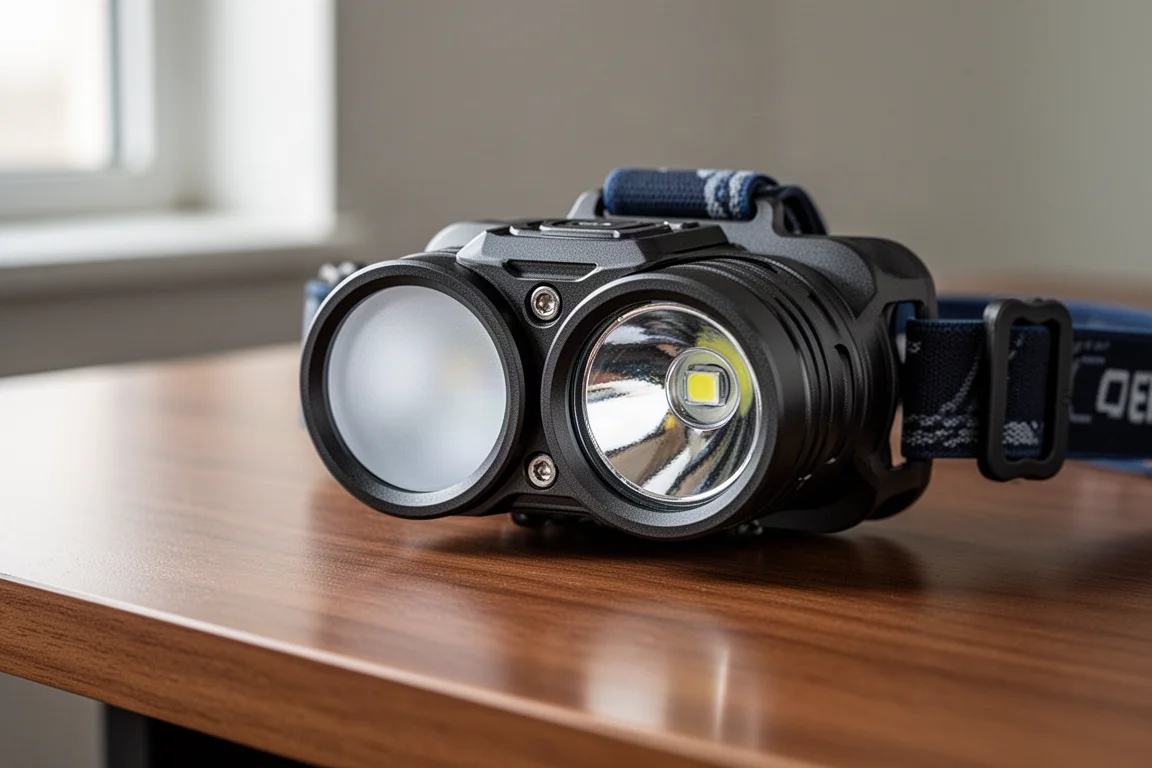
The interface is refreshingly simple: two independent buttons, one for flood and one for spot. Press to switch on, tap through the settings, hold to switch off. Because the buttons are independent, you can run both emitters at once for combined distance and spread, something newer versions of this light reportedly restrict, and a change many users disliked.
Battery, Charging, and Durability
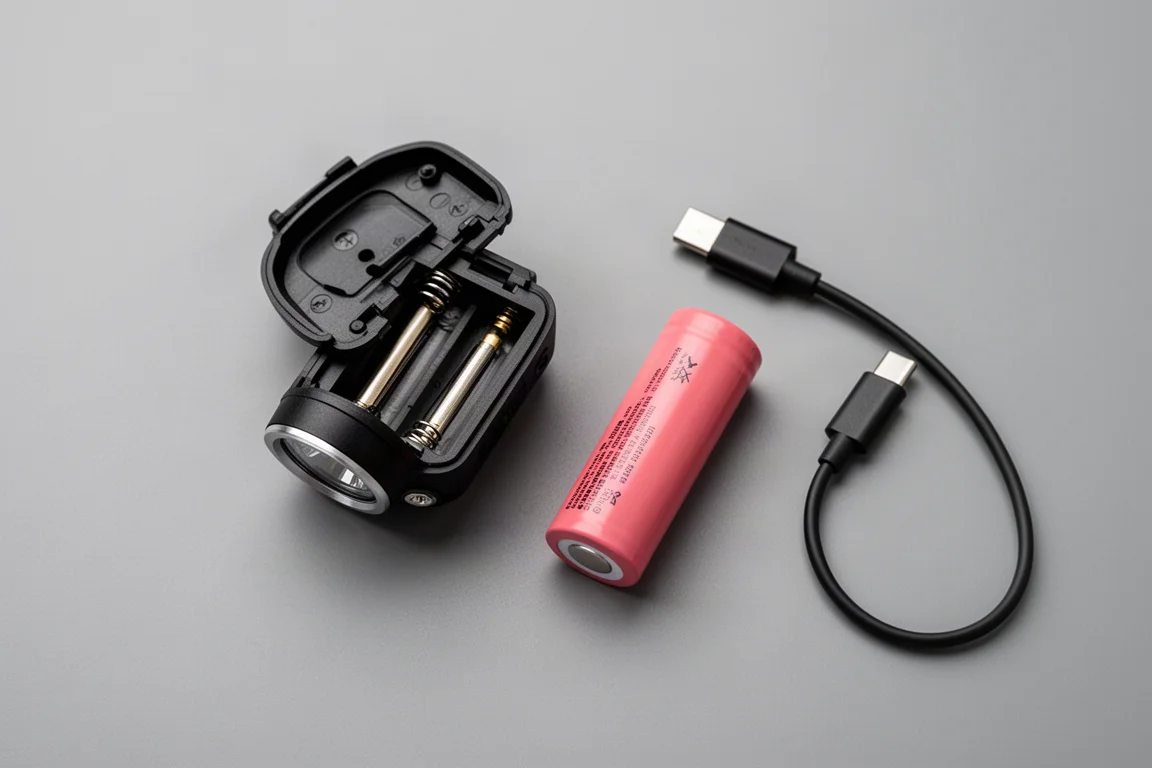
The HM65R runs on a standard 18650 rechargeable battery and charges through a USB-C port. A quick press of either button shows the battery level indicator. One practical tip: swapping the stock cell for a 3,500 mAh 18650 with an integrated micro-USB port adds a second charging path, so nearly any available cable will work.
Construction is a magnesium housing with a polycarbonate overlay, sealed with O-rings and rated IP68, good for submersion to 2 meters, which is far beyond what rain will ever ask of it. That durability matters. Cheaper headlamps with all-polycarbonate bodies can crack from a single drop, exposing the electronics and ending the light’s waterproofing.
The weight is about 3.2 ounces, on the heavier side for a headlamp, partly due to the housing, the 18650 cell, and the dual lenses. It is not a dealbreaker, and the balance on the head feels secure without the lamp flipping forward on hard steps.
Everyday Use and Fit
The dual-emitter layout shines outside. Reading a map up close? Flood on low. Jogging a forest trail? Flood on a higher setting with a wide, even beam spread. Need to see far down a path? The spotlight has solid reach with a centered but not aggressively hot beam. Running both at once gives distance and peripheral coverage together.
The fit uses a standard headband with an over-the-head strap plus a fabric shroud around the lamp body, which lets you grab and adjust the light without touching the controls. Orientation is effectively foolproof: the lamp always sits correctly on the band, so the buttons end up on top no matter how you put it on. Button presses register easily even with gloves on.
Two thoughtful touches round out the design. A lockout mode, activated by holding both buttons for 3 seconds until the light flashes, prevents the battery from draining in a bag. And a memory function returns the lamp to the last setting used. The one gap: there is no shortcut straight to the lowest mode, so you may briefly blast your own eyes in a dark tent.

The Compact Companion: Fenix HM50R
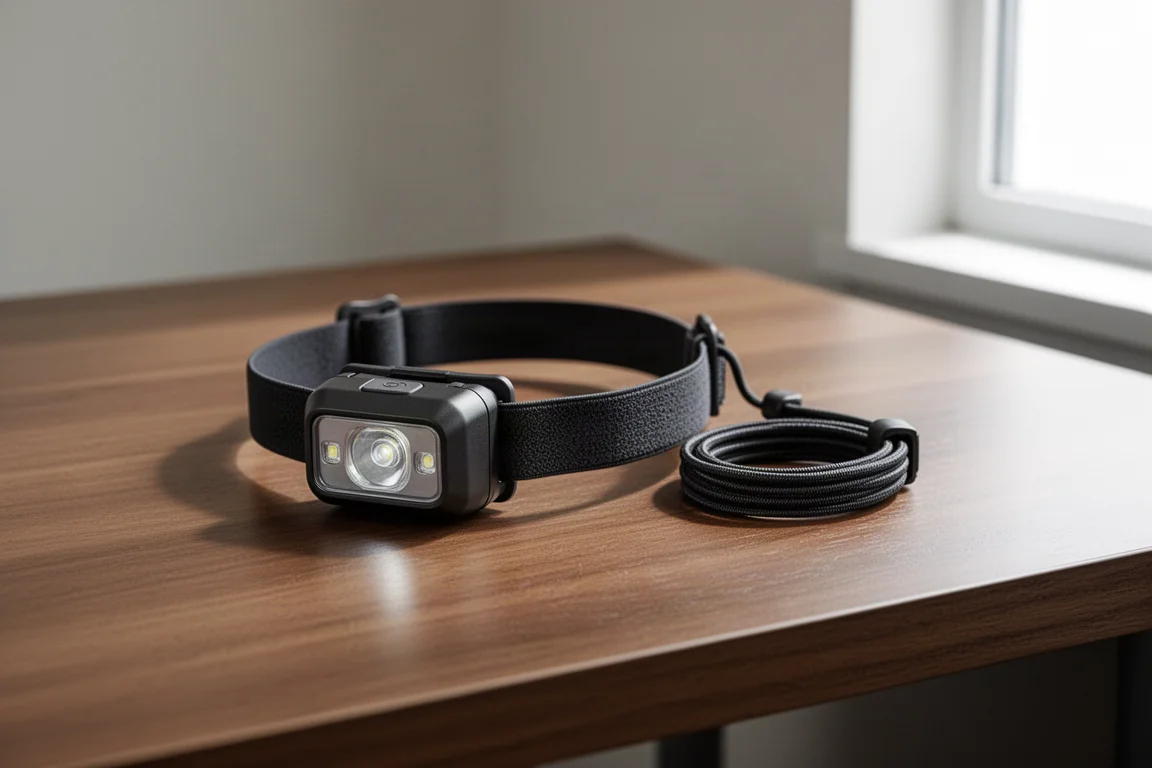
The HM50R is the opposite philosophy. It is tiny, runs on a single rechargeable or standard CR123 battery, and keeps the design deliberately simple. For reading in bed, it is arguably the better tool: the HM65R’s flood runs a little bright for close work, and its beam pattern can need constant adjustment as your eyes move down a page.
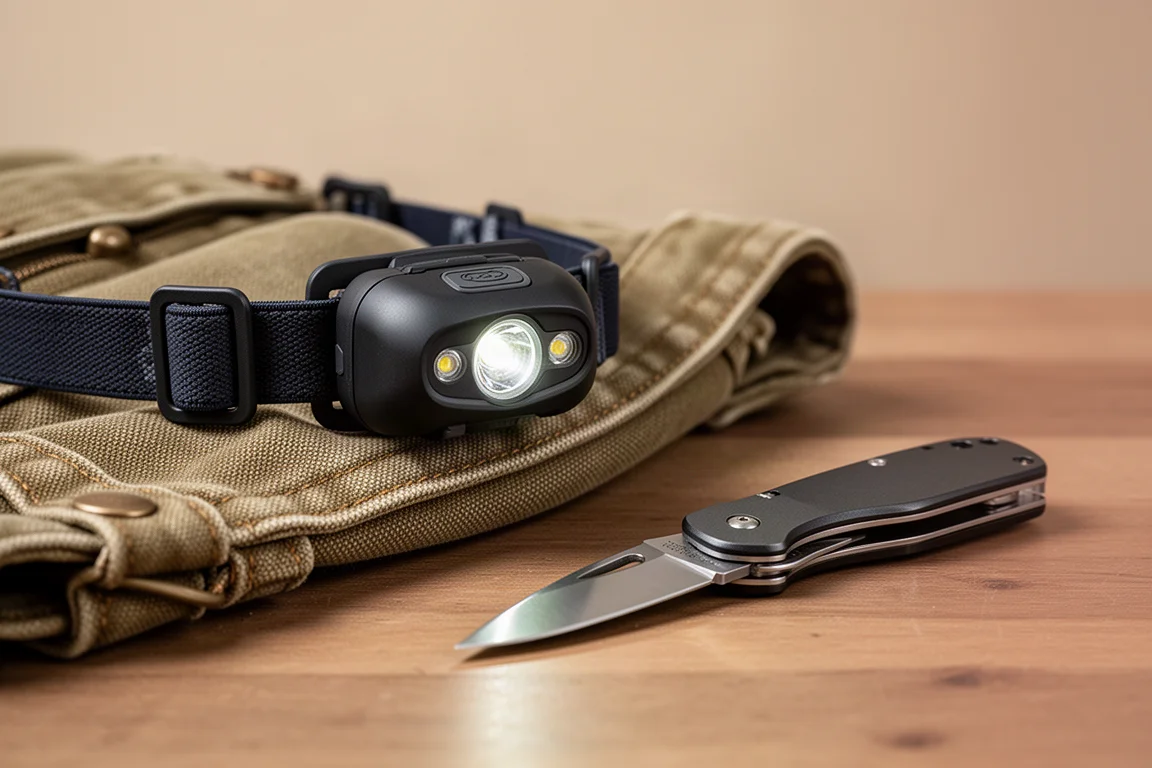
What the HM50R lacks is flexibility. There is no true flood-versus-spot choice, no dual-emitter output, and the build feels less overbuilt than its bigger sibling. It is the light you throw in a pocket as a backup or grab for a quick task, not the one you take out for a full night on the trail.
Buying Advice
If you want one headlamp that can genuinely do a bit of everything, the HM65R is the stronger pick. At roughly $95 to $100 it is a real investment, but the dual-emitter design, independent controls, IP68 sealing, and USB-C charging add up to a light built to last. The newer version exists, but it changes the design in ways that split opinion, including a thicker single strap and coupled controls, so the original remains the safer choice for many buyers.
If your needs are smaller and more occasional, the HM50R covers the basics in a package that weighs almost nothing and costs less. Many people will reasonably own both: the HM50R for everyday quick tasks and the HM65R for anything that demands real output and beam control.
Conclusion
The HM65R proves that two emitters beat one compromise. Its honest limitations, a bit of weight, no direct-to-low shortcut, and no red light mode, are easy to accept next to what it delivers: a clean interface, real durability, and beam patterns that actually match the task. Pair it with an HM50R for the small stuff and you have a lighting setup that covers nearly every situation without reinventing anything.
Further reading
Related Reviews
Headlamps
Nitecore UT27 Headlamp Review: Ultralight Comfort, Limited Real-World Output
An ultralight 2.7 oz headlamp with flood, spot, and red LEDs plus a swappable battery, but its real-world brightness falls short for fast movement.
Headlamps
Nitecore NU33 Review: A Compact 700-Lumen Headlamp for Everyday Adventure
A close look at the Nitecore NU33, a lightweight USB-C headlamp with throw, flood, and red modes, strong runtimes, and a few trade-offs worth knowing before you buy.
Headlamps
Petzl Swift RL Review: A 92 g Headlamp With Reactive Lighting and 1,200 Lumen Boost
A practical look at the Petzl Swift RL, covering reactive lighting, output modes, comfort, charging and the trade-offs worth knowing before you buy.