Cycling Power Meters
Favero Assioma Pro RS Review: A Podless Road Power Meter Pedal
Favero's Assioma Pro RS moves the electronics, strain gauges and battery into the spindle for a lighter, tidier road power meter pedal. Here is what the design changes mean for your bike and your data.
Introduction
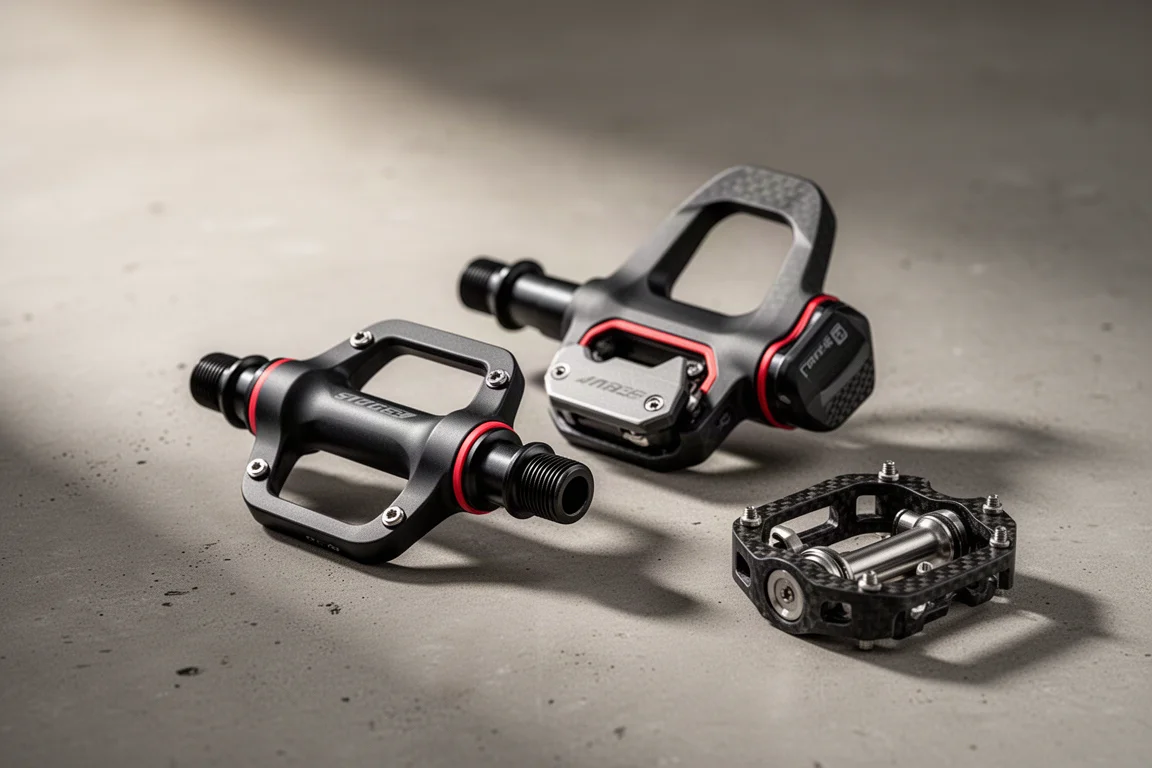
Favero has built its reputation on power meter pedals that cost noticeably less than most rivals while still producing data riders are willing to trust. The Assioma Pro RS is the road-going expression of that idea, and the most striking change is one you cannot see: the pod is gone.
Everything that used to sit outside the pedal now lives inside the spindle, including the electronics, the strain gauges and the batteries. What you are left with looks like an ordinary road pedal, and in its dual-sided form it measures power on both sides.
Who the Favero Assioma Pro RS Is For
The Pro RS is aimed at road riders who want dual-sided power data without stepping up to flagship pricing. It is also a natural fit for anyone already running Shimano road cleats, because the pedals are fully compatible with the SPD-SL system. Favero even includes a set of Shimano yellow cleats in the box, the version with the most float in Shimano’s road range, along with a fresh set of cleat bolts.
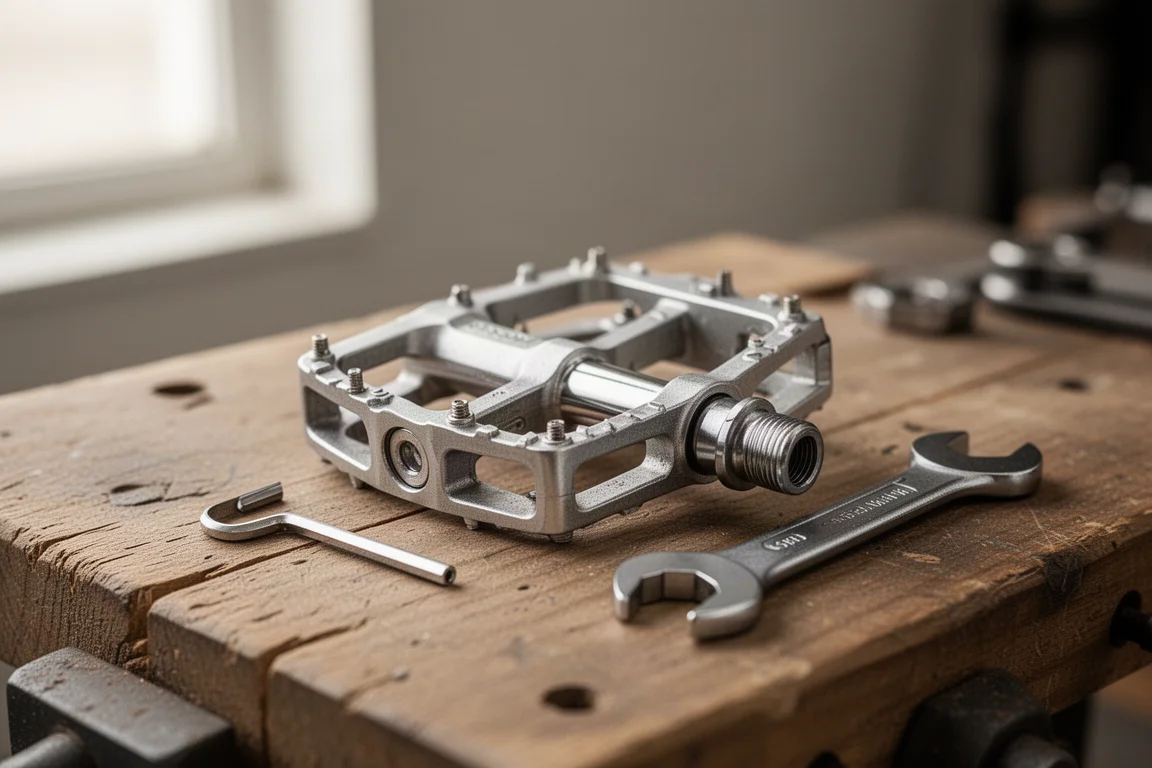
The interchangeable body design widens the appeal further. Because the pedal bodies can be swapped, the same spindle can move between road and off-road use, which suits riders who would rather own one power meter system than two.
Main Strengths: A Podless Power Meter Built Into the Spindle
Favero is the first to point out that fitting the electronics, the strain gauges and the batteries into the spindle was not easy, given how little space there is inside it. The company lists the advantages as no power dropouts, simpler maintenance, and a lower cost when the pedal body eventually needs replacing.
The body swap itself is straightforward in principle. The road bodies use the same stainless steel spindle as the off-road Assioma Pro MX, so an Allen key and a spanner are enough to change discipline. It is a job worth doing carefully rather than quickly, with everything clean before reassembly.
Favero has also tuned the bearings to spin a little more slowly than you might expect. That may cost a fraction of a watt, but it means the pedal body is less likely to swing around when you pull away from a junction.
Light Weight, Low Stack Height, and a 53 mm Q Factor
Weight is one of the headline claims. Favero says the Assioma Pro RS is the lightest road power meter pedal on the market at 123.5 g per pedal, and the figure is easy to believe once the pedals are in hand. They are lighter than a set of Shimano Ultegra road pedals, which is a notable result for a pedal with strain gauges and a battery inside it. The body is made from a carbon fiber composite.
Stack height is kept to 10.5 mm. As well as helping with bike fit, Favero says the low stack maximizes power transfer and minimizes energy dispersion, producing a more efficient and fluid pedal stroke than competing designs.
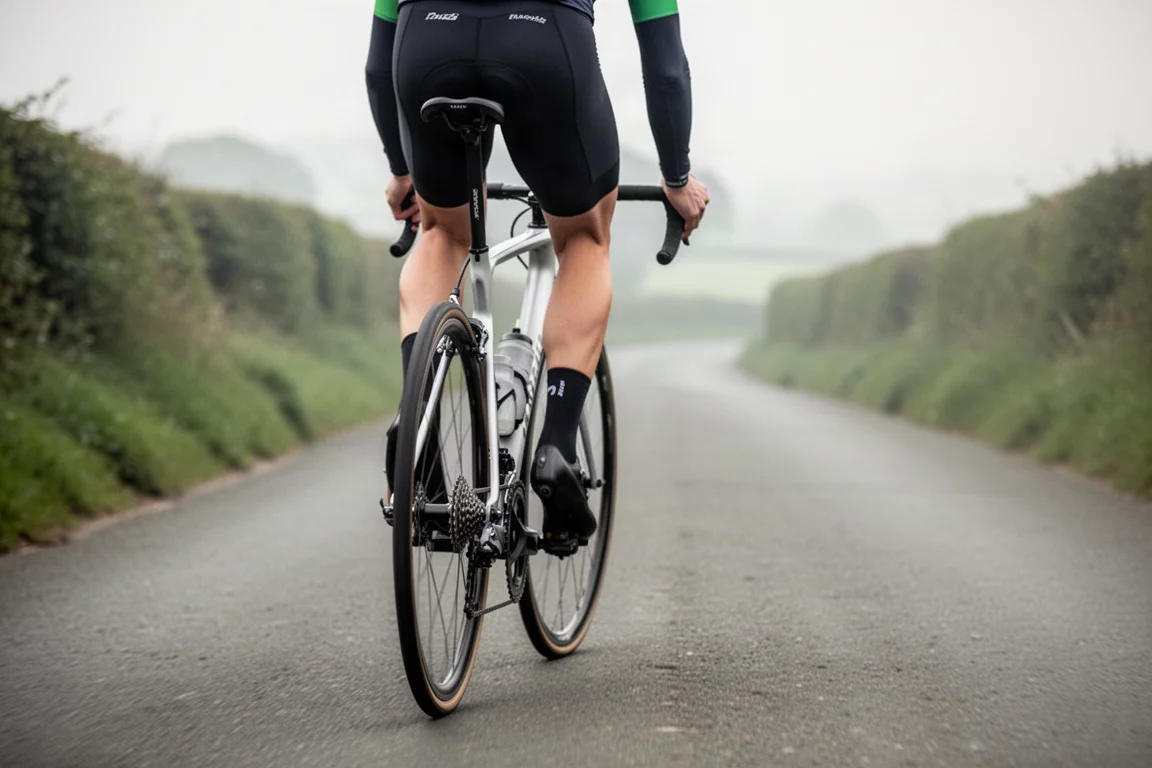
The Q factor is 53 mm, which puts the pedals in line with standard Shimano road pedals. For riders who found the Q factor of the original Assioma Duo off-putting, that change alone makes the Pro RS a much easier recommendation.
Power Data, the Updated App, and the IAV System
The pedals continue to deliver motion-based power analysis, which Favero describes as providing superior accuracy and in-depth performance metrics. Alongside the usual power, cadence and left/right balance, you can see torque effectiveness and other data to shape your training.
Favero has also refreshed its app, which now includes a quick start guide to get the pedals set up and then displays data live on your phone.
The newest metric is pedal center offset, which arrived with the off-road Assioma Pro MX. It shows how force is distributed across the pedal platform through the stroke. Combined with rider position and power phase, which indicates the part of the pedal stroke where you generate peak force, this is data you can use to refine your pedaling technique. There are two potential payoffs: finding a little more power without extra training, and pedaling in a more balanced way that may reduce strain on a particular part of the body.
Accuracy Claims and Oval Chainring Support
Favero declares an accuracy of plus or minus 1 percent. The claim rests on the company’s IAV power system, which stands for instant angular velocity. An integrated gyroscope detects variation in your pedaling and factors it into the power calculation.
Favero says this guarantees the declared accuracy not only in regular riding and lab-controlled conditions, but also when oval chainrings are fitted.
For riders who train to power, that last point matters. Oval rings change the relationship between crank position and force through the stroke, and a system that accounts for pedaling variation is a more reassuring choice if you use them.
Things to Consider Before Buying
Putting everything inside the spindle does involve compromises, and Favero is upfront about them. If a battery develops a problem, the whole spindle has to be replaced rather than a single cell. Favero says every battery is tested at its Italian factory during production, which is the mitigation the company offers.
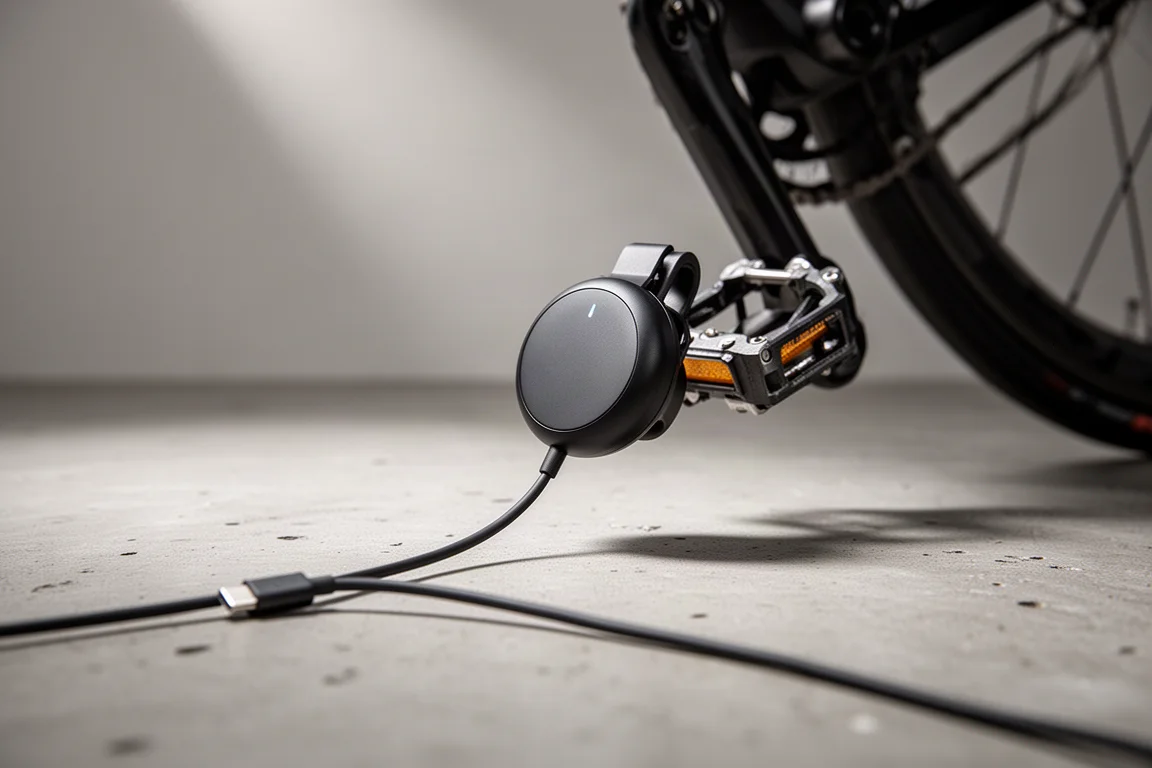
The batteries are rechargeable rather than user-replaceable, a decision Favero links to reliability. A sealed, hermetic battery avoids the power contacts that can cause dropouts, whereas replaceable batteries need to be accessible to the rider. Charging is handled by pods that clip onto the pedals, and a USB Type-C cable is included in the box.
Price is the other consideration. The road model costs more than the off-road version, so the tidy podless design and the lower Q factor come at a premium over the MX.
Buying Advice
A dual-sided set of Assioma Pro RS pedals is priced at £650. That is more than the off-road version, but it remains good value for a dual-sided power meter, particularly one that looks this clean on the bike. If you only need power from one side, the Assioma RS1 is available at £399.
Riders who split their time between road and gravel have a straightforward option too: the off-road Assioma Pro MX uses the same spindle architecture, so one system can cover both.
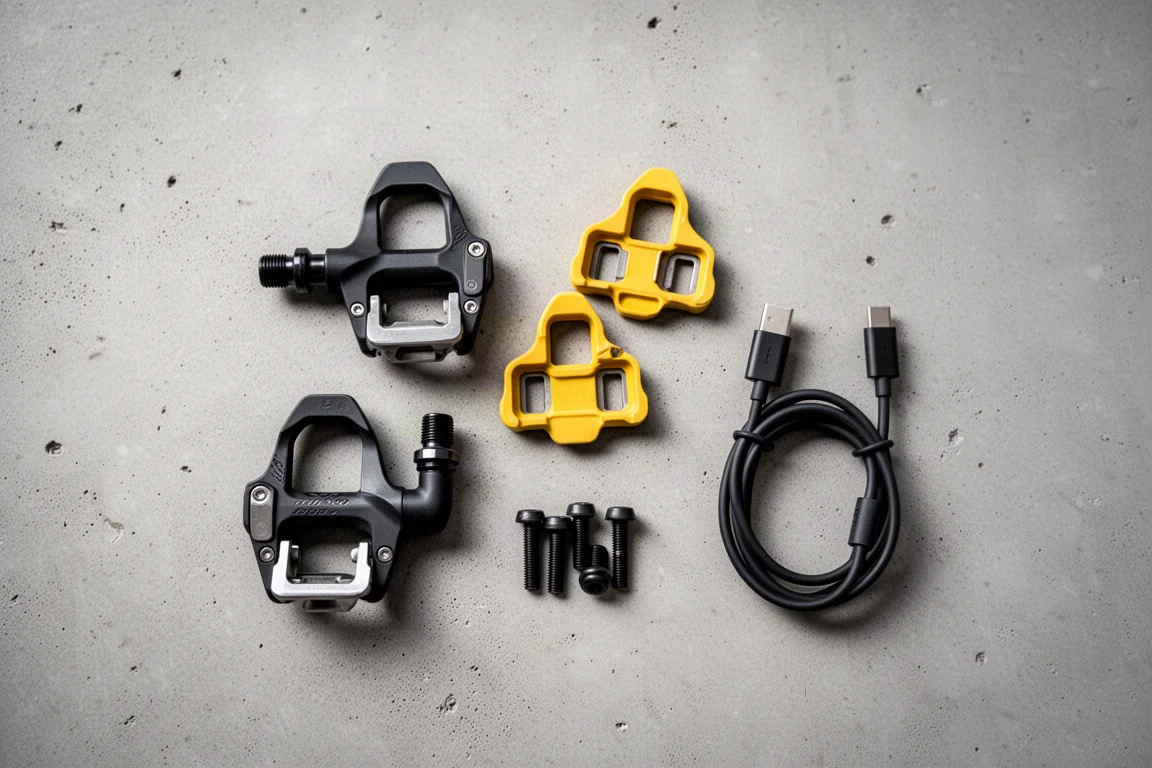
Before committing, think about what you actually need from a power meter. If left/right balance and the fuller data set matter to your training, the dual-sided Pro RS is the version to choose. If you simply want reliable total power and a lower entry point, the single-sided RS1 covers that. Shimano cleat users also get a genuinely convenient package here, with cleats and bolts in the box and a Q factor that matches what they already ride.
Conclusion
The Assioma Pro RS is a considered update rather than a cosmetic one. Moving the electronics into the spindle removes the pod, drops the weight, and brings the Q factor into line with standard Shimano road pedals, while the rechargeable sealed battery addresses the dropouts that can come from exposed power contacts. The trade-offs are real, notably the cost of replacing a spindle if a battery fails and a price that sits above the off-road model. For road riders who want dual-sided power data in a package that looks and feels like a normal pedal, it is an easy set of compromises to live with.
Product link
View more details for Favero Assioma Pro RS
This product is mentioned in the review. Check the specifications, options, and compatibility before buying.
View more details for Favero Assioma Pro RSFurther reading
Related Reviews
Cycling Power Meters
Five Affordable Power Meters for Road and Off-Road Cycling
Five practical power meter options under $500 that deliver reliable power measurement without breaking the budget.
Cycling Power Meters
Assioma Pro MX-2 Review: Dual-Sided Off-Road Power Meter Pedals
A light dual-sided off-road power meter pedal with a claimed 191 g weight, plus or minus 1% accuracy and a 60-hour battery.
Cycling Power Meters
Best Power Meter Pedals 2026: Seven Systems Compared
A practical comparison of seven power meter pedal systems, covering accuracy, battery life, servicing, weight and price.