Cycling Power Meters
Best Power Meter Pedals 2026: Seven Systems Compared
A practical comparison of seven power meter pedal systems, covering accuracy, battery life, servicing, weight and price.
Introduction
Power meter pedals are popular for a simple reason: they fit any bike and install with everyday tools. An 8 mm Allen key or a 15 mm pedal spanner is enough, which makes them easier to live with than crank, spider or hub based systems, particularly for riders who move between bikes.
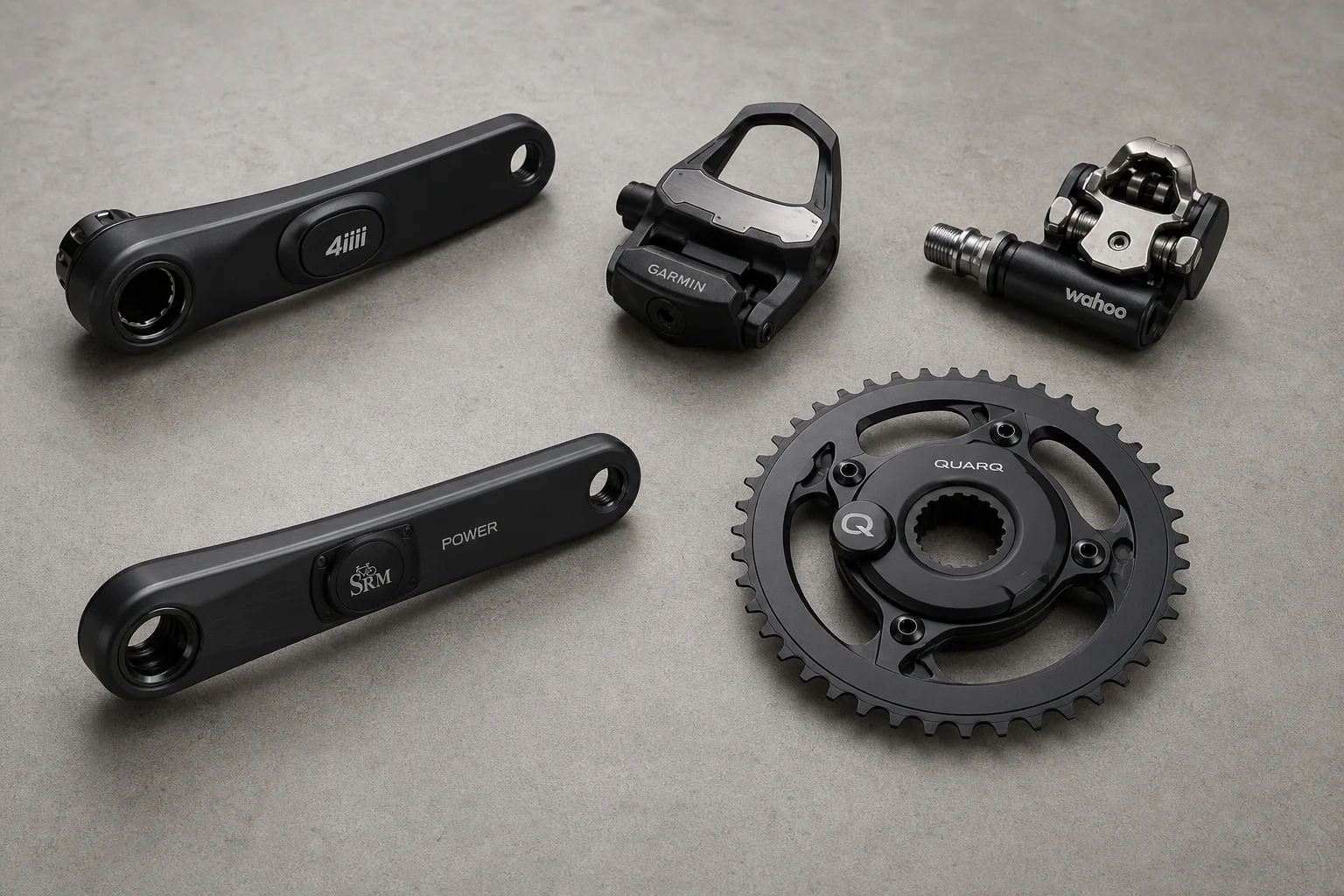
Four brands dominate the category: Favero, Garmin, Look and Wahoo. SRM also builds power meter pedals, but at a price level well above this group, which puts them outside the scope of a practical comparison.
Every system covered here was compared against an Elite Direto XR smart trainer and a range of trusted on-bike power meters, indoors and outdoors, to see whether the promised accuracy holds up in real conditions. Six of the seven delivered. One did not, and the details are further down.
How These Power Meter Pedals Compare
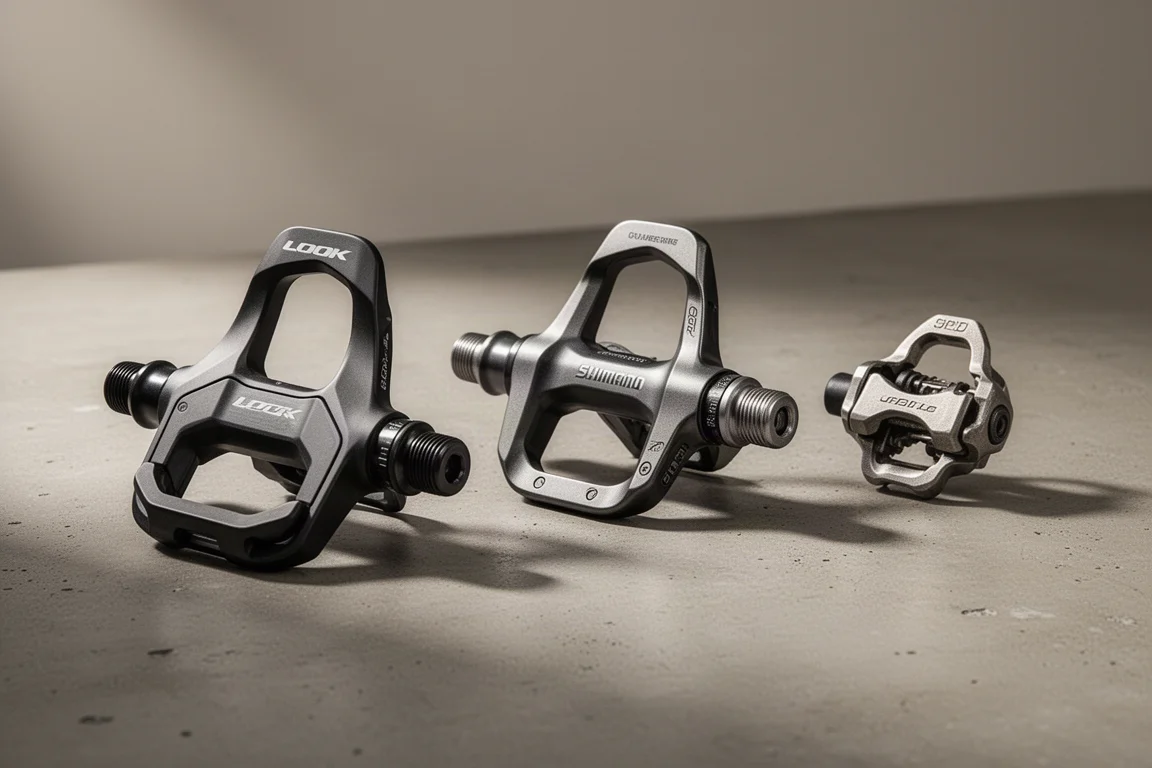
Cleat compatibility has opened up considerably. Favero and Garmin both offer pedal bodies for Keo-compatible, SPD-SL and two-bolt SPD cleats. Look covers its own Keo cleats and also offers an off-road body for SPD cleats. Wahoo sticks to the Speedplay platform.
One nuance is worth checking before you buy. Fitting the SPD-SL compatible spindles to the Favero Assioma Duo widens the Q factor by 10 mm, which moves the centre of each pedal body 5 mm further out on both sides. Riders who spend time on gravel or mountain bikes, where Q factors are typically wider, are unlikely to mind. Devoted road riders who have had a bike fit and know their preferred stance width should consider it carefully.
Weights sit closer together than the marketing suggests. The Look Keo Blade Power is the lightest road pedal here at 269 g per set, the Garmin Rally RS200 is the heaviest at 320 g, and the Favero Assioma Duo sits between them at 305 g. Off-road, the Favero Assioma Pro MX leads at 384 g per set, the Look X-Track Power comes in at 405 g, and the Garmin Rally XC200 is heaviest at 444 g. A few grams will not change how a bike performs, so weight is a weak reason to pick one system over another.
Price, running costs and long term servicing are where the differences become meaningful.
Best Overall Value: Favero Assioma Duo
The Assioma Duo is the cheapest way into dual-sided pedal based power in this group, at just under £580 or $650. It runs on a rechargeable lithium ion battery rated for 50 to 60 hours of riding, which for most people means charging roughly once a month or less.
Data quality is the strongest argument for it. Across years of comparative riding against multiple power meters and smart trainers, the Assioma Duo has proven consistent and reliable. Setup through the smartphone app is straightforward, the pedals must be activated there, and firmware updates go through without friction.
Servicing is simple as well. The spindle and pedal body come apart at home with Allen keys and no proprietary tools. The external pods on the pedal body are not the most elegant design, but they do not affect performance and have not caused shoe clearance problems. The standard version keeps a narrow 54 mm Q factor, which suits road riders who care about stance width.
Off-Road Value Pick: Favero Assioma Pro MX
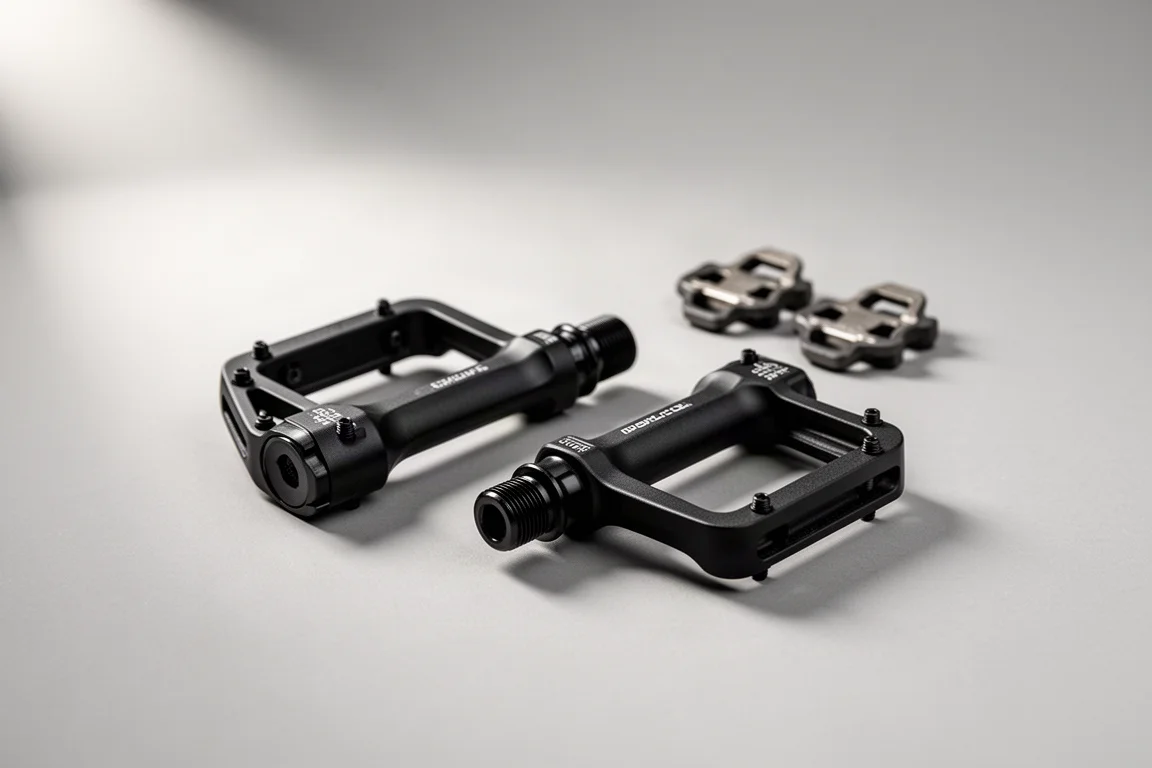
The Assioma Pro MX applies the same approach to two-bolt SPD off-road pedals, and it is the lightest off-road option here at 384 g per set. Everything sits inside the spindle, so there is no external pod, and the result is a cleaner looking pedal than the road version.
At £599 or $759 it undercuts every other off-road power meter pedal in this comparison. Setup runs through the same app, and servicing again needs nothing more than Allen keys. The main limitation is flexibility: the spindles cannot be moved onto road pedal bodies, so a rider who wants both road and off-road setups will need two sets rather than one set plus spare bodies.
For gravel and mountain bike riders who want power data without adding bulk, the Pro MX is the simplest answer in this group. Riders who split their time between road and dirt should weigh that against the Garmin and Look options, which can be converted.
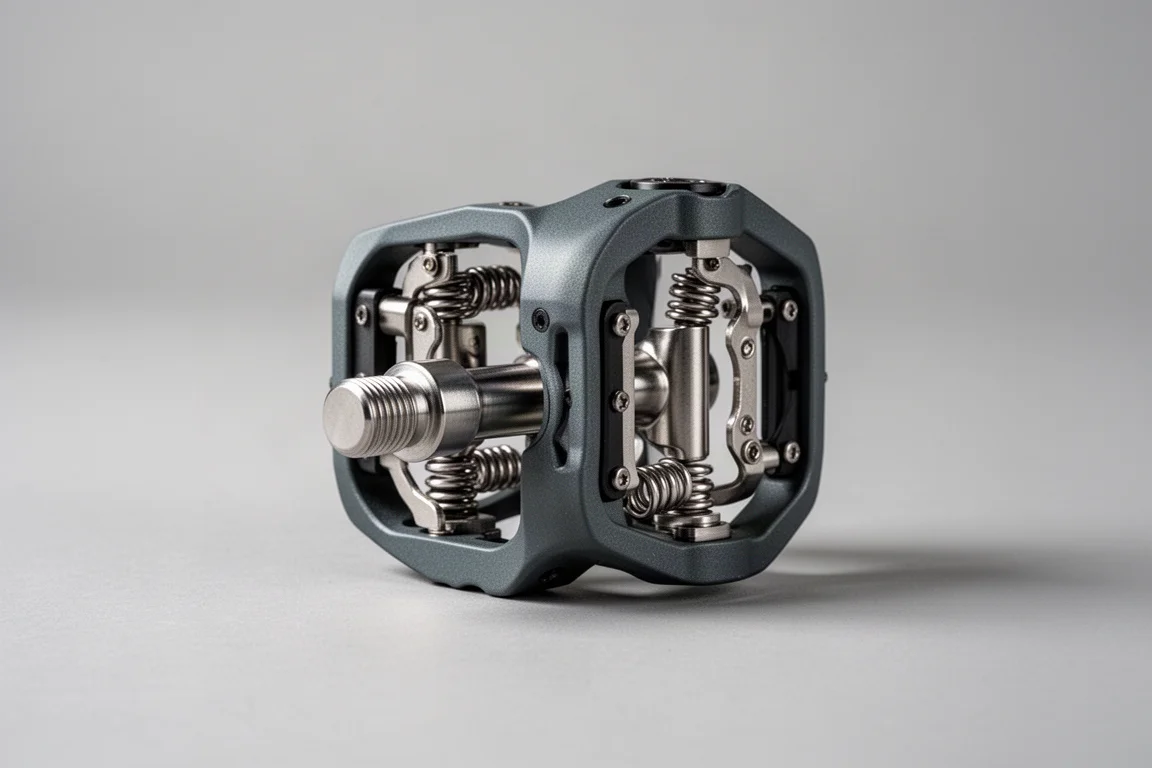
Best Battery Life and Versatility: Garmin Rally RS200
The Rally RS200 is the heaviest road pedal here at 320 g per set, and at just under £770 in the UK it is the most expensive of the road options. It answers both points with two clear advantages.
The first is battery life. Garmin uses replaceable coin cell batteries rated at around 120 hours, roughly double the runtime of the rechargeable systems in this group. Carrying a spare pair in a saddle bag is easy, which matters on ultra distance rides or long trips where charging opportunities are uncertain. The second is flexibility: the spindles can be swapped between road and off-road pedal bodies, so one set can cover two bikes. Off-road bodies are sold separately at just under £350 a set, which is not cheap, but it is still less than buying a second power meter.
Data has been excellent across years of use, and release tension is adjustable, which the Look blade system cannot match. Servicing at home is possible, though it needs Allen keys, a socket wrench and, on Garmin pedals, a precision screwdriver.
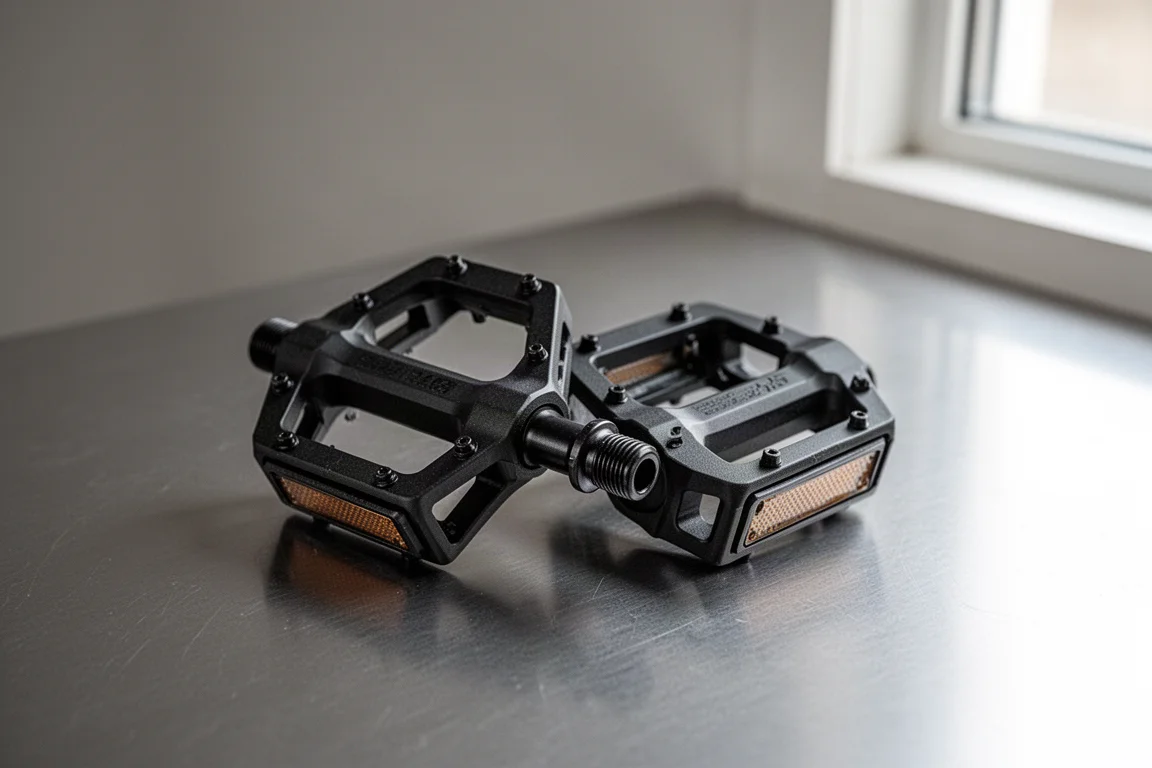
Garmin Rally XC200: The Off-Road Option
The Rally XC200 takes the same platform off-road with an SPD body. At 444 g per set it is the heaviest pedal in this comparison, and at just under £960 in the UK or just under $1,200 in the US it is also the most expensive.
The trade-offs mirror the road version: around 120 hours from replaceable coin cells, the ability to move the spindles onto road pedal bodies, and power data that has proven consistent in testing. Riders who want one spindle set for both a road and an off-road bike will find the logic appealing despite the price.
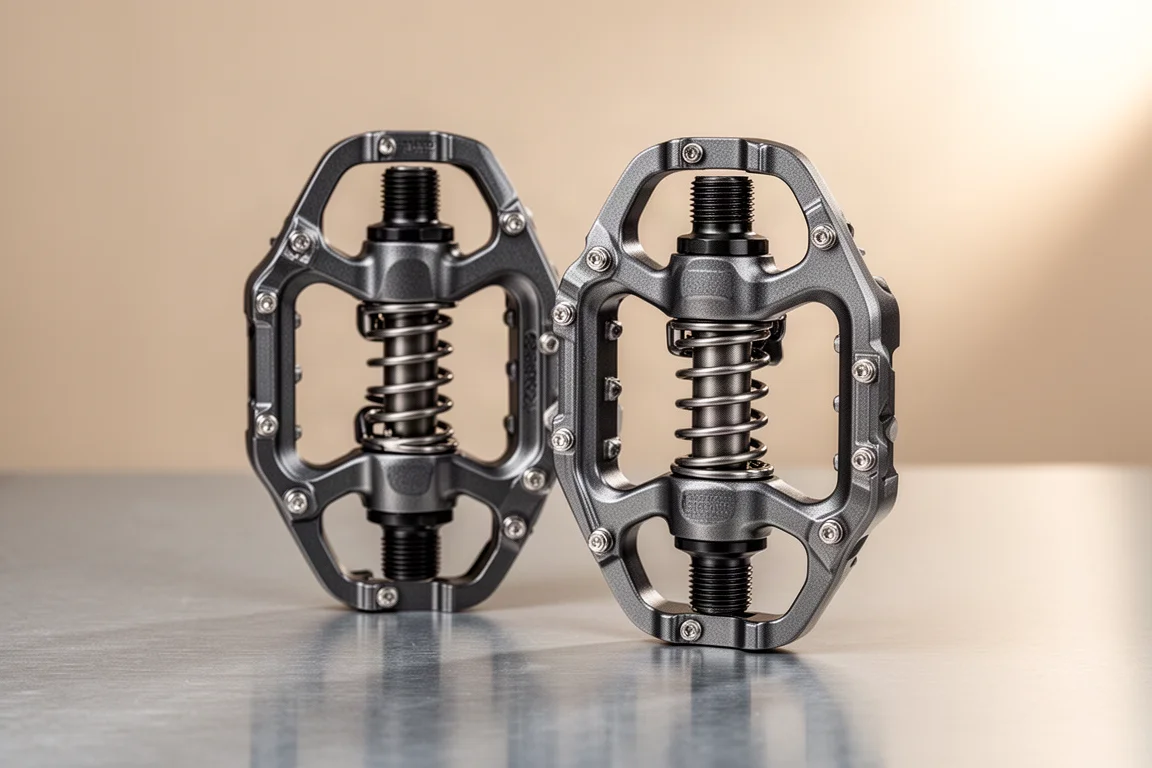
Look Keo Blade Power: Light and Fast, With Caveats
The Keo Blade Power is the lightest road power meter pedal here at 269 g per set, and at £899 in the UK or $999 in the US it sits below the Garmin options. The carbon blade that retains the cleat is a distinctive design, and it is also the source of the main practical drawback: release tension cannot be adjusted directly. Changing it means buying a different blade, at around £40 per set. Look also fits stiffer 16 Nm blades rather than the 12 Nm blades used on the standard pedals, which makes unclipping firmer than many riders will expect.
Outdoors, the data lined up well with on-bike power meters. Indoors, the story changed. On both firmware version 1.5 and the later version 1.011, the right side pedal under-reported against a true dual-sided reference, and left-right balance drifted. The likely cause appears to be an error in the zero offset process when riding indoors, possibly triggered by interference from nearby wireless devices, though every other pedal system in this group handled the same busy indoor environment without issue.
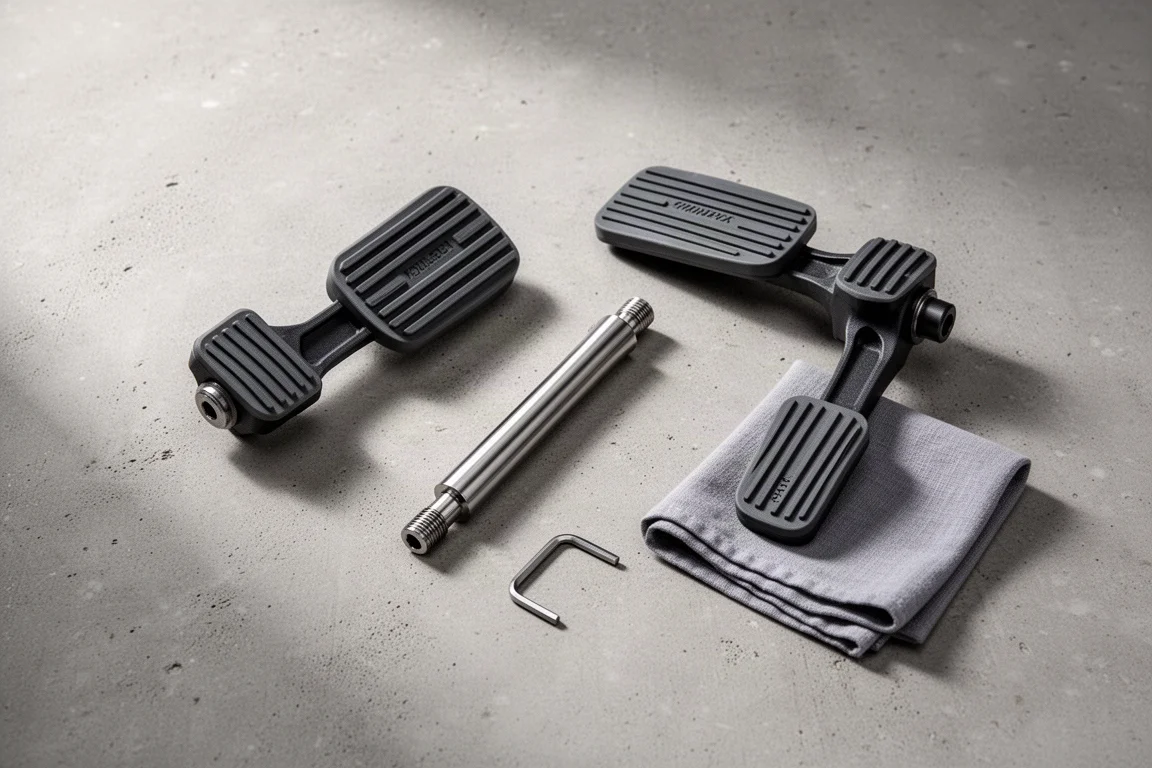
Setup was also a weak point. The companion app would not allow an account to be created, which blocked registration, firmware updates and settings changes until manual approval was arranged, and firmware updates stayed difficult even after that. Registration matters because it activates the warranty. Servicing needs a proprietary two-prong tool, around £15, to remove the axle end cap, although the spindles can be swapped onto Look off-road bodies at £300 a set. The hardware looks sound and the problems appear to be software related, so a future firmware update could change the picture, but as things stand the Keo Blade Power is the hardest of the seven to recommend without reservations.
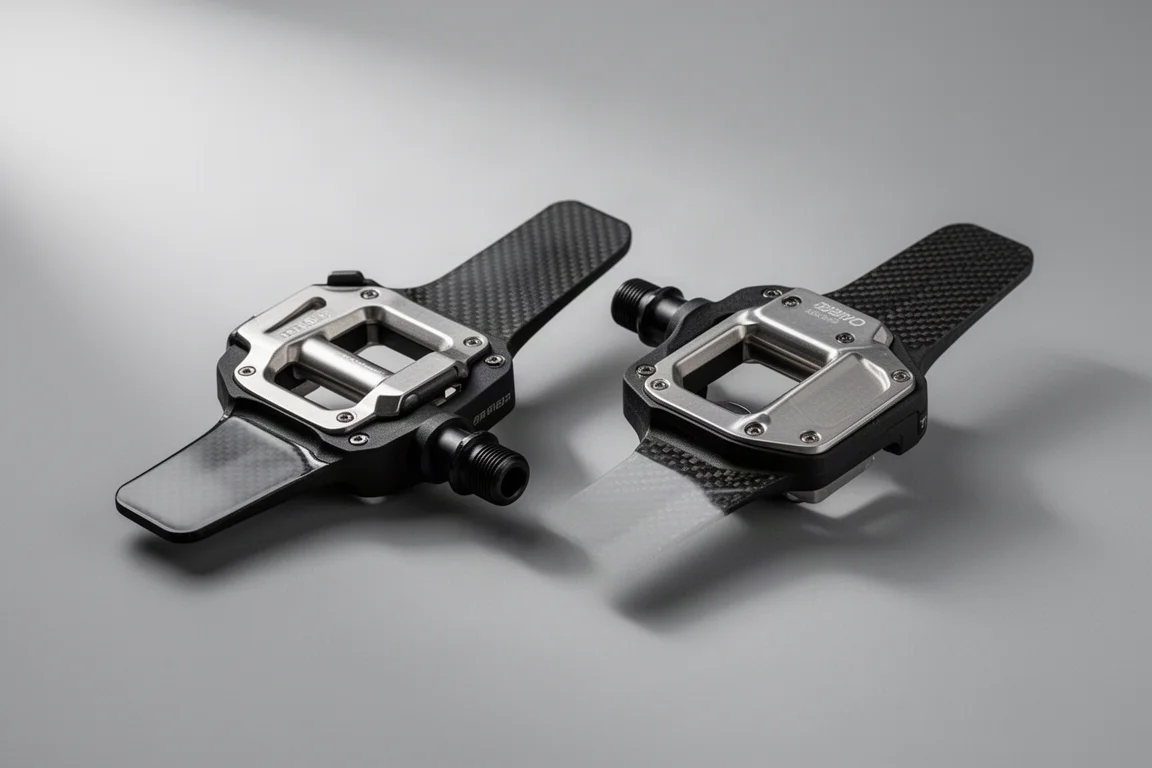
Look X-Track Power: The Off-Road Blade Platform
The X-Track Power brings the same platform to an SPD off-road body. At 405 g per set it is heavier than the Favero Assioma Pro MX, and at almost £1,000 in the UK or $1,099 in the US it is priced with the premium group rather than the value one.
Spindles can be swapped onto the road pedal bodies, which gives the same two-bike flexibility as the Garmin Rally system. The setup and firmware experience carried over during testing, so riders considering this model should expect the same app related friction. Outdoors, power data matched other on-bike meters well.
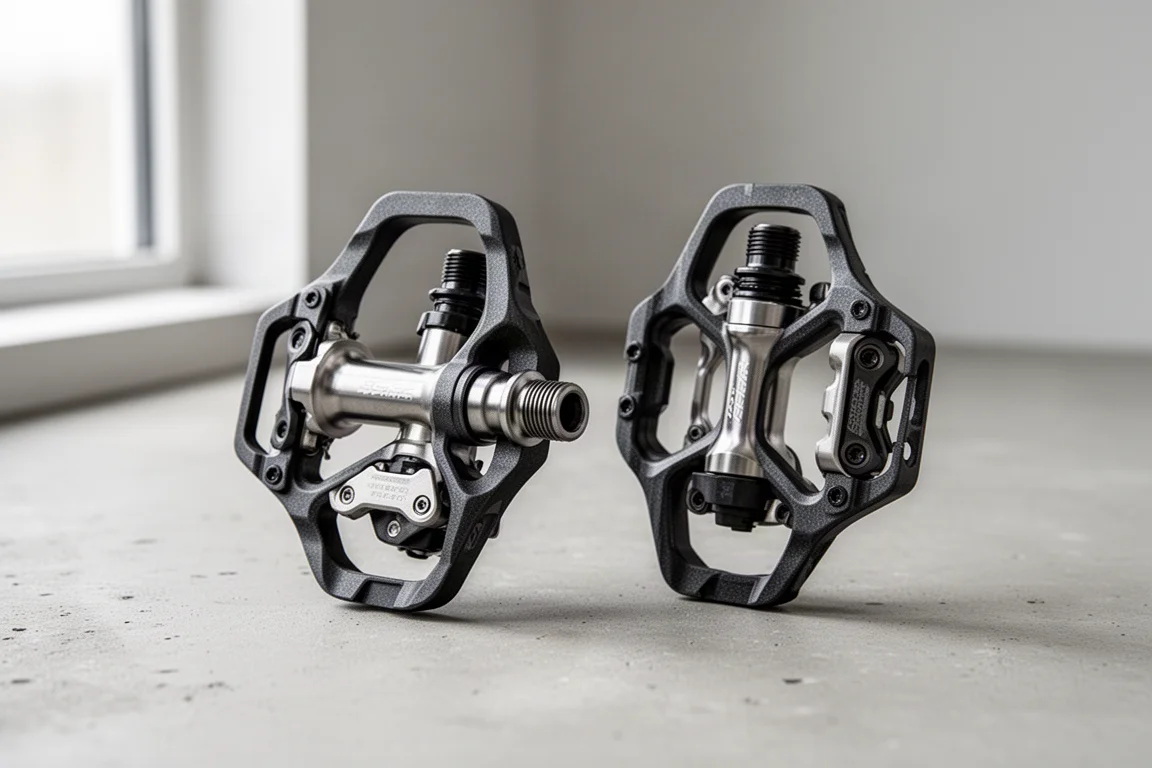
Wahoo POWRLINK ZERO: Built for Speedplay Riders
The POWRLINK ZERO is the odd one out because it uses the Speedplay platform only, and there is no aero pedal body option. On paper it is light at 277 g per set, though Speedplay cleats add 148 g in total against 73 g for Shimano cleats or 68 g for Look Keo Grip cleats, which narrows the gap considerably.
Battery life is 50 to 60 hours from a rechargeable battery, matching the Favero and Look approach. Data performance was flawless during testing, matching a crank based power meter and an Elite Direto XR smart trainer. Dual-sided entry and exit is a genuine Speedplay strength, although clipping in takes a deliberate foot roll rather than a simple downward stamp, so riders new to the platform may want to try a cheaper non-power meter set first.
Serviceability is the biggest caveat. Wahoo treats these pedals as non user serviceable, so bearing work means sending them back to Wahoo or visiting an official dealer. Attempting it at home risks the warranty.
Buying Advice

Two systems stand out overall: the Favero Assioma Duo and the Garmin Rally. The Favero edges ahead on price and on the convenience of rechargeable batteries. The Garmin counters with roughly double the battery life, replaceable cells and swappable pedal bodies, at a higher price and with more weight on the pedal.
Riders who want the lowest outlay for accurate dual-sided data should start with the Assioma Duo, and off-road riders should look at the Pro MX first. Riders who ride both road and dirt and want one set of spindles to cover everything should look at the Garmin Rally system, though it is worth doing the arithmetic: a road Assioma Duo set plus an off-road Assioma Pro MX set costs only around £100 more than a Garmin road set plus off-road pedal bodies, and two complete sets remove the need to swap anything.
There is a third route worth considering. A single set of off-road SPD compatible power meter pedals can be used on both a road and an off-road bike, paired with two-bolt cleat adapters for road shoes. It is an unusual setup, but for riders who would rather own one power meter than two, it works.
The Wahoo POWRLINK ZERO remains a strong option for anyone already committed to Speedplay, and a less certain one for everyone else. The Look pedals are the hardest to justify today: the hardware has promise and the outdoor data was good, but the app problems and the indoor accuracy issues need to be resolved before they can be recommended with confidence.
Conclusion
There is no single best answer for every rider, but there is a clear order of value. The Favero Assioma Duo takes the top spot for most people, with reliable data, a rechargeable battery, easy servicing and the lowest price in this group. The Garmin Rally system follows closely, and its longer battery life and swappable pedal bodies are worth the premium for riders who ride long distances or want one system for road and off-road.
The Favero Assioma Pro MX is the straightforward off-road pick. The Wahoo POWRLINK ZERO makes sense for confirmed Speedplay users. The Look Keo Blade Power and X-Track Power are the ones to watch rather than buy right now, with solid hardware held back by software issues that should be fixable in time.
Further reading
Related Reviews
Cycling Power Meters
Five Affordable Power Meters for Road and Off-Road Cycling
Five practical power meter options under $500 that deliver reliable power measurement without breaking the budget.
Cycling Power Meters
Assioma Pro MX-2 Review: Dual-Sided Off-Road Power Meter Pedals
A light dual-sided off-road power meter pedal with a claimed 191 g weight, plus or minus 1% accuracy and a 60-hour battery.
Cycling Power Meters
Best Power Meter Pedals: Favero, Garmin, Look, and Wahoo Compared
A practical guide to the main power meter pedal systems, covering cleat compatibility, weight, price, battery life, serviceability, and data accuracy.