Cycling Components
Favero Assioma Pro MX-2 Review: A Trail Power Meter Pedal Built to Take Hits
A fully sealed power meter pedal with a replaceable body, reviewed for water resistance, retention, durability, and real trail use.
Introduction
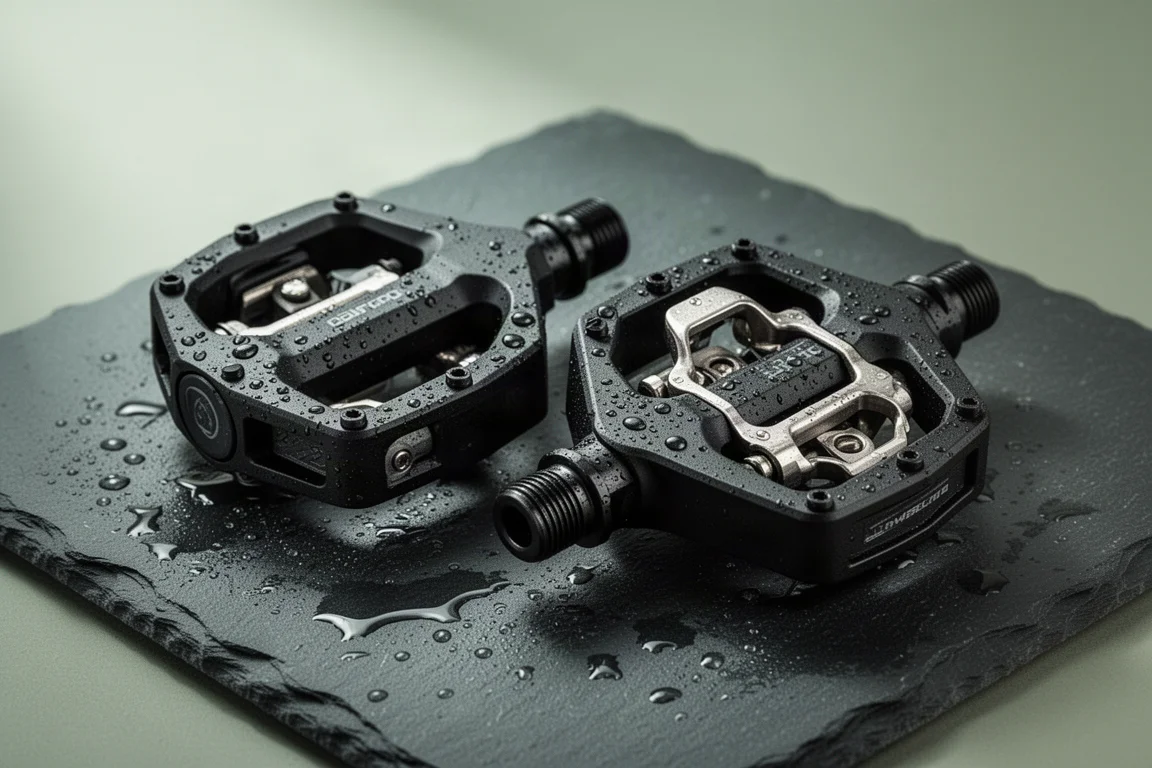
Power meter pedals have always been an awkward fit on a mountain bike. The electronics sit exactly where rocks, roots, and mud tend to land, and plenty of designs ask you to open a hatch or connect a cable somewhere on the pedal body. The Favero Assioma Pro MX-2 takes a different route: a fully sealed unit with the battery housed inside the pedal, and a body that can be replaced when it eventually meets a rock.
That design choice is why this review concentrates on durability, water resistance, and day-to-day usability rather than power figures. The more interesting question with an off-road power meter is not whether it measures, but whether it keeps working after a season of abuse.
Who the Favero Assioma Pro MX-2 Is For
This is a pedal for riders who want power data on a mountain bike or a gravel bike without treating the hardware as disposable. If your riding involves wet weather, rocky descents, or long winter training blocks, the sealed body and rebuildable construction are the features that matter most.

It also suits riders who think in terms of years rather than seasons. A pedal that can be stripped down and rebuilt is a different proposition from one that has to be thrown away the first time it takes a hard hit, even though the upfront cost is higher.
The MX-2 is a less obvious match for riders chasing the lightest possible setup, or for those who rarely ride anywhere that threatens a pedal body.
Main Strengths: Sealed Body and Rebuildable Design
The headline feature is that the pedal is completely sealed. All of the electronics and the battery live inside the pedal body, which means there are no hatches to open, no covers to peel back, and no charging port exposed to water and grit. That gives the design strong resistance to water ingress, and it is the reason the pedals can be ridden through genuinely filthy conditions without special care.
The second strength is serviceability. The entire pedal body is removable and replaceable. If you strike a rock hard enough to damage the outer shell, the body can be swapped without replacing the internals, so the expensive part of the pedal survives. That is an unusual level of repairability for a power meter.
Rounding things out, battery life is decent, the pedals have been reliable in use, and pairing them has been straightforward in practice.
Ride Feel and Retention on the Trail
Once clipped in, the MX-2 feels solid and secure. Engagement is firm and the platform feels stable underfoot, which matters on rough ground where a vague connection quickly becomes distracting. Even alongside trail pedals that add an extra platform around the mechanism, this pedal felt more stable once engaged.
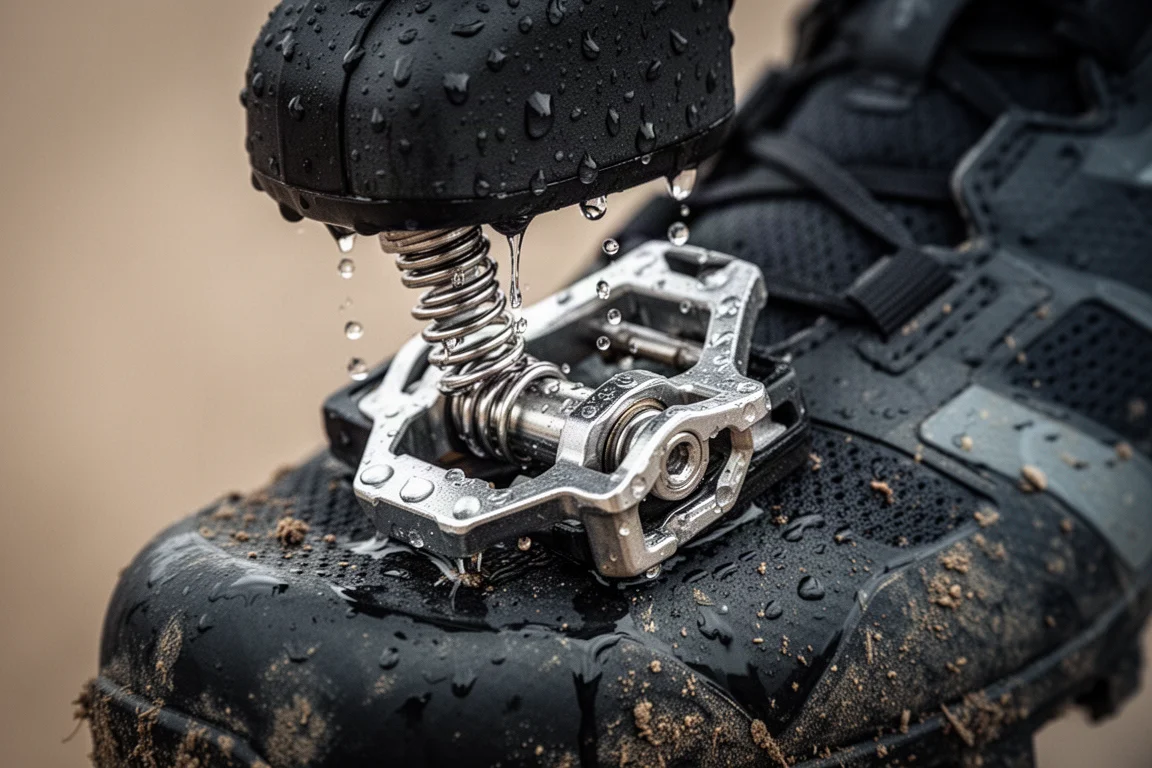
That stability comes from stiff retention, and it is worth understanding before buying. The same firmness that makes the pedal feel locked in also makes entry and release more deliberate than on many cross-country style pedals.
Real-World Durability in Wet and Rocky Conditions
The MX-2 was ridden on soaked, rooty trails in the Surrey Hills, the kind of day where water resistance stops being a specification and becomes the whole point. The pedals stayed sealed and kept working throughout.
Rock strikes are part of the deal on technical descents, and the pedal bodies picked up contact marks during hard riding without any effect on function. Those scuffs are precisely the scenario the replaceable body is designed for: cosmetic damage to the outer shell, with the internals left untouched.
Things to Consider Before Buying
The main trade-off is entry. The MX-2 has a smaller platform and stiffer retention than familiar trail and cross-country pedals such as the M540 SPD, XT SPD XC, or XT SPD trail, and it is noticeably harder to clip into as a result. Riders used to a light, forgiving engagement should expect an adjustment period.

Release tension is adjustable, and easing it off can make the pedal easier to live with, but the underlying character does not change. The stable, locked-in feel that makes the MX-2 appealing on descents is the same quality that makes it fussier at low speed or when you need to get a foot back in quickly.
Cost is the other consideration. This sits at the expensive end of the power meter pedal market, and the value case rests on the rebuildable design rather than on the initial outlay.
Long-Term Ownership and Rebuild Value
The rebuildable construction changes how the numbers work over time. Because the pedal body, and effectively everything on it, can be replaced, a hard hit on a rock does not end the pedal’s life. You replace the damaged section and keep the electronics and spindle in service.
That makes the MX-2 more of a long-term investment than a straightforward expensive power meter. Riders who keep equipment for several seasons, service it properly, and ride terrain that punishes hardware will get more from that design than riders who replace their kit every year.
Buying Advice
The MX-2 makes the most sense for riders who already know they want power on off-road rides, and who ride terrain that punishes hardware. Wet winters, rocky descents, and long gravel training blocks are exactly where the sealed body and replaceable shell earn their keep.

If your priority is the easiest possible clip-in, or the cheapest route to power data, this is not the obvious pick. Entry is harder than most trail pedals and the price is high.
If you want a pedal you can rebuild after a rock strike, ride through winter without worrying about seals, and keep in service for years, the Favero Assioma Pro MX-2 is a convincing choice.
Conclusion
The Favero Assioma Pro MX-2 solves the two problems that make power meter pedals awkward on a mountain bike. The fully sealed body keeps water out and removes charging hatches from the equation, while the replaceable shell means rock damage is a service job rather than a write-off. Retention is firm and the platform feels stable once you are in.
The compromises are real but specific: entry is harder than on familiar trail pedals, and the price is at the premium end of the category. For riders who value durability, repairability, and year-round usability over the lightest possible engagement, those trade-offs are easy to accept.
Product link
View more details for Favero Assioma Pro MX-2
This product is mentioned in the review. Check the specifications, options, and compatibility before buying.
View more details for Favero Assioma Pro MX-2Further reading
Related Reviews
Cycling Components
A 20,000-Mile Budget Race Bike Build: Five Parts Worth Knowing
A rim brake race bike assembled from low-cost components and ridden for 20,000 miles. Here is what delivered real speed, what caused problems, and what to weigh before copying the formula.
Cycling Components
7 Bike Fit Products Fitters Avoid: What to Check Before You Buy
Seven bike components that regularly cause knee, foot and saddle problems, with the specific concerns behind each one and what to look for instead.
Cycling Components
Four Affordable Bike Upgrades That Improve Ride Feel
Four low-cost cycling products that make a real difference to ride feel, plus the free setup changes worth trying first.