Chainsaws
Budget Chainsaw vs Stihl Magnum MS 661: Does the Farm Boss 460 Hold Up?
We compare the $400 Farm Boss 460 against the Stihl Magnum MS 661 and the Stihl MS 250 on torque, cut speed, vibration, and real-world value.
Introduction
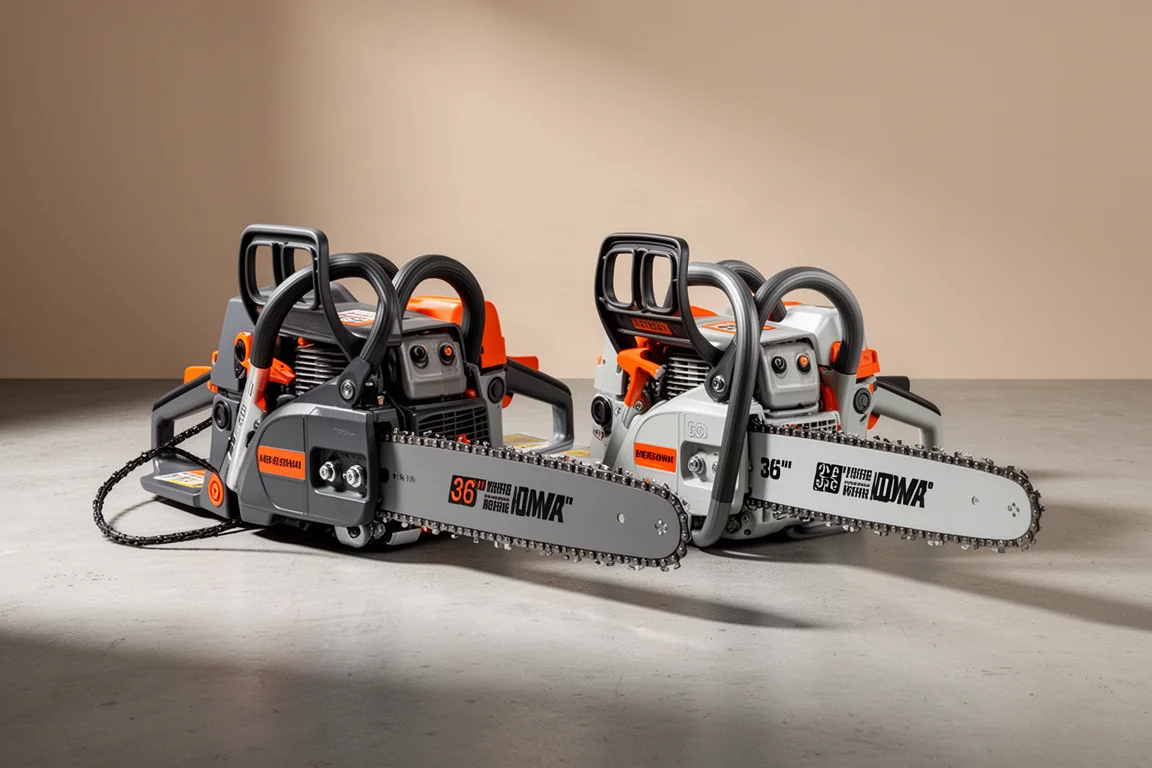
The pitch is hard to ignore: a full-size 91.1 cc chainsaw with a 36-inch bar for around $400, built around parts the manufacturer claims are compatible with the Stihl MS 660, sitting next to a $1,640 Stihl Magnum MS 661. That price gap is exactly why this comparison matters. We ran both saws through starting tests, vibration measurements, sprocket speed checks, a torque dyno, a timed cut test, and a big-log challenge, with the smaller Stihl MS 250 joining for reference. Here is how it all shook out.
Farm Boss 460: The Budget Challenger
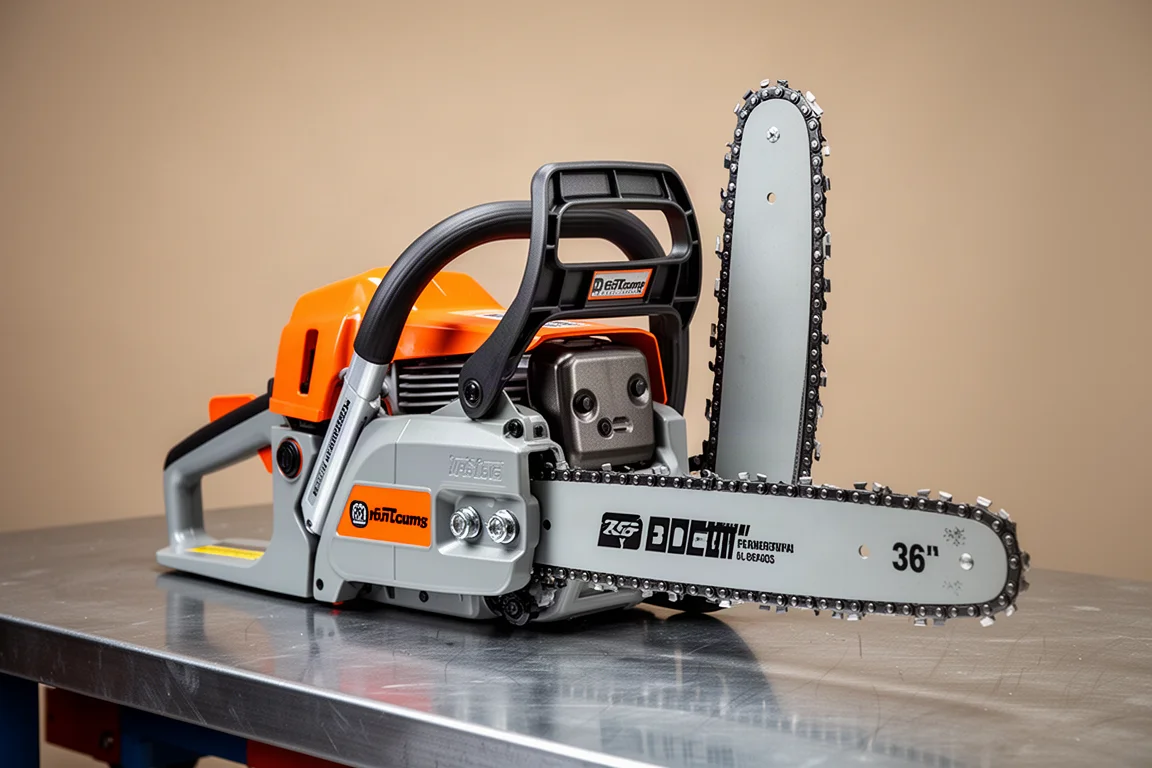
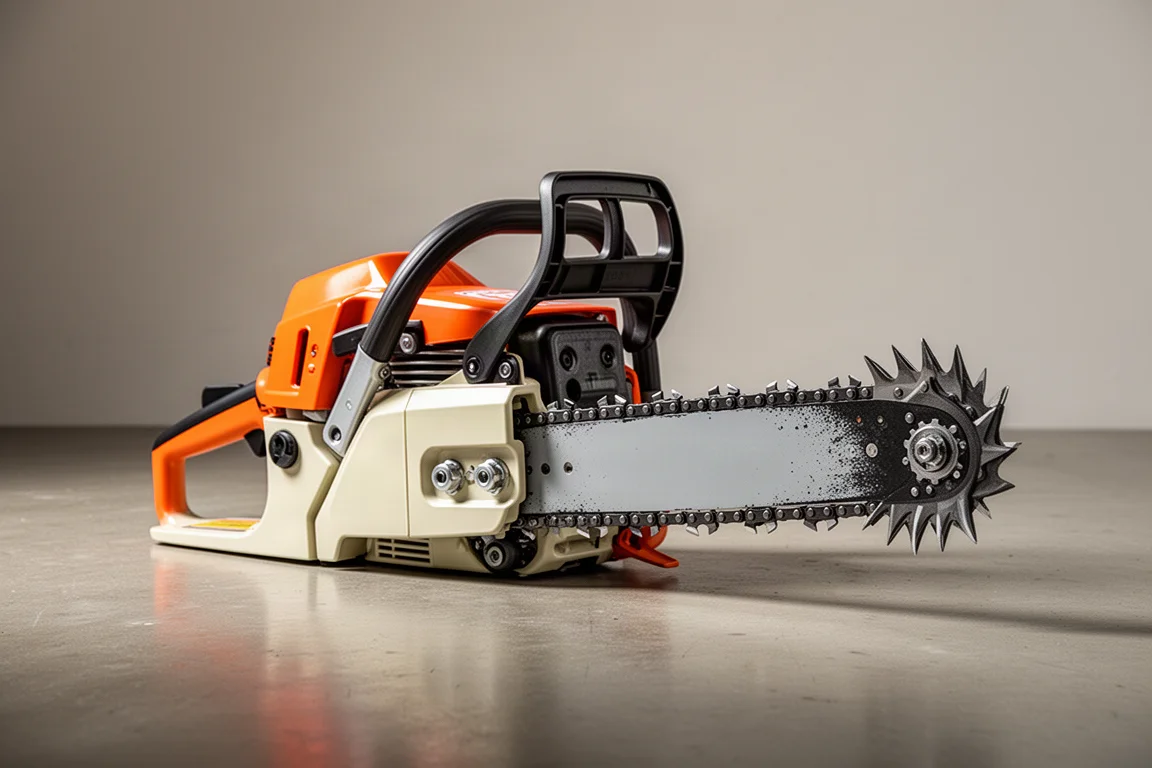
The Farm Boss 460 costs around $350 for the power head or about $400 with the bar and chain. It is made in China, and the manufacturer states that all parts are compatible with the Stihl MS 660. Small assembly is required, including the felling spikes and the handle, though no assembly instructions were included. It is set up just like the Stihl saw, so a Stihl unit works as a reference if you need one.
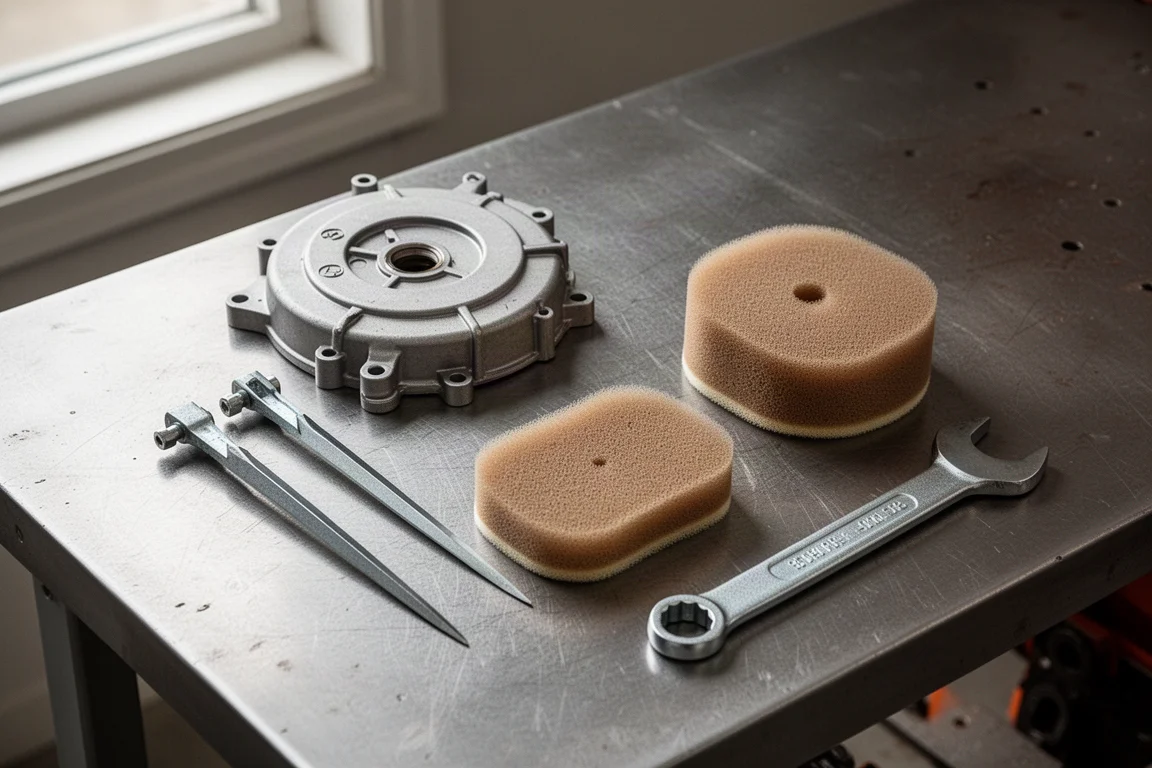
Not everything is rough around the edges. The air filter setup is decent compared to other budget saws, and the clutch cover is cast aluminum of surprisingly good quality. The two felling spikes, one mounting to the cover and one to the saw, mirror the Stihl layout. The weak points: the choke lever is extremely stiff and clunky, and the factory tune runs very rich, which we confirmed on the cut test later.
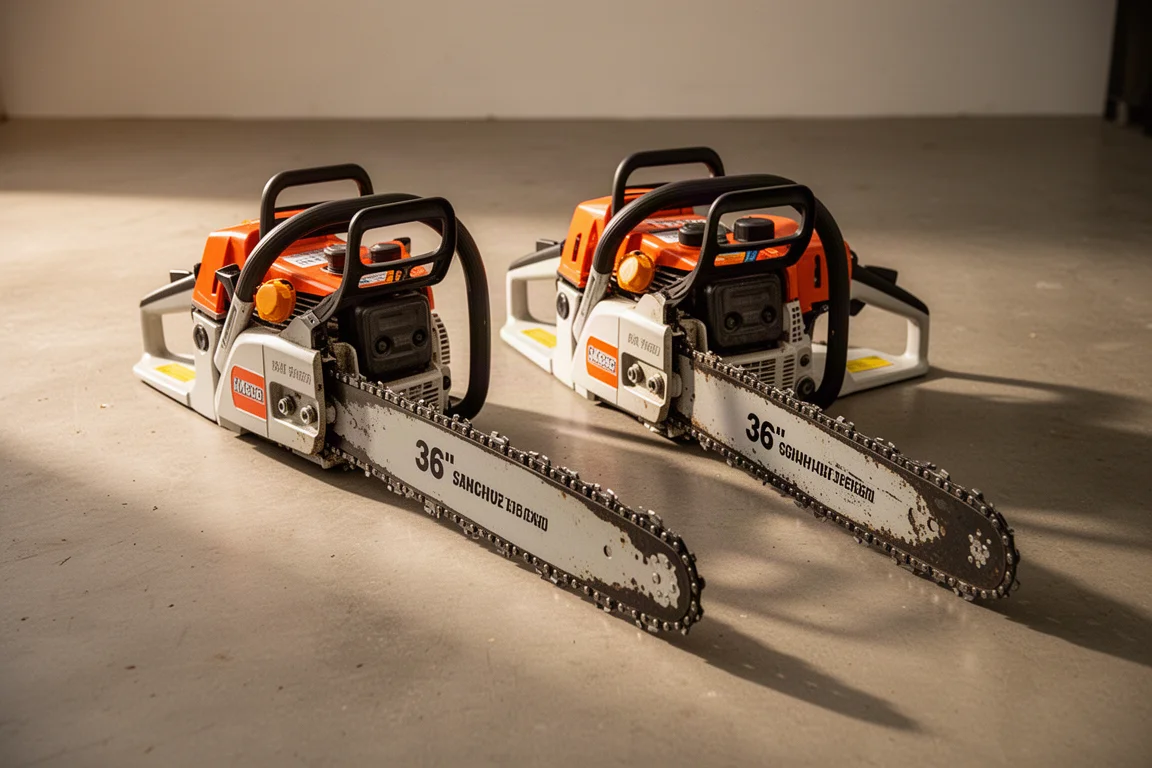
Spec-wise, the Farm Boss claims a maximum of 13,300 RPM and roughly 7 horsepower. The 36-inch bar is claimed to be 20% lighter than the equivalent alloy bar, and in practice it came in at 2,284 g versus the Stihl bar at 2,302 g, so the two are nearly interchangeable. The chain is 3/8 pitch, .063 gauge (listed in testing notes as 0.63), and 114 links, identical to the Stihl chain at exactly 566 g. The Farm Boss chain looks like a full chisel pattern, while the Stihl chain looks more rounded, closer to a semi-chisel. With the 36-inch bar and chain installed, the saw weighs 24.72 lb.
Starting behavior was reasonable for a first run: it showed signs of life on the fourth pull and ran after nine pulls total. Peak starting force measured 15.5 kg, about 34.2 lb, with the compression release engaged. Vibration on the front handle ran 62 to 65 mm per second squared, noticeably higher than the Stihl, and wide-open sprocket speed came in around 9,850 RPM. Noise hit 117 decibels, so hearing protection is a must.
Stihl Magnum MS 661: The Premium Benchmark
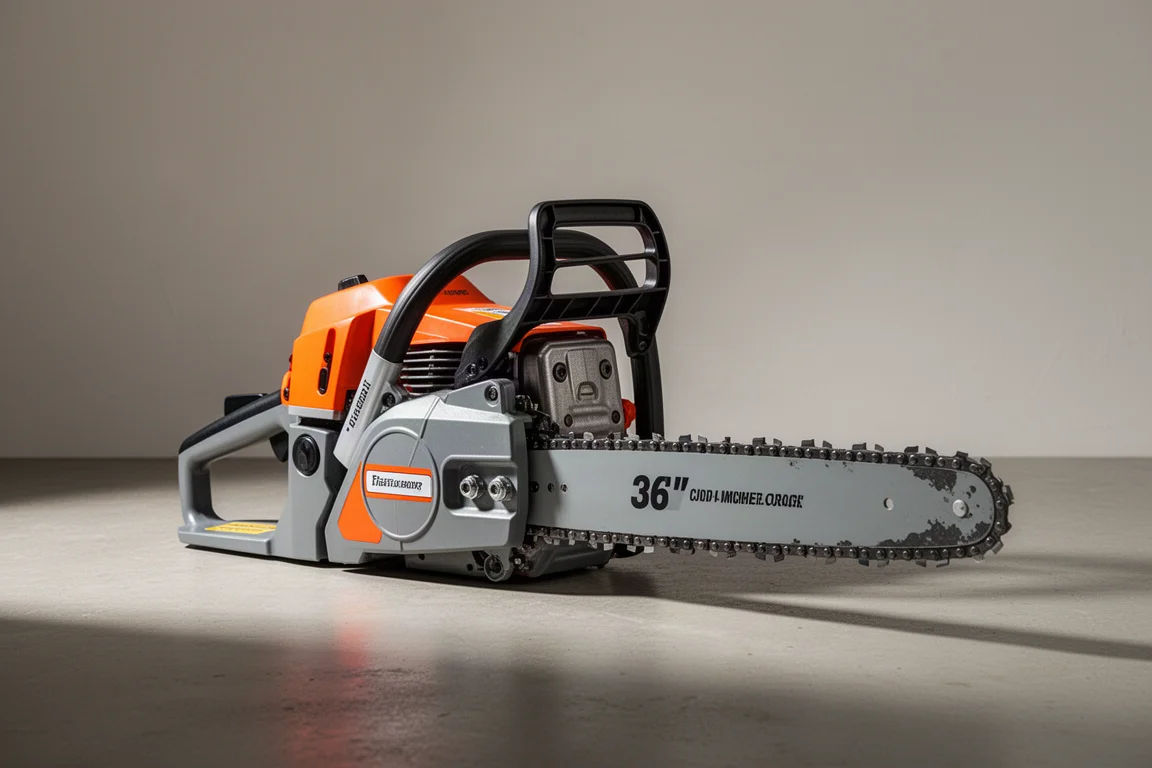
At $1,640, the Stihl Magnum MS 661 arrived pre-assembled and made in Germany. It shares the same 91.1 cc engine size as the Farm Boss and is rated for just over 7 horsepower. The starting grip has a built-in shock absorber that reduces effort on the starter cord, though it still took six pulls to get running on first start, and peak pull force measured 19.5 kg, about 43 lb, meaning it actually needs more arm strength than the Farm Boss even with compression released.
Where the Stihl clearly earns its price is in refinement. The air filter setup is better: the filter element outperforms a foam filter and seals more effectively against the engine. Vibration on the front handle measured just 39 to 46 mm per second squared, a real difference you notice over long sessions. Wide-open sprocket speed topped out at just over 13,400 RPM, far beyond the Farm Boss, and noise measured 120.6 decibels. With the 36-inch bar and chain it weighs just over 23 lb, a bit lighter than the Farm Boss. On a homemade chainsaw dyno, it took the best of 77 lb of downward force to stall it, about 12 lb more than the Farm Boss’s best of 65 lb.
Cut Test: Nine 4x4s and a Big Log
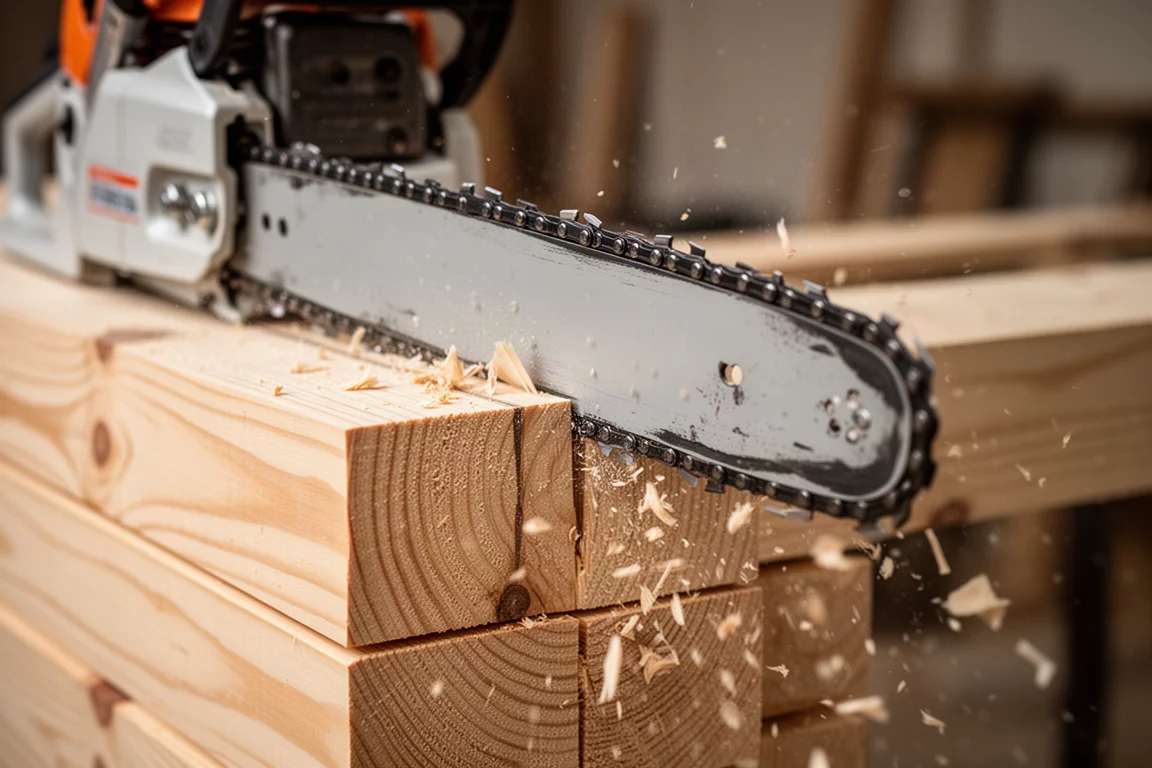
Out of the box, the Farm Boss ran like a saw with about 4 horsepower, bogging down easily and stalling when pushed. Its best initial cut through the nine-4x4 test log was 11.61 seconds. The Stihl, despite one early stall, found its sweet spot quickly and posted 5.88 seconds on its third cut. The difference was dramatic.
The turnaround came with two changes. With a genuine Stihl bar and chain installed, the Farm Boss improved to 9.75 seconds. Then a careful leaning of the carburetor, staying rich enough to avoid engine damage, genuinely woke the saw up: the Farm Boss then cut in 6.24 seconds, nearly matching the Stihl’s 5.88-second best.
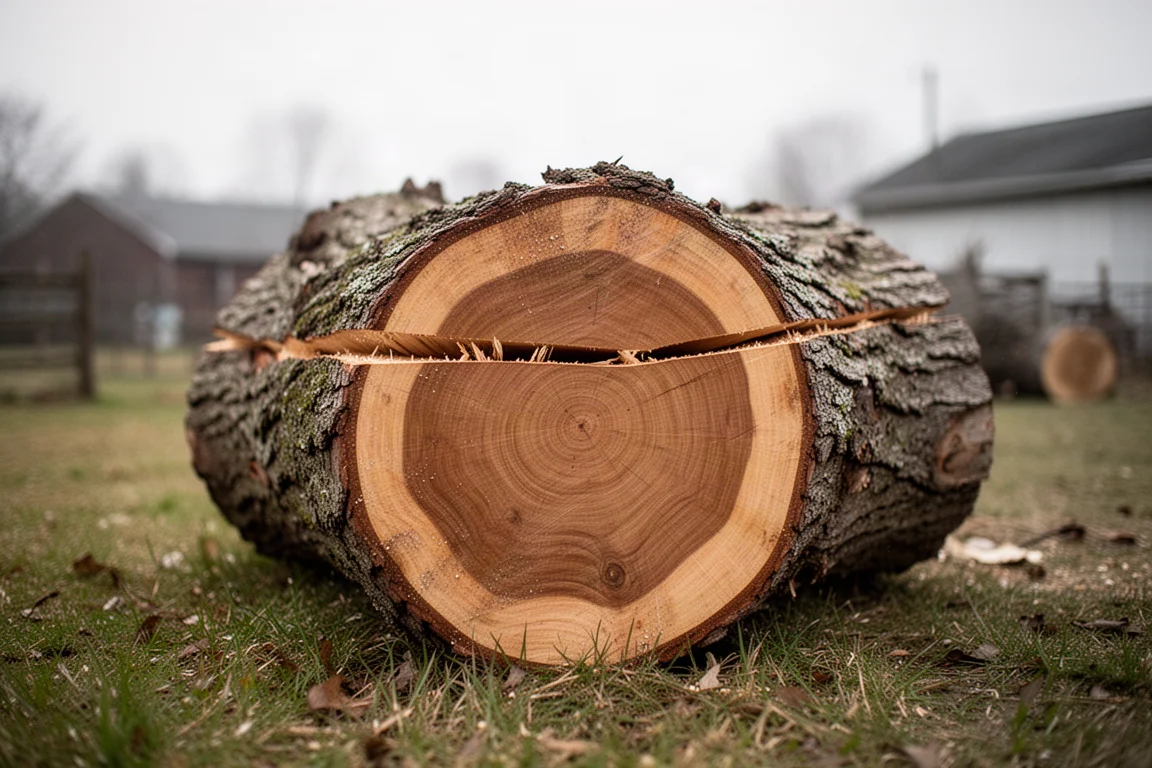
For a small-saw reference point, the Stihl MS 250, with roughly half the engine size, cut the same log in 10.42 seconds at best, packing impressive torque and chain speed for its class. On the big log test, cutting through a tree trunk with a diameter of around 33 inches, the Stihl averaged 36.9 seconds over three cuts while the Farm Boss averaged 43.7 seconds, making the Stihl about 18% faster on average.
Big Log Test on a 33-Inch Trunk
Cutting a full-size log section tells you how a saw behaves under sustained load. The Stihl held a noticeably higher chain speed under load and felt more torquey, with massive wood chips spraying from the underside of the saw. Its two fastest runs on the big log were 35.9 and 35.95 seconds, nearly identical.
The Farm Boss managed 42.3 and 41.79 seconds on its two clean runs, its slowest effort stretching to 47.6 seconds after the chain stopped twice under too much pressure. Vibration was higher on the Farm Boss, though honestly not terrible for a saw this size. The gap held consistent with the test log: the Stihl is meaningfully faster and smoother under sustained load.
Should You Buy the Farm Boss or the Stihl?
Is the Farm Boss as good as the Stihl? Absolutely not. But that is the wrong question. At $400 to $500 with the performance it delivered, especially after a carburetor tune and a Stihl bar and chain, it is a tremendous value, and there is no hesitation in recommending it for budget-conscious buyers. If you cut frequently, professionally, or all day long, the Stihl’s smoother operation, lower vibration, better filtration, and higher sustained chain speed justify the premium. The MS 250 remains a great option for lighter duty work where portability matters.
Conclusion
The Stihl Magnum MS 661 is the better saw in every measurable way: more torque, faster cuts, less vibration, and better build refinement. But the Farm Boss 460 came within half a second of the Stihl’s best test-log cut once properly tuned, at roughly a quarter of the price. Match the saw to your workload, and both can be the right choice.
Further reading
Related Reviews

Chainsaws
Best Gas Chainsaws 2026: Eight Saws Put to the Test
We tested eight 18-inch gas chainsaws from budget picks to premium models to find the best value, the fastest cutter, and the most refined option.
Chainsaws
Best Gas Chainsaws Tested: 8 Saws From Budget to Professional Grade
Eight 18-inch chainsaws tested on starting, cutting speed, torque, vibration, and noise, from a $96 budget saw to a $430 Stihl MS250.
Chainsaws
$100 Chainsaw vs $550 Stihl: Can Budget Saws Really Compete?
Two budget chainsaws face off against the Stihl MS 291 in torque, cutting speed, fuel efficiency, and cold-start tests to see where the money actually goes.