All-Road Bikes
Fara Allroad Review: A Road-First Carbon Bike for Rough Tarmac and Long Days
A carbon all-road bike from a small Norwegian brand, built for rough roads, wide tires, and bikepacking. Here is how it rides and what to check before buying.
Introduction
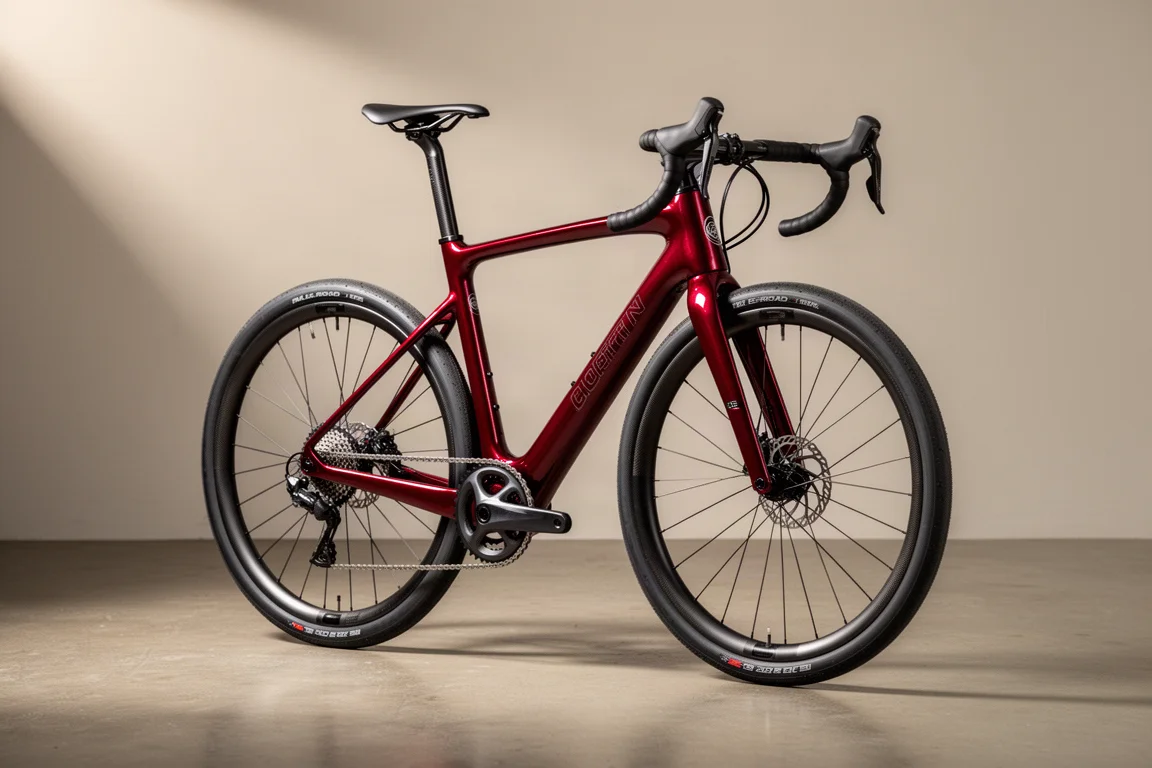
Fara is a small bike company based in Oslo, Norway, and the Allroad is the kind of bike more of us should be riding. It is a carbon fiber road bike built around wide tires, a laid-back geometry, and a genuinely clever integrated storage solution.
The name tells you most of what you need to know. This is a road bike first, designed for road surfaces that are badly maintained, with enough capability to handle a bit of gravel as well. It is not a gravel bike, and Fara is not pretending otherwise. Think of it as road-first with some gravel on the side.
What makes the Allroad particularly interesting is how that clear purpose combines with the way it is sold. Fara sells directly through its own website, which means two things: good value for money, and the ability to customize the bike to your personal requirements.
Who This Bike Is For
The Allroad is aimed at riders who want comfort and calm handling over race pace. The geometry is classic endurance bike fare: high at the front, shorter in the reach, longer in the wheelbase, and with a slacker head angle. That produces the more relaxed, laid-back handling you want from a bike that was never designed for racing.
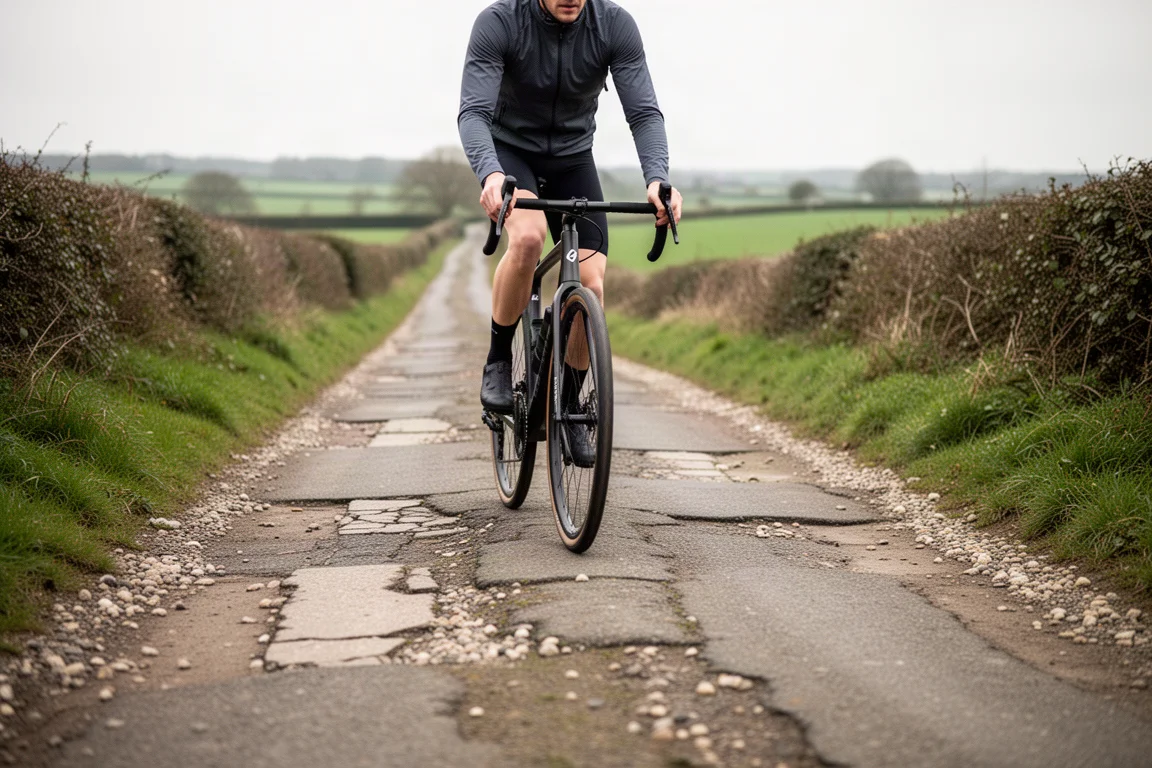
If your riding looks like long weekend loops on quiet country lanes, back roads, and mixed surfaces, this is squarely in the right territory. It also suits riders who want to carry luggage, fit mudguards, and use the bike for bikepacking without fighting the frame for mounting points.
One practical limitation is size range. Because Fara is a small company, the Allroad platform comes in just four sizes. At 181 centimeters tall, the bike fitted well, but riders at the extremes of the size range may struggle to find a match.
Frame, Geometry, and Ride Feel
The frame is packed with details, and visually it is a very accomplished design. Three layers of paint are used to achieve the super glossy finish, which has a real depth to it, and the decals are refreshingly understated.
Comfort is the headline. The Allroad is crazy smooth, and it handled rough roads, potholes, gravel, mud, and rain without complaint. The relaxed, chilled-out manner makes it an easy bike to ride on bad surfaces, which is exactly where a lot of us actually spend our time. The combination of big tires and laid-back geometry delivers both comfort and traction.
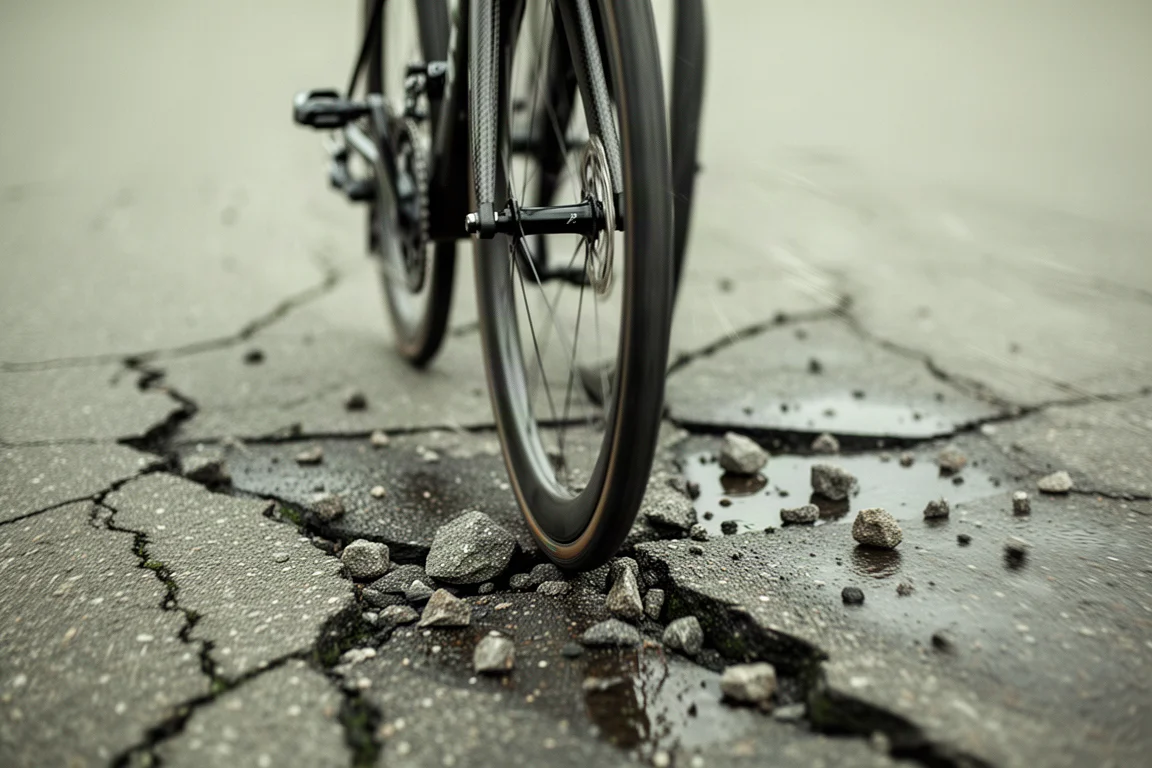
In practice, the ride quality lands close to that of a well-known endurance benchmark, but without the complex and heavy decoupling hardware that design relies on. The result is comparable comfort in a simpler, lighter package. If you do want to push the pace, the bike is not a slouch either, though outright speed is clearly not its reason for existing.
The seatpost is a regular round 27.2 millimeter unit with an external seat clamp, which is about as simple and fuss-free as this part of a bike gets.
Tire Clearance, Mounts, and On-Bike Storage
The carbon frame has room for tires up to 38 millimeters wide. The build reviewed here ran 35 millimeter tires, which is a sensible choice for a road-first machine that occasionally steps off the tarmac.
Mounting options are generous. There are mounts for mudguards on both the fork and the rear stays, additional mounts on the fork, top tube mounts, and small hidden mounts inside the front triangle. Those concealed points accept magnets for Fara’s own custom frame bag, which is the integrated storage solution that helps the bike stand out from a crowded field.
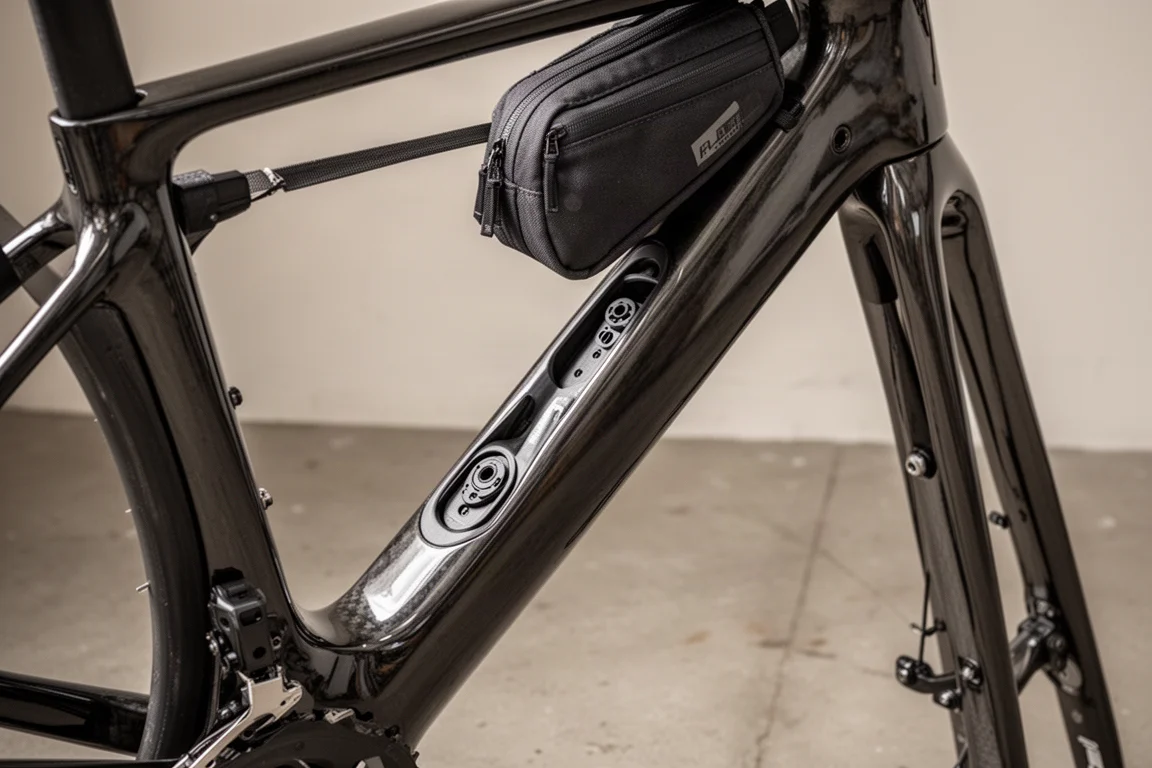
This matters more than it might sound. A frame bag that attaches cleanly without straps rubbing paint or cables is a genuine advantage for bikepacking, and it is the kind of detail that separates a thoughtfully designed all-road bike from a road bike with wider tires bolted on.
Traction on rough tarmac and dry gravel is strong. In thick mud the stock tires are not the best choice, but a simple tire swap addresses that, and the wide clearance gives you plenty of freedom in what you fit.
Component Choices and Customization
The equipment on the test bike was generally impressive. The Panaracer gravel tires suit the bike’s ambition well, and the wide tire clearance means you can fit whatever you prefer. The Fulcrum carbon wheels also impressed: light, stiff, nicely wide for fat tires, and with a bit of added aerodynamic benefit. The Fizik Argo saddle proved a good pairing too, with a shape that works for both short and long rides.
There are a few changes worth considering. The 3T stem uses Torx bolts, which are a pain to work with, and a simple round handlebar would be preferable to the aero model fitted. A wider-range cassette would also make climbing easier, particularly if you plan to load the bike up for bikepacking.
The upside of buying direct is that these preferences are not hypothetical. You can specify the build to suit your own requirements rather than accepting a fixed spec.
Things to Consider Before Buying
Two details deserve attention before you commit.
First, the bike uses a press-fit bottom bracket. Consumer demand and much of the market have been moving toward threaded bottom brackets, with major players dropping press-fit standards, so this may be a concern depending on your point of view. It has caused no problems over several weeks of riding and made no noise at all.
Second, the internal cable routing at the front runs into the top of the steerer tube. There are real pros and cons here. The benefit is that when you go bikepacking with a handlebar bag, there are no cables in the way, and the chosen solution makes changing your handlebar and stem very easy. The downside is that it is not the most elegant system visually, and unless you are going for full integration, it is hard to see the advantage over running cables inside the down tube or top tube. It feels like something of a halfway house: some benefits, possibly outweighed by having cables enter through the headset.
Buying Advice
Pricing is where the direct-sales model pays off. The Allroad starts from three and a half thousand pounds, and the model tested here, with a SRAM Force AXS two-by groupset, Fulcrum carbon wheels, and Panaracer tires, costs five thousand pounds.
For context, an endurance bike widely regarded as a natural comparison, fitted with the same groupset, runs to eight thousand pounds. Set against that, the Allroad looks like a bit of a bargain.
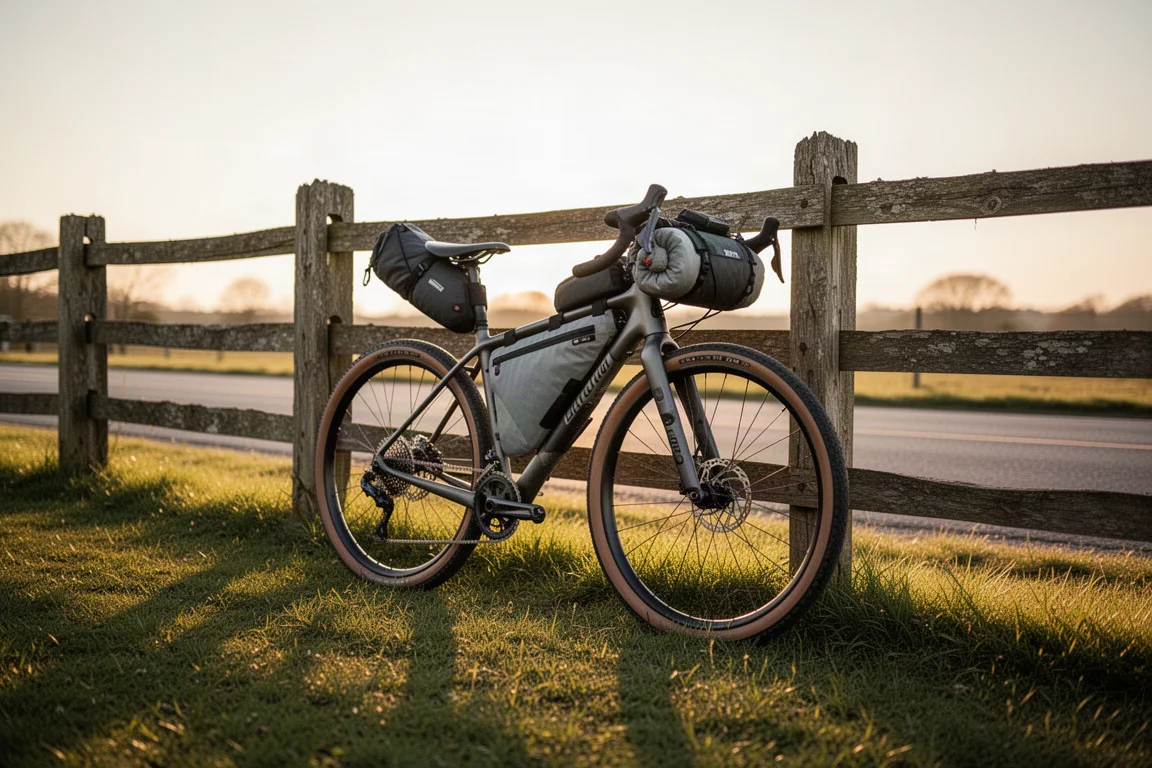
The bike market is a crowded place right now, but this is a small company offering something visually striking with genuinely useful details, and build quality that stands with the benchmarks in the category. If your priorities are comfort, a laid-back geometry, versatility for bikepacking and mudguards, and long-distance riding rather than race-day speed, the Allroad deserves a place on your shortlist.
Conclusion
The Fara Allroad is a fantastic option in a very crowded market. It is better suited to many riders than a road race bike, and arguably better than a gravel bike for the riding most people actually do: long distances in comfort, on surfaces that are rarely pristine. The direct-sales model delivers strong value and real customization, the ride quality is excellent, and the storage and mounting details show a company thinking carefully about how the bike will be used. Check the size range and weigh up the bottom bracket and cable routing preferences, and this becomes an easy recommendation.
Product link
View more details for Fara Allroad
This product is mentioned in the review. Check the specifications, options, and compatibility before buying.
View more details for Fara AllroadFurther reading
Related Reviews
All-Road Bikes
Ridley Griffin RS with Classified PowerShift and Shimano Di2: An All-Road Bike Review
An all-road bike that pairs a relaxed endurance geometry with virtual front shifting from the Classified PowerShift two-speed hub and Shimano Di2 integration.
All-Road Bikes
Ridley Griffin RS Review: An All-Road Bike With Classified PowerShift and Shimano Di2
A practical look at the Ridley Griffin RS, an all-road bike with 42mm tire clearance built around the Classified PowerShift two-speed hub now fully integrated with Shimano Di2.
All-Road Bikes
Wilier Rave Review: An All-Road Bike That Stretches Into Gravel
The Wilier Rave uses one frameset across its all-road and gravel builds, so tires, gearing, and cockpit decide how it rides. Here is what to know before buying.