Sim Racing
Fanatec Podium Pedals Review: High-End Sim Racing Hardware With Console Compatibility
A detailed look at the Fanatec Podium Pedals, covering console compatibility, build quality, adjustment options, and the driving experience.
Introduction
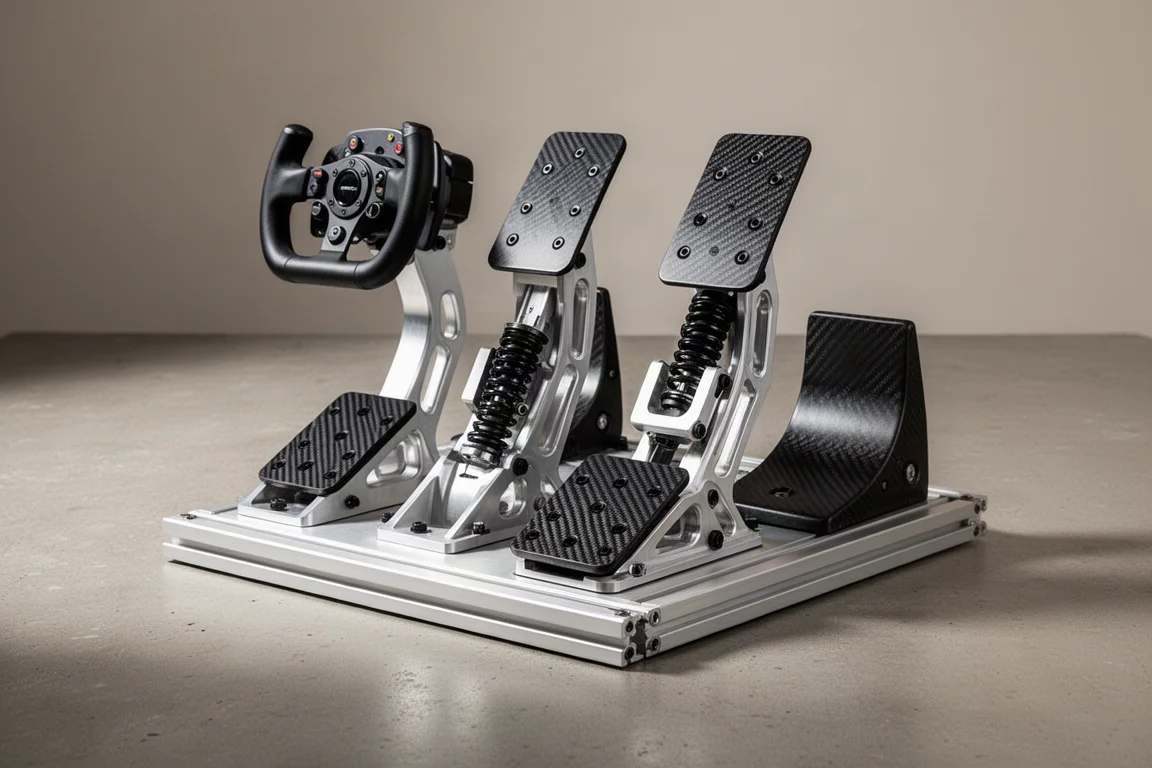
The Fanatec Podium Pedals have been one of the most anticipated products in sim racing. Since the release of the Podium DD1 and DD2 wheelbases, there has been a clear gap in the product lineup where a high-end pedal set should sit. That gap has now been filled with the arrival of these pedals, which aim to carry the Podium name and deliver a premium experience.
These pedals stand out for a few key reasons. They are natively compatible with PlayStation, Xbox, and PC, which is a significant feature for console users who have been waiting for a high-end pedal option. The build quality is also a major focus, with CNC machined aluminum construction and dry carbon fiber pedal plates included in the Formula package. The price point is another talking point, coming in lower than many expected, though the two-pedal set is priced the same as the upcoming three-pedal set.
Who These Pedals Are For
The Podium Pedals are aimed at sim racers who want a premium, rigid, and durable pedal set that can handle high braking forces. They are particularly relevant for console users who want a high-end option that works natively with their platform, something that has been rare in this segment. The pedals are also designed for those who appreciate fine mechanical adjustment and are willing to spend time dialing in the feel to their preference.
These are not entry-level pedals. They require a proper cockpit to mount to, as the brake pedal is very stiff and needs a rigid platform to perform as intended. Riders who are happy with their current mid-range pedals may not find a compelling reason to upgrade, as the driving experience is not necessarily a massive leap forward. The value here is more about build quality, presentation, and the console compatibility that few other high-end options offer.
Design and Build Quality
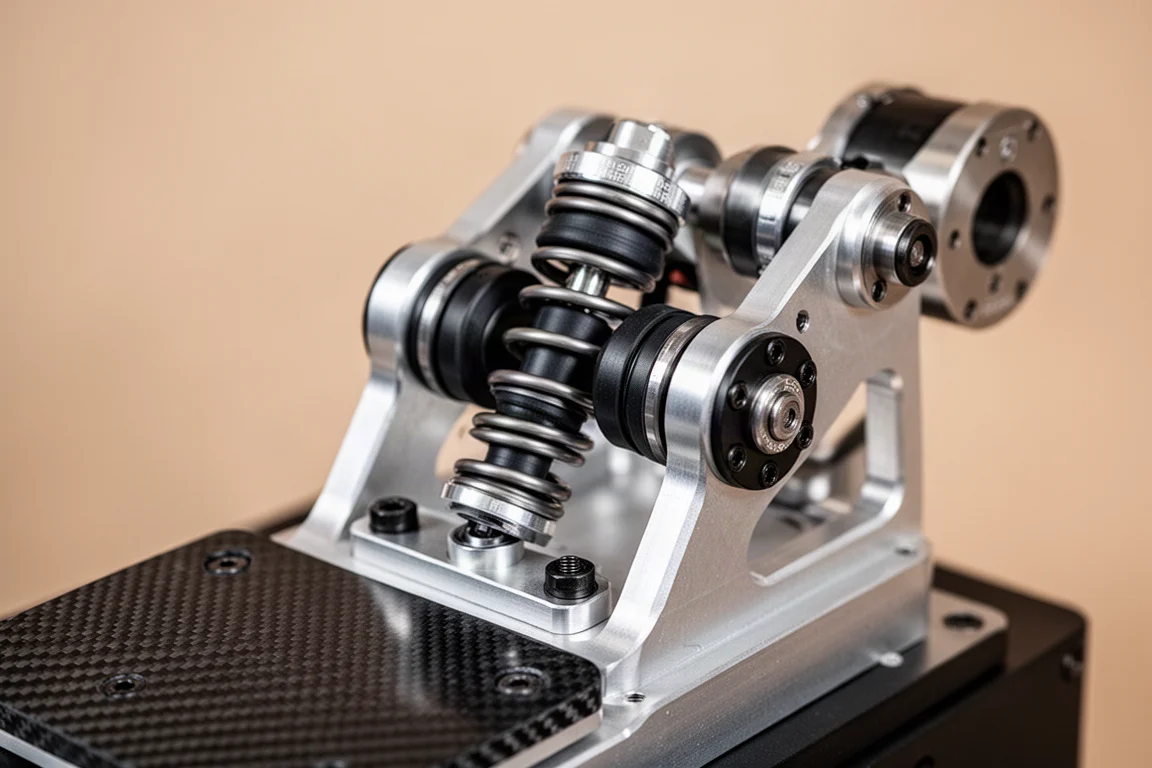
The Podium Pedals are constructed almost entirely from CNC machined aluminum. The brake pedal uses forged aluminum, which goes through a process to strengthen the material further. Under all driving scenarios tested, there were no issues with flexing or bending, which is a positive compared to some other high-end pedal sets that have looked the part but not held up under extreme force.
The pedals feature a 200 kg load cell with a rated force at the pedal face of 150 kg. Even pushing with maximum effort, it was difficult to reach the upper limits of the braking force, which speaks to the robustness of the design. The throttle pedal uses a contactless Hall effect sensor with a resolution of 65,536 individual steps, which equates to 16-bit resolution. This provides smooth and precise throttle input.
Both pedals have a sealed bearing system at the pivot point, with no squeaking or play from side to side. The overall design is simple and well presented, avoiding the complexity that some other brands use to stand out. The included dry carbon fiber pedal plates and heel cups are nicely presented, though they are prone to scratching from rocks or dust in driving shoes. The standard aluminum pedal plates, which are included in the first batches, offer a more practical and durable option.
Software and Adjustability
The Fanatec software has been consolidated into a single package, which is a significant improvement over the previous fragmented driver and Fanalab setup. All Fanatec hardware is listed on the left-hand side, and each device can be adjusted individually. The pedal software provides a visual representation of input, including the amount of force applied to the pedal face in kilograms.
There are presets for linear, progressive, and degressive response curves, as well as custom curves that can be adjusted by moving nodes. The brake force adjustment allows the 100% input point to be set anywhere from 50 kg up to 150 kg of force. A dead zone adjustment is available, though it only works when using a custom curve, which is useful for preventing accidental brake input when resting a foot on the pedal.
For console users, the pedals can be connected via RJ12 to a Fanatec wheelbase and via USB to a Windows PC at the same time. The pedals prioritize the wheelbase connection for console use, but when the wheelbase is powered off, the pedals switch to the PC connection for adjustments. Custom curves can be saved to the pedal memory and then selected from the wheelbase. This is a thoughtful feature that makes the pedals much more usable for console players.

The Driving Experience
The throttle pedal has a relatively stiff spring out of the box, which provides good precision and control. The action is smooth with no binding or grinding. There is a very slight click when transitioning from forward to backward movement, but this is not noticeable during driving. The pedal offers a good sense of position throughout its stroke, and the adjustment range for travel and preload is generous, though the preload adjustment does have a caveat where the spring can max out before the bump stop if wound in too far.
The brake pedal is where the design gets more interesting. The elastomer and spring stack features individual adjustment for each of the four stages, allowing the travel of each stage to be limited independently. There is also a preload adjustment for the entire stack. This provides a high level of granular control over the pedal feel, and the design is one of the best seen on a load cell pedal.
However, the included springs and elastomers do not offer a wide range of different feels. The configurations provided, ranging from road car to formula, all feel relatively linear and stiff. There is no clearly defined threshold point that makes it easy to hit consistent braking pressure. This is a fundamental aspect of a good sim racing pedal, as it helps with muscle memory and consistency. It took longer to establish that muscle memory with these pedals compared to others with a more defined threshold point.
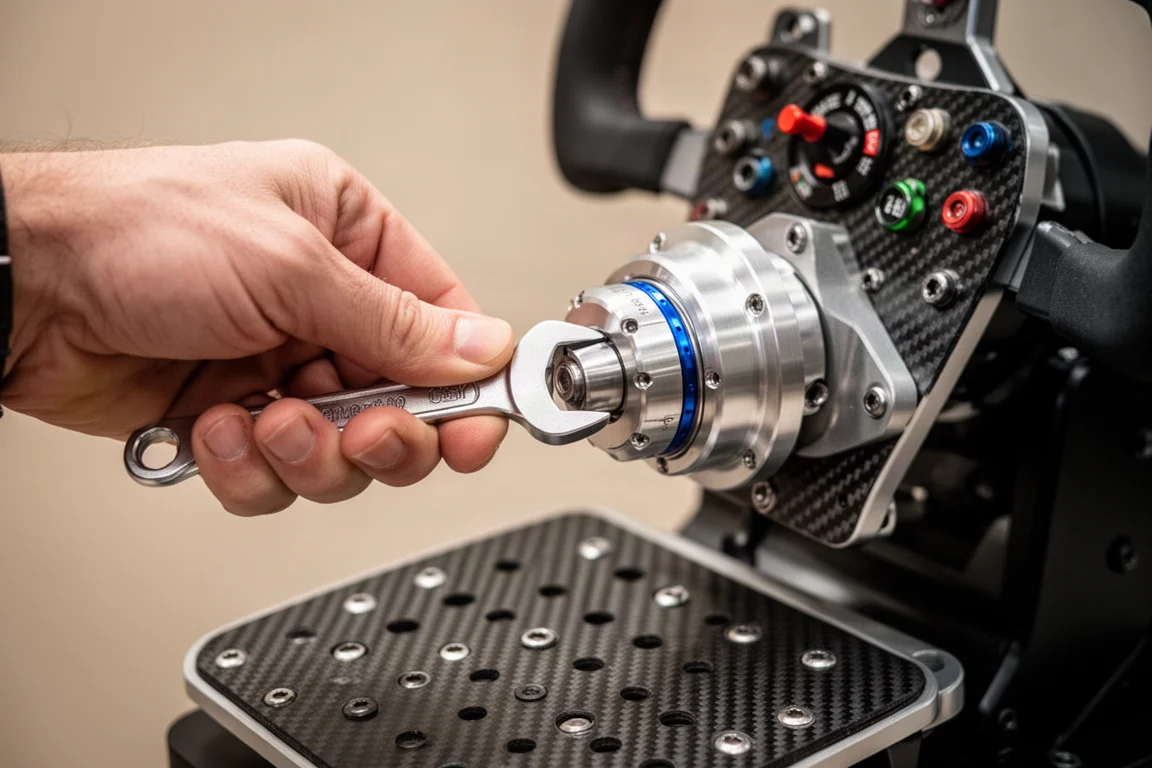
The issue is not with the mechanical design, which is excellent, but with the limited selection of springs and elastomers included in the kit. Experimenting with a weaker spring from another brand in the first stage created a much more defined threshold point, simulating the initial pad-to-rotor uptake before the brakes bite. This transformed the driving experience, showing that the design is capable of much more than the included components allow.
Buying Advice
The Podium Pedals are priced at $699.95 in the US, with the two-pedal Formula package costing the same as the upcoming three-pedal set. The clutch pedal will be available separately later this year for $199.95. The price is fair for what is being offered, but it does not necessarily mean the pedals are the best value for everyone.
For those who already own the CSL Elite V2 pedals and are happy with them, there is no compelling reason to upgrade. The driving experience is not a massive leap forward, and the CSL Elite V2 pedals offer a clearly defined threshold point that caters to a wider variety of driving styles out of the box. The Podium Pedals are more suited to esports professionals who spend hundreds of hours in the same car and can establish muscle memory over time.
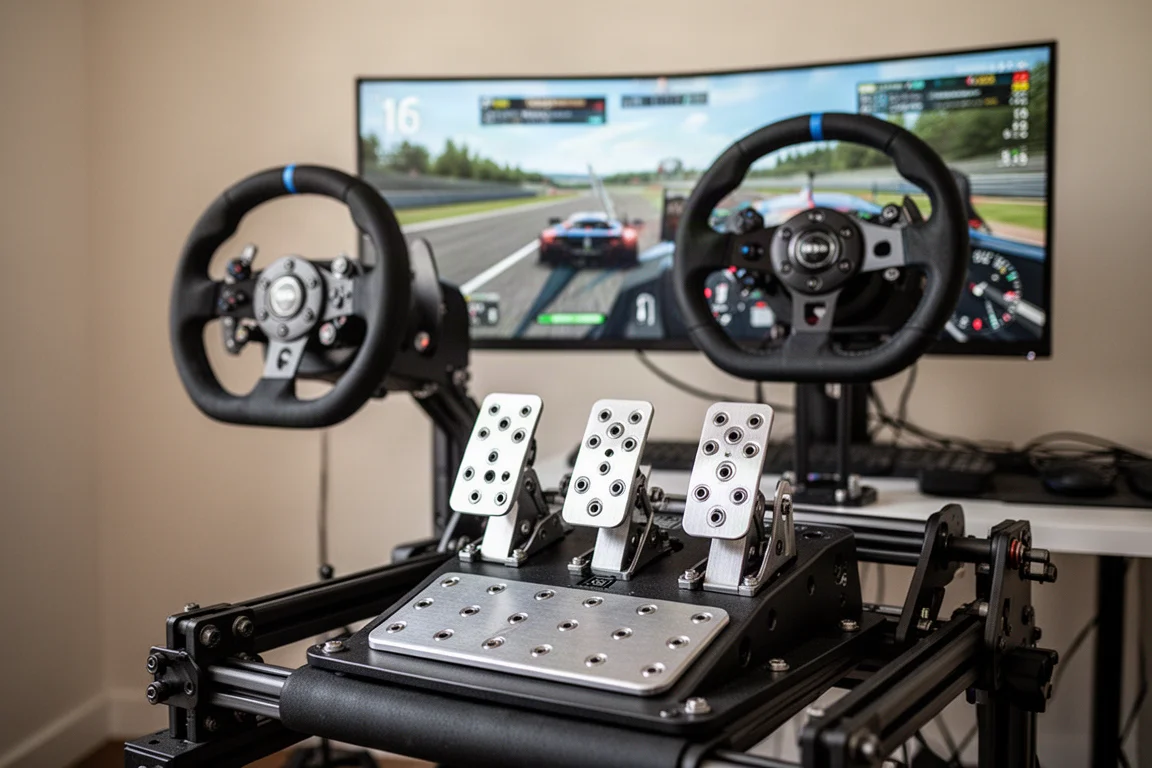
What you are paying for with the Podium Pedals is build quality, presentation, and the native console compatibility. The pedals are the best console-compatible option currently available, and they are worthy of the Podium name in terms of overall quality. However, the limited spring and elastomer selection is a letdown, and the quality of the fasteners is not up to par with the rest of the product. If a wider variety of springs and elastomers were included, these pedals would be much easier to recommend for a broader range of sim racers.
Conclusion
The Fanatec Podium Pedals are excellent pedals that are not overpriced for what they offer. They feature a robust mechanical design, plenty of granular adjustment, and native console compatibility that is unmatched in this price range. The build quality is solid, and the pedals can withstand high braking forces without any flex.
However, they are not the right choice for everyone. The included springs and elastomers limit the range of pedal feels, and the lack of a clearly defined threshold point makes them less suitable for sim racers who jump between different cars and need to adapt quickly. The pedals are more geared toward esports professionals who can invest the time to build muscle memory.
If you are looking for a high-end pedal set with console compatibility and appreciate fine mechanical adjustment, the Podium Pedals are worth considering. But if you are happy with your current pedals, there is no urgent need to upgrade. The value here is in the build quality and presentation, not necessarily in a revolutionary driving experience.
Product link
View more details for Fanatec Podium Pedals
This product is mentioned in the review. Check the specifications, options, and compatibility before buying.
View more details for Fanatec Podium PedalsFurther reading
Related Reviews
Sim Racing
Asetek Initium Direct Drive Bundle Review: A Strong Entry Point With a Standout Pedal Set
The Asetek Initium bundle brings a 5.5 Nm upgradeable wheelbase, a functional round wheel, and a surprisingly capable pedal set to a crowded entry-level direct drive market.
Sim Racing
ConSimPit Ecosystem Overview 2026: Wheelbases, Pedals, and Wheels
A detailed look at ConSimPit's sim racing ecosystem, covering wheelbases, pedals, and steering wheels with honest observations on quality and value.
Sim Racing
Cube Controls Astra Review: A Lightweight Sim Racing Wheel That Nails the Fundamentals
The Cube Controls Astra is a lightweight aluminum sim racing wheel that focuses on build quality and driving feel over extra features.