Stand-Mount Speakers
Falcon Acoustics M10 Review: A Small Stand-Mount Speaker With Real Low-End Weight
A two-way stand-mount with a rear port, a genuine 8-ohm load, and bass weight that belies its five-inch driver.
Introduction
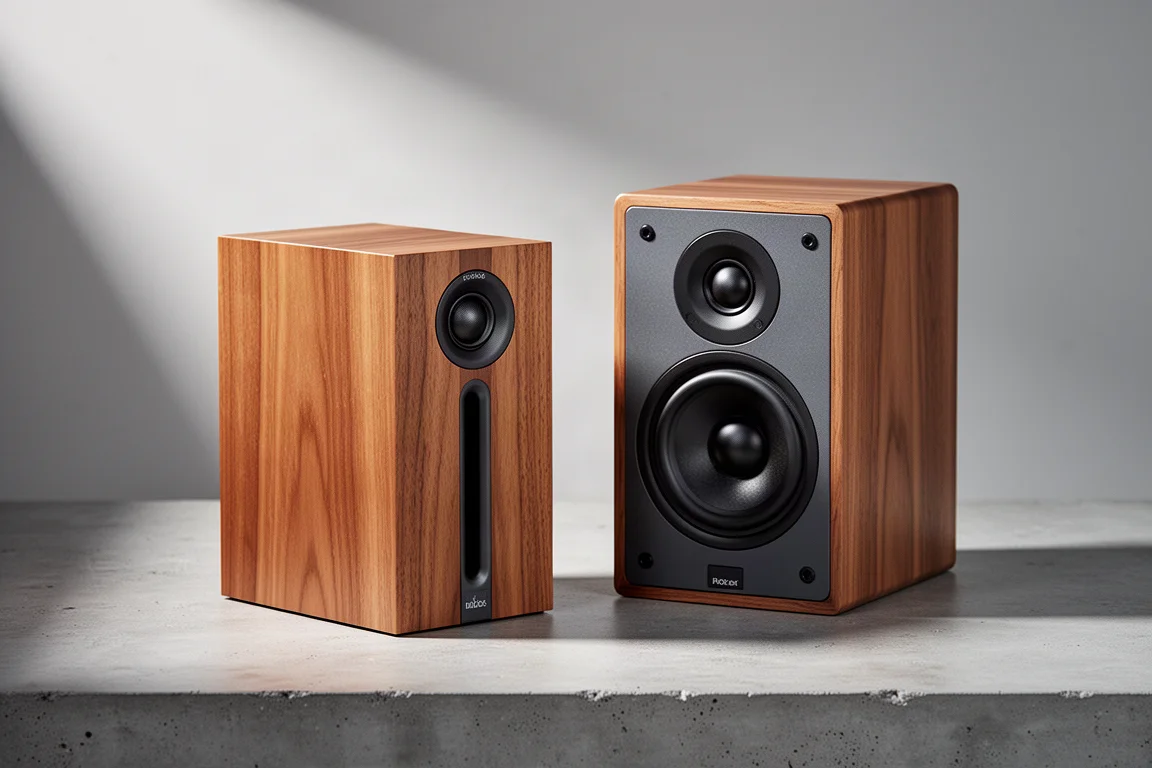
Falcon Acoustics built its name on LS3/5a type speakers, a lineage that started in the 1970s as a BBC near-field studio monitor for on-location work and small studios before crossing over to a much wider audiophile audience. The M10 is not another LS3/5a. It is an original Falcon design and the debut model in the company’s M Series, and it takes a different route: a two-way stand-mount with a rear bass port, a deeper cabinet, and an unusually friendly 8-ohm load.
In the United States the walnut version is priced at $2,295 per pair, and the rosewood finish adds a $200 premium for a total of $2,495 per pair.
What follows is a look at who the M10 suits, how it is built, what it does well with music, and where a careful buyer should pause before committing.
Who This Speaker Is For
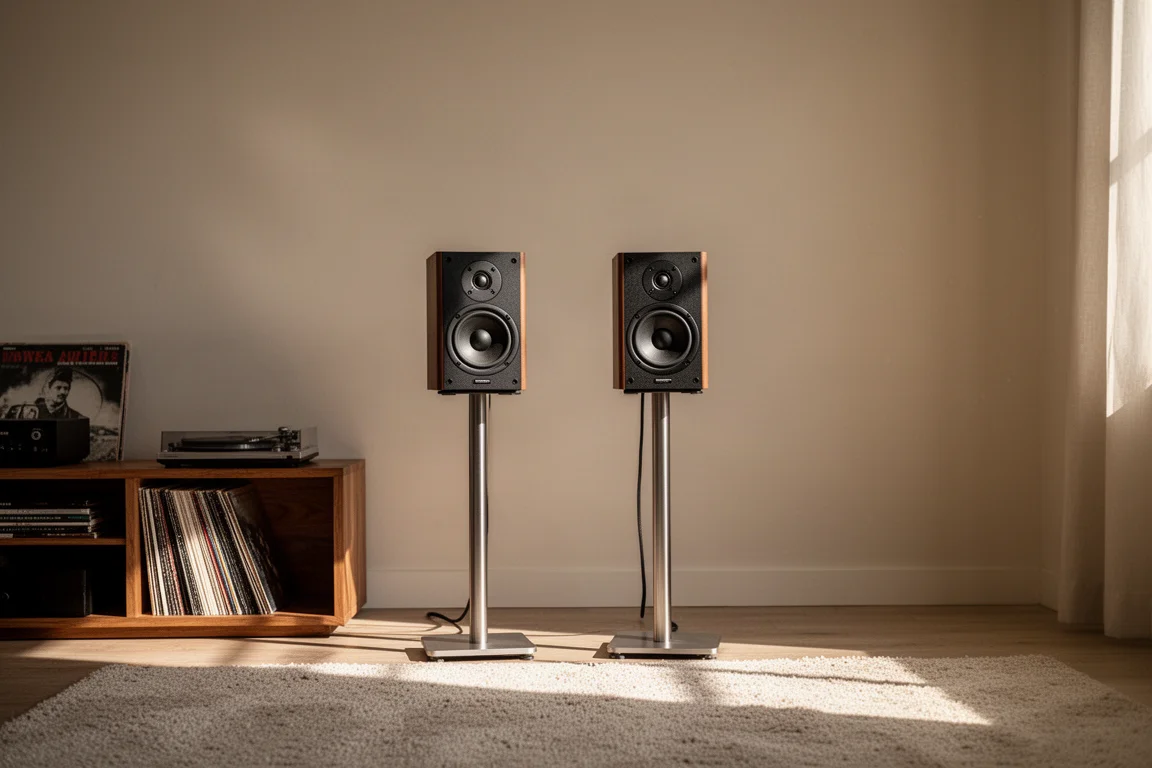
The M10 is for listeners who want a genuinely small stand-mount speaker without surrendering low-frequency weight. It is comfortable in mid-sized and even fairly large rooms as long as it has some space around it, and it also works well near field at close listening distances. That flexibility is rare in a cabinet this size.
It rewards an easygoing listening style. Listeners who chase maximum resolution and fine detail will find a concentric-driver design such as the KEF LS50 Meta more explicit, while anyone who prefers a relaxed balance and more support at the bottom will lean toward the M10. This is unambiguously an audiophile speaker, yet it is one that invites long sessions rather than short critical ones, and that distinction matters more than any single specification.
Design and Build Quality
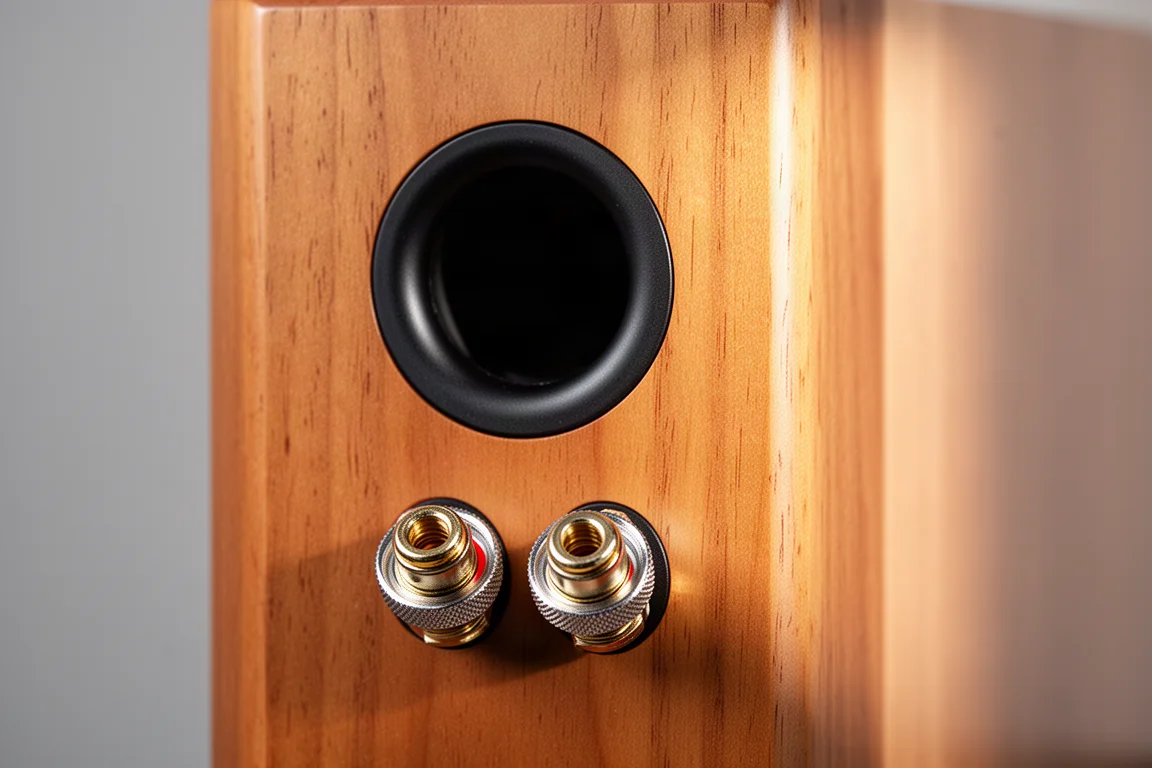
The M10 shares its five-inch B110 mid-bass driver with the LS3/5a lineage. That driver was originally designed and manufactured by KEF, and Falcon later took over production and now builds its own B110 units. The tweeter, by contrast, is an original Falcon design with nothing in common with the LS3/5a. The cabinet is ported rather than sealed, with a rear bass port, and it is nearly four inches deeper than an LS3/5a.
Binding posts are notably deluxe, the kind of hardware that makes bi-wiring or thick cable runs straightforward. Finishes are real wood, offered in walnut and rosewood, with a satin sheen that sits between high gloss and matte rather than chasing either extreme. Grilles attach magnetically and lift off easily, and the sonic difference between grilles on and grilles off proved inconsequential, which means the wood can stay on display.
Sound Quality and Main Strengths
The electrical behaviour here is refreshing. Nominal impedance is 8 ohms and drops only to about 6 ohms, so this is a genuine 8-ohm design rather than a nominal rating that collapses under load. Bass extension is specified down to as low as 40 Hz, and in a domestic room the mid-40 Hz region is realistic. Sensitivity sits around 86 dB, which means the M10 wants an amplifier with real capability behind it.
Two very different amplifiers were used during listening. A powerful Class D integrated produced a plush, satisfying combination, and an output-transformerless tube amplifier also drove the M10 with ease. Treble is not etched, sparkling or hyper-detailed, but it is satisfying and never shouts. The midrange carries the music, and the bass delivers serious space for a five-inch woofer without ever sounding thin or anemic.
Placement matters, and the M10 likes room to breathe. Given space, it images broadly and spaciously with a reasonably deep soundstage, and that openness is its signature. Acoustic instrumentation has real panache, rock holds up well for a speaker of this size, and a bright, aggressive recording arrived noticeably less bright and less aggressive, which made it easier to enjoy. On a bass-heavy hip-hop record, the overall balance simply made more sense than it does through an LS3/5a, which can feel uptight by comparison even though it remains the higher-clarity monitor and the substantially brighter one. Against the KEF LS50 Meta, the M10 gives up some air, spaciousness and fine-detail resolution, and the LS50 Meta is the more dynamic of the two, though the M10 is not far behind in that contest.
Things to Consider Before Buying
Very low late-night levels are not this speaker’s strongest suit. Like most small speakers, it sounds better once the volume is nudged up a little, so listeners who mostly play quietly should weigh that against its many strengths.
Detail resolution is also a matter of taste rather than a defect. If the priority is hearing every nuance in a mix, a concentric-driver competitor will pull ahead. If the priority is an easy, full-bodied balance that stays comfortable over hours, the M10 makes the stronger argument. Buyers should also account for the two finish prices, since the rosewood option adds a meaningful premium over walnut.
System Matching and Placement
The 86 dB sensitivity figure is the practical detail that shapes system building. The M10 benefits from an amplifier with genuine power on tap, and both a high-output Class D integrated and an output-transformerless tube amplifier proved capable partners. Small, low-powered amplifiers are unlikely to get the best from it.
Distance from the wall behind the speaker is the other variable. Roughly 18 inches of clearance was the practical minimum before the low end became too generous, and this is a meaningful difference from the LS3/5a, which produces little below 70 Hz and actually benefits from near-wall placement at around three inches. Buyers moving from an LS3/5a type speaker should expect to rearrange the room rather than reuse the same position.
Buying Advice
The M10 makes the most sense for a buyer who wants one small speaker that can do several jobs: near-field listening at a desk, relaxed evening sessions in a living room, and enough low-end weight that a subwoofer is not the first thought. Pair it with an amplifier that has real current delivery, give the cabinets a foot and a half of space behind them, and choose the finish you actually want to look at.
If near-wall placement and maximum clarity are the priorities, an LS3/5a type speaker remains the more natural fit. If a compact cabinet with more bottom-end weight and an easier tonal balance is what you are after, the M10 is the better match.
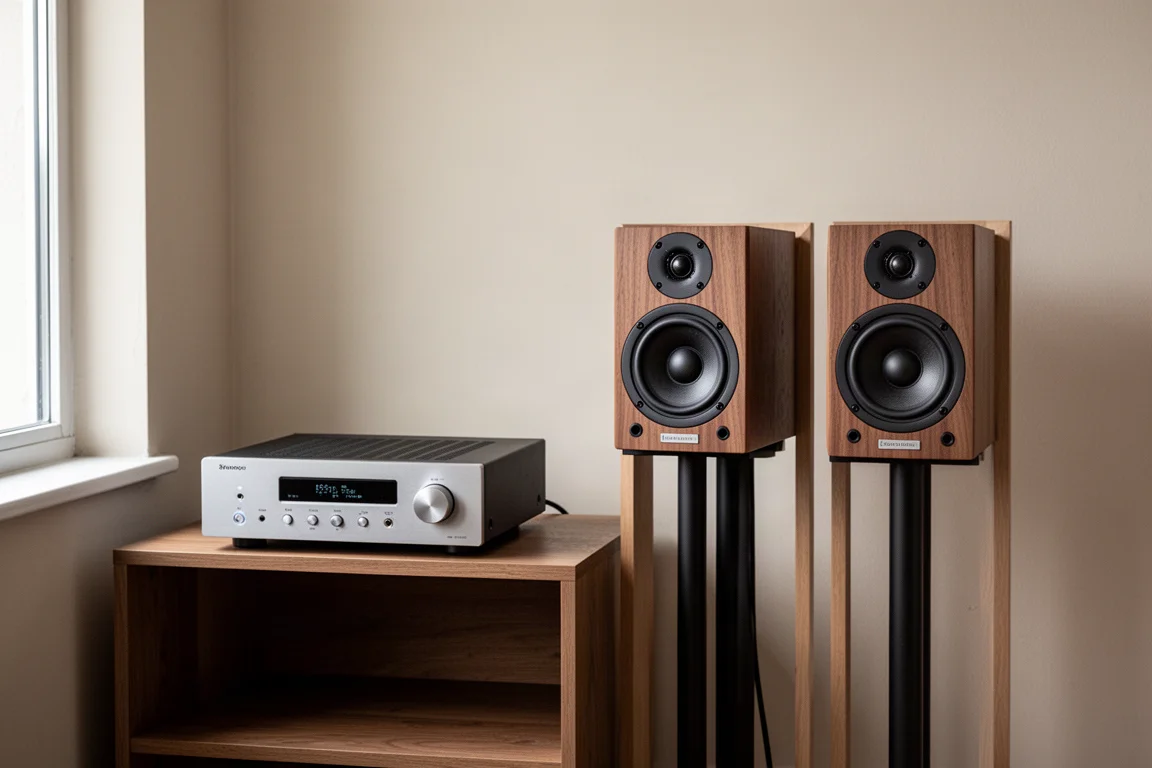
Budget for the amplifier as carefully as for the speaker itself, because the sensitivity figure makes the electronics an active part of the result rather than an afterthought.
Conclusion
The Falcon Acoustics M10 is a sweet little speaker that behaves like a much larger one. It plays comfortably in mid-sized and large rooms, handles rock with more composure than its dimensions suggest, and brings real character to acoustic instrumentation. It gives up some fine detail next to sharper, more clinical rivals, and it is not at its best at whisper-quiet levels, but those are clear trade-offs rather than hidden ones. For listeners who want a small stand-mount with genuine low-end support and a balance that stays easy on the ears, the M10 is an easy speaker to fall for.
Product link
View more details for Falcon Acoustics M10
This product is mentioned in the review. Check the specifications, options, and compatibility before buying.
View more details for Falcon Acoustics M10Further reading
Related Reviews
Stand-Mount Speakers
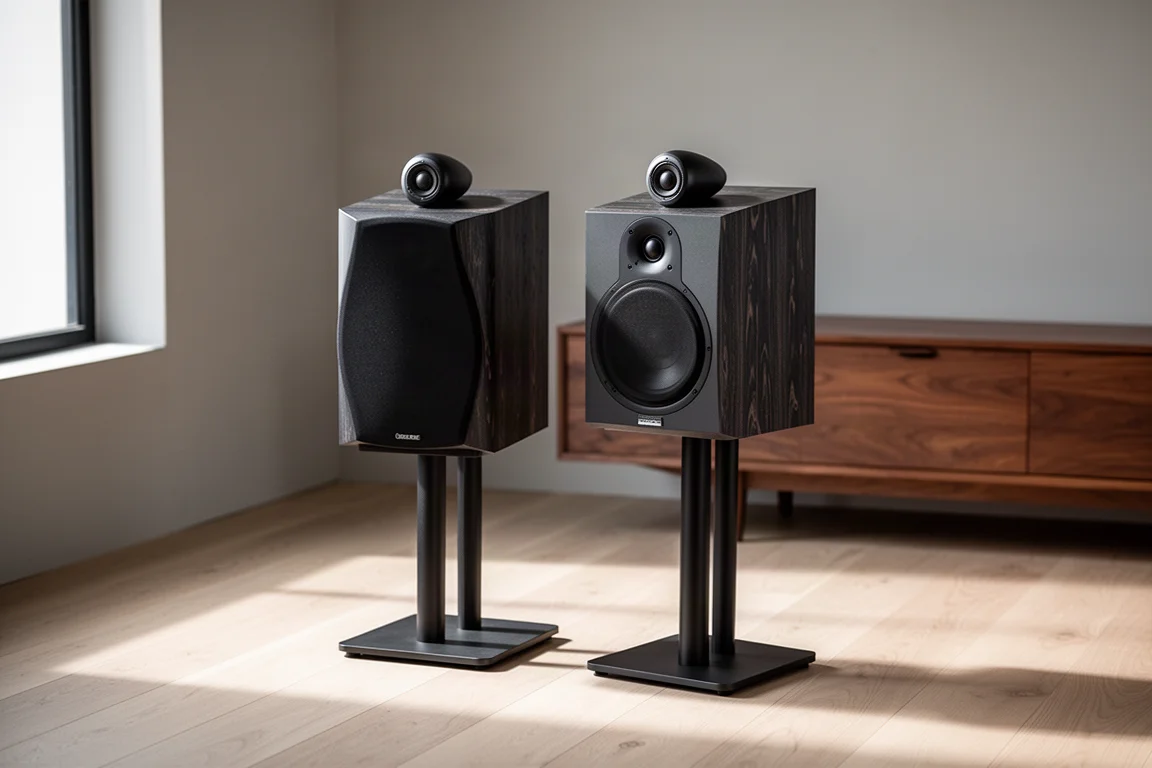
Bowers & Wilkins 705 S3 Review: A Compact Stand-Mount Built Around Clarity
A close look at the Bowers & Wilkins 705 S3: its Carbon Dome tweeter, Continuum bass, amplifier demands, placement behaviour, and the trade-offs to weigh before buying.
Stand-Mount Speakers
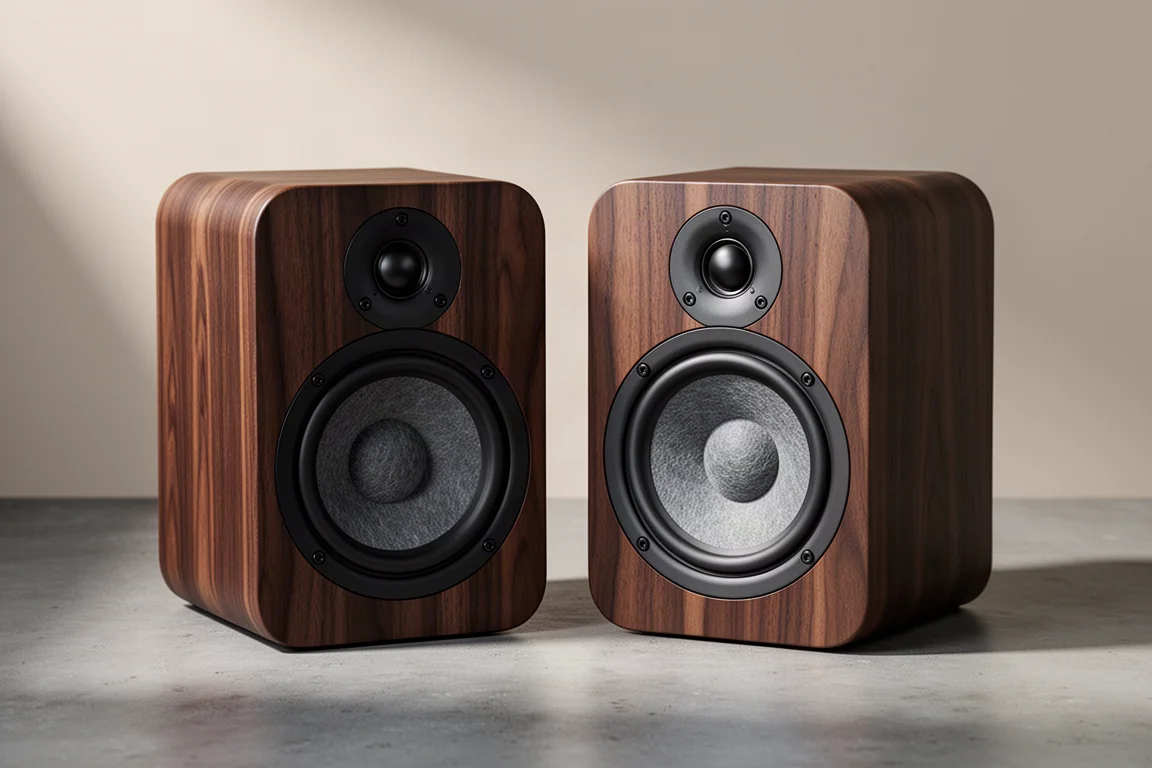
Focal Theva No.1 Review: A Relaxed Stand-Mount Speaker With Real Space
The Focal Theva No.1 is the smallest speaker in the Theva line. Here is what its open, forgiving sound does well, and which trade-offs to weigh before buying.

Backpacking Gear
Building a 10 lb Base Weight: An Ultralight Backpacking Gear List
A practical walkthrough of the ultralight pieces behind a 10 lb base weight, from a 765 g pack and a roomy one-person tent to a full camp chair and a dependable water filter.