Road Bikes
Factor Monza Review: A Race Bike Built for Regular Cyclists
The Factor Monza keeps race-derived handling and stiffness while dialing back fit, adding in-frame storage and making home maintenance easier. Here is what to know before buying.
Introduction
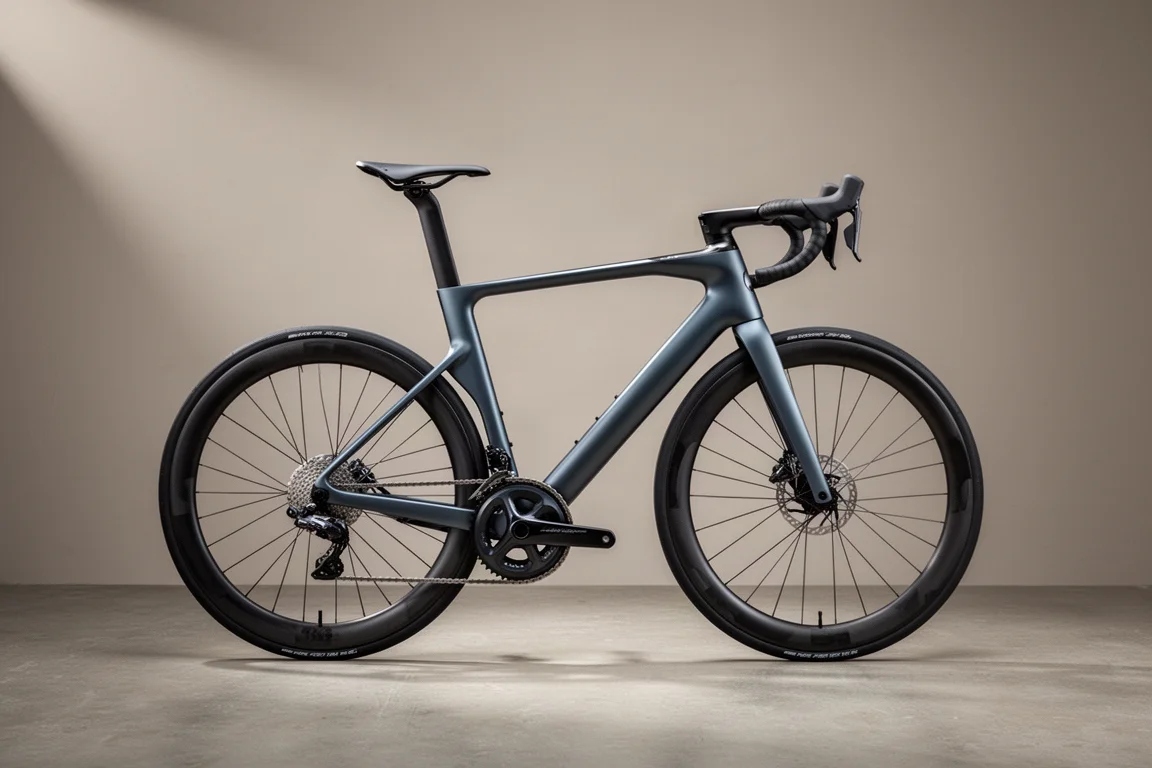
The Factor Monza arrives with an unusual brief for a modern race bike. Rather than chasing the demands of professional riders with lower weight and more stiffness, it is built around the needs of amateurs who train seriously, race local criteriums and road races, or simply enjoy the speed and handling of a race bike without ever pinning on a number.
That makes it a rare proposition. Most brands take a flagship race bike and trickle it down through cheaper groupsets, components and carbon layups. Factor instead developed a separate model with features chosen for riders who buy their own equipment and maintain it themselves.
Who the Factor Monza Is For
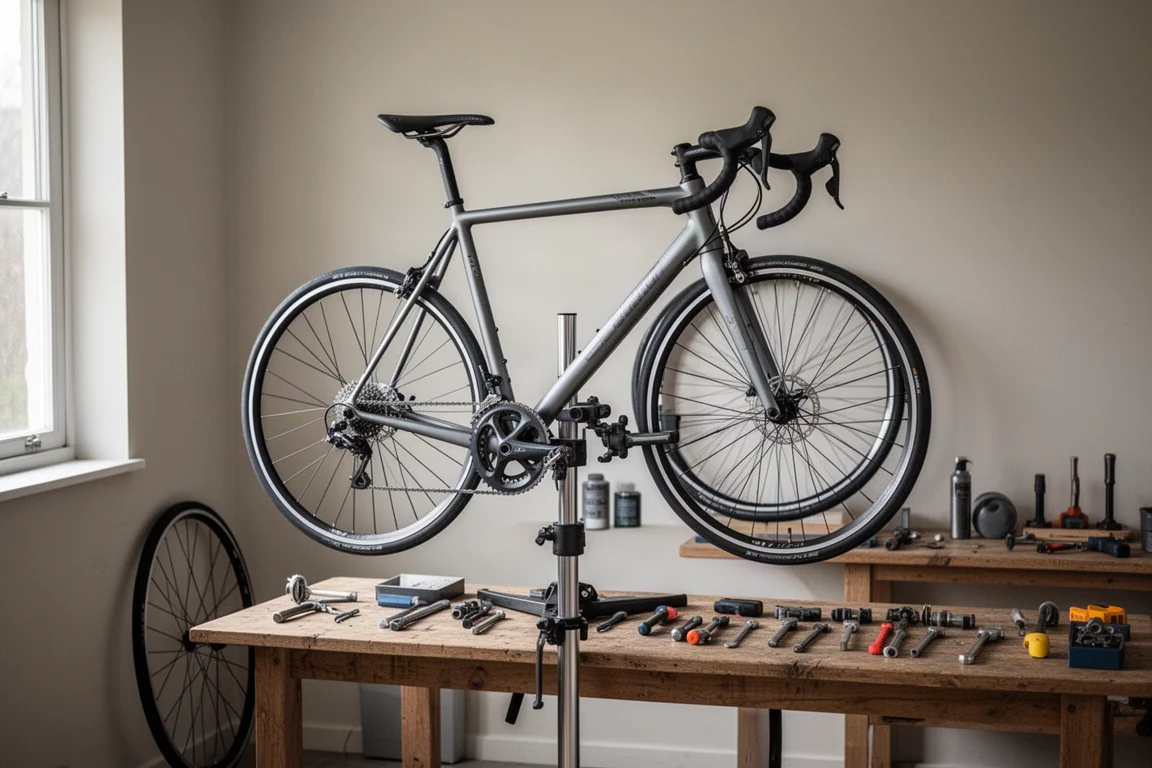
The Monza is aimed at the rider who uses one bike for everything: weekday training, weekend group rides and the local race series. It is also a sensible choice for the home mechanic who works without a support team or team mechanics on standby.
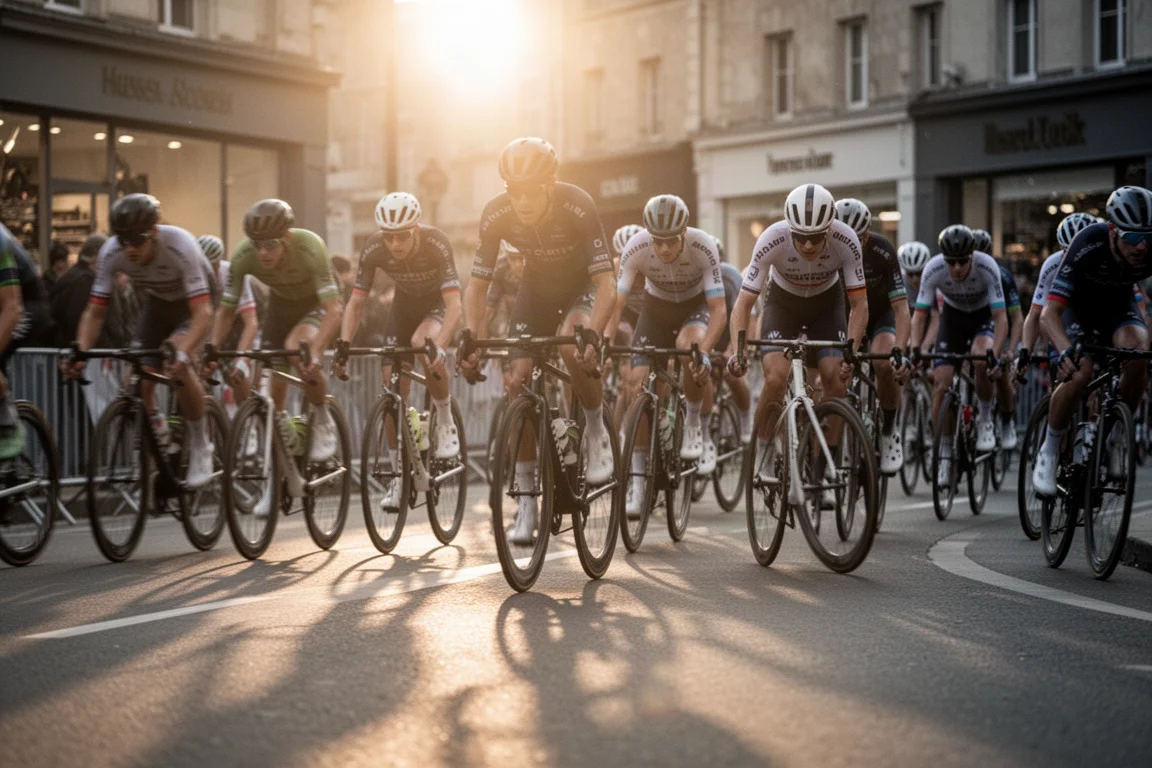
If you want the sharpest, lowest front end and the lightest possible frame, this is not the bike. If you want race bike handling with a fit you can genuinely hold, and a bike you can service yourself, the Monza is squarely on target.
Main Strengths
Factor has been deliberate about which parts of a top-tier race bike to keep and which to soften.
Race-Derived Handling and a More Livable Fit
Factor states that the Monza’s geometry and handling match the Ostro VAM, so cornering and climbing character should feel familiar, and there is said to be no compromise in stiffness between the two frames.
The difference is in fit. The Monza runs a 10 mm higher stack and a slightly shorter reach, which lifts the handlebar and brings it a little closer. That is not an endurance road bike position, but it is a dialed-back race fit. The taller head tube also means the stem can be run slammed with no spacers, avoiding the tall stack of spacers seen on many race bikes set up beyond what their owners can comfortably hold.
The design also reflects the wider move toward steeper seat angles and more forward positions, with shorter cranks opening up the hip angle.
In-Frame Storage and Practical Details
The Monza puts storage inside the frame, a feature that has become common on gravel and mountain bikes but remains rare on road race bikes. Inner tubes and CO2 canisters fit in the down tube, and Factor claims that removing a saddle bag can save around six watts. There are practical gains too: the weight sits lower and more centrally, and the contents stay sealed away from weather and the road spray thrown up by the rear wheel.
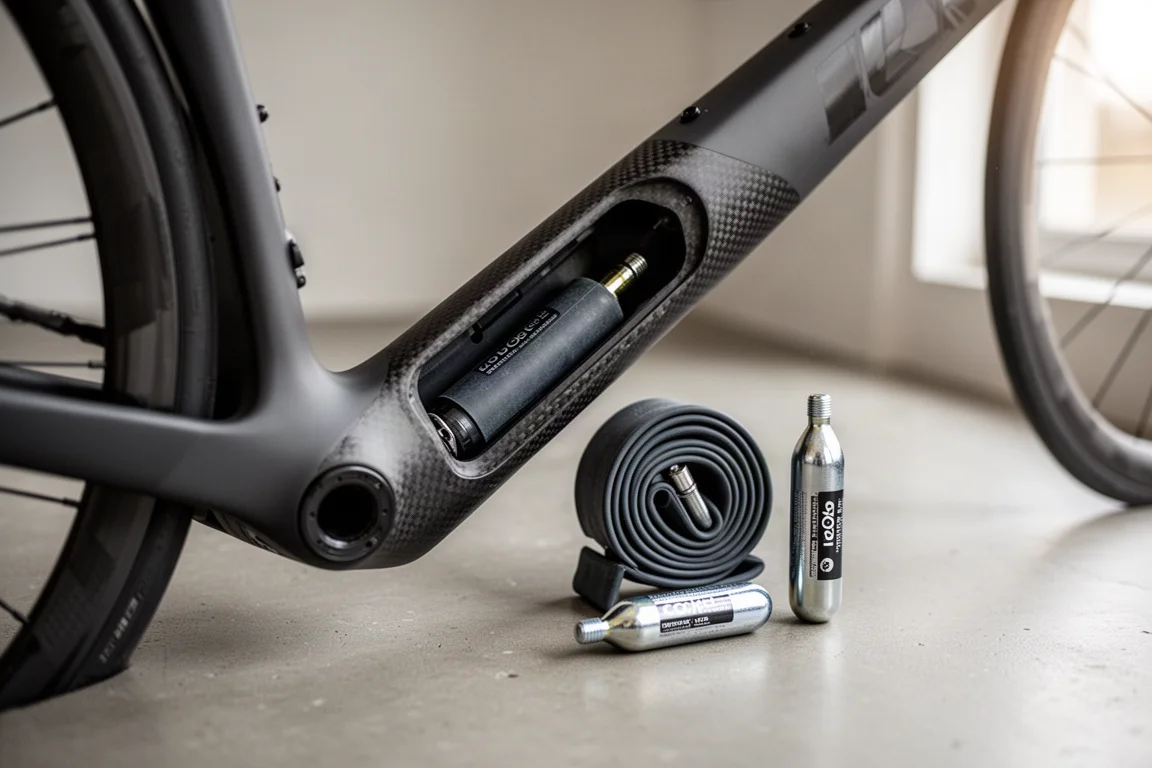
Because the saddle bag is no longer needed, the saddle clamp includes a mount for a GoPro-style adapter, so a radar unit or rear light can be fitted instead. The clamp has two positions, which gives a little extra room to fine-tune the fit.
Front End, Tire Clearance and Frame Standards
Up front, the cables run fully internally, but the system is designed to be easy to work on and is compatible with any handlebar system on the market. The steerer tube is round rather than D-shaped or triangular, and the headset uses standard 1.5 inch bearings top and bottom. Handlebars are offered in a wide range of dimensions.
The bar tops are slimmer than the fully aero bar on the Ostro VAM, trading a little aerodynamic advantage for more comfort when your hands are on the tops during climbs and steady cruising.
The frame is UDH compatible, so future groupsets will fit without issue. Tire clearance runs to 34 mm with 6 mm of ISO clearance, and wider rubber may fit. That is more room than the 32 mm typical of most race bikes.
Things to Consider Before Buying
Two complete builds are offered: Shimano Ultegra Di2 at $6,800 and a SRAM Force build at $7,000. Nothing sits above or below those two options, so there is no Rival or 105 build, and no Red or Dura-Ace build.
The frameset costs $4,000, which is more than the $2,700 frameset of a comparable Cervélo Soloist, and also more than that bike’s $4,400 to $4,500 frame and wheel module. A complete Soloist with Ultegra Di2 costs the same $6,800, so a direct comparison between the two would be genuinely close. Riders who want a higher-tier groupset than Force or Ultegra may prefer to buy the frameset and build it up themselves.
For context, the Ostro VAM frameset is $5,500 and complete bikes start at $8,000, so the Monza sits clearly below the flagship.
Buying Advice
The Monza makes the most sense for riders who want a single bike for training and racing, and who value being able to service their own equipment. The taller front end, the in-frame storage and the standard front-end hardware are the features that separate it from a pure pro-level race bike.

If you already own wheels and components, the frameset is the flexible route. If you want a complete bike with modern electronic shifting, the Ultegra Di2 build is the more affordable of the two, while the SRAM Force build costs a little more. Seven sizes are available, from 45 to 61, and the bike is available now.
Conclusion
The Factor Monza is a considered answer to a question most brands avoid: what should a race bike look like for the person paying for it? Race-derived handling and stiffness remain, while fit, storage, serviceability and tire clearance are tuned for real-world use. Riders who want the absolute lightest and most aerodynamic option will look elsewhere, but for amateurs who train and race on the same bike, the Monza is a compelling package.
Product link
View more details for Factor Monza
This product is mentioned in the review. Check the specifications, options, and compatibility before buying.
View more details for Factor MonzaFurther reading
Related Reviews

Road Bikes
10 New Road Bikes Worth Watching: Aero, Titanium, Steel and Endurance Standouts
A practical roundup of 10 new road bikes, from aero flagships chasing single-watt gains to titanium, steel and endurance platforms built for real roads.
Road Bikes
2026 Tour de France Road Bikes: Six Race Machines Worth a Closer Look
Six race bikes from the 2026 Tour de France grid, reviewed for paint, silhouette, wheels and the specification details that matter to buyers.
Road Bikes
3T Strada Italia Review: A Radical Aero Road Bike That Rides Smooth
A made in Italy carbon aero road bike with a deep head tube, wide tire clearance and a genuinely comfortable ride. Here is what to know before buying.