Camper Vans
Explorer Ford Transit Conversion Van Review: A Simple, Capable Travel Van
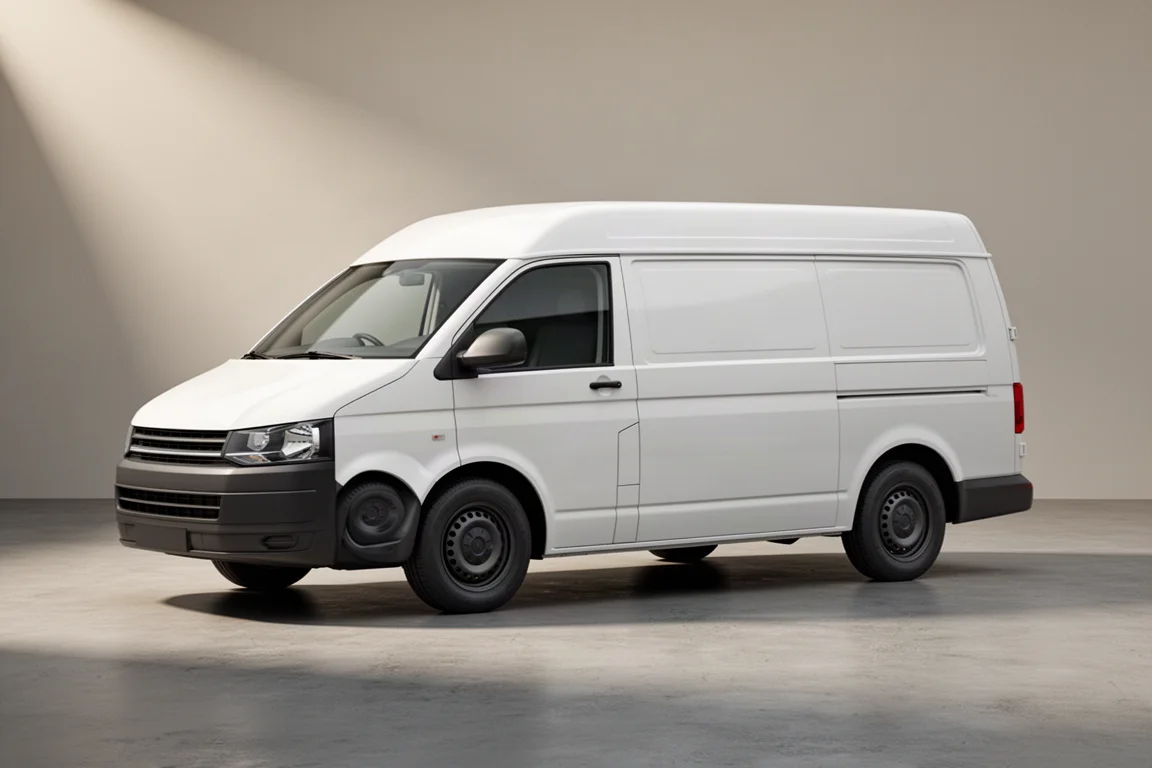
A short-wheelbase, low-roof Ford Transit camper conversion built for travel, with a finished interior, all-wheel drive, and a deliberately simple set of systems.
Introduction
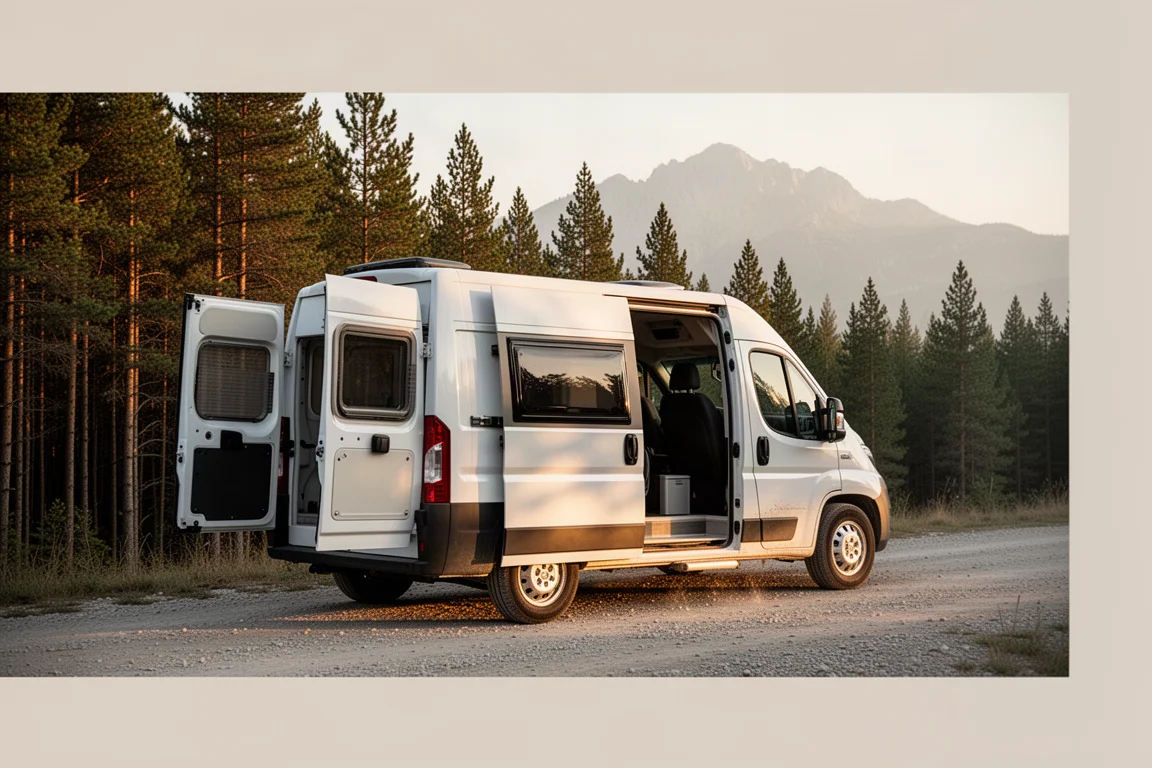
Some travel vehicles are chosen for capability, and some are chosen for the way they make a trip feel. This one belongs to the second group. The Explorer Ford Transit conversion van is a short-wheelbase, low-roof camper built around a single idea: everything needed for the night should be reachable without stepping outside.
The build began with a clear set of priorities. It is a travel vehicle rather than a full-time home, it arrived with a finished interior rather than as an empty cargo shell, and it was specified to keep the total cost far below the six-figure luxury conversions. From the outside it reads as an ordinary passenger van. Inside, it works like a small, well-organized apartment.
Who This Van Is For
This van suits people who cover long distances and sleep somewhere different most nights. Cross-country driving, remote gravel roads, and quick roadside overnights all favor a setup where the bed, the food, and the bathroom are already inside. That is the core advantage: after a long day behind the wheel, there is nothing to unfold, pitch, or assemble in the rain.
It also suits buyers who want a finished interior without commissioning a custom build. A cargo van starts as an empty shell, which leaves two options: finish it yourself or pay another company to do the work. A conversion van arrives with insulation, wiring, lighting, and outlets already installed, and the buyer can still choose details such as carpet color and trim.
The trade-offs point in the other direction for some buyers. The low roof means you cannot stand upright inside, and the platform has modest ground clearance, so it is not a vehicle for technical trails or narrow mountain tracks. Anyone planning to live in a van full time, rather than travel in one, will probably want a taller roof and a more elaborate layout.
Why the Ford Transit Platform Makes Sense
The platform decision came down to serviceability and cost. Other full-size vans were considered and set aside: one major brand has discontinued its passenger van, and the premium European option is expensive to buy and difficult to service outside dealership networks, with reports of breakdowns that require transporting the vehicle long distances for repairs. Pre-built camper versions of that van can run from around $200,000 to $300,000, which is house money for a vehicle that is not going to be lived in.
The Ford Transit was chosen in short-wheelbase, low-roof form. The low roof is a deliberate choice rather than a compromise: it keeps the van stable in crosswinds, which matters when the plan involves crossing the country. Drivers of high-roof versions frequently avoid long highway runs for exactly that reason. Since the van is used for travel rather than residence, the missing standing height has not been a practical problem.
All-wheel drive has handled snow without complaint, and while it is not as capable as a dedicated full-time four-wheel-drive system, it has been enough for every route the van has been asked to take. The EcoBoost V6 is a genuinely strong engine for a vehicle of this size, and it returns around 17.3 mpg, which is respectable for a full-size van.
The footprint deserves honest consideration. The van is roughly as large as a full-size pickup, so it is not the tool for tight, steep mountain roads. A lift kit was ruled out on purpose: raising the van would hurt fuel economy and add reliability risk. As it sits, the van has covered 19 miles of remote gravel road with no issues at all.
What the Explorer Conversion Adds
Explorer builds the conversion, and the buyer has input on the specification. Carpet color and trim are selectable, and equipment can be deleted. Middle seats, the center console, the television, and the rear air conditioner were all removed to keep the van bare bones. Skipping that optional equipment avoided roughly $40,000 of gear that would not have been used.
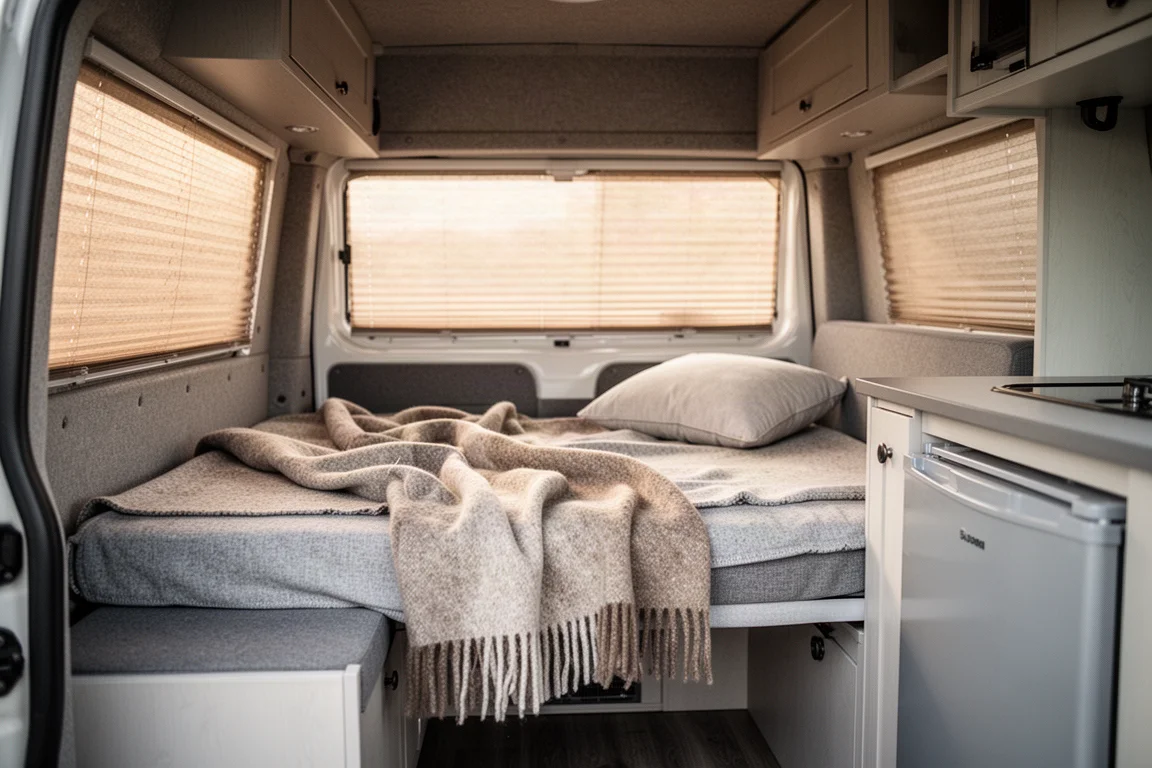
What remains is the practical core: insulation, additional sound insulation, interior lighting, extra outlets, windows on all sides, limo-black window tint, pull-down blinds, a rear bench that folds into a bed wide enough for two, rear air conditioning, and a dual battery setup. The tint and blinds make the interior genuinely private, and the windows keep it bright and easy to see out of.
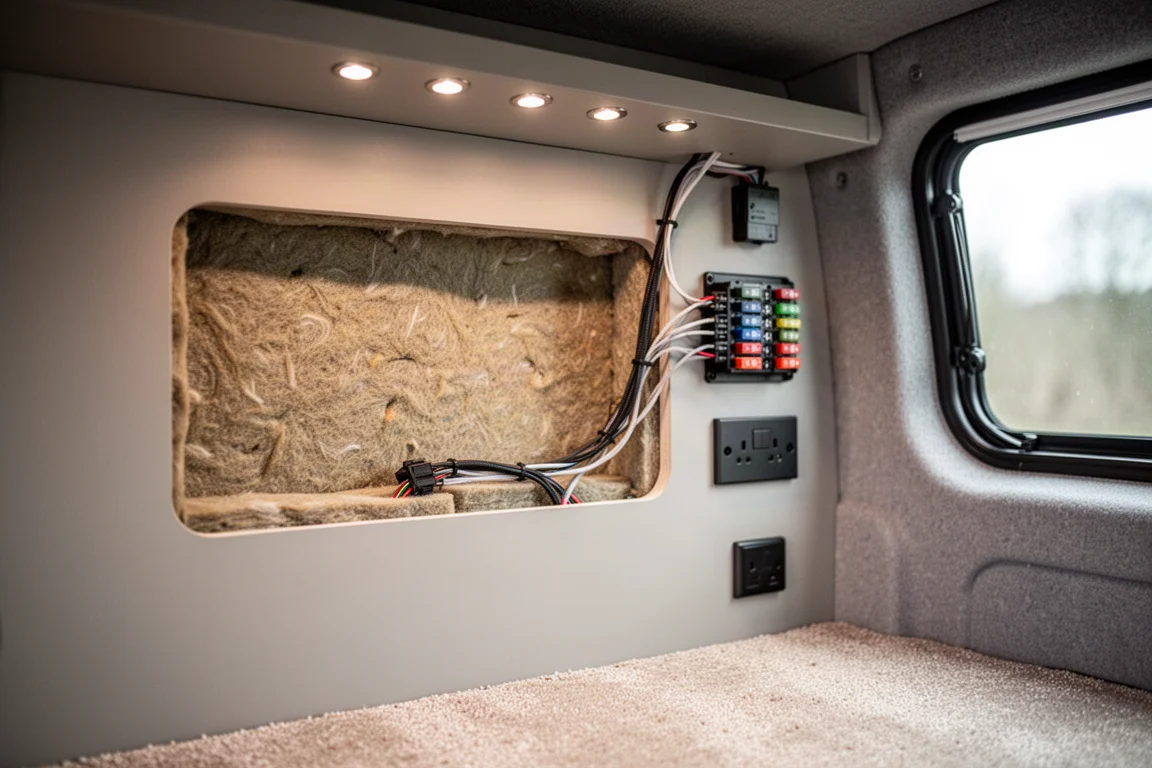
Fit and finish lands at an adequate level for the price. One fuse panel issue needed troubleshooting after delivery, and a blind had been mounted in the wrong spot and pulled loose, both minor fixes. It is worth noting that spending more does not automatically buy better craftsmanship: a far more expensive luxury conversion has been observed with weaker fit and finish than this van.
Power, Cooling, and Everyday Systems
Heat management does more work here than most people expect. Reflective foil insulation cut for the windshield and side windows, combined with the interior blinds, blocks radiant heat before it enters the cabin. The interior stays cooler, the fridge runs less, and the power system is asked to do less work, which means less charging and more time parked. The blinds also provide privacy at no extra cost.
Ventilation is handled with mesh insect screens and window vents made specifically for the Transit. The screens attach with magnets that stick directly to the metal, and the vents have slats that keep rain from blowing inside, so airflow is possible even in poor weather. The front sun shade and side insulation pieces are vehicle-specific as well. The vent set cost around $100 at the time of purchase, and the price has since risen by at least $40, so it is worth budgeting for.
Cold storage comes from a Dometic CFX 45 compressor fridge, the largest unit used in this setup so far. It is quiet and power efficient, which matters more than raw capacity when the power supply is limited. A portable power station with an add-on battery handles the electrical load, charged through the DC cigarette port while driving and topped up with solar panels during longer stationary stays. Water is a simple five-gallon bag tied in place, and a do-it-yourself toilet bucket hidden inside an ottoman doubles as an extra seat; contractor bags, kitty litter, and RV scent packs keep it odor-free.
The coffee kit is a good example of the overall philosophy. A single bag holds instant coffee, fuel, a small stove, a pot, and spoons, and it hangs within reach so a cup takes minutes rather than a full kitchen setup. Showers follow the same logic: heat water, pour it into a bottle with a drilled lid, and rinse off in a pop-up shelter stored under the bed.
Space, Storage, and Stealth
Storage is split between the space under the bed and the cargo area behind it. Two expedition duffel bags hold clothing and fit under the bed perfectly, alongside a table, chairs, a suction-cup awning that attaches to the van without permanent hardware, and a shower shelter. Behind the bed, the cargo area takes backpacks, tools, a spare battery bank, and a food container, with a camp kitchen storage box underneath that has a hard top and doubles as a table.
Small-item storage is generous. Cup holders, cubby holes, and pockets are scattered throughout the cabin, which makes it easy to give every item a home. The habit that keeps the whole system working is a daily reset: put everything back where it belongs before the space has a chance to become cluttered.
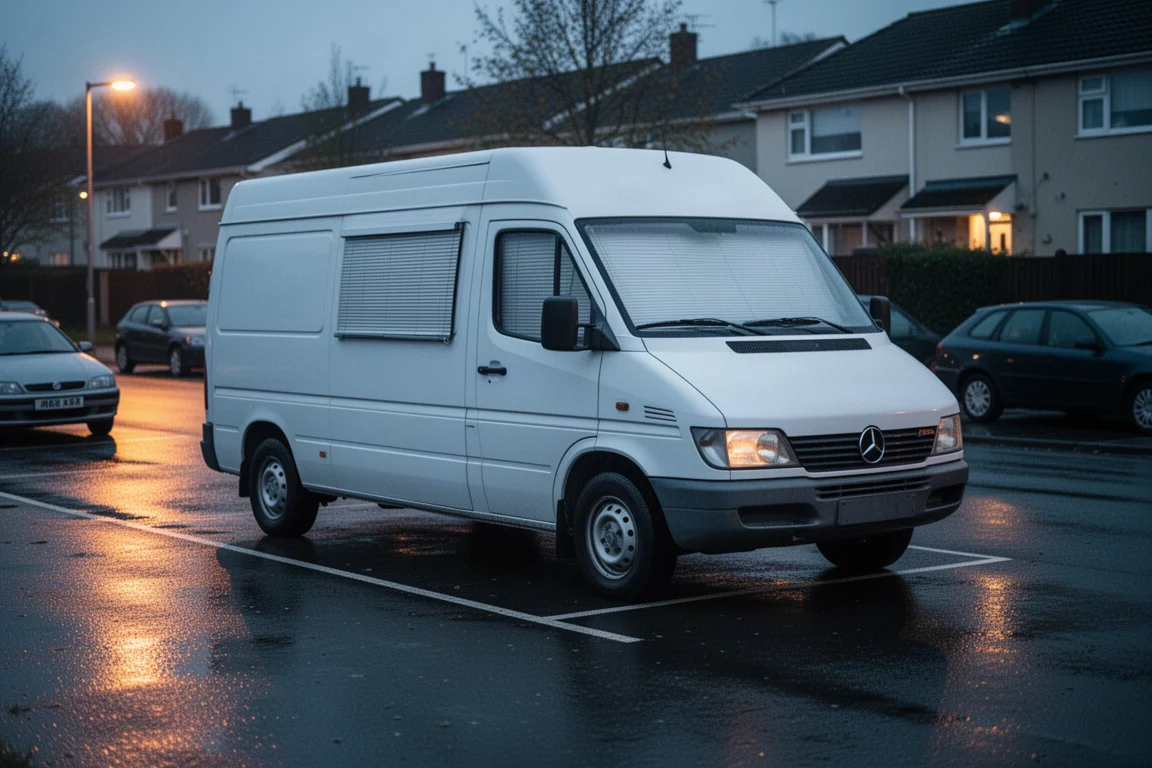
The exterior is deliberately plain. Nothing is mounted on the outside, so the van looks like a passenger van rather than an overland rig. That means it fits a normal parking space, works at drive-throughs, and can be parked overnight without announcing that someone is sleeping inside. There is also a security argument: break-ins have been rising, trailheads are common targets, and a vehicle covered in gear attracts attention that a plain van does not.
Things to Consider Before Buying
Conversion quality varies between builders and even between individual vans, so inspect the electrical panel, blinds, and trim carefully, and test every outlet and light before accepting delivery. Confirm exactly which seats and appliances are included, since many buyers delete equipment to control cost and the specification can differ substantially from a showroom example.
Roof height is the decision that is hardest to reverse. A low roof is better in crosswinds and easier to park, but it rules out standing inside. If the plan leans toward full-time living, a taller roof is likely the better answer.
Ground clearance and size set the limits of where the van can go. It is comfortable on long gravel roads and remote tracks, but it is not a rock crawler, and lifting it would cost fuel economy and reliability. Door configuration matters too: side-opening and rear doors were chosen over a sliding door for airflow control, and because sliding door tracks collect dust and grit on gravel roads, which is a reliability concern over time.
Budget expectations should be realistic. A fully equipped luxury camper van can reach $200,000 or more, and adding every available option to a simpler build can still approach $40,000 in equipment. The expensive items are the ones that change how long you can stay out, such as a compressor fridge and a capable power station.
Buying Advice
Start by deciding whether the van is for travel or for living. That single question determines roof height, interior complexity, and budget, and it is much cheaper to answer it before buying than after.
If travel is the goal, prioritize the systems that keep you out longer: insulation, ventilation, cold storage, and power. Reflective window insulation, mesh screens, and vehicle-specific window vents are inexpensive relative to their impact, and they reduce the load on everything else. Choose a door configuration that suits your climate and the roads you actually drive.

When working with a conversion company, ask about insulation, sound deadening, lighting, and outlets, and find out which factory options can be deleted. Simplicity is the theme that runs through this entire build, partly because simple gear costs less, and partly because the same stove, water bag, and shower setup can move between a van, a truck, and an off-grid cabin.
Finally, check any used conversion thoroughly: electrical faults, loose trim, and mis-mounted fittings are the usual culprits. Then make the setup your own. Other builds are a starting point, not a template, and the only way to learn what you actually need is to spend nights on the road and adjust.
Conclusion
The Explorer Ford Transit conversion van works because it does not try to do everything. It is a short-wheelbase, low-roof travel van with a finished interior, all-wheel drive, reasonable fuel economy, and a simple set of systems that keep the occupants comfortable without constant charging or setup. The strongest argument for it is the one that is hardest to see in photos: when you stop for the night, you never have to get out.
Product link
View more details for Explorer Ford Transit Conversion Van
This product is mentioned in the review. Check the specifications, options, and compatibility before buying.
View more details for Explorer Ford Transit Conversion VanFurther reading
Related Reviews
Camper Vans
Ford Transit Explorer Conversion Van Review: A Simple, Capable Travel Setup
A practical look at a short-wheelbase, low-roof Ford Transit converted by Explorer, covering all-wheel drive, fuel economy, the interior build, and the trade-offs to weigh before buying.

Backpacking Gear
Building a 10 lb Base Weight: An Ultralight Backpacking Gear List
A practical walkthrough of the ultralight pieces behind a 10 lb base weight, from a 765 g pack and a roomy one-person tent to a full camp chair and a dependable water filter.

Road Bikes
10 New Road Bikes Worth Watching: Aero, Titanium, Steel and Endurance Standouts
A practical roundup of 10 new road bikes, from aero flagships chasing single-watt gains to titanium, steel and endurance platforms built for real roads.