Camping Sleeping Pads
Exped MegaMat Duo 10 vs REI Camp Dreamer Double: Which Two-Person Sleeping Pad Fits Your Tent?
A practical comparison of two self-inflating double sleeping pads, covering sleeping surface, comfort, insulation, packed size, weight, valve design, and price.
Introduction
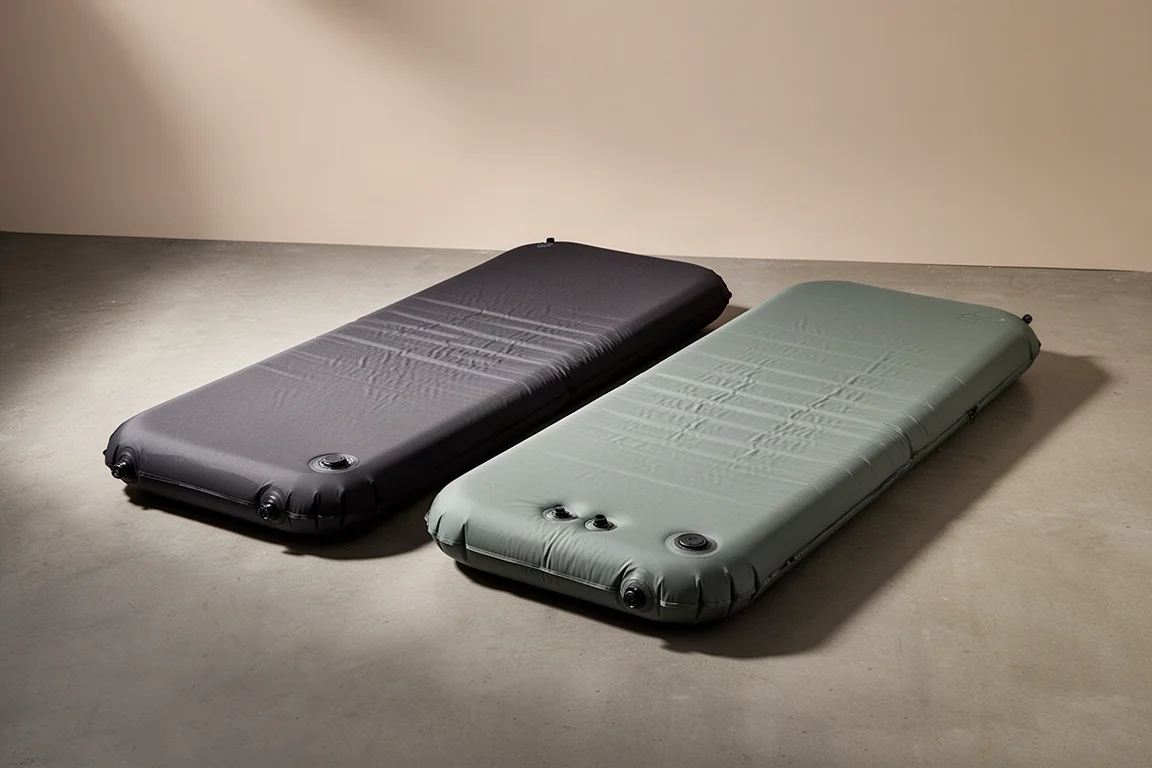
A two-person self-inflating sleeping pad has to do several jobs at once: keep two sleepers comfortable through the night, fit the floor of the tent, and stay manageable when it is time to pack up and move on. The Exped MegaMat Duo 10 and the REI Camp Dreamer Double answer those requirements from opposite directions. One prioritizes a plush, well-insulated sleeping surface in a compact, lightweight package. The other prioritizes a much larger sleeping area at a noticeably lower price.
This comparison works through the differences that matter most in practice: sleeping surface size, comfort, inflation and deflation, insulation, build quality, portability, and price, so you can judge which set of trade-offs suits the way you camp.
How These Two Sleeping Pads Compare
Both pads are self-inflating doubles with welded seams, vertical side walls, and enough thickness that a sleeper’s body does not touch the ground when lying on the back, stomach, or side. The Exped MegaMat Duo 10 in its Medium Double size lifts a sleeper about 4 inches off the ground, while the REI Camp Dreamer Double sits at roughly 3.75 inches.
From there the two diverge. The Exped pad is built around a compact footprint that matches the floor area of two regular sleeping pads placed side by side, which makes it easy to fit into two-person tents. Two MegaMats will also pair up inside a four-person tent. The REI pad is built around maximum surface area, measuring roughly 81 by 54 inches, which makes it about 8 inches longer and 12 inches wider than the Exped Medium Double. Even the Exped MegaMat Long Wide Double, at about 78 by 52 inches, is still smaller than the REI Camp Dreamer Double.

Weight and packed volume follow the same pattern. The Exped Medium Double weighs about 7.2 pounds for the mattress alone, while the REI Camp Dreamer Double weighs about 11.6 pounds. Packed down, the Exped measures roughly 23 by 11 by 10 inches, while the REI compresses to about 29 by 15 by 12 inches.
Exped MegaMat Duo 10: Plush Comfort and Packed-Size Efficiency
The Exped MegaMat Duo 10 is the more premium pad of the two. Its top surface is 50D nylon with a polyester laminate, and its base is 75D polyester for added durability against the tent floor. The seams are welded and feel high quality, and the pad has proven durable through frequent, hard use.
Comfort is the strongest argument for this pad. The sleeping surface is flatter and feels plusher and softer than the REI surface, and the vertical side walls keep the usable area extending closer to the edges. The pad also carries a higher R-value of 8.1, giving it more insulation than the REI rating of 6.5.
Setup is quick. The pad self-inflates in about 10 minutes, then needs roughly 30 seconds of pumping to top off. Its mini pump moves air quickly, at about one second per stroke, and attaches easily to the inflation valve. An attached toggle can be pushed into the inflation valve to speed inflation up further. The valve design is low profile, with separate inflation and deflation valves, and the larger deflation valve makes emptying the pad faster. Deflating and repacking the Medium Double into its stuff sack takes about 2 minutes 45 seconds on your own.
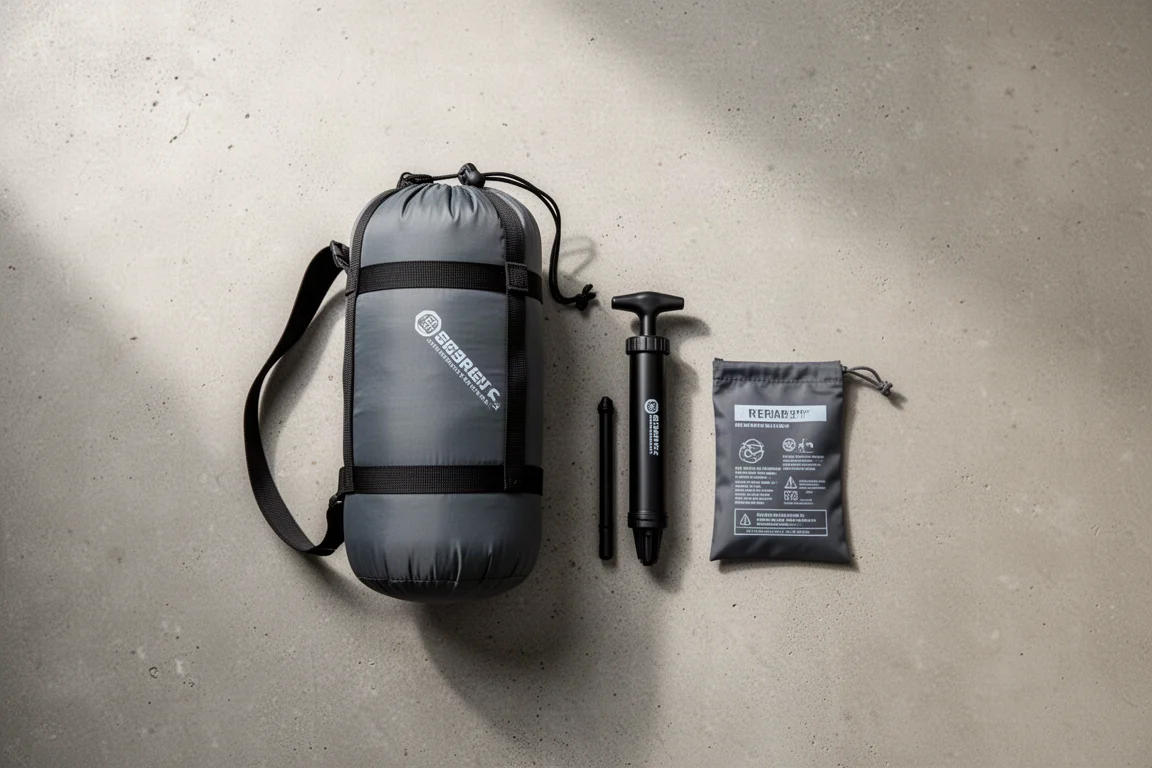
The package includes a stuff sack, a mini pump, instructions, and a repair kit. The stuff sack feels soft, smooth, and well made, and it has a shoulder strap for carrying.
REI Camp Dreamer Double: More Sleeping Space for Less
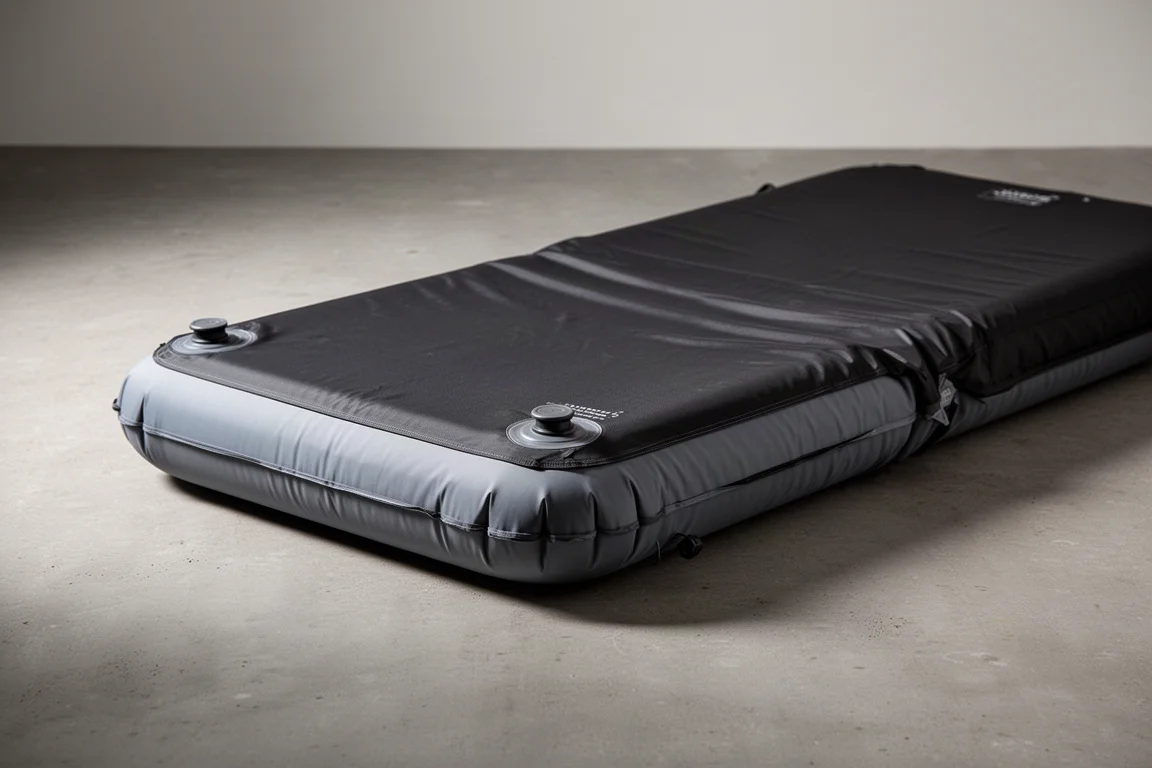
The REI Camp Dreamer Double takes the opposite approach. It offers substantially more sleeping surface than the Exped Medium Double while costing less, and for its size it is one of the least expensive big-name self-inflating mattresses available.
That extra surface is the main reason to choose it, and it is also the main thing to plan around. Two Camp Dreamer Doubles will not fit side by side in a four-person dome tent, so the pad suits tents with a large floor area or solo campers who want room to spread out.
Comfort is good, with vertical side walls and minimal bounce. The surface is slightly less flat and slightly less plush than the Exped, though both pads keep sleepers off the ground.
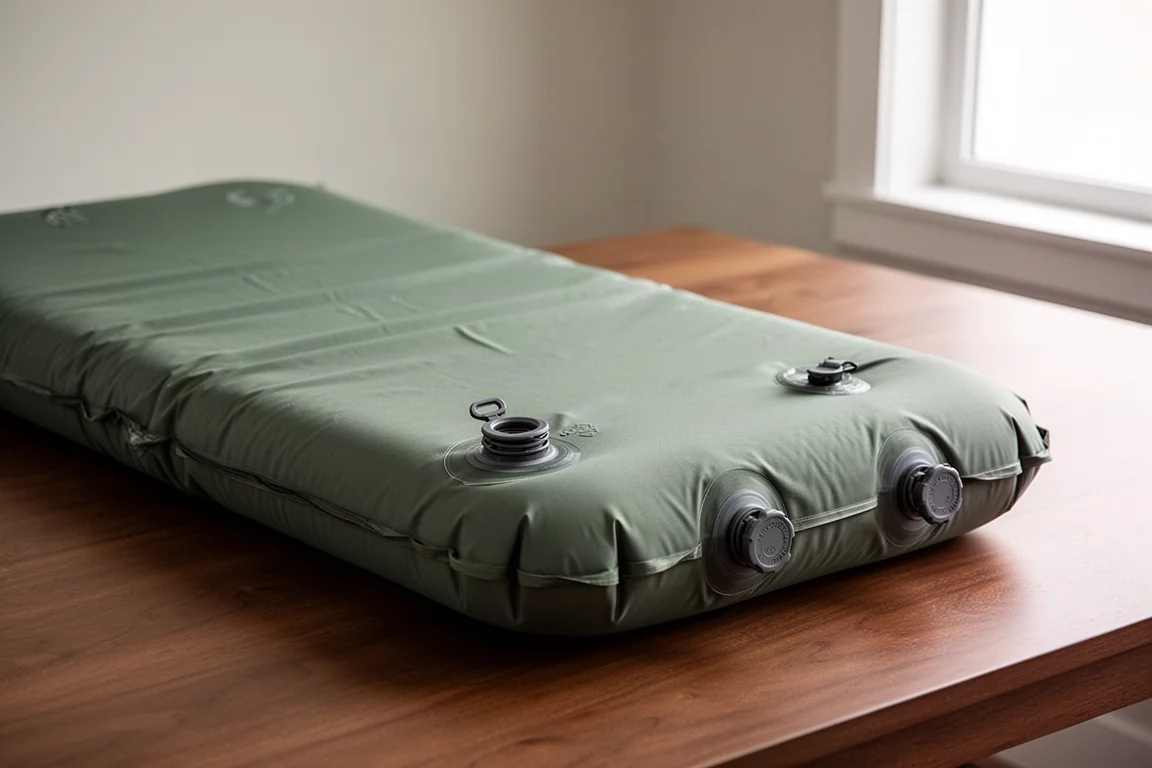
The pad self-inflates in about 10 minutes, then needs roughly a minute of pumping to finish. The pump is slower than the Exped pump, at about 3 to 4 seconds per stroke, and attaching it to a valve is less convenient. The two hi-flow TPR valves can both be flipped to the inflation side so both let air in, but they need to be aligned properly and their screw-on caps tightened to prevent leaks. Deflating and repacking takes closer to 5 minutes, and the smallest packed size is about 29 by 15 by 12 inches.
Build quality is polyester with welded seams similar to the Exped. One caution: individual units have arrived with small manufacturing defects, so it is worth inflating the pad and inspecting it as soon as it arrives.
Inflation, Deflation, and Setup Time
Both pads self-inflate quickly, reaching most of their volume in about 10 minutes without effort. The real difference shows up in the top-off phase, when a pump is used to bring the pad to full firmness.
The Exped mini pump is the quicker of the two. Each stroke takes about a second and moves a noticeable volume of air, so topping off takes roughly 30 seconds. The REI pump takes about 3 to 4 seconds per stroke and needs closer to a minute to finish the job, and it is more fiddly to attach to the valve.
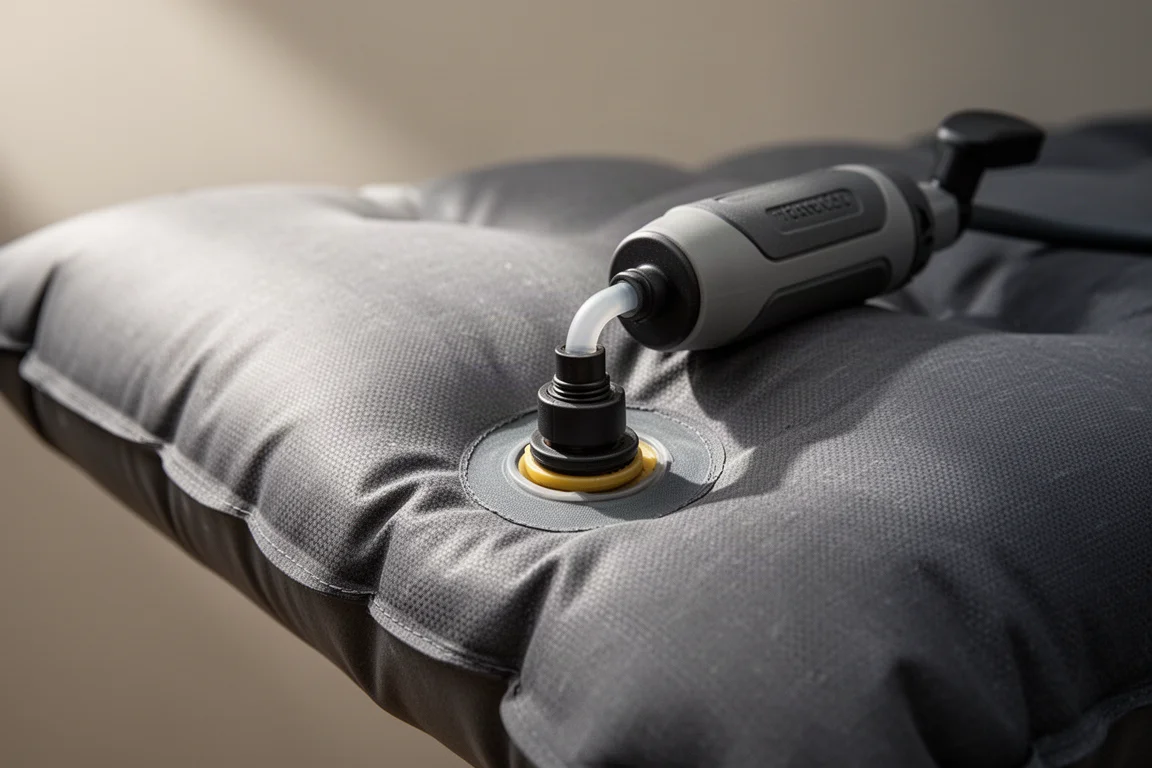
Deflation mirrors that gap. The Exped’s larger deflation valve empties the pad faster, and the full process of deflating and packing it into the stuff sack takes about 2 minutes 45 seconds. The REI takes closer to 5 minutes, and its larger surface area makes it harder to roll and squeeze down.
The accessories differ just as much. The Exped mini pump weighs about 1.6 ounces against about 11.8 ounces for the REI pump, and the Exped stuff sack comes in at about 5.3 ounces against about 11.5 ounces for the REI carry bag. Both bags include shoulder straps.
Insulation, Materials, and Build Quality
Insulation separates the two on paper. The Exped MegaMat Duo 10 has an R-value of 8.1, while the REI Camp Dreamer Double is rated at 6.5. Both were used in summer temperatures between 60 and 80 Fahrenheit without feeling too hot, but the higher rating gives the Exped more margin when conditions turn colder.
Materials are closer than the ratings suggest. The Exped uses a 50D nylon top with a polyester laminate and a 75D polyester base, while the REI uses polyester. Both have welded seams, and both feel like durable, well-made pads.
Valve design is the clearest practical difference in daily use. The Exped’s low-profile FlatValves keep inflation and deflation on separate paths, which is simpler to live with. The REI’s hi-flow TPR valves perform well but ask for more attention: they have to be aligned properly and their screw-on caps tightened to avoid leaks.
Size, Weight, and Portability
Portability is where the Exped pulls ahead most clearly. The Medium Double weighs about 7.2 pounds against roughly 11.6 pounds for the REI Camp Dreamer Double, a difference of about 38%. Packed volume is more dramatic still: the Exped compresses to slightly less than half the size of the REI.
That combination is unusual. The Exped Medium Double gives up about 29% of the REI’s sleeping surface, weighs about 38% less, and still packs down to more than 50% smaller. For backpack-to-car camping trips where space in the vehicle matters, that adds up quickly.
The accessories follow the same theme, with the lighter pump and stuff sack on the Exped side. Both storage bags come with shoulder straps, so either pad is easy to carry from the car to the tent.
Price and Value: What Each Pad Costs
At full price, the REI Camp Dreamer Double costs roughly 15% less than the Exped MegaMat Medium Double and about 27% less than the Exped Long Wide Double. REI also runs sales several times a year, and a discount of around 30% has brought the price more than $100 below the Exped Medium Double.
That makes the REI the clear value pick, particularly given its size. It is one of the least expensive big-name self-inflating mattresses in this class, and it offers excellent value whenever it is discounted.
Buying Advice: Matching the Pad to Your Trip
Choose the Exped MegaMat Duo 10 if comfort, insulation, packability, and low weight matter most. It is the stronger pad overall on comfort, inflation and deflation speed, portability, insulation, and build quality, and its Medium Double footprint fits neatly into two-person tents. Two of them can be paired inside a four-person tent.
Choose the REI Camp Dreamer Double if sleeping area and price matter most. It delivers substantially more surface for less money, with solid comfort, welded seams, and vertical side walls. Just check your tent floor dimensions first, and inspect the pad as soon as it arrives.

If budget is the deciding factor, the REI Camp Dreamer Double is worth waiting for a sale. If you want the highest-quality self-inflating double and can stretch the budget, the Exped MegaMat Duo 10 is the stronger long-term choice.
Conclusion
Both pads are comfortable self-inflating doubles that keep sleepers off the ground, and neither is a poor choice. The Exped MegaMat Duo 10 wins on comfort, insulation, packed size, weight, pump speed, and valve design. The REI Camp Dreamer Double wins on sleeping surface and price, and it becomes a genuinely strong value when it goes on sale.
Further reading
Related Reviews
Camping Sleeping Pads
Best Sleeping Pads 2026: Comfort Awards and Top Picks
A comfort-focused roundup of ten sleeping pads, from budget dimpled designs to thick stretch-top models, with gold, silver, and bronze comfort awards.
Camping Sleeping Pads
Best Ultralight Sleeping Pads 2026: Seven Lightweight Pads Compared
Seven sub-600 g sleeping pads compared on weight, comfort, warmth, and price, with clear picks for cold sleepers, comfort seekers, and budget buyers.
Camping Sleeping Pads
DOD Outdoors Soto Air Mattress Review: Comfort First, at a Price
A thick foam-and-air camping mattress with an 8.3 R-value and a clever inflation system, weighed against a premium price and a tight storage bag.