Coffee Brewing
Espresso Puck Prep: Techniques and Tools for Better Extraction
A comprehensive guide to espresso puck preparation, covering distribution methods, tamping techniques, and tools that genuinely improve your shots.
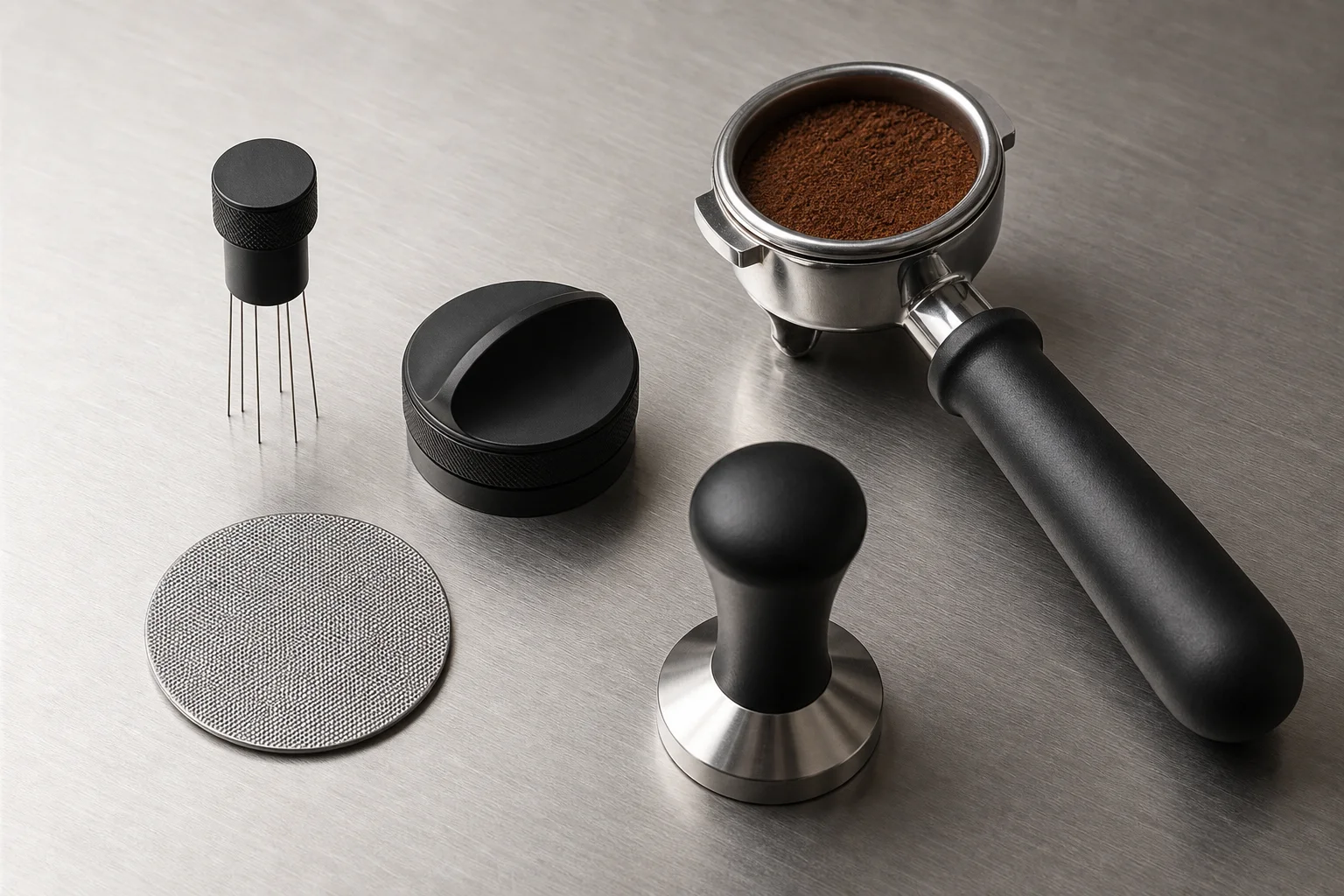
Introduction
Espresso puck preparation is the foundation of consistent, well-extracted shots. The goal is straightforward: create an even bed of coffee so water flows through it uniformly, extracting flavour evenly rather than channelling through weak spots. While professional cafes often use minimal prep, home espresso enthusiasts can achieve noticeably better results by understanding and applying these techniques strategically.
This guide covers the major puck prep stages, the tools available, and honest assessments of their impact. The key is to maximize your current setup before investing in new equipment, and to focus on techniques that solve real problems in your brewing.
Understanding Puck Prep Fundamentals
Puck prep begins before the portafilter. Start by weighing both your input beans and the ground coffee in the basket to ensure your grinder is delivering consistent doses. Many grinders retain more coffee than they output, so this step reveals whether you’re actually getting what you expect.
The Ross Droplet Technique, a light spray of water on beans before grinding, reduces static and retention without damaging most grinders. A single spray from a spray bottle is sufficient if you’re making one or two espressos daily. Ensure your basket is completely dry before dosing, as moisture can encourage water to flow around the puck edges rather than through it.
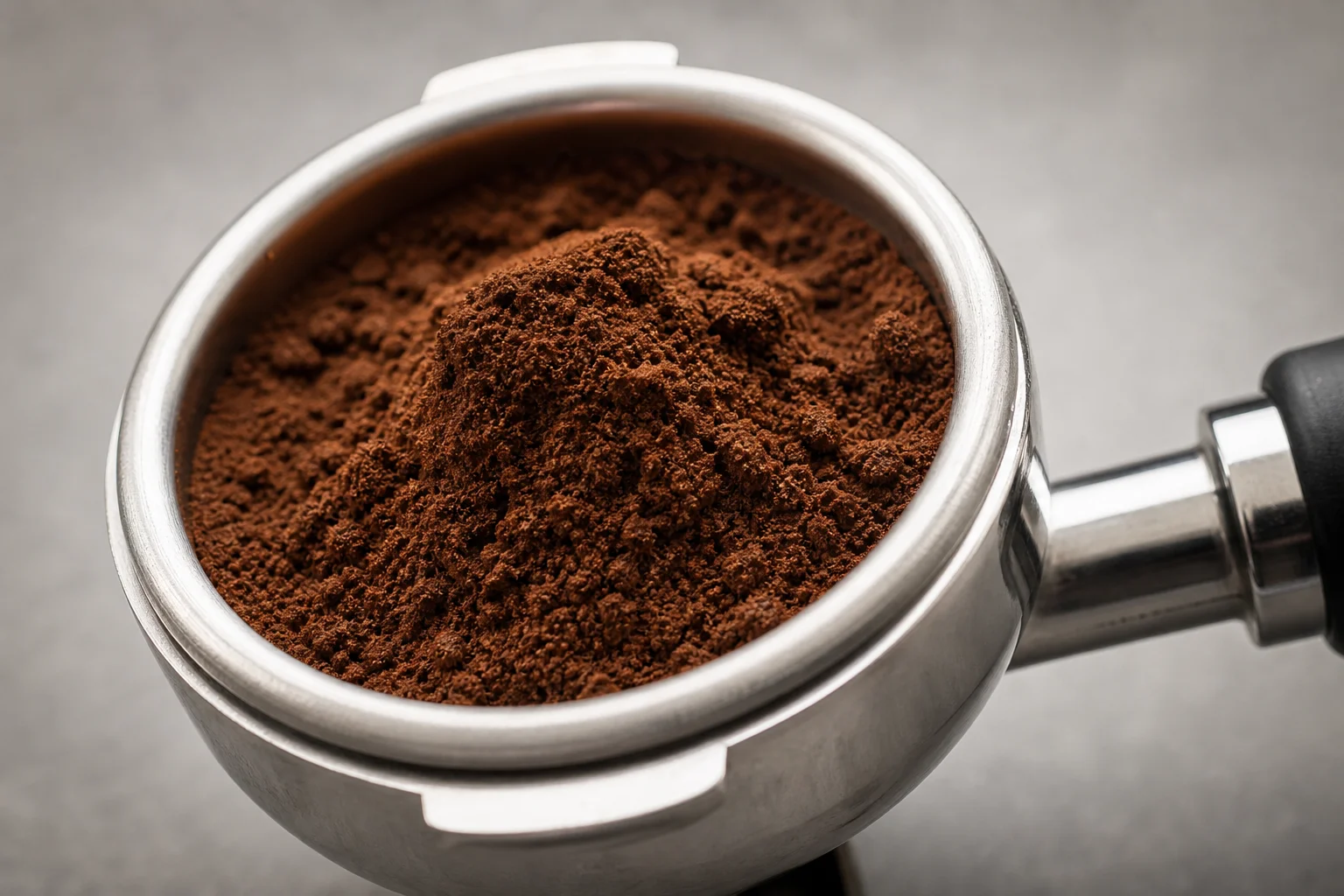
Once ground coffee lands in the basket, you’ll notice two problems: a mound in the centre with gaps around the edges, and clumps of grounds that were compressed during grinding. Tamping this uneven bed directly will result in thin sections where water flows easily and dense sections where it doesn’t, leading to uneven extraction and mediocre flavour.
Needle Distribution: The Most Effective Method
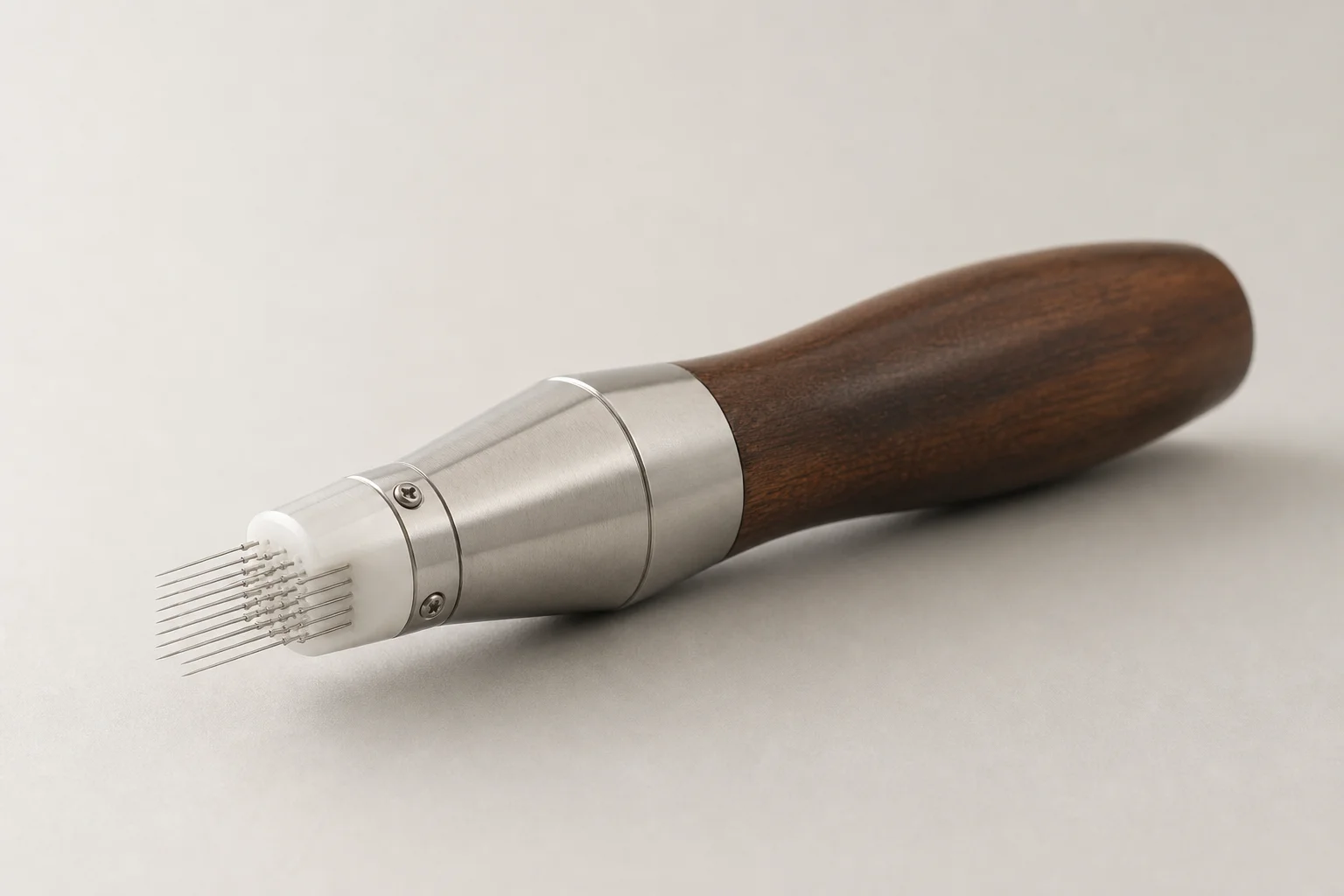
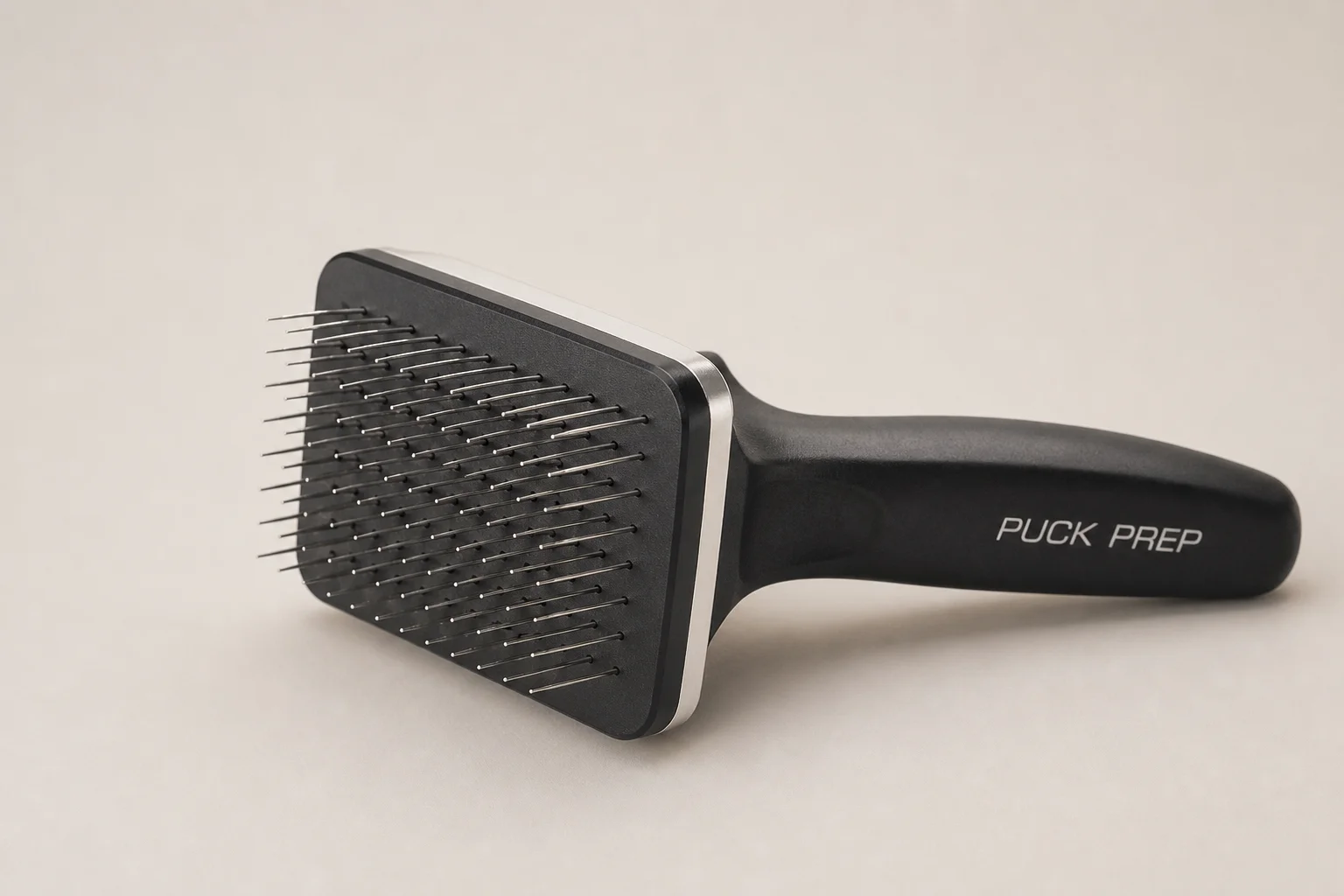
Needle distribution tools break up clumps and spread grounds evenly from the basket bottom upward. The Sworkdesign WDT tool is highly effective, though you can make a similar tool inexpensively using a cork and acupuncture needles. The technique is simple: insert needles deep into the basket, stir and move the coffee around, work upward through the bed, and finish with an even surface.
For faster commercial use, the DUOMO The Eight offers a motorised alternative with a spring-loaded needle array that spins to distribute coffee. It includes a cleaning stand and produces excellent results, though the cost is substantial for home use.
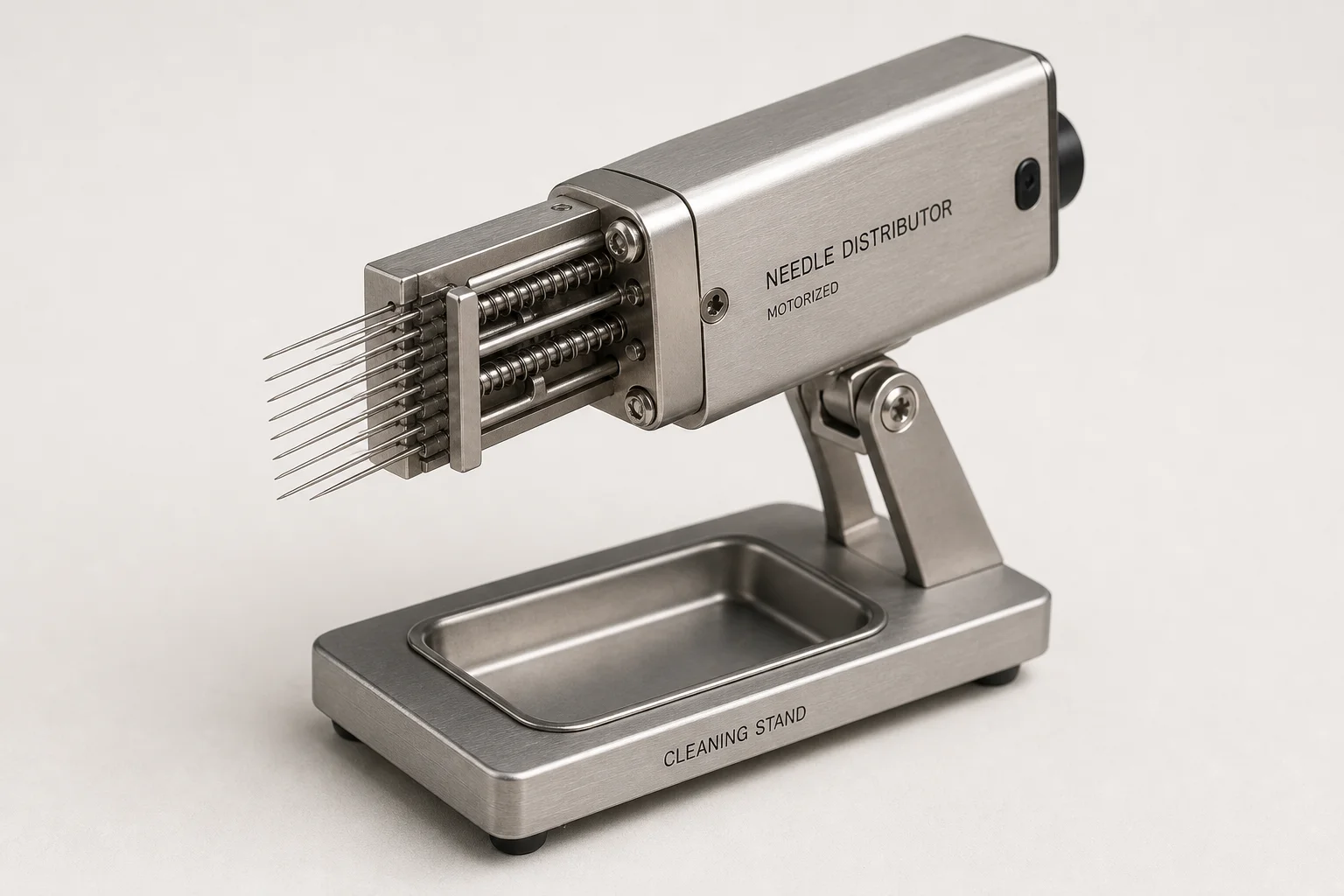
Needle distribution is the most effective method for breaking clumps and ensuring even extraction. It requires a small learning curve but produces consistent, visible improvements in shot quality.
Wedge Distributors: Smooth and Satisfying
Wedge distributors like the Ona Coffee Distributor and Pullman wedge distributor work by rotating over the coffee bed, smoothing grounds outward and applying gentle pressure. They produce a visually even surface and feel satisfying to use. However, testing with a glass jar reveals they primarily affect the top layer of coffee, with minimal impact on the bottom half of the puck.
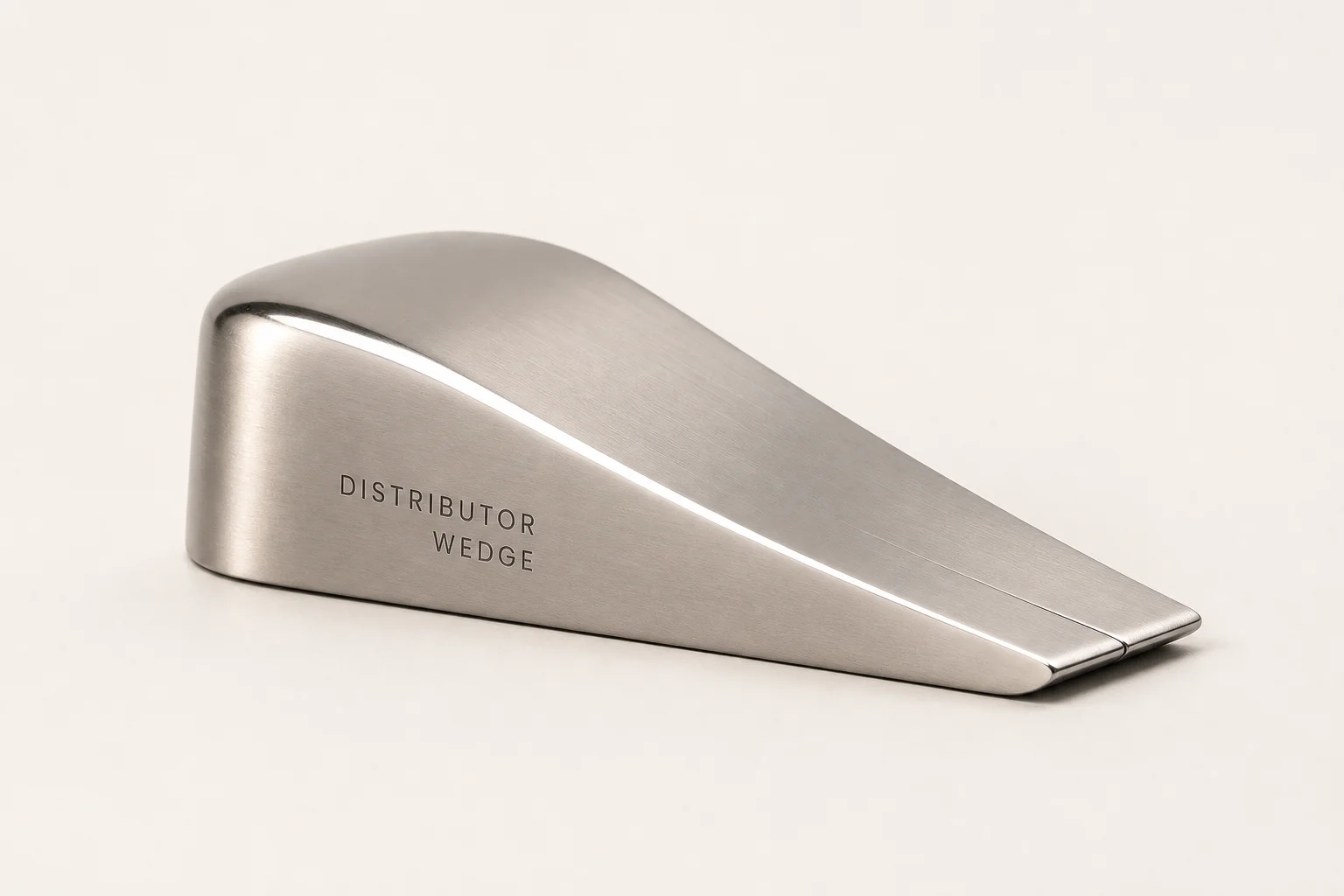
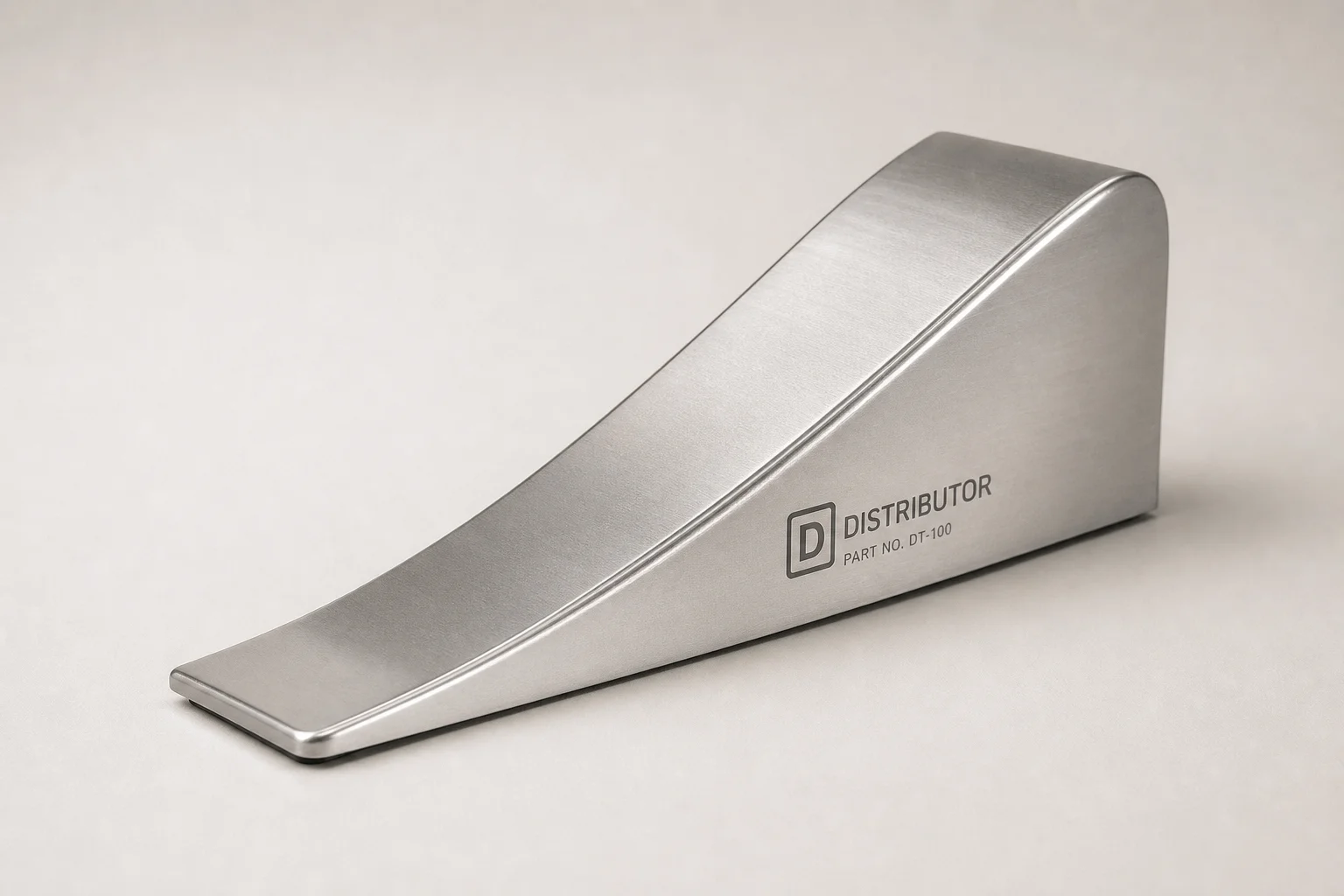
While wedge distributors don’t harm extraction, they’re less effective than needle distribution for breaking clumps and ensuring deep, even distribution. They suit users who prioritise ease and aesthetics over maximum extraction consistency.
Alternative Distribution Methods
Manual distribution using your hands was the standard before modern grinders. Techniques like the north-south-east-west method or Stockfleth’s distribution are effective but inconsistent and require significant practice. They’re rarely recommended today.
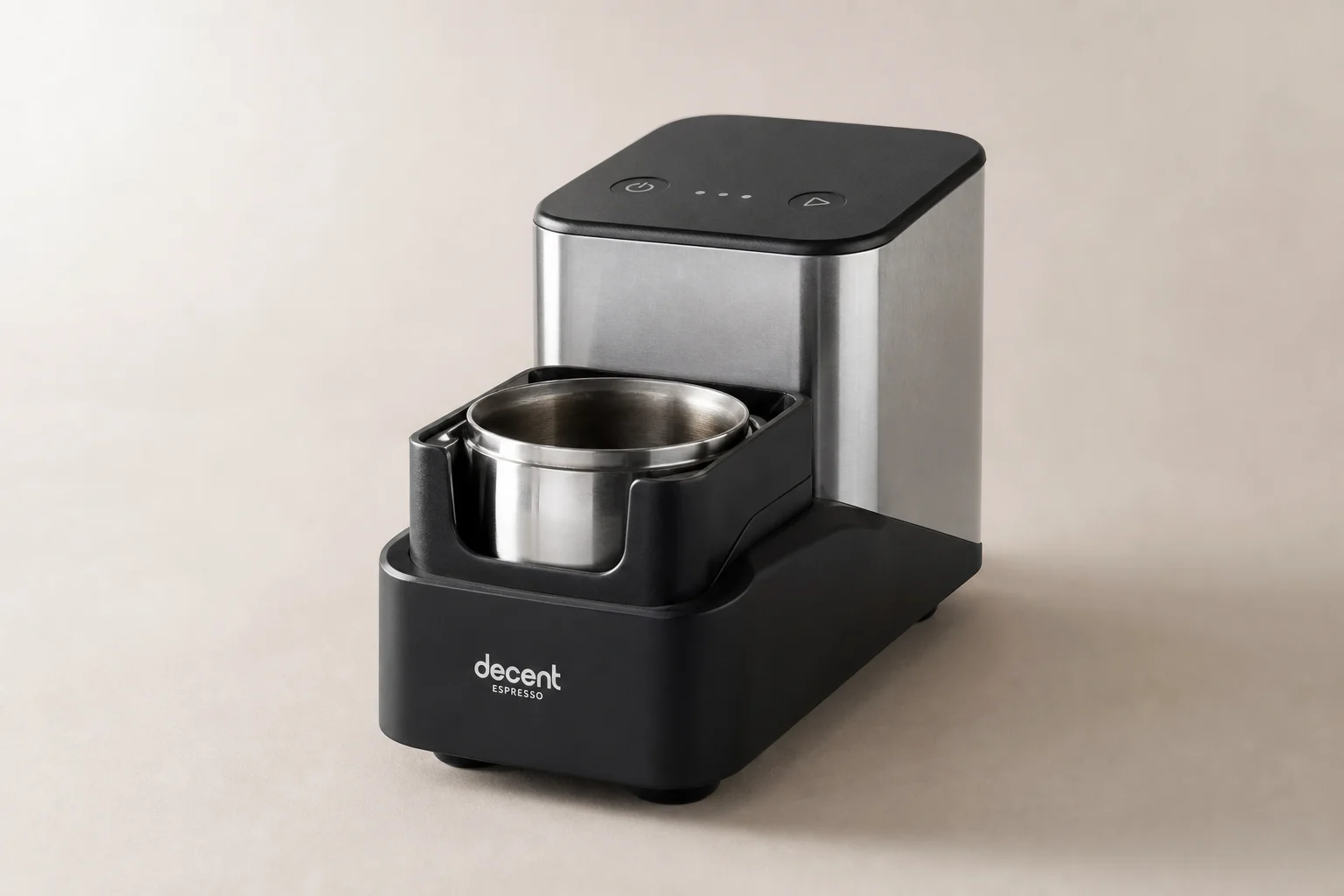
Vibration distribution, exemplified by the Nurri vibration distributor, uses mechanical vibration to settle the coffee bed. While interesting and fun to use, testing shows it moves fine particles downward, creating a layer of fines at the basket bottom that slows flow and reduces extraction clarity.
Advanced Puck Prep: Seeding Pathways
The Sworkdesign PorcuPress is a needle tool designed to press into the coffee bed before tamping, creating small holes that theoretically seed water pathways through the puck. You press, rotate slightly, and repeat across the bed. It’s an experimental approach that produces incremental gains for those chasing maximum extraction.
Paper Filters and Puck Screens
A thin paper filter at the basket bottom removes fine particles and some oils, reducing tiger striping and slightly improving texture. More notably, it increases flow rate and extraction, often reducing shot time by 5-6 seconds. The challenge is finding food-safe paper that fits your basket. Hole-punched Chemex filters work well in some baskets.
Puck screens are metal mesh discs that sit on top of the puck, helping distribute water evenly and preventing excessive puck expansion during pre-infusion. Testing shows consistent extraction improvements, though they’re fussy to clean and require ultrasonic baths or careful steaming.
Tamping: The Final Step Before Brewing
Tamping is binary: you’ve either pressed hard enough to remove air pockets or you haven’t. Pressing harder than necessary provides no additional benefit. Hold the tamper like a doorknob with your thumb pointing down, position your elbow directly above the coffee, and press down evenly until the coffee stops feeling squishy.
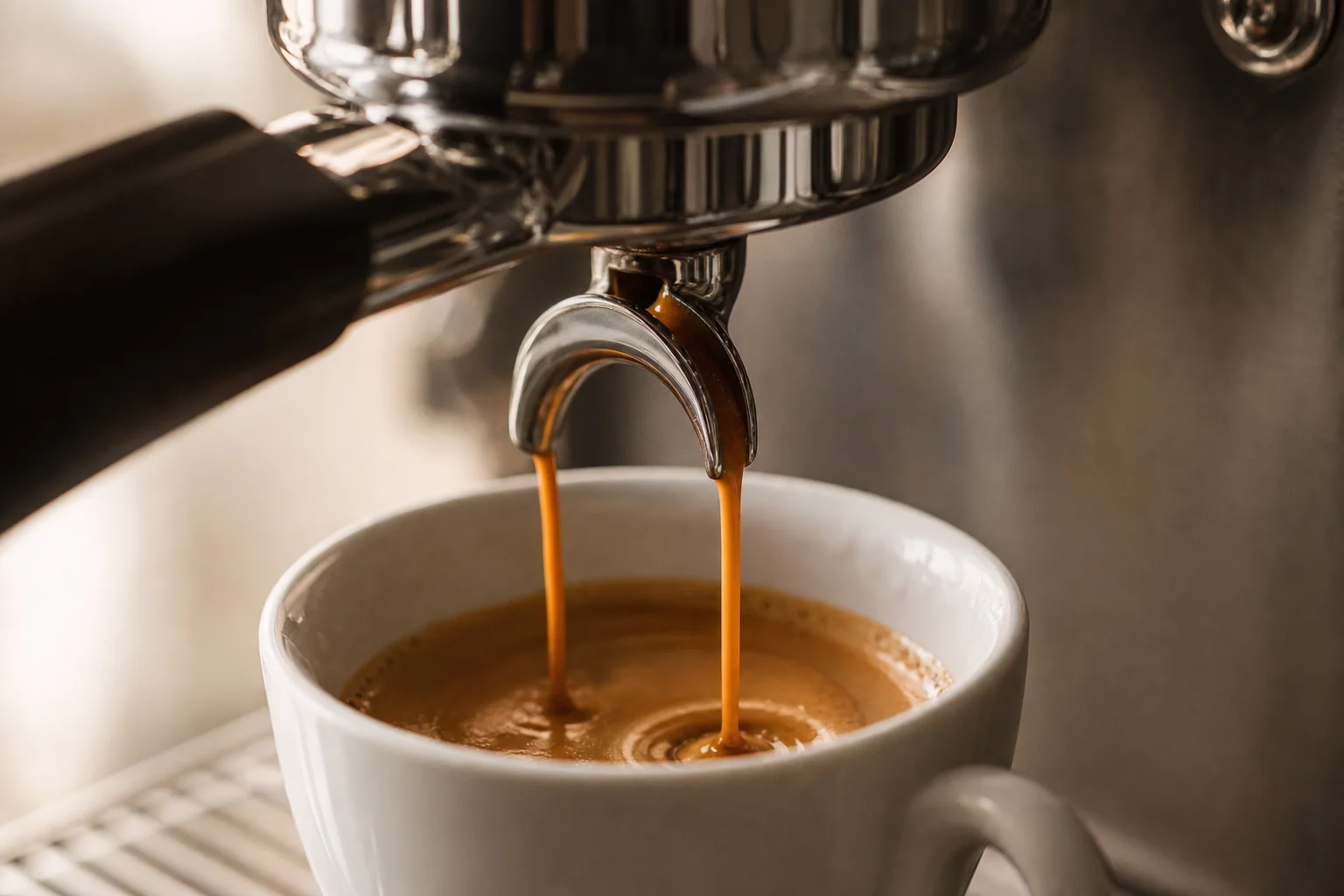
Rotate the tamper slightly to check levelness with your fingertips. Twisting and polishing feel satisfying but add nothing to extraction. Traditional tamping is effective and enjoyable for most users.
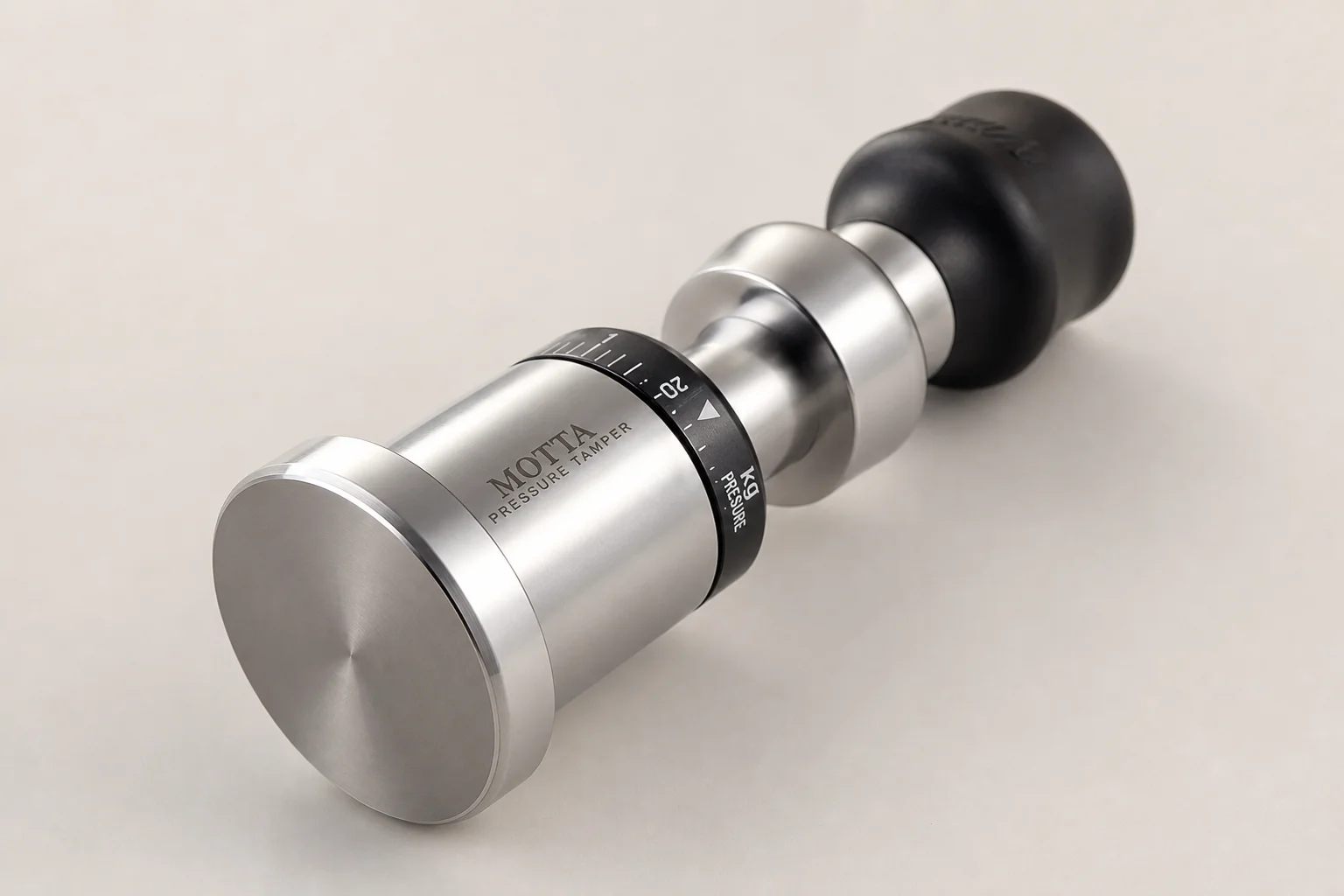
The Force Tamper is an expensive alternative that stops pressing at a predetermined pressure and sits on the basket rim to ensure perfectly level tamps every time. It removes variables some users worry about, though it also removes the tactile feedback many enjoy. It’s worthwhile only if you’re uncomfortable with manual tamping consistency.
Building Your Personal Routine
The most important step is maximizing your current setup before buying new tools. Focus on consistent dosing, a dry basket, and effective distribution before investing in advanced equipment. Needle distribution offers the best return on investment for most home users, followed by careful, level tamping.
Experiment with paper filters and puck screens if you’re curious about incremental gains, but don’t feel obligated to use every technique. The goal is better espresso, not complexity for its own sake.
Conclusion
Espresso puck prep doesn’t require expensive equipment or elaborate routines. Start with consistent dosing, dry baskets, and needle distribution. Add other techniques only when they solve specific problems you’ve identified in your shots. The most important variable remains the quality of your grinder and beans, so ensure those foundations are solid before chasing diminishing returns with advanced tools.
Further reading
Related Reviews
Coffee Brewing
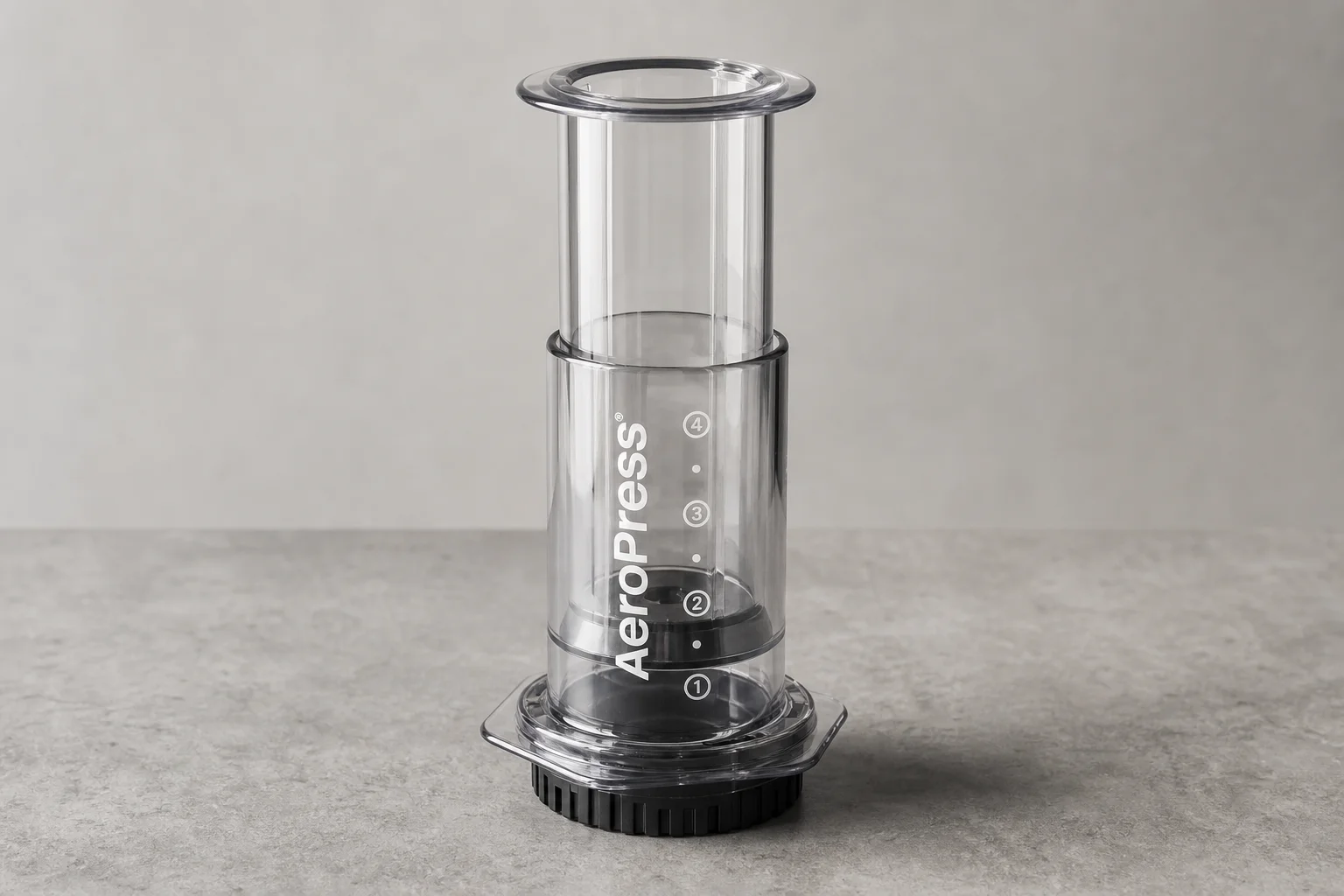
AeroPress Clear Review: A Transparent Upgrade With Caveats
The new AeroPress Clear uses Tritan material and costs $50, but doesn't brew better coffee than the original. We tested durability, staining, and what the price increase means for the brand's future.
Coffee Brewing
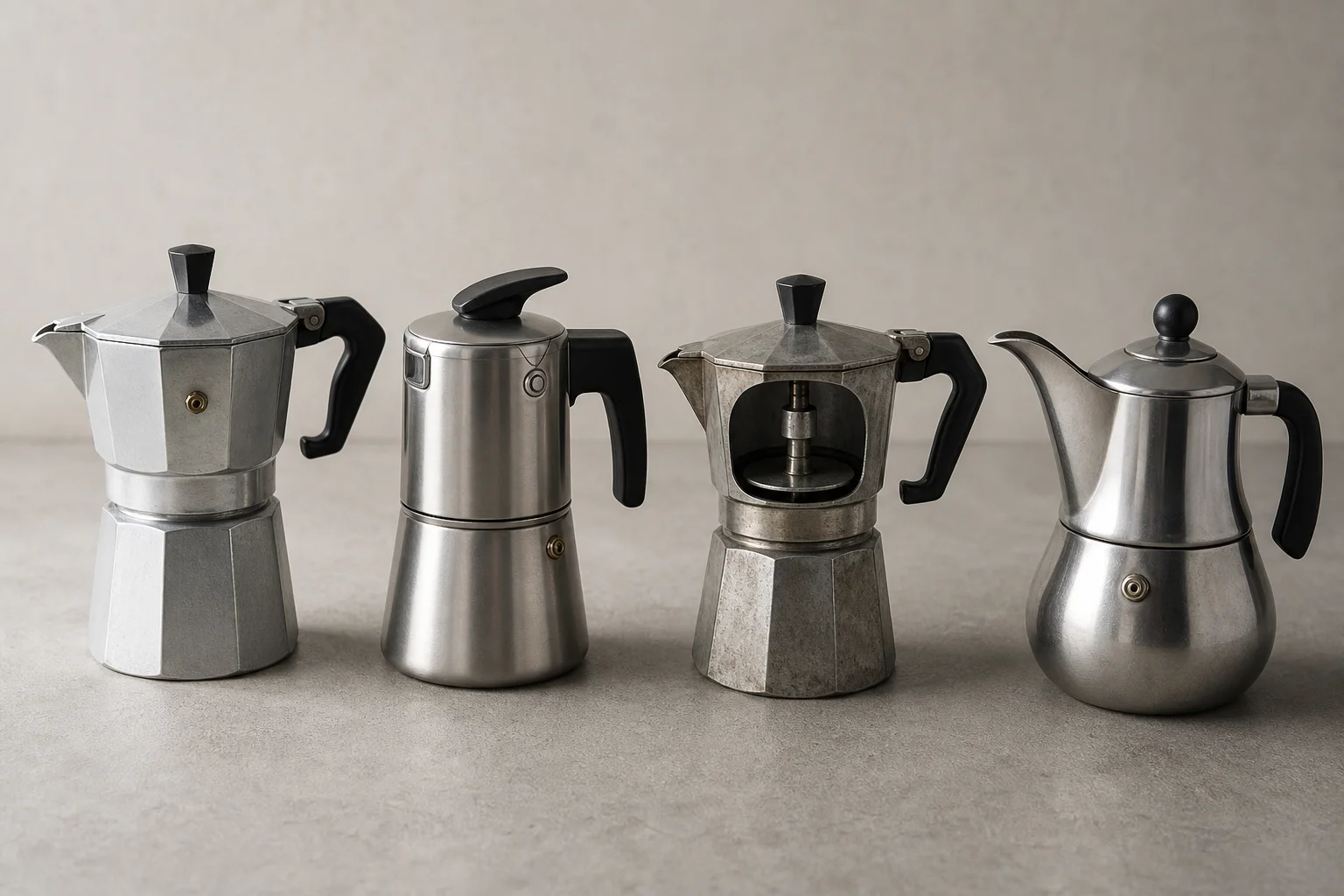
Moka Pot Variations: Four Interesting Adaptations Worth Exploring
A detailed look at four moka pot variations, from pressure-valve designs to milk-steaming models and automated float systems, with honest assessments of their brewing strengths and practical trade-offs.
Coffee Brewing
No-Bypass Brewing: Tricolate vs Next Level Brewer Compared
Two pour-over brewers designed to eliminate water bypass and deliver stronger, more flavourful coffee. Which suits your brewing style?