Home Theater Projectors
Epson LS500 Review: An Ultra Short Throw Projector for Rooms With Light
A practical look at the Epson LS500 ultra short throw projector, covering who it suits, where it performs best, and what to plan for before buying.
Introduction
For years the choice between a television and a projector came down to one question: how dark could you make the room? Projectors needed near-total light control, and they cost far more than a comparable television. That has shifted. Bright 4K front projectors and ultra short throw models are now available at reasonable prices, and the Epson LS500 is one of the models that makes the projector question worth asking again in an ordinary living space.
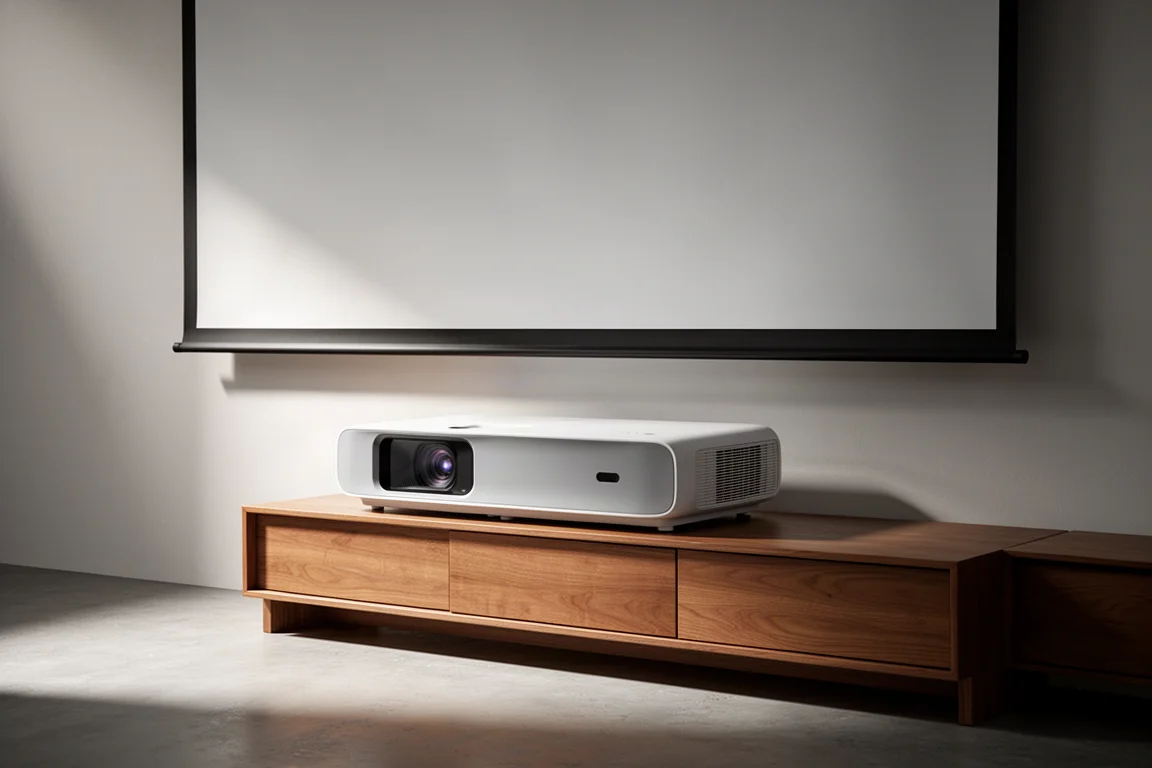
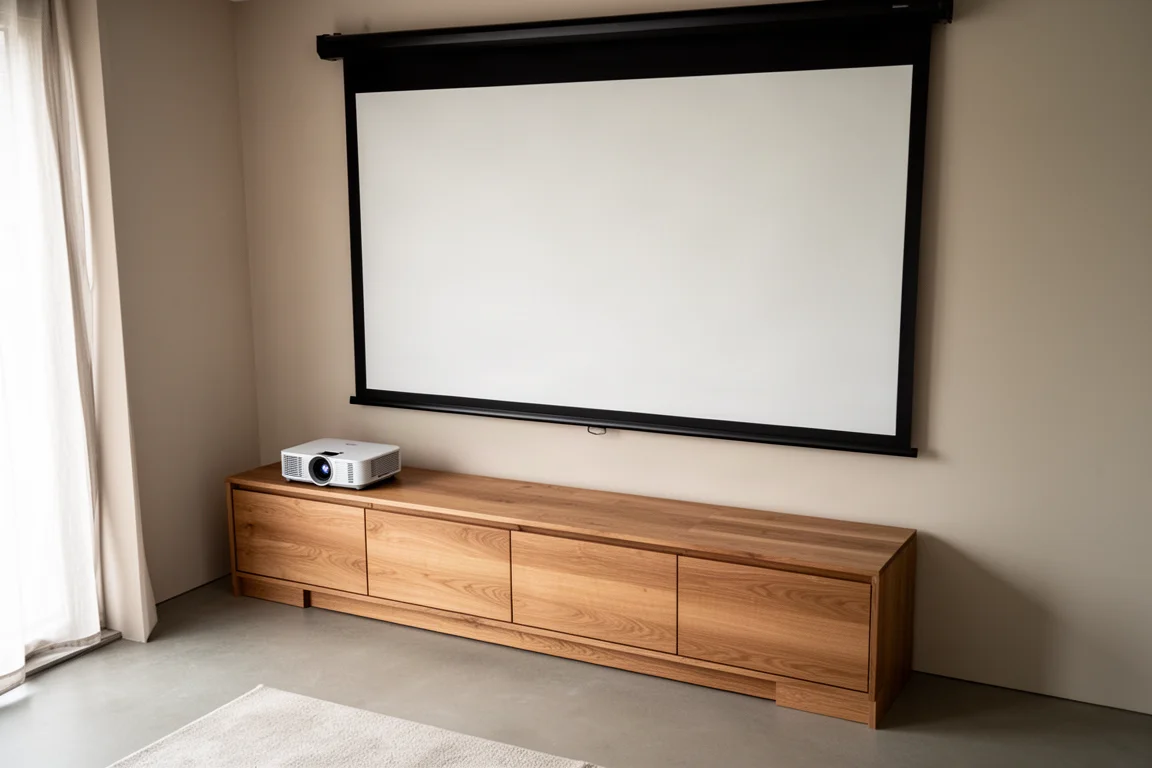
Ultra short throw projectors place a large image on a screen from a very short distance. Instead of hanging from the ceiling at the back of the room, the unit can sit on a cabinet directly against the wall, which removes the ceiling mount, the long cable run, and the awkwardness of hardware floating in the middle of a family room.
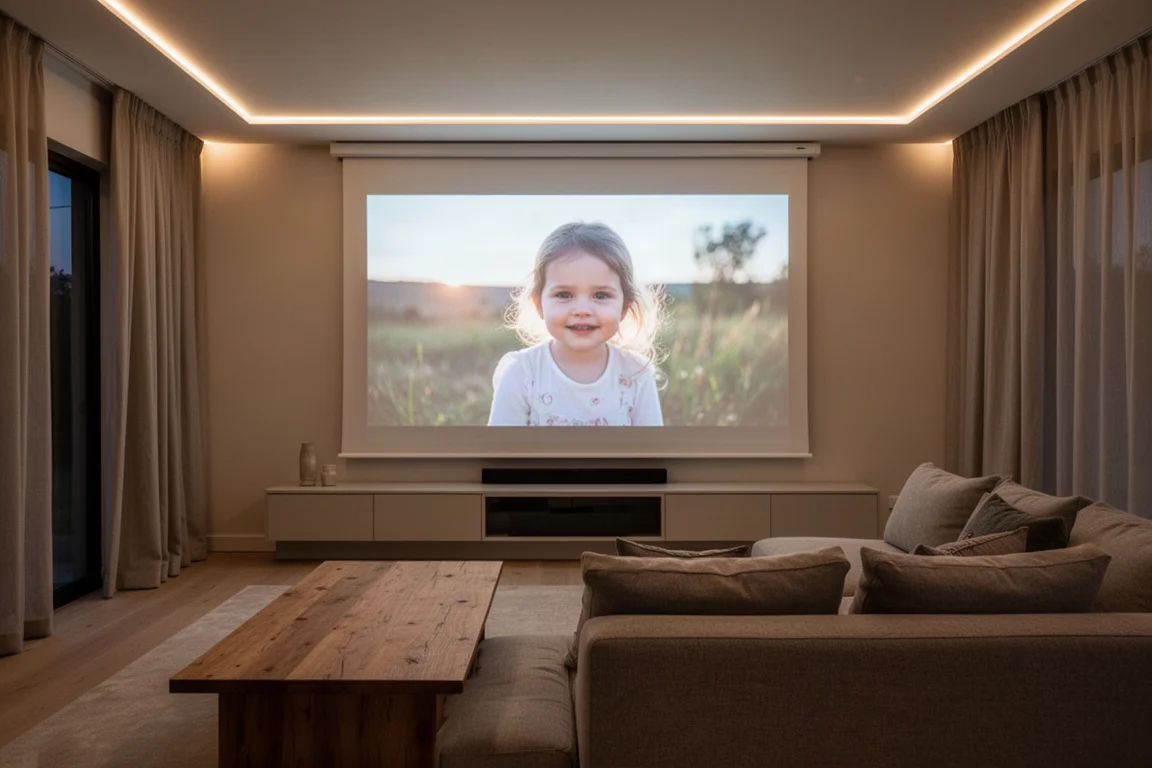
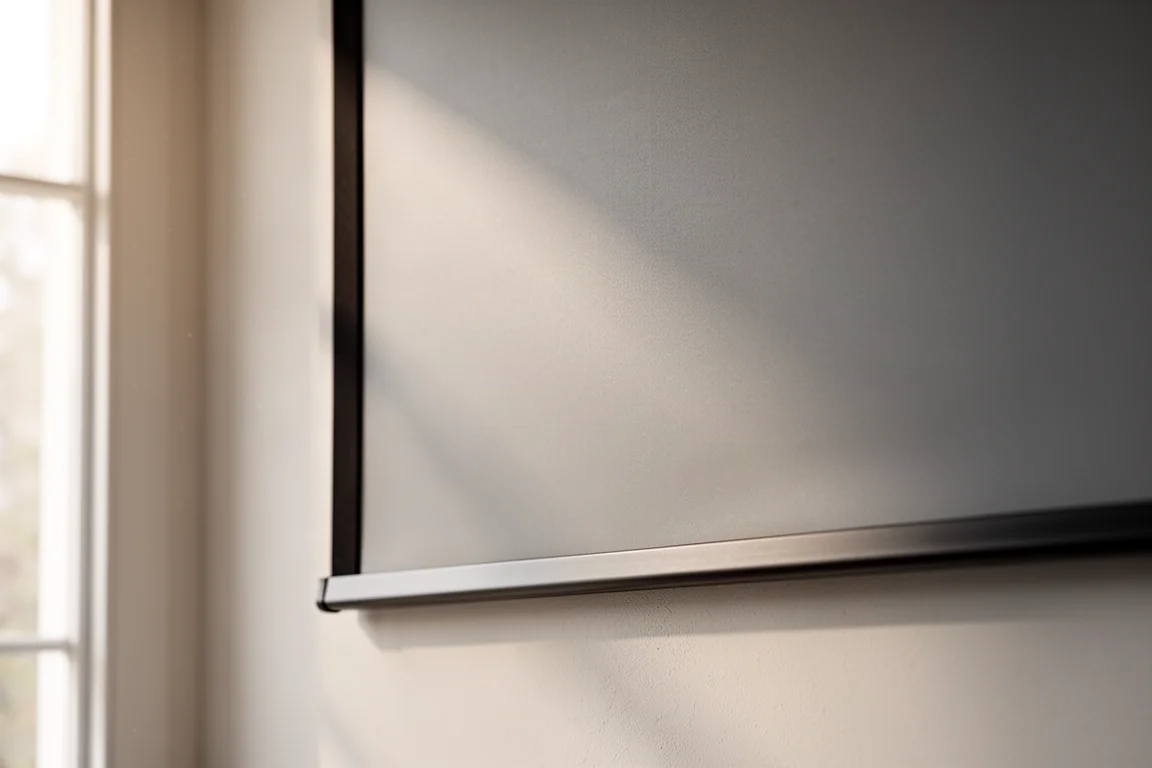
The screen matters as much as the projector. This class of ultra short throw projector uses a screen material that rejects ambient light, which allows a very large image to stay bright even when the room is not fully darkened. That combination, a short throw chassis plus an ambient light rejecting screen, is what makes the LS500 relevant to family rooms and media rooms rather than only to dedicated theaters.
Who the Epson LS500 Is For
The LS500 suits households that want a genuinely large picture in a room that also has to function as a normal living space. If you watch a lot of films, series, or sport in a family room and you want something bigger than the 85-inch ceiling that flat panels reach at reasonable prices, a short throw projector is the natural next step.
It also suits anyone who has avoided projection because of installation. There is no ceiling mount to plan, no ladder work, and no visible projector at the back of the room. The unit lives on furniture, which is a much easier proposition to explain to everyone else in the house.
Finally, it fits rooms where the seating is not arranged like a cinema. Because the image is thrown upward from a cabinet at the front of the room, the room can keep its existing layout, its fireplace, its coffee table, and its everyday furniture.
Main Strengths
The headline strength is image size. The LS500 can produce a picture up to 120 inches, which is well beyond what most people can reasonably fit as a flat panel. Size is not a vanity spec either. The larger the screen, the more immersive the experience becomes, whether you are watching a match or following a story on screen.
Brightness is the second strength. Paired with an ambient light rejecting screen, the LS500 delivers a pretty bright image with technology that keeps the picture bright even when a few lights are switched on. That is a meaningful change from older projection setups, which washed out the moment a lamp came on.
Placement is the third. The projector sits on a cabinet right against the wall, so it stays out of the way and stays easy to reach. There is nothing to hide and nothing hanging overhead, which keeps the room looking like a room rather than a screening booth.
Cost is the fourth. A short throw setup that produces an image up to 120 inches can cost less than some 85-inch televisions, which is the comparison most buyers will make first.
Things to Consider Before Buying
The screen is part of the system, not an optional extra. The ambient light rejecting material is what keeps a large image bright in a room with some light, so plan the projector and screen as one purchase rather than two separate ones.
Light control still deserves attention. A projector of this kind holds up well with ambient light, but direct sunlight falling onto the screen is a different problem. Curtains or shades are still worth having if a window faces the screen.
You need somewhere to put it. The projector needs a cabinet or stand positioned directly beneath the screen and flat against the wall, so it is worth checking that your room layout allows that arrangement before committing.
If your ambitions run past 120 inches, this is the point to reconsider. Beyond that size, a conventional front projector with newer screen materials and some added light control becomes the more sensible route, along with motorized shades or curtains to manage the room.
Living With the Epson LS500 Day to Day
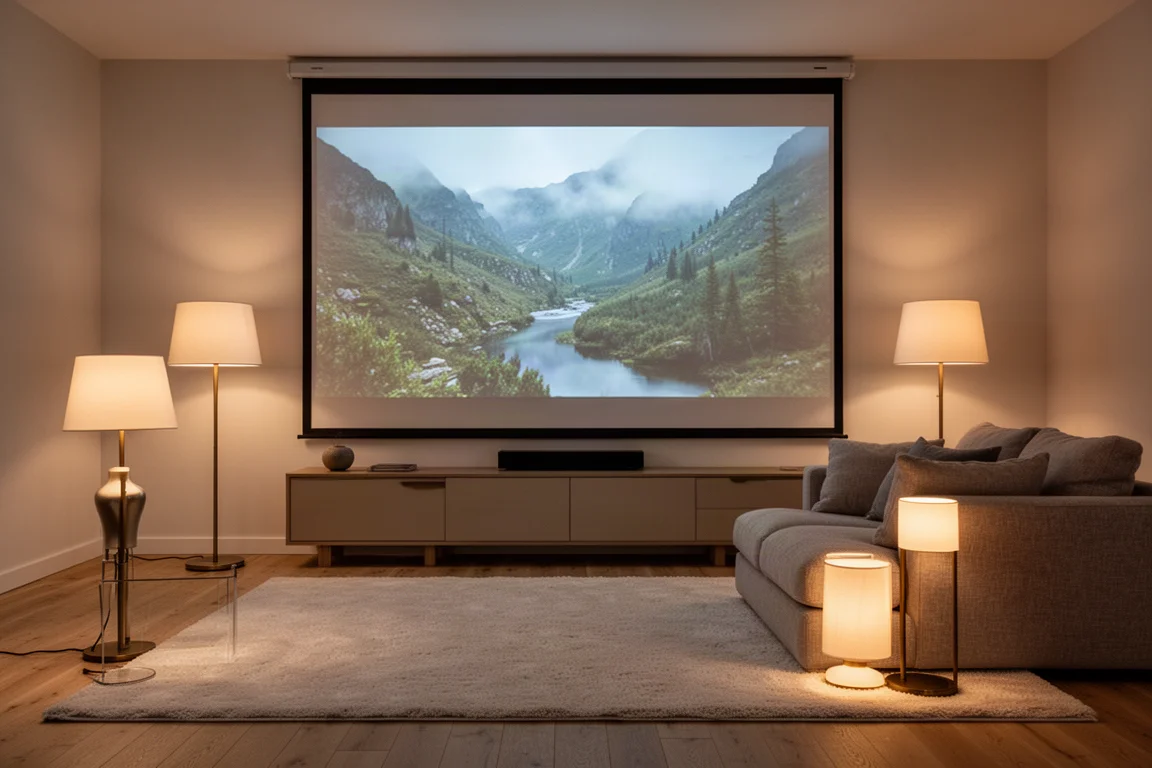
Day to day, the LS500 behaves more like a very large television than like a traditional projector. You switch it on, the image appears on the screen above the cabinet, and the room stays usable. For sport with friends, the practical trick is to design the lighting so that any fixture shining directly onto the screen can be switched off on its own. Do that, and you can keep a good amount of light in the room while still getting a huge, satisfying picture.
The days of being forced to sit in the dark to get a bright image are largely over. With a good screen and a modern bright projector, you can have most of the lights on and still get a picture that is far better than what a fully darkened room would have given you a decade ago.
Widescreen films are another quiet advantage. Projectors in this class can flip between 2.4 and 16:9 aspect ratios with a single button press on the remote, which means a widescreen movie can fill the full width of the screen instead of sitting inside the black bars that a television imposes.
There is also a subjective point that many viewers raise: watching a film projected onto a screen can feel a little less fatiguing on the eyes than watching on a television. Reflected light off a screen has a softer, more natural quality than direct emission from a panel, and it is part of why a projected image can feel less like watching television and more like experiencing a film.
Setup, Screen, and Placement
Setup is one of the least demanding parts of owning the LS500. The projector rests on a cabinet against the wall, throws its image upward onto the screen, and needs no ceiling mounting. Because the unit is on furniture rather than overhead, there is nothing to hide and nothing to integrate into the architecture of the room.
The screen is the piece worth planning carefully. Ambient light rejecting material is what allows the image to stay bright in a room with windows and lamps, so the screen is not a generic accessory but the component that makes the whole approach work in a lit space.
Because everything sits at the front of the room, cable runs stay short and tidy, and the installation does not dictate where the seating has to go. If you later want to change the room around, the projector and screen can move with it far more easily than a ceiling-mounted system.
Buying Advice
Start with the comparison you will actually make. A short throw projector that delivers up to 120 inches can cost less than some 85-inch flat panel televisions, and that price relationship is the strongest argument for going this route. If a very large image is the goal, the value case is straightforward.
Then check the room. How much daylight lands on the wall where the screen will go? Can you darken a window if direct sun hits the screen? Is there a cabinet or stand that can sit flat against the wall beneath the screen? If the answers are workable, the LS500 is a strong fit.
Finally, be honest about size. If 120 inches is more than enough, the LS500 with an ambient light rejecting screen is a clean, simple way to get there without turning your living room into a construction project. If you want to go larger still, plan for a conventional front projector and budget some light control alongside it.
Conclusion
The Epson LS500 answers the old television versus projector question in a way that most rooms can actually live with. It puts a very large image on the wall, keeps that image bright with a few lights on, and sits quietly on a cabinet instead of hanging over your head.
It is not a purchase to make on size alone. The screen is part of the system, direct light still needs managing, and placement has to suit your room. Get those details right, and the LS500 delivers the kind of immersive, cinema-scale picture that a flat panel simply cannot reach at a comparable size.
Product link
View more details for Epson LS500
This product is mentioned in the review. Check the specifications, options, and compatibility before buying.
View more details for Epson LS500Further reading
Related Reviews
Home Theater Projectors
Barco Heimdoll Family Guide: Choosing a Native 4K RGB Laser Projector
A practical guide to the Barco Heimdoll, Heimdoll Cinemascope, Heimdoll Plus, and Heimdoll Plus Cinemascope for large-format home theaters.
Home Theater Projectors
Best Home Theater Projectors 2026: Five Models Ranked by Performance and Value
A comprehensive ranking of five home theater projectors, from budget-friendly to premium options, evaluated on brightness, resolution, color accuracy, and gaming performance.
Home Theater Projectors
Epson EpiqVision LS800 Review: A Super Ultra Short Throw 4K Laser Projector for Bright Living Rooms
A practical look at the Epson EpiqVision LS800 and the SilverFlex Ultra ALR screen, covering brightness, throw distance, gaming performance, and the setup trade-offs worth knowing.