Floorstanding Speakers
Eminent Technology LFT8C Review: A Dipole Planar Speaker With Remarkable Coherence
A US-built floorstanding planar magnetic speaker with an active dipole woofer, reviewed for its transparency, bass speed, imaging and setup demands.
Introduction
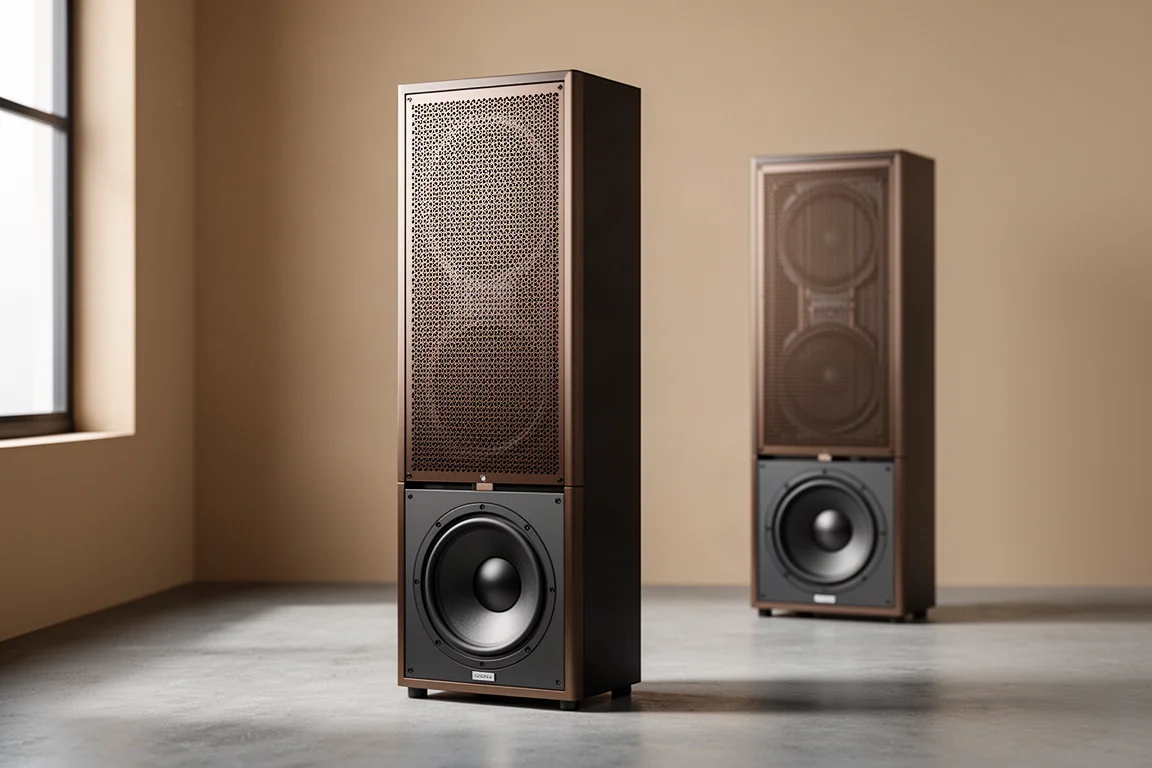
Eminent Technology designs and builds its loudspeakers in Tallahassee, Florida, and the LFT8C is the current version of its most attainable floorstanding design. Seen from the front, it appears to be a twin of the earlier LFT8B. The rear of the cabinet tells a different story. Where the LFT8B used a single 8-inch direct radiating woofer in a sealed box, the LFT8C moves to a dipole woofer section: a forward-firing 8-inch driver paired with a rear-firing 6.5-inch driver, driven actively by onboard electronics with DSP that fine-tunes the balance between the woofer and the planar magnetic midrange and tweeter.
The result is a substantial step up in purity and transparency, and in the way the woofer and the panel work together. The speaker is more coherent and more seamless, and its bass detail and clarity are remarkable.
Who This Speaker Is For
This is a speaker for listeners who want maximum resolution, clarity and detail, presented on a large, close-to-life-size soundstage. It suits people who listen at medium levels and who value an open, three-dimensional presentation over the tonal warmth of a conventional box speaker.
Pricing is $4,500 per pair, with free shipping in the US but not to Europe. Eminent Technology sells direct in the US, supported by a small number of brick and mortar dealers. There is no distribution in Europe or the UK, but the company sells direct to the UK and to most of Europe.
Owners of the earlier LFT8 models have an unusual option: the active dipole woofers can be purchased separately for $1,600 per pair and swapped into an existing pair of speakers. Free shipping applies in the US, not to Europe or the UK.
That upgrade path matters because the change is not cosmetic. The active woofer section alters the relationship between bass and panel, and that is where most of the improvement lives.
Main Strengths: Transparency and Coherence
The headline quality is transparency. On dense, layered recordings the speaker separates individual instruments and voices with unusual ease, and the high frequencies are pure, clear and extended. Because the cabinet is tall, the presentation stretches across the room as a wall of sound that reaches beyond the outer edges of the speakers, forward of them and behind them.
What makes the LFT8C distinctive is the coherence between the woofer and the panel. The handoff from the dipole woofer to the dipole planar magnetic driver is seamless, to the point where the speaker behaves like a full range electrostatic design, but one with bass response extending down to roughly 40 to 50 Hz and with dynamics that electrostatic speakers rarely match. Listeners familiar with classic electrostatic panels such as the Quad 63 will find this design considerably more dynamic.
Resolution is high, yet the speaker does not punish lesser recordings. Weak recordings still sound weak, but they remain listenable rather than fatiguing, which is a difficult balance to strike in a high resolution design.
Bass Performance and the Active Dipole Woofer
Bass speed, definition, agility and clarity are the strongest technical arguments for the active dipole approach. You can hear into bass instruments, including the tactile sense of an instrument moving air in the room, and the transition between the woofer and the panel stays clean throughout.
Because the woofer is active, it also has its own volume control, so the level of the woofer can be raised or lowered relative to the panel. That is not possible on the passive version, where the woofer often sat around two to three decibels too hot for many listeners. Here the balance can be tuned to taste.

The trade-off is depth and weight at the very bottom. An 8-inch driver working with a 6.5-inch rear-firing partner will not sound like a 15-inch or even a 12-inch powered subwoofer, so anyone who wants that kind of low end will need to add a separate subwoofer to the system.
Midrange, Imaging, and Room Behavior
The binding posts on the rear panel are the amplifier input for the panel, covering the midrange and tweeter. Balanced and RCA inputs and outputs handle the connection between a preamplifier and a power amplifier, along with the DSP section that manages the woofer.
In the sweet spot, the imaging locks in and becomes big, wide and deep. The height of the cabinet gives voices and instruments a life-size quality that is a large part of the appeal. Move five or ten feet off axis and the speaker still sounds convincing, filling the room in a way that resembles instruments playing in a real space rather than a pair of drivers firing at a chair.
That behaviour comes from the dipole radiation pattern. As much sound leaves the back of the speaker as the front, while radiation to the sides is minimal, which reduces reflections from side walls. The panels also fire straight ahead, so ceiling bounce is less of a concern. In practical terms, it is an easier speaker to place than its size and technology might suggest.
Setup, Placement, and Power Requirements
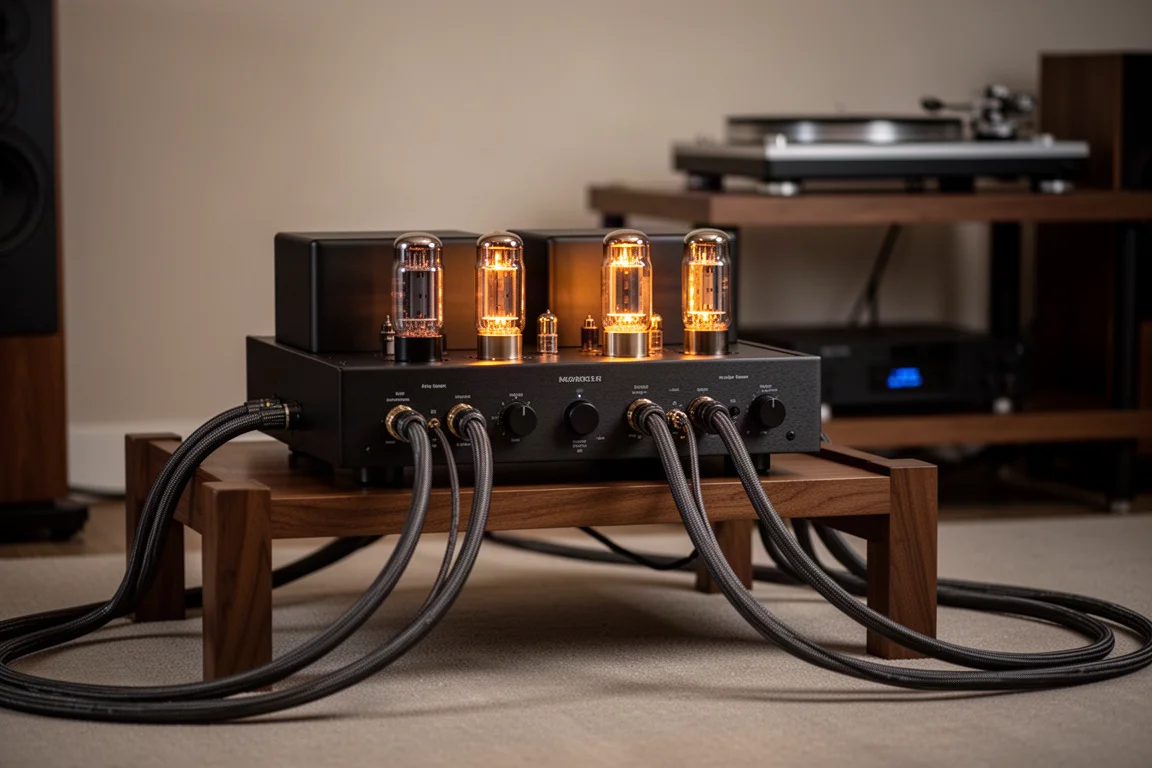
Sensitivity is on the low side, around 87 dB, so the speaker needs a capable amplifier. A Pass XA25 and a Linear Tube Audio LTA 40, rated at 50 watts per channel into 4 ohms, were both strong matches during listening sessions.
Give the speaker room to breathe. Roughly three feet of space behind the cabinet is a sensible starting point, though some rooms will work with two feet. As with most speakers, it sounds better away from the wall behind it.
Very quiet late night listening is not where this design shines. It is at its best at medium levels and above, which is typical of low sensitivity speakers. High sensitivity designs such as horn speakers and Zu speakers handle low volume listening better.
Plan the system around that requirement. Budget for an amplifier with genuine current delivery, and leave enough floor space behind the speakers for the dipole output to develop properly.
DSP, Listening Levels, and Trade-offs
The DSP path routes the signal from a preamplifier into a power amplifier and provides a menu of settings for balancing the woofer with the panel. Technical questions can be directed to the designer, Bruce Thigpen, who handles them personally.
The main advantage of running with DSP is louder playback with ease. Without DSP, the speaker will distort if pushed too hard, and the distortion is obvious rather than subtle. Within its comfortable range in a large room it plays as loudly as most listeners will need, and DSP was not the preferred option in listening sessions here.
Two further considerations are worth weighing. First, this is not a subwoofer replacement, so budget for a separate subwoofer if deep output matters. Second, it is a revealing speaker, which means it will expose the character of the rest of the system as clearly as it exposes the recording.
Buying Advice
For the money, this is a remarkable speaker. It is made in the US, it offers extreme transparency, phenomenal imaging and bass with speed and dexterity, and it stands among the most impressive speakers in its class. Its midrange is clear and low in distortion, and the effect becomes obvious when returning to conventional dynamic speakers with tweeters and woofers mounted across the front panel, which can sound loose and muddled by comparison.

One alternative deserves mention. A modified Pure Audio Project Duet 15, with an upgraded midrange and an improved crossover network, offers a larger, fuller balance, a greater sense of ease and much better performance at low volume, helped by its 15-inch open baffle woofer. It also costs roughly double the price of the LFT8C.
If you crave maximum resolution, clarity and detail with an open, close-to-life-size soundstage, the LFT8C is a compelling choice. If you need subwoofer-level low end, or you listen mostly at very low volumes, plan accordingly: add a subwoofer or consider a different design.
Conclusion
The LFT8C takes a proven planar magnetic platform and improves the part of the design that most needed it. The active dipole woofer brings the bass and the panel into far closer agreement, and the result is a coherent, transparent and genuinely engaging speaker. It is at its best at medium listening levels, it needs a competent amplifier and space behind it, and it will not replace a dedicated subwoofer. Within those boundaries, it delivers a level of clarity and imaging that is hard to match at the price.
Product link
View more details for Eminent Technology LFT8C
This product is mentioned in the review. Check the specifications, options, and compatibility before buying.
View more details for Eminent Technology LFT8CFurther reading
Related Reviews
Floorstanding Speakers
Acoustic Energy AE109 Mark II Review: A Refined Floorstander at £699
The Acoustic Energy AE109 Mark II is a slim, warm sounding floorstander that delivers clarity, midrange body and strong imaging in small to medium rooms.
Floorstanding Speakers
Acoustic Energy AE509 Review: A Slim Floorstander With Deep, Defined Bass
A practical look at the Acoustic Energy AE509, a slim floorstanding speaker with carbon fibre drivers, deep and well-defined bass, and an easy-going character that rewards careful system matching.
Floorstanding Speakers
Arendal 1528 Tower 8 Review: Reference Neutrality With Real Demands
A close look at the Arendal 1528 Tower 8, a nearly five-foot, 200-pound floorstander that rewards generous space, serious power, and high listening levels with reference-grade neutrality.