Smart Trainers
Elite Gusto Review: Elite's Most Feature-Packed Smart Trainer Yet
Elite's new top-end direct drive trainer brings auto calibration, dual Bluetooth, Bluetooth bridging, an easy-start ERG mode and a 6.2 kg flywheel for $999 or $1,199.
Introduction
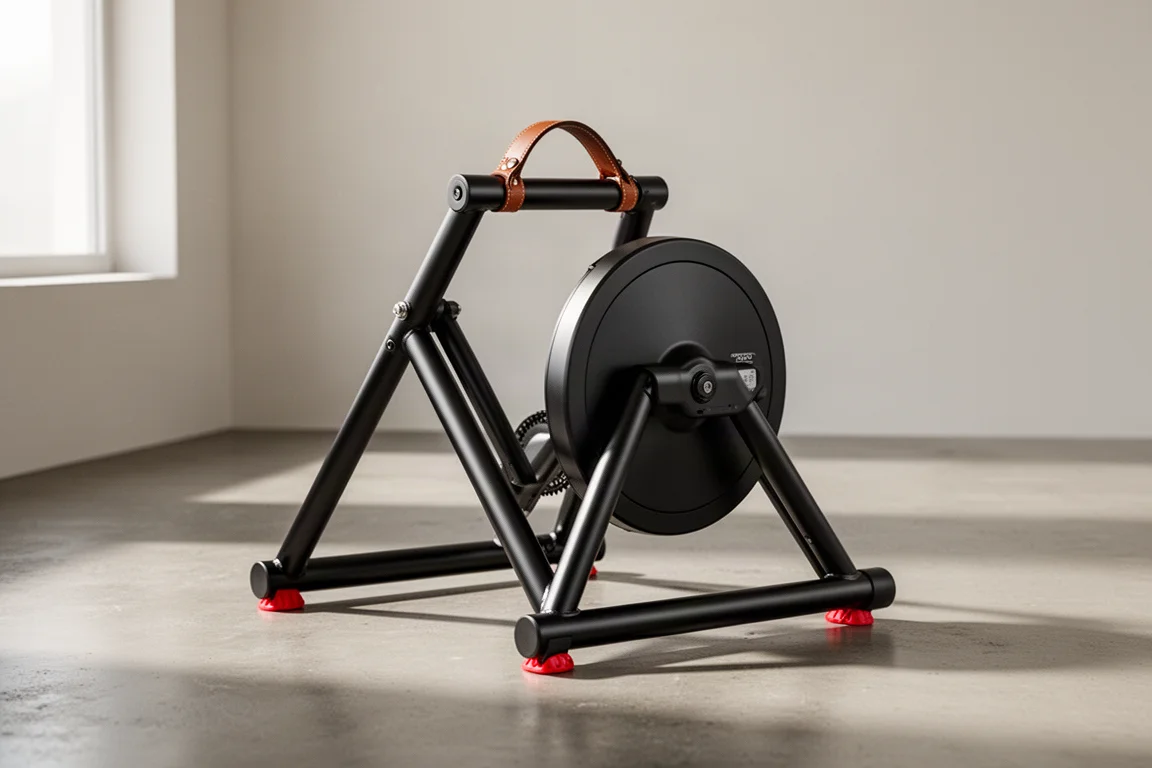
Elite has a habit of quietly shipping solid trainers, but the Gusto is a different statement of intent. It is the company’s new top-end direct drive smart trainer, replacing the Direto XR and going head to head with the Wahoo KICKR, Saris H3, and Tacx Neo series. What makes it notable is just how much new feature set Elite has packed into a single generation: roughly nine meaningful additions, from flexible feet to automatic calibration and a new easy-start mode for ERG workouts.
The price is $999 or $1,199 depending on market, with the difference largely explained by shipping costs from Italy, where all of Elite’s trainers are manufactured. That price tag puts it firmly in premium territory, so the real question is whether the feature list justifies it. After spending serious time on it, the short answer is that this is the best trainer Elite has ever made, and a genuinely competitive option at the top of the market.
Who This Product Is For
The Gusto is aimed at riders who take indoor training seriously. It is a direct drive unit, meaning you remove your rear wheel and mount the bike directly on the trainer, which eliminates slippage and delivers the accurate, consistent power transfer expected from mid to high-end trainers. Max resistance covers simulated grades up to 24%, and max wattage is 2,300 watts at 40 km/h or 1,100 watts at 20 km/h, so even very strong sprinters will not run out of headroom.
It also suits multi-device households. Dual Bluetooth connectivity means you can run a training app on one device and another app or accessory on a second device at the same time, alongside unlimited ANT+ connections. If you train with a Polar or Sunding-style watch, or a device that only supports Bluetooth, that extra channel is genuinely useful.
Standout Strengths
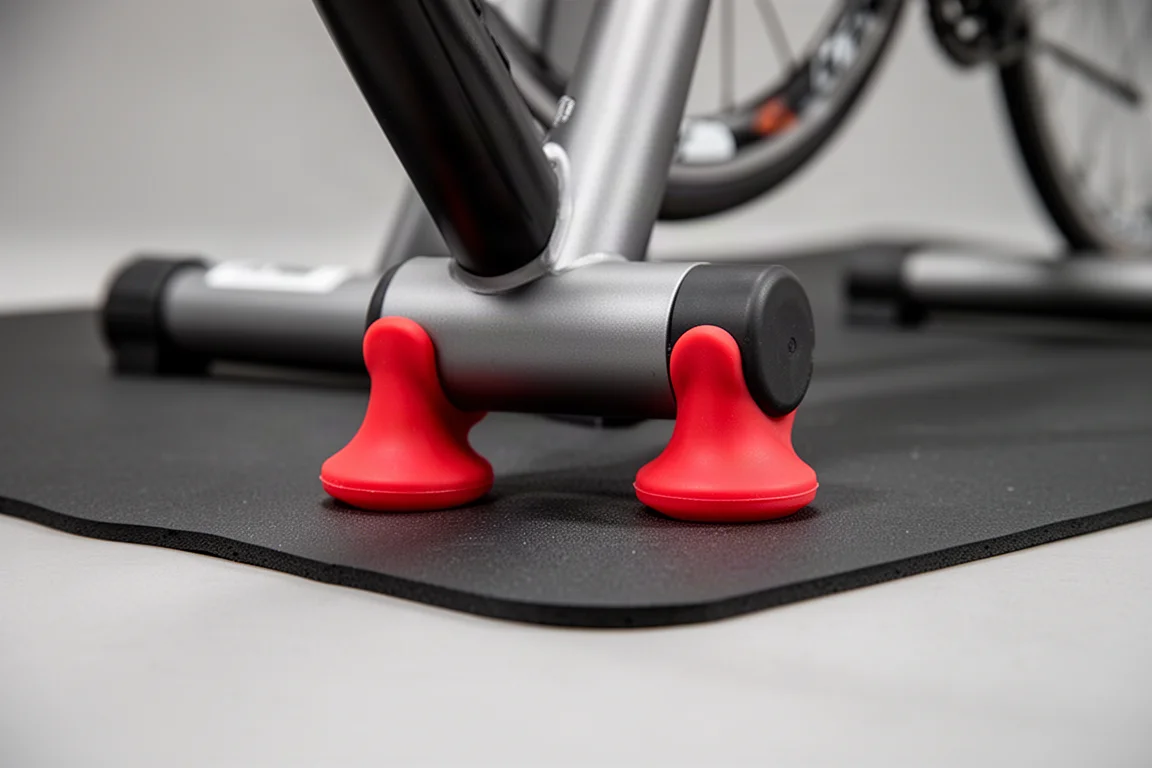
The most immediately visible new feature is the Elite Flex feet. These small squishy feet compress slightly during steady-state riding and noticeably more during hard sprints or side-to-side rocking, softening the harshness of out-of-the-saddle efforts. Two sets ship in the box: a red, more flexible pair and a black, firmer pair. Heavier riders may prefer the black set for less give, and both are height-adjustable so you can fine-tune how the trainer sits on your floor mat.
Auto calibration is another headline addition. Elite has not detailed exactly when it triggers, but the trainer handled big studio temperature swings, from around 68 degrees up to the mid-80s and back down, without ever needing a manual calibration, and the numbers stayed spot-on throughout testing. Fewer calibration rituals means more time actually riding.
Bluetooth bridging is the sleeper feature. You can route your heart rate strap, whether ANT+ or Bluetooth Smart, through the trainer itself and broadcast it as a single channel alongside power, cadence, and trainer control. That matters most on Apple TV, which limits concurrent Bluetooth channels, and it effectively frees a channel for accessories like steering units. Latency through the bridge is essentially zero, with heart rate data time-synced almost identically to a direct strap connection.
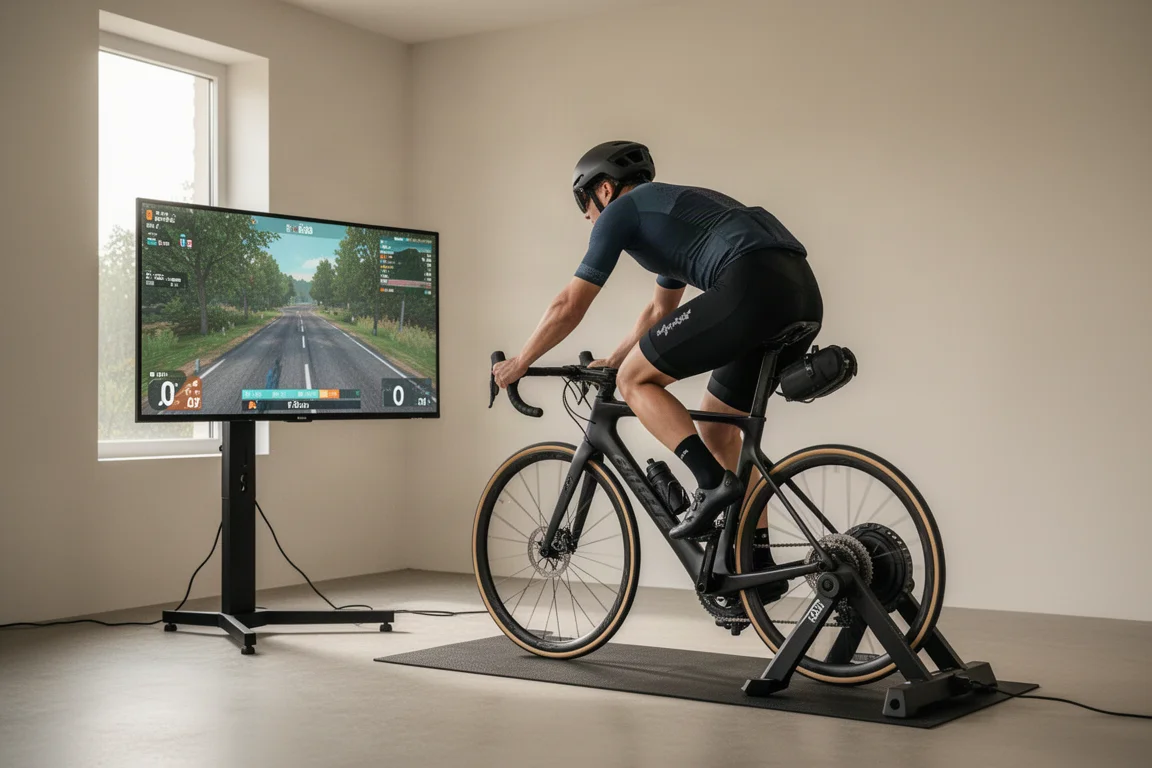
The easy-start ERG mode option is the kind of feature you dismiss until you need it. Normally, stopping pedaling mid-interval makes restarting brutally hard for the first few seconds at higher wattages. The Gusto releases the load when the flywheel stops, then gives you roughly three seconds to get up to speed before ramping resistance back in. You can literally hear the internal motor release the tension. Four ERG smoothing modes are also available for the outgoing data display, though the raw signal is stable enough that smoothing feels optional.
On the hardware side, the flywheel has grown from 5.1 kg to 6.2 kg, which increases inertia and noticeably improves road feel. Accelerations and decelerations behave much closer to real riding than some earlier Elite trainers. Claimed accuracy has also tightened from 1.5% to 1%, backed by the Elite OTS power meter system built into the unit, a genuine power meter inside the trainer, which remains rare in this category.
Finally, it is quiet. Not quite KICKR-level silent, but with the bike in the small front chainring, you essentially hear only your drivetrain. Wired connectivity is coming too: a port on the base will accept a Direct Connect accessory that adapts to Ethernet, using the same protocol as Wahoo so it works with apps out of the box. That accessory is due later this year with pricing expected to match Wahoo’s.
Things to Consider Before Buying
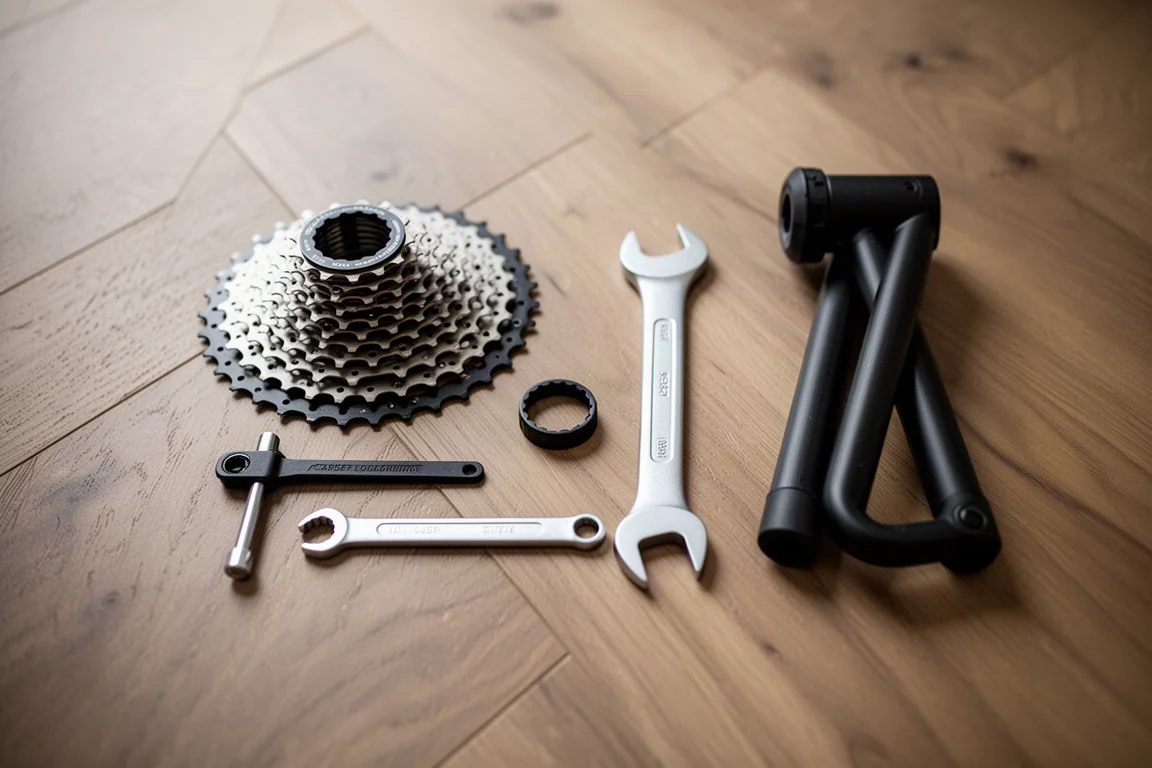
No cassette is included, which is a bit of a bummer at this price point, though it likely reflects industry-wide cassette supply constraints. You will need to install your own with a cassette tool. Cassette compatibility covers Shimano and SRAM 9/10/11-speed, Shimano 12-speed road, and SRAM NX 12-speed, with freehub adapters available for other setups.
The wired accessory is not available at launch either, so if Ethernet connectivity is your priority, you will be waiting until later in the year. And while the Gusto slots in alongside the KICKR V5 and Tacx Neo series, those competitors hold a few advantages of their own, mainly around their magnetic resistance systems. In practical riding, the difference is hard to notice, but it is worth knowing the trade-off.
Setup itself is straightforward: one disc-shaped cover over the flywheel attaches with two screws in about 15 seconds, then the cassette, then unfold the legs, mount the bike, and plug in. The whole process takes under five minutes. A faux leather handle on top makes the unit easy to carry, and the legs fold in for storage under a bed or couch.
Ride Feel and Everyday Use
The heavier flywheel is the change you feel every single ride. Earlier Elite trainers like the Süeto sometimes lacked flywheel inertia, and you could tell. The Gusto delivers the acceleration and deceleration behavior you expect outdoors, and while no trainer fully replicates real riding, this one gets much closer.
Protocol support is complete: ANT+ and Bluetooth Smart, ANT+ FE-C for trainer control, Bluetooth FTMS, and standard power meter broadcast. Compatibility with Zwift, TrainerRoad, Rouvy, RGT, and FullGas is effectively total. If an app does not work with this trainer, the problem is on the app’s side, because the Gusto speaks every industry standard. The estimated cadence algorithm is also very good, close to a dedicated cadence sensor.
Accuracy and Buying Advice
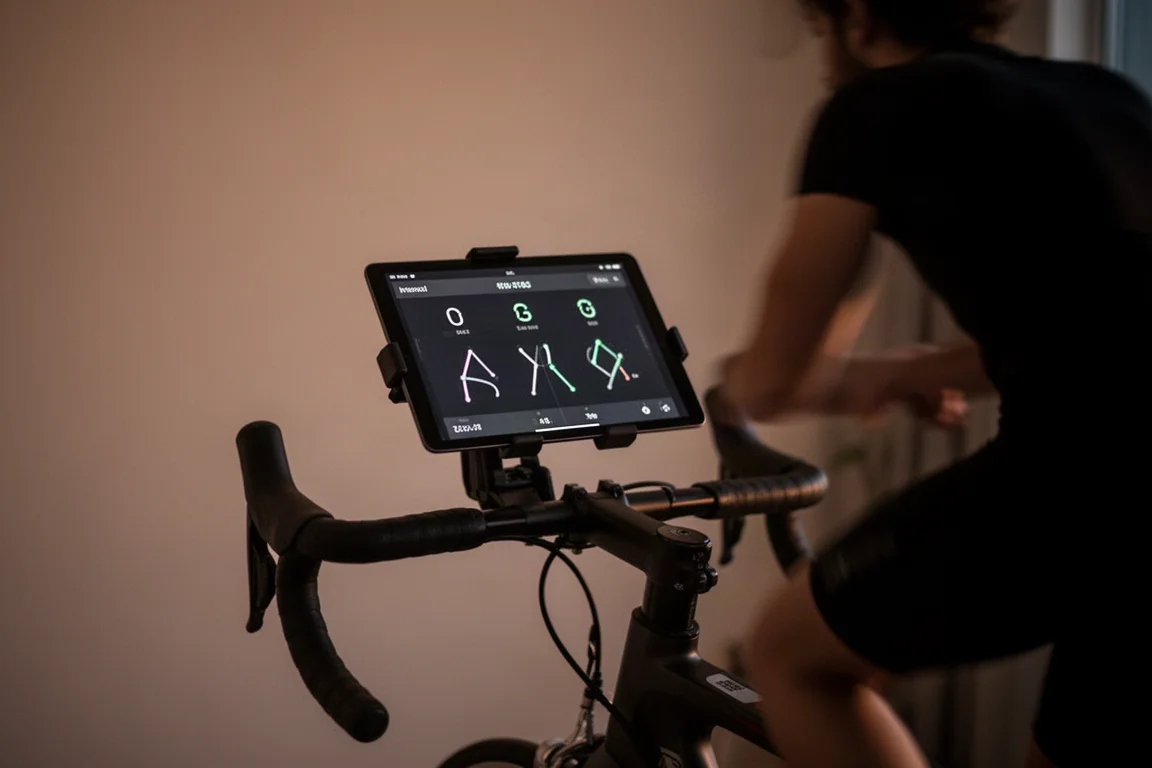
Accuracy testing showed near-perfect alignment against reference pedals in 30x30 intervals stepping between 150 and 450 watts, tight agreement across Zwift group rides with surges around 450 watts, and stunning alignment in ERG workouts at both roughly 500-watt and repeated 850-watt intervals. Longer 10-minute steady intervals held power well too.
The one soft spot is sprints. Around 850 to 900 watts, the Gusto reads slightly higher than reference meters. That behavior is common among trainers, but at this price a tighter sprint reading would be nice. Responsiveness in ERG mode, measured with the same 150-to-450-watt step test used across trainers, landed at two and a half to three and a half seconds, right in the sweet spot. Faster than that would feel like hitting a brick wall.
At $999 or $1,199, the Gusto slots comfortably among the top-end trainers alongside the KICKR V5 and Tacx Neo series, and it carries more new features than either. For riders who want auto calibration, flexible feet, Bluetooth bridging, and easy-start ERG in one unit, it is an easy recommendation.
Conclusion
The Elite Gusto is Elite’s best trainer to date, and it is not particularly close. The feature list is full of practical additions rather than gimmicks, the accuracy is excellent in normal riding, the ride feel has taken a real step forward, and the noise level is low enough to disappear behind your drivetrain. No cassette and a slightly loose sprint reading are the only real nitpicks. If you are shopping at the top of the smart trainer market, this one belongs on your shortlist.
Product link
View more details for Elite Gusto
This product is mentioned in the review. Check the specifications, options, and compatibility before buying.
View more details for Elite GustoFurther reading
Related Reviews
Smart Trainers
Pinnacle HC Review: An Affordable Direct Drive Smart Trainer
A close look at the Pinnacle HC, a £500 direct drive smart trainer with a 2,200W ceiling, a 5.7kg flywheel, and a quiet, stable ride feel for indoor training.
Smart Trainers
Wahoo Kickr Core vs Zwift Hub: Which Budget Direct Drive Smart Trainer Should You Buy?
A practical head to head between the Wahoo Kickr Core and the Zwift Hub, covering price, flywheel weight, setup, noise, connectivity, and power accuracy.
Smart Trainers
Elite Avante Review: A Smart Trainer That Punches Above Its Hardware
The Elite Avante pairs mid-range trainer hardware with high-end software features like built-in Wi-Fi and heart rate bridging. Here is how it holds up after months of riding.