Cycling
Eight Owner Bikes Under the Microscope: What Makes Each One Work
Eight bikes from gravel, road, touring and cargo riding, with notes on what each build gets right and where the compromises sit.
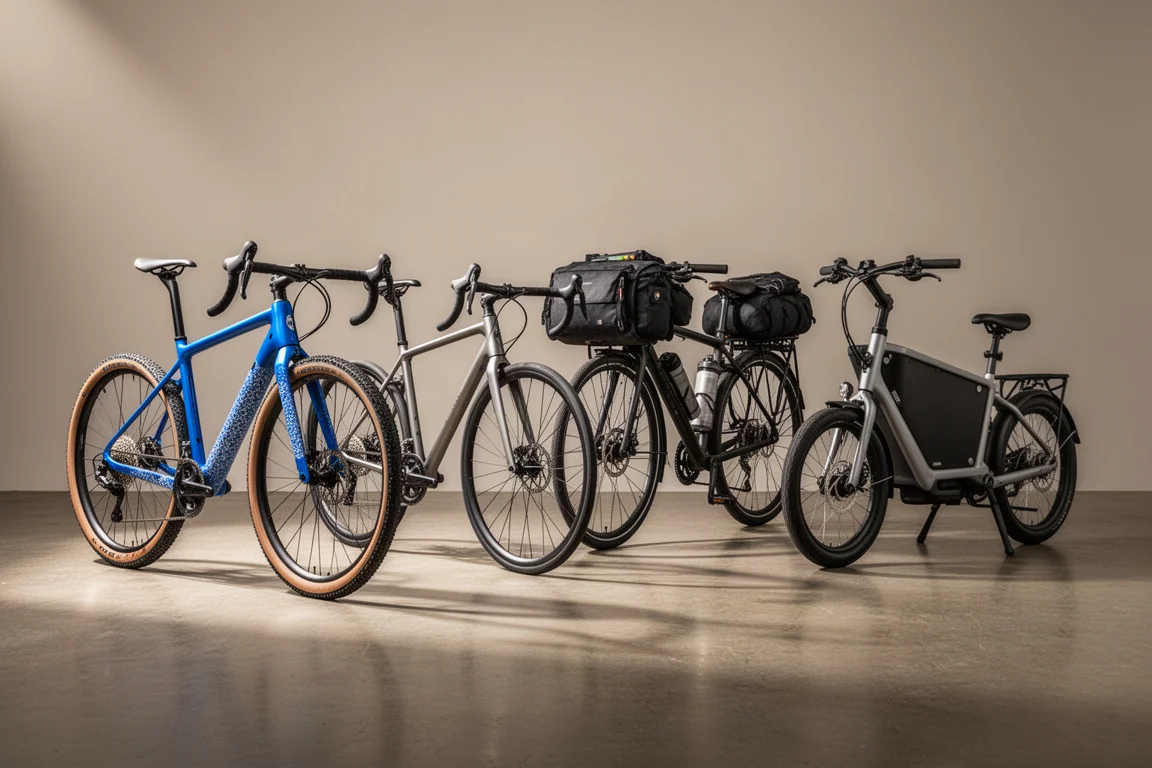
Introduction
Eight bikes, eight very different briefs. One is a carbon gravel racer with a power meter and a top tube bag full of snacks. Another is a modest alloy road frame running a groupset that costs more than the frame itself. There is an ultra-distance tourer that covered roughly 15,000 km across 19 countries, a compact cargo bike that carries two adults and two dogs, and several high-end aero road machines with more integration than most home mechanics would want to touch.
The common thread is setup. Every bike here belongs to someone who rides a great deal and knows what they want from a build, which makes them useful reference points whether you are shopping for a complete bike or planning a slow upgrade path over a couple of seasons.
How These Bikes Were Assessed
Four things stood out as worth judging. First, whether the parts choice matches the riding the bike is actually used for, since a build optimised for the wrong terrain is money poorly spent. Second, how the bike handles real-world maintenance, because a machine that needs a workshop for a stem change is a different proposition from one you can service on a kitchen floor. Third, weight distribution and fit, especially on small frames where bottle clearance and front-end load become genuine constraints rather than minor annoyances. Fourth, value, since several of these builds are expensive and a couple are refreshingly modest.
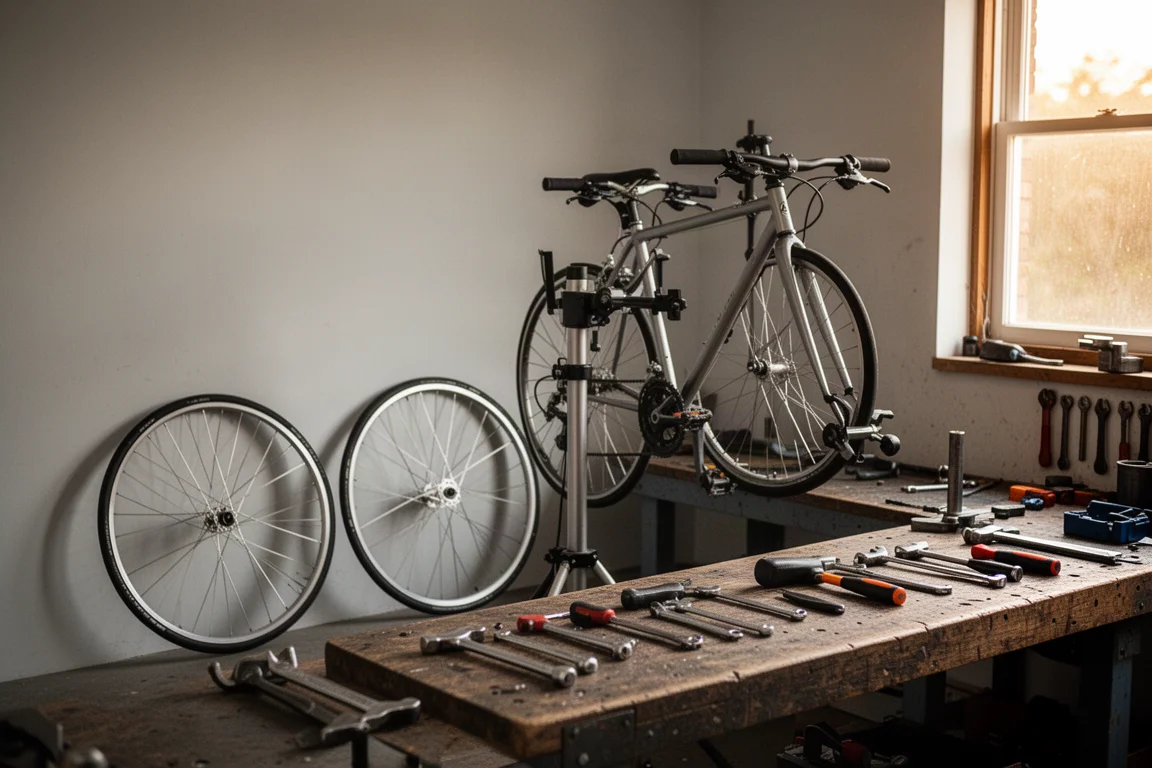
Specification levels vary enormously across the eight, from entry-level alloy to a full top-tier electronic groupset, so the notes below focus on what each bike does well and where the compromises sit rather than on ranking them against one another. Different riders want different things, and the most useful question is which of these approaches fits the riding you actually do.
Ribble Gravel SL: A Gravel Build With Pro-Level Details
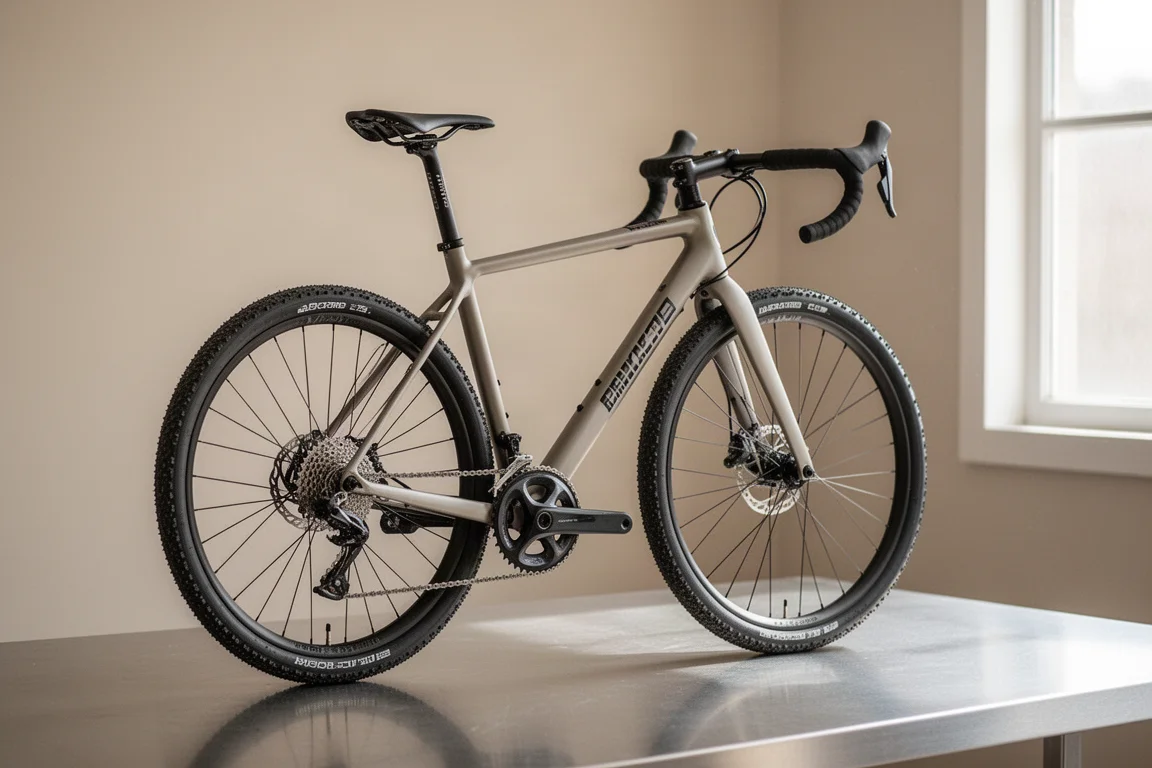
This is a blue carbon gravel bike with a speckled finish on the fork legs, a detail that reads as character rather than decoration once you see it in person. It runs a SRAM Force groupset with a power meter and Specialized tires, and the whole package has been assembled by a rider who spent years racing at a high level.
Two details are worth copying. The first is a top tube bag, which adds genuinely useful food storage on long gravel rides while sitting clear of the bars and the front wheel. The second is the way the race number is mounted: curved around the front of the bike and sitting almost flush with the frame, rather than pinned flat across the front and spoiling the aerodynamics of the entire front end.
The cockpit is a one-piece bar and stem. That is a fast, clean solution, but it locks you into a single bar width and stem length, so it only makes sense if your position is already dialled in. On a bike with this parts list, and for a rider with this much experience, it is a reasonable bet. If you are still experimenting with fit, a conventional two-piece setup will save you a lot of money later.
The frame is also backed by a brand that puts real effort into supporting domestic racing through its own teams, which is a small but genuine point in its favour.
Specialized Allez: The Alloy Bike That Overdelivers
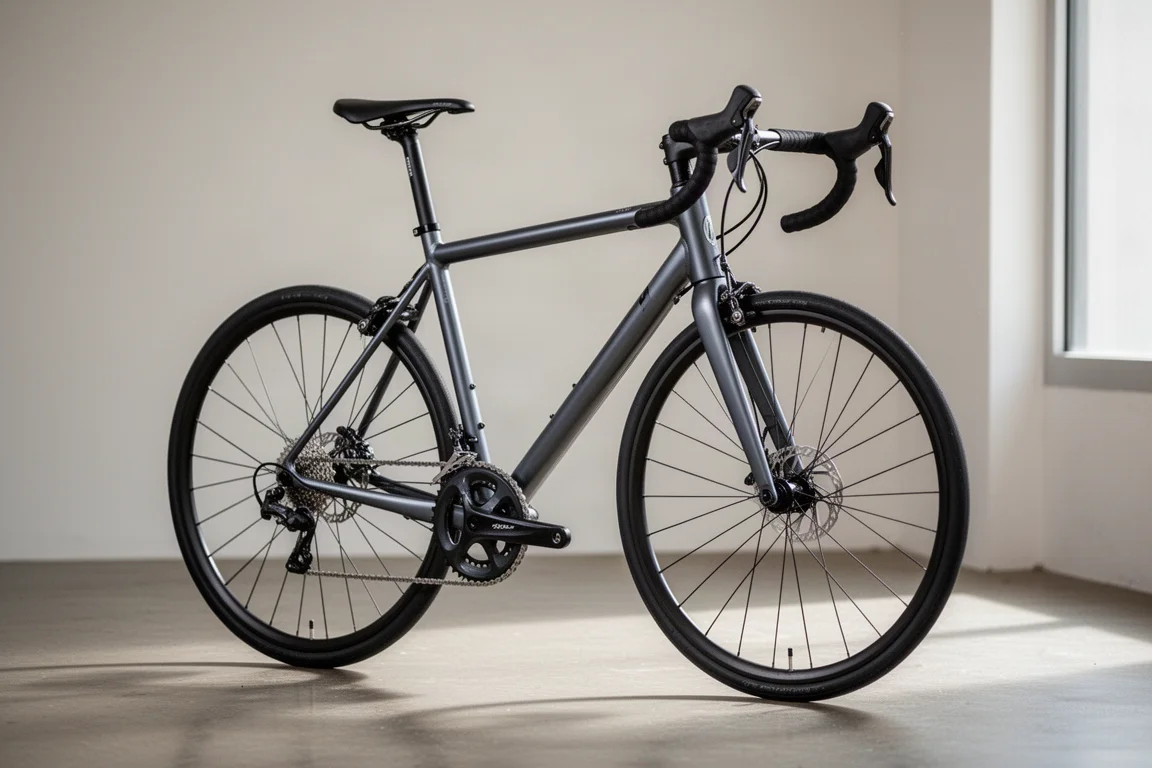
The frame is alloy rather than the flagship carbon model, and by the owner’s own account this is not a top-spec build. It still runs an 11-speed Ultegra Di2 groupset with disc brakes and a set of Hunt wheels, which places it well above what the frame material might suggest at first glance.
A 130mm stem stretches the position out and gives the bike a more aggressive, race-oriented look. Long stems on compact frames are not something to copy blindly, but when a frame runs short and tall, a longer stem can make the whole bike look and ride better than the sum of its parts. The paint scheme helps as well. The branding sits low on the down tube, which some riders love and others find odd, though the overall effect is striking.
There is a large saddle bag with room for real kit, plain bottle cages that do not need to match anything, and a fairly deep bar drop that is worth checking against your own preferences before copying the setup. Taken as a whole, this is a good reminder that an alloy frame with quality components remains a genuinely competitive way to spend money.
Giant Revolt: The Round-the-World Workhorse
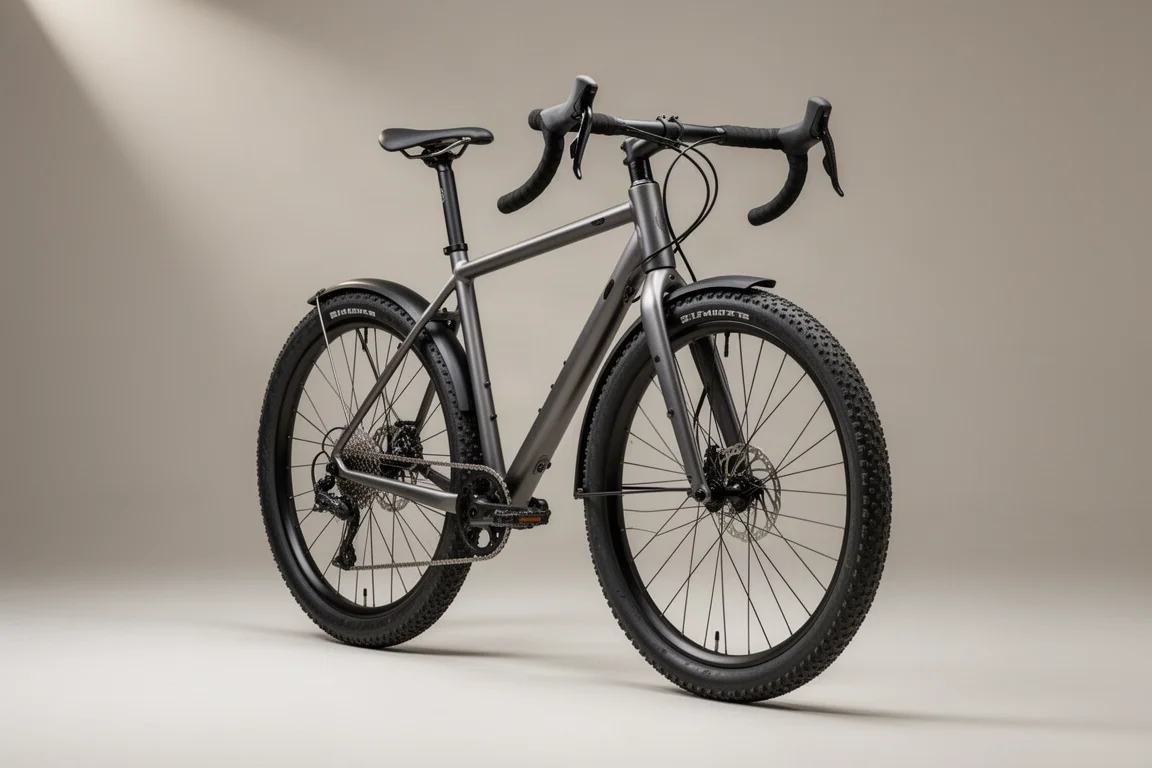
This one has the best story in the group. A full carbon gravel bike that covered roughly 15,000 km in four months across 19 countries without a single puncture, carrying a full touring load the whole way.
The failures are as instructive as the successes. A bolt on the front rack snapped near the border of Afghanistan on the Pamir Highway, caused by the weight carried in the two front panniers, and was repaired with zip ties to the fork that held for the remainder of the trip. Tires began delaminating in Turkey, and a fresh dose of sealant at a bike shop in Istanbul resolved it. The lesson is not that the bike is fragile, but that a well-supported frame with simple, repairable parts and broad dealer coverage is the right tool for that kind of ride.
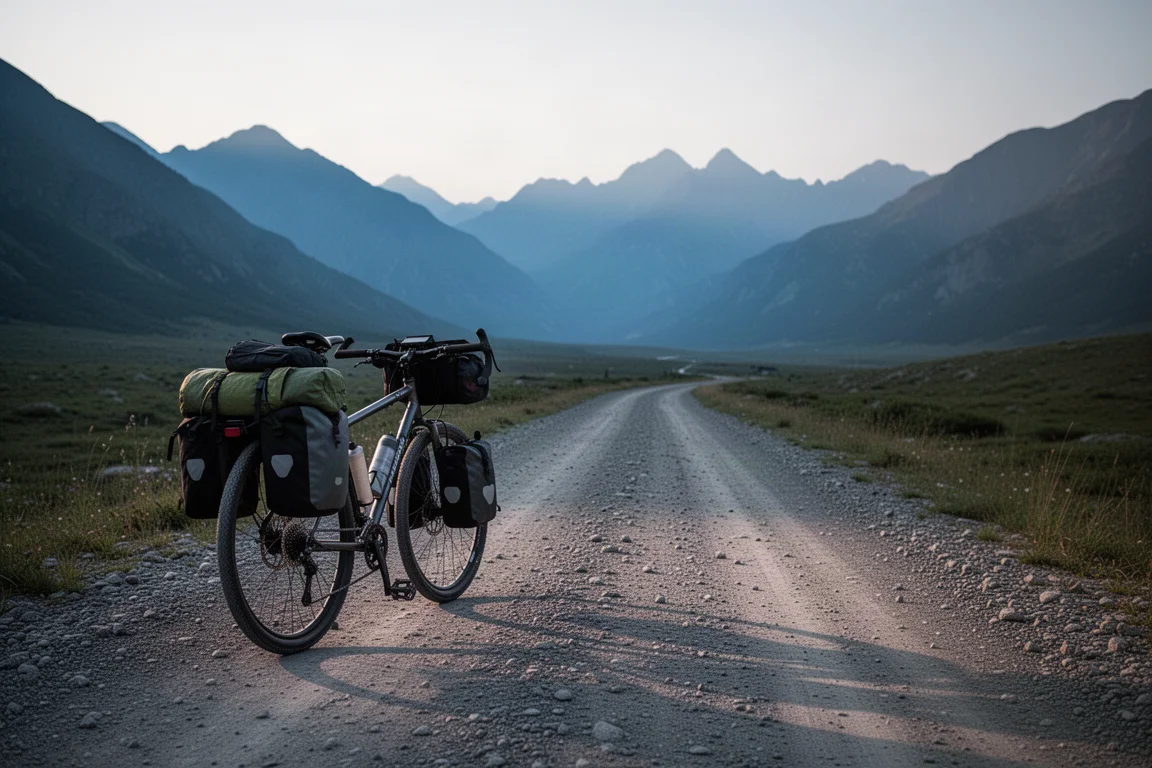
The groupset is entry level, with a crank that carries no more than the manufacturer’s name on it, and the frame is still full carbon. That combination is a strong argument that long-distance travel does not require an exotic build. The setup does expose one common problem: on a small frame, bottle clearance gets tight, and bottle cage bolt extenders that shift a cage slightly up or down are a cheap and effective fix. A wide-brimmed hat hung off the back of the bike is a small detail that makes a lot of sense for sun protection over long days in the saddle.
Giant Defy: Matte Paint and a Comfort-First Frame
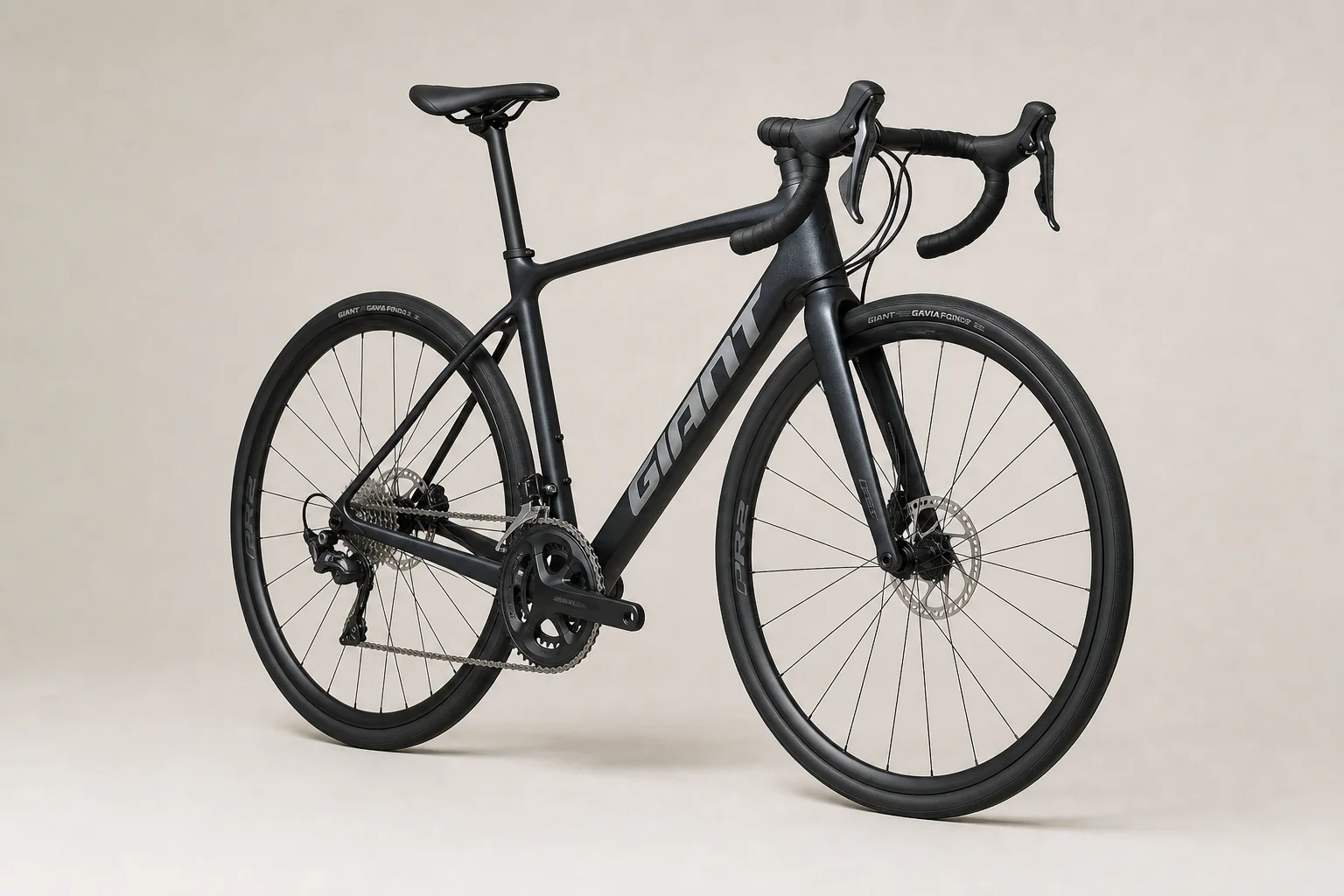
This is the endurance-leaning model in the range, built on a high-grade composite frame with an integrated seatpost. The finish is the standout feature: a matte fade with the branding rendered as an outline rather than a solid block, which gives the frame a much lighter look than the usual treatment and photographs beautifully.
The build is thoroughly matched, with the same brand’s wheels, bars and tires throughout, and the rider’s kit picks up the frame colours. Big-volume tires with a slick centre and grip on the shoulders suit the endurance brief well, offering comfort and cornering confidence without sacrificing too much speed on smooth tarmac. The rear light is the weak point: it is the type bundled with a new bike, and it does not throw much light, so it is worth upgrading on any commuter or winter machine.
This is a bike that prioritises comfort over outright pace, and the paintwork is the reason it stands out in a group of far more expensive machines.
Cervélo S5: Full-Aero, Full-Commitment
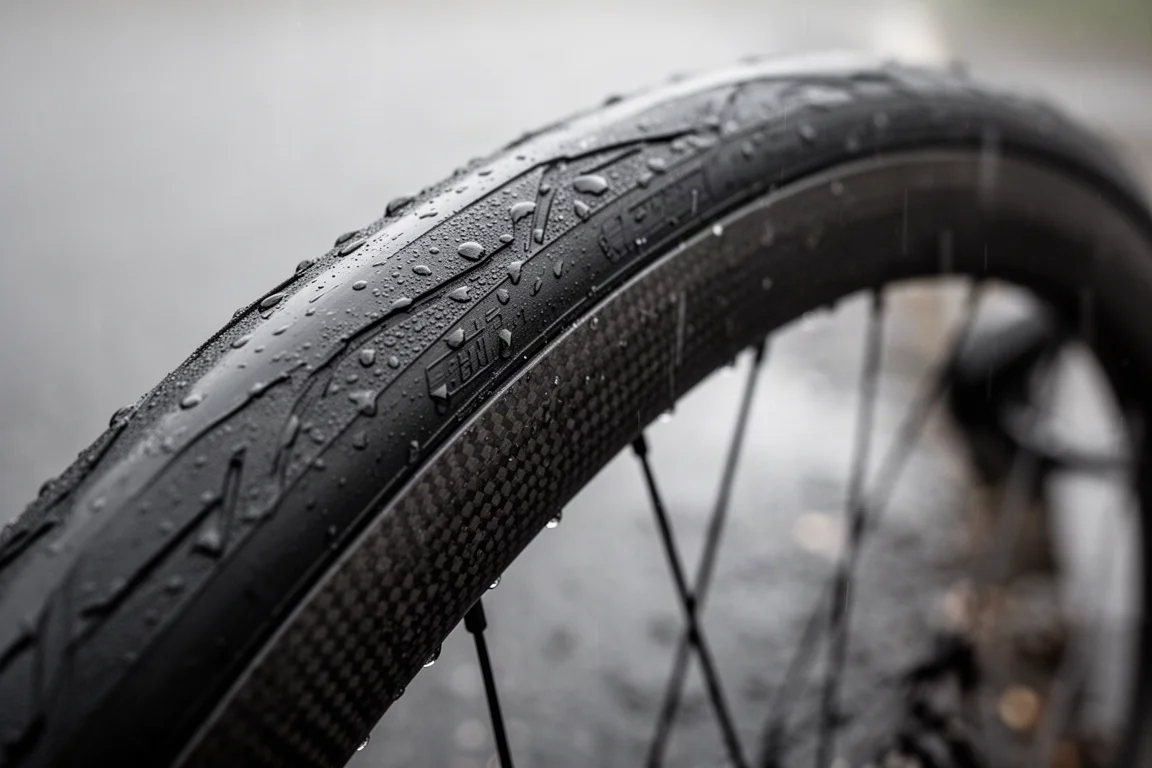
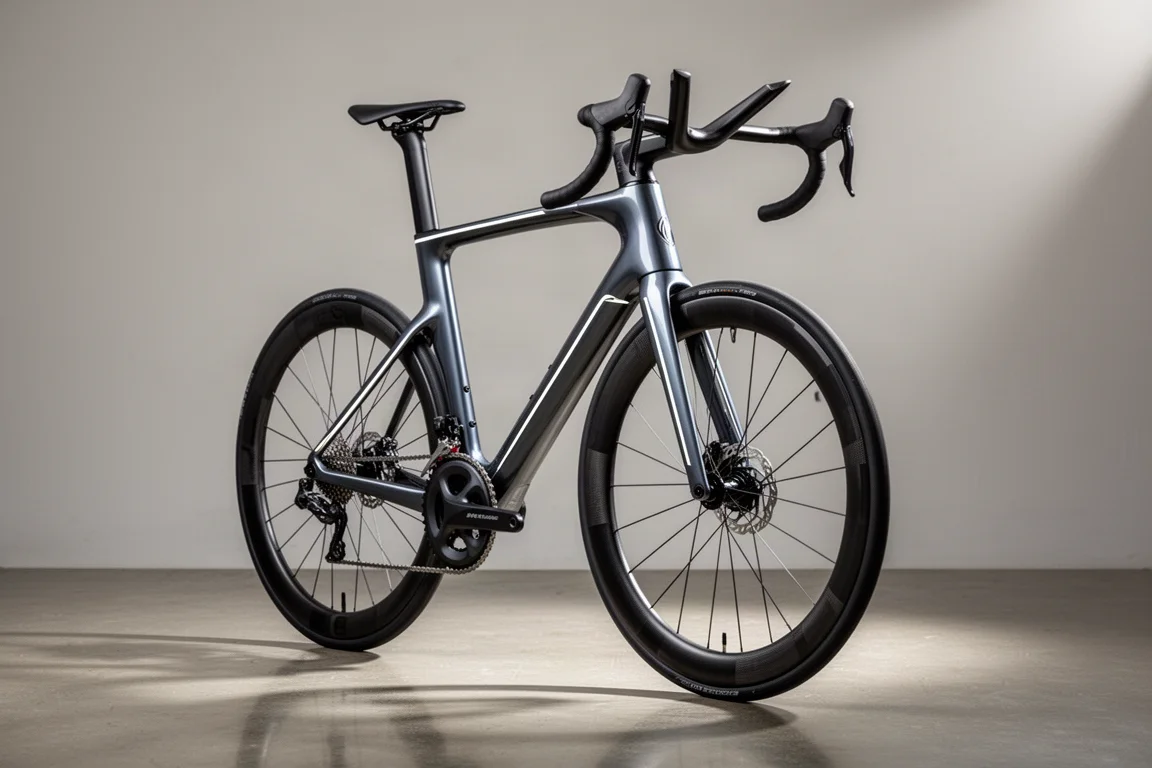
This is a full-aero race bike built to a clear philosophy. It runs Reserve 63/52 wheels set up tubeless with 30mm tires, a 50-tooth chainring paired with a 10-33 cassette, and a colourway that shifts between green, yellow and oil-slick tones depending on the light.
The numbers matter less than the intent. Thirty-millimetre tires on a bike like this show that wider rubber is no longer treated as a speed compromise, and the gearing is set up for a strong rider on rolling terrain rather than for long alpine climbs. The front end is the interesting part. There is no conventional steerer and stem arrangement, with the fork bolting to the frame and a fairing covering the junction, which is closer to how a time trial bike is assembled.
That integration looks superb, and it also means you want a good mechanic in your life. The saddle is tipped slightly nose-down, a common position for riders chasing an aggressive front end. This is a bike with real character, and it makes no apology for what it is designed to do.
Worth saying plainly: a machine this focused is not the right answer for someone who does not care about speed. It is an excellent bike for the riding it was built around, and it makes no attempt to be versatile.
Omnium Mini Max: The Cargo Bike That Replaces a Car
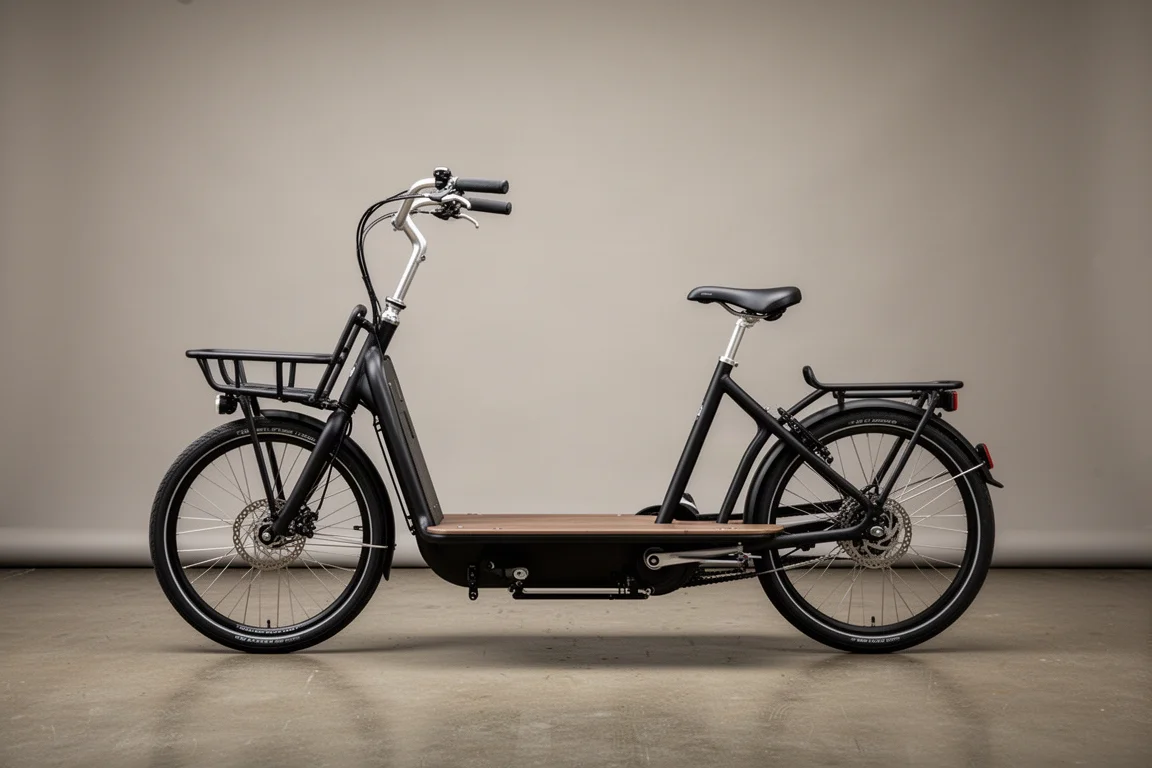
The most unusual bike here, and arguably the most useful. This is a compact cargo bike in a small frame size, ridden daily for around four years and currently carrying two adults, two dogs and a lot of character.
The specification is a mix of sensible and special. There is a Brooks C17 saddle that both riders find comfortable, a GRX crank at the front and a 10-speed Deore drivetrain at the back, and a carbon top deck that trims weight from the load area. The wheels come from Halo: a Super Drive hub laced to a T2 rim at the rear, and an SP dynamo hub laced to a T2 rim at the front. T2 rims make sense on cargo bikes because they are available in both 20-inch and 700c, so front and rear can be matched. The dynamo is not wired up yet, and there is a custom CNC-machined mount, designed and made by the owner, intended to tuck a dynamo light neatly underneath the load bed.
There are mudguards, which matter on a bike used in all weathers, and tires with proper tread on the shoulders. The small front wheel feels planted rather than nervous, because the weight distribution puts real pressure over the front contact patch. An electric version is available, and with a strong motor it is quick enough to keep pace with road bikes in traffic. It is not a cheap way to get around, with a complete setup running into many thousands, but as a replacement for a car or a second car, particularly in a rural area, the maths can work.
Scott Foil RC Pro: Integration Taken to the Limit
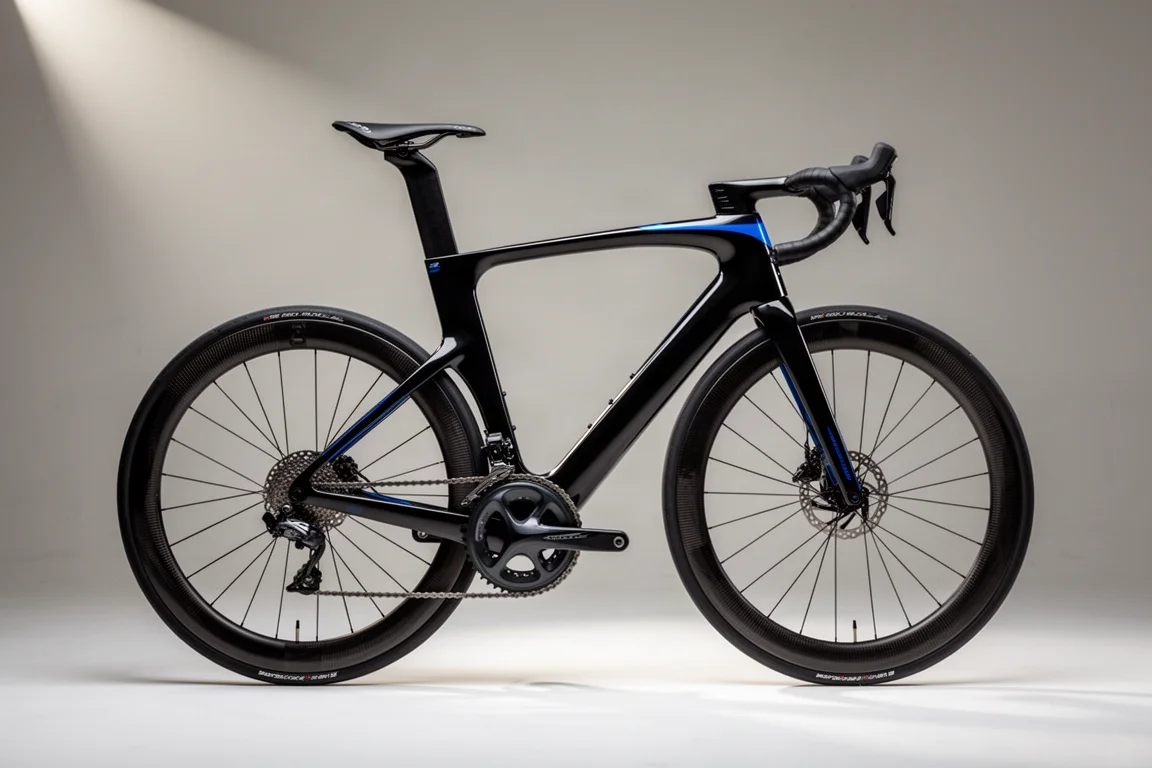
A 2023 aero road bike with the newest 12-speed Dura-Ace groupset and a one-piece carbon wheelset using carbon spokes. The frame size is extra small, which makes the deep-section silhouette look even more pronounced.
The details are extremely tidy. The computer mount projects forward from the front end with a light tucked underneath it, a neat way to keep the cockpit uncluttered, and the tires are on the generous side, in keeping with the trend toward wider rubber on aero bikes. The owner is clearly methodical: the same fittings appear on every bike in the stable, and the position is dialled in rather than guessed at.
The trade-off is serviceability. Everything is integrated, so anything that needs changing becomes a workshop job, which is the bike equivalent of a modern car that needs specialist equipment for basic maintenance. If you do your own spannering, factor that in before buying anything this integrated. If you do not, it simply means budgeting for shop time.
R Spree R: A Boutique Carbon Road Bike With Classic Touches
This is a boutique brand from Los Angeles that worked with a respected steel frame builder on its geometry, then applied that thinking to a flagship carbon road bike. The result mixes modern and classic cues: an integrated cockpit and generous tire clearance, but no dropped seat stays.
Clearance for 35mm tires is a real advantage, and the bike currently runs 30s that measure closer to 32 on its wide carbon wheels. The branding is small and chrome-like, placed where it reads cleanly rather than shouting, and the groupset is top end with an oversized jockey wheel. The bar shape is a particular highlight, with a profile that looks comfortable as well as fast.
The one criticism concerns the bottle cages, which are a themed design that does not grip bottles well. It is a small thing and easily changed. Overall this is a well thought out, clean, well-maintained bike that is considerably more interesting than its specification sheet suggests.
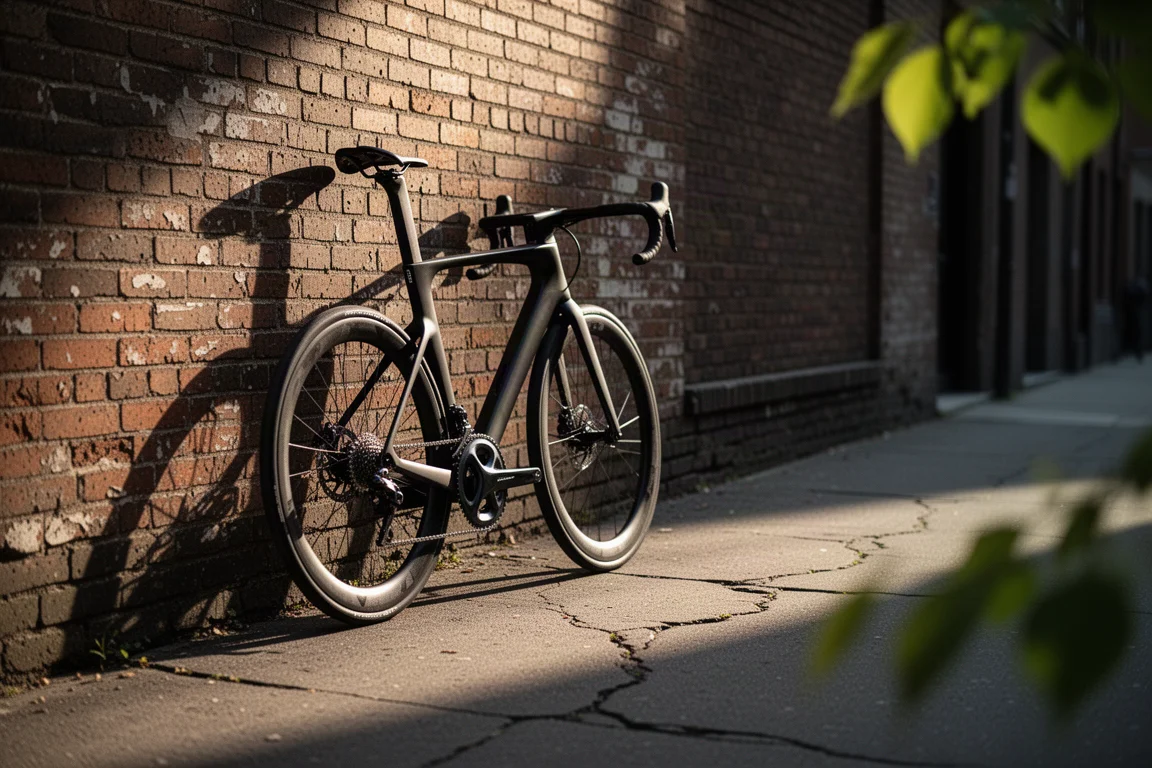
That combination of boutique geometry and modern carbon construction is exactly the sort of thing that is hard to find in a mainstream range, and it is why this bike stands out in a strong group.
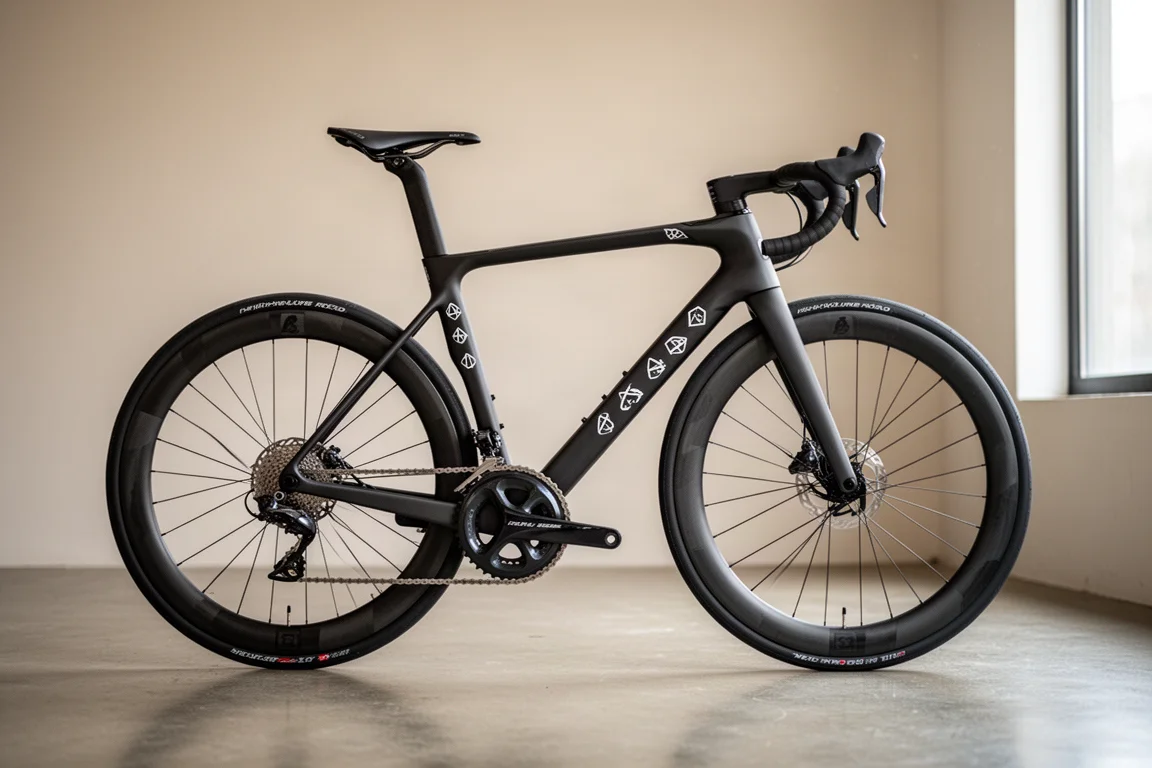
Buying Advice: Matching the Bike to the Rider
The clearest lesson from this collection is that specification level matters far less than fit. The alloy road bike with a high-end groupset is a more rewarding purchase than a carbon frame with cheap components, and the world-touring gravel bike proves that an entry-level drivetrain is not a barrier to an enormous ride.
Decide first whether you want focus or versatility. The aero road bikes here are superb at what they do and make no concessions elsewhere, while the gravel and endurance bikes cover a much wider range of riding with only a small penalty in outright speed. If you ride one kind of terrain almost exclusively, a specialised bike will reward you. If your riding varies week to week, versatility is worth more than any weight saving.
Integration deserves a hard look before you buy. One-piece cockpits, hidden cabling and non-standard front ends look superb and make routine changes expensive. If your position is not settled, or you like doing your own maintenance, a conventional setup will save you money and frustration.
Smaller riders should check bottle clearance and front-end load carefully. Compact frames often struggle to fit two bottles plus a frame bag, and bolt extenders are a cheap solution worth knowing about.
Finally, consider the whole cost of ownership rather than the sticker price. A cargo bike that replaces a car is a different financial proposition from a third road bike, and a bike that needs dealer servicing every time something rattles should be budgeted for accordingly.
Conclusion
Eight bikes, eight sensible answers to eight different questions. The gravel racer shows how much a well-chosen detail like a top tube bag or a neatly mounted race number improves a bike in daily use. The alloy road bike proves that frame material is not destiny. The touring gravel bike demonstrates that simple parts and broad dealer support matter more than specification on a long trip. The cargo bike is the most convincing argument here that a bicycle can genuinely stand in for a car.
If you take one thing away, make it this: buy for the riding you do, be honest about whether you want to maintain the bike yourself, and do not pay for integration you cannot service. Get those three right and almost any of these approaches will serve you well for years.
Further reading
Related Reviews
Cycling
2026 Bike of the Year and the Cycling Gear Worth Watching
A drop bar roundup for 2026 covering the Ridley Kanzo Fast 2.0, Shimano Dura-Ace Di2 R9300, Trek Checkpoint ALR Gen 3, Specialized Tarmac SL9, Garmin Fenix 9 and Insta360 X6.
Cycling
Best All-Road Bikes 2026: Six Versatile Endurance Road Bikes Worth Considering
A practical look at six all-road and endurance road bikes, from lightweight carbon speed machines to steel all-rounders and comfort-focused mile eaters.
Cycling
Best All-Road Bikes 2026: 8 Endurance Bikes for Road and Light Gravel
Eight all-road bikes that blur the line between endurance road and light gravel, compared on tire clearance, ride character, practicality, and value.