Aquarium Lighting
EcoTech Radion G6 Blue Review: Wider Spread for Deep Coral Displays
A practical look at what changes when a deep 1,500-gallon coral display moves from older Radion fixtures to the Radion G6 Blue, covering coverage, spectrum, output and the trade-offs worth weighing before buying.
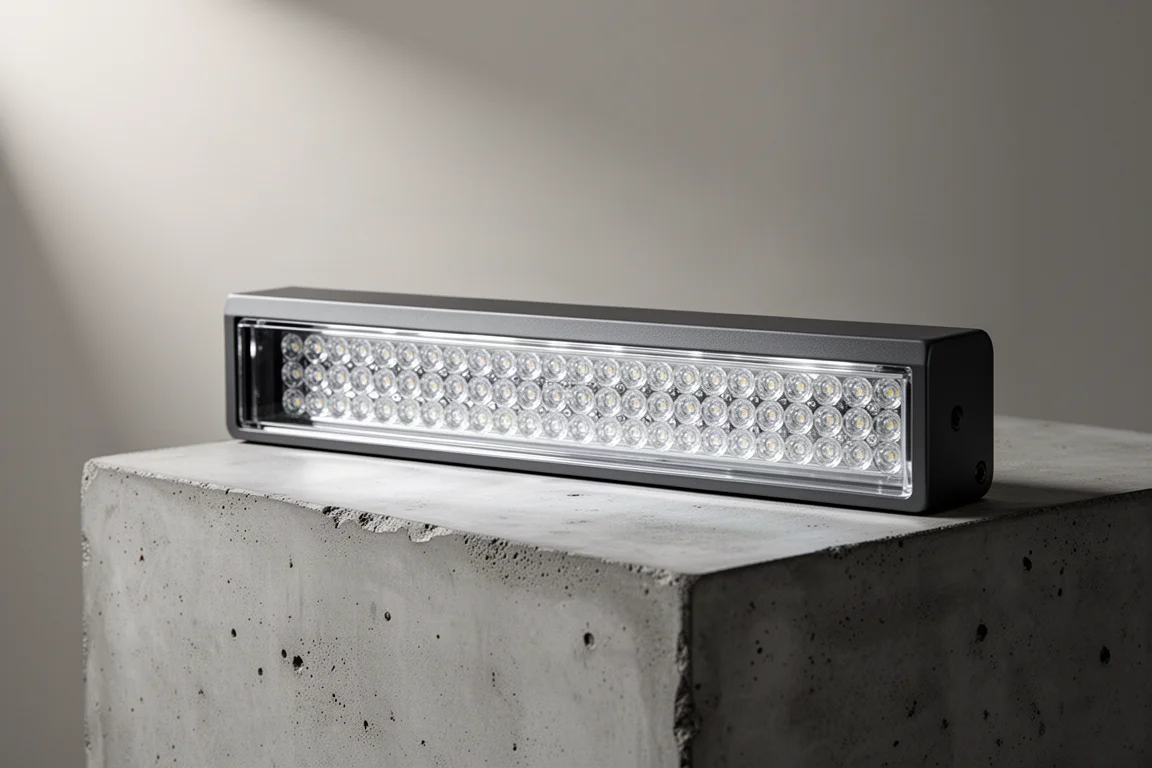
Introduction
Swapping lighting on a four-foot-deep, 1,500-gallon coral display is not a casual upgrade. The system covered here runs 22 fixtures mounted almost shoulder to shoulder at the ceiling, and those fixtures had been working well for years.
The move to the EcoTech Radion G6 Blue was made for one practical reason: too much of the light was landing in narrow, focused pools, and too little was reaching the outer edges, the back corners, and the shaded undersides of large colonies.
Three weeks after the changeover, the differences are easy to see inside the tank. This review covers what changed, what the trade-offs are, and which reef keepers are likely to get the most from the same move.
Who the Radion G6 Blue Is For
The Radion G6 Blue suits reef keepers who already run a predominantly blue schedule and treat coral fluorescence as a central part of the viewing experience. Blue light dominates most of the daily photoperiod on the display described here, and that schedule is exactly why the blue-leaning version was chosen over the whiter alternative.
It also fits anyone lighting a deep tank. This display is four feet deep, and the ceiling was already at capacity with 22 fixtures mounted edge to edge. Tanks with dark back corners, shaded powerheads, or large colonies that block light from the corals sitting beneath them are the clearest candidates for a spread-focused fixture.
Commercial coral growers have a practical interest as well. When square footage is the limiting resource, every newly lit area of rock becomes usable growing space.
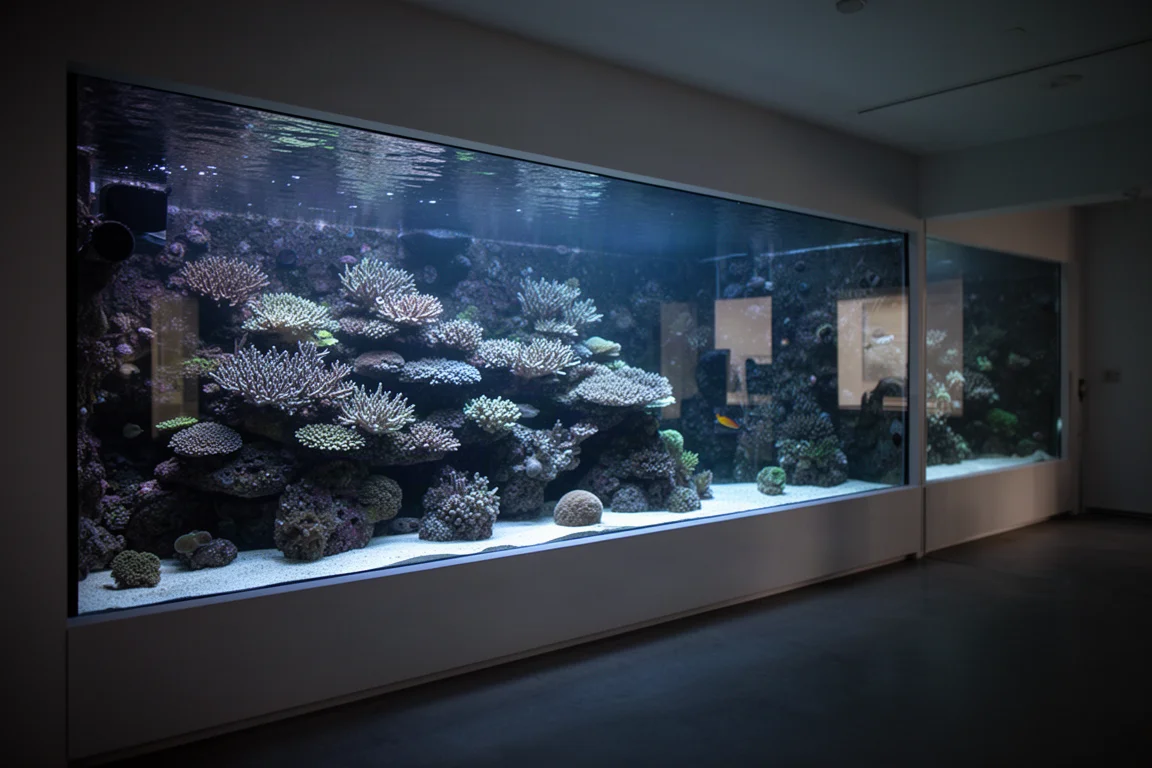
Smaller systems deserve a second thought. A wider distribution changes how light lands across a tank compared with a narrow, high-intensity hotspot, so a hobbyist moving from a single older fixture should plan to review mounting height and photoperiod rather than simply swapping boxes.
Wider Coverage and Softer Shadowing
The previous generation of fixtures delivered a focused cone of light. That had real value on a four-foot-deep tank, because it pushed intensity all the way to the bottom. The cost was a set of predictable dark zones: a back corner near a hot pink millepora colony, a lower corner, and the areas around the powerheads.
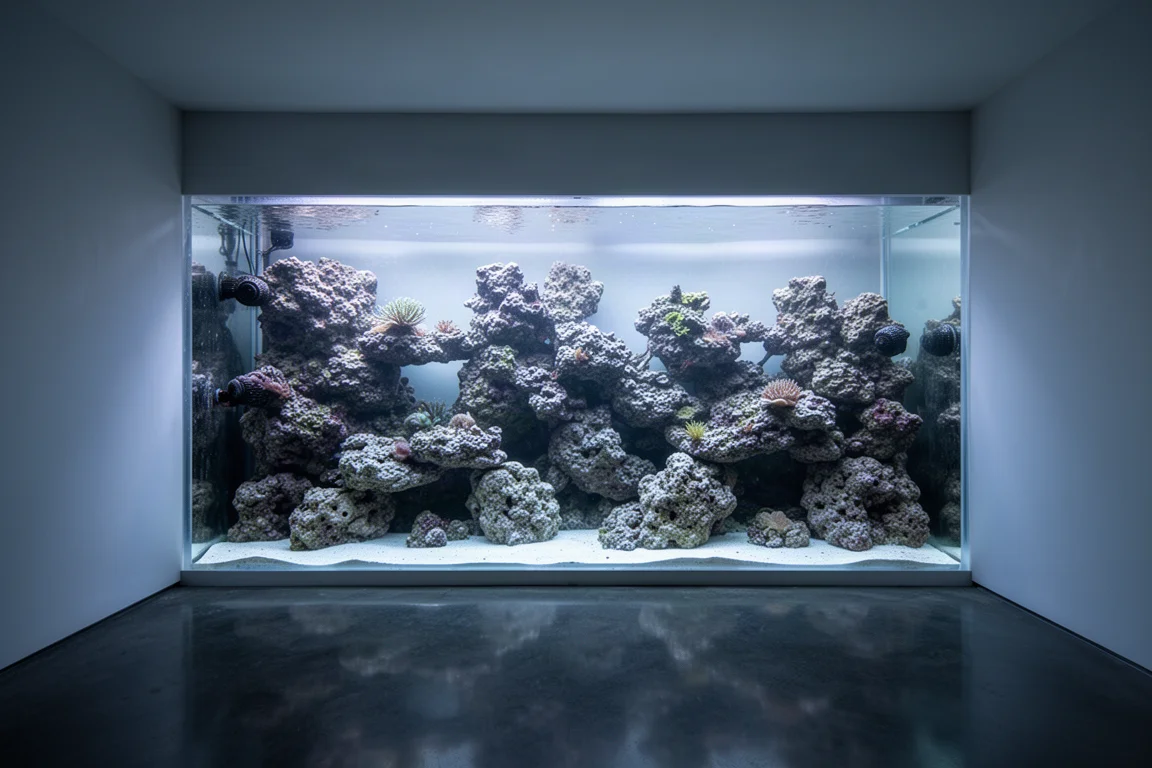
The Gen-6 design spreads the same fixture count across a much wider array. In practice, the walls of the tank are now lit all the way around, and the team running the display estimates that roughly 50% more light covers areas that previously received very little. Powerheads that used to sit in their own shadow are clearly visible, and the glass shows light in places that were once dark.
The more striking change is inside the colonies. Undersides that previously read as dark brown or black now show the actual color of the coral tissue, an effect that had not been seen since the days of T5 fluorescent lighting. A Montipora sitting below a bank of Acropora is muted by the branches above it rather than fully shaded, and a vertical lip that had been in shadow is now lit.
That extra brightness does carry maintenance with it. Areas of glass that never needed attention now collect growth, and the laminated front panel, built from two half-inch sheets, reveals a slight haze under the wider light. Possible fixes under consideration include changing the angle of the fixtures at the top or hanging a drop cloth to catch light at the glass edge.
What Three Weeks of New Light Revealed
Three weeks is not a long-term verdict, but it is enough time for obvious stress responses to surface, and none appeared. Coloration and polyp extension stayed consistent, and the greater reach of the light is doing visible work: color on the undersides of colonies is becoming richer, and a green fragment tucked into a corner that had gone dark is recovering.
There is one measurable trade-off. Growth tips look slightly less pronounced, which points to marginally slower growth at the current output. The plan is to raise intensity gradually to bring that back while keeping the coverage gains.
One coral responded in a way that was not anticipated. A bounce mushroom in the upper corner of the tank had been losing pink coloration and the bubble on its skirt under the older fixtures at full output, a likely stress response to sitting roughly 12 to 14 inches below the surface in a concentrated beam. With light distributed more evenly, that colony is under less pressure while the bottom of the tank still receives what it needs.
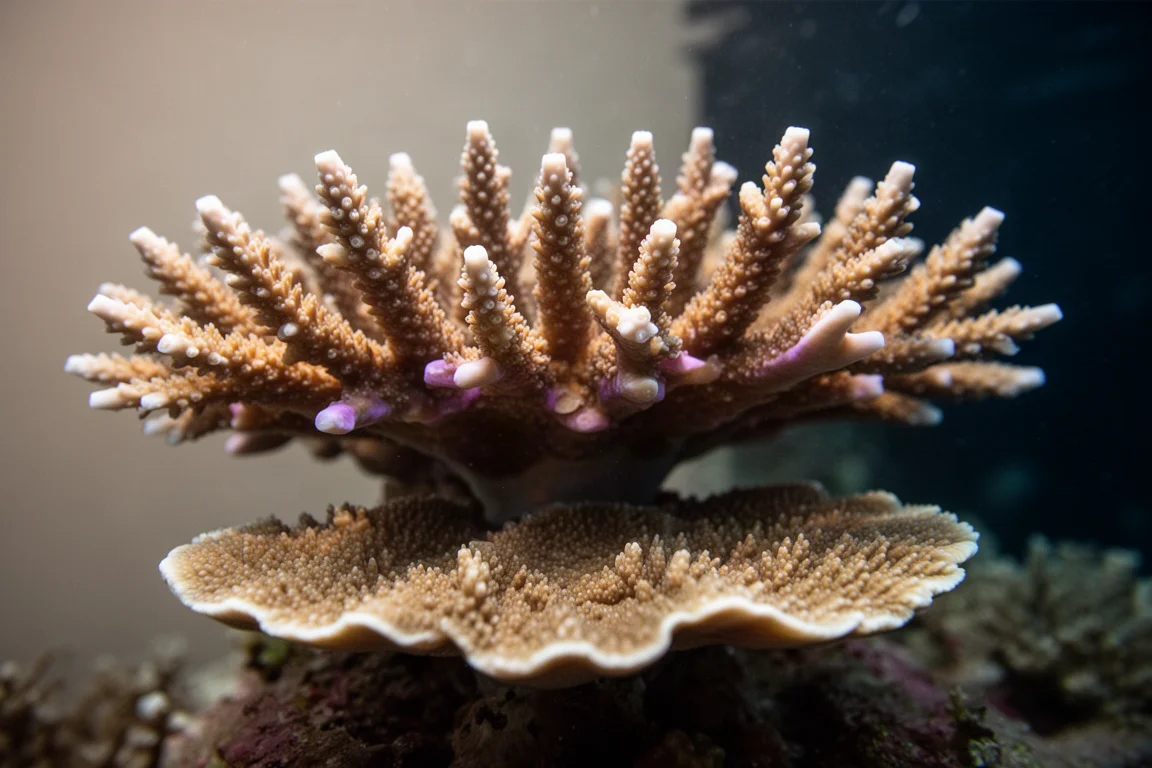
The bigger picture is space. Areas that used to be written off as too dark to plant are back in play, which matters in a working display where colonies are constantly trimmed and repositioned to keep light reaching the right places.
Spectrum: Warm Whites and Fluorescent Pop
Spectrum is where the G6 Blue separates itself from earlier Pro-generation fixtures. The Pro version runs whiter, with a cast that leans toward yellow. Fish and pink tones looked good under it, but on a schedule dominated by blue light, and for a business built around coral fluorescence, the blue version is the better match. Color from above is crisp, and fluorescence in the tank is strong even before the fixtures reach full blue.
The other shift is in the whites. Earlier lighting leaned on cool white diodes, and the tank team routinely dialed the red channel down to avoid visible red banding and color separation drifting across the aquarium. The newer warm white mix folds that red content into the white output, so the tank shows a cleaner, more natural color without extra color spilling around the display. Warm white also balances a blue-heavy schedule and highlights the chromatic pigment in fish rather than adding more blue to the mix.
Intensity, Heat, and Longevity
The previous lighting schedule ran two plateaus at 100% intensity: a bright full-spectrum peak early in the day, a step down into a softer full spectrum, and then blue for the remainder. That added up to roughly six or seven hours of white light including ramp times.
After the switch, the same schedule looked so bright that overall output was cut to 60%, a 40% reduction, and the tank still reads as fully lit. The fixtures also run cooler. The fans sit idle for much of the day because the diodes are not generating enough heat to trigger them, which in a cramped, warm equipment space with limited airflow is a meaningful benefit. Cooler operation also points toward longer diode life.
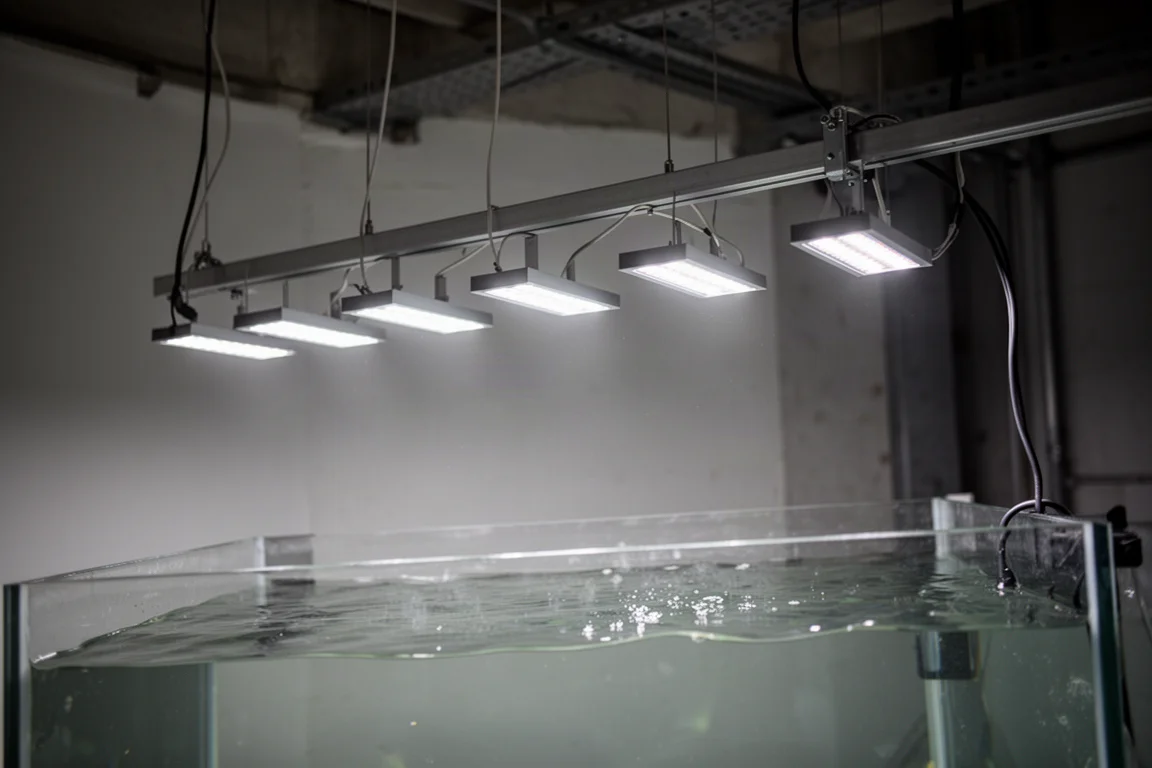
Installation turned out to be far simpler than expected. The power supply is the same, the mounting footprint is the same, and the existing cables and cable management stayed in place, so all 22 fixtures were swapped without rewiring the ceiling. Communication with the Mobius app was also noticeably easier than with the previous generation.
Worth noting: the 60% figure comes from visual assessment rather than PAR measurements, and the team’s plan is to nudge intensity back up over time to find the sweet spot.
Things to Consider Before Buying
Coverage should drive the decision here. The fixture rewards reef keepers who need light spread across a wide footprint. If your tank is small, or if you deliberately want a narrow, aggressive beam aimed at a specific coral placement, the wider distribution will feel like a change in plan rather than a pure upgrade.
More light on the glass means more maintenance. Expect to clean in places that previously stayed clear, and if your tank has a laminated viewing panel, be prepared for some haze and refraction to show up under the wider output.
The long-term questions are genuinely open. Whether these fixtures hold up over years of service, and whether corals respond as hoped, will only be answered over a longer stretch than three weeks. There is also an unresolved curiosity about coralline algae: coralline growth tends to slow on LED-lit systems compared with older approaches, and whether the panel-style spread changes that pattern is unproven.
For commercial operations, the economics matter more than the aesthetics. Newly lit corners convert directly into usable growing space, and the stated position from the team running this display is that if the approach continues to perform, more of its systems will move to the same generation.
Buying Advice
If you are upgrading from a Gen-3 or Gen-4 fixture on a deep tank with dark zones, the G6 Blue addresses the exact problem those tanks tend to have: uneven coverage. The practical benefits observed here are wider illumination to the walls and corners, visible color on the undersides of colonies, a blue-leaning spectrum built for fluorescence, and the ability to run at lower output with the same visual result.
Before you buy, decide which version fits your schedule. The blue version is aimed at tanks that run blue-dominant light for most of the day, while the whiter Pro variant suits reef keepers who prefer a brighter, more neutral look. This display runs heavily blue and chose accordingly.
Plan the transition rather than rushing it. Fixtures can be swapped without touching the power supply or the existing cable management, which kept a 22-unit changeover to a single working session, and starting at reduced intensity is a sensible way to let corals adapt before pushing output back up.
For hobbyists running a single fixture, the calculation is simpler. The change is most worthwhile when a tank is wide or deep enough that shadowed areas and blocked colonies are a recurring frustration, rather than a compact setup that one light already covers comfortably.
Conclusion
The Radion G6 Blue earns its place on this display because it solved a specific, visible problem. Moving from focused cones to a wider panel-style spread lit the walls, the back corners, and the undersides of large colonies, and it did so while letting the system run at 60% of its previous output.
Three weeks in, the honest summary is that the results are promising rather than proven. Coloration is improving in areas that were previously dark, there has been no adverse reaction, and the main trade-off is a slightly slower growth tip that the team intends to correct by raising intensity. Fixture longevity and long-term coral performance remain open questions.
For reef keepers with a deep tank, a blue-heavy schedule, and shadows they have been fighting for years, this is a well-targeted upgrade. For everyone else, the decision comes down to how much of the tank you actually need to light.
Product link
View more details for EcoTech Radion G6 Blue
This product is mentioned in the review. Check the specifications, options, and compatibility before buying.
View more details for EcoTech Radion G6 BlueFurther reading
Related Reviews
Aquarium Lighting
AI Blade LED Lights Review: A Versatile Strip Light for Reef Tanks
A practical look at the AI Blade LED line, including the value-focused Grow spectrum, mounting options, app control and PAR performance.
Aquarium Lighting
AI Hydra 32 and Hydra 64 Setup Guide: Mounting Heights, Spacing, and Add-On Lighting
A practical reef lighting guide covering optimal mounting heights for the AI Hydra 32 and Hydra 64, spacing for even coverage, and when add-on lighting is worth it.
Aquarium Lighting
AI Prime Review: A Compact Reef Light That Grows With Your Tank
A small, modular reef aquarium LED that reaches LPS and soft coral PAR levels over a 60-gallon cube, plus the spacing, mounting height, and control habits that make it work.