Aquarium Lighting
EcoTech Marine Radion Buying Guide: XR15 vs XR30, Blue vs Pro, and the MXM Module
A practical guide to the EcoTech Marine Radion range: what the lens design changes, how to choose between the XR15 and XR30, how the Blue and Pro profiles differ, and what the optional MXM module adds.
Introduction
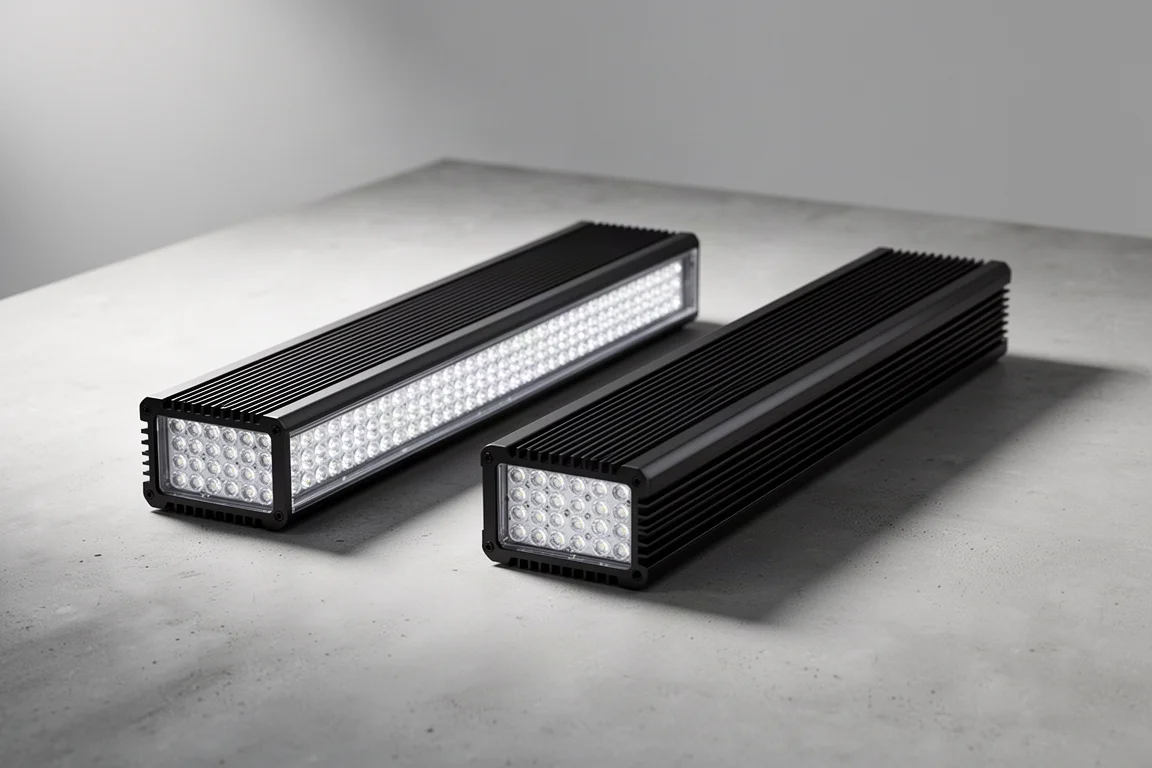
The Radion range is one of the most established names in LED reef lighting, and the questions that come up around it are remarkably consistent. What does the lens design actually change? Is the XR15 or the XR30 the right fit? How do the Blue and Pro spectral profiles differ? What does the optional MXM module add? And do the fixtures justify the reputation they carry?
This guide works through each of those points in turn, focusing on the practical details that shape a purchase decision rather than spec sheet trivia.
How to Choose Intensity, Coverage, and Spread
Getting more intensity out of a light fixture without increasing power draw sounds like a straightforward win, and up to a point it is. The trade-off is spread. The fixture is not creating more photons with the new lens approach; it is concentrating the photons it already produces over a smaller surface area.
That behavior is genuinely useful in a few specific situations. A taller aquarium, usually over 24 inches tall, benefits from the extra punch because the light reaches the bottom of the tank before it begins spreading out. The same concentration is useful when you want to create deliberate high and low PAR zones in a mixed reef, placing light-demanding SPS corals directly under the fixtures while LPS corals and soft corals sit off to the sides. It can also help in a thinner aquarium where you want to keep light spill contained inside the tank rather than washing across the room.
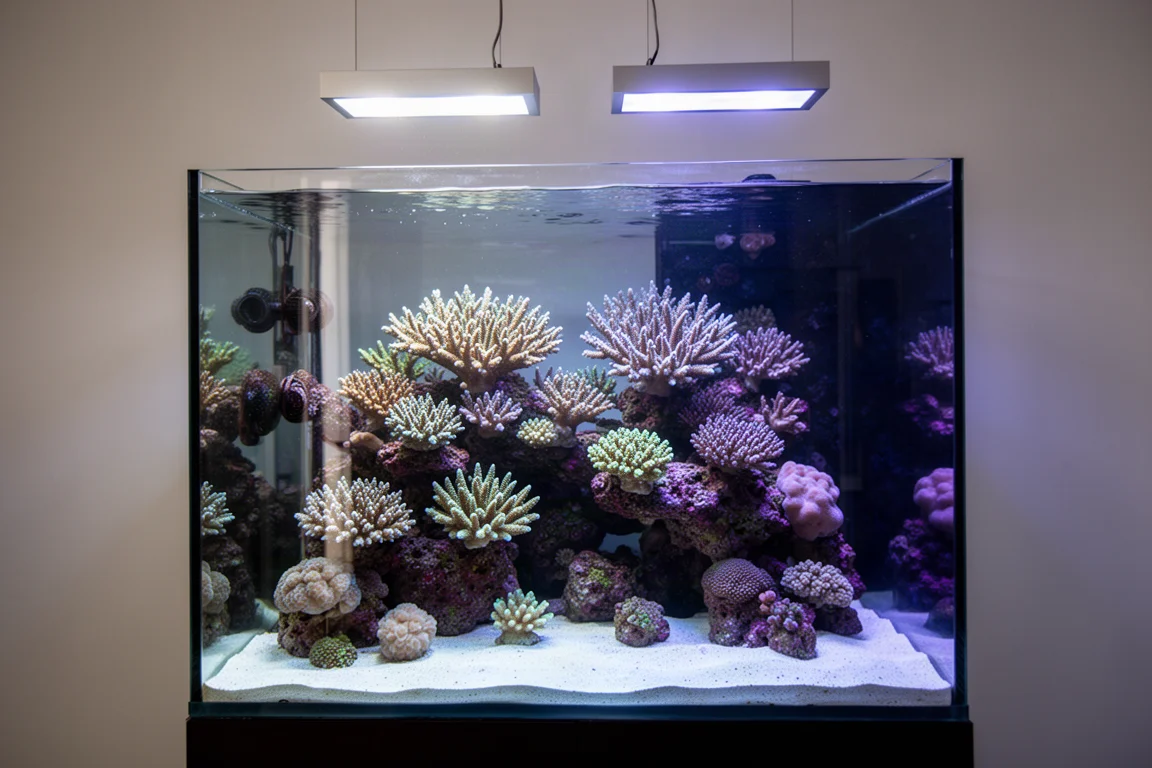
The one adjustment worth remembering is intensity. When you concentrate a lot of light into a smaller volume of water, dial the output down. Otherwise the tank is simply over-lit.
Coverage is a separate question from intensity, and it determines how many fixtures a system needs. A longer or wider aquarium is not solved by one larger fixture; it is solved by running more fixtures of whichever model suits the corals being kept.
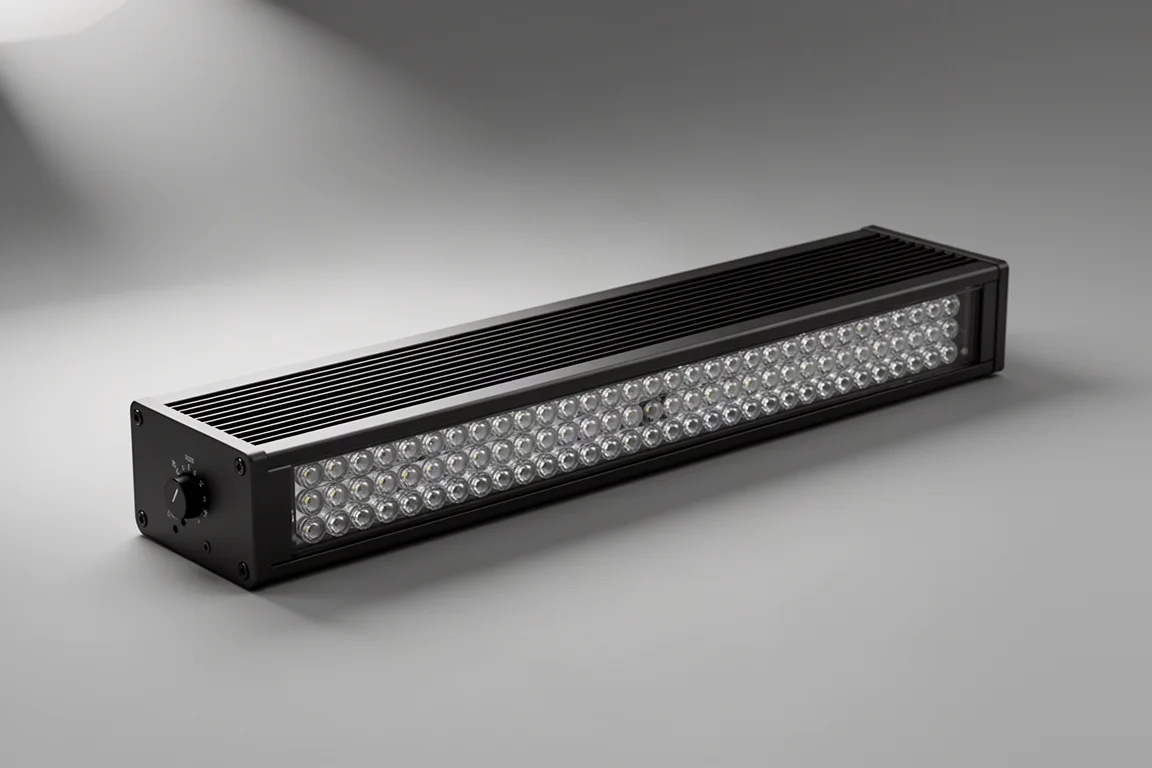
EcoTech Marine Radion XR15
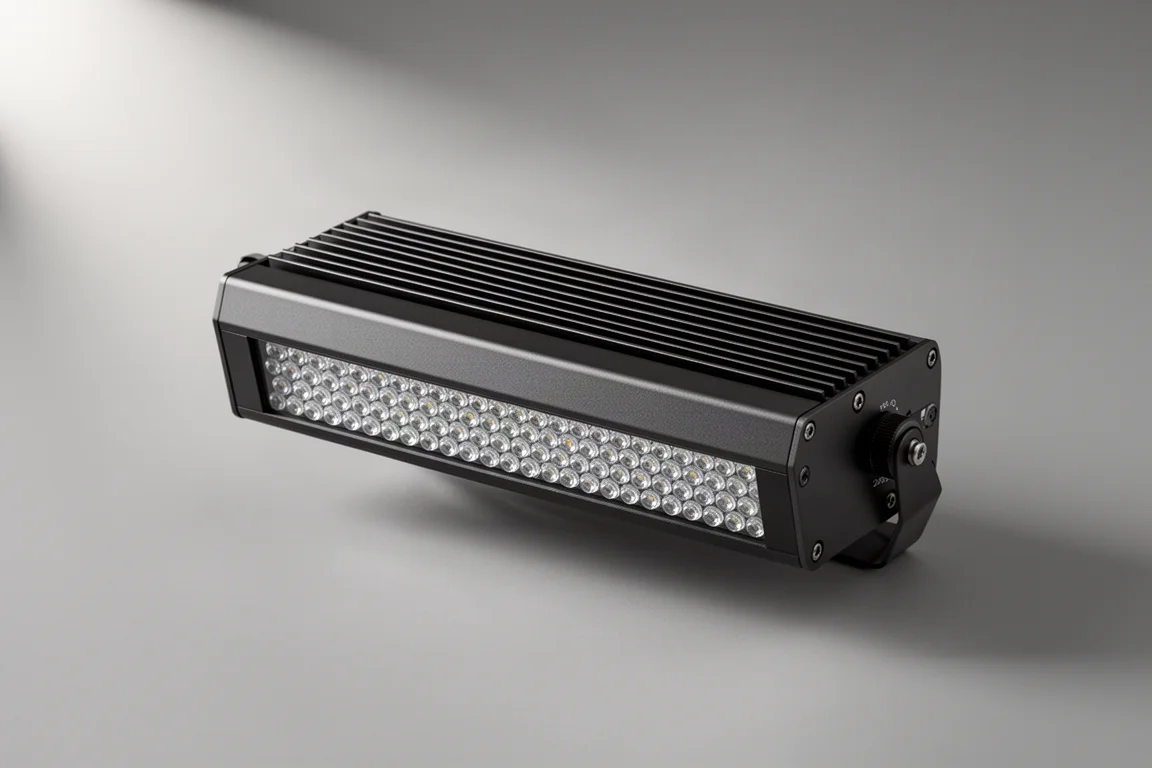
The XR15 is the more compact of the two core Radion fixtures. Because it draws roughly half the power of the XR30, it is best understood as a lower-intensity light rather than simply a smaller one.
That makes it a strong match for a reef built around soft corals or an LPS dominated tank, and for shallow aquariums where light does not have far to travel. In a tank that is much longer or wider, the XR15 still works; you simply use more of them to cover the additional footprint.
EcoTech Marine Radion XR30
The XR30 is the wider fixture in the range, adding a few extra inches of side-to-side coverage over the XR15. The more significant difference is output: it draws roughly twice the power of the XR15, which makes it the higher-intensity option of the two.
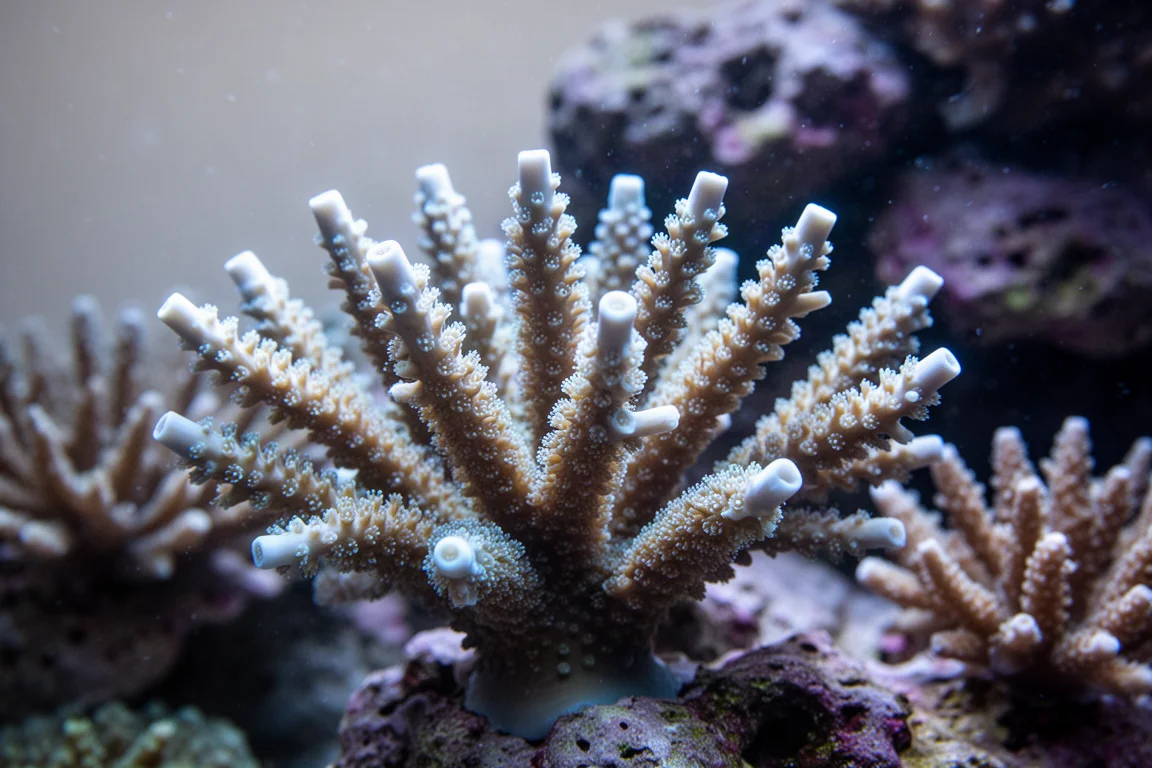
If you plan to keep high-light corals such as SPS in a reef aquarium with typical dimensions, the XR30 is likely the better starting point. The same principle applies to long or wide tanks, where the answer is more fixtures rather than a different model.
EcoTech Marine Radion Blue
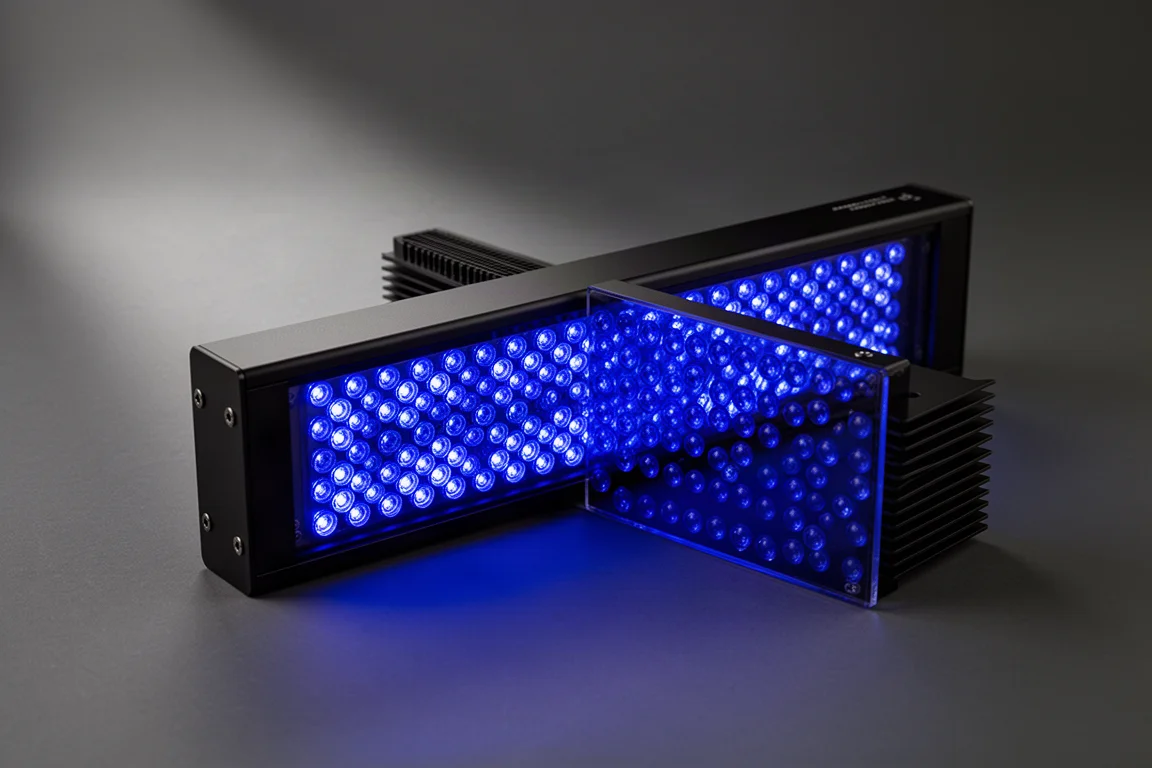
The Blue and the Pro differ in their inherent spectral profile, which sounds more technical than it is. Both fixtures carry the necessary spectral peaks for strong coral growth and coloration, so the choice between them is not a question of which one grows corals better. On that front, the two are close enough that the difference is marginal.
Where they diverge is the look. The Blue is a predominantly blue fixture designed to recreate a well-regarded AB+ spectral profile with all of the fixture’s channels running at 100 percent, which lets you get maximum output while using that profile. It suits reefers who prefer a bluer tank that shows off coral fluorescence and color pop at all times.
EcoTech Marine Radion Pro
The Pro delivers a full spectrum look instead. It can still run an AB+ style spectrum as it always could, but it achieves that with some channels turned down rather than everything at full output.
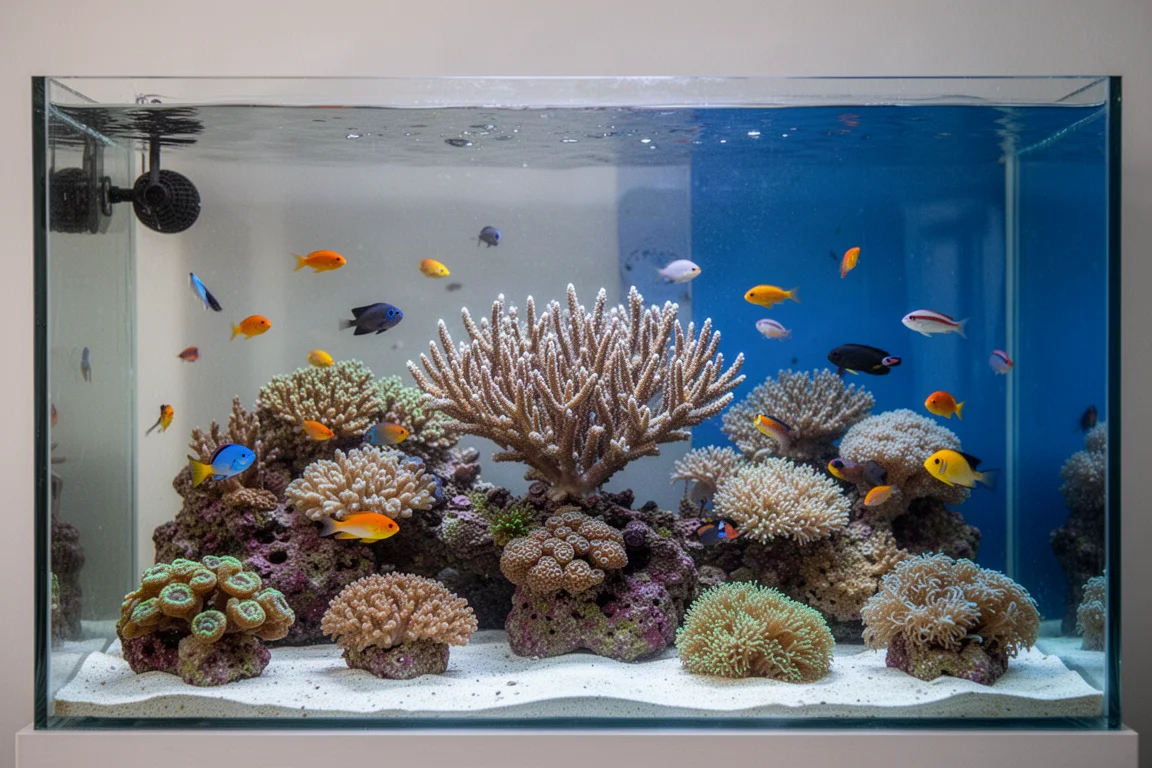
That makes the Pro the fixture for anyone who prefers a brighter, more natural daylight appearance, one that balances coral fluorescence against the chromatic pigments of both corals and fish. It is an aesthetic preference rather than a performance advantage, and it is worth choosing on that basis.
EcoTech Marine MXM Module
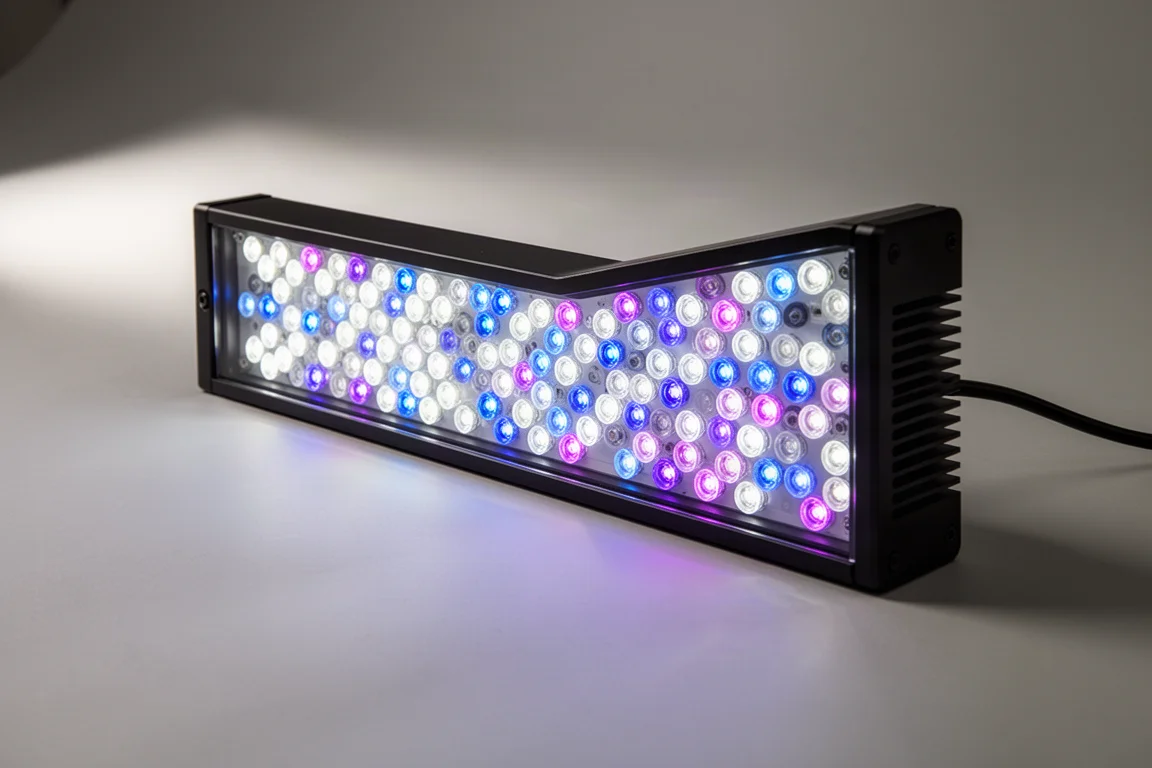
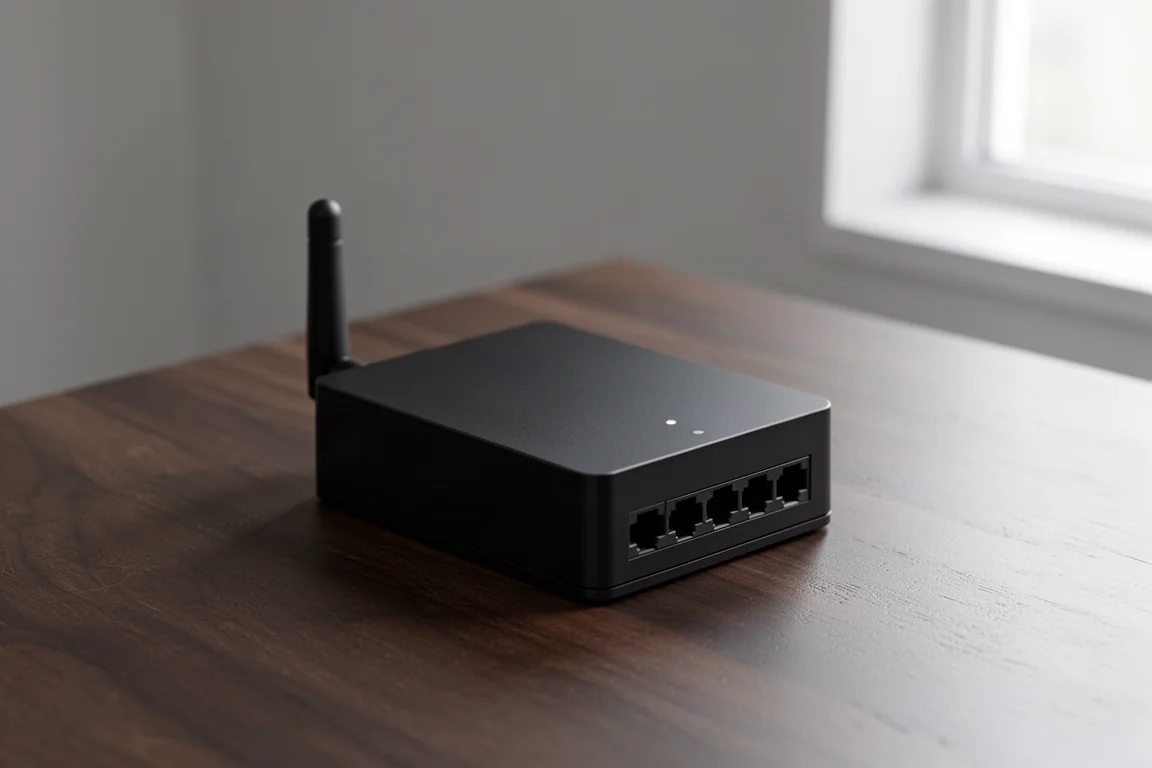
The MXM module is entirely optional, and it addresses a specific gap. It acts as a bridge between the Mobius app that Radions run on natively and a Neptune Systems Apex, so fixtures can be programmed and scheduled through Apex Fusion instead.
The appeal is integration. Once the lighting sits inside the Apex ecosystem, it can respond alongside the rest of the equipment to changes in parameters. If nutrients or major elements bottom out, for example, the lights can lower their intensity to protect corals from trying to grow rapidly while those essentials are unavailable. It is a tool for aquarists who like to fine-tune their gear, and it works with virtually all EcoTech Marine equipment as well as Aqua Illumination products, so a single module opens up options beyond the Radions.
Are They Actually Worth It
Reef keepers have no shortage of excellent LED options, and fixtures from a wide range of brands are capable of growing large, healthy, colorful colonies of even the most light-demanding corals. Against that backdrop, the Radions remain one of the most popular choices in the hobby.
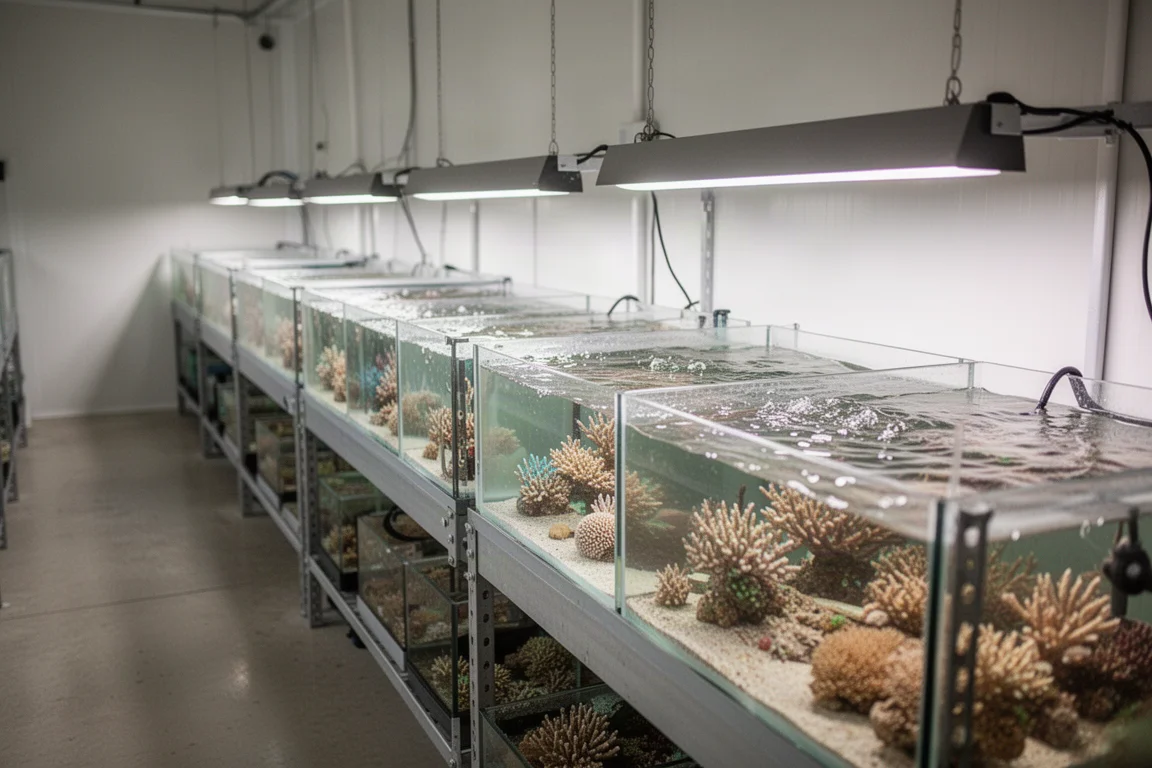
Part of that comes from trust built outside the hobby itself. Coral research and rescue centers, public aquariums, and coral farms use Radions to simulate seasonal coral changes that trigger spawning events, to provide energy to endangered and threatened coral species, and to grow out and color up thousands of coral frags each year. Many local aquarium shops also run them over display and holding systems to keep corals healthy and looking their best until they go home. For aquarists who weigh that kind of long-term institutional use alongside the feature set, the Radions make a defensible case for themselves.
Buying Advice
Start with the corals you intend to keep rather than the size of the fixture. High-light SPS in a tank with typical dimensions points to the XR30, while soft corals, an LPS dominated setup, or a shallow aquarium is well served by the XR15. Longer and wider tanks are handled by adding more fixtures of either model.
The Blue and Pro decision is purely about the look you want to live with. Choose the Blue for a blue-dominant tank that emphasizes fluorescence and color pop, and the Pro for a brighter, more natural daylight appearance. Neither is the better reef light on coral health grounds.
The MXM module is worth adding only if you already run a Neptune Systems Apex and want lighting to react to parameter changes alongside your other equipment. Because the lens design concentrates output, it is also worth planning to reduce intensity in shallow or narrow aquariums where all of that light lands in a small volume of water.
Conclusion
Choosing a Radion comes down to three decisions: how much intensity the tank needs, which spectral look you prefer, and whether you want the lighting tied into an Apex system. The XR15 and XR30 split along intensity and power draw, the Blue and Pro split along appearance rather than coral performance, and the MXM module is a targeted addition for Apex users. Get those three right and the fixture itself is unlikely to be the limiting factor in the reef.
Further reading
Related Reviews
Aquarium Lighting
AI Blade LED Lights Review: A Versatile Strip Light for Reef Tanks
A practical look at the AI Blade LED line, including the value-focused Grow spectrum, mounting options, app control and PAR performance.
Aquarium Lighting
AI Hydra 32 and Hydra 64 Setup Guide: Mounting Heights, Spacing, and Add-On Lighting
A practical reef lighting guide covering optimal mounting heights for the AI Hydra 32 and Hydra 64, spacing for even coverage, and when add-on lighting is worth it.
Aquarium Lighting
AI Prime Review: A Compact Reef Light That Grows With Your Tank
A small, modular reef aquarium LED that reaches LPS and soft coral PAR levels over a 60-gallon cube, plus the spacing, mounting height, and control habits that make it work.