Portable Power Stations
EcoFlow River 3 vs Delta 3 Plus vs Delta 2 Max: First Look at the New Lineup
A hands-on first look at EcoFlow's new River 3 and Delta 3 Plus, compared against the older Delta 2 Max, with the layout and design changes that matter most.
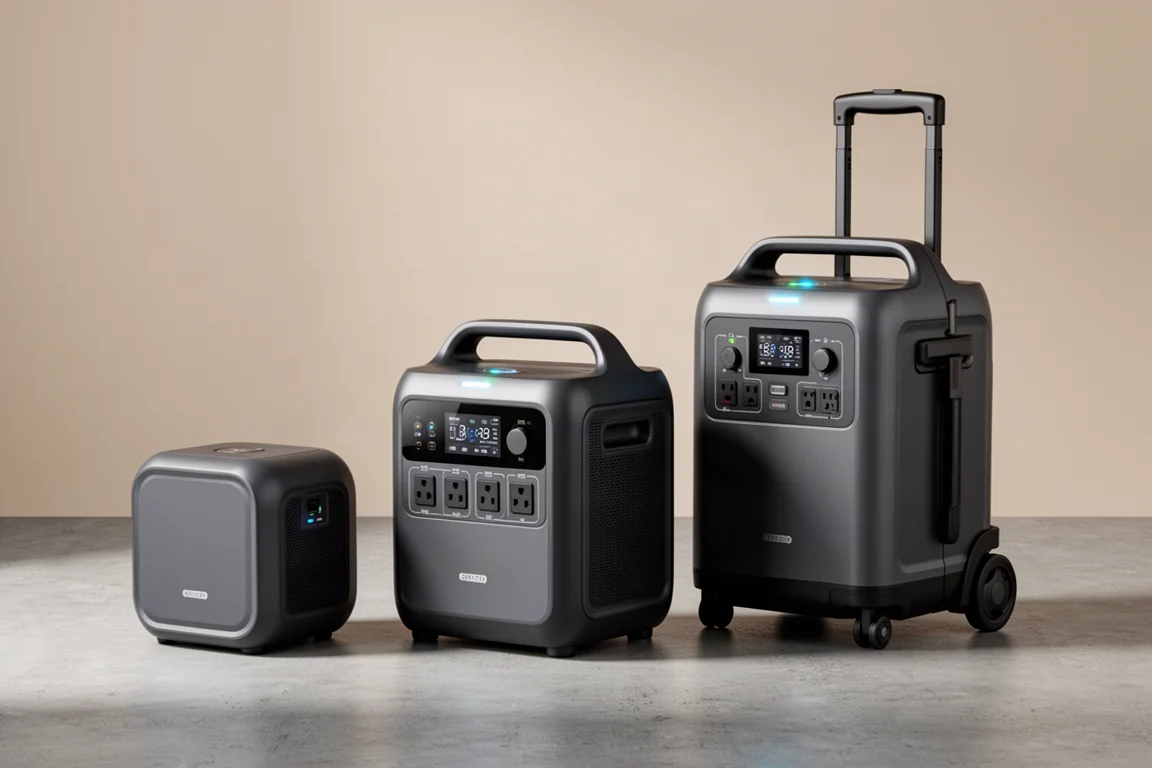
Introduction
EcoFlow’s newest wave of portable power stations is here, and even a quick side-by-side tells you this generation is more about smarter design than dramatic battery jumps. The lineup on our desk covers three tiers: the new compact River 3, the redesigned Delta 3 Plus, and the older Delta 2 Max that many buyers are still considering.
This is a first look rather than a full long-term verdict, but the changes you can see and feel are already meaningful, especially if you have used an older EcoFlow unit before.
A New Layout Philosophy
The defining change across the new generation is port placement. Older EcoFlow units, including the Delta 2 Max, keep the display, USB ports, and power controls on the front while most AC outlets and inputs live on the back or sides. That worked, but it meant walking around the unit to reach plugs.
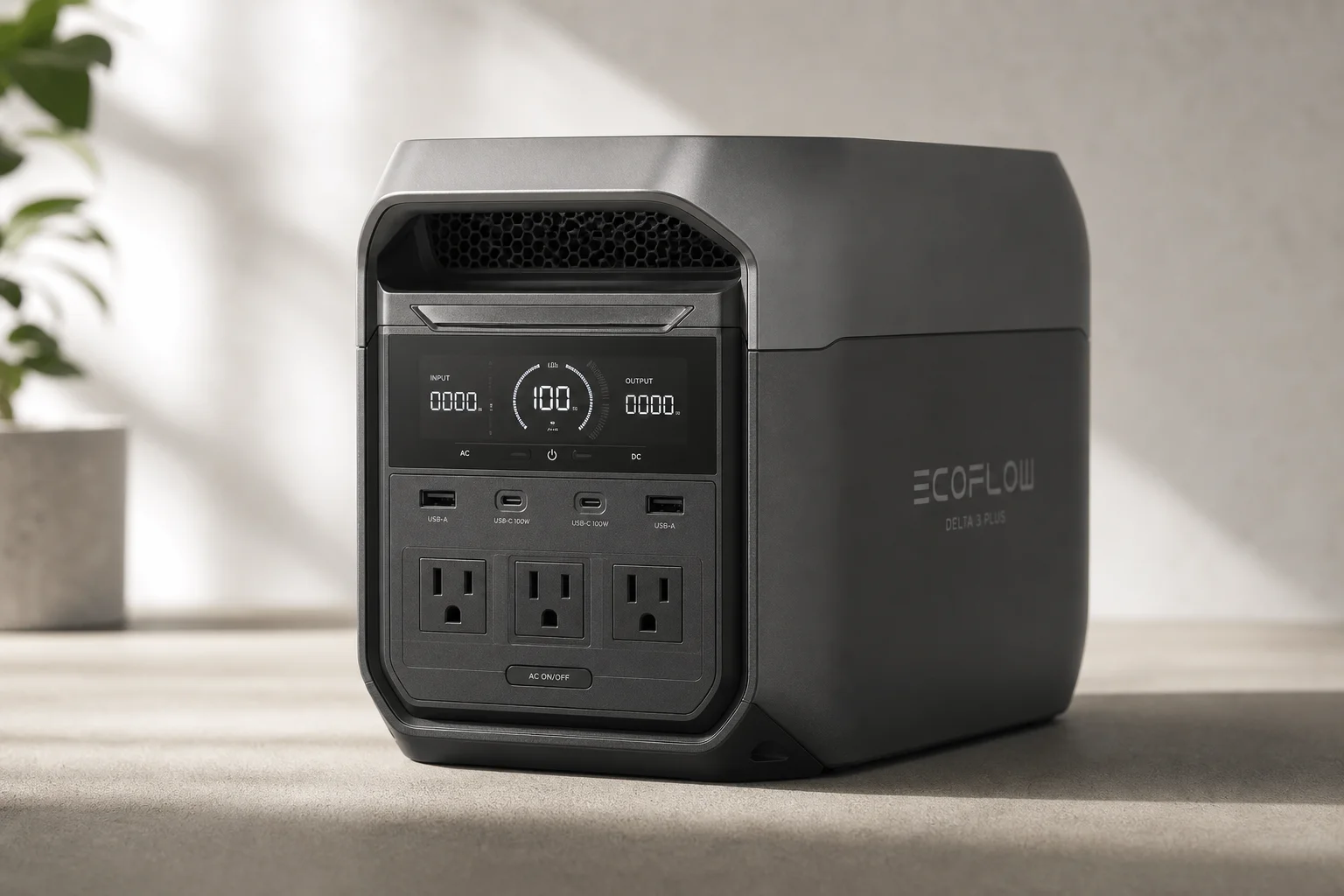
The new design moves almost everything forward. On the Delta 3 Plus you get the display, two USB-A ports, two USB-C ports, and all the controls up front, while the power input is the only thing left on the rear panel. It is a small change on paper that makes daily use noticeably more convenient.
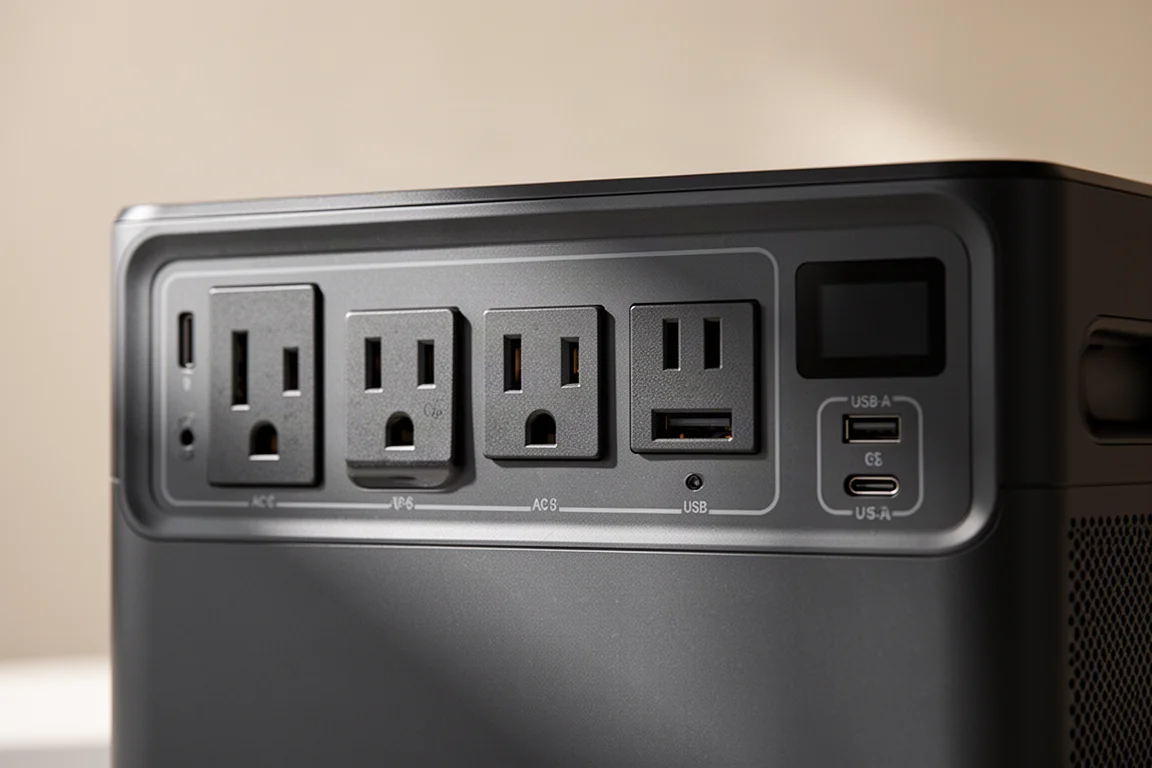
Even the AC outlets have been rethought. The Delta 3 Plus offers three standard non-grounded outlets and three grounded outlets, each positioned in a different orientation so bulky wall-wart plugs fit side by side without overlapping. Anyone who has ever lost an outlet to an oversized charger will appreciate that detail.
EcoFlow River 3: The Compact One
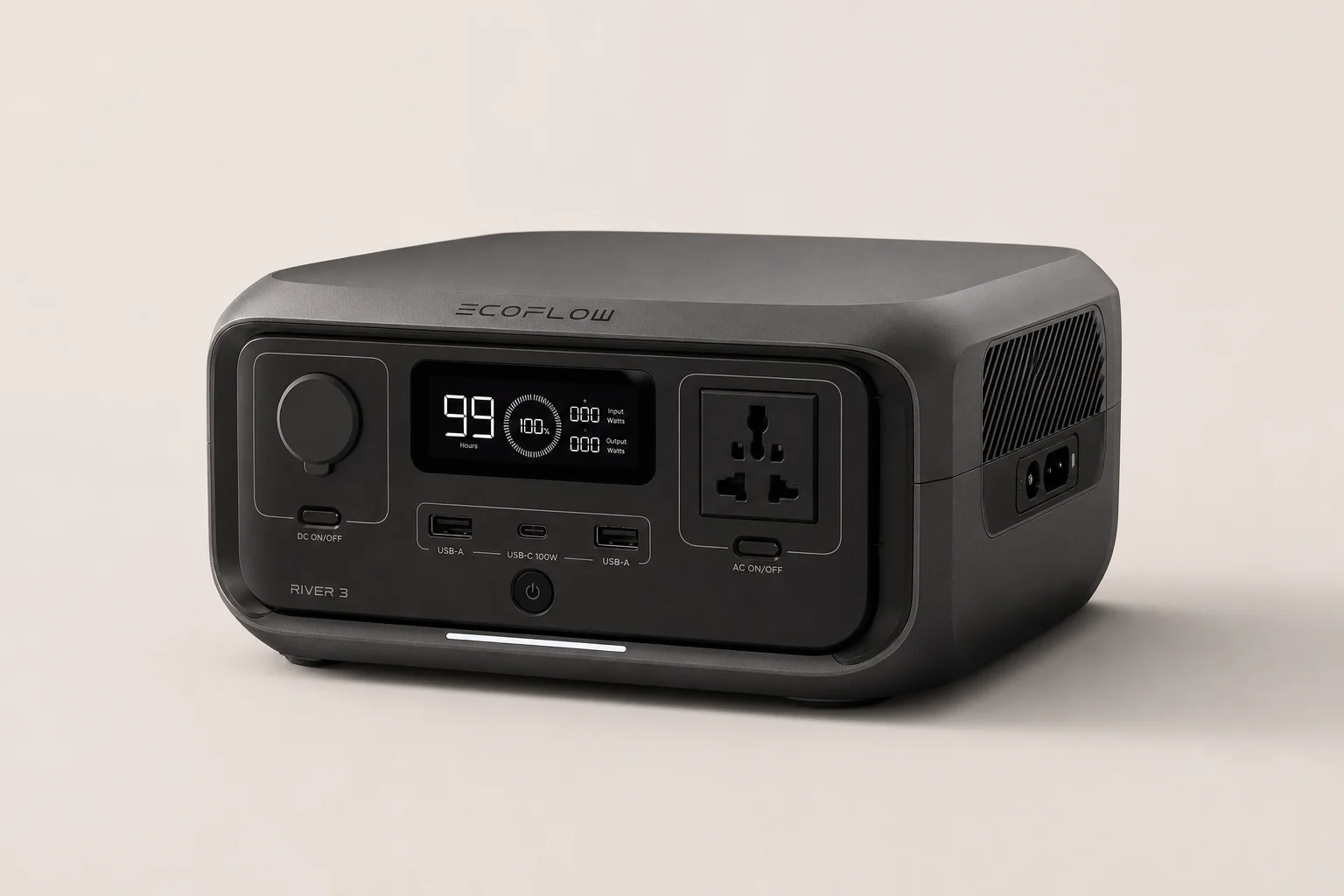
The River 3 is the smallest unit in the new line, and it has real charm beyond its size. The front panel packs a 12V cigarette-lighter-style output, two USB-A ports, and a USB-C port. The USB-C output supports up to 100W, and there is a separate port delivering up to 140W, which is genuinely generous for a unit this size. For comparison, the larger Delta 2 Max tops out at 100W on its USB-C.
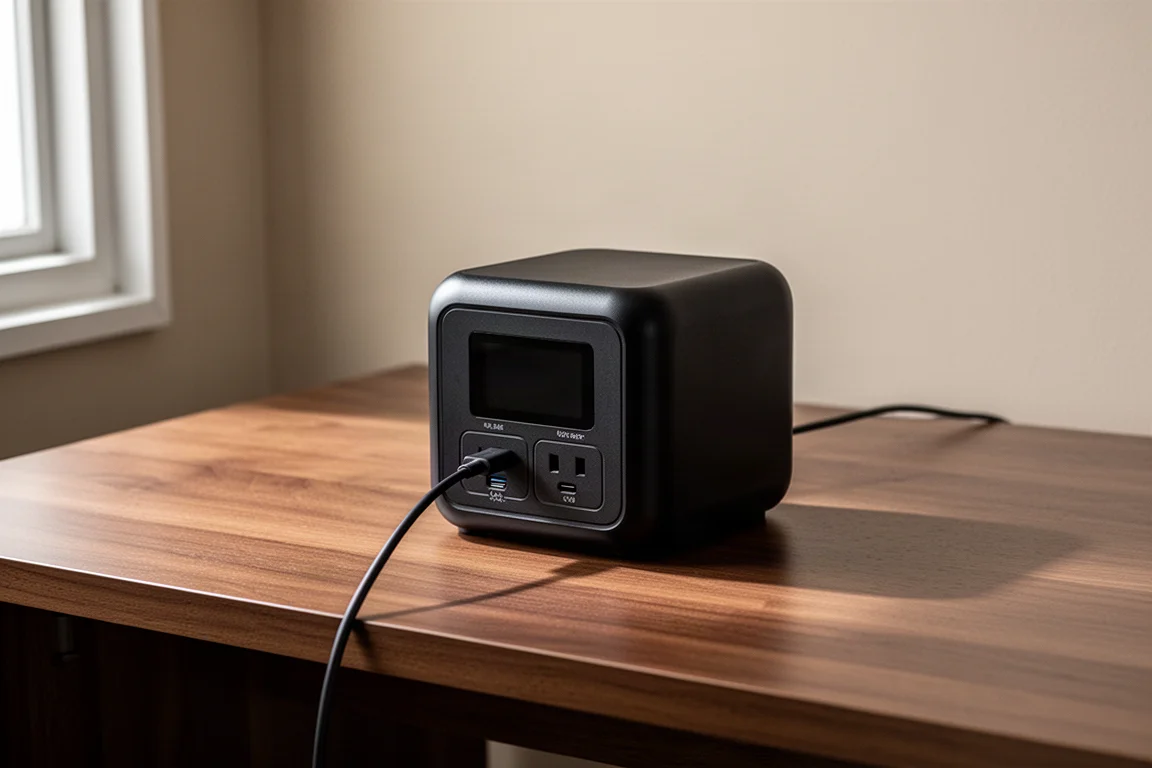
It also keeps two AC outlets on the front, one non-grounded and one grounded. On the side you find the power input, a solar input, and ventilation, with a flush handle at the top that has just enough of a rim to keep items from rolling off. Notably, there is no contactless charging here, which will not bother anyone who found that feature gimmicky to begin with.
EcoFlow Delta 3 Plus: The Redesigned Middle Child
The Delta 3 Plus is where the new layout shows off most. Everything you touch day to day sits on the front: the display, the USB-A and USB-C ports, the outlet selector, and the main power button. Flip it around and the back is refreshingly clean.
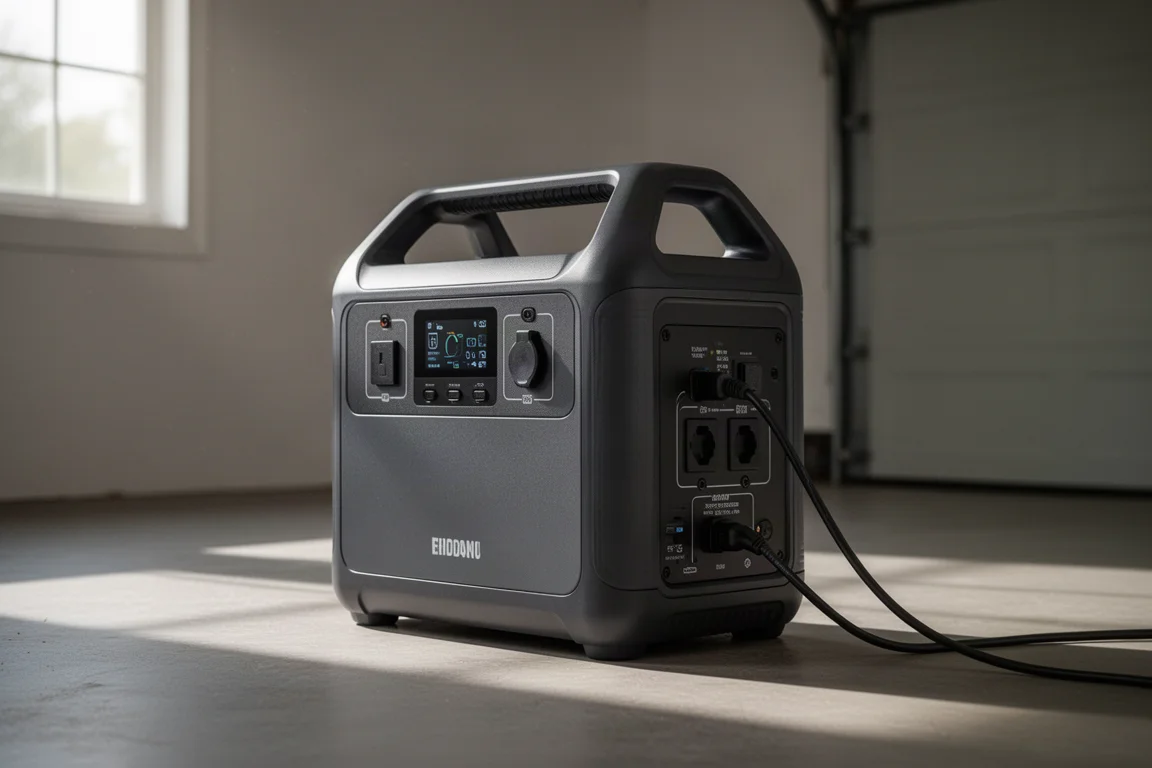
The rear panel carries the solar input, the external battery port, and the power input, plus a hidden 12V output and a couple of barrel plugs tucked around the back because there simply was not room up front. Notably, the external battery port has moved from the side to the back, a change that is easy to miss but solves one of the older units’ more awkward design quirks.
How It Compares to the Delta 2 Max
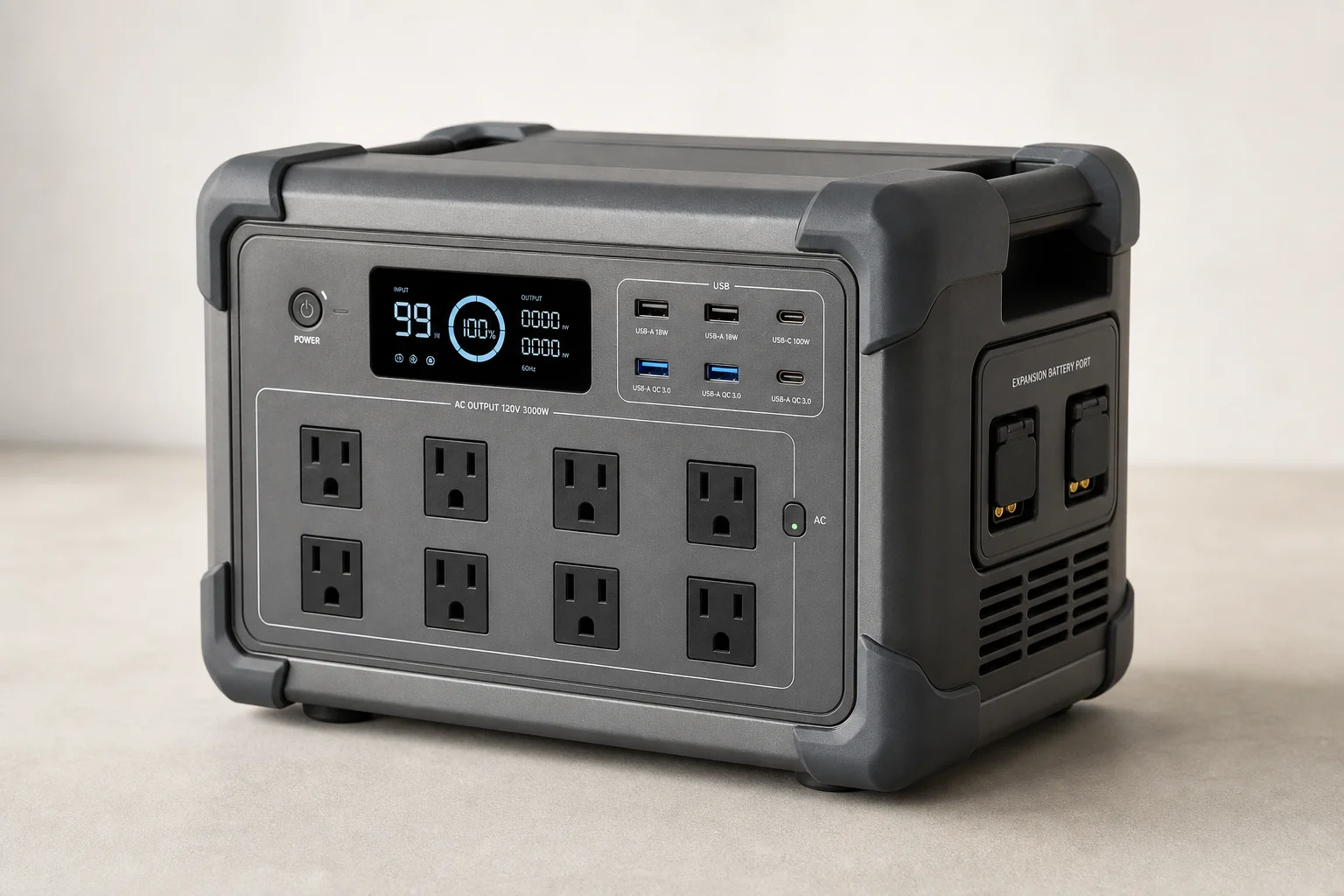
The Delta 2 Max remains the familiar reference point. Its layout puts the display, USB ports, and controls up front with the remaining ports on the back, and it served plenty of buyers well. Against the new generation, the biggest differences are the fully front-facing port arrangement, the smarter outlet orientation, and the relocated external battery port.
Battery capacity alone may not be the headline upgrade this time around, but the design refinements add up to a unit that is easier to live with day to day.
Buying Advice
The new River 3 and Delta 3 line started rolling out for purchase around October 10, so availability should be straightforward. Worth knowing as well: EcoFlow has announced a buyback program that lets you trade in a power station from any brand for up to $1,000 toward a purchase in the Delta 3 line, which is worth factoring in if you are upgrading from an older unit.
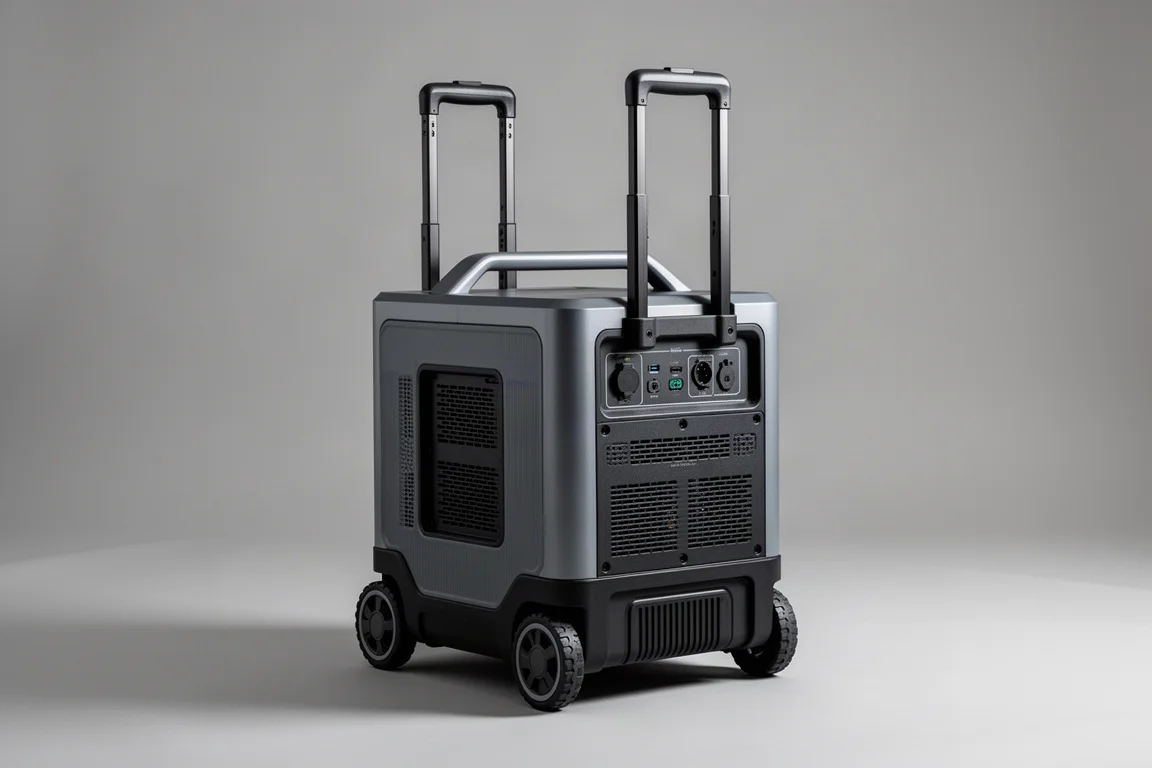
As a rough guide: the River 3 makes sense if you want the smallest, most portable option with surprisingly strong USB-C output; the Delta 3 Plus is the pick if you value the redesigned front-panel layout and room to expand with an external battery; and the Delta 2 Max still holds appeal if you find it at a good price and can live with the older layout.
Conclusion
This generation of EcoFlow power stations is less about reinventing battery chemistry and more about fixing the everyday annoyances: overlapping plugs, side-mounted battery ports, and ports you have to hunt for. Based on this first look, the River 3 and Delta 3 Plus represent a genuine step forward in design, and a full deeper dive is worth waiting for before making a final call.
Further reading
Related Reviews

Portable Power Stations
Anker SOLIX F3000 Review: A Powerful Portable Power Station With a Few Design Quirks
The Anker SOLIX F3000 delivers strong performance, fast charging, and a competitive price, but a few design choices may give you pause.

Portable Power Stations
EcoFlow Delta 3 Series: Five New Power Stations Previewed
EcoFlow expands the Delta 3 lineup with five models, from the compact Classic to the flagship Ultra Plus. Here is what each one offers.
Portable Power Stations
Oscal Power Max 6000 Review: A Large Solar Generator With Real Trade-Offs
A week of off-grid use shows what the Oscal Power Max 6000 handles well, where it falls short, and when a fuel generator still makes more sense.