Portable Cooling
Dyson HushJet Mini Cool Review: Premium Handheld Fan Performance vs Budget Alternatives
The Dyson HushJet Mini Cool brings jet-engine-inspired airflow technology to a $100 handheld fan. We test its cooling power, noise levels, and real-world comfort against a $13 budget alternative.
Introduction
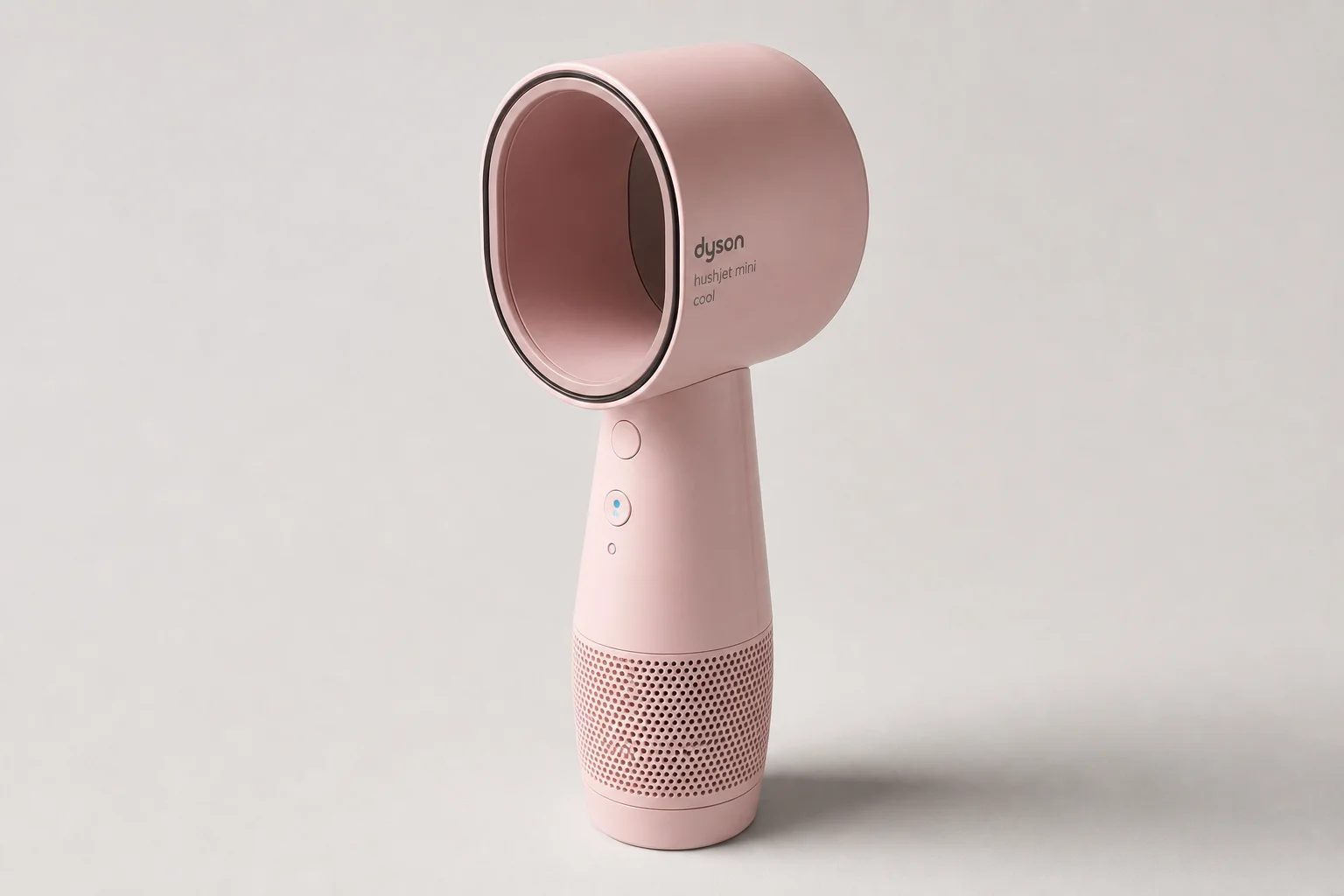
Dyson has long dominated the premium cooling and air treatment market with innovative designs and advanced technology. The launch of the HushJet Mini Cool marks the brand’s entry into the handheld fan category at a premium price point of $100 USD. This compact device brings Dyson’s signature bladeless design and newly developed HushJet technology to a portable form factor. But does the engineering justify the cost when budget alternatives cost a fraction of the price? We put the HushJet Mini Cool through rigorous testing against a $13 budget fan to evaluate cooling performance, noise levels, battery life, and real-world comfort.
HushJet Technology and Design
The HushJet Mini Cool weighs just 212 grams, roughly equivalent to a smartphone, making it genuinely portable for extended outdoor use. The exterior echoes Dyson’s Supersonic hair dryer aesthetic, carrying forward the brand’s design language with a bladeless construction that eliminates the risk of hair entanglement.
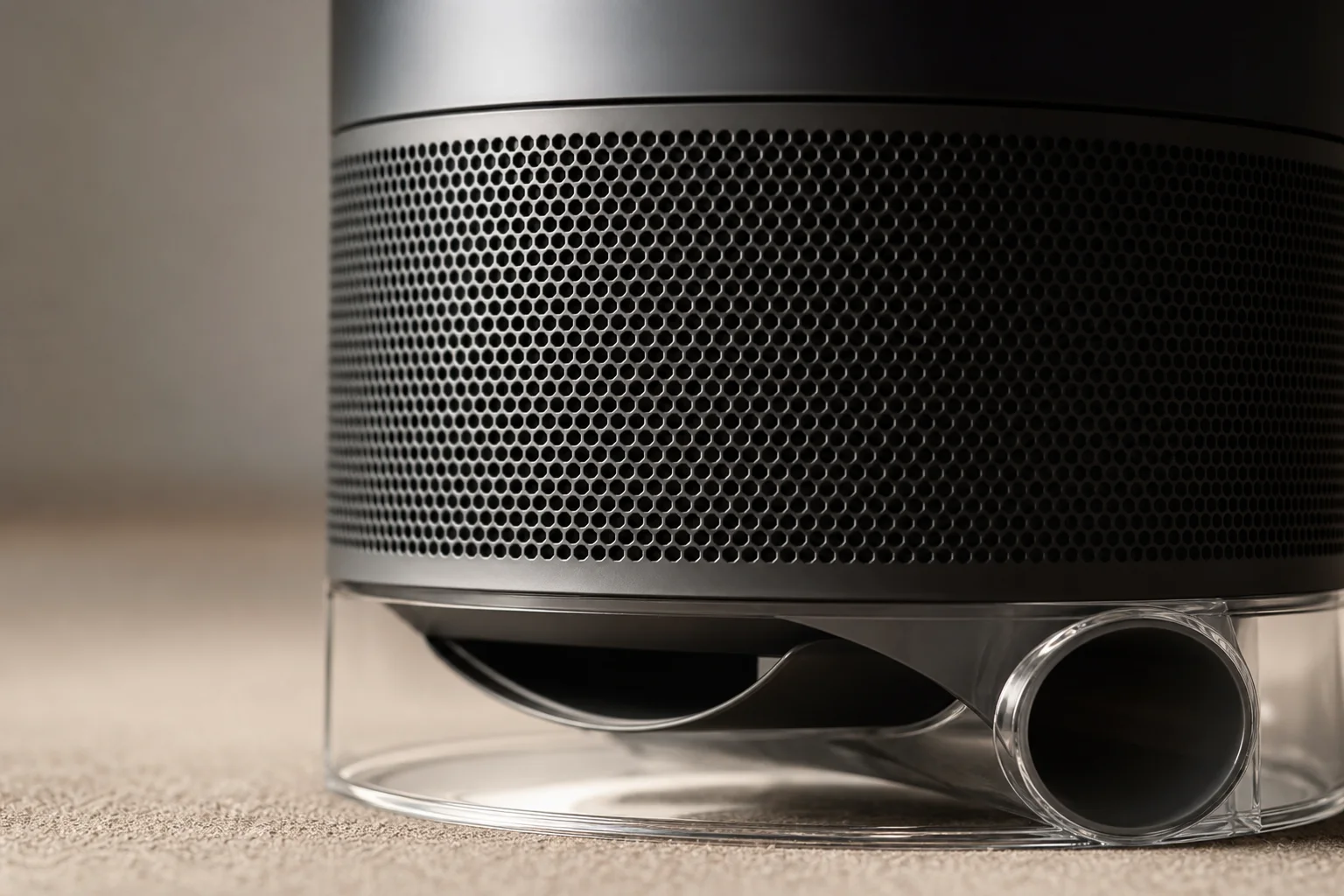
The headline feature is HushJet technology, which draws inspiration from jet engine principles. Air enters through a honeycomb mesh base, passes through the HushJet system, and exits via a patented nozzle design that produces a highly concentrated airflow. This engineering approach creates wind that is more focused, travels further, and delivers greater force than conventional fan designs. The 360-degree adjustable nozzle allows users to direct the airflow precisely where needed.
Cooling Performance Testing
To evaluate actual cooling effectiveness, we conducted a controlled test using an infrared thermal imager. We heated water to boiling, allowed it to cool to 75°C, then applied the fans at different speed settings for 30 seconds each.
At setting 1 (lowest speed), the Dyson achieved an 11.07% temperature reduction compared to 10% for the budget fan. The difference was marginal.
At setting 3 (medium speed), the gap widened noticeably. The Dyson dropped the temperature by 16.08% versus 11.6% for the budget alternative.
At setting 5 (maximum speed), the performance difference became substantial. The Dyson achieved a 24.8% temperature reduction, bringing the peak temperature down to 56.4°C. The budget fan managed only 15.73%, with the peak remaining above 60°C.
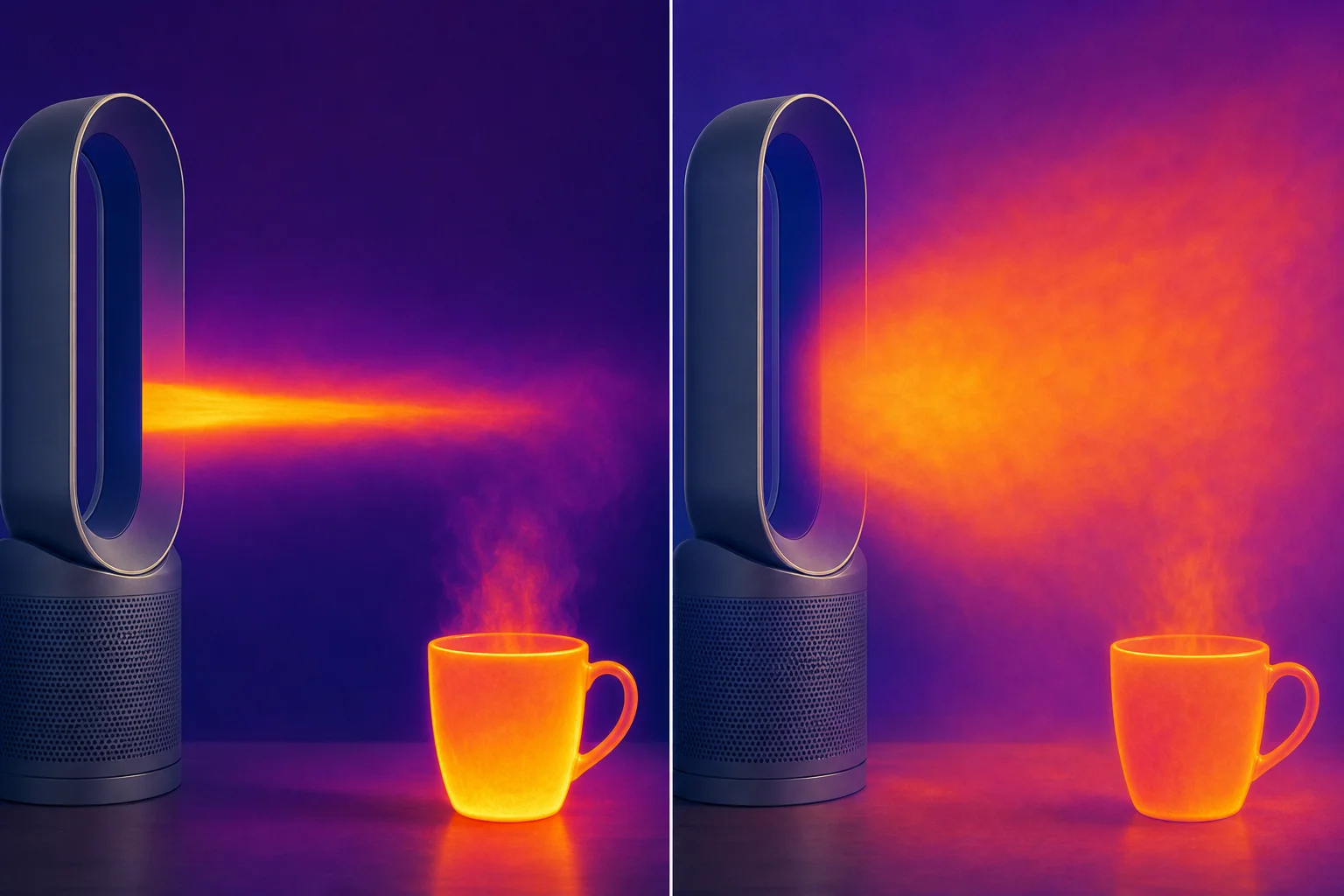
Critically, the cooling patterns differed. The budget fan concentrated cooling only on the cup’s surface, while the Dyson’s airflow penetrated deeper into the core, suggesting superior heat dissipation capability. However, in subjective use, the concentrated beam of the Dyson creates a localized cooling sensation on a specific point of skin, whereas the budget fan’s wider dispersal pattern may feel more comfortable to some users because more skin surface contacts the cool air simultaneously.
Design, Weight, and Usability
The interface is refreshingly simple: a power switch and up/down controls for wind speed. A hidden Boost Mode engages maximum speed at 65,000 RPM, equivalent to approximately 88 kilometers per hour. The fan can be held by hand or suspended using the included lanyard, and the nozzle rotates 360 degrees for directional adjustment.
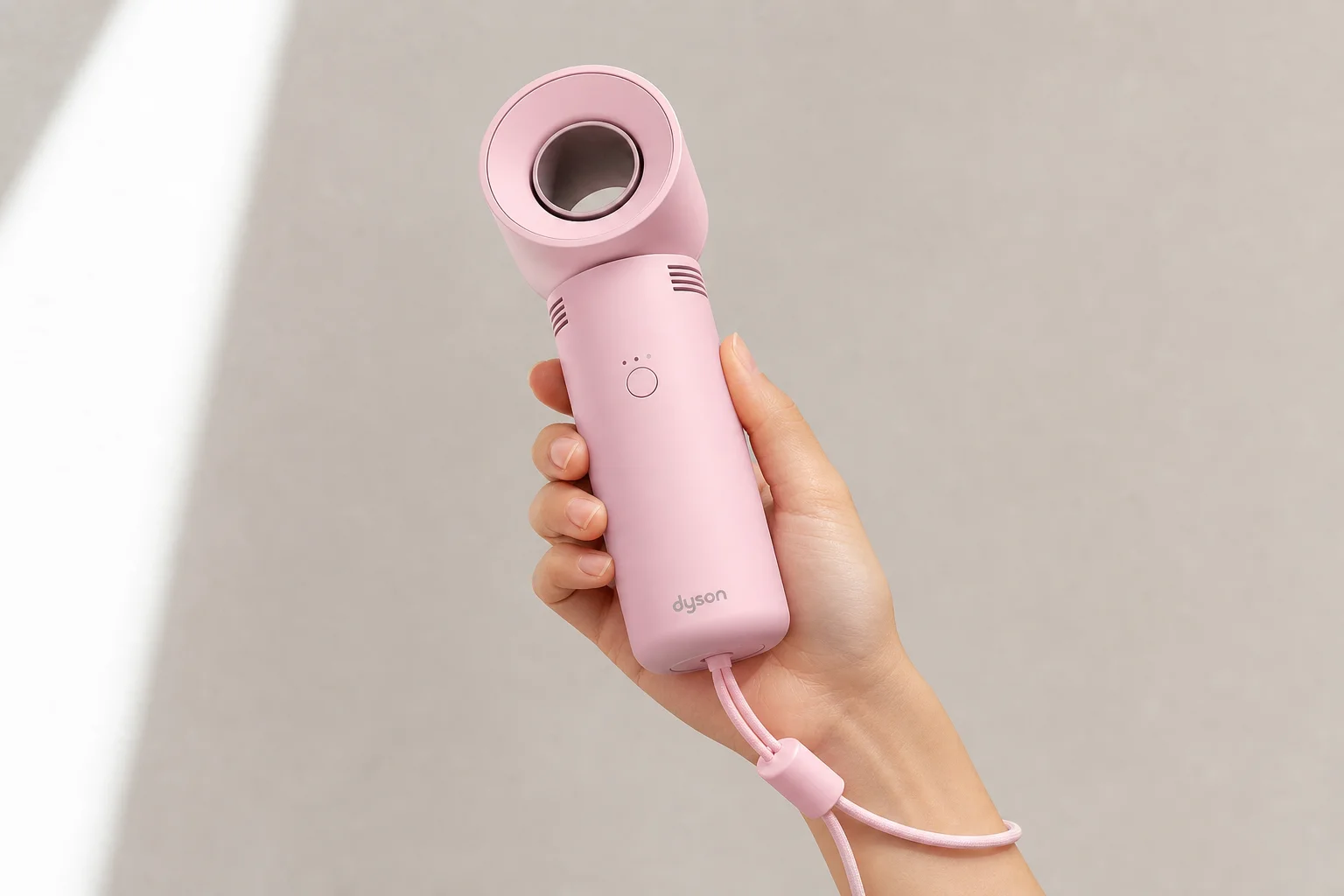
Battery life at setting 1 reaches six hours, sufficient for most daytime outings. In an extreme test, continuous Boost Mode operation lasted 52 minutes, considerably longer than expected. Notably, the fan can operate on setting 1 while charging, with no overheating issues reported.
The HushJet Mini Cool launches in three colors: pink (currently available), with classic blue-purple and orange-red versions arriving in May/June.
Noise Levels and Real-World Comfort
Dyson claims HushJet technology produces a quiet, smooth breeze by converting chaotic, noisy wind into controlled flow. Decibel measurements support this: at both setting 1 and setting 5, the Dyson recorded lower noise levels than the budget fan.
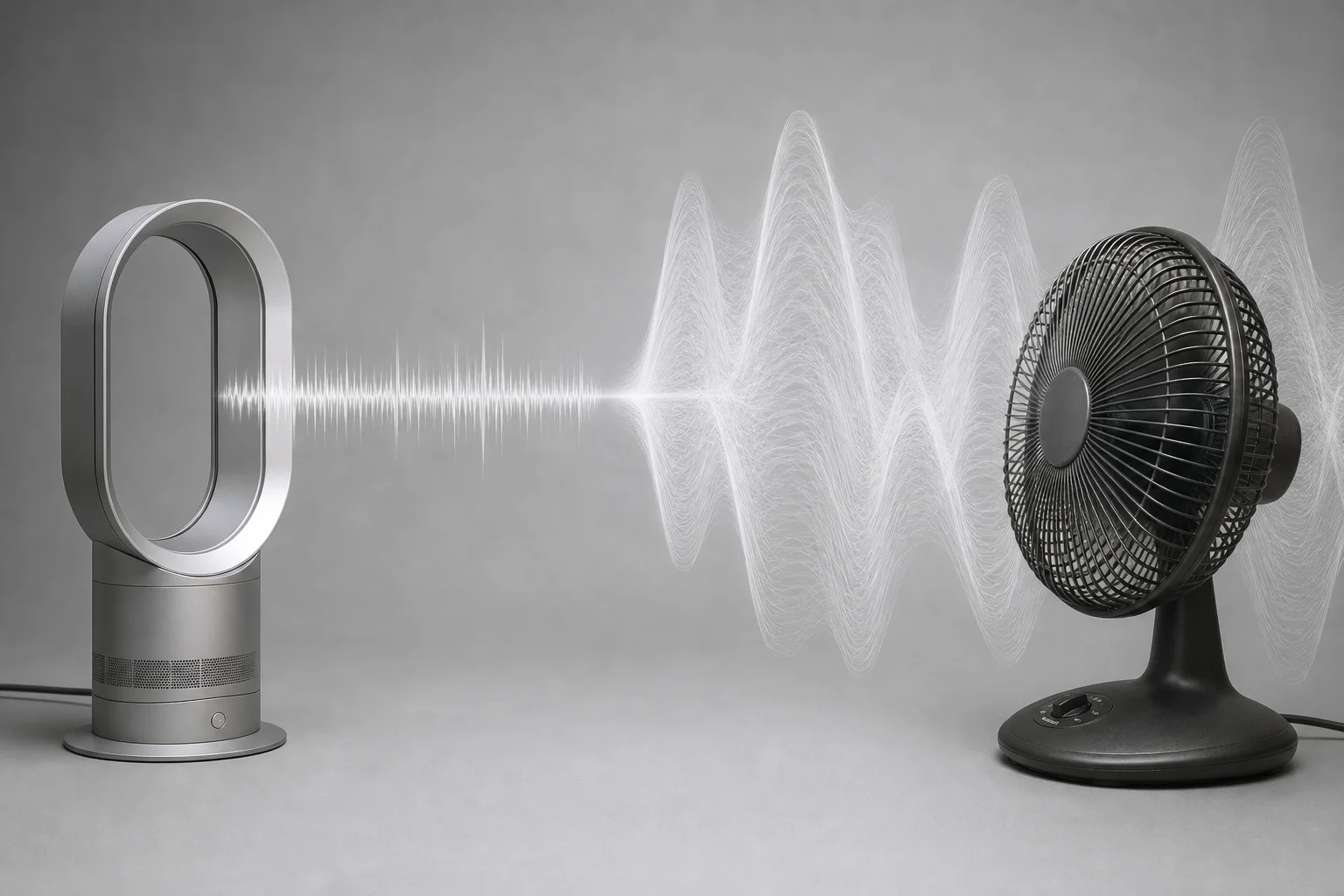
However, subjective listening reveals nuance. The Dyson produces a higher-pitched sound signature that measures quieter on a decibel meter. The budget fan’s motor generates a deeper, more solid tone that registers as louder in absolute terms but may feel less intrusive to some ears. This highlights the distinction between measured noise and perceived noise comfort.
Conclusion
The Dyson HushJet Mini Cool excels in engineering, design refinement, and measured performance metrics. Its concentrated airflow delivers superior cooling penetration, and its noise profile is objectively quieter. For users who value premium build quality, advanced technology, and focused cooling performance, the $100 price tag reflects genuine innovation.
However, the practical cooling sensation and comfort experience may not justify the sevenfold price premium for all users. The budget fan’s wider airflow distribution creates a more diffuse cooling effect that some may find more pleasant during extended use. The choice ultimately depends on whether you prioritize concentrated, high-performance cooling with premium design, or broader, more dispersed cooling comfort at a fraction of the cost.
Product link
View more details for Dyson HushJet Mini Cool
This product is mentioned in the review. Check the specifications, options, and compatibility before buying.
View more details for Dyson HushJet Mini CoolFurther reading
Related Reviews
Portable Cooling
Best Neck Fans and Air Conditioners 2026: 13 Portable Cooling Options Compared
We compared 13 neck fans and wearable air conditioners across cooling performance, air speed, runtime, comfort, and noise to find the best value for hot days.
Coffee Brewing
AeroPress Clear Review: A Transparent Upgrade With Caveats
The new AeroPress Clear uses Tritan material and costs $50, but doesn't brew better coffee than the original. We tested durability, staining, and what the price increase means for the brand's future.
Coffee Equipment
Aeropress Go Review: A Compact Travel Brewer That Solves One Specific Problem
The Aeropress Go shrinks the original design and adds an integrated cup, but it may not address the travel challenges most coffee enthusiasts actually face.