Floorstanding Speakers
Dynaudio Evoke 30 Review: A Slim Floorstander That Sounds Bigger Than It Looks
A compact Denmark-built floorstander with a natural, articulate voice, real wood finish options, and an eight-year warranty. Here is where the Dynaudio Evoke 30 shines and what to weigh before buying.
Introduction
The Dynaudio Evoke 30 is a compact floorstanding speaker that leans on driver technology trickled down from the brand’s higher-end models. It stands roughly three feet tall, a little under a metre, which puts it among the smaller true floorstanders you can buy. It is designed and built in Denmark and sells for $3,999 per pair.
What makes it more interesting than its dimensions suggest is tonal weight. A cabinet this slim should sound lean. The Evoke 30 does not. Its 28 mm soft-dome tweeter and its two 14 cm (5.5 in) mid-bass drivers give it a voice that sounds noticeably larger than the cabinet it comes in.
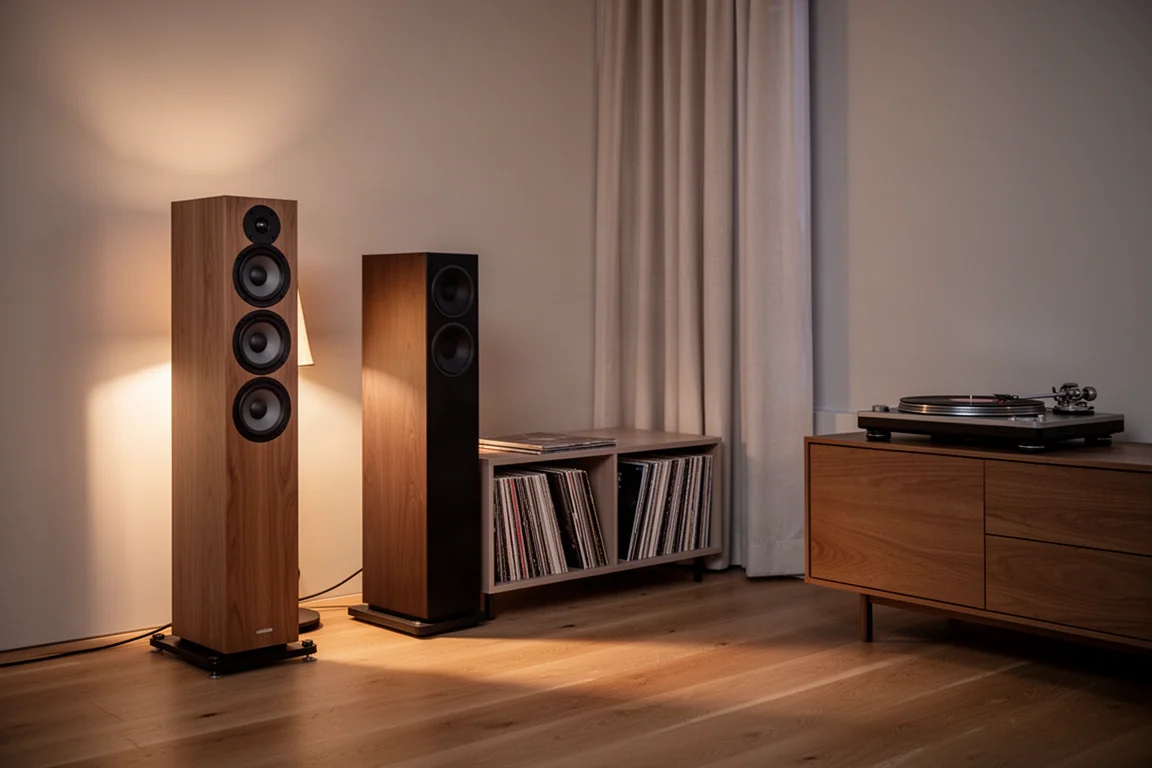
Here is what the Evoke 30 does well, who it suits, where it asks for care in setup, and how it behaves alongside a higher-sensitivity alternative.
Who the Dynaudio Evoke 30 Is For
The Evoke 30 is at its best in a small to midsize room, where it can be pulled out from the wall and given room to breathe. Listeners who value natural timbre, vocal realism, and imaging will get the most out of it, and it is a sensible choice for anyone who wants a floorstander that does not visually dominate a living space.
It is a less obvious fit for very large rooms or for listeners chasing hard-hitting low end. With a rated sensitivity of 88 dB and a pair of 5.5 in woofers, it is not built for extreme output or for bass-heavy material played at high volume.
Design and Build
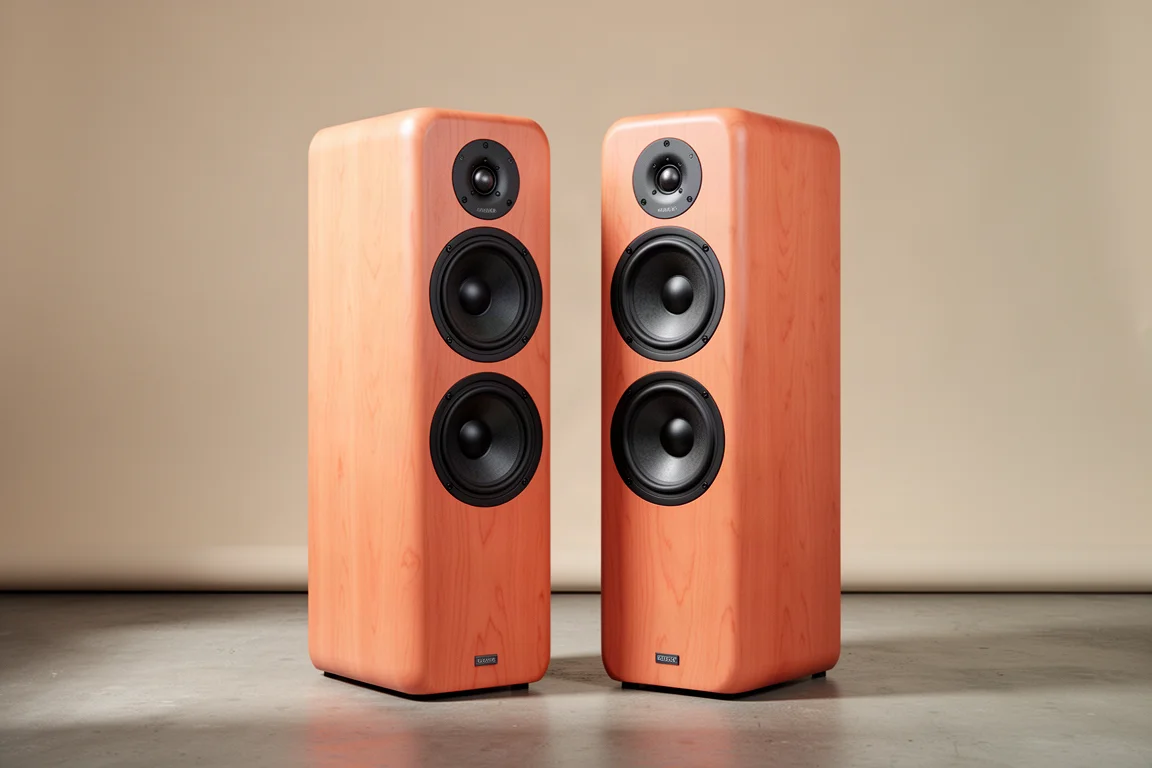
The Evoke 30 is available in walnut, gloss white, gloss black, and an apricot wood veneer. The apricot finish is real wood veneer rather than a printed wrap, which gives the cabinet a warm, furniture-grade appearance that holds up well in an ordinary living room.
Internally, this is a 2.5-way design rather than a simple two-way. The upper 14 cm driver covers the midrange and part of the bass, while the lower 14 cm driver handles the low end only. Both work alongside a 28 mm soft-dome tweeter that inherits technology from Dynaudio’s higher-end models. A large bass port sits on the rear of the cabinet, and a plug is supplied so you can reduce low-frequency output if your room reinforces bass more than you want.
Dynaudio refines its drivers using measurements from its Jupiter facility, where a robotic arm fitted with 31 microphones performs a 360-degree pass around a speaker under test. Those results feed back into driver design. Packaging is equally thorough: each speaker is triple boxed, and the tweeters ship under yellow protective covers so the soft domes cannot be accidentally damaged before setup. The warranty runs to eight years.
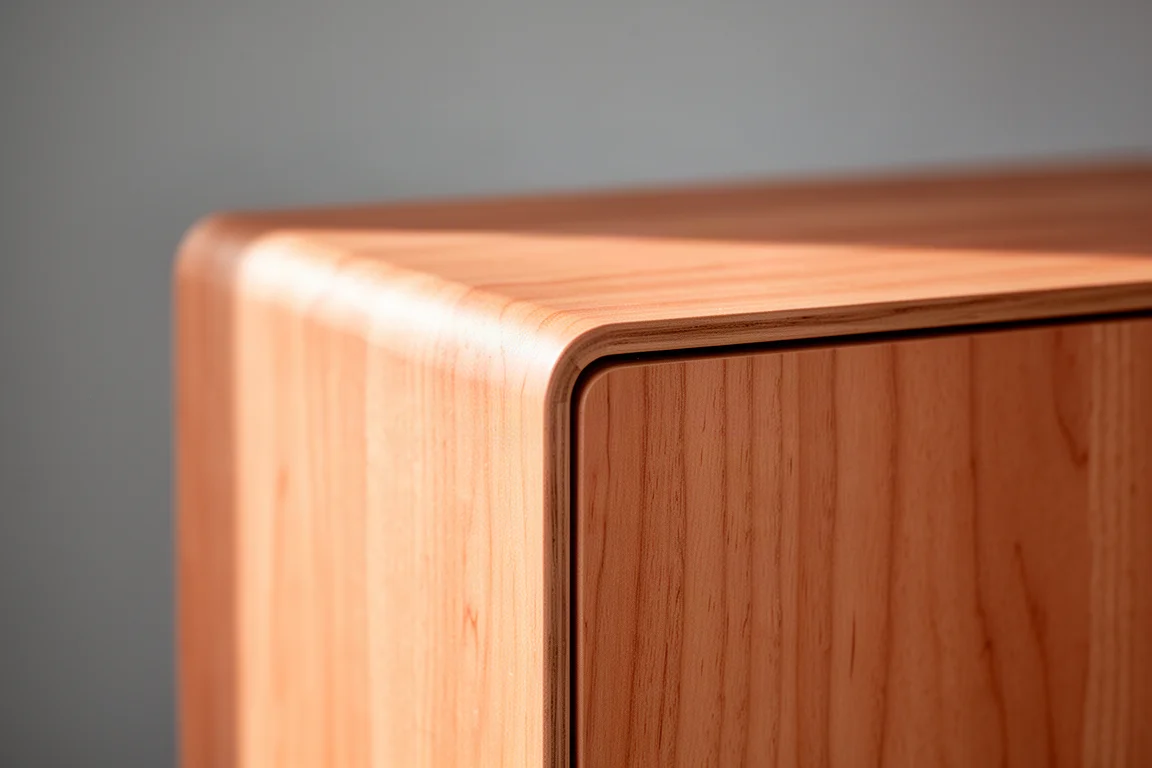
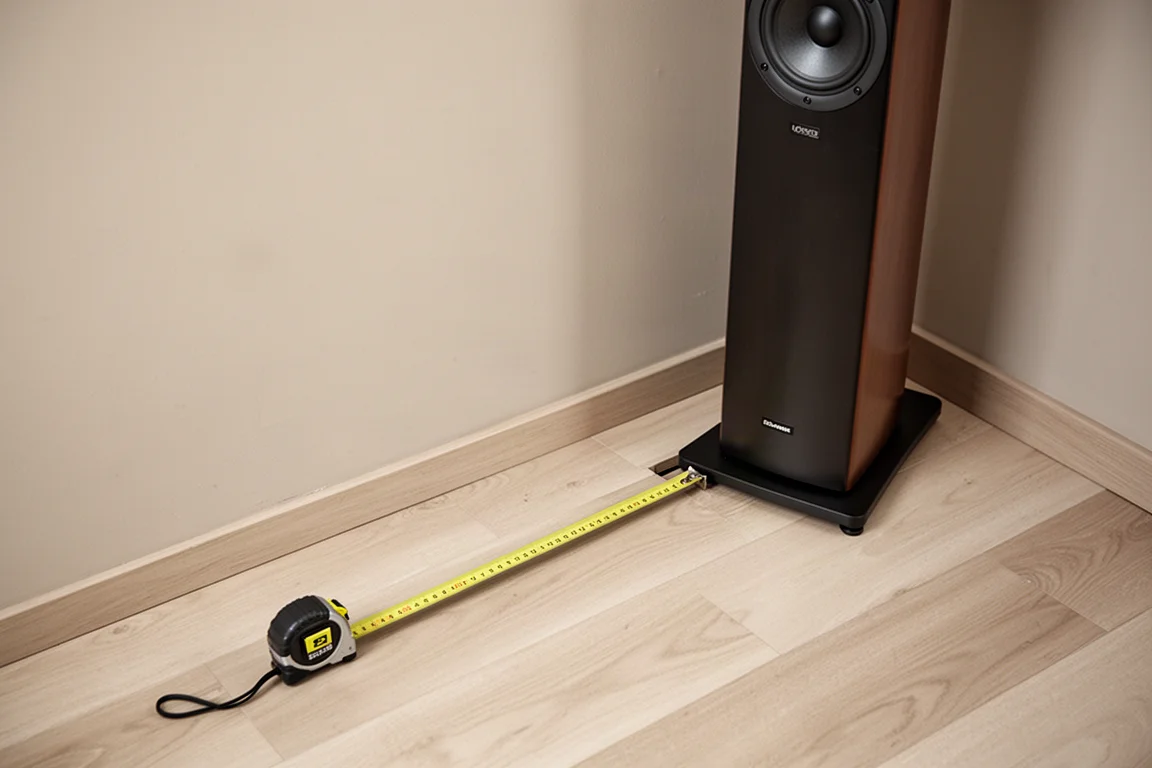
At three feet tall the cabinet is easy to move and easy to live with, and the rear-ported alignment means placement matters more than the small footprint suggests.
Room Placement and Amplifier Needs
The Evoke 30 is forgiving about toe-in. A very small amount, or none at all, is usually enough, and the right answer depends on your room’s acoustics rather than on a fixed rule. Distance from the front wall matters more. Three feet of space behind the speaker worked well; closer placement is possible, but like most speakers it tends to give its best when it sits well out into the room.
With 88 dB sensitivity, the speaker rewards a capable amplifier. A 200 W per channel Class AB design such as the SPL Performer S900 provides generous headroom, and a lower-powered quality amplifier such as the Pass XA25 also drives it cleanly. A modest integrated amp will still make music, but the Evoke 30 will not flatter an underpowered one.
Main Strengths
The first thing that stands out is articulation. The Evoke 30 is clear and detailed without sounding clinical, and its tonal balance is fuller than its slim cabinet would suggest. It does not sound small, lean, or undernourished.
Midbass is the real surprise. Between roughly 80 Hz and 150 Hz the speaker produces more fullness than a cabinet this narrow has any right to, which is what makes it feel bigger than it is.
That quality shows up most clearly on acoustic material. Folk, country, and bluegrass recordings with unprocessed, natural production sound like they are playing in the room rather than through a box. Close-miked voices keep their body, and acoustic instruments retain their presence.
The speaker is also more versatile than its voicing might imply. Bright, jangly, reverb-heavy rock with plenty of energy plays through with ease, and the Evoke 30 can reach reasonably high volumes for a speaker with 5.5 in drivers. It stays composed rather than turning hard or shouty.
The tweeter deserves separate credit. It is pure and clear, and left to its own devices it never turns bright, harsh, or edgy. When a recording is meant to sound aggressive, it will, but the speaker does not add that character on its own.
Imaging is another strength. On a live recording engineered to emphasise spatial cues, the soundstage extended well beyond the outer edges of the cabinets, with a stable centre focus and convincing front-to-back depth. That is impressive from a speaker this size.
How the Evoke 30 Compares With a Higher-Sensitivity Speaker
Sensitivity and cabinet size shape character more than price does, and that became clear in a direct comparison with the Zu Audio Dirty Weekend 6. The Dirty Weekend 6 costs a little less, is rated at 95 dB sensitivity against the Evoke 30’s 88 dB, and uses a much larger cabinet with a 10 in full-range driver plus a tweeter.
On instrumental funk played loud, with peaks in the high 80 dB range, the Dirty Weekend 6 had the edge. It was brighter and more forward, and it carried the energy and dynamics of the performance more forcefully. The Evoke 30 still sounded fuller in the midbass despite being the smaller speaker, but the high-sensitivity design won on drive and immediacy.
On acoustic music with close harmonies, the result reversed. The Evoke 30 sounded more complete, with more natural voices and more acoustic presence in the room. The Dirty Weekend 6 sounded thinner and harder by comparison, adding an edge that did not suit the material.
The practical takeaway is straightforward. If you want maximum dynamic snap and you listen loud, a high-sensitivity design has real advantages. If you want natural timbre, vocal realism, and imaging depth, the Evoke 30 is the stronger performer.
Things to Consider Before Buying
The Evoke 30 does not deliver a deep, solid bottom-end impact. It is a small floorstander, and while it sounds full rather than lean, it will not pressurise a room the way a larger cabinet with bigger woofers will.
Room size matters. It is happiest in small to midsize spaces. In a large room with a lot of air to move, it can run out of headroom sooner than you might expect.
Sensitivity is another consideration. At 88 dB the speaker asks more of an amplifier than a high-sensitivity design would, and a weak amp will hold it back.
Placement deserves planning. The rear bass port benefits from some distance to the wall, and the supplied plug is worth keeping on hand if your room adds too much low end. Toe-in is a matter of taste and room acoustics rather than a rule.
Finally, at $3,999 per pair the Evoke 30 sits in premium territory. The finish options, the eight-year warranty, and the driver technology are part of what you are paying for.
Buying Advice
The Evoke 30 makes the most sense for a listener with a small to midsize room who wants a floorstander that gets out of the way of the music. It suits acoustic, vocal, folk, jazz, and well-recorded rock, and it rewards an amplifier with genuine headroom.
If your priority is maximum output and dynamic punch from a high-sensitivity speaker, a different design will serve you better. If your priority is articulation, natural tone, and a soundstage that extends past the cabinets, the Evoke 30 is easy to recommend.
Conclusion
Dynaudio’s compact floorstander does not try to be everything. It is a slim, well-finished speaker that sounds considerably bigger than it looks, with a clear and natural voice, an excellent tweeter, and imaging that belies its dimensions.
Buy it for the way it presents acoustic music and for its ability to step aside and let the recording speak. Match it to a room it can fill and an amplifier that can drive it, and it will do the rest.
Product link
View more details for Dynaudio Evoke 30
This product is mentioned in the review. Check the specifications, options, and compatibility before buying.
View more details for Dynaudio Evoke 30Further reading
Related Reviews
Floorstanding Speakers
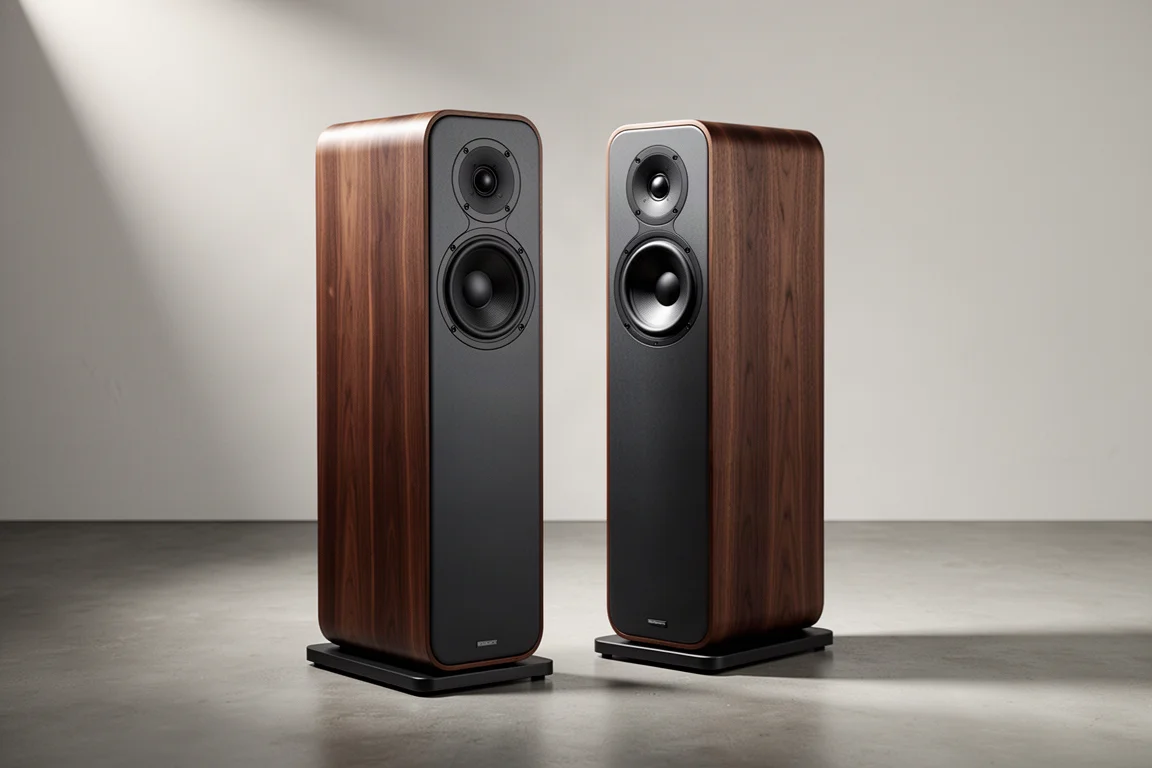
Acoustic Energy AE109 Mark II Review: A Refined Floorstander at £699
The Acoustic Energy AE109 Mark II is a slim, warm sounding floorstander that delivers clarity, midrange body and strong imaging in small to medium rooms.
Floorstanding Speakers
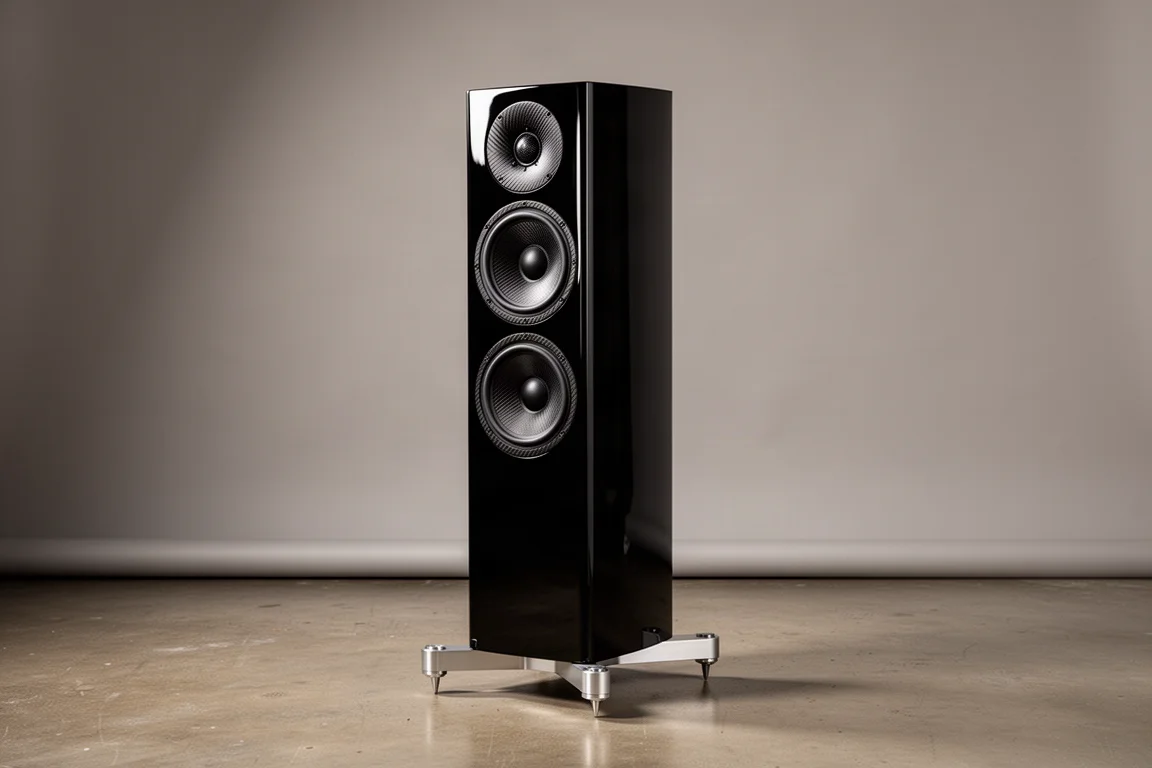
Acoustic Energy AE509 Review: A Slim Floorstander With Deep, Defined Bass
A practical look at the Acoustic Energy AE509, a slim floorstanding speaker with carbon fibre drivers, deep and well-defined bass, and an easy-going character that rewards careful system matching.
Floorstanding Speakers
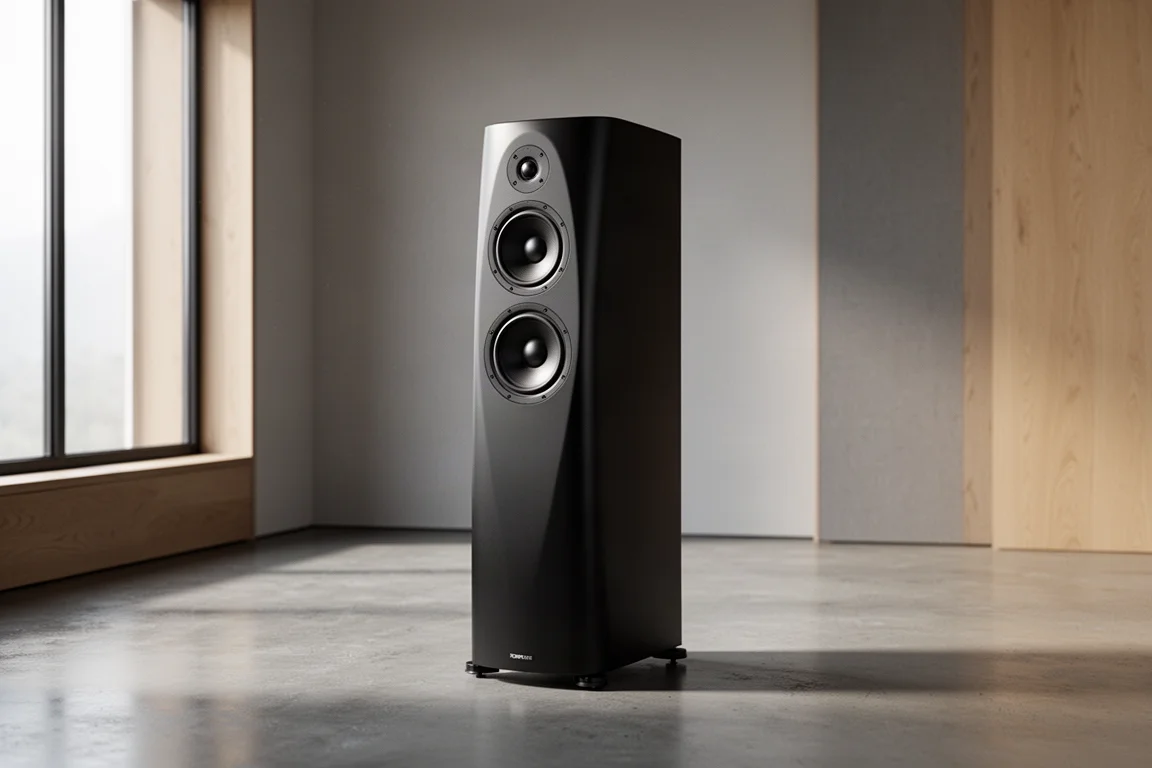
Arendal 1528 Tower 8 Review: Reference Neutrality With Real Demands
A close look at the Arendal 1528 Tower 8, a nearly five-foot, 200-pound floorstander that rewards generous space, serious power, and high listening levels with reference-grade neutrality.