Floorstanding Speakers
Dynaudio Emit 30 Review: A Value Floorstander With One Clear Caveat
A two-and-a-half-way floorstanding speaker with genuine 40 Hz reach, a strong midrange and a treble region that rewards careful placement or a little equalization.
Introduction
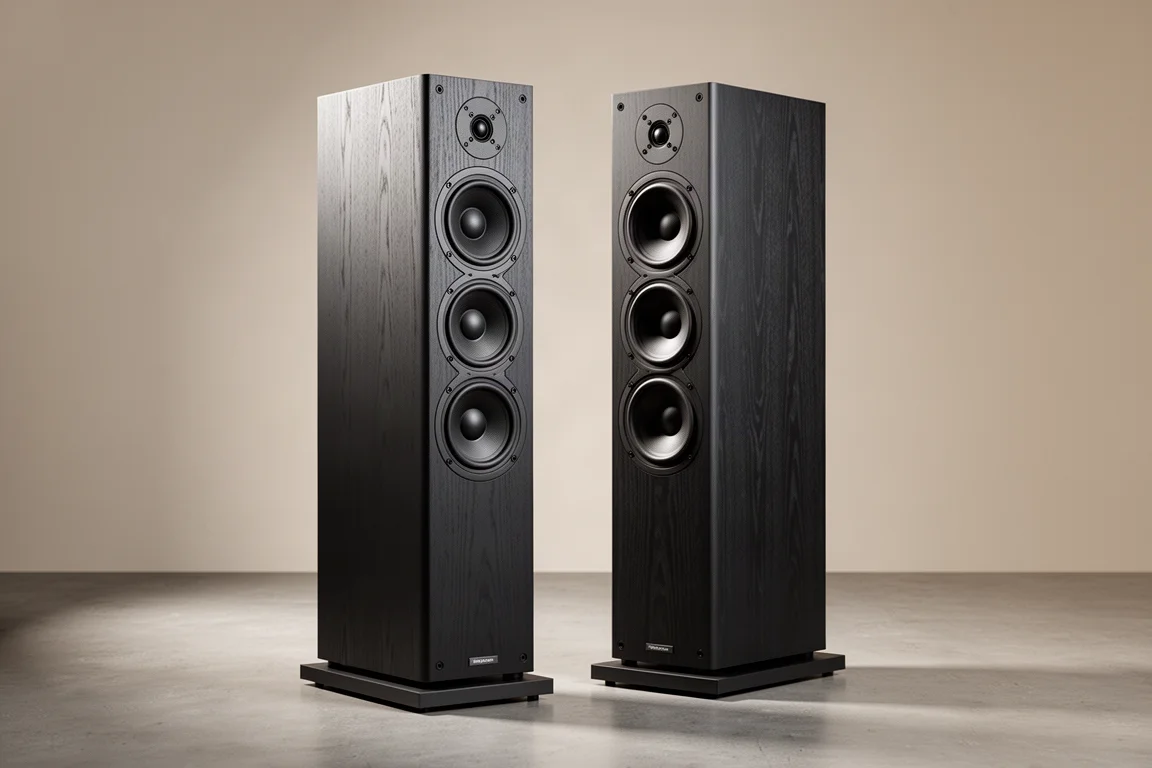
The Dynaudio Emit 30 is the most affordable floorstanding speaker in the company’s range, and it sells for around $1,700 a pair. It is a two-and-a-half-way design with two rear-firing bass reflex ports, a 5.25 inch midwoofer paired with a 5.25 inch woofer, and a dome tweeter measuring just under one inch. Crossover points sit at 1,000 Hz and 3,550 Hz, power handling is rated at 180 watts, nominal impedance is listed at 4 ohms, and each cabinet weighs roughly 15 kg, or about 34 lb.
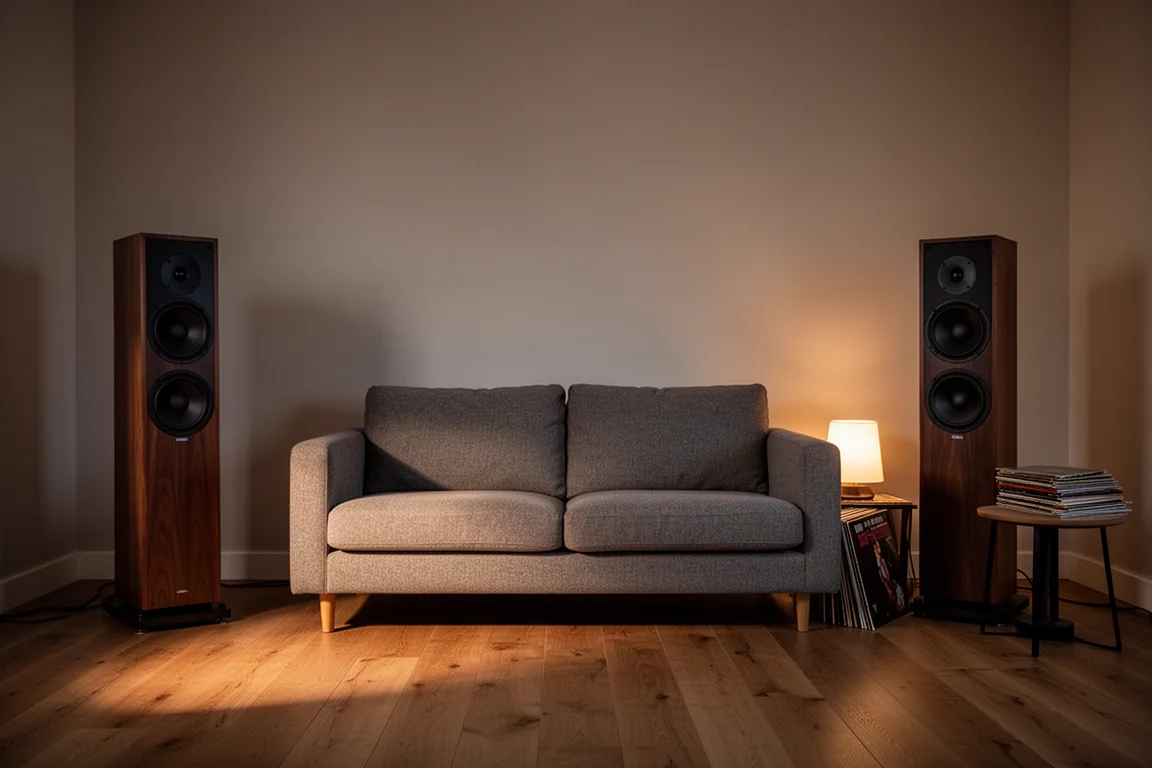
The two-and-a-half-way layout is the most interesting engineering decision here. The lower woofer runs up to about 1,000 Hz, while the upper midwoofer continues to roughly 3,550 Hz, where the tweeter takes over. Splitting the crossover points this way sidesteps acoustic lobing problems that would otherwise appear because of the physical distance between the tweeter and the lower driver. It also adds sensitivity. With only one midwoofer on the baffle, output would likely drop by roughly 4 to 6 dB.
This review covers how the Emit 30 behaves in a normal room, what its measurements show, and where it asks the buyer to make a tradeoff.
Who this product is for
The Emit 30 suits listeners who want a floorstander that reaches genuinely low without leaning on a subwoofer. In-room response extends to about 40 Hz, which is unusual at this price. If most of your music stays above 40 or 50 Hz, you can run these on their own quite happily. A subwoofer is still a sensible addition in most systems, but it is not mandatory here.
It also suits listeners who are comfortable fine-tuning a room. This speaker has well-controlled directivity and takes well to equalization, so anyone with a parametric EQ available, or the patience to move speakers around, can shape the sound considerably.
It is less suited to buyers who want a perfectly linear treble straight out of the box with no adjustment at all.
Main strengths
Low-frequency reach is the headline. In-room extension lands at about 40 Hz, with a measured F3 of 44 Hz and F10 of 36 Hz. Below 40 Hz the response rolls off quickly, but getting to 40 Hz in a room is easy.
The midrange and bass both perform well. The midrange sounds good and the lower bass sounds really good, which is a strong combination for a speaker in this bracket.
Directivity is another strength. The horizontal window stays usable to about plus or minus 70 degrees and the vertical window to about plus or minus 20 degrees, with the tweeter axis giving the best result. Because the sound power is well behaved and dispersion is uniform, equalization is genuinely effective rather than a blunt instrument.
Distortion is low. Harmonic distortion measured at 86 dB and again at 96 dB both look good, and compression behaviour also looks good.
Value is the final point. For around $1,700 a pair you get low distortion, good low-frequency extension, a capable midrange, a wide soundstage and a reasonable vertical sweet spot.
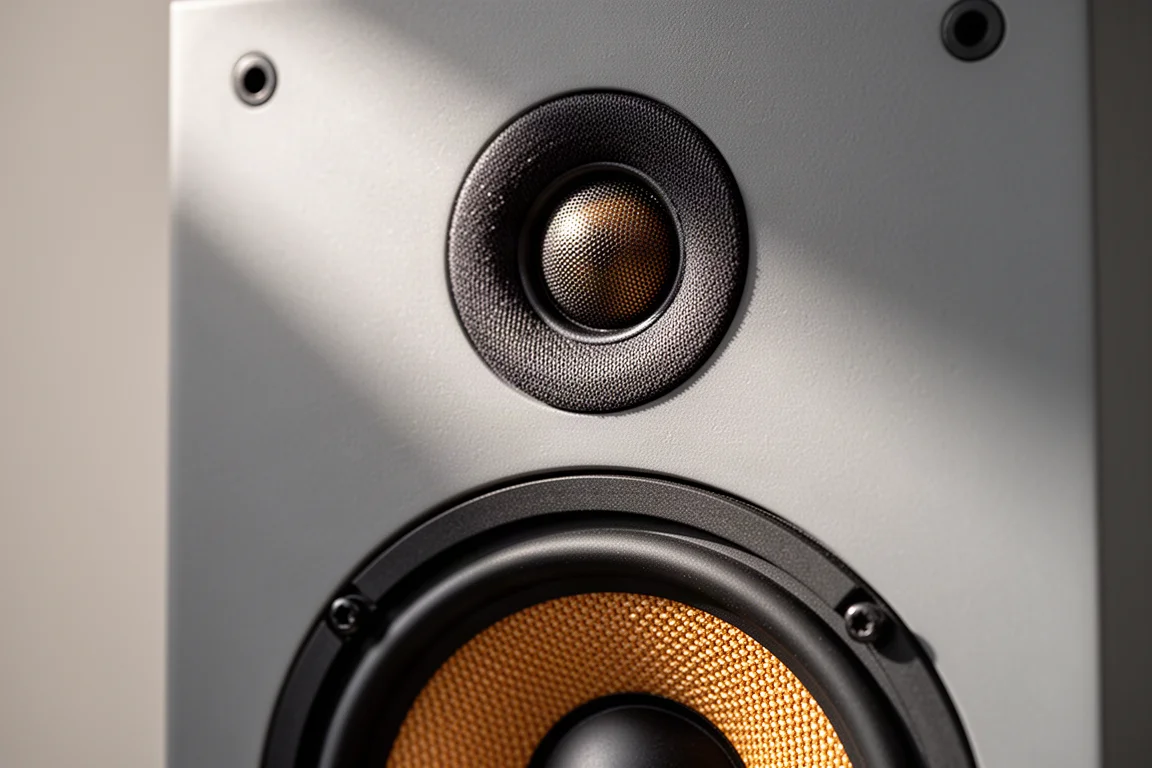
Sensitivity measured around 86 dB on average against a specified 87 dB, and power handling is rated at 180 watts.
Measured performance and in-room behaviour
Impedance drops to roughly 3.7 ohms at its lowest point, so this behaves like a 4 to 6 ohm nominal load. Two resonances are visible in the data. One sits around 350 Hz and looks like an enclosure resonance, most likely related to cabinet height. The other falls between roughly 1 and 2 kHz and appears to be a cone edge or surround resonance. Both are high in Q and dissipate quickly, so they are unlikely to be audible in normal listening.
Multi-tone distortion shows a rise between about 600 Hz and 1.5 kHz. Some of that is a matter of presentation, since distortion is plotted relative to the fundamental, so any dip in the frequency response pushes those figures higher. Overall the result is roughly par for a speaker at this price, and crossing the speaker over at 80 Hz reduces it slightly.
On-axis linearity is where the more noticeable behaviour lives. The lower to mid treble region, broadly 2 to 5 kHz, shows a deviation of about 2 to 3 dB across a wide enough band to be clearly audible. Burst decay shows higher Q resonances around 450 Hz and again between about 1 and 2 kHz, which dissipate fairly quickly.
Things to consider before buying
The upper frequency range is the main caveat. During listening, the region around 1 kHz and above sounded inconsistent: sometimes a little too soft, sometimes a touch hot, and clearly dependent on frequency. Side-by-side switching against a known linear reference made the lower to mid treble stand out, and there the speaker sounded too soft at times. A mild dip in the treble is usually preferable to a boost, but in this case the notch is more aggressive than ideal.
A parametric EQ boost of about 2 dB in the 3 to 6 kHz region with a Q of roughly 1 is the practical fix if you have the tools. That same dip is why male vocals can lack a little presence and why cymbals can lack some sizzle.
Placement matters a great deal. Set up close to the wall, these speakers sound far too boomy. Pulling them out from the wall clears most of that up. If you do have equalization, you can place them a little closer to the wall, boost the low end, then tame the resulting boominess with EQ to gain a bit more extension. Without EQ, keep them away from the wall.
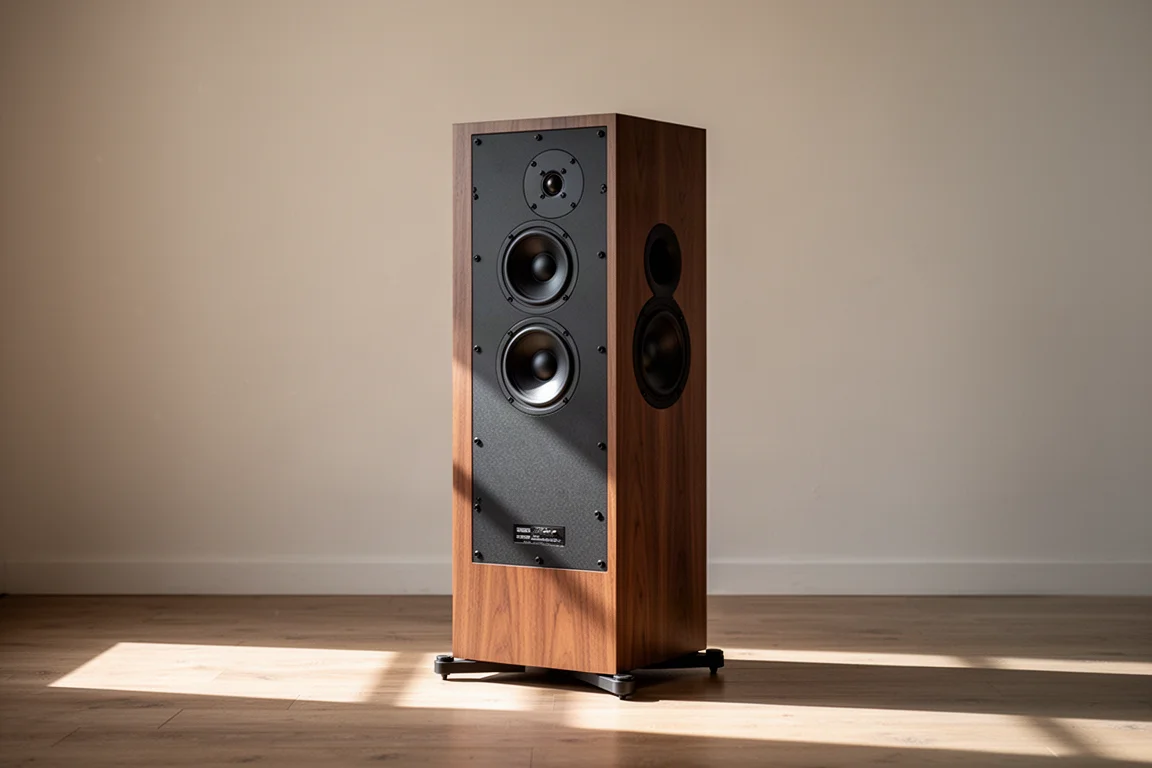
A subwoofer is not required if your content stays above 40 to 50 Hz, but the speaker is still the kind of design that most systems would benefit from pairing with one.
Setup and system matching
Angling is worth experimenting with. Pointing the speakers directly at the listening position left the higher frequencies sounding slightly off, and 30 degrees of toe-out was clearly too much. Angling them roughly 10 to 15 degrees away from the listening position worked best. Vertically, stay within about plus or minus 20 degrees and listen on the tweeter axis.
Distance from the rear wall is the other key variable. Give them room behind, and the low end stops dominating the presentation. With a minimum impedance of about 3.7 ohms, an amplifier that is comfortable driving a 4 ohm load is the safer match.
Equalization is the third lever. Good directivity and controlled sound power mean changes stick. The 3 to 6 kHz area with a Q of about 1 and a boost of around 2 dB is where attention pays off, and lifting that region helps male vocals and cymbals sit properly in the mix.
Buying advice
At around $1,700 a pair, the Emit 30 trades a less linear upper frequency range for low distortion, strong low-frequency extension, a good midrange, a wide soundstage and a reasonable vertical sweet spot. That is a fair trade if you are willing to work with it.
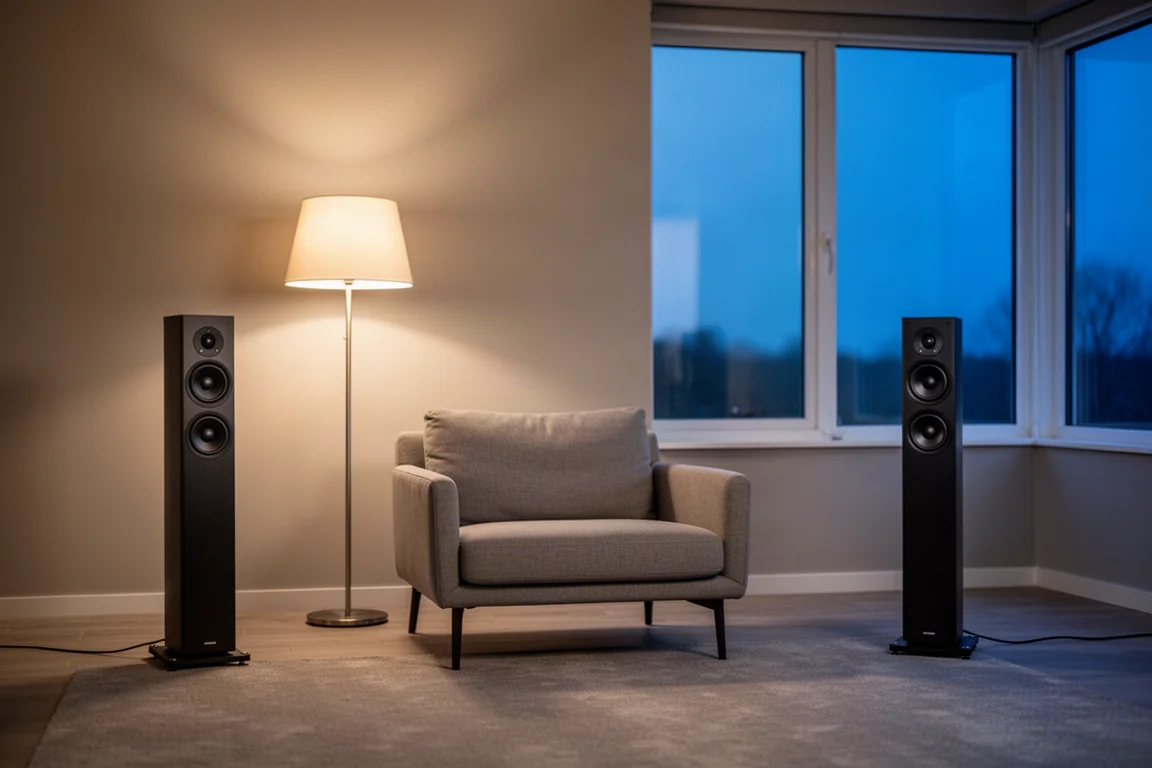
If you have equalization available, or you are happy to spend an afternoon on placement and toe-in, the tradeoff becomes manageable and the rest of the package is genuinely strong. If you want a speaker whose treble is linear out of the box and you have no intention of adjusting anything, this one is likely to frustrate you. Buyers who value deep bass and a wide, well-dispersed soundstage over an immaculate top end will get the most from it.
Conclusion
The Dynaudio Emit 30 is a solid value floorstander. It reaches about 40 Hz in room, keeps distortion low, delivers a good midrange and disperses sound evenly enough that equalization works properly. The cost is a lower to mid treble region that needs a small EQ lift to sound its best, and a placement habit of sitting well clear of the wall. Buyers who accept those two conditions get a lot of speaker for the money.
Product link
View more details for Dynaudio Emit 30
This product is mentioned in the review. Check the specifications, options, and compatibility before buying.
View more details for Dynaudio Emit 30Further reading
Related Reviews
Floorstanding Speakers
Acoustic Energy AE109 Mark II Review: A Refined Floorstander at £699
The Acoustic Energy AE109 Mark II is a slim, warm sounding floorstander that delivers clarity, midrange body and strong imaging in small to medium rooms.
Floorstanding Speakers
Acoustic Energy AE509 Review: A Slim Floorstander With Deep, Defined Bass
A practical look at the Acoustic Energy AE509, a slim floorstanding speaker with carbon fibre drivers, deep and well-defined bass, and an easy-going character that rewards careful system matching.
Floorstanding Speakers
Arendal 1528 Tower 8 Review: Reference Neutrality With Real Demands
A close look at the Arendal 1528 Tower 8, a nearly five-foot, 200-pound floorstander that rewards generous space, serious power, and high listening levels with reference-grade neutrality.