Freeride Skis
Dynastar M3 100 (2026) vs M-Pro 99: Two 100 mm Freeride Twin Tips Compared
A close look at the 2026 Dynastar M3 100 and the outgoing M-Pro 99, covering construction, camber, on-snow behaviour, and who each ski suits.
Introduction
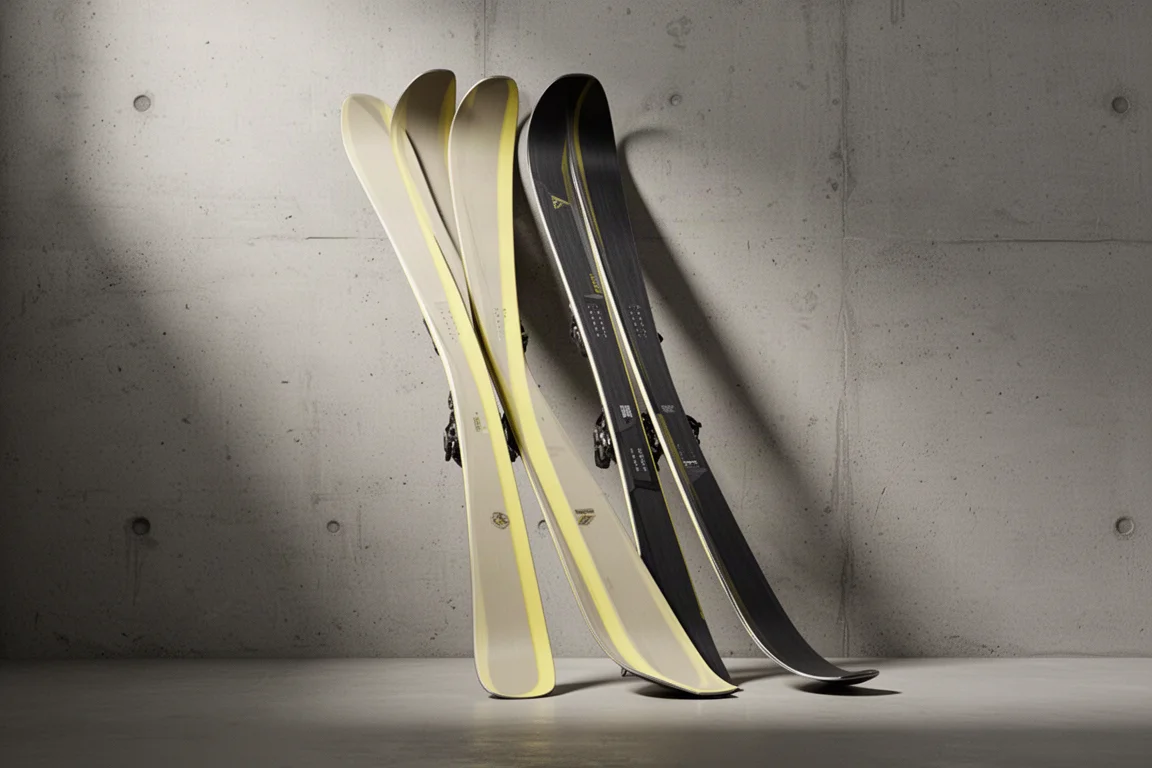
A 100 mm twin tip has to cover a lot of ground. It needs to hold an edge on the way back to the lift, stay calm when the snow turns cut up and heavy, and still feel light enough to move around in the trees. The 2026 Dynastar M3 100 is the brand’s newest take on that brief, and it replaces the outgoing 99 mm model with a wider shape and an updated core.
The changes are not cosmetic. The M3 100 moves to Hybrid Core 2.0, keeps a pronounced camber profile underfoot, and adds width at the tip, tail, and waist. The outgoing M-Pro 99 stays in the picture as an easier-turning alternative that is still worth considering, particularly if maneuverability matters more to you than composure at speed.
This guide covers what changed, how the M3 100 behaves on trail and off, and which of the two skis lines up better with how you actually ski.
Construction: Hybrid Core 2.0 in the M3 100
The most important update is the core. Hybrid Core 2.0 pairs a poplar wood core with polyurethane strips running along the sides, and the wood itself is made up of three poplar layers: one flat layer at the bottom, with the top two milled and joined together. It is the same wood and polyurethane combination used in the M-Free and M-Pro series, minus the metal laminates.
The joinery is doing real work here. Rather than relying on extra layers of epoxy to bond the ski, the construction uses the joined poplar laminates to hold everything together. That reduces waste and the carbon footprint of production, and it also increases the energy that moves through the friction between the bonded wood layers.
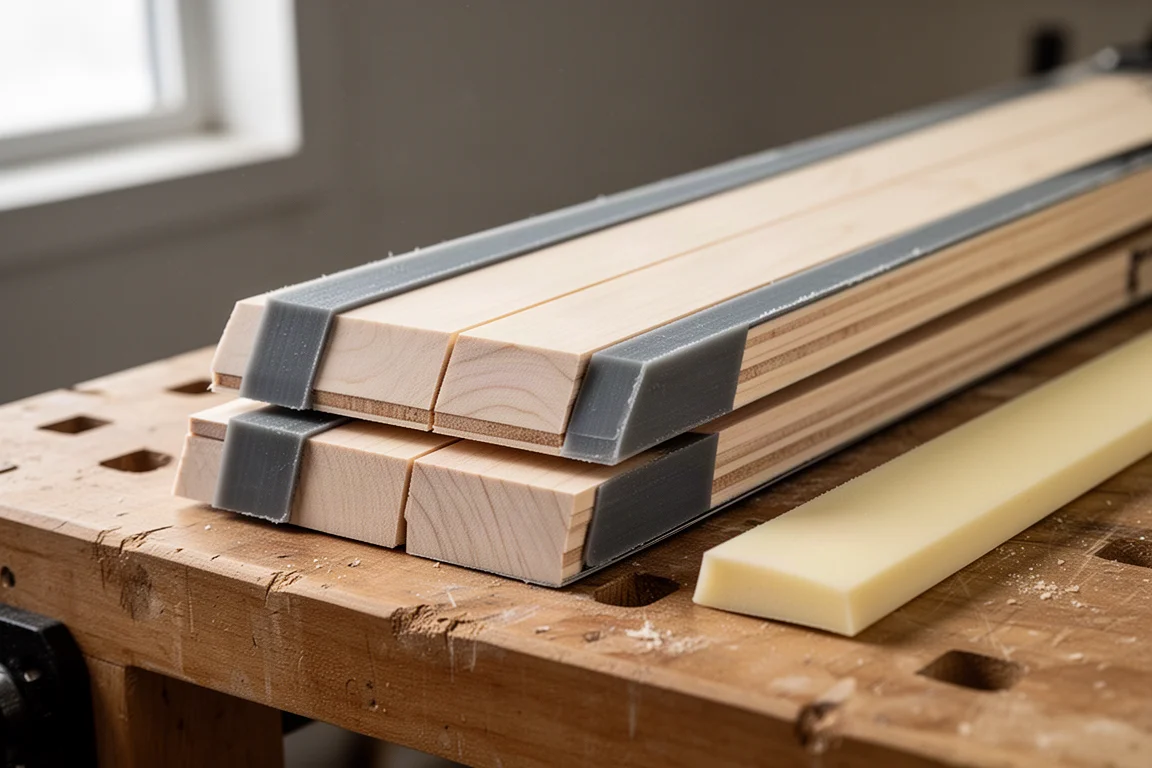
The core profile is noticeably thicker than the outgoing model, and there is roughly 5 cm more sidewall running along the length. The polyurethane takes up a surprisingly large share of the core, close to half in places, which is unusual in this category. It is also light. A 185 cm M3 100 measured 2,016 g per ski once the binding was subtracted, based on 3,259 g with a Look Pivot 15 mounted and 1,243 g for that binding. The outgoing 99 mm ski measures slightly heavier.
Shape and Camber: The Defining Trait
The M3 100 adds about 3 mm at the tip and tail and 2 mm underfoot in the 185 length, so it is a wider ski overall. The profile is where it gets interesting. There is a distinct mustache shape with roughly a centimeter of camber underfoot between the bases, which is uncommon at a time when many skis are moving toward flatter profiles. The tips and tails carry a lot of rocker and stand quite tall at both ends.
The taper is deliberately uneven. The tip narrows back to about the end of the sidewall, which makes the ski direct and highly mobile off trail. The tail keeps more material and reads as more squared off, and that is where the precision at the end of a carved turn comes from. Both the outgoing 99 and the new 100 hold an 18 m turn radius in the 185 length.
On-Snow Performance: Carving, Chop, and Trees
For a 100 mm ski with no metal, the M3 100 carves far better than it has any right to. The camber and the core loading work together, and the result is visible acceleration out of the turn. Lay it over and push into it, and the edge locks in almost immediately.
On packed powder groomers, crud, and chop, the ski is excellent. The taper knifes through broken snow while the camber reaches down to the firmer layer underneath and holds there. It has not seen a great deal of very firm, refrozen snow, and that is the one area where a dedicated frontside ski would clearly be the better call.
Edge grip is close to a Nordica Unleashed 98, which is the stronger of the two in that specific area, but the M3 100 gives back more energy and pop. Damping is roughly a 7.5 out of 10 on a scale where a Playmaker 101 sits at 1 and a Mantra 102 sits at 10, and the longer 192 length would likely push that closer to 8.25. It is also remarkably quiet, with almost no noise underfoot, and the polyurethane is the likely reason.
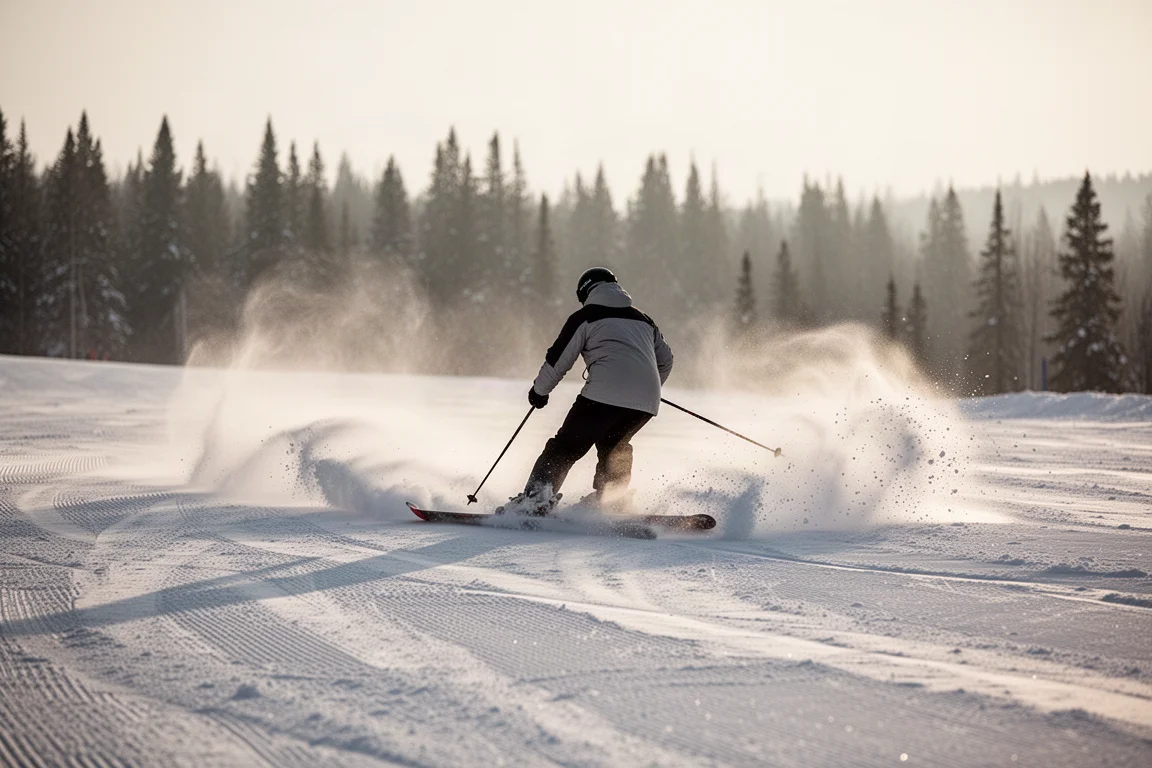
Speed changes the character. The camber rewards higher speeds and can feel catchy at lower speeds, particularly in less than ideal snow, where the contact points make themselves known quickly. Strong skiers, whether through fitness or technique, will not notice it much. Intermediate skiers may get hung up.
Off trail, performance is condition dependent. In refrozen trees with a thin layer of snow on top, the ski felt catchy. In soft snow and slush, the tails release easily and the tapered shape takes over, making it very maneuverable and noticeably more so than a Revolt 101. The trick is to load the tip and tail and use that stored energy to unweight and change direction.
Float is not its strongest suit. A Salomon QST 100 floats better because the M3 100 gives up taper, but the M3 100 tracks better through crud and chop with less deflection.
In the park, this is not a dedicated freestyle ski. It asks for a calculated approach, and the camber makes it hard to wash out or smear an imperfect landing. Takeoffs on jumps and rail lips are excellent, almost trampoline-like, and the swing weight feels low enough that rail tricks are not a problem. Landed switch out of 540s, it does not feel catchy, and it plows straight through deep takeoff ruts without wavering.
Dynastar M-Pro 99: The Outgoing Reference
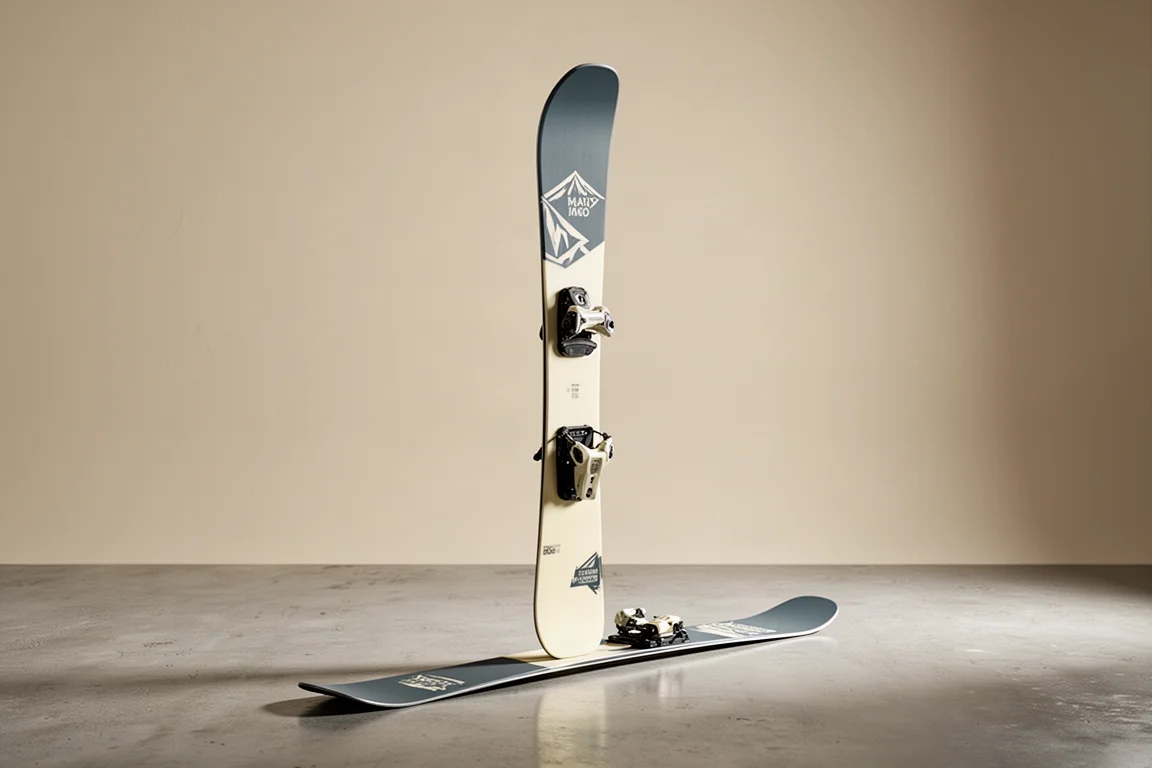
The 99 mm ski it replaces is not obsolete. It is easier to turn, more mobile, and more agile, and it steers readily from the tip. As a tree ski it has a strong reputation, and it remains slightly better than the M3 100 in trees and at slower speeds off trail, especially for less aggressive skiers.
Its core profile is thinner and its sidewall shorter, and it does not carry the same camber grip, which contributes to its friendlier low-speed feel and its ease in tight terrain. The trade-off is less energy and less precision at the end of a turn.
For anyone who wants a ski right now, the M-Pro 99 is available at a good deal while it lasts, and it is still a wonderful ski in its own right. Choosing it over the 2026 model is a question of handling preference rather than a step down in quality.
How the M3 100 Compares to Other 100 mm Skis
Against a Nordica Unleashed 98, the M3 100 is the more off-trail-oriented ski. The Unleashed has better edge grip and suits skiers who spend most of their time on trail, while the M3 100 becomes the better choice once half or more of your day happens off piste.
Against a Rossignol Sender Free 100, which leans further into park, the M3 100 is the more dynamic and energetic ski. Against a Super Black Ops 98 and a Sender Soul 102, the M3 100 sits between them. The Black Ops is the more symmetrical, park-leaning option, and the Sender Soul 102 is a heavy, run-it-straight ski that weighs close to 2,400 g in its longer length. The M3 100 has more soft snow ability than the Super Black Ops and is more maneuverable in softer snow than the Sender Soul 102.
A Black Crows Justice is the more unwavering of the two, a bulldozer that gets better as snow firms up, and its turn radius tightens as you lay it over, while the M3 100 relies more on skier input for turn shape. An Atomic Bent 100 is easier to access and has more tip float, while the M3 100 is stronger, more stable, and more damp, and it is the better carver of the pair.
What makes the M3 100 stand out in a crowded category comes down to two words: damp and energetic. Few skis manage both at this level.
Who Each Ski Suits Best
The M3 100 is the better fit if you split your time between groomers and off-piste terrain, want a ski that stays composed when the snow gets cut up, and enjoy a cambered ski that gives something back at the end of every turn. It rewards a strong, deliberate skier.
The M-Pro 99 is the better fit if you spend most of your time in trees and tighter terrain, prefer a ski that turns easily at lower speeds, or you are stepping up from a narrower all-mountain ski and want something more forgiving.
Buying Advice: Availability, Value, and Timing
Availability is the practical issue with the M3 100. Pairs have been hard to find, and what was available sold through quickly, so regular dealer orders in summer are the realistic window. If you want the newest shape and the Hybrid Core 2.0 build, planning ahead is worthwhile.
The M-Pro 99 is the opposite situation. It is in stock now at a good deal, and the arrival of a new 100 mm model does not make it a lesser ski. It is simply a different one, easier to steer and less demanding.
On length, the 185 measures slightly short, and a couple of stuffed tips were attributed to that. Moving up to the 192 would add damping and stability, though it would cost some maneuverability off trail. Running the two together, with a 185 in one model and a 192 in the other, is one way to cover both ends.
Conclusion
The 2026 Dynastar M3 100 is a genuinely interesting ski. Hybrid Core 2.0, a mustache profile with real camber underfoot, and a wider footprint add up to a ride that is both damp and energetic, a combination that is rare at any width. It carves better than a metal-free 100 mm ski should, handles crud and chop with confidence, and stays quiet underneath you.
It is not a ski for everyone. The camber asks for strong technique or a bit of muscle at low speeds, and the taper costs some float. Skiers who want the easiest possible time in the trees will still prefer the outgoing M-Pro 99, which remains available and remains excellent.
Dynastar has been building twin tips for a long time, and that experience shows here. If the M3 100 matches how you ski, it is a ski that covers a lot of terrain without asking much in return.
Further reading
Related Reviews
Freeride Skis
Armada Playmaker 101 Review: A Light, Lively Freeride Ski Built to Play
A closer look at the Armada Playmaker 101, a lightweight freeride twin tip with a poplar and paulownia core, carbon rods through the mid-body, and a deliberately playful character.
Freeride Skis
Armada Playmaker 111 Review: A Lightweight Freeride Ski Built for Soft Snow
A close look at the Armada Playmaker 111, a 111 mm freeride twin tip built around float, playfulness, and a drifty feel in fresh and soft snow.
Freeride Skis
Best Women's Freeride and Powder Skis 2026
A 104 mm to 118 mm comparison of sixteen women's freeride and powder skis, covering weight, rocker, metal placement and the terrain each model suits best.