Freeride Skis
Best Women's Freeride and Powder Skis 2026
A 104 mm to 118 mm comparison of sixteen women's freeride and powder skis, covering weight, rocker, metal placement and the terrain each model suits best.
Introduction
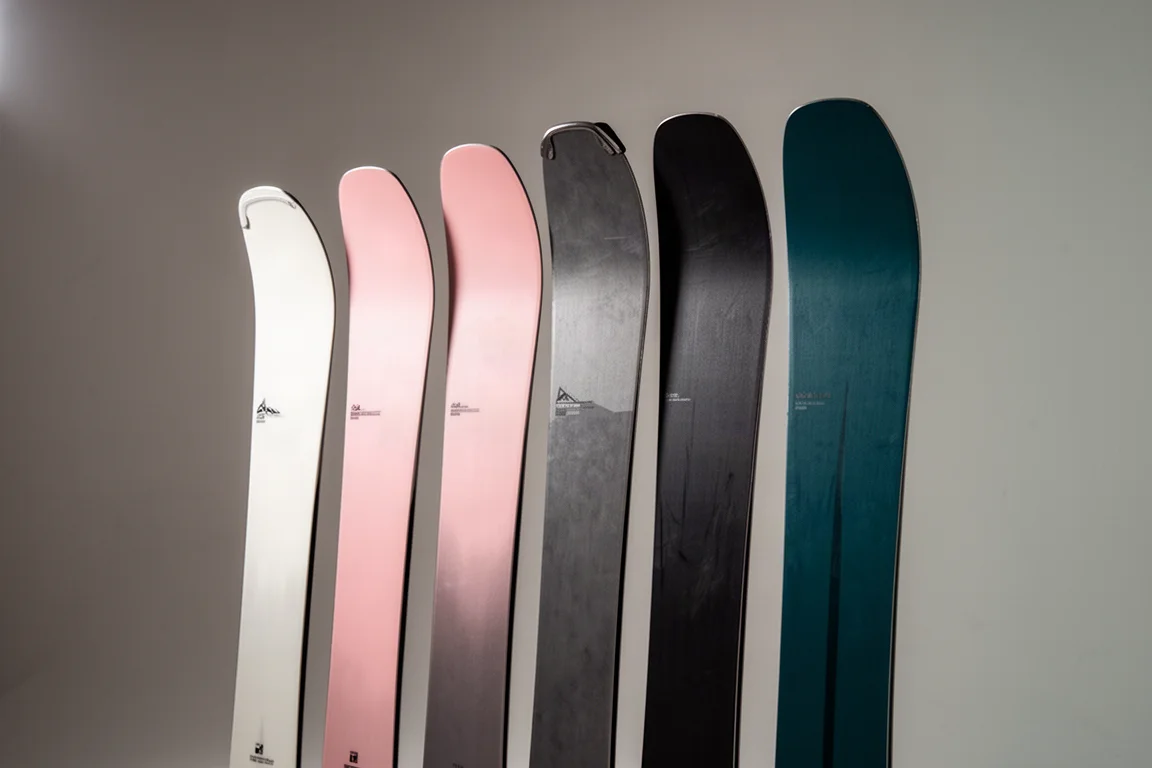
Women’s freeride and powder skis now cover an unusually wide spread of shapes and builds. This comparison covers sixteen models, from 104 mm underfoot, where a ski still works as a daily driver across mixed conditions, up to 118 mm, where the design brief narrows sharply toward deep snow, steep terrain and high speed.
The list runs narrowest to widest. At the narrow end, the trade-offs are weight, metal and how much soft-snow float you can add without giving up groomer manners. At the wide end, the skis become specialized tools, and the question shifts from versatility to whether the shape matches the way you actually ski on a deep day.
Several models here share their construction with a unisex or men’s counterpart, and at least one uses a single unisex graphic. Where that is the case, the build is the same.
One pattern holds throughout: weight and strength move together. The lightest skis here are built for climbing and reward a lighter touch, while the heaviest are damp, powerful and demanding. Most of the range sits between roughly 1,500 g and 1,800 g, which is where the most versatile options live.
What to Look For in a Freeride Ski
Weight is the first filter. The spread here runs from around 1,300 g to around 2,300 g. Below 1,600 g, a ski is a realistic candidate for a hybrid or touring binding. Above 1,800 g, you are buying stability and damping rather than uphill ease.
Rocker and splay matter next. Tip rocker is nearly universal in this category, so the separating factor is the tail. A flatter tail gives a more directional, supportive feel and better skin retention. A deeply splayed or twin tail makes a ski surfy and easy to pivot, at the cost of support at the back.
Taper and effective edge decide how a ski behaves on firm snow. Aggressive taper feels quicker and looser but gives up edge contact. A longer effective edge holds better on groomers and in variable conditions.
Metal placement is the last piece. Full-width metal in the tips and tails resists deflection when you hit something unexpected, while tapering it through the middle brings swing weight down.
Line Pandora 104
The Pandora 104 sits at the light end of this group at roughly 1,500 g. It uses a lightweight wood core with carbon fiber stringers and a directional shape, and it shares its dimensions with the men’s ski that has since left the catalog.
The profile carries a generous amount of tip rocker and noticeably less splay in the tail, so the back of the ski stays supportive and directional. The flex is soft in the tips and tails but stronger through the middle, which keeps the ski lively without feeling vague.
It is not a dedicated powder ski. Riders who move between soft snow and groomers, or who want something light enough for a hybrid binding and the occasional tour, get the most from it. The average turn radius is listed at 14.6 m. There is no dedicated skin notch at the tail, though plenty of riders tour on it anyway.
Rossignol Rallybird 104 Ti
The Rallybird 104 Ti is the only ski in the Rallybird collection with metal in it. The build pairs a paulownia wood core and a carbon alloy matrix with a titanal beam, and the weight lands just over 1,700 g.
That metal changes the character. This is a smooth, damp ski that holds its composure in crud and variable snow, with a tip that plows through inconsistent surfaces and a midbody that settles the ride. The tail is flatter than the Pandora’s, and the turn shape gets longer as you move up the length options. The 163 cm version lists a 13 m radius.
It is a hard-charging ski for advanced and expert skiers. Riders who already ski fast and aggressively will find it powerful and responsive at the same time.
Nordica Santa Ana 104 Free
Nordica uses terrain-specific metal in the Santa Ana 104 Free: full width in the tips, tapering through the fore and aft sections, then full width again underfoot. The result is a tip and tail that resist deflection when you hit something firm and unexpected, with less swing weight than a full sheet of metal would create.
At about 1,750 g it is roughly 50 g heavier than the Rallybird 104 Ti, and it carries the most tail splay of the narrower skis here. That combination gives it a surfy, playful feel in soft snow without losing strength underfoot.
This is a well-rounded ski that works as an everyday option in a snowier climate and as a powder ski in a lower-snow region. It is still an advanced to expert build, but the blend of playfulness and power is what makes it stand out. A 110 mm version follows a similar recipe.
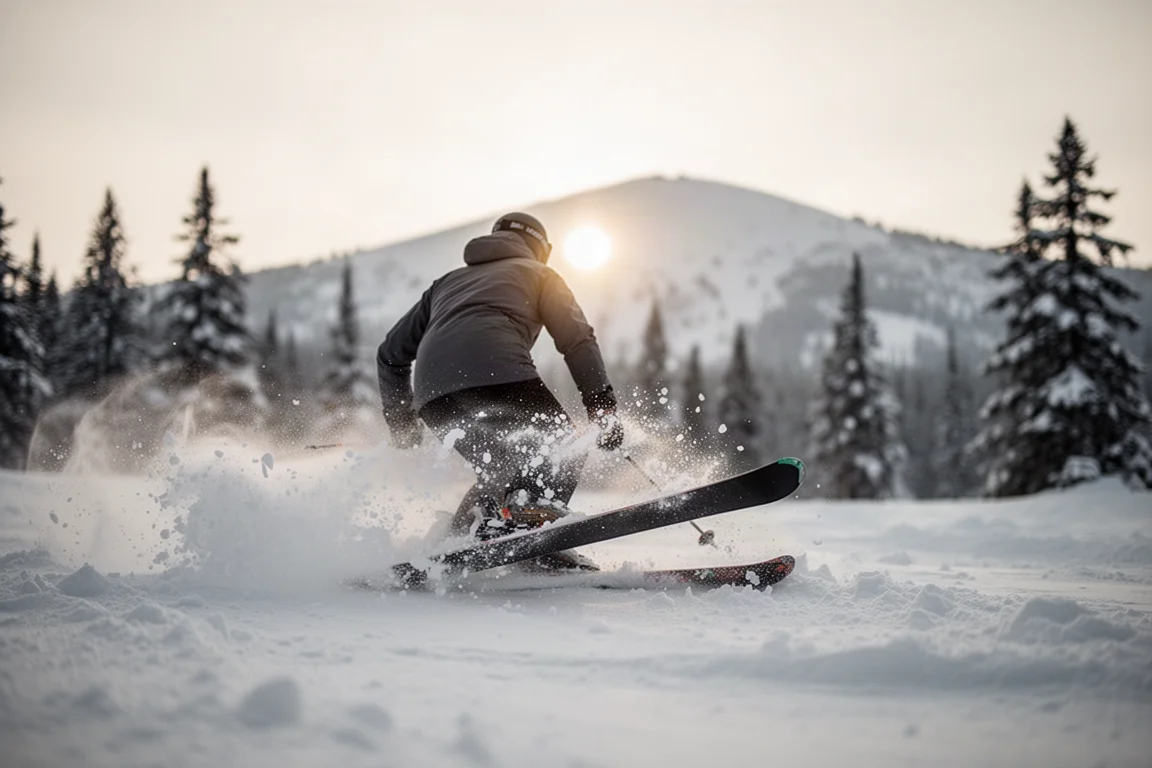
Riders who want one ski to cover groomers, crud and powder without committing to a dedicated powder shape will find the balance here convincing.
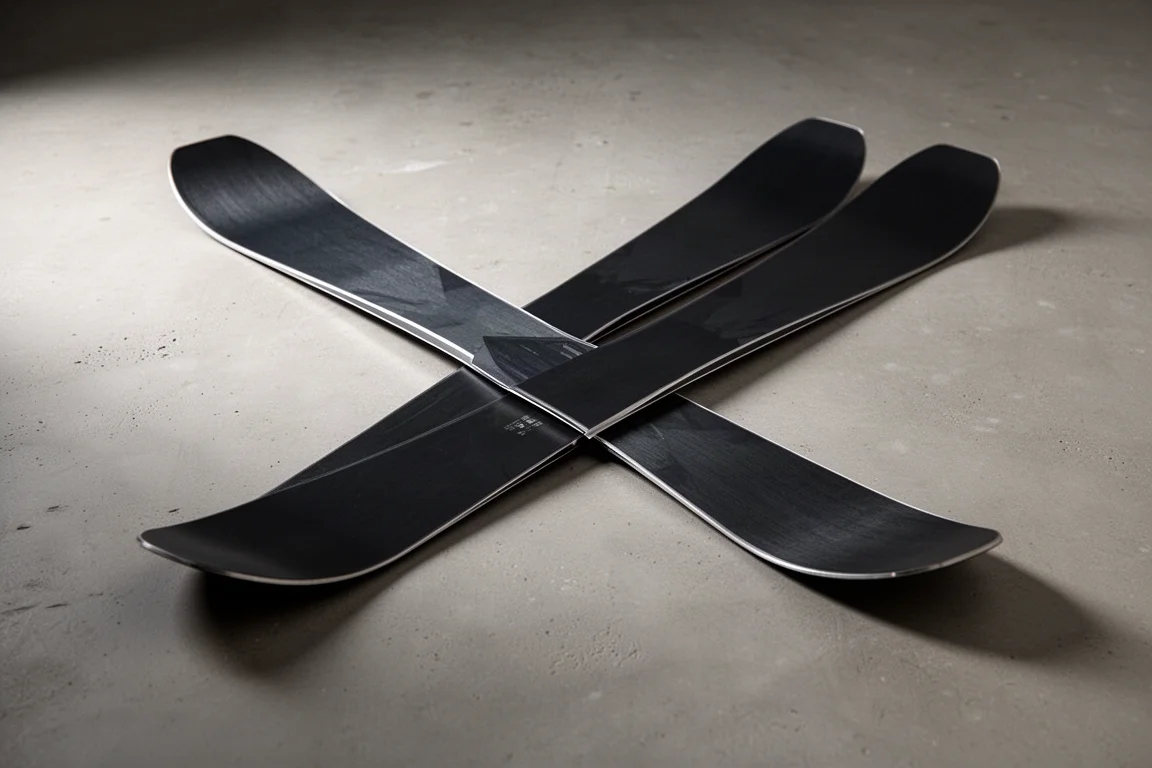
DPS Pagoda Tour 106 C2
The Pagoda Tour 106 C2 is the touring specialist of this group at roughly 1,300 g. It is built with a multi-layer wood core, a strip of Algal Tech running through the middle of the ski and Algal sidewalls.
The C2 shaping is a straighter cut than the RP shapes, with less rocker and a longer turn radius. What stands out is how stiff the ski is for its weight. It is precise, responsive and surprisingly stable at around 1,300 g, so downhill performance does not feel like a compromise for the climb.
This is a dedicated touring ski. Hybrid bindings do not really suit it. Riders who want a quicker, more rockered feel should look at the Pagoda 100 RP instead, which uses a more pronounced early taper and a shorter turn shape.
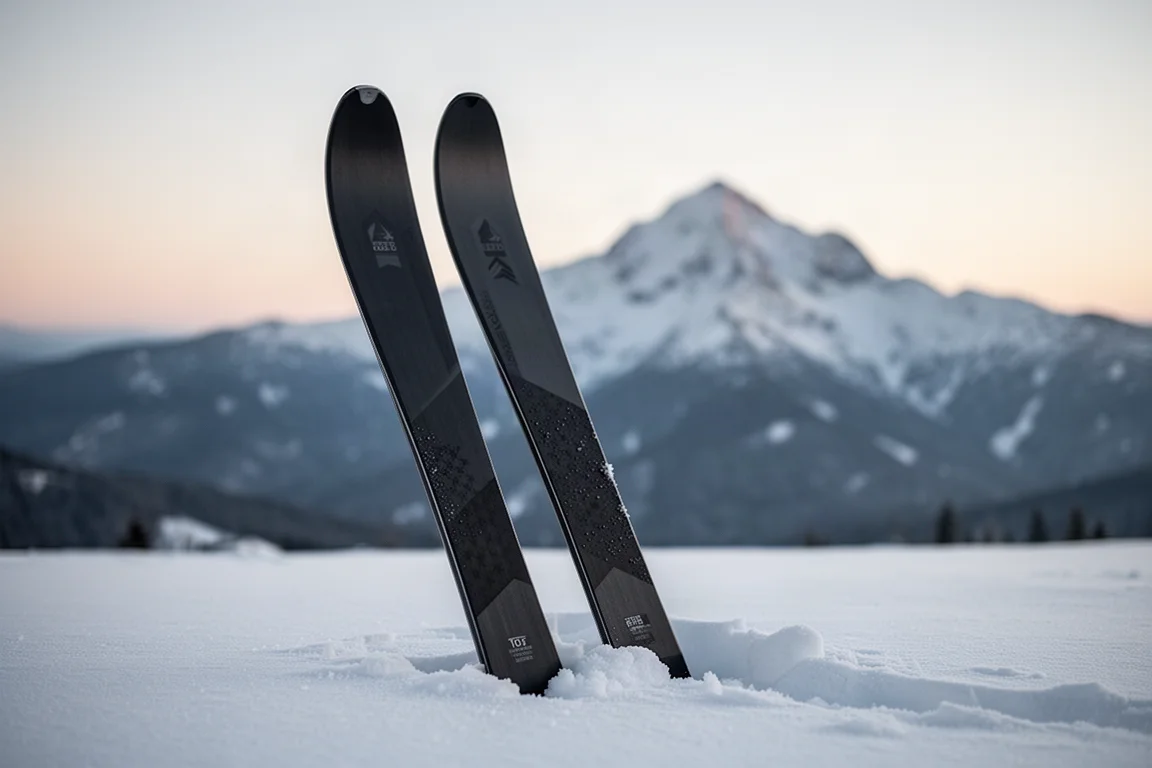
Salomon QST Stella 106
Salomon reworked the Stella 106 with more aggressive taper, moving the widest point of the tip and the tail closer to the center of the ski. Combined with substantial rocker at both ends, it makes the ski quicker and more agile than its width suggests.
The build uses a poplar wood core, CFX fiber, damp tech and a double sidewall underfoot. That construction supports the middle of the ski well, so despite the short effective edge on firm snow, the ski stays stable underfoot and easy to flick around. The tail shape allows switch skiing, and the ski works in trees and bumps as happily as in soft snow.
At about 1,830 g it is not a light ski. A hybrid binding makes sense for short tours and the occasional sidecountry lap, but riders planning serious touring time should look at a lighter option.
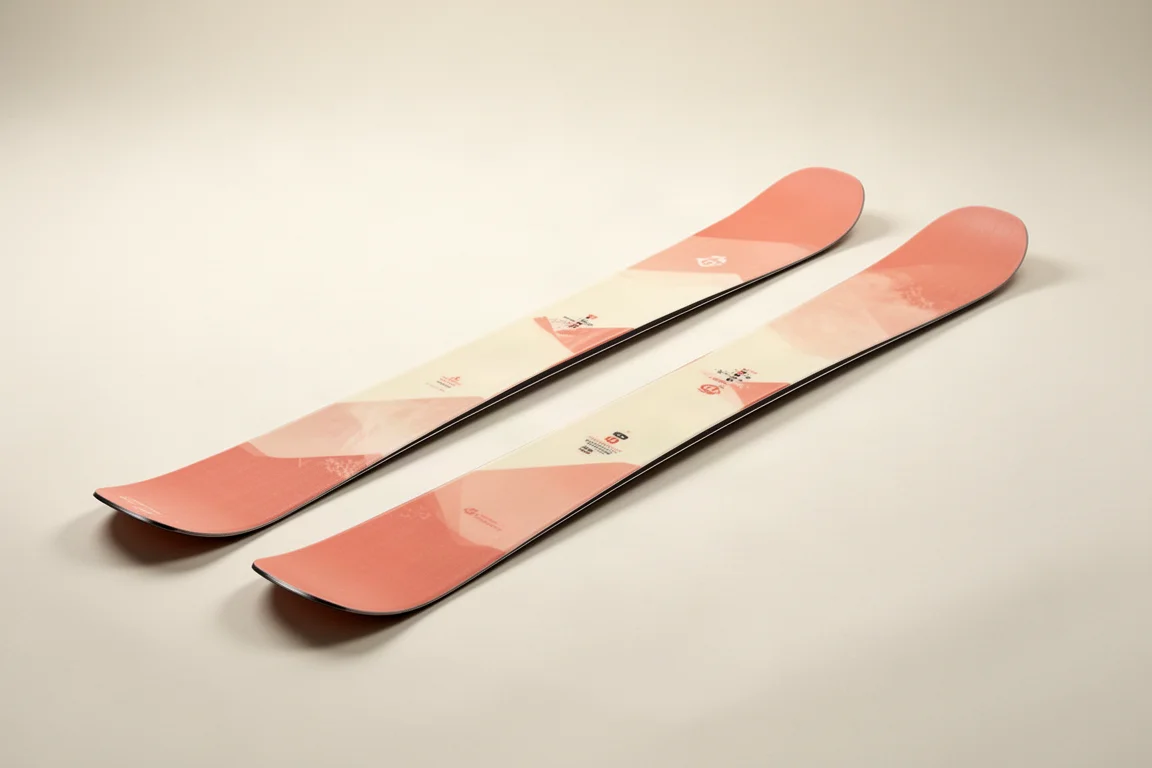
Black Crows Atris 105
The Atris 105 comes down from 108 mm in previous seasons. The shape is freestyle-inspired but directional: plenty of tip rocker, a good amount of rise in the tail, and not quite a true twin tip.
The construction is simple by the standards of this group, with a poplar wood core and fiberglass. Much of the value is in the manufacturing method and the finish quality, which puts it in a premium bracket. The 19 m turn radius is longer than several skis here, and the sidecut keeps a long effective edge, so the ski holds on firmer snow and stays controlled.
It is a big mountain powder ski with more versatility than the width implies, and quicker edge to edge than most riders expect. Riders who want a more dedicated big mountain tool should look at the Anima.
K2 Mindbender 106C
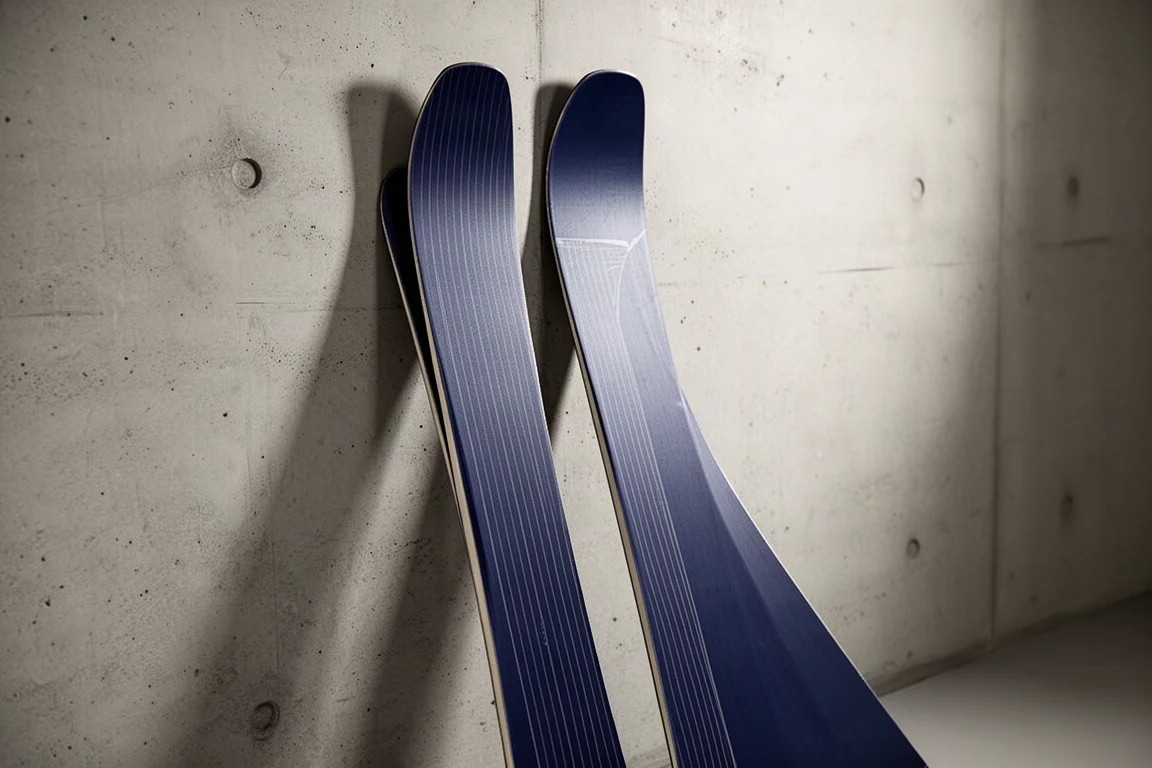
The Mindbender 106C is a women’s-only model, with no equivalent in the men’s line. K2 uses a carbon spectral braid rather than metal: the weave is tighter and angled more horizontally in the forebody, then runs longitudinally toward the tail.
That construction changes torsional stiffness along the length of the ski. The tip feels strong, supportive and responsive when you initiate a turn, while the tail releases easily. The shape is directional with a good amount of tip rocker and a flatter tail than the Santa Ana, QST or Atris, though there is still tail rocker in the profile.
At around 1,575 g it is close in weight to the Pandora 104, and a hybrid binding works well on it. The 15 m turn radius makes it snappy in trees and bumps while staying stable underfoot. It is also one of the more approachable skis in this group for an intermediate stepping into the width.
View more details for K2 Mindbender 106C
Liberty Genesis 106 BC
The Genesis 106 BC takes the recipe of the standard Genesis 106 and makes it lighter for touring, using aspen, maple and carbon. It lands at roughly 1,500 g, which is heavier than the DPS but light enough for a touring binding.
The notable detail is the tail, which is flatter than on the standard version. That keeps a skin in place and gives more support in technical backcountry terrain, while the tip carries a lot of rocker. The ski is agile and easy to flick around, with a flex pattern that still delivers stability.
The character leans toward freeride with touring capability rather than pure alpine touring. Liberty also mills a flat spot for skin attachment. It is a less common sight on the hill, but riders in snowier regions will find a lot to like.
Volkl Blaze 106
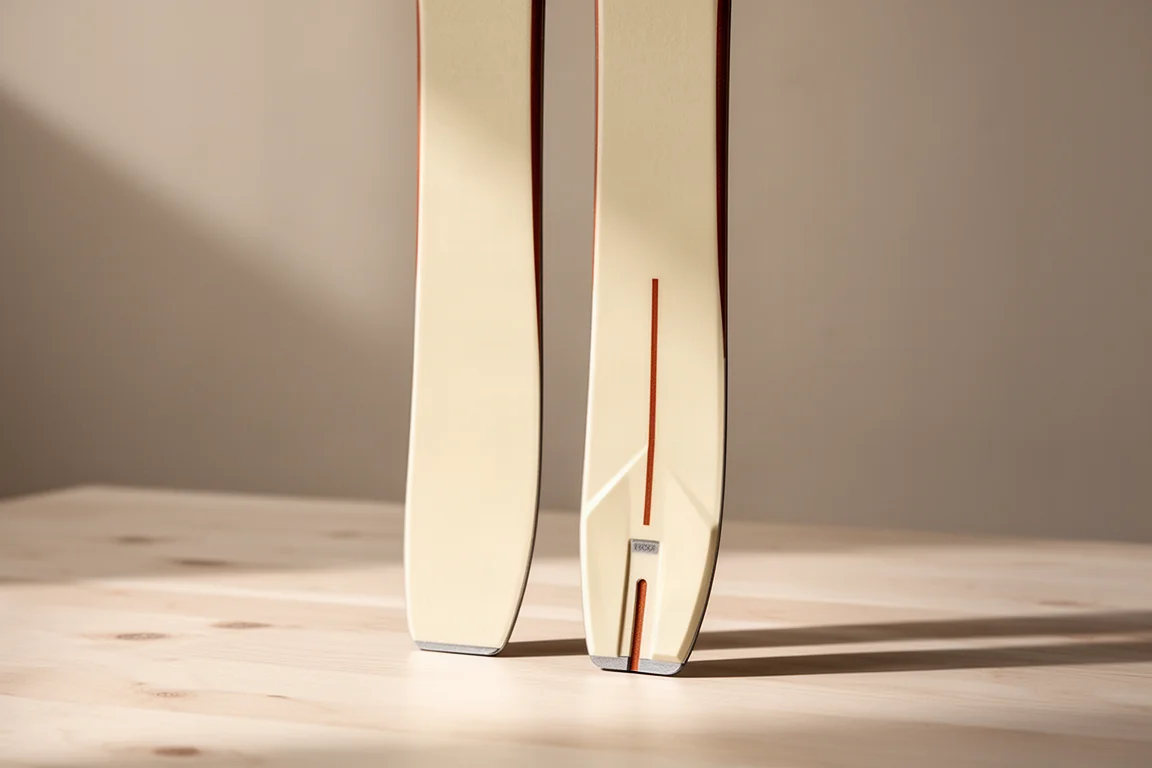
The Blaze 106 has been in the line for around three years and helped establish the hybrid freeride and touring category. The build layers several types of wood, adds a synthetic strip down the center, and uses a titanal binding platform underfoot that reaches the sidewalls and extends into the fore and aft sections, so it strengthens the ski as well as holding the binding.
The shape is directional with very long tip and tail rocker, and the 3D radius measures 29 m in the tip, 14 m underfoot and 23 m in the tail. It is surfy and smeary despite carrying less splay than a twin tip, and at just over 1,500 g it is light enough for a touring setup. There is a skin attachment point on the tail.
Most riders use it in the resort, where it works as a powder ski, and it also fits neatly into a wider quiver alongside narrower skis from the same line.
Riders who split their time between lift-served soft snow and the occasional uphill day get the most from it.
View more details for Völkl Blaze 106
Armada ARW 106 UL
The ARW 106 UL takes the shape and concept of the ARV 106 and drops the weight with a lighter core. Despite the ultralight label, it still comes in over 1,800 g, which makes it one of the heavier skis in this comparison.
It is an all-mountain freeride twin tip, with a lot of camber underfoot, a lot of rocker and splay, and Smear Tech bevels in the base that add float. The result is a sturdy ski that plows through variable snow rather than deflecting off it.
The mount point is the most centered of any ski here, which suits riders with a freestyle background. For most skiers an alpine binding makes more sense than a hybrid one on this ski.
Atomic Backland 107
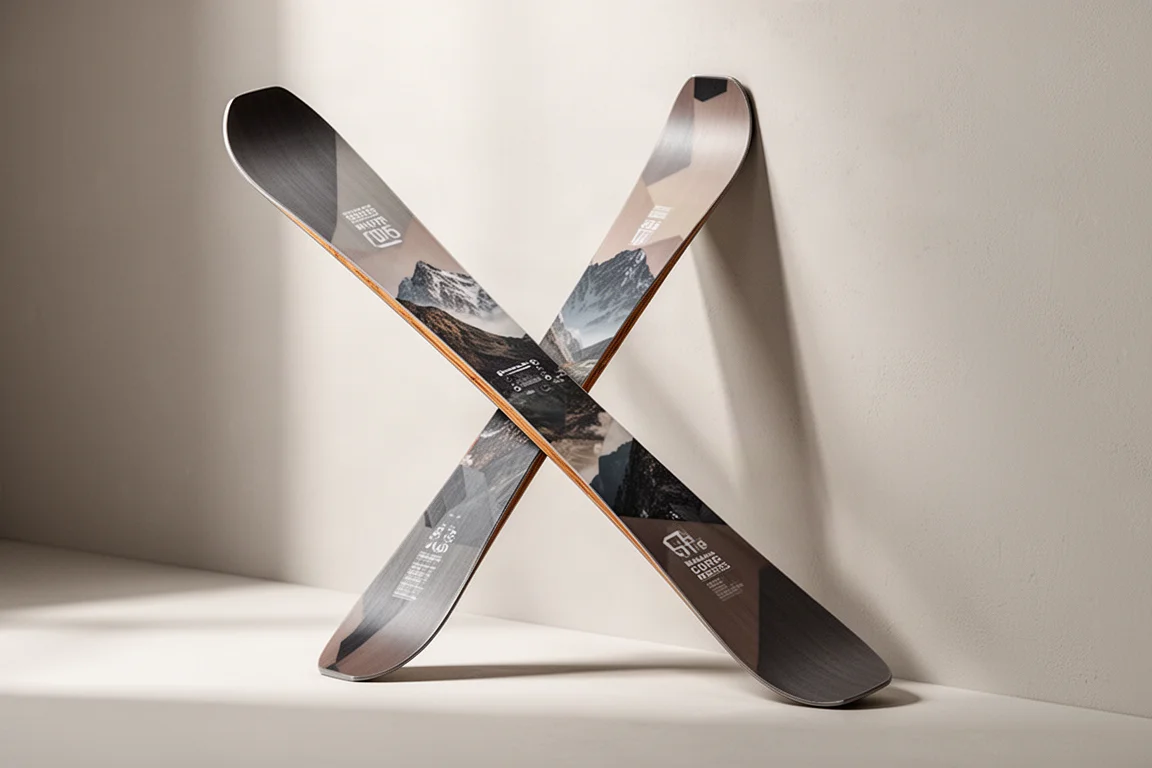
The Backland 107 uses a lightweight wood core with carbon fiber stringers that are visible through windows in the topsheet. At 182 cm it comes in just under 1,600 g, and at a length comparable to the other skis here it would be the second lightest in the group.
The profile is strongly directional, with considerably more tip rocker than tail rocker and a flatter tail that gives support when you need it in the backcountry. Horizon Tech in the tip adds float in soft snow, similar in concept to the bevels used elsewhere.
It is a touring ski with an impressive strength-to-weight ratio, and it feels stronger than an equivalent-width freeride ski from the same brand. Riders who ski technical backcountry terrain will appreciate how much downhill performance comes with the low weight.
View more details for Atomic Backland 107
Fischer Ranger 108
The Ranger 108 is a unisex ski with a single graphic, not a women’s or men’s specific model. It follows the same recipe as the rest of the new Ranger line: a beech and poplar wood core with shaped titanal underfoot and a flex cut, similar in length to the metal plate used in the Blaze but shaped differently.
Across the Ranger line, the metal gets shorter and the rocker gets longer as the width increases, so the 108 is firmly in powder territory. It is a resort powder ski more than a backcountry one, with long tip rocker and a lot of splay in the tail, close to a twin tip with the end cut off.
It is one of the strongest skis in this group, with excellent vibration damping and a smooth, powerful feel underfoot. It is also one of the heavier options, and it is not an intermediate ski. Most skis in this width range are more approachable.
Line Pandora 110
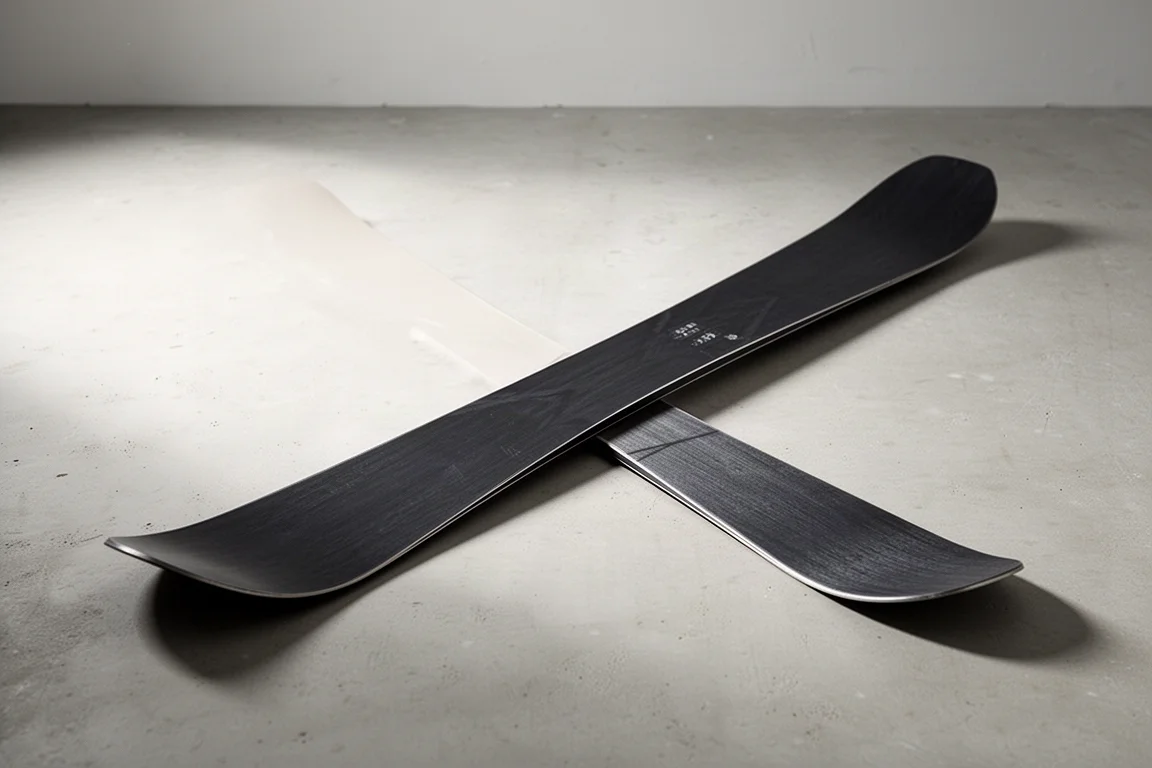
The Pandora 110 borrows construction and shaping ideas from the Vision skis, which are freestyle twin tips. The build uses a triple hybrid construction with cross-hatched carbon fiber, applied differently from the carbon in the Pandora 104.
It is the softest flexing ski in this comparison and one of the lightest at under 1,400 g. That combination makes it a rare thing: a wide, light twin tip that works as a touring ski if you want one, and a playful freestyle-oriented option in the resort.
It is not for the hard-charging skier. It suits riders who want to turn the whole mountain into a playground, hit side hits, land switch and keep things loose. The softer flex is the point.
View more details for Line Pandora 110
Blizzard Sheeva 11
The Sheeva 11 is the widest ski in the Sheeva line and shares its recipe with the Rustler skis on the men’s side. The build uses carbon flip core DRT, with a metal laminate underfoot that runs full width, tapers and ends where the rocker begins.
At 164 cm it weighs about 1,750 g and lists a 16 m turn radius. The flex pattern varies along the ski: torsional rigidity underfoot for edge grip, control and power, and more torsional flex in the tips and tails for maneuverability and playfulness.
It sits between the two skis around it in character. It is not as strong as the Ranger 108 and not as playful as the Pandora 110, but it is an extremely well-rounded resort powder ski at 112 mm underfoot, and easier to get on edge than its width suggests. It is a good match for riders in snowier regions.
Black Crows Anima
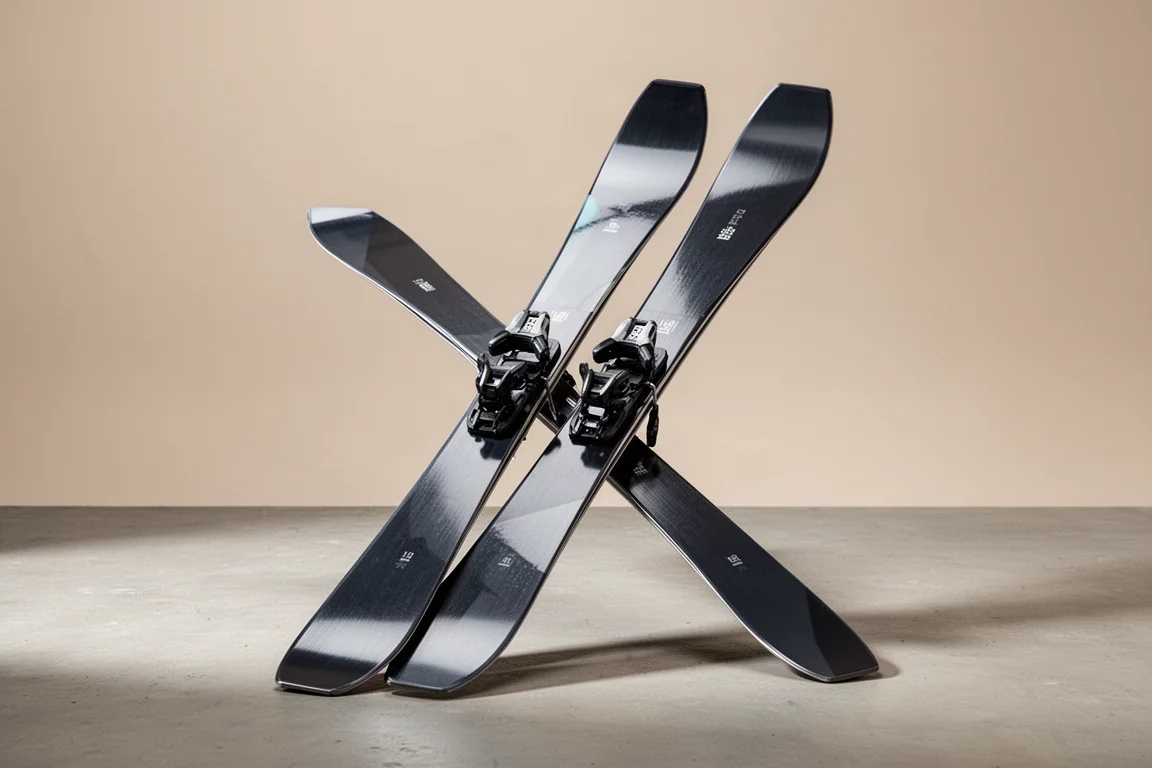
The Anima is 115 mm underfoot and is a big mountain powder ski with very little versatility outside that brief. It carries a lot of tip and tail rocker and true twin tip splay, which is unusual in the powder category.
That shape makes it a specific tool: think landing a 180 off a cliff into deep snow, or skiing freestyle-influenced lines where you want the tail to release without a fight. Women’s graphics are available in shorter lengths.
On groomers and firm snow it will not deliver the performance of the narrower skis here. Riders who spend their deep days chasing that style of skiing will find it does exactly what it is built for.
View more details for Black Crows Anima
Rossignol Black Ops 118
The Black Ops 118 is the most specialized ski in this comparison. It is a big mountain powder ski with a heavy freestyle influence, originally developed under the guidance of Parker White and Chris Logan and now Tatum Monod’s pro model. It is built for aggressive, steep, fall-line skiing.
Do not let the twin tip shape suggest otherwise: it is burly. Rossignol uses a lot of rubber in the build, which delivers a huge amount of vibration damping, and the ski itself is very strong. It is not a quick, agile powder ski.
At about 2,300 g it is far heavier than anything else here. It also has the most rocker of any ski in this group, with the tail carrying almost the same profile as the tip. That combination gives near endless stability and power while still allowing big slash turns in deep snow without fighting the tail. It is a one-dimensional ski, aimed at very aggressive expert skiers who want width, top-speed stability and big mountain performance.
Buying Advice
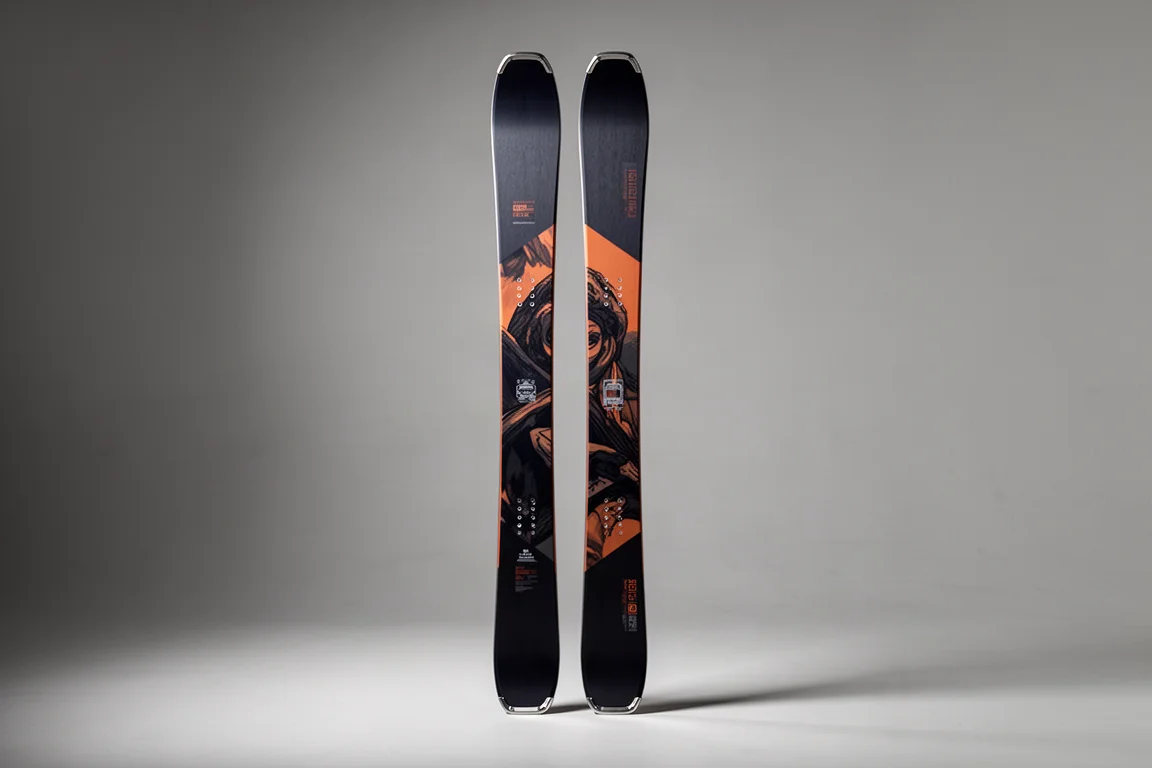
Choosing within this range comes down to how much of your season happens in soft snow, and how hard you ski when it does.
For riders who want one ski that handles groomers, crud and powder, the 104 mm models are the sensible starting point. The Pandora 104 and Mindbender 106C are the lightest and most forgiving of the group. The Rallybird 104 Ti and Santa Ana 104 Free add metal and weight in exchange for stability and damping.
If your priority is climbing, the DPS Pagoda Tour 106 C2, Liberty Genesis 106 BC, Atomic Backland 107 and Volkl Blaze 106 are the touring-relevant options, with the DPS and Backland leaning most heavily toward the uphill.
At the wide end, the choice is about terrain and style rather than compromise. The Sheeva 11 is the most versatile of the powder-focused skis. The Anima and Black Ops 118 are specialist tools for deep days and aggressive lines, and the Pandora 110 is the outlier: light, soft and freestyle-oriented rather than powerful.
Whichever width you land on, check the binding plan against the ski’s weight and construction. Hybrid bindings make sense on the lighter models. The heavier and more powerful skis are better served by an alpine binding.
Conclusion
This range runs from a 1,300 g touring ski to a 2,300 g big mountain tool, and the right answer depends far more on where and how you ski than on any single specification. The 104 to 106 mm models cover the widest set of conditions and suit the most riders, while the 110 mm and wider skis reward a specific kind of day.
If you are unsure between two models, decide first whether you want a ski that climbs, a ski that charges, or a ski that plays, then match the weight, metal placement and tail shape to that answer.
Further reading
Related Reviews
Freeride Skis
Armada Playmaker 101 Review: A Light, Lively Freeride Ski Built to Play
A closer look at the Armada Playmaker 101, a lightweight freeride twin tip with a poplar and paulownia core, carbon rods through the mid-body, and a deliberately playful character.
Freeride Skis
Armada Playmaker 111 Review: A Lightweight Freeride Ski Built for Soft Snow
A close look at the Armada Playmaker 111, a 111 mm freeride twin tip built around float, playfulness, and a drifty feel in fresh and soft snow.
Freeride Skis
Black Crows Anima Birdie Review: A Strong, Playful Women's Freeride Powder Ski
A 115 mm women's freeride powder ski with a poplar, carbon, and Kevlar build. Here is what it does well, who it suits, and what to weigh before buying.