Camping Gear
Duraflame Compressed Logs Review: Reliable Campfires Without Dry Firewood
A practical look at Duraflame compressed logs for camping, covering burn times, heat and light output, smoke, weight, and which size makes sense for your trips.
Introduction
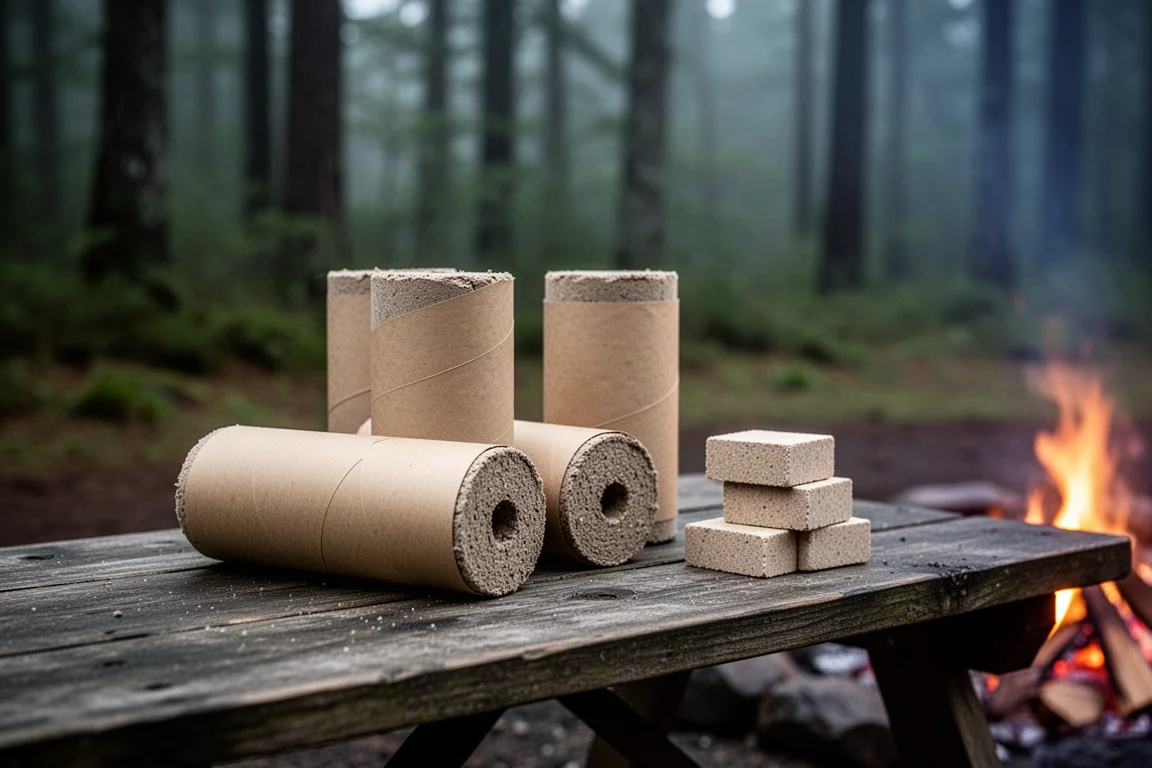
Getting a campfire going is usually a question of fuel, and fuel is usually a question of weather. In a wet climate where rain arrives most days, dry firewood is often simply not there to find, and the wood you do find is damp enough to fight you. Duraflame compressed logs are the substitute that makes a fire possible anyway: a wrapped, self-contained fuel log that lights from its own paper and burns for a predictable stretch of time.
This review covers the sizes the company offers, what they are like to actually use at a campsite, and the trade-offs worth understanding before you commit to a case.
Who These Compressed Logs Are For
These logs make the most sense for car campers, truck campers, and overlanders who want a fire without spending an hour gathering and processing wood. They are equally useful in popular campgrounds where the surrounding forest has been picked clean, and in wet conditions where every stick on the ground is soaked through.
There is also a safety angle. In areas with a lot of venomous snakes, you are not pushing through brush and tall grass looking for fuel, because the fire is already in your vehicle. And because you are not carrying wood from one place to another, you avoid a practice that is widely discouraged and in many places illegal and subject to fines.
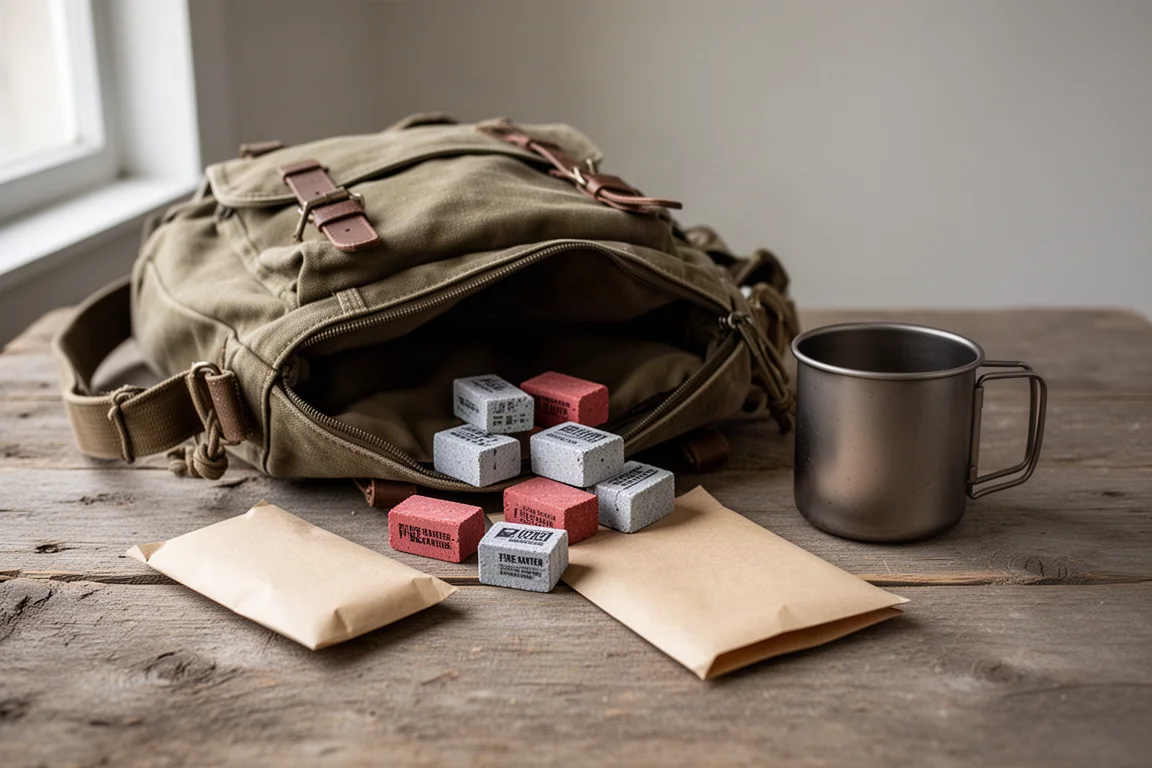
Backpackers are not left out. The larger logs are far too heavy to carry on foot, but the small 4.5 oz blocks are light enough to pack several without noticing the weight, and they are inexpensive. Carrying at least six of them gives you a campfire that will last a few hours.
Main Strengths
The first strength is simplicity. You light the paper wrapper and the log takes over from there. There is no splitting, no kindling hunt, and no fire-building skill required. In practice the full log takes closer to 15 minutes to be burning all the way through rather than the 5 minutes the company advertises, because the surface of the log is very smooth and rounded and flames catch rough edges far more readily than smooth ones. Score the surface with a stick to break the material loose and expose the fibers, and ignition becomes dramatically easier. Once a flame is held against that roughened material, it catches almost immediately.
The second strength is time. You do not walk into the forest, drag wood back to camp, or process it. That time goes back to the people you are camping with.
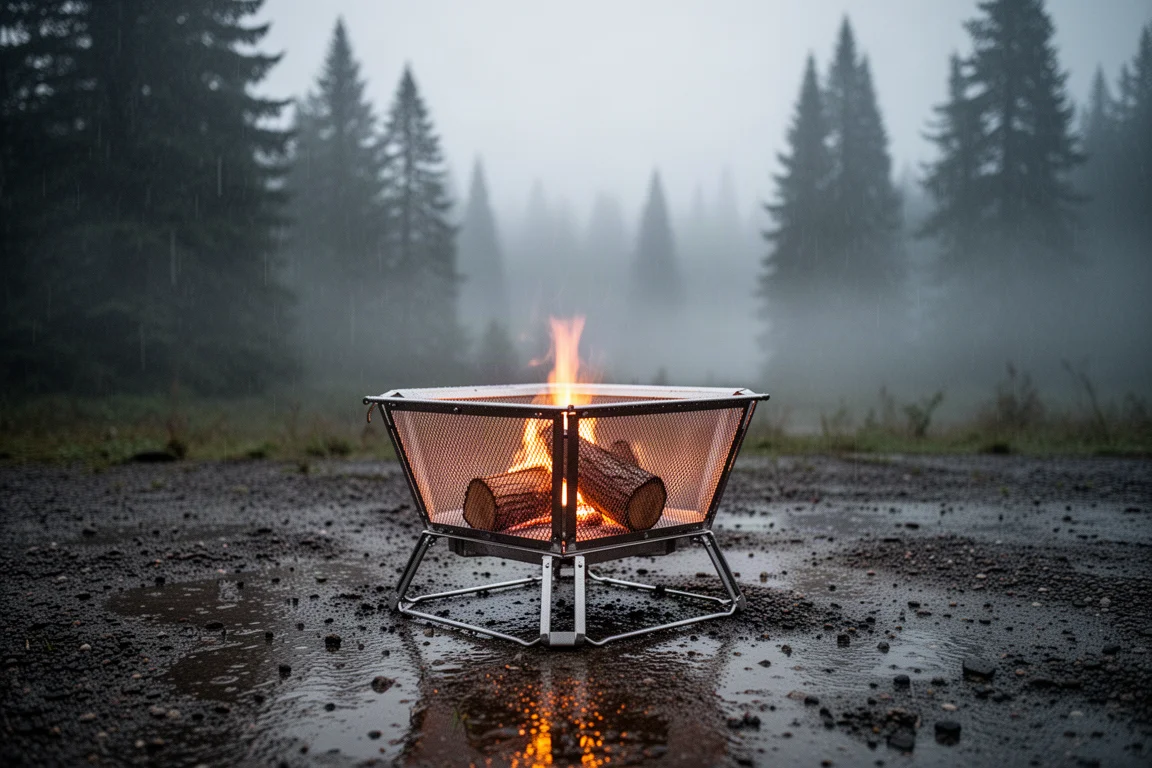
Heat output is genuinely impressive for the size, particularly in a raised mesh fire pit where the heat radiates in every direction rather than into the ground. One log produces enough warmth to be worth sitting around, and the burn is consistent and predictable from start to finish, which is not something you get from a mixed pile of firewood where every piece burns at a different rate.
The logs are also compact, individually wrapped, and cleaner to handle than a bundle of loose firewood. Once burning, they are notably wind resistant, and they burn down completely to ash, which makes cleaning out a fire pit very straightforward. Value is strong as well, especially when purchased in a store.
Burn Time, Heat, and Light Output
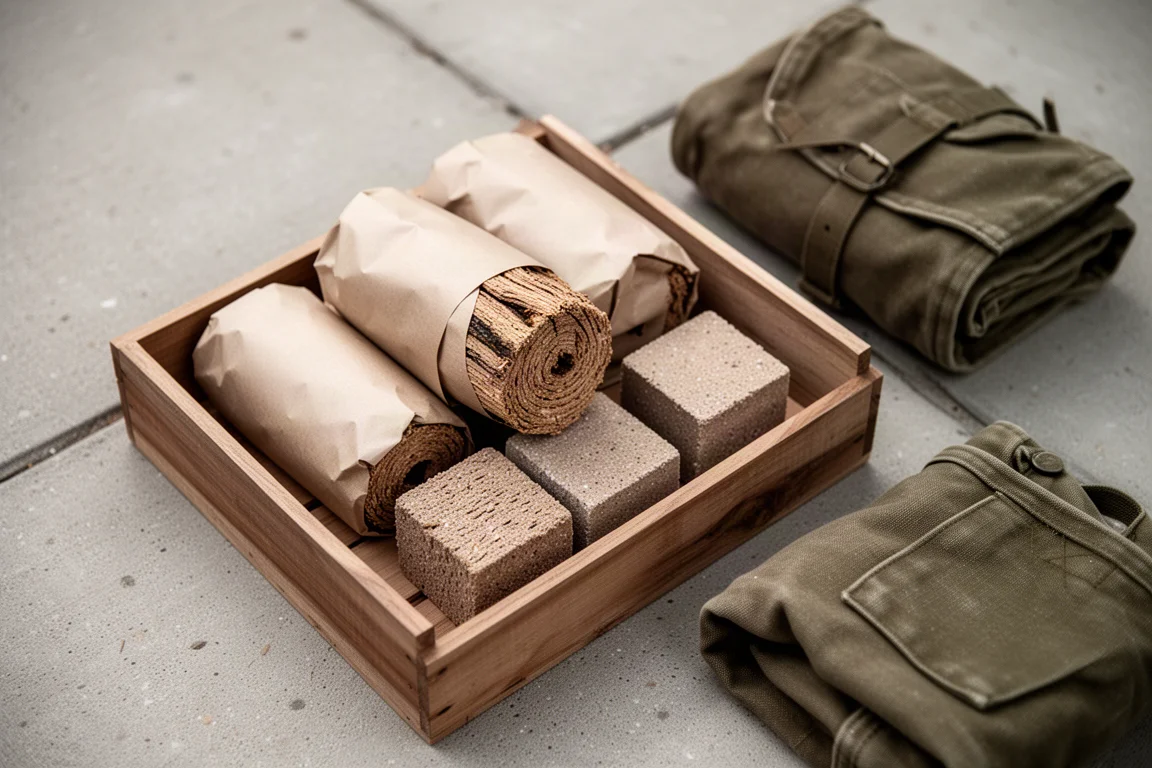
Duraflame builds these logs in several sizes. The 4.5 lb log measures 11 in by 4 in and is rated for 3 hours of burn time, which is the version most campers will want. The company also offers a 6 lb log rated for 4 hours, a 2.5 lb log rated for 1.5 hours, and the small 4.5 oz blocks that burn for roughly 30 minutes each.
The 3 hour figure holds up. In practice, three hours is about the point where most people are ready to move on from the fire anyway, so the burn time lands well for an evening at camp.
Heat is where these logs earn their place. A single log in a mesh fire pit throws a surprising amount of warmth, and the output stays steady rather than surging and fading. If you want a more aggressive fire, break the burning material up with a stick. That shortens the overall burn but turns a comfortable fire into a very hot and intense one.
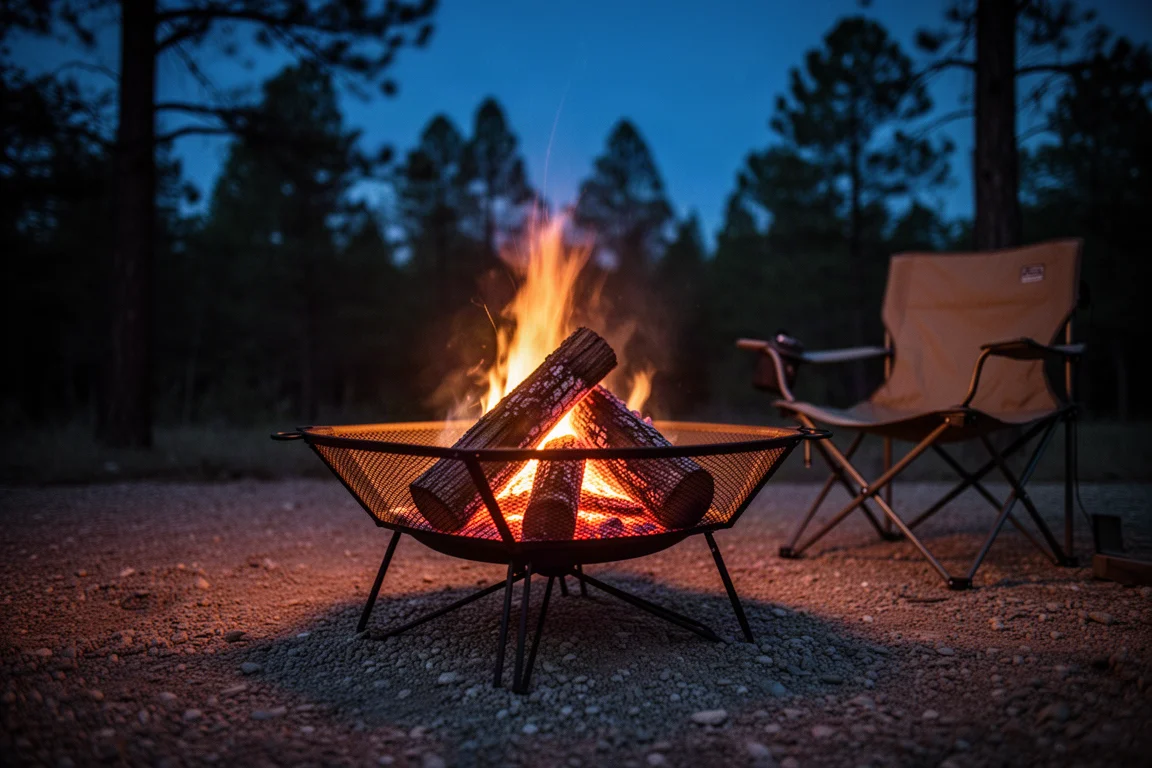
Light output is just as useful. A fully burning log in a mesh fire pit casts enough light that you can stand around it without a headlamp and still see the ground beneath you and the area around your camp.
Smoke, Residue, and Safe Use
Smoke is the clearest drawback. The company claims these logs produce less smoke than typical firewood, and that does not match real-world use. The regular version, the premium version, and the small blocks all produce a lot of smoke, and the smoke is dark and leaves a residue behind. Dry firewood burns noticeably cleaner.
The smoke is also harsh. The company describes the logs as non-toxic, and you can cook over them according to the manufacturer, but breathing the smoke is unpleasant in a way that wood smoke is not. It irritates the throat quickly, which is worth weighing if you plan to sit close to the fire for hours.
Safe use matters more here than with ordinary wood. Once one of these logs is burning, it stays burning, and you can put it out with water, but a partially burned log is still coated in wax and can dry out and reignite without much encouragement. Burn these logs all the way through. If a piece is left behind at your campsite, it can smolder for a long time before it catches again.
Things to Consider Before Buying
Weight is the practical issue. A six-count case of the 4.5 lb logs comes to roughly 27 lb, which is a lot to move around. The packaging is designed so you can pull the logs out one at a time rather than lifting the whole box, which helps.
Price varies considerably by retailer. Expect the six-count case to cost meaningfully more online than in a store, largely because you are paying to ship 27 lb of dense fuel.
Two more things worth knowing. First, the company claims the premium version burns brighter and bolder than the regular version, but across repeated trips the difference is not something you will notice. Second, the advertised ignition time is optimistic. Plan for the scoring trick if you want the log fully involved quickly.
Buying Advice
For most campers, the 4.5 lb log is the right choice. Three hours of steady heat covers a normal evening, and a six-count case gives you a fire every night of a typical trip without touching a single piece of firewood.
If you are backpacking, skip the large logs entirely and carry the 4.5 oz blocks instead. Six or more of them in a pack weigh almost nothing and take up very little room. The way to use them is to lay one down first, then build smaller material and larger wood on top, with anything damp at the top of the pile, and light from the bottom. The block dries out the material above it and gets a stubborn fire going.
If you are buying for a vehicle-based setup, buy from a store when you can. The price is lower and you avoid the shipping cost that comes with a heavy case of logs. Either way, choose based on how you camp rather than on the premium label, since the upgrade is not something you will feel in use.
Conclusion
Duraflame compressed logs are a genuinely useful piece of camp kit, particularly for anyone who camps where it rains often or where the local firewood has been cleared out. They light easily once you know how to score the surface, they burn for a predictable three hours, they throw real heat and light, and they save a significant amount of time and effort. The trade-offs are heavy smoke, a harsh smell, and the need to burn each log completely through. Weigh those against the convenience, and for wet-weather camping the math comes out in their favor.
Product link
View more details for Duraflame Compressed Logs
This product is mentioned in the review. Check the specifications, options, and compatibility before buying.
View more details for Duraflame Compressed LogsFurther reading
Related Reviews
Camping Gear
3FUL Ultralight Ground Sheet Review: A Two-Person Footprint Worth Packing
A 6.7 oz two-person ground sheet in ripstop silnylon, priced around $30. Here is what it protects, what it does not do, and who should pack it.
Camping Gear
Backcountry Light Dual-Function Tarp and Floor Review: A Footprint First
A dual-purpose tent floor and tarp that keeps falling rain off you, but cannot block wind. Here is where it works and where it does not.
Camping Gear
Best 2-Person Camping Mattresses for Couples: 10 Options Compared
A practical comparison of ten two-person camping mattresses, covering self-inflating pads, air pads and air mattresses for couples.