Portable Audio
DUNU Concept R Review: A Portable CD Player With an R-2R DAC
A compact CD player, R-2R DAC and headphone amplifier in one machined aluminium chassis, with the strengths and trade-offs worth knowing before you buy.
Introduction
The DUNU Concept R is a portable CD player that also houses an R-2R digital-to-analogue converter and a headphone amplifier in the same chassis. It sells for around 700 euros in Europe, with a similar figure in US dollars.
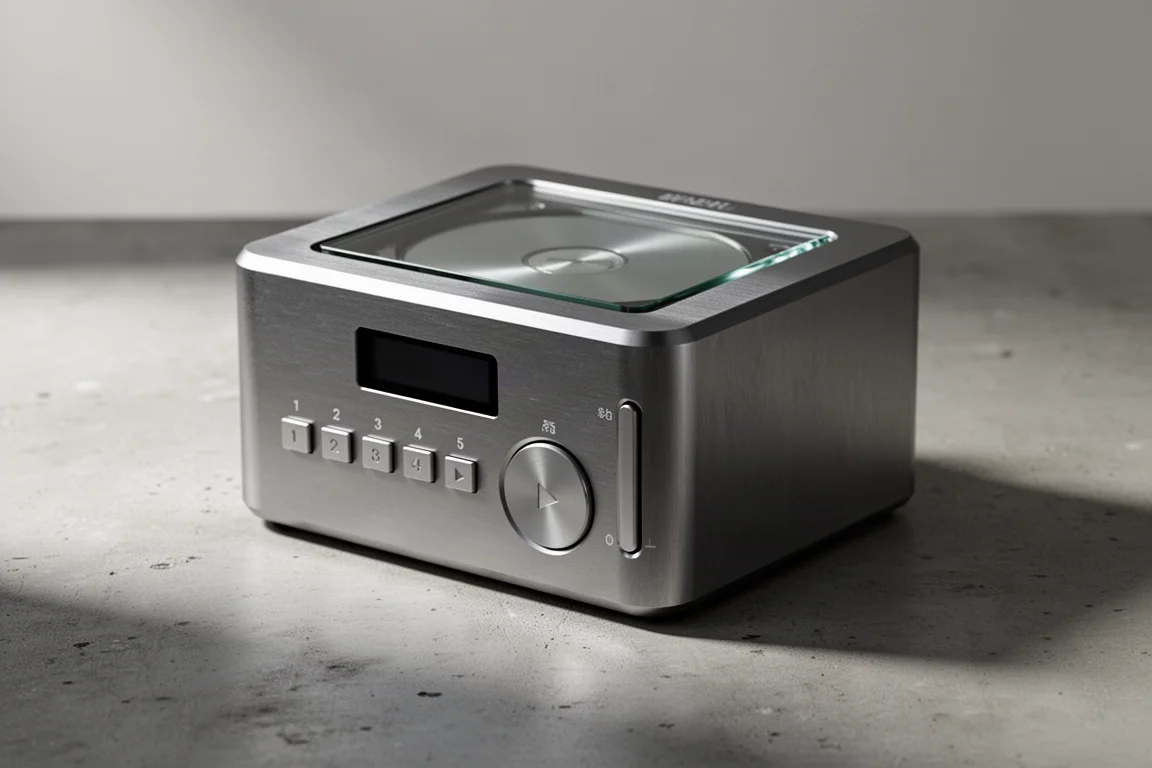
What separates it from most players at this price is the construction. The outer chassis is CNC machined from a solid block of aerospace grade aluminium alloy, and the resulting build quality is unlike anything else at this price point. The converter inside is a fully differential four-channel R-2R module built around a precision-matched 192 resistor array.
At the size of a hardback book and weighing just over a kilo, it is better described as transportable than portable. It will not fit in a jacket pocket, and most owners will keep it out in the open, on a tray table, an office desk, the couch, or a sideboard.

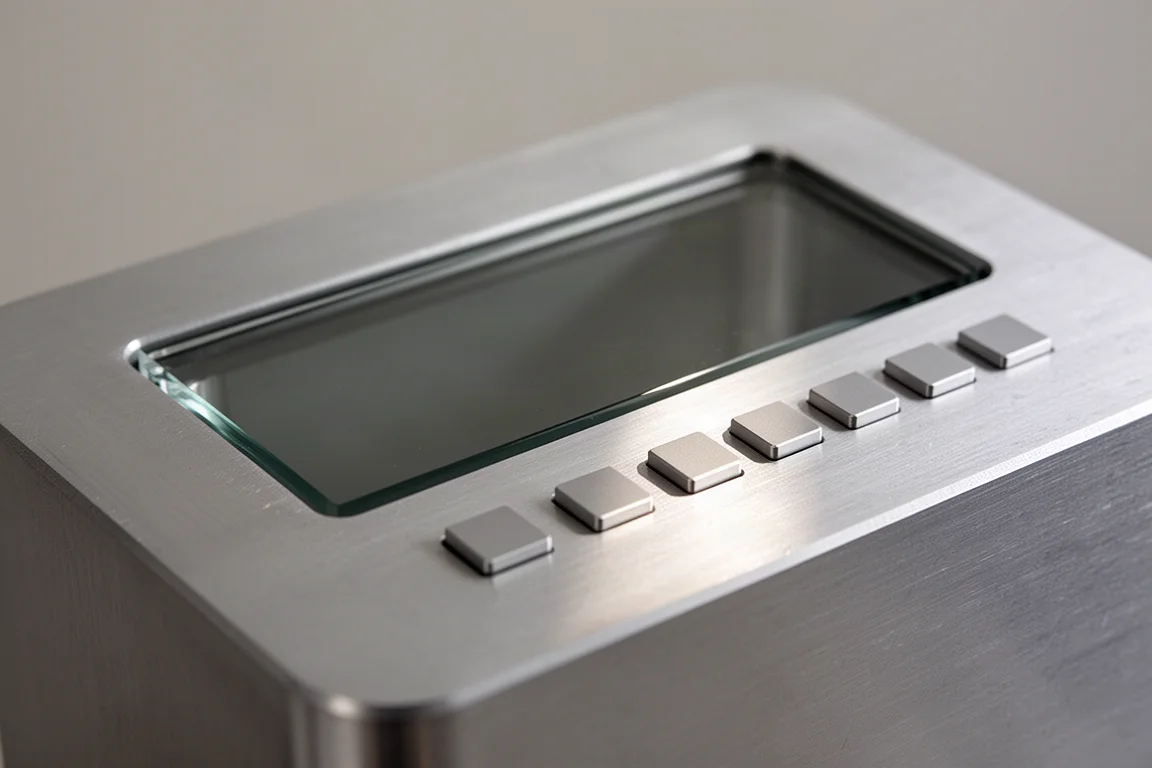
Two details are worth noting before you press play. The window that lets the CD see outward is made of tempered glass, and the 2-inch monochrome OLED display is clean and readable. The control layout also borrows from classic turntable design, with numbered buttons for direct track access and a volume slider whose physical resistance is judged very well indeed.
Who the DUNU Concept R Is For
The Concept R suits listeners who want a physical disc player as part of a small, high-quality setup rather than a piece of pocket kit. It makes sense on a desk or sideboard where a full-width CD player would be awkward, and it works as a compact all-in-one for headphone listening.
It is also a good fit for anyone running a network streamer with a USB output, because the Concept R can act as a USB DAC in that chain. Owners of a two-channel system can use its balanced line output as a fixed-level source. What it is not is a commuter device: the size and weight rule out jacket pockets, and a bag is needed for anything more than a move between rooms.
Main Strengths
Build quality is the headline. The machined aluminium body, the tempered glass disc window and the firm, reassuring click of the top-loading mechanism all point to a level of finish that is rare at this price. The mechanism is stiff to open but locks down securely, and the transport holds its position even when the player is moved while a disc is spinning. The proprietary servo architecture, the Sanyo laser and the internal buffer all contribute to that stability.
Amplification is solid state throughout, and long pressing the M button switches between class A and class AB modes. In class A the treble is sweeter, better extended and the sound feels more internally spacious, which makes class AB hard to go back to once you have heard the difference.
On the front edge there is a 6.35 mm single-ended socket and a 4.4 mm balanced socket. Powered from the wall over USB, the balanced connection promises up to 1.3 W per channel into 32 ohms; on battery power that figure is roughly halved. DUNU rates the internal battery at 10 hours, and the player can run while charging, so the shorter real-world runtime matters less at a desk than it would away from a power socket.
In use the Concept R sounds bigger, more substantial and more dynamically alert than more affordable rivals such as the FiiO DM-13 and the Moondrop Disc Dream 2 Ultra. Its presentation has solid macrodynamic presence and very decent layer separation, with a slightly understated top end that keeps brighter headphones in check without tipping into softness.
Things to Consider Before Buying
The first consideration is simply size. At just over a kilo and the footprint of a hardback book, this is a stay-at-home product for most people. It also needs the main switch engaged if it goes into a bag, so that nothing is triggered accidentally in transit.
The 4.4 mm balanced socket has an output impedance of 1.2 ohms, which can shift the frequency response of in-ear monitors whose input impedance sits below 10 ohms. That is worth checking against your own earphones before committing.
Battery life is rated at 10 hours but lands closer to eight in practice, and balanced output power drops by roughly half once the recharger is disconnected. If you plan to run demanding headphones away from mains power, that matters.
Connectivity is deliberately focused as well. The only digital input is USB-C, with a second USB-C port for recharging, and the TOSLINK socket on the back panel is the only digital output. Anyone hoping to feed the internal converter from a coaxial or optical source will not be able to.
Listening Notes: Class A Mode and Headphone Pairings
Class A mode is the setting worth leaving on. Compared with class AB, the treble is sweeter and better extended, and the sound feels more internally spacious. Both modes are solid state, and despite what some retail listings suggest, there are no tubes inside the chassis.
Driving a pair of FiiO FT7 headphones, the Concept R showed solid macrodynamic presence and delivered very decent layer separation. Its slightly understated top end turned out to be an advantage with those headphones, reining in a sometimes wayward lower treble without collapsing into softness. The overall presentation is engaging rather than overly analytical.
Against the Chord Mojo 2, the audible differences were smaller than expected. Both offer comparable punch and scale, but the Mojo 2 steers the presentation towards finer detail retrieval and makes instrumental layering more obvious, while the Concept R leans towards a slightly less resolving but no less engaging richness. The Mojo 2 remains the technically superior converter of the two, though the gap is not wide enough to justify the extra cabling and USB connections needed to run it as an external DAC in a system.
Used as a line-level source into an integrated amplifier, the Concept R’s converter sounds a little smoother than the amplifier’s own internal DAC. The amplifier offers marginally livelier transients and better bass definition, while the Concept R lends greater physicality to vocal performances. It is a close call either way.
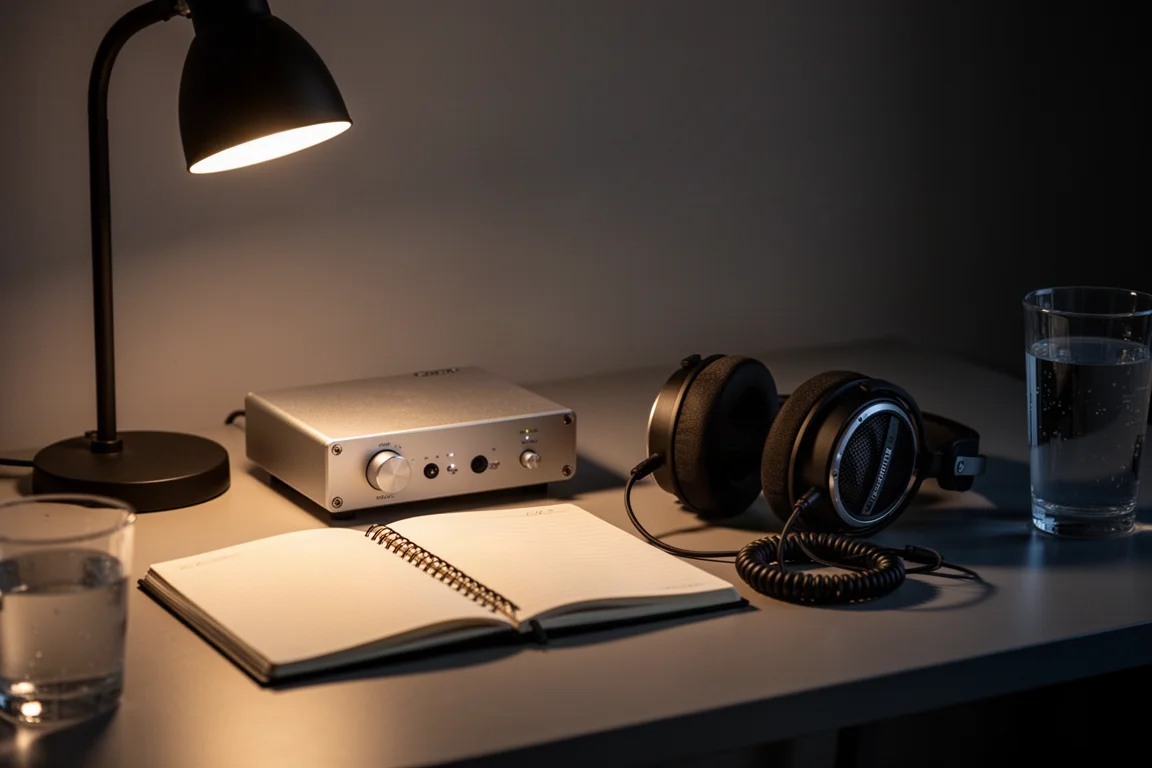
For listeners who are already settled on a particular converter, the TOSLINK output keeps the Concept R in play as a transport rather than replacing what they own. That flexibility is part of what makes the player easier to recommend than a conventional one-function CD deck.
Using the Concept R as a USB DAC and CD Transport
The USB-C input supports native DSD up to DSD 512 and PCM up to 32-bit/768 kHz, and a 24-bit/192 kHz stream passed through exactly as advertised. In practice this makes the Concept R a straightforward companion for a network streamer that offers a USB output.
The back edge carries a 4.4 mm balanced analogue output delivering a fixed line-level signal at 4.2 volts. Because it is a fixed line level, the volume slider has no effect on that output, and level control moves downstream to the amplifier.
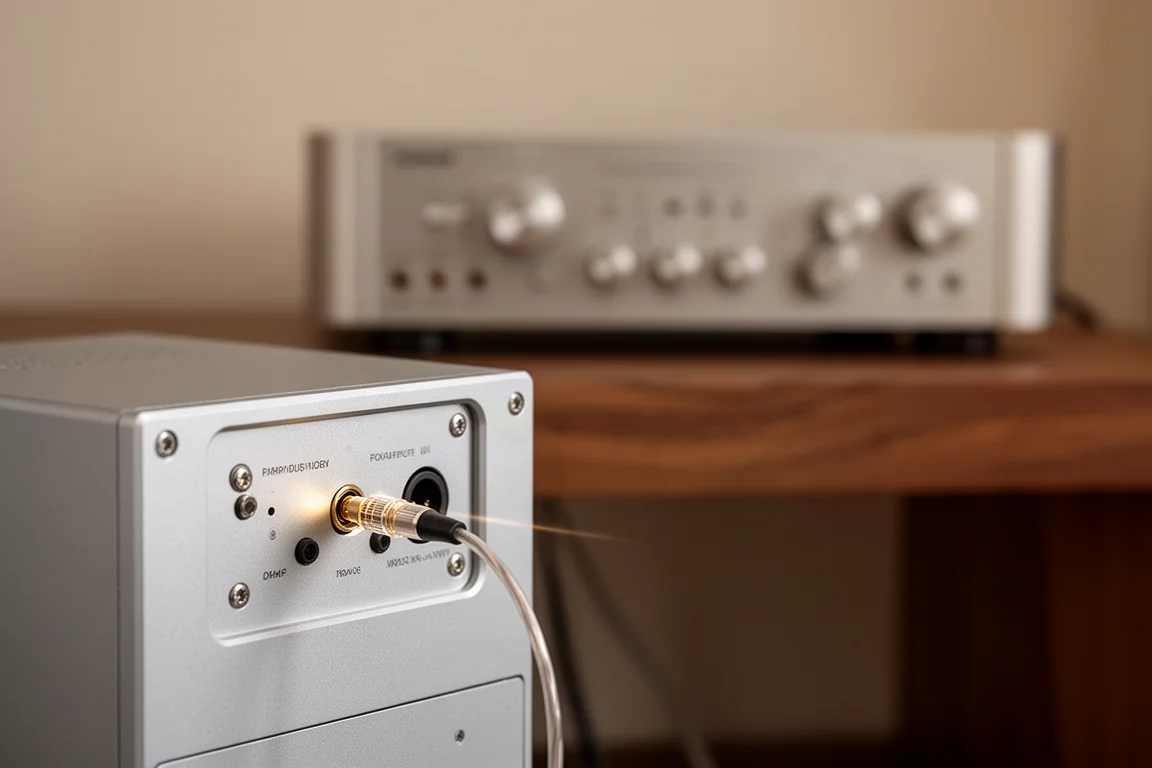
There is also a TOSLINK socket on the back panel, which is the player’s only digital output. For anyone attracted to the Concept R’s look and feel but already invested in a DAC, that optical output still opens up possibilities, and it is a reasonable limitation given the all-in-one intent of the design.
Buying Advice
At around 700 euros in Europe, or a similar figure in US dollars, the Concept R sits well under a grand. The value case rests on how much of it you will actually use: it is a CD player, a USB DAC and a headphone amplifier in one chassis, and it does things most traditional CD players at this price cannot.
If you only need one of those functions, a dedicated component may be the more sensible route. If you want a compact disc player that can also serve a network streamer and drive headphones from the same box, the combination is uncommon and the execution is unusually solid.
Nothing about the Concept R feels compromised or unfinished in daily use, which is rare for a product that covers this much ground.
Conclusion
The DUNU Concept R is one of the most solidly built portable products you can buy at any price, and it behaves less like a lifestyle accessory than a small piece of serious hi-fi. Class A mode, the balanced and single-ended headphone outputs, the USB DAC input and the optical output give it a flexibility that full-width players rarely match.
The caveats are practical rather than fundamental: it is too large and heavy for pocket use, the balanced socket’s output impedance deserves a check against low-impedance in-ears, and battery operation halves the available power. Weigh those against a machined aluminium chassis, a stable top-loading transport and a smooth, engaging converter, and the Concept R makes a strong case for itself for anyone who wants discs, headphones and streaming to meet in one compact box.
Product link
View more details for Dunu Concept R
This product is mentioned in the review. Check the specifications, options, and compatibility before buying.
View more details for Dunu Concept RFurther reading
Related Reviews
Portable Audio
Best USB DAC Dongles Compared: DragonFly Cobalt, Fosi Audio DS1 and Hidizs S9 Pro
Five portable USB dongle DACs compared on sound signature, outputs, connectivity, build quality and value, from the $77 Fosi Audio DS1 to the $350 DragonFly Cobalt.
Portable Audio
Cayin RU6 Review: A Discrete R2R Dongle DAC That Sounds Bigger Than It Looks
A pocket-sized R2R ladder DAC with balanced output, tactile controls, and a spacious, dynamic sound, plus the power limits worth knowing before you buy.
Portable Audio
Chord Mojo 2 Review: A Pocketable DAC and Headphone Amp for Serious Listening
A practical look at the Chord Mojo 2, a portable DAC and headphone amplifier with a custom FPGA design, dual headphone outputs, USB-C input, and a battery-friendly desktop mode.