Portable Power Stations
DJI Power 500 vs Jackery 500: Two Power Stations, Two Generations Apart
A side-by-side look at the modern DJI Power 500 and the long-running Jackery 500, covering ports, battery chemistry, teardown impressions, and pricing.
Introduction
On paper, the DJI Power 500 and the Jackery 500 occupy the same space: similar size, similar capacity, and, notably, a similar price. In practice, they represent two different eras of power station design. The DJI sits at the newer end of the market, with modern LFP battery chemistry, a stronger display, and ports you will not find elsewhere. The Jackery 500 is a long-running design built on older lithium-ion technology, and it shows in the details.
This comparison walks through the physical design, port selection, internals, and long-term battery expectations of both units, then looks at what each costs and who each one actually makes sense for.
Design and First Impressions
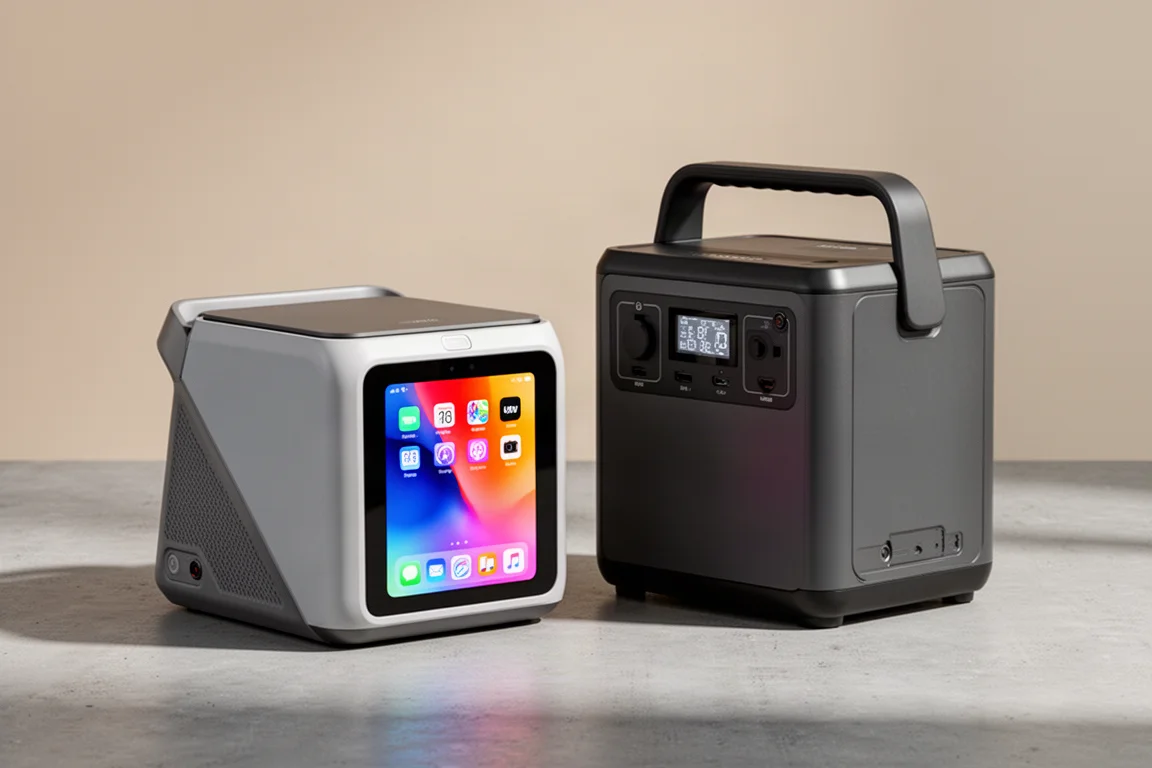
Side by side, both units are roughly box-shaped, but the differences jump out quickly. The Jackery keeps its signature handle on top, which stands proud of the unit and gets in the way of stacking anything above it. The DJI slopes the rear of the body so the handle does not protrude as much, leaving a flat top surface that is genuinely usable.
The DJI also puts all the essential information on its front face, while the Jackery relies on a small, dated LCD that looks more at home on a calculator than in a device in this price range. On the outside, the Jackery does include a flashlight, which is a nice-to-have even if flashlights on power stations are generally more novelty than necessity. Air intakes sit on the rear of the DJI and on the sides of the Jackery, so both manage heat without much visual clutter.
Ports and Everyday Usability
Here the gap widens. The DJI Power 500 carries two USB-A ports, two USB-C ports, AC output, and a car socket, giving it a noticeably more modern port mix. The Jackery offers three USB-A ports but no USB-C at all, along with two barrel plugs, a car lighter jack, and a single AC outlet. For anyone charging phones, laptops, or tablets in 2026, the absence of USB-C is a real limitation.
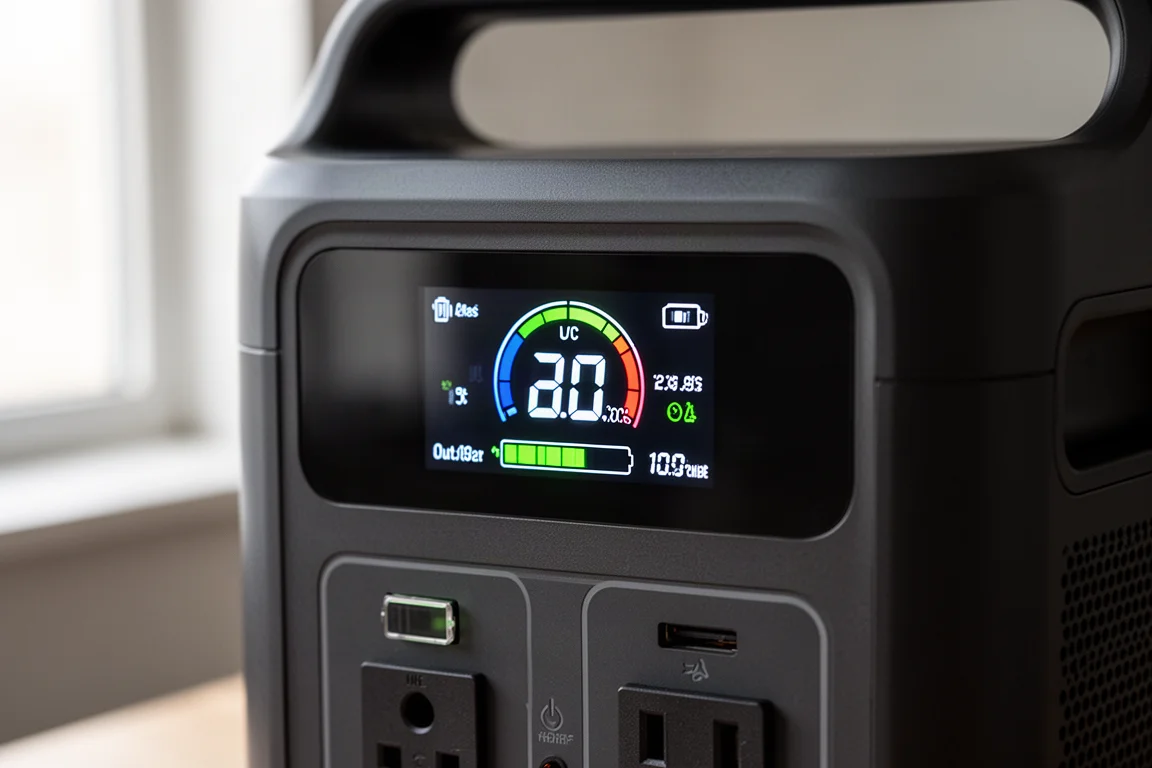
The Jackery’s display also lags behind. It is functional, but it is the kind of screen that felt dated years ago, and it reinforces the sense that this design has been coasting on its original engineering.
The SDC Port: DJI’s Quiet Advantage
The DJI Power 500 and its larger sibling both include an SDC light port, a dual in-and-out DC connection that bypasses the inverter entirely. That means direct power to and from the battery bank with no inverter losses, which matters for both efficiency and flexibility.
DJI sells a range of cable accessories for it: a power outlet adapter for charging the unit from a car’s power outlet, a reverse adapter that adds a cigarette-style socket to the box itself, an SDC-to-XT60 cable for the many devices that use that connector, solar panel adapter modules for wiring up panels, and a power adapter for charging compatible drones, with fast and slow charging options.
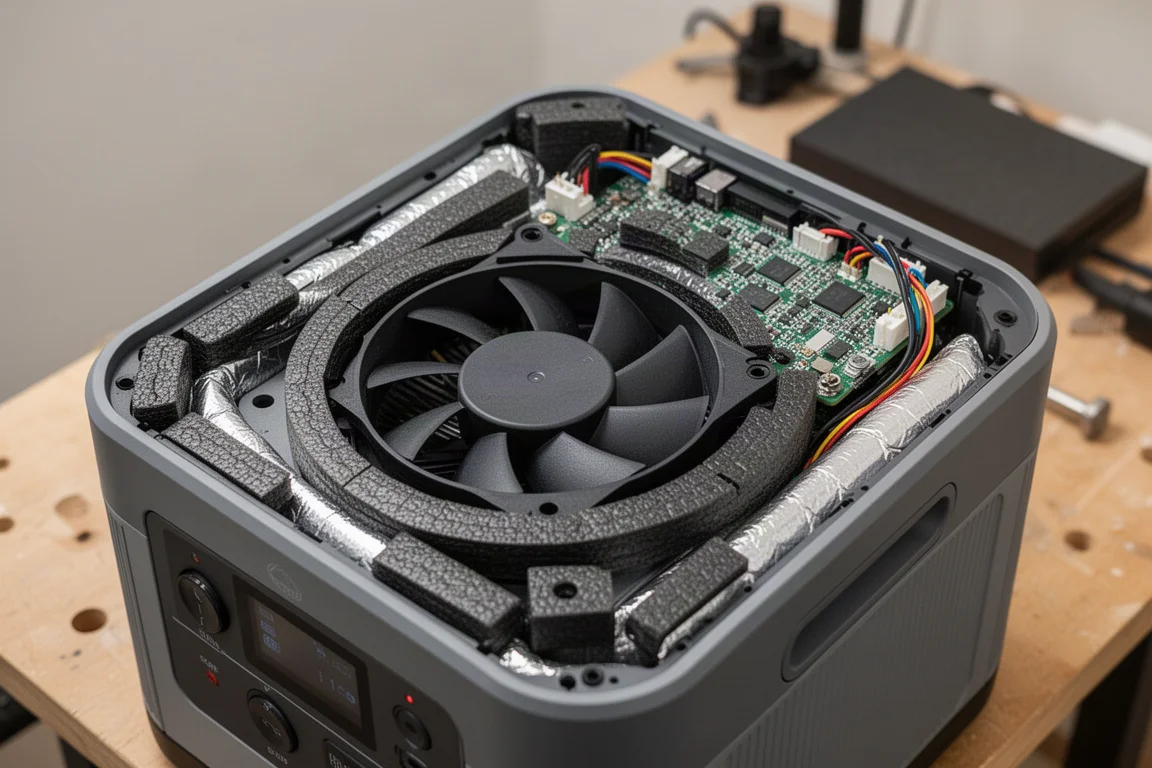
No competing power station at this size currently offers an equivalent port ecosystem, and for DJI drone owners in particular, that is a compelling reason to stay within the brand.
Teardown Impressions
Opening both units tells two very different engineering stories. The Jackery comes apart easily enough: remove the two side vent covers, undo a mix of Allen and Phillips screws, and the interior is exposed. Inside, the fan is mounted directly against the frame rather than resting on its cushion, the circuit board feels like components were placed wherever they fit rather than designed for the use case, and the battery cells are basic 18650s with no visible branding. There is a conformal coating on the board and some strategic adhesive, but the overall impression is functional rather than refined.
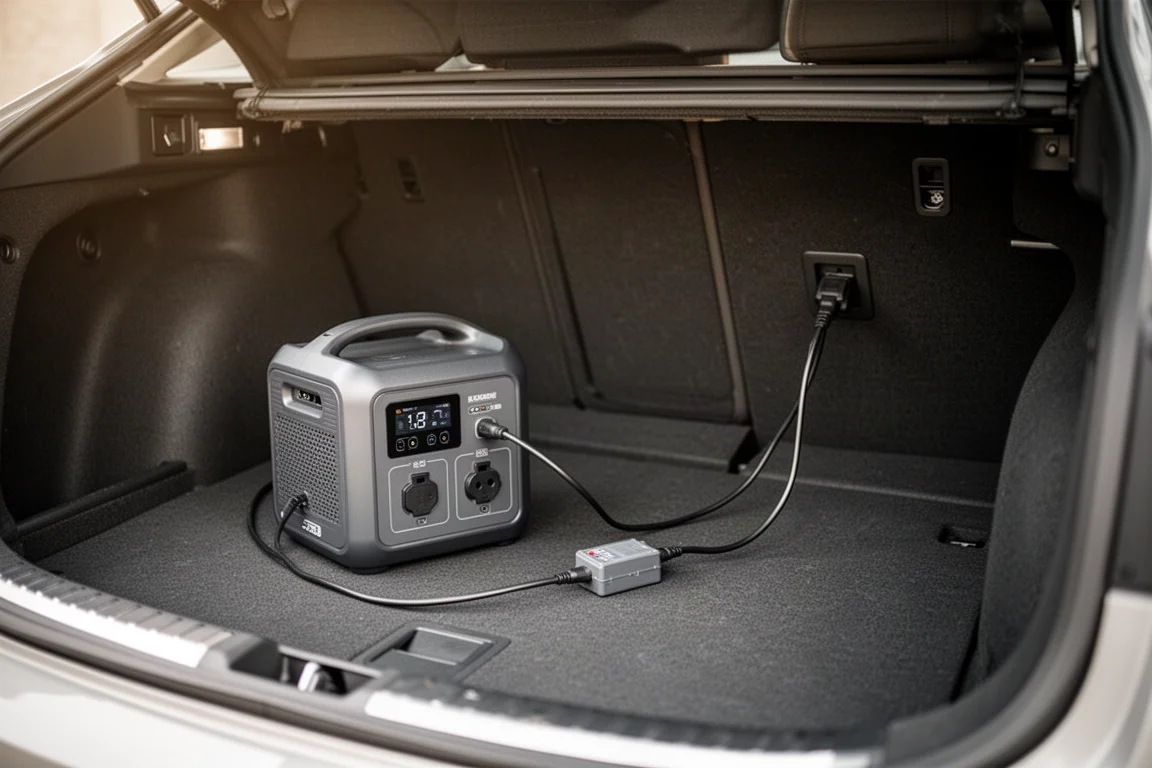
The DJI is a different story. The board is wrapped in extensive protective material on both sides, the cells sit in a well-organized assembly, and the fan is mounted in a rubber grommet with a cushioned cover plate on top. That mounting approach goes a long way toward explaining why the DJI runs so quietly in use. The interior clearly reflects a purpose-built custom design rather than an assembled collection of parts.
Battery Chemistry and Longevity
This is where the generational divide is clearest. The Jackery 500 uses lithium-ion cells rated for around 500 recharge cycles, which works out to roughly a year and a half of daily discharge-and-recharge use. Lithium-ion is more power dense, but it also runs hotter and carries better-known thermal risks.
The DJI Power 500 uses LFP (lithium iron phosphate) chemistry, rated for approximately 4,000 cycles. Run a full discharge and charge above 80 percent every day and the math works out to well over ten years of use. Real-world results will vary for both units, but the headline difference in rated cycle life is roughly eight to one in DJI’s favor. Interestingly, LFP is not new technology either; it has been around a long time, but it is only recently showing up in mainstream portable power.
Pricing: The Awkward Question
Both units sell for around $500, which is what makes this comparison uncomfortable for Jackery. DJI is not a budget brand, yet it is selling newer battery technology, better engineering, more ports, and a far superior display at the same price Jackery charges for a design that is roughly five years old.
Jackery does have an updated version on the way, with LFP batteries, a folding handle, a better (though not great) screen, and app control similar to the DJI. The catch is timing: that next-generation Jackery arrives as the market moves into the newest tier of power station design, and it is priced the same. On Jackery’s site, the old and new versions sit side by side at identical prices, with the distinction easy to miss unless you dig into the product detail page.
Buying Advice
If you want the most modern package at this price point, the DJI Power 500 is the stronger buy on nearly every measurable axis: battery cycle life, port selection, display quality, noise, and internal build. The SDC ecosystem adds value that no other brand currently matches, especially if you own or plan to own a DJI drone.
The Jackery 500 only really makes sense if you find it discounted well below its sticker price, or if you are already invested in the Jackery accessory ecosystem and the lack of USB-C does not affect you. Otherwise, paying full price for this design means buying previous-generation technology at next-generation prices.
Conclusion
The DJI Power 500 and Jackery 500 look like siblings on a spec sheet, but they are a generation apart in execution. The DJI wins on battery longevity, ports, display, and engineering, all at the same price. Unless the Jackery drops significantly in cost, the choice here is straightforward.
Product link
View more details for DJI Power 500
This product is mentioned in the review. Check the specifications, options, and compatibility before buying.
View more details for DJI Power 500Further reading
Related Reviews

Portable Power Stations
Anker SOLIX F3000 Review: A Powerful Portable Power Station With a Few Design Quirks
The Anker SOLIX F3000 delivers strong performance, fast charging, and a competitive price, but a few design choices may give you pause.

Portable Power Stations
EcoFlow Delta 3 Series: Five New Power Stations Previewed
EcoFlow expands the Delta 3 lineup with five models, from the compact Classic to the flagship Ultra Plus. Here is what each one offers.
Portable Power Stations
Oscal Power Max 6000 Review: A Large Solar Generator With Real Trade-Offs
A week of off-grid use shows what the Oscal Power Max 6000 handles well, where it falls short, and when a fuel generator still makes more sense.